
Splitbeard Bluestem (Anatherum ternarium)
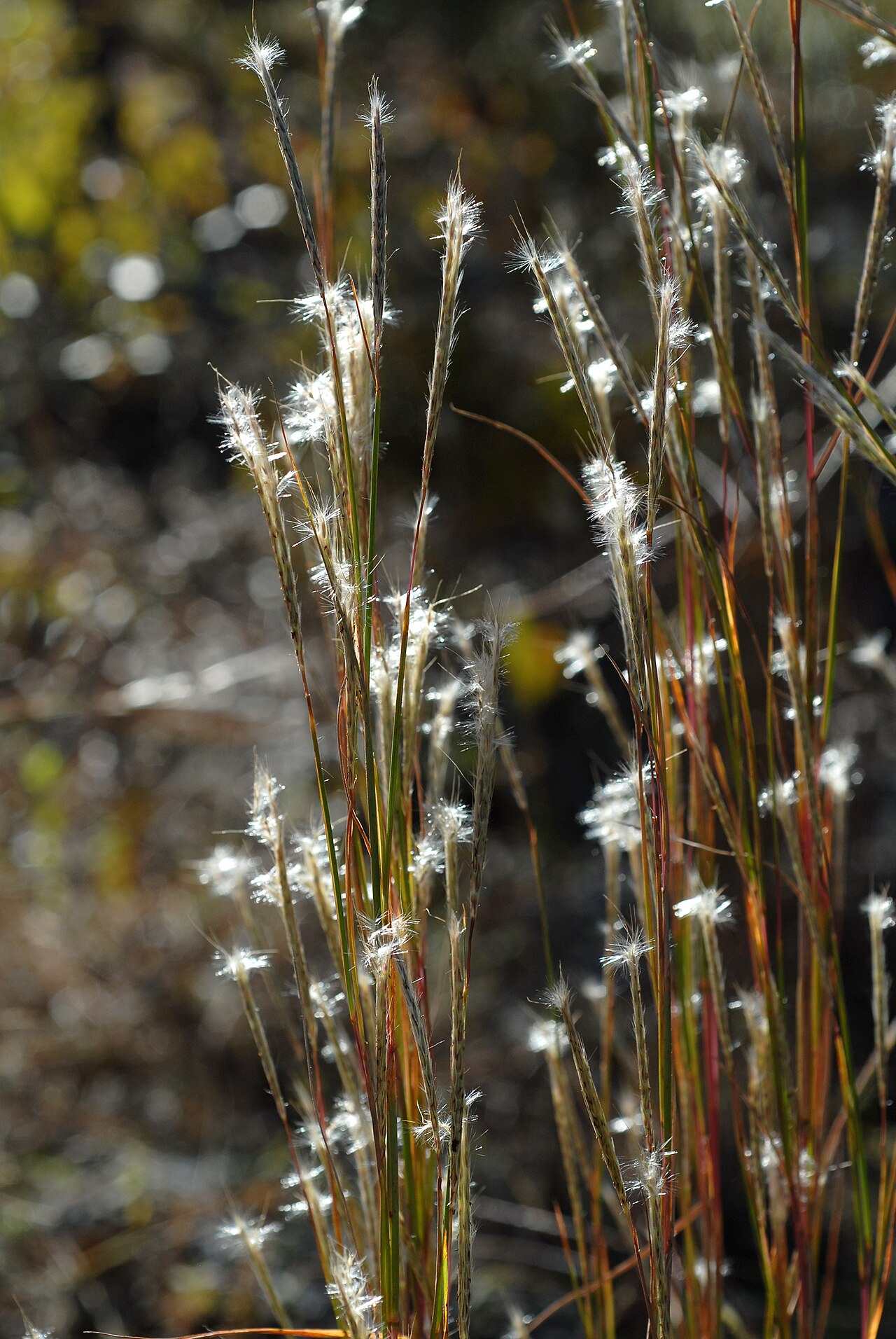
Splitbeard bluestem earns its place in a native garden when low autumn sunlight catches its silver-white tufts. The show comes from fine hairs around the flowering and fruiting structures rather than broad petals. It is an upright warm-season bunchgrass with a comparatively narrow base, useful where a meadow needs texture without another large block of foliage.
The plant is familiar in older floras as Andropogon ternarius. Kew now accepts Anatherum ternarium, following a recent reassignment of this group of grasses; both names are given here so nursery labels, the regional table and the USDA profile remain understandable. The name change does not make it a new species or justify creating a second page.
In Arkansas, Louisiana, eastern Oklahoma and eastern Texas, think of sunny upland openings and pine-prairie edges rather than a wet lawn. The regional table's suggestion of cut flowers refers to its ornamental stems and seed heads. Leaving most stems standing through winter preserves the feature that makes the grass attractive and retains structure for small wildlife.
Identification
Stems & Growth Form
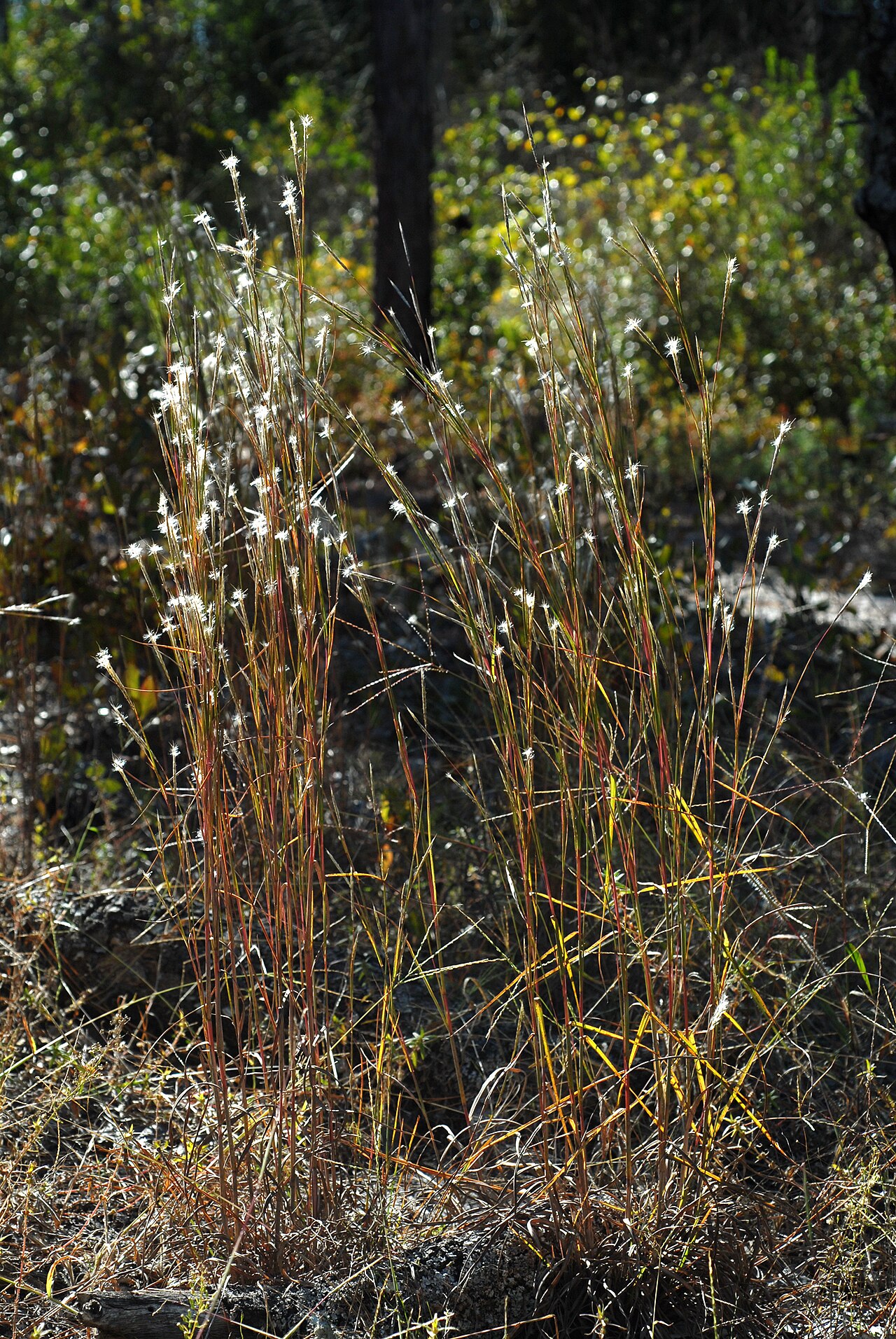
Slender upright stems arise in bunches and branch toward their flowering ends. The plant is not a turf-forming lawn grass. A mature bunch can look mostly stemmy, with relatively little broad foliage, which is part of its light visual character. Stems and seed heads are more useful for identification than a photograph of an early-season tuft alone.
Leaves
Narrow blades are concentrated toward the base and may curl downward. Leaves arise alternately along the stems, as in other grasses. Compare the whole plant, leaf sheaths and flowering branches before assigning an identity. Several southeastern bluestems look similar in vegetative growth, and common names such as silver bluestem are used inconsistently in commerce.
Flowers
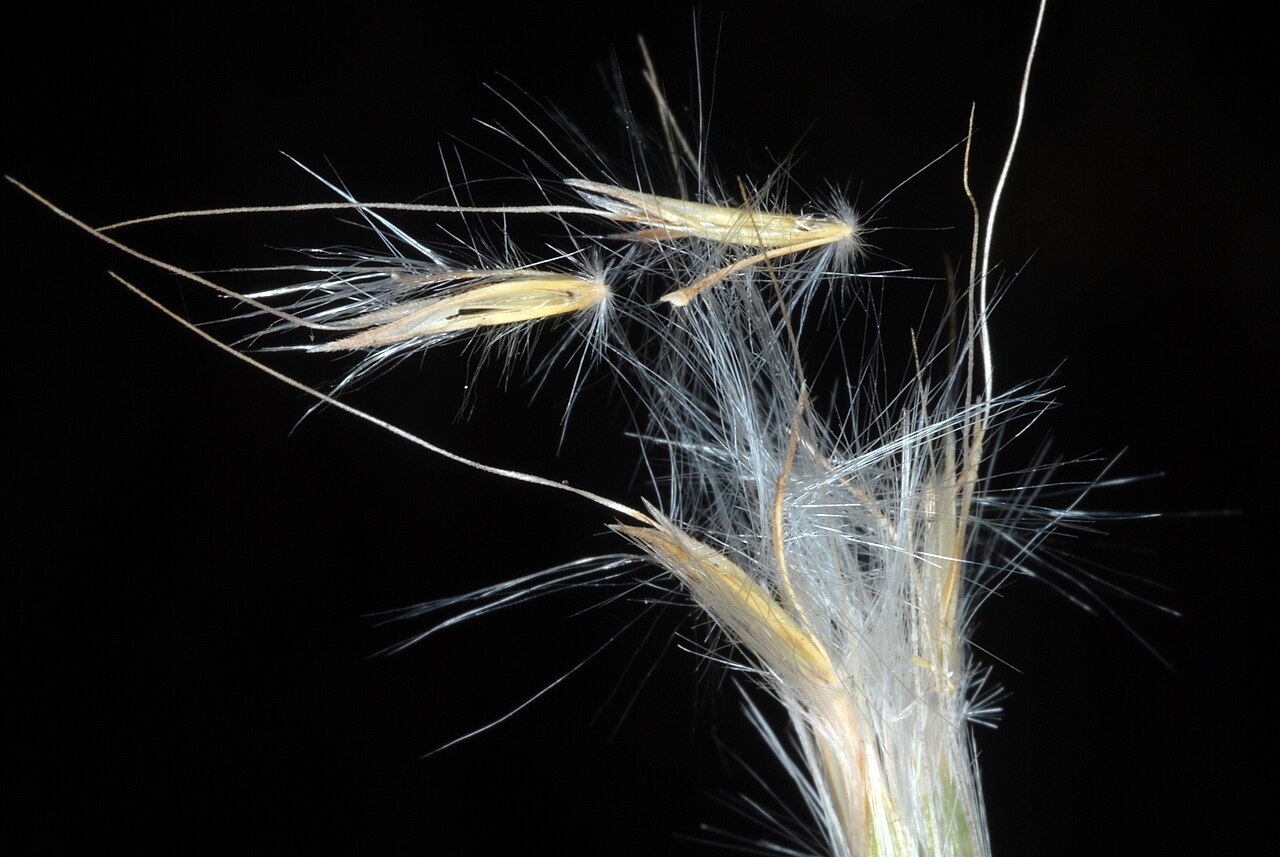
The flowering structures typically divide into paired racemes, with long pale hairs giving a split, paintbrush-like effect. The tiny grass flowers themselves are not the showy part. Close views of the branching arrangement help separate it from little bluestem and broomsedge. A specialist key may be needed for plants outside the expected range or for closely related segregate taxa.
Fruit & Seeds
Small grass fruits mature within the spikelets. Hairy remnants can remain conspicuous after some material has dispersed, keeping the branch tips decorative into winter. The fluffy seed units are very different from a large clean grain such as wheat; hand sowing benefits from careful distribution so all the material does not land in one clump. Do not confuse a persistent empty seed head with a guarantee of viable seed.
Quick Facts
| Scientific Name | Anatherum ternarium (syn. Andropogon ternarius) |
| Family | Poaceae |
| Plant Type | Warm-season perennial bunchgrass |
| Mature Height | Usually 2–4 ft; taller stems possible in favorable conditions |
| Mature Spread | Narrow bunches that enlarge by tillering; allow space for mature stems |
| Growth Rate | Seasonal warm-weather growth |
| Sun Exposure | Full sun to light partial shade |
| Water Needs | Moderately dry to dry once established |
| Soil Type | Well-drained sandy or other lean upland soil |
| Soil pH | Acidic to neutral |
| Bloom Time | Late summer through fall; August–November reported in Louisiana |
| Flower Color | Small grass flowers; conspicuous silvery-white hairs around the spikelets |
| Fall Color | Tan to bronze stems with persistent pale seed-head structure |
| Fruit | Small dry grass grains carried in hairy spikelet units |
| Deer Resistant | Not reliably deer-proof; young growth can be grazed |
| USDA Hardiness Zones | Use locally sourced stock; no single hardiness interval established by the cited sources |
Native Range
Kew recognizes a central and eastern U.S. range extending into northeastern Mexico. The U.S. map follows that native treatment, while the text notes the District of Columbia separately because a state map may not display such a small jurisdiction clearly. This is not a grass native to every part of the continent simply because it belongs to the bluestem group.
Its habitats include prairies, woodland borders and open pine communities, as well as some disturbed fields. The Louisiana botanical account describes bunches on upland soils and notes that it can increase in poorly managed pasture. That agricultural description is not the same as calling it an introduced invasive species: it is a native grass whose abundance responds to land use.
Use regional provenance and local habitat as the guide for planting. A dry sandy opening in the Piney Woods is more informative than a broad hardiness-zone number. For ecological restoration, confirm local occurrence and the intended seed mix with a regional specialist, especially where similar grasses or narrowly interpreted taxa occur.
Native Range at a Glance
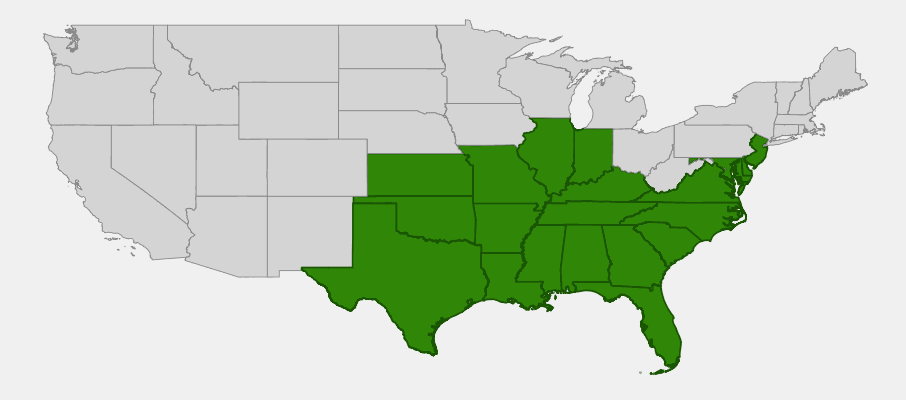
| U.S. States | Alabama, Arkansas, Delaware, Florida, Georgia, Illinois, Indiana, Kansas, Kentucky, Louisiana, Maryland, Mississippi, Missouri, New Jersey, North Carolina, Oklahoma, South Carolina, Tennessee, Texas, Virginia |
| Mexico / Canada / Other Range | Northeastern Mexico; District of Columbia also included in Kew’s U.S. distribution |
| Ecoregion | Southeastern pine savannas, prairie openings and central/eastern upland margins |
| Elevation Range | Lowland to upland open sites; obtain local provenance guidance |
| Habitat | Prairies, open pine woods, woodland borders and disturbed old fields |
| Common Associates | Locally appropriate little bluestem, Indiangrass and native meadow wildflowers |
📋 Explore the native plant list for Arkansas, Louisiana, eastern Oklahoma and eastern Texas. Species occurrence differs within this multi-state region.
Growing & Care Guide
Light
Full sun gives the most dependable upright flowering display. Light shade at an open woodland edge can work, but a closing canopy changes the habitat over time. Do not plant it beneath dense evergreen cover and expect meadow-like performance. Place it where backlighting can illuminate the seed heads without requiring the grass to lean across a walkway.
Soil & Water
Favor lean, well-drained soil and avoid routine high-nitrogen feeding. Water young plugs while their roots establish, then allow a drier regime suited to the site. A permanently wet planting pocket is a poor substitute for its upland conditions. Excess irrigation and fertility can encourage surrounding weeds and make meadow maintenance harder even if the grass itself remains alive.
Planting Tips
Use nursery-propagated plugs or a documented seed source with the scientific name clearly identified. Prepare the site by reducing perennial weed competition before sowing. Space plants according to the eventual flowering stems, not just the small basal tuft seen at purchase. A few trial plants observed for a season can reveal whether the location stays too wet or becomes too shaded.
Pruning & Maintenance
Leave standing stems through autumn and much of winter where possible, then cut back before new warm-season growth becomes entangled in last year's stalks. Remove cut material without scalping the crown. In a mixed meadow, timing matters: repeated mowing during the flowering period removes both the display and much of the seed production. Large-scale burning is a specialist land-management practice, not a casual home-garden substitute for maintenance.
Propagation
The grass reproduces through seed and tillering. Seed mixes should identify the taxon and provenance, rather than simply list 'bluestem.' Distribute fluffy seed evenly over a prepared surface according to the supplier's protocol and protect the site from aggressive weeds during establishment. Divide garden-grown bunches only when suitable new growth and moisture conditions allow recovery; do not dig wild prairie plants for landscaping.
Landscape Uses
- A dry native meadow with fall-blooming wildflowers.
- A sunny woodland-edge transition within the local native range.
- A small repeated accent where afternoon light catches the silvery tufts.
- A limited source of decorative stems while most remain for winter structure.
Wildlife & Ecological Value
For Pollinators
Like other grasses, splitbeard bluestem is wind-pollinated rather than a nectar flower. Its ecological value should not be described as a mass of nectar for bees. Pair it with native flowering plants if pollinator forage is a goal, and let the grass contribute shelter, structure and diversity to that planting.
For Birds
Seed and cover resources associated with native bluestems can support small birds and other animals. The Louisiana account distinguishes some of its animal-use information as applying to the broader genus, so this page does not turn that into a guaranteed species-by-species feeding list. Dense mixed vegetation and a range of seed-bearing plants are more useful than promises about one grass alone.
For Mammals
Young growth may be grazed, while mature stemmy material has relatively low forage value. This is therefore not presented as a high-yield pasture replacement. In gardens, occasional browsing does not necessarily eliminate its ornamental role, but newly installed plugs may need protection until rooted.
Ecosystem Role
Bunch structure leaves spaces between crowns where other native plants can grow. That can be valuable in a diverse meadow if invasive weeds are kept in check. Its occurrence in disturbed fields also shows why management history matters: a field dominated by one tough grass is not automatically equivalent to a species-rich native prairie.
Cultural & Historical Uses
The older genus name Andropogon refers to beard-like structures, and splitbeard is an apt visual description of the paired hairy flowering branches. Paintbrush bluestem is another common name. Common names help gardeners remember a plant but cannot replace botanical identity when several related grasses share them.
The 2023 taxonomic transfer to Anatherum is reflected in Kew's accepted name. USDA and many extension resources still use Andropogon ternarius. Keeping both names together makes older information usable and prevents the mistaken purchase of two labels for the same plant.
Its garden appeal lies in seasonal light, movement and seed-head texture rather than in a large floral centerpiece. Decorative stems can be cut sparingly, but a substantial portion left standing often gives the better landscape effect. No food or medicinal use is recommended on the basis of this profile.
Frequently Asked Questions
Are Andropogon ternarius and Anatherum ternarium different plants?
They refer to the same species in the taxonomic treatment used here. The former is the familiar older name; Kew accepts the latter.
Is it the same as little bluestem?
No. Little bluestem is Schizachyrium scoparium. The paired hairy racemes and other flowering characters help identify splitbeard bluestem.
Does it feed bees with nectar?
No nectar display is implied. It is a wind-pollinated grass; combine it with native wildflowers for floral forage.
Should I fertilize it to make a larger clump?
Routine heavy fertilization is unnecessary. Choose a sunny, well-drained site and manage competing weeds instead.
When should I cut the stems?
Usually near the end of winter, before fresh growth becomes entangled, while retaining autumn and winter structure as long as practical.
Sources & Further Reading
- Kew Plants of the World Online: identity, synonyms and native distribution
- USDA PLANTS profile
- University of Tennessee Smart Yards: cultivation
- USGS Plants of Louisiana: identification and ecology
Find Native Plants Near You
Ask a native-plant nursery for correctly identified, nursery-propagated stock and information about regional provenance. Match the plant to your site rather than collecting it from a wild population.
Arkansas native plant nurseries · Louisiana native plant nurseries · Oklahoma native plant nurseries · Texas native plant nurseries