
American Bellflower (Campanulastrum americanum)
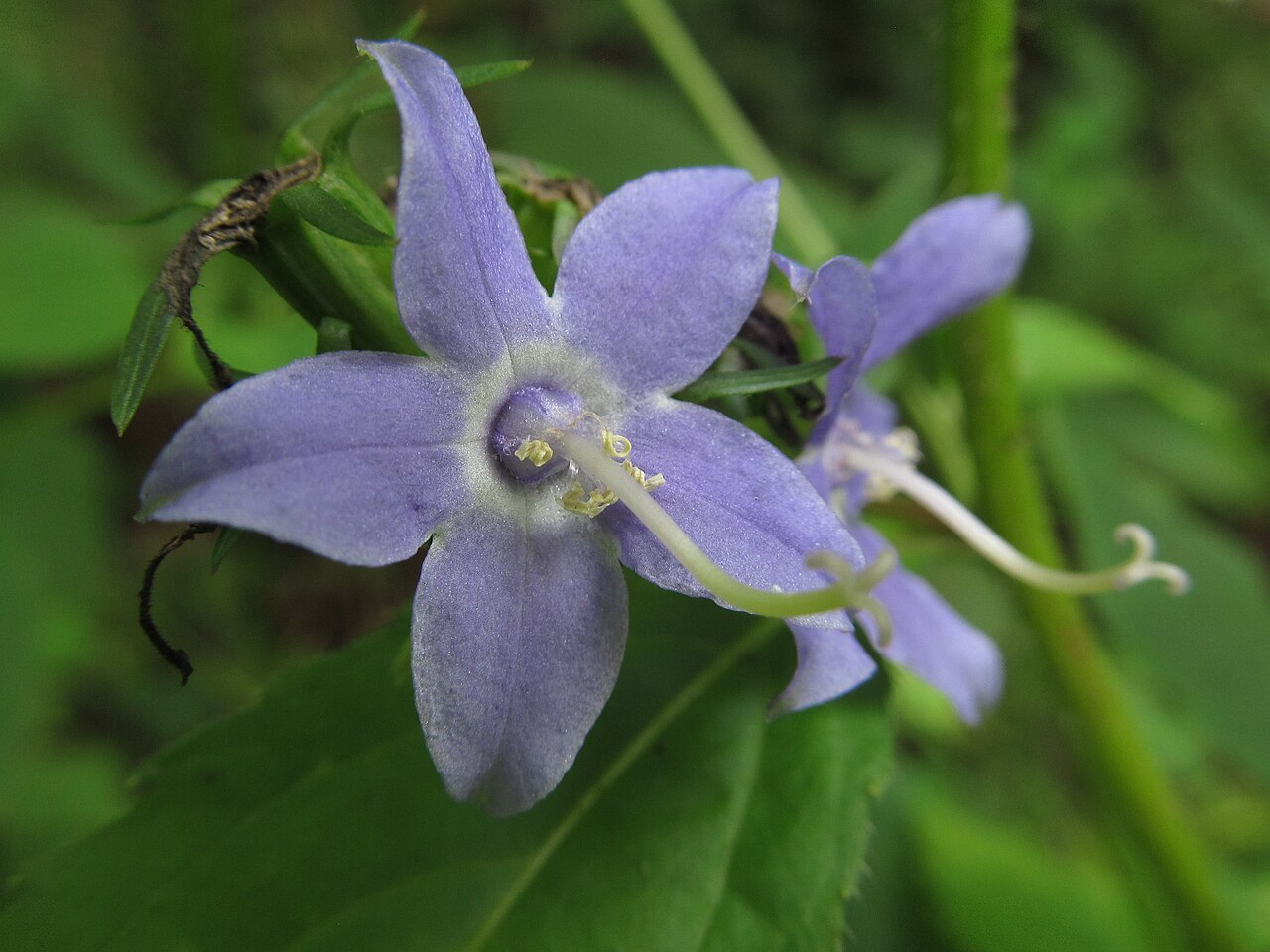
American bellflower (Campanulastrum americanum, also known as Campanula americana) lifts a succession of blue, star-shaped blossoms through the summer woodland garden. The flowers are strikingly flat for a bellflower, with a long curved style projecting from the center. Their arrangement along an upright stem creates height without the broad bulk of a shrub. A patch is particularly effective beside a shaded path where the flower details can be seen at eye level.
The key to growing it is understanding its short life cycle. Often biennial, it may make a low rosette before producing a tall flowering stem the following season; annual behavior also occurs. A continuing garden population therefore depends on successful seed production and recruitment, not on one permanent crown behaving like a long-lived perennial. Learn the rosette before weeding, and leave some seed-bearing stems if you want the display to return.
American bellflower suits moist, reasonably fertile woodland edges better than a hot, exposed dry bed. It is native across much of eastern and central North America, including Nebraska and Kansas, but that does not make it native to every part of the combined Nebraska–Kansas–eastern Colorado list. It also appears in the Arkansas–Louisiana regional list; this page separates that list coverage from the verified state-level native range.
Identification
Stems and habit
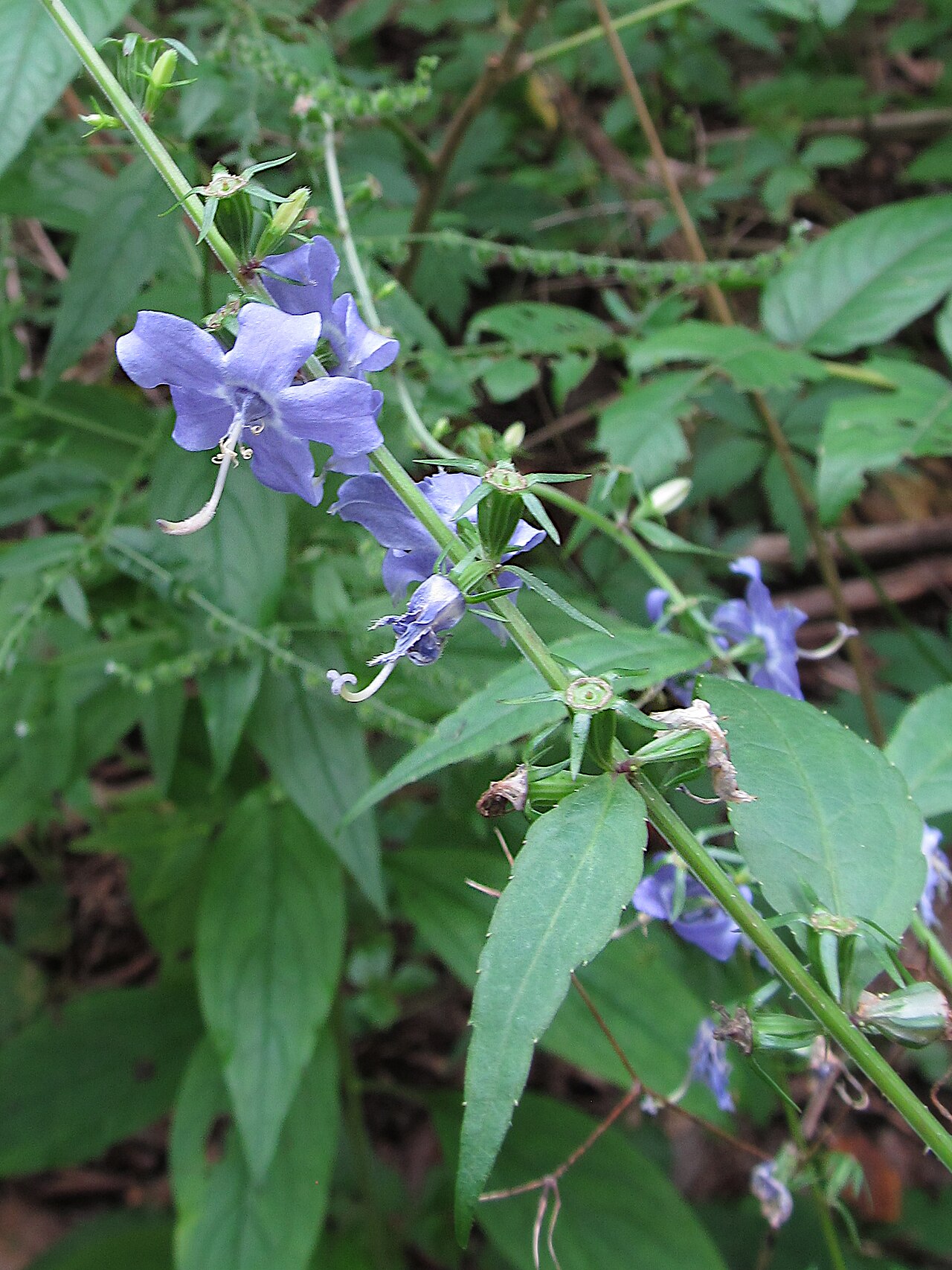
Flowering plants are upright, commonly about 2–6 feet tall, with a main stem that is often simple or only lightly branched. Height changes with moisture, soil and competition. A first-year rosette and a flowering adult can look like unrelated plants, so photograph both stages in your own garden. Avoid judging identity from stature alone: a drought-stressed plant may flower at a much smaller size than a well-watered woodland specimen.
Leaves
Leaves are alternate along the flowering stem, with toothed margins and a pointed, broadly lance-shaped to oval blade. Basal leaves have longer stalks; upper leaves become smaller. Feel and inspect a leaf rather than identifying a plant only by its blue flower color. The combination of alternate leaves, tall summer stems and the very distinctive projecting flower style is much more useful than any one character on its own.
Flowers
The corolla opens into five spreading blue to violet lobes, usually with a paler center. A long style curves conspicuously away from the flower, helping separate it from many familiar garden bellflowers. Several blossoms can be open at once, with buds and developing capsules along the same flowering portion of the stem. Individual blossoms are temporary; the extended show comes from sequential flowering, not from each flower lasting all summer.
Fruit and seeds
Small upright capsules replace the flowers and release fine seed when mature. If renewal is desired, leave a portion of the stems until seed dispersal has occurred. Keep seed from this species separately labeled from other bellflowers. Do not assume that an unfamiliar self-sown bellflower is the native species: introduced Campanula species can also spread in gardens and need their own identification.
Quick Facts
| Scientific Name | Campanulastrum americanum; synonym Campanula americana |
| Family | Campanulaceae (bellflower family) |
| Plant Type | Annual or biennial herbaceous wildflower |
| Mature Height | Approximately 2–6 feet at flowering |
| Mature Spread | About 1–2 feet; population expands by seed |
| Growth Rate | Rosette followed by rapid flowering-stem growth |
| Sun Exposure | Partial shade; more sun where moisture and cooler summers permit |
| Water Needs | Moist to average, well-drained woodland soil |
| Soil Type | Humus-rich loam; avoid chronic drought or stagnant water |
| Soil pH | Broad garden tolerance; neutral soil is suitable |
| Bloom Time | Summer into early fall, depending on region |
| Flower Color | Blue to violet-blue, often pale at center |
| Fall Color | Not a major fall-color plant; stems die after seeding |
| Fruit | Dry capsules with numerous small seeds |
| Deer Resistant | No dependable resistance; browsing can occur |
| USDA Hardiness Zones | Generally 4–8; persistence depends on seedling survival |
Native Range
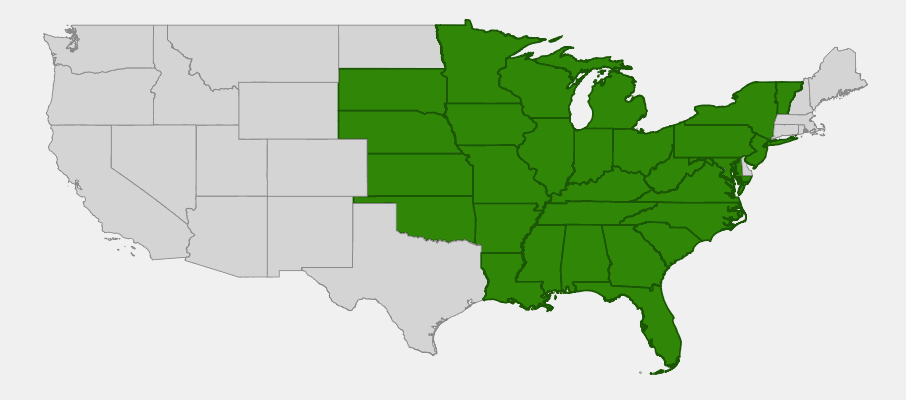
Kew treats Campanulastrum americanum as native to eastern Canada and the north-central and eastern United States. Its native range includes Ontario and Québec and a broad U.S. belt from the central plains eastward. The map on this page follows that native distribution, not the locations of every cultivated specimen.
Nebraska and Kansas are native states in this treatment; Colorado and Texas are not included. A regional list covering several states is a navigation aid, not a declaration that every entry is indigenous throughout the whole region. In the southern regional list, Arkansas, Louisiana and Oklahoma have verified native coverage under this treatment. Check local floras before using the plant in a restoration project near a range boundary.
In habitat, think of woodland openings, streamside woods, thickets and other partly lit places with adequate soil moisture. Local growing conditions matter at least as much as the broad climate zone. A shaded urban site can still be extremely dry under large trees, while a sunny northern site can remain moist enough for good growth. Match the root-zone conditions rather than relying on the word shade alone.
📋 Regional plant list: Nebraska, Kansas and Eastern Colorado
📋 Also listed in our Arkansas, Louisiana, Eastern Oklahoma and Eastern Texas regional plant list; verify state-level native status above before restoration use.
Growing & Care Guide
Light
Start with partial shade or the bright edge of deciduous woodland. In a hot-summer garden, afternoon protection is useful, but a position in dense root competition may still need water. Observe the site through a full day before planting: a bed that looks shaded in the morning may receive intense reflected heat later. Where a moist northern site receives more sun, monitor the leaves and soil instead of applying a rigid shade rule.
Soil and water
Aim for a well-drained, moisture-retentive root zone. Water at soil level when establishment conditions are dry, and check beneath the surface before deciding the plant needs more. Lower leaf loss during drought is a reason to assess moisture and competition, not immediately to fertilize. Deeply compacted soil and a continually saturated depression are both poor substitutes for a moist woodland loam.
Planting tips
Use correctly labeled nursery plants or regionally sourced seed. Place tall flowering plants where they will not shade small front-edge species, and allow access for observing seedlings the following year. Keep the original nursery label: this species’ two scientific names can otherwise lead to mistaken duplicate purchases. When planting a rosette, leave its center at the soil surface rather than burying it under soil or mulch.
Pruning and maintenance
Deadheading every stem prevents the seed renewal needed for a lasting population. Instead, decide which plants can ripen seed and which need trimming beside a path. Mark a few seedlings so they survive spring cleanup. Once seed has dispersed, remove stems where tidiness is important while retaining suitable habitat structure elsewhere. A vanished flowering adult is not necessarily a failure if healthy new rosettes have replaced it.
Propagation
Seed is the normal way to increase a planting. Follow a reputable supplier’s sowing and dormancy guidance, which can depend on seed storage and collection conditions. Fine seeds need careful placement and consistent attention during germination; avoid burying them under an arbitrary thick layer of soil. Keep a dated record of sowing and emergence so annual versus biennial behavior in your own conditions becomes clear.
Troubleshooting
Inspect rosettes for slug or snail damage and flowering stems for browsing before treating a sparse stand as a soil problem. A patch may fail to renew because mulch is too deep, the seed was removed with deadheading, or young plants were mistaken for weeds. Fix the actual recruitment problem before buying a replacement population each year. Do not substitute an aggressive nonnative bellflower simply because it is easier to find at a nursery.
Landscape Uses
- A tall blue accent along a moist woodland path.
- Loose drifts at the back of a partly shaded native border.
- A self-renewing component of a woodland-edge planting.
- Summer flowers after many spring woodland plants have finished.
- A close-observation pollinator planting where the distinctive flowers can be inspected.
Wildlife & Ecological Value
For pollinators
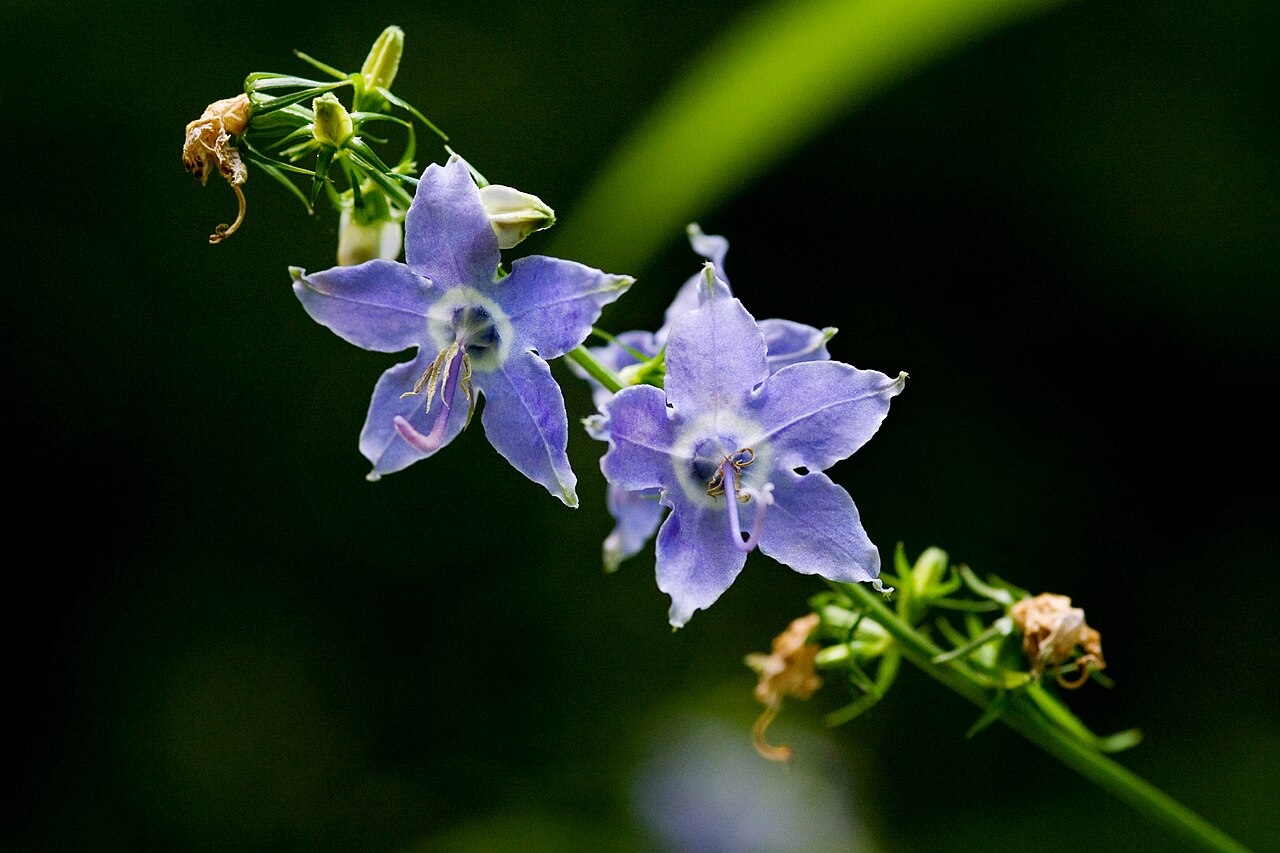
Long-tongued bees are well-suited to the flowers, and published observations include bumblebees and leaf-cutting bees. A garden patch offers an opportunity to observe how insects work the projecting floral parts. Leave flowering stems unsprayed and combine this summer display with other native flowering seasons. Do not infer pollination effectiveness simply from any insect seen resting on a flower.
Birds
The plant is not a fruiting shrub, but its flowers, foliage and surrounding vegetation can form part of a more diverse garden food web. Build bird habitat with multiple layers rather than expecting a stand of bellflowers alone to supply nesting cover or major fruit crops. Nearby native shrubs and trees can supply structure without placing the whole bellflower patch in dry, dense shade.
Mammals
Deer can browse foliage and flowers. If stems disappear abruptly, inspect for feeding signs before concluding that the plant collapsed from disease. Temporary protection may help a small establishing population set seed. The goal is not to promise a browse-proof garden but to give enough plants a chance to complete their life cycle under local conditions.
Ecosystem role
This short-lived native can occupy small openings in a woodland-edge community. Its persistence through seed makes gentle disturbance and open germination space important at garden scale. That does not mean large areas should be stripped bare: retain soil protection and observe where seedlings naturally establish, then manage those small areas deliberately.
Cultural & Historical Uses
The naming history explains why older regional lists often say Campanula americana while contemporary nursery and botanical references may use Campanulastrum americanum. Both names refer to this same taxon in the sources used here. Kew and the USDA profile consulted for this page use Campanulastrum; other botanical treatments retain Campanula. This is a classification difference, not two different native garden plants.
The broadly open flower is notable in a family often associated with little bells. That unusual floral form has helped make the species memorable to botanists and gardeners. Botanical records and nursery catalogs can be searched under both names, but any purchased plant still needs identity verification rather than relying on a common name alone.
Its most useful contemporary garden story is the return of summer bloom to partly shaded native plantings. This guide does not turn historical references into medicinal recommendations or invent traditional uses. Grow nursery-propagated material, keep provenance records where possible, and leave naturally occurring populations undisturbed.
Frequently Asked Questions
Are Campanula americana and Campanulastrum americanum the same plant?
Yes, in the taxonomic treatments used here they are alternative names for American bellflower. The regional table’s older name is reconciled to this page rather than creating a duplicate.
Why did it make only a rosette?
Biennial behavior is common. A plant may spend its first season as a low rosette and flower the next year. Preserve labeled rosettes through cleanup and assess them the following season.
Will the same plant flower every year?
Do not count on it. A lasting patch generally relies on new plants from seed, so leave some capsules to mature and protect seedlings from accidental removal.
Can it grow in a dry shade bed?
Persistent dryness is a poor match. Partial shade does not guarantee moist soil, especially beneath mature trees. Check root-zone moisture and choose another species if the site cannot provide it.
Is the bellflower sold for rock gardens interchangeable?
No. Many bellflowers differ in origin, life cycle and growth habit. Buy by scientific name and do not assume a low ornamental Campanula can replace this tall native.
Sources & Further Reading
- Kew: Campanulastrum americanum, taxonomy and native range
- NC State Extension: American bellflower
- Illinois Wildflowers: American bellflower
- Missouri Department of Conservation: tall bellflower
- South Dakota State University: American bellflower
Find Native Plants
Ask growers about nursery propagation and regional provenance. Browse our Nebraska native plant nurseries, Kansas native plant nurseries, Colorado native plant nurseries directory for suppliers.