
Tall Coreopsis (Anacis tripteris)
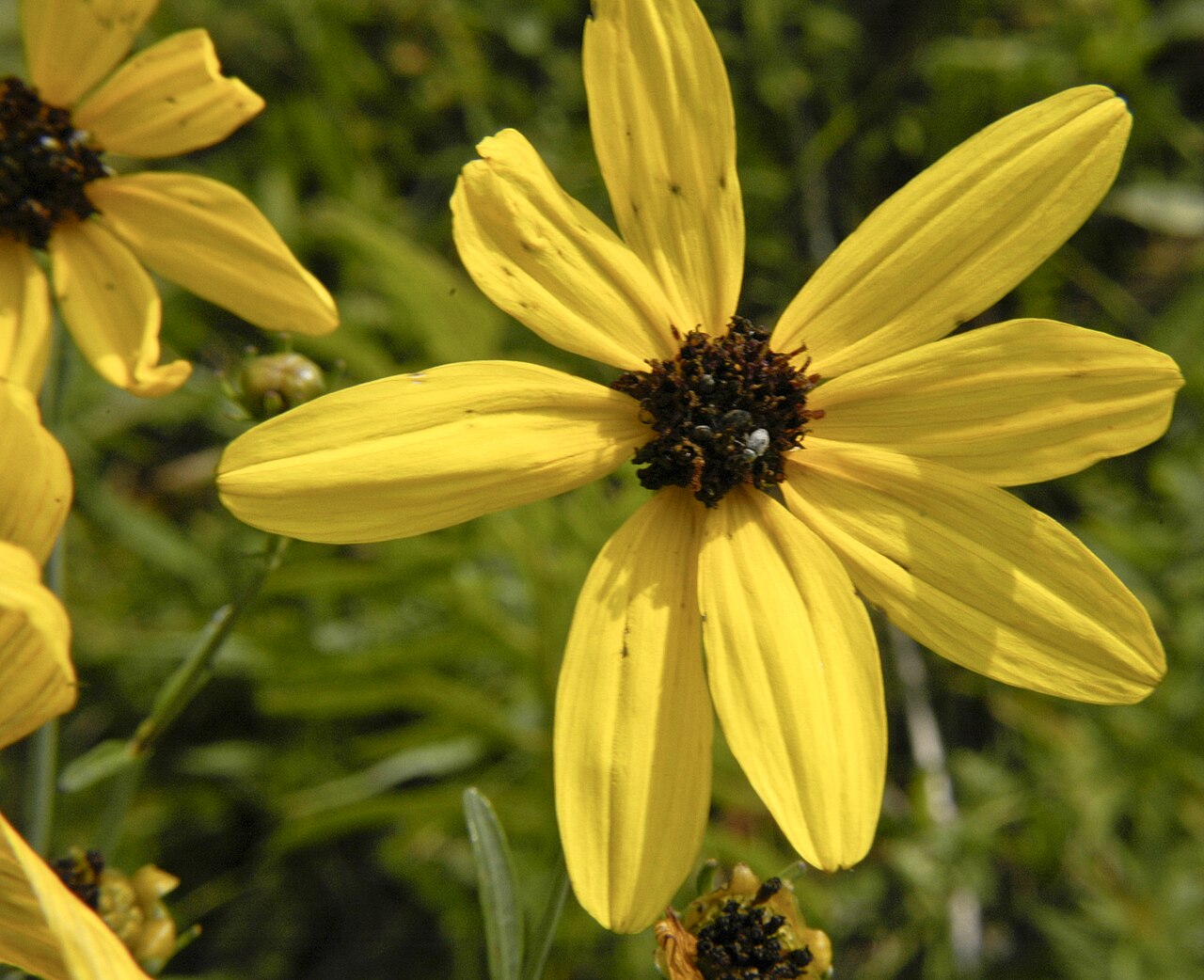
Tall coreopsis is a plant to look up to: a prairie-scale perennial that lifts small yellow daisies over most neighboring flowers. Its stems carry the bloom well above the foliage, creating an airy yellow layer rather than a solid wall. A sunny meadow, large rain-garden shoulder, or the back of a generous border suits it much better than a narrow foundation bed. The botanical name now accepted by Kew and NC State is Anacis tripteris; Coreopsis tripteris remains the familiar name on many seed packets and older native-plant lists.
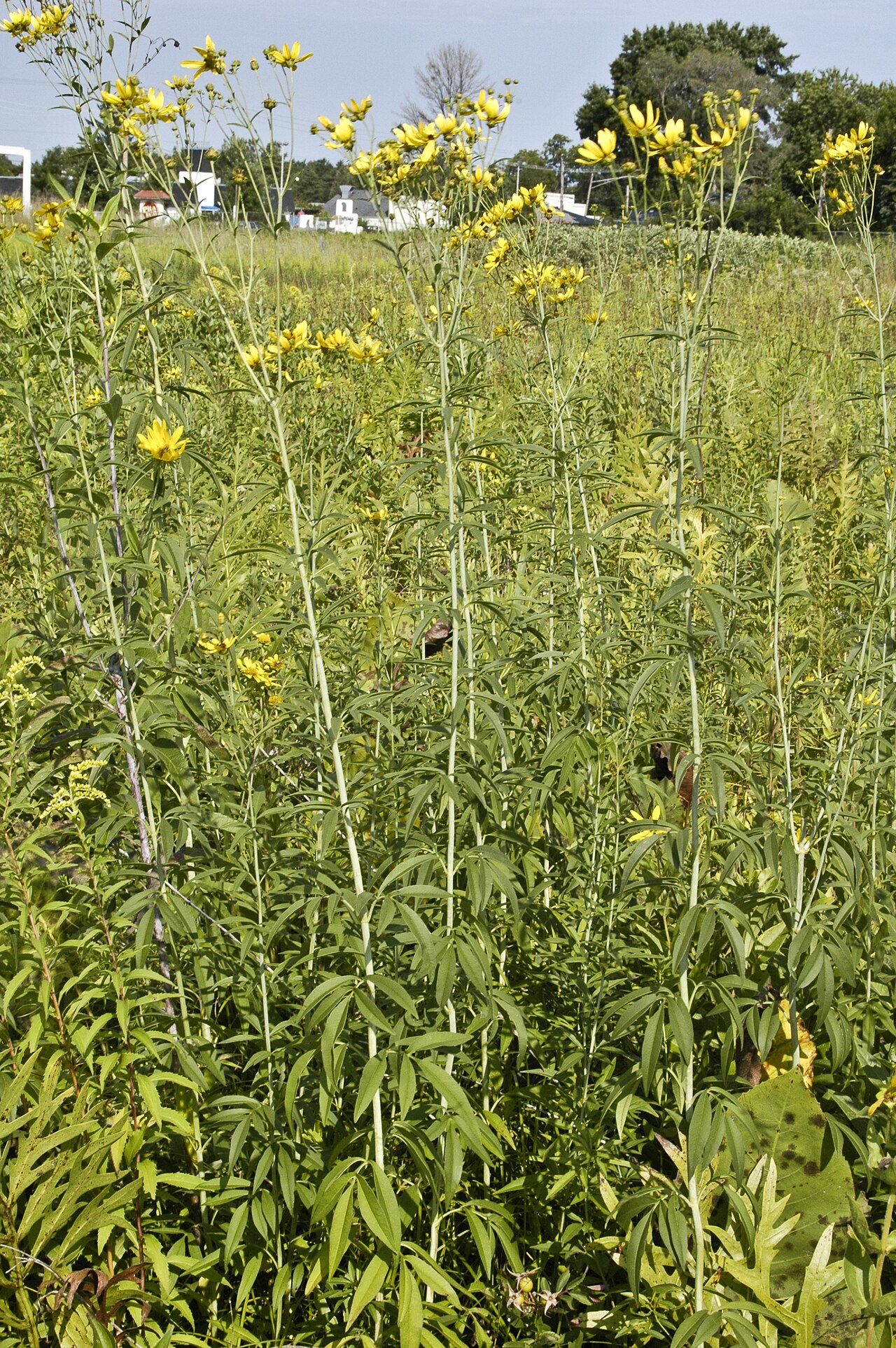
This is not one of the low, finely divided tickseeds sold for edging. Mature plants commonly stand about 4–8 feet high, sometimes taller in rich, moist ground. The divided lower leaves are an important identification clue. Flower heads have yellow rays around a dark center, followed by small dry fruits that can remain on the standing stems into the seed-feeding season. Its size is part of the attraction, but must be planned for before planting.
For Arkansas, Louisiana, eastern Oklahoma and eastern Texas, it belongs in the conversation about tall native meadow plants, with local provenance and suitable moisture guiding the final choice. A state-level record does not mean it occurs naturally in every county. Choose nursery-grown plants or correctly identified seed, allow a substantial footprint, and decide how much reseeding and clonal spread your garden can accommodate. A modest initial planting is easier to manage than a large patch squeezed between delicate perennials.
Identification
Stems & Growth Habit
Tall coreopsis is herbaceous, not a woody shrub. Upright stems rise from a perennial crown with short rhizomes; branching is most apparent toward the flowering part of the plant. Mature stems can tower over a person, particularly where moisture is reliable. Observe the entire plant, not just a flower brought indoors: a tall branched silhouette and the foliage below it tell much more than a yellow daisy alone. Young spring shoots do not yet reveal the eventual height, so label them before surrounding vegetation closes in.
Leaves
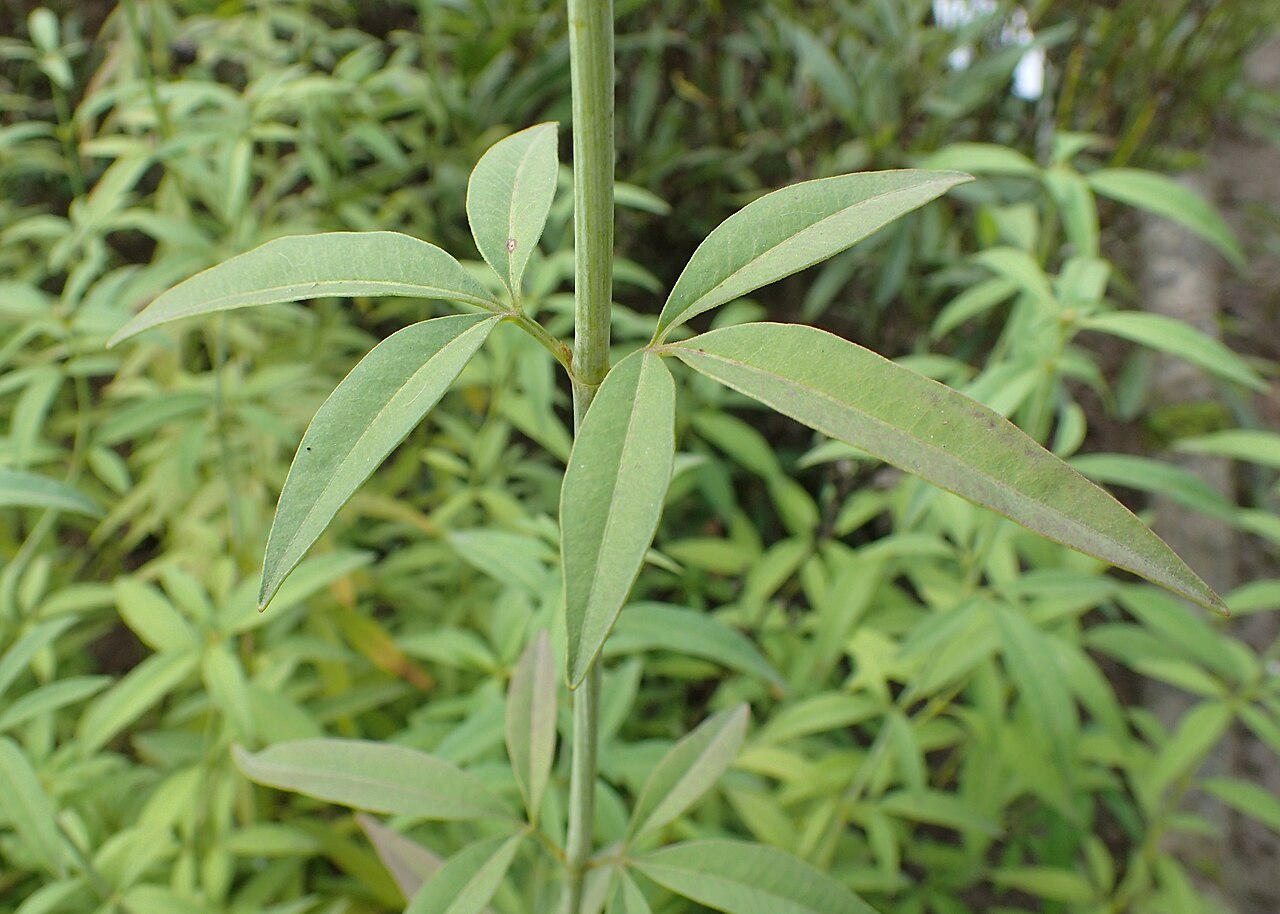
Lower and middle leaves are usually divided into three narrow segments; some may show additional divisions. Upper leaves can be simple. The leaflets are lance-shaped, giving a less ferny appearance than threadleaf coreopsis. Compare several nodes on the same stem when identifying a specimen, because judging only the undivided leaves near a flower can hide the most useful feature. Leaf shape, plant stature, and flower-head structure together separate this species from many of the yellow composites sharing its habitat.
Flowers
The yellow rays surround a dark purplish to brown central disk. A flower head is a cluster of many small flowers, not a single large blossom, and usually measures roughly 1½–2 inches across. Heads are carried on the upper branching stems in late summer and into fall, with weather and provenance affecting timing. A mild anise-like floral fragrance is reported; this is not a reason to treat the foliage as a culinary herb. The dark center and relatively simple yellow rays give it a different expression from double-flowered garden cultivars.
Fruit & Seeds
After flowering, heads dry and release small flattened brown-to-black fruits, botanically achenes. Watch for drying heads rather than relying on a fixed harvest date. A paper bag held beneath a dry head helps catch ripe seed without stripping the entire patch. Leave some heads for wildlife and natural renewal, but remove others if seedlings would be unwelcome. A seedling population can vary in height and vigor; select where seedlings remain on the basis of available space, not just where they first germinate.
Quick Facts
| Scientific Name | Anacis tripteris; synonym Coreopsis tripteris |
| Family | Asteraceae (aster family) |
| Plant Type | Rhizomatous herbaceous perennial |
| Mature Height | Usually 4–8 ft; vigorous plants may approach 10 ft |
| Mature Spread | About 2–4 ft initially; colonies expand beyond this |
| Growth Rate | Moderate; strong seasonal stem growth |
| Sun Exposure | Full sun preferred |
| Water Needs | Average to moist; established plants tolerate some drought |
| Soil Type | Well-drained loam, sand or rocky soil; avoid stagnant wet crowns |
| Soil pH | Acidic to neutral |
| Bloom Time | Late summer into fall; timing varies regionally |
| Flower Color | Yellow rays with dark purplish-brown disks |
| Fall Color | Not a primary ornamental feature; foliage dries seasonally |
| Fruit | Small, flattened dry achenes |
| Deer Resistant | Often less browsed, not deer-proof |
| USDA Hardiness Zones | 3–8, with suitable provenance and site |
Native Range
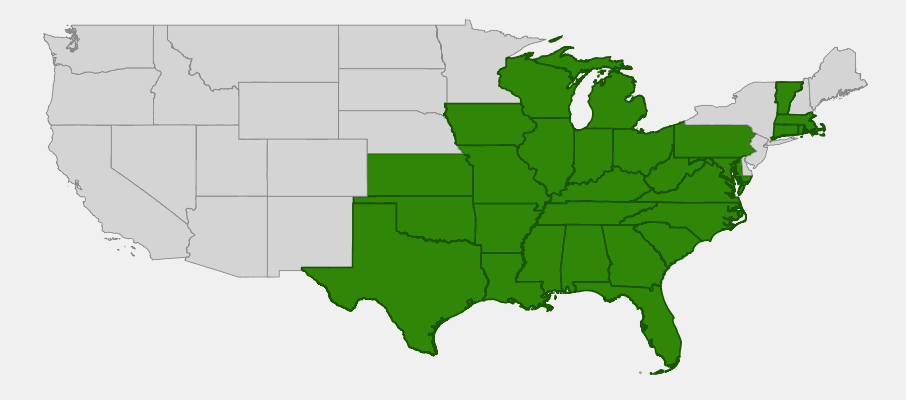
Tall coreopsis is native across a large part of central and eastern North America, from southern Canada into the southern United States. The state shading follows the native distribution recognized by Kew for Anacis tripteris, rather than simply coloring every place where someone has photographed a cultivated plant. Ontario and Quebec are part of the Canadian range. Kew treats New York as introduced, so it is deliberately not shaded as native here.
Within the Arkansas–Louisiana–eastern Oklahoma–eastern Texas region, look to prairies, open woodland margins and related sunny openings rather than assuming uniform suitability across the map. Tall plants often perform best where soil holds useful moisture but does not leave the crown submerged. A dry upland planting may remain smaller than a rich lowland one. This ecological variability is one reason to obtain seed from a nearby, comparable habitat when the goal is restoration.
The map is a broad orientation aid, not a planting permit or county-level inventory. Consult the linked USDA record and a local herbarium or native-plant society for finer distribution. A garden outside the historical range may grow the plant successfully, but horticultural success does not change its native status. Keep those two questions separate when designing habitat gardens or writing a restoration specification.
📋 Regional plant list: Arkansas, Louisiana, Eastern Oklahoma and Eastern Texas
Growing & Care Guide
Light
Choose a genuinely sunny position, preferably receiving at least six hours of direct light. A plant placed at a dark woodland edge may lean toward the opening and become harder to support. Remember that a bed sunny in April may be shaded when nearby trees leaf out. Check the proposed location in the season when tall coreopsis will be growing most strongly, and leave room for air circulation around the mature stems.
Soil & Water
Think moist but aerated, rather than permanently flooded. Water a newly planted root ball thoroughly, then check the soil before repeating irrigation. Once roots extend into the surrounding ground, adjust watering to actual rainfall and soil texture. Established drought tolerance should not be confused with maximum flowering in a bone-dry site. Equally, a wet hollow with sour, stagnant soil is not automatically a good choice just because the species occurs in some moist habitats.
Planting Tips
Plant during a mild season when you can monitor establishment. Set a container-grown plant at its original crown level, loosen circling roots gently, and firm the surrounding soil without compacting it heavily. Start with wide spacing—roughly several feet between crowns in a garden—and let the planting reveal its mature spread. Keep mulch away from the crown. In a meadow, use the local seed supplier’s prescription rather than translating garden spacing directly into an acreage rate.
Pruning & Maintenance
In a formal border, install discreet support before stems are tall enough to fall into a path. Cut spent heads selectively if reseeding is a concern; leave a portion when wildlife use is the priority. Over-fertilizing to force growth can make an already large plant more difficult to manage. In late winter or spring, remove old stems as needed without damaging new shoots. Retain some upright stubble and undisturbed areas where practical instead of clearing every stem to ground level at once.
Propagation
Seed and division are practical methods, but they serve different goals. Seed-grown plants offer genetic diversity; division duplicates an existing clump. Follow the seed lot’s treatment instructions, since provenance, storage and season affect germination. Small trial sowings are useful before committing an entire packet. Divide an established plant while dormant or beginning growth, keeping roots attached to each viable crown section, and water divisions as transplants rather than treating them immediately as drought-established plants.
Managing a Colony
Mark the intended boundary of the patch. Remove unwanted seedlings while their roots are still small and lift expanding edge divisions rather than allowing the plant to crowd a narrow walkway. A vigorous native is not automatically an invasive alien, but it can still overwhelm a small design. If containment requires constant cutting, consider relocating it to a larger sunny area. The solution is usually a better match between plant size and garden scale, not a heavier fertilizer or pesticide program.
Landscape Uses
- Place at the back of a large sunny border, where tall stems will not obscure shorter plants.
- Use in a meadow with space for both mature height and gradual colony expansion.
- Plant on a moist, well-drained rain-garden shoulder rather than in a permanently inundated sump.
- Combine with locally appropriate grasses for a varied structural layer, leaving access for maintenance.
Wildlife & Ecological Value
For Pollinators
The many disk florets provide repeated feeding opportunities while a head is in bloom. Avoid spraying flowers, and keep a succession of other local flowers nearby so the planting does not offer food only during one brief period. Watching which bees and other insects actually visit your patch is more informative than assuming every regional pollinator uses it equally.
For Birds
Dry seed heads can remain accessible after petals have fallen. Leave at least part of the stand through the seed season where site appearance and fire-safety needs allow. A few untidy-looking stalks can be useful habitat structure, though they are not a substitute for the shrubs, grasses and trees birds also need for cover and nesting.
For Mammals
Reports of reduced deer browsing do not mean no animal will eat a young shoot. Protect new plantings where deer pressure is high, especially when other forage is scarce. This page does not treat the plant as a food crop for people or livestock. Use it for ornamental and habitat planting, and make separate, evidence-based decisions about any grazing situation.
Ecosystem Role
In an appropriately placed meadow, a tall flowering perennial adds vertical structure and occupies a different space from ground-hugging species. A diverse planting is preferable to letting a single vigorous colony dominate. Observe how neighboring plants respond over several seasons, then thin or divide where necessary to keep open niches for other native species.
Cultural & Historical Uses
The familiar word coreopsis survives in the common name even as botanical classification changes. Kew now accepts Anacis tripteris and lists Coreopsis tripteris as a synonym; NC State’s horticultural treatment also uses Anacis. Older floras, seed catalogs and the USDA profile may retain the older combination. They describe the same plant concept here, not two different wildflowers to add separately to a garden list.
The epithet tripteris points to the divided leaf form that makes this tall yellow composite easier to recognize. Botanical names can preserve a useful field clue, but a name is not a complete identification key: leaf position, age and variation still matter. Keeping the old synonym alongside the accepted name makes it easier to compare a nursery label with historical references.
Its contemporary value is chiefly as a large native ornamental and meadow component. No specific medicinal or edible use is recommended here. For a home garden, the meaningful choice is whether its height, spread and seasonal character fit the site. A correctly named, responsibly propagated plant in suitable conditions is a better contribution than a wild-dug specimen planted where it cannot thrive.
Frequently Asked Questions
Is tall coreopsis the same as Coreopsis tripteris?
Yes. This page uses Anacis tripteris, the accepted name in the cited Kew and NC State treatments. Coreopsis tripteris is the established synonym, not a second species.
Why is my plant much taller than the label suggested?
Moisture, fertility and provenance affect size. Plan for a tall perennial, commonly 4–8 feet and occasionally more, rather than assuming it will behave like a compact edging tickseed.
Can I grow it in a small bed?
Only if you can allow its mature height and manage spread. A large rear border or meadow usually requires less intervention than a tight bed beside a doorway.
Should all the flowers be deadheaded?
That depends on the goal. Removing heads reduces seed production; retaining some supports the seed season and allows natural renewal. Use selective removal if you want both a manageable patch and standing seed heads.
Does the state map mean it is native throughout Texas?
No. State shading records native occurrence somewhere within a state. County records, habitat and local provenance matter, especially across a state with very different ecological regions.
Sources & Further Reading
- Kew Plants of the World Online — accepted name, synonyms and native distribution
- NC State Extension Plant Toolbox — tall coreopsis
- NC State Extension — perennial cut-flower trial observations
- USDA PLANTS — Coreopsis tripteris, COTR4
Find Native Plants
Ask growers about nursery propagation and regional provenance. Browse our Arkansas native plant nurseries, Louisiana native plant nurseries, Oklahoma native plant nurseries, Texas native plant nurseries directory for suppliers.