
Giant Ironweed (Vernonia gigantea)
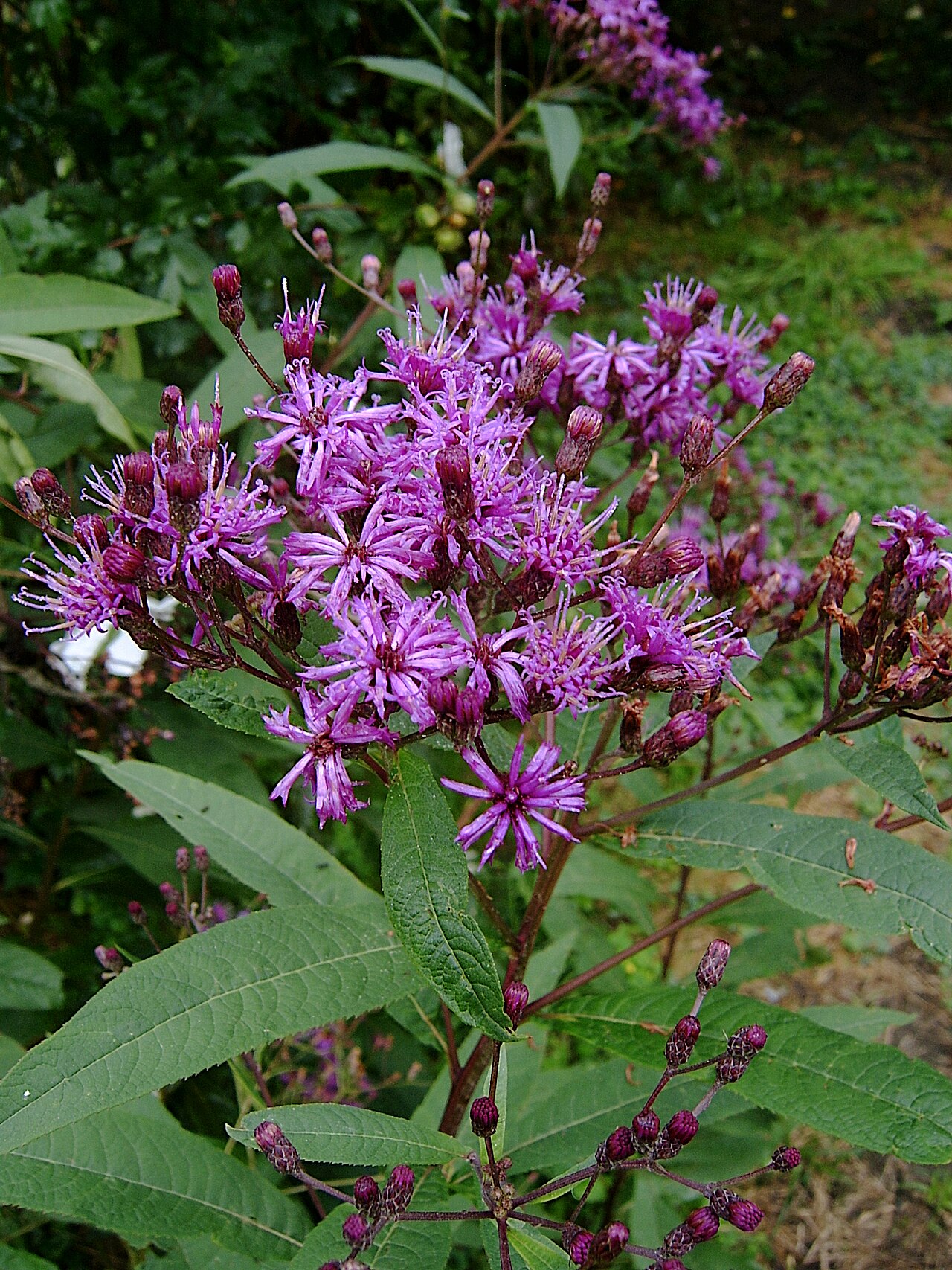
Giant ironweed makes a late-season statement with purple flower clusters held above an upright framework of green stems and leaves. It is a substantial perennial for a meadow, a broad border, or the sunny edge of a moist planting. The flower color is intense without the large ray petals of a sunflower: each head is composed of many small tubular florets.
Vernonia gigantea is also sold or described under the older name Vernonia altissima. It is native in Kentucky and Tennessee and across much of the central and eastern United States. The word giant is worth taking seriously when choosing a site. Some plants remain moderate in ordinary garden conditions, while vigorous specimens in favorable soil can grow well above a person’s height.
This guide concerns giant ironweed, not prairie ironweed, New York ironweed, or a plant identified only as ironweed. Several species look similar at a distance, and flower color alone cannot separate them. Start with correctly named nursery stock, allow sufficient room, and manage the planting for both its late flowers and the insects that use it.
Identification
Stems and overall size
The stems are upright, stiff, and usually branched toward the flowering top. Descriptions encompass approximately 3–12 feet, reflecting variation among sites and populations; 5–8 feet is a useful garden planning allowance for a vigorous specimen. A small first-year plant is not evidence that its mature size will stay small. Reserve a position where the full stem can be supported by nearby vegetation or viewed from a distance.
Leaves
Leaves alternate along the stem and are elongated, with toothed edges. Upper surfaces are darker green than the lower surfaces, which may show some hairiness. Their size and texture vary along the stem. The combination of toothed alternate leaves and purple, rayless flower heads suggests an ironweed, but precise identification also requires attention to the involucral bracts and other details.
Flower heads
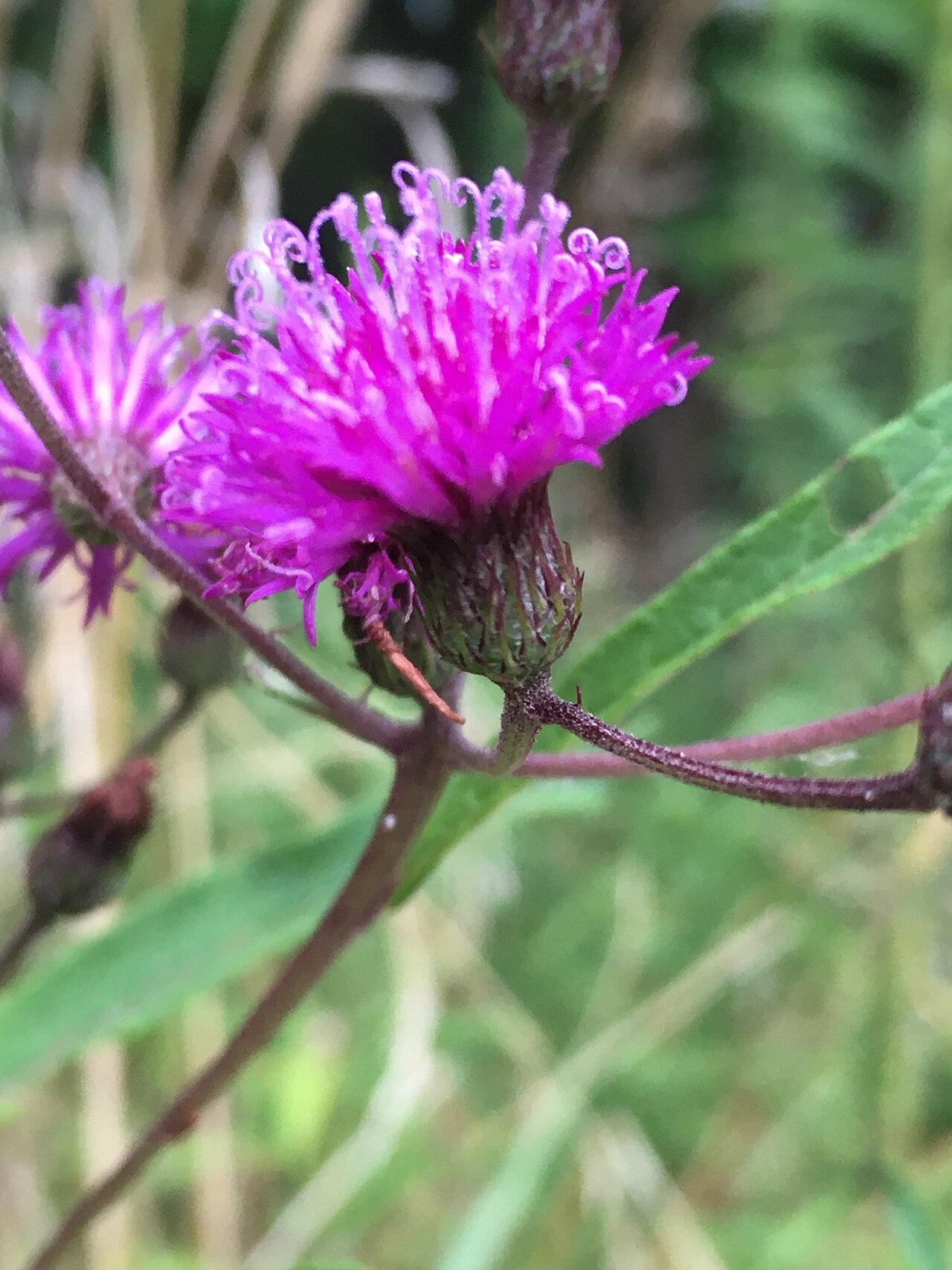
The broad terminal display contains many small heads, each packed with tubular purple to magenta florets. There are no broad outer ray petals. Individual heads may contain roughly 10–30 florets. This gives the flowering top a fine-textured appearance even though the whole plant is large. Compare the small heads with the larger, more individually conspicuous heads of some other ironweeds.
Fruits and winter structure
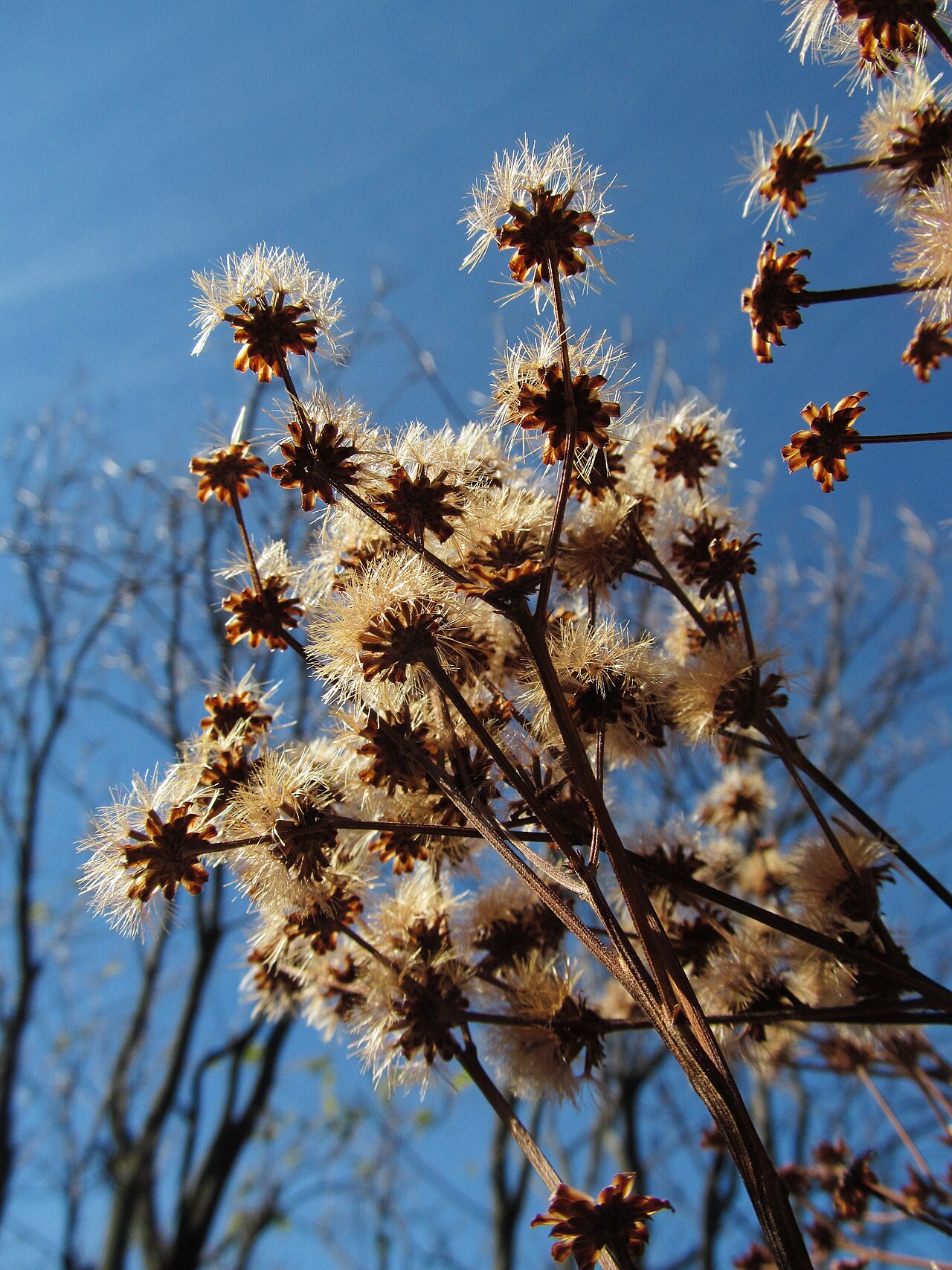
After flowering, small dry fruits develop with a tuft of hairs that aids wind dispersal. Mature seed heads become tan or gray-brown. The standing stems and branching tops can remain conspicuous into winter. A plant that has finished flowering should not be mistaken for a dead planting failure; the perennial crown persists while the previous season’s stems age.
Similar species and old names
Vernonia altissima is a useful synonym when searching older references, but Vernonia fasciculata is a different species. Giant ironweed and related ironweeds can overlap geographically and share broad garden traits. When a wild plant’s identity matters, use a regional botanical key or qualified local help. Do not transfer a name from one purple-flowered plant to another merely because both grow tall.
Quick Facts
| Scientific Name | Vernonia gigantea; synonym Vernonia altissima |
| Family | Asteraceae (aster family) |
| Plant Type | Herbaceous perennial |
| Mature Height | About 3–12 feet; allow substantial space for vigorous plants |
| Mature Spread | Clump expands over time; provide several feet of room |
| Growth Rate | Vigorous after establishment |
| Sun Exposure | Full sun to partial shade |
| Water Needs | Average-moist to wet; best with reliable root-zone moisture |
| Soil Type | Loam, clay loam or sandy loam; moist but not a permanent pond |
| Soil pH | Adaptable |
| Bloom Time | Late summer into early fall |
| Flower Color | Purple, magenta or lavender-purple |
| Fall Color | Foliage fades to brown; tan seed heads persist |
| Fruit | Small dry fruits with hair tufts |
| Deer Resistant | Often avoided, but browsing is not impossible |
| USDA Hardiness Zones | Use regional nursery stock; commonly cultivated across its eastern native range |
Native Range
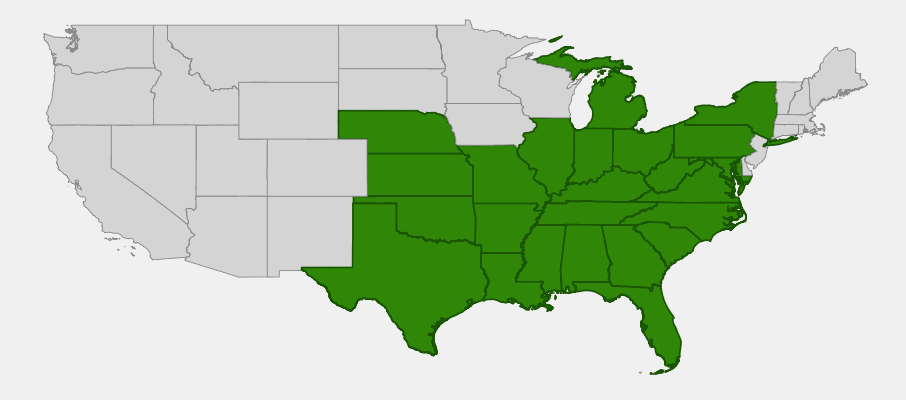
Kew’s Plants of the World Online lists a native range from southeastern Canada through the central and eastern United States. Ontario is the Canadian portion of that treatment. The U.S. states highlighted on the map are Alabama, Arkansas, Florida, Georgia, Illinois, Indiana, Kansas, Kentucky, Louisiana, Maryland, Michigan, Mississippi, Missouri, Nebraska, New York, North Carolina, Ohio, Oklahoma, Pennsylvania, South Carolina, Tennessee, Texas, Virginia, and West Virginia.
Natural habitats include moist prairies, floodplains, stream margins, open woodland edges, and disturbed sunny ground. A roadside record is not a recommendation to plant beside traffic, and a floodplain occurrence does not mean the crown should remain under standing water. For a garden, look for enough sun and a root zone that does not become severely dry during the growing season.
Kentucky and Tennessee fall within the native range, but local conditions still determine suitability. A sunny moist meadow is a different site from a thin, droughty ridge. For ecological restoration, obtain local or regionally appropriate seed and verify the intended ironweed species. A state map cannot show the detailed distribution of every population or distinguish all local habitat requirements.
📋 Regional plant list: Kentucky & Tennessee
Growing & Care Guide
Give the mature plant room
Choose the back of a broad border or a meadow position where height is an asset. Avoid placing it immediately in front of a low window or beside a narrow path where leaning stems would become a nuisance. Mark a generous planting footprint before digging. If the only available space requires constant cutting to keep the plant small, select a naturally smaller native species instead.
Sun and soil
Full sun usually produces the strongest flowering display, though partial shade is tolerated. Work with the soil you have when it retains adequate moisture and drains reasonably. There is no need to create an isolated pocket of rich compost in otherwise ordinary ground. In a wet planting, place it where water can recede rather than at the permanently submerged center of a pond.
Planting and establishment
Set the crown at the same depth it occupied in its nursery container. Water thoroughly to settle the surrounding soil and check moisture during the first growing season. A newly planted root ball can dry even in a site described as moist. Keep weeds from crowding the young crown so that water and light reach the plant while its roots become established.
Water through dry spells
Established giant ironweed is not a substitute for a true xeric perennial. During prolonged drought, inspect the root zone and water deeply when necessary rather than relying on brief surface sprinkling. Group it with plants that appreciate similar moisture. This makes irrigation more efficient and avoids repeatedly watering a dryland neighbor simply to maintain the ironweed’s preferred conditions.
Managing height
If a shorter display is necessary, an early-season cutback can reduce final height, though it changes the plant’s natural form and may alter bloom timing. Do not wait until buds are developing and then remove the entire flowering top expecting the same show. Leaving some stems uncut provides a useful comparison and can preserve an uninterrupted late-season flower resource.
Supporting stems
Dense shade, unusually rich soil, or exposed wind can contribute to leaning. First consider whether the site is suitable before installing permanent stakes. Neighboring meadow plants can provide gentle support, but they should not smother the crown. If staking is needed in a formal border, install discreet support while stems are still developing rather than tying a fallen flowering plant into a tight bundle.
Seed and division
The species can be propagated from seed or by dividing an established garden clump. Keep seed lots labeled with source and identity, especially where more than one ironweed is grown. Follow a reputable regional nursery’s pretreatment guidance rather than assuming every Vernonia seed lot has identical dormancy. Division is most manageable when the plant is dormant or beginning growth and the resulting pieces can be watered reliably.
Reseeding and boundaries
Mature seed can move beyond the original clump. In a small garden, remove some spent heads before they disperse if seedlings would be unwelcome. In a larger native planting, allow a portion to remain and monitor recruitment. The aim is a balanced community, not a single species occupying every gap. Pull unwanted young seedlings before their roots become large.
Winter stems and cleanup
Retain standing material where it is safe and compatible with the site. NC State recommends leaving portions of dead stems for stem-nesting bees rather than clearing everything to ground level. A staged cleanup allows old stems to remain while new growth emerges. Keep fallen stems within a suitable habitat area rather than immediately shredding all material that might contain insects.
Troubleshooting
Minor insect feeding is not automatically a garden emergency. Check whether damage is cosmetic, whether the plant is still growing, and whether moisture stress is involved before treating anything. Aphids and chewing insects can occur. Avoid spraying flowers visited by pollinators. For persistent collapse or severe disease symptoms, seek a local diagnosis rather than applying a sequence of unrelated products.
Landscape Uses
- Place behind shorter native perennials for a tall late-season purple accent.
- Use in a sunny moist meadow with enough room for mature stems and occasional seedlings.
- Include along a rain-garden margin that drains between storms, rather than in permanently standing water.
Wildlife & Ecological Value
Late-season flowers
Bees and butterflies visit the purple flower heads. The late flowering period can complement earlier native perennials and extend the season of available nectar. Plant several compatible species with different bloom times rather than expecting one ironweed clump to supply all the resources needed by a pollinator community.
Stems as habitat
The value of the plant continues beyond the last bloom. Retained stems can contribute nesting structure for some native bees, while seed heads and standing vegetation add complexity to the planting. Cleanup choices therefore matter as much as the initial plant purchase. Where a formal edge is needed, tidy the path while leaving less visible habitat material farther inside the bed.
Browsing and competition
The foliage is often avoided by livestock and many mammals, which helps explain its prominence in some pastures. That does not make it universally deer-proof. Protect new plants if browsing pressure is high and observe local behavior. A vigorous native can also compete strongly in a small garden, so monitor its spread and maintain a diverse planting.
Cultural & Historical Uses
The genus commemorates the botanist William Vernon, while gigantea refers to the plant’s large stature. Older references often use Vernonia altissima, so recognizing that synonym helps connect historical horticultural descriptions with the current accepted name. Common names are less precise: ironweed can refer to several distinct species.
Giant ironweed has long been a familiar element of open eastern landscapes, including pasture edges and moist disturbed ground. Its presence in heavily grazed places reflects selective feeding by livestock as well as its capacity to persist. In a garden, the same toughness is useful when paired with an appropriate site and enough space.
This page emphasizes ornamental and habitat uses rather than medicinal claims. A plant’s historical name or its avoidance by livestock is not evidence that it is safe to ingest. Its clear garden role is to provide late purple flowers, strong vertical structure, and a locally appropriate component of a moist native planting.
Frequently Asked Questions
How tall will giant ironweed get?
Size varies greatly with provenance and conditions. Published descriptions span about 3–12 feet, so give it a substantial space and do not judge mature size from a small nursery pot.
Is Vernonia altissima the same plant?
Yes, that name is a synonym used in older references for V. gigantea. Other ironweeds, including V. fasciculata, remain different species.
Can I keep it shorter?
An early-season cutback can reduce height, but may change the flowering display. A naturally smaller species is usually better where space is permanently limited.
Will it grow in dry gravel?
That is not its best site. It generally performs better with reliable moisture and suitable soil than in a very dry, lean rock garden.
Should I cut every stem down in fall?
Not necessarily. Leaving some standing stems and seed heads can provide habitat and seasonal structure. Use a staged cleanup where that fits the garden.
Sources & Further Reading
- Kew: Vernonia gigantea taxonomy and native range
- NC State Extension: giant ironweed
- USDA PLANTS: giant ironweed
Find Native Plants
Ask growers about nursery propagation and regional provenance. Browse our KY native plant nurseries, TN native plant nurseries directory for suppliers. Explore the native nursery finder.