Wyeth Buckwheat (Eriogonum heracleoides)
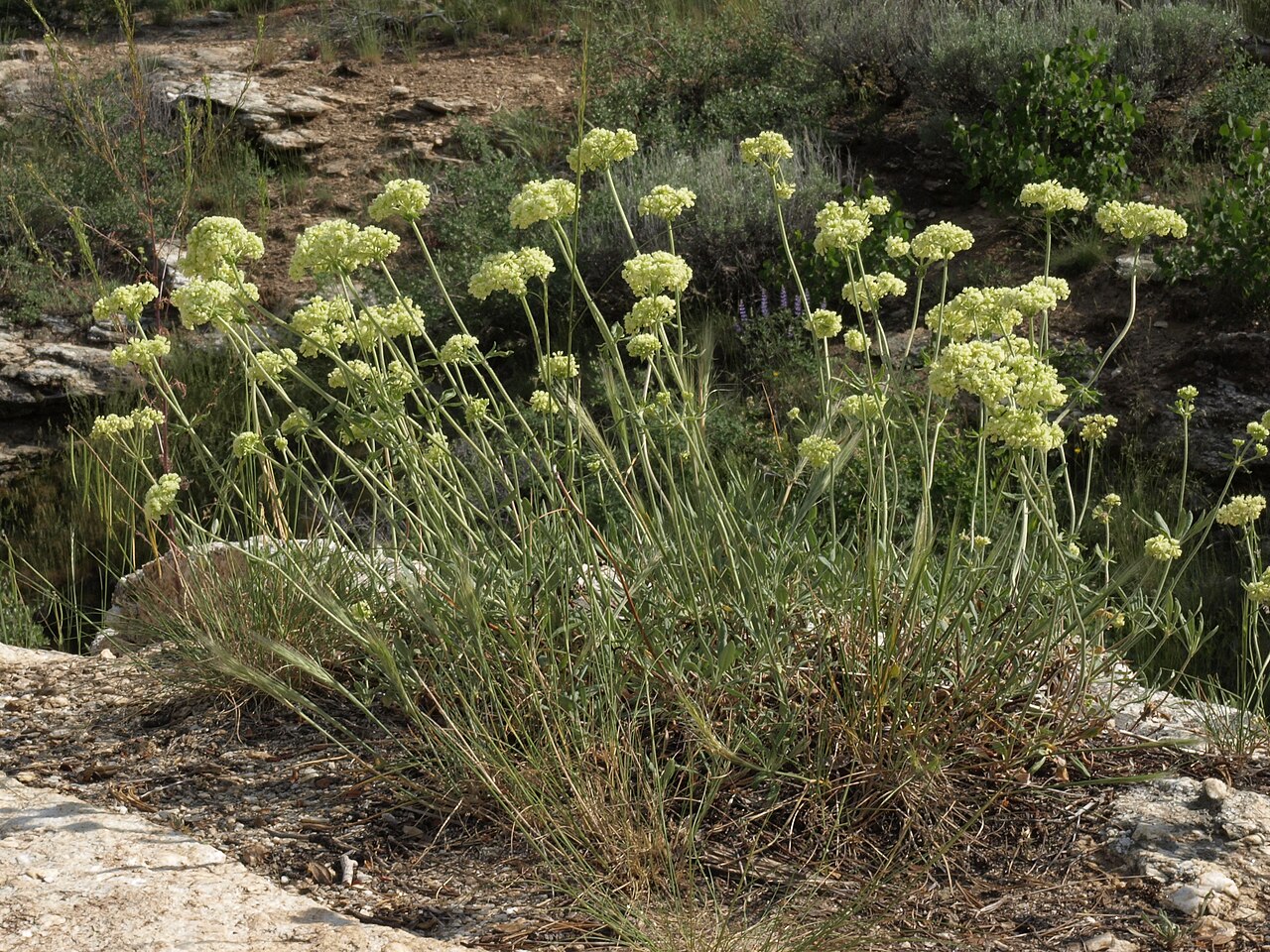
Wyeth buckwheat is a small western perennial with a disproportionately useful presence in a dry garden. A woody base supports narrow, often grayish leaves and open clusters of creamy flowers. Instead of demanding deep, fertile border soil, it fits the lean spaces between rocks and bunchgrasses. Its restrained size makes it easier to place near paths than many of the tall forbs of the Intermountain West.
The scientific name is Eriogonum heracleoides. Parsnipflower buckwheat is another common name, referring to the branched flower display rather than a relationship to edible parsnips. It belongs to the buckwheat family, Polygonaceae, and is not the crop buckwheat grown for flour. A nursery label should include the full botanical name because western Eriogonum species can differ greatly in size, hardiness, and soil preferences.
For gardeners in Idaho, Montana, and Wyoming, the most important decision is the planting site: give it sun, drainage, and room for a low crown to develop. The following guidance combines botanical descriptions with practical dry-garden planning. Seed source, elevation, and local winter moisture matter more than a promise that any plant called buckwheat will survive anywhere in the West.
Identification
Growth habit
A mature plant has a persistent woody base rather than a fresh, soft annual root system. Flowering stems rise above a low leafy crown or spreading mat. Published descriptions range from roughly 4 to 24 inches tall, with occasional taller flowering plants; elevation and growing conditions account for part of that variation. Judge the plant by both its low foliage and its raised flower stems, not by a single advertised height.
Leaves
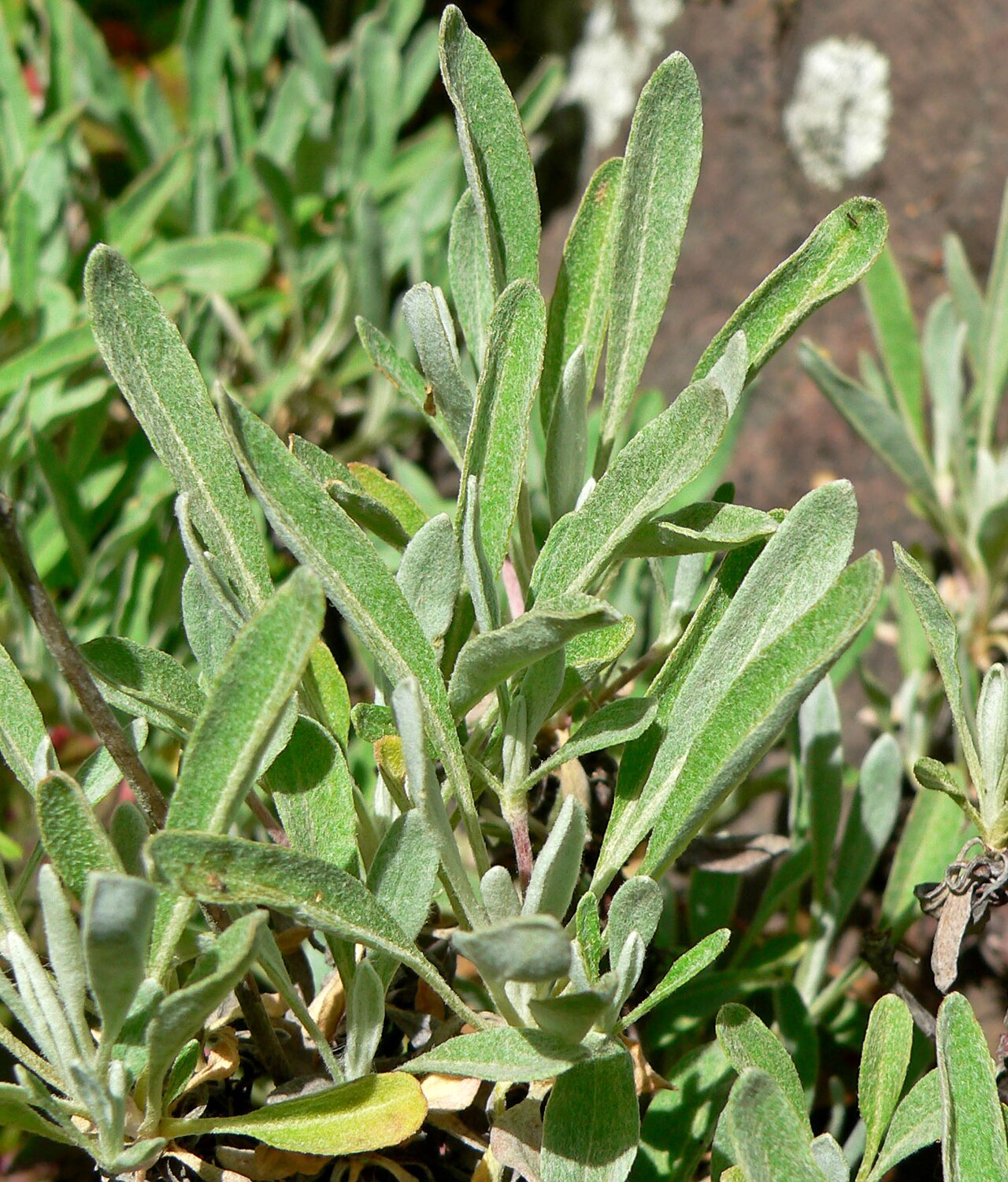
Leaves are narrow and often gray-green or bluish green, with hairs especially evident beneath. Their woolly appearance is helpful in a dry landscape, but gray foliage alone does not establish identity. Look for the combination of narrow leaves, a woody crown, and the branching cream-flowered inflorescence. Avoid confusing it with the broad basal leaves and denser flower heads of sulfur buckwheat.
Flowers and bracts
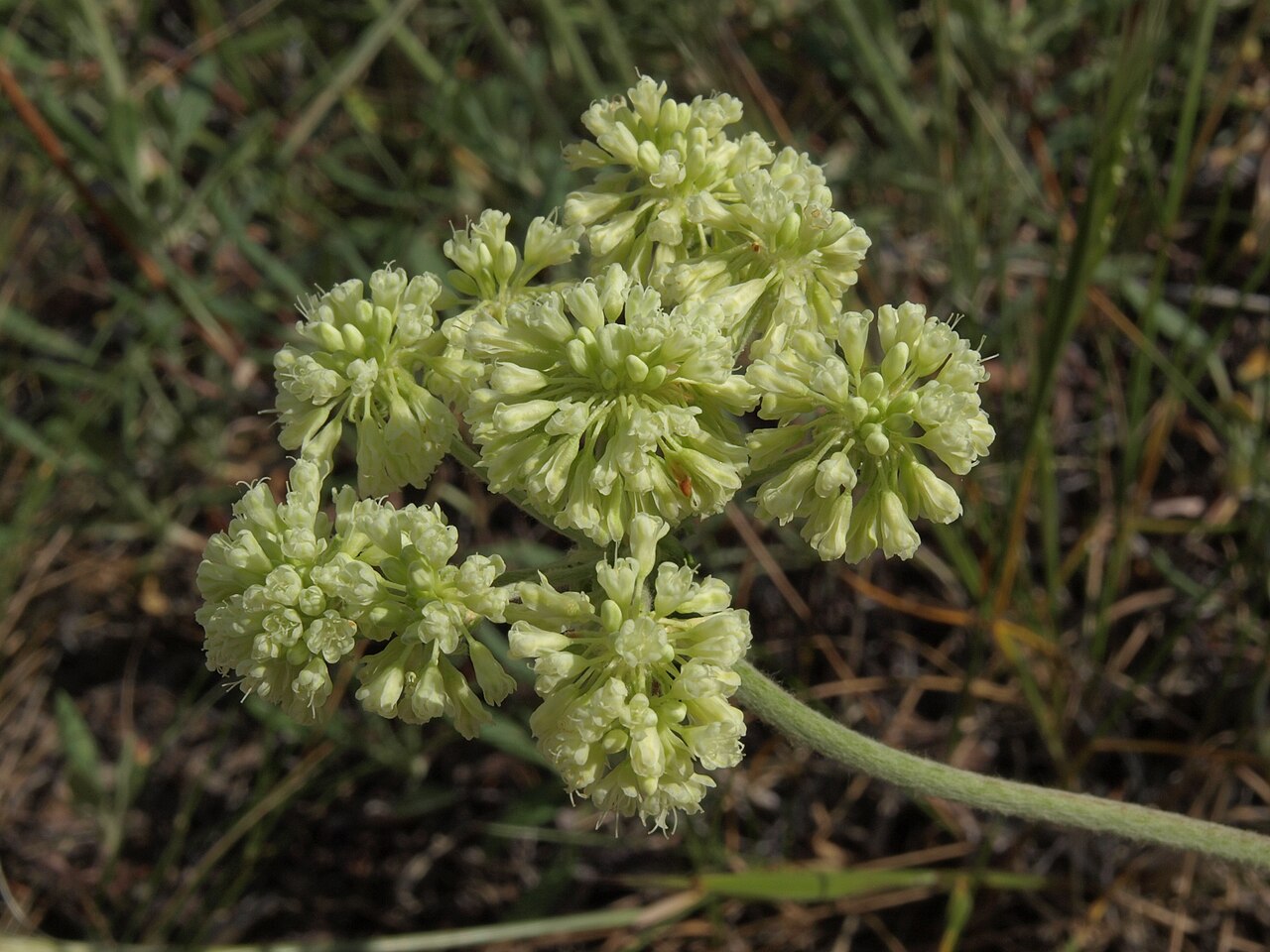
Small creamy white to pale yellow flowers are grouped at the ends of branches. The common variety, var. heracleoides, usually carries a conspicuous whorl of leaflike bracts on a flowering stem. That feature is useful but not universal: var. leucophaeum may lack the whorl or have only a single bract. An otherwise convincing plant should not be rejected solely because this one feature differs.
Seasonal appearance
Bloom commonly falls between late spring and midsummer, shifting with snowmelt and elevation. Aging flower clusters can become orange or reddish and remain attractive after the fresh cream color fades. The persistent foliage and woody base give the planting some structure outside flowering time. Brown spent heads are a normal seasonal phase, not automatically a sign that the plant has died.
Distinguishing similar plants
Many wild buckwheats share woolly leaves and tiny clustered flowers. For a confident wild identification, examine leaf shape, hairs, stem bracts, branching, and the small involucres around flower clusters with a regional key. Do not identify a collected seed lot from flower color alone. Purchase propagated material identified as E. heracleoides when the goal is this species rather than a general buckwheat display.
Quick Facts
| Scientific Name | Eriogonum heracleoides |
| Family | Polygonaceae (buckwheat family) |
| Plant Type | Woody-based perennial forb or low subshrub |
| Mature Height | Usually 4–24 inches; flowering size varies by provenance |
| Mature Spread | Low spreading crown, often around 1–2 feet in cultivation |
| Growth Rate | Moderate to slow |
| Sun Exposure | Full sun |
| Water Needs | Low once established; avoid persistently wet roots |
| Soil Type | Well-drained rocky, gravelly or sandy soil |
| Soil pH | Adapted to varied western mineral soils; drainage is the priority |
| Bloom Time | Late spring to midsummer; later at elevation |
| Flower Color | Creamy white to pale yellow, aging orange-red |
| Fall Color | Gray-green foliage and aging warm-colored flower heads |
| Fruit | Small dry one-seeded fruits |
| Deer Resistant | Browsing varies; not a guaranteed deer-proof plant |
| USDA Hardiness Zones | Select local provenance; mountain and low-elevation populations differ |
Native Range
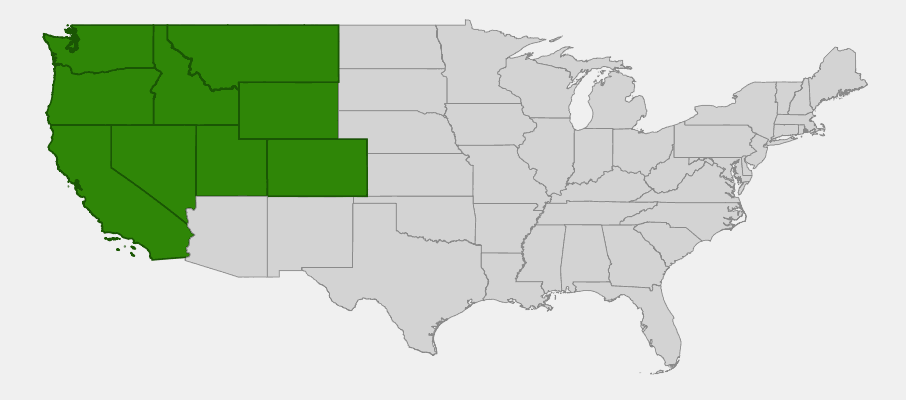
Plants of the World Online treats Eriogonum heracleoides as native from British Columbia into the western United States. Its listed U.S. range includes California, Colorado, Idaho, Montana, Nevada, Oregon, Utah, Washington, and Wyoming. The map summarizes those states; it does not mean the plant occurs in every county, elevation band, or habitat within them.
Natural settings include shrub-steppe, dry forests, rocky slopes, ridges, and canyon country. The USDA plant guide describes associations with sagebrush and bitterbrush and emphasizes dry, well-drained conditions. A garden can reproduce the essential light and drainage without copying every feature of a wild site. A sunny bed that stays soggy through winter is not equivalent to a dry rocky slope.
For restoration, use a regional seed source and determine which variety is appropriate. A British Columbia or high-mountain population should not automatically be substituted for a warm, dry basin population. State-level nativity is a useful first filter, while a local flora and the supplier’s provenance information provide the finer detail needed for a specific planting.
📋 Regional plant list: Idaho, Montana & Wyoming
Growing & Care Guide
Choose a sunny position
Place the plant where it receives an open stretch of direct sun and is not buried beneath taller foliage. Morning sun followed by dense afternoon shade is less suitable than a bright, airy rock-garden edge. Before planting, observe nearby shrubs at their mature size: a small buckwheat can be shaded out as neighboring plants expand, even if the site looks open on planting day.
Drainage before amendments
Test the bed after rain or snowmelt. If water lingers around the intended crown, choose a raised, naturally draining position rather than adding a handful of grit to a deep wet hole. Broad improvement of the planting area is more useful than creating a small pocket of different soil. Avoid heavy compost enrichment; this is a plant for lean mineral conditions, not a fertilizer-driven display.
Planting nursery stock
Set a propagated plant at its original soil level and keep the woody base visible. Water the root ball and surrounding soil thoroughly after planting, then monitor moisture while roots move outward. A gravel surface can suit the design, but do not pile it against the crown. Label the species and source so you can assess how that particular population performs through the first winter.
Water during establishment
Low water use does not mean a newly planted root ball can be forgotten. Check below the surface during dry weather and water when the root zone begins to dry, allowing air to return between soakings. Once established, reduce supplemental irrigation rather than keeping it on the schedule used for a nearby lawn. Repeated shallow watering can keep the crown damp without encouraging deeper rooting.
Spacing and companions
Allow space for the crown and for air to pass between plants. Small native bunchgrasses and other low dryland forbs can provide contrasting texture without overwhelming it. Avoid vigorous groundcovers that spread into the woody base. In a mixed bed, group plants with similar watering needs so that keeping one thirsty neighbor alive does not continually saturate the buckwheat.
Starting from seed
The USDA guide reports dormancy in fresh seed and a long cool, moist pretreatment, commonly 16–24 weeks near refrigerator temperature. Outdoor fall sowing can provide a natural winter treatment where conditions are appropriate. Sow shallowly in a prepared, weed-free medium and keep the seed lot labeled. Germination timing can vary, so do not discard a tray simply because it fails to emerge as quickly as an annual garden flower.
Seedling care
Young seedlings need light, careful watering, and protection from competition. A clean nursery tray makes it easier to distinguish seedlings from weeds than scattering rare seed into an established bed. Gradually expose young plants to outdoor sun and wind before transplanting. Keep records of sowing and emergence dates; those observations are more useful for future propagation than assuming every seed source behaves identically.
Seasonal maintenance
Leave some fading flower heads for their warm color and seed development. Remove broken stems or unwanted spent growth carefully without cutting indiscriminately into the woody base. This is not a shrub that needs regular shearing into a geometric shape. A light cleanup that preserves the natural crown is usually more compatible with its growth than repeated clipping to force a dense edge.
Troubleshooting decline
If a plant declines, check crown burial, drainage, shade, and root-zone moisture before applying fertilizer. Yellowing or collapse after a wet period calls for a different response than dry leaves on a recently transplanted specimen. Do not assume more water is always the answer. Compare conditions with a healthy plant nearby and adjust the site rather than repeatedly replacing a plant in the same unsuitable spot.
Containers and small spaces
A deep, freely draining container can be used as a trial where garden soil is unsuitable, but container roots experience more extreme cold and drying than roots in the ground. Use drainage holes and a stable mineral-rich medium, not a sealed decorative pot. Treat container culture as a monitored experiment and retain the source label, especially if you intend to move the plant into a permanent native planting later.
Landscape Uses
- Use at a sunny rock-garden edge where cream flowers and gray foliage can be viewed closely.
- Combine with locally native low bunchgrasses in a dry border, leaving open space around the woody crown.
- Include in a regionally appropriate pollinator planting, using propagated local material rather than digging wild plants.
Wildlife & Ecological Value
Flower visitors
The flowers are visited by native bees. Oregon State University reports bee observations that include Osmia and Nomada in Harney County. Those records support its value as one component of a western flower sequence, but they do not mean every garden will attract the same species. Provide other locally native flowers before and after its bloom to extend available forage.
A dryland planting community
Its strongest ecological contribution comes when it is part of a suitable plant community rather than an isolated ornament surrounded by frequently irrigated turf. Preserve some open ground, avoid blanket insecticide use, and allow a range of flowering times. The small size makes it possible to add floral resources in dry spaces where larger plants would require more room or irrigation.
Seed and habitat stewardship
Allowing a portion of the flower heads to mature supports natural seasonal processes and provides seed for propagation where collection is appropriate. Do not strip wild populations for garden projects. A nursery-grown plant with known provenance offers a better starting point for a repeatable planting, and it avoids removing a mature perennial from the habitat in which it is already functioning.
Cultural & Historical Uses
The common names Wyeth buckwheat and parsnipflower buckwheat illustrate two different ways plants acquire familiar labels: one is a personal-name association, while the other describes the flower display. Neither common name is a sufficient botanical identification by itself. The scientific name provides the stable link between this garden guide, nursery inventories, and regional floras.
Wild buckwheats are characteristic plants of western dry landscapes and have increasingly been included in native horticulture and revegetation work. USDA propagation guidance for this species reflects interest in establishing it from seed, not merely admiring it in the wild. Its modest size and low water demand make it useful in designs that emphasize local plant communities rather than a conventional heavily irrigated border.
This guide does not present the plant as food or medicine. The word buckwheat should not be taken as evidence that a wild species can be used like cultivated grain buckwheat. For garden use, its clear value is ornamental and ecological: pale flower clusters, persistent texture, and a place in sunny western native plantings.
Frequently Asked Questions
Is Wyeth buckwheat the same as edible buckwheat?
No. Eriogonum heracleoides is a western wild buckwheat, not the cultivated grain crop. Grow it for its flowers, texture, and native-plant value rather than assuming it is edible.
Does every plant have a whorl of leaves on the flower stem?
No. A whorl is characteristic of the common variety, but var. leucophaeum may have only one bract or none. Identification should use several features and a regional key.
Why did my plant fail in a watered flower bed?
Check drainage, crown burial, and competition. A dryland species can suffer when managed on the same frequent irrigation schedule as thirsty border plants, especially if the crown stays wet.
Can I grow it from seed?
Yes, but fresh seed may need a long cool, moist treatment. The USDA guide describes 16–24 weeks; fall sowing and patient monitoring are often more appropriate than expecting immediate warm-room germination.
Is it native throughout Idaho, Montana, and Wyoming?
It is native in all three states, but not in every habitat or county. Use local occurrence information and an appropriate seed source for restoration or a highly site-specific native garden.
Sources & Further Reading
- Kew: accepted name and native range
- USDA NRCS: parsnipflower buckwheat plant guide
- Oregon State University: parsnip-flower buckwheat
- Utah State University: western native plants
- US Forest Service: western forbs profile
Find Native Plants
Ask growers about nursery propagation and regional provenance. Browse our ID native plant nurseries, MT native plant nurseries, WY native plant nurseries directory for suppliers. Explore the native nursery finder.