
Common Ninebark (Physocarpus opulifolius)
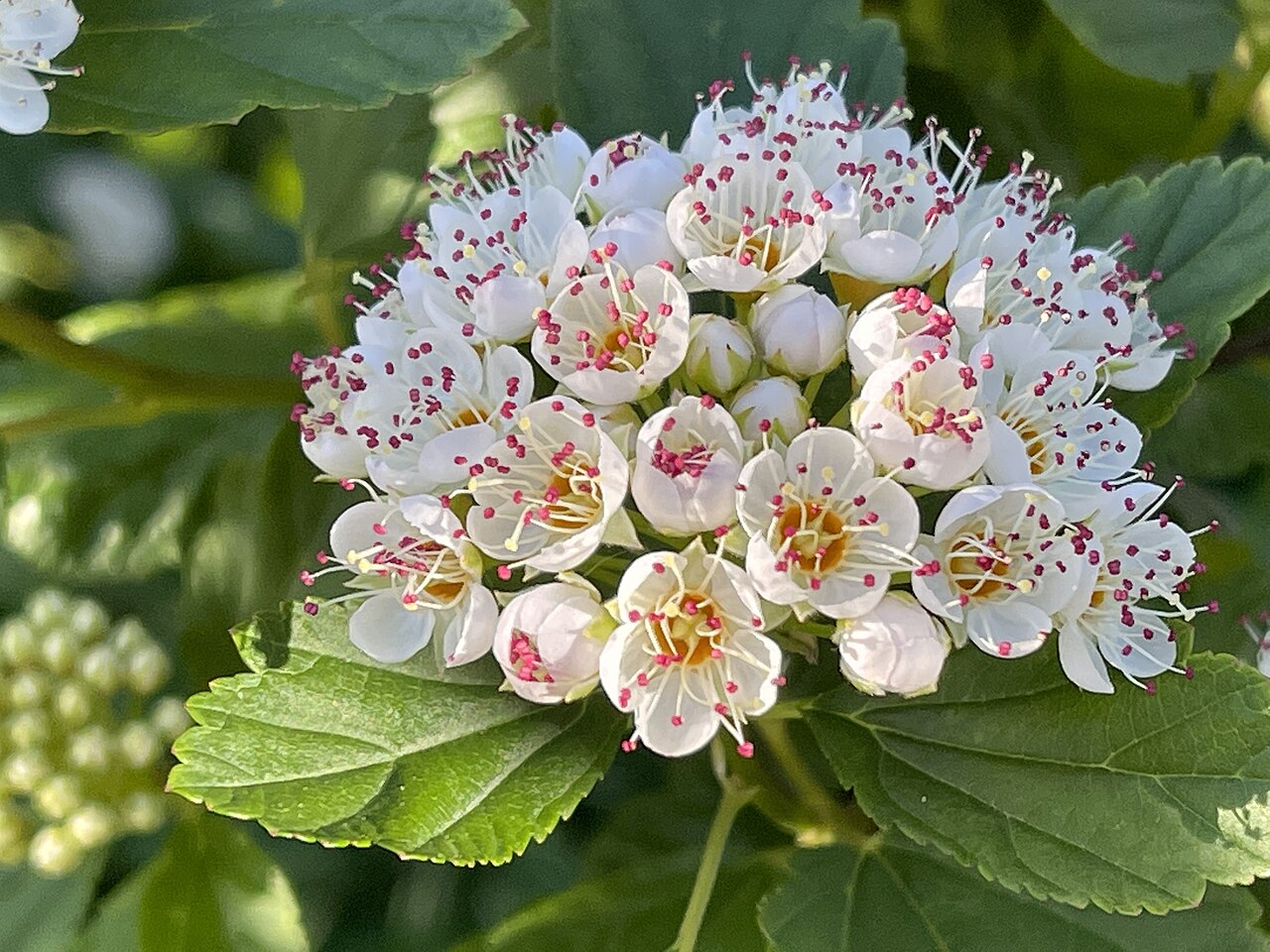
Common ninebark is an adaptable deciduous shrub that earns its place through several seasons. Rounded clusters of white or blush-pink flowers appear in late spring or early summer, lobed leaves fill out arching branches, and older stems reveal peeling layers of bark after the leaves fall. It is particularly useful where a native shrub is needed for a loose hedge or broad background planting.
The wild-type plant normally has green foliage. Purple, burgundy, gold, and compact forms in nursery catalogs are cultivated selections, not the default appearance of every Physocarpus opulifolius. This distinction is important because an older regional table described the species as having purple foliage. Choose a straight-species plant with appropriate provenance when that is the goal of a native planting.
Ninebark also produces dry, inflated seed-bearing fruits rather than berries. They can turn reddish before drying, which may explain casual berry descriptions, but their structure is different from a fleshy fruit. Accurate identification of leaves, flowers, fruits, and bark makes this shrub easier to distinguish from other native shrubs and from the western ninebark species.
Identification
Habit and branches
Expect a multi-stemmed shrub with an upright to arching habit. Ordinary species plants often reach roughly 5–10 feet tall with a substantial spread, though named selections can be much smaller. The mature outline is naturally loose rather than a tight formal ball. Allow that structure to develop if winter bark and spring flowering are important features of the design.
Leaves
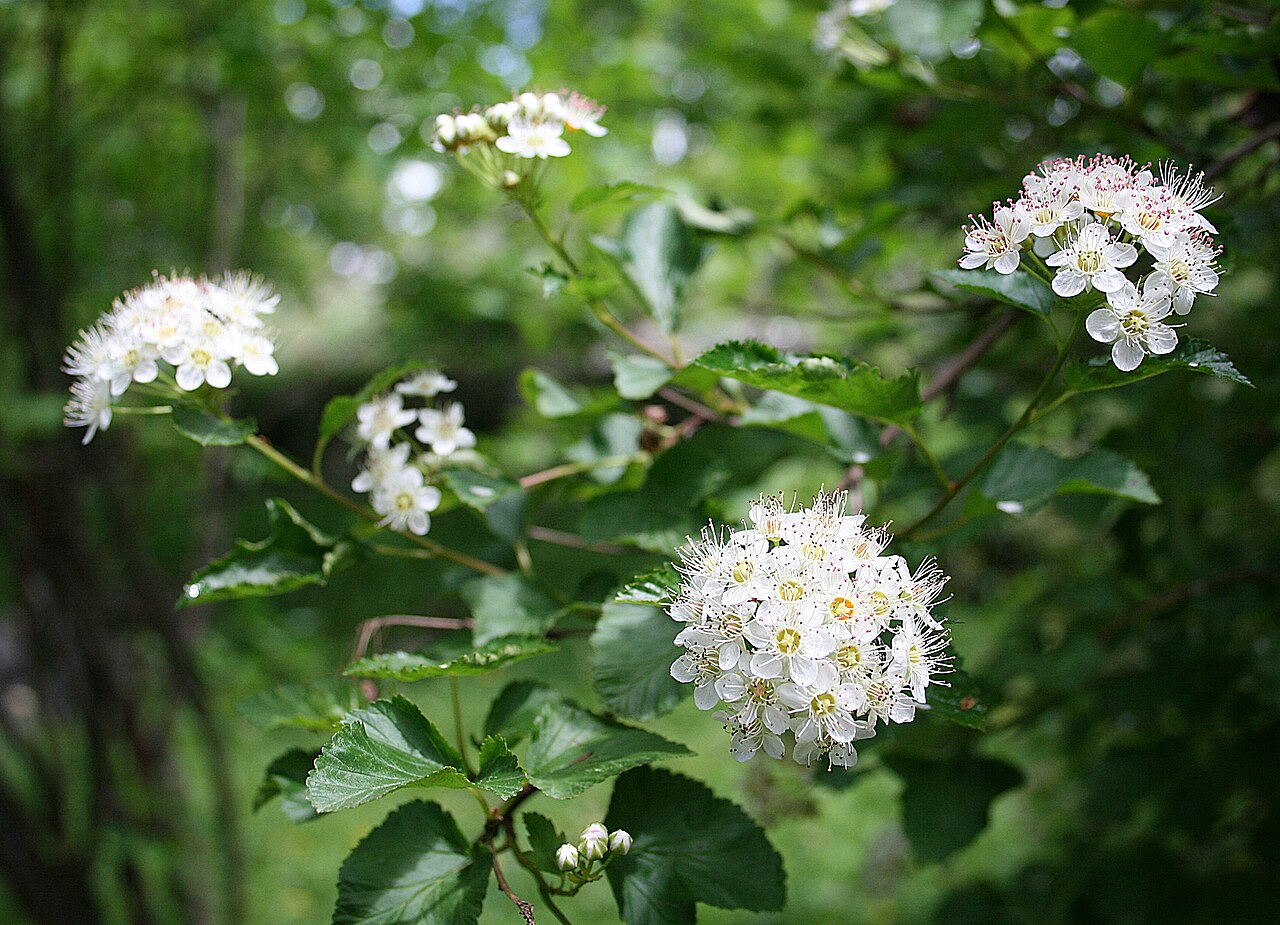
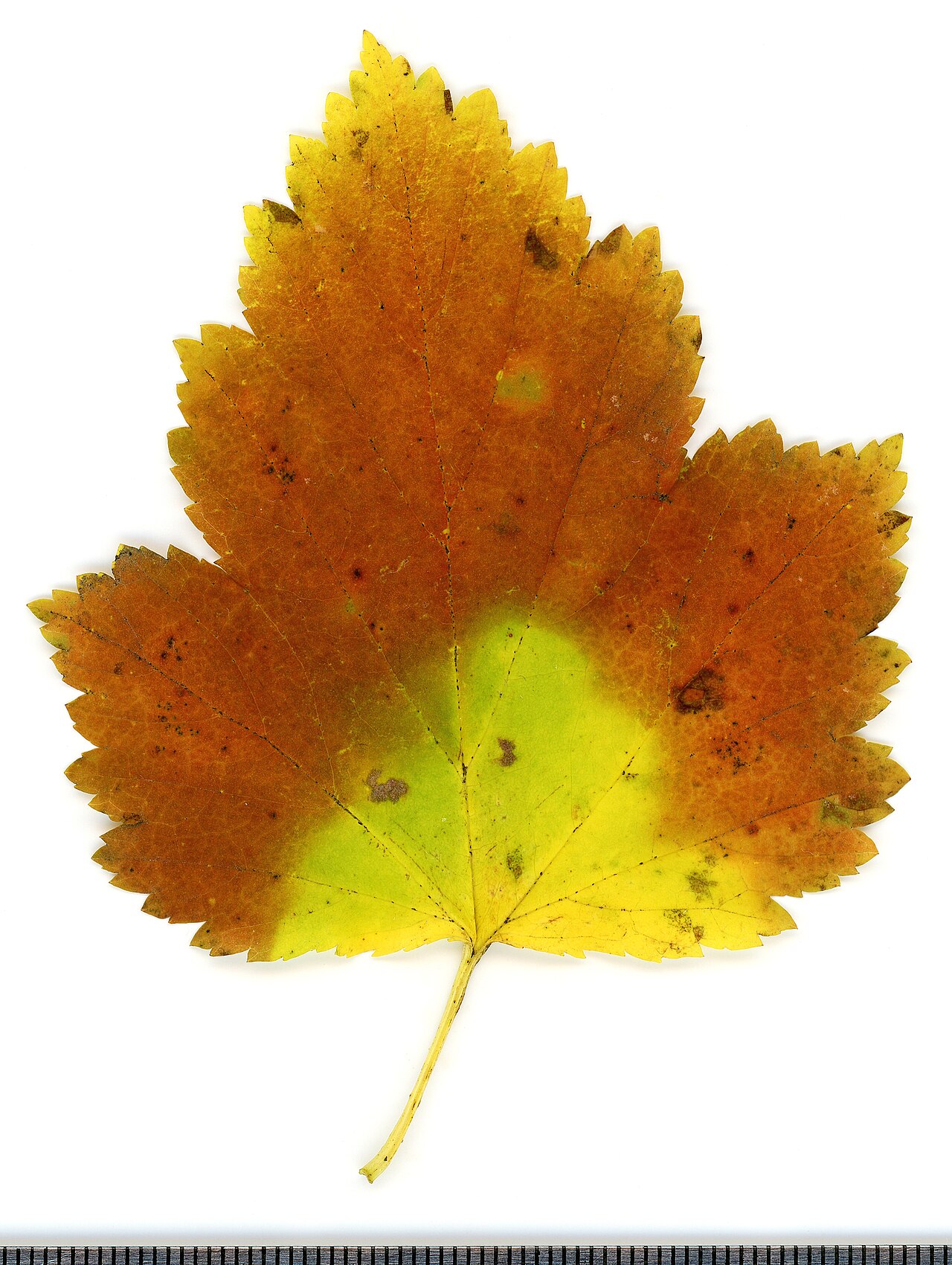
Leaves are alternate, simple, and usually divided into three to five shallow lobes with toothed margins. Typical summer foliage is green, with a paler lower surface. The broad lobed outline can suggest a small maple leaf, but the alternate arrangement and shrub’s other features distinguish it. Red-purple leaves on a nursery plant usually indicate a selected form, not a separate seasonal phase of all wild ninebarks.
Flowers
Small five-petaled flowers gather into rounded clusters. White petals, sometimes tinged pink, surround numerous stamens. A flowering branch may carry several clusters, creating a soft pale display against the foliage. The flowers appear on older growth, so indiscriminate pruning before bloom can remove the very wood carrying the developing display.
Fruits
Each flower can develop a cluster of small inflated follicles. These dry fruits may become red or reddish brown before maturing and splitting to release seeds. They are not berries, despite their color and grouping. Looking closely at a mature cluster reveals the papery walls and separate units, useful features when the shrub is no longer in bloom.
Bark and related species
Older bark peels in strips and patches, exposing different brown and reddish tones beneath. The common name refers to this layered appearance, not a literal count that must be found on every stem. Western species such as Physocarpus capitatus, P. malvaceus, and P. monogynus should not be substituted solely because they share peeling bark and the name ninebark.
Quick Facts
| Scientific Name | Physocarpus opulifolius |
| Family | Rosaceae (rose family) |
| Plant Type | Deciduous flowering shrub |
| Mature Height | Usually 5–10 feet; cultivars vary |
| Mature Spread | Often similar to height; allow a broad arching outline |
| Growth Rate | Moderate to fast |
| Sun Exposure | Full sun to partial shade |
| Water Needs | Average-moist; established plants tolerate some dryness |
| Soil Type | Adaptable loam, clay or sandy soil with drainage |
| Soil pH | Tolerates a broad range from acidic to alkaline |
| Bloom Time | Late spring to early summer |
| Flower Color | White to pale pink |
| Fall Color | Often yellowish or brown; variable |
| Fruit | Dry inflated follicles, not berries |
| Deer Resistant | Variable; protect young shrubs where browsing is heavy |
| USDA Hardiness Zones | Commonly 2–8; match the nursery selection to the site |
Native Range
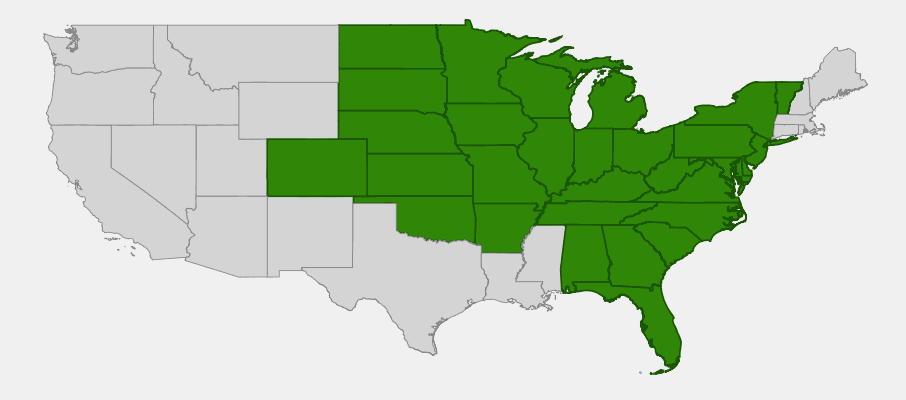
Common ninebark is native to central and eastern North America. The map is a conservative synthesis of the broad USDA/NatureServe treatment, with New England adjusted to the more specific Native Plant Trust account. That regional flora identifies native populations in part of Vermont and possible nativity in Connecticut, while treating other New England occurrences as introduced. Connecticut is left unshaded here because its status is uncertain in that account.
Range treatments are not identical. Older USDA guidance includes the western intermedius form within P. opulifolius, while some modern floras recognize P. intermedius separately. Kew’s state listing also differs from regional treatments. The map therefore represents a stated broad horticultural concept, not proof that every occurrence or nursery cultivar is indigenous to the county where it is found. For restoration, confirm the local taxon and provenance.
The regional lists linked below are within the central and eastern area where ninebark is widely used as a native shrub. Natural habitats include streambanks, rocky slopes, bluffs, and thickets. It is not necessary to reproduce a riverbank in a garden, but it is important to provide enough room and avoid permanently stagnant soil. Western outlying records should be checked against a local flora rather than generalized to the whole western United States.
📋 Regional plant list: Illinois, Iowa & Missouri
Growing & Care Guide
Plan for the mature outline
Measure the space for a shrub several feet wide before buying a small container. A ninebark squeezed beside a narrow walkway will need repeated pruning that removes flowers and natural form. A loose hedge, bank planting, or broad border is usually a better fit. If compact size is essential, verify the mature dimensions of a named selection rather than assuming the species will stay small.
Sun and shade
Full sun promotes a strong flower display, while partial shade can be useful in hotter parts of the range. Deep shade is not the same as partial shade and can produce a thinner shrub with fewer flowers. Consider the shade cast by nearby trees once fully leafed out. The site that looks sunny in March may be shaded for much of the growing season.
Soil and drainage
Ninebark tolerates a useful range of soil textures and acidity. That adaptability does not mean every wet hole is suitable. Choose soil that drains between rain events, even where moisture is plentiful. Avoid creating a small heavily amended planting pocket that differs sharply from surrounding clay. Broadly suitable conditions and correct planting depth are more valuable than excessive enrichment.
Planting
Set the root flare at the surrounding soil level and spread or correct circling roots as appropriate for the nursery stock. Water the root ball thoroughly and settle the soil without burying the stems. Keep mulch away from the base. A young shrub may need regular moisture checks during its first season even though established ninebark is often described as tough.
Watering established shrubs
Once roots are established, ordinary rainfall may be sufficient in a suitable climate and soil. During prolonged drought, a deep watering is more useful than repeated light sprinkling. Watch the plant and root zone rather than watering because a calendar says to do so. A shrub growing near irrigated turf may receive more moisture than expected, which should be considered before adding extra water.
Pruning for flowers
Because the next display develops on older wood, prune for shape soon after flowering when possible. Remove a selected stem or shorten an awkward branch rather than shearing every shoot into the same outline. If renovation is necessary, recognize that a hard dormant-season cut can sacrifice the next bloom. Separate the goal of rejuvenating an overgrown shrub from the goal of maximizing flowers that year.
Renewal and bark display
Older stems show the peeling bark most clearly. Retaining a mixture of stem ages provides both new growth and winter texture. When thinning, remove chosen old or damaged stems at their origin rather than leaving a collection of short stubs. Stand back between cuts so the finished shrub retains an arching, balanced shape. There is no need to expose every inner branch at once.
Propagation
Ninebark can be propagated from seed or cuttings. Seed-grown plants are useful when genetic diversity is desired, but offspring of a colored-leaf cultivar may not reproduce its exact appearance. Cuttings preserve a selected clone. For native restoration, source information is more important than simply multiplying a decorative plant already present in a garden. Follow a nursery protocol appropriate to the material and season.
Powdery mildew and other problems
Powdery mildew can affect some selections, and fire blight is another reported problem. Begin with correct identification of symptoms and consider airflow, crowding, and the cultivar’s susceptibility. Do not apply a treatment to flowers being visited by insects without understanding its effects and label restrictions. For serious dieback, a local extension diagnosis is more useful than assuming all browning has one cause.
Choosing cultivars thoughtfully
Purple and gold selections offer ornamental effects, but their appearance should not be used to describe the wild species. Ask whether the plant is a cultivar, a hybrid, or straight species and whether its mature size fits the site. A native-garden goal may favor locally sourced green-leaved plants, while a designed border may prioritize a particular selection. Make that choice explicitly rather than relying on an incomplete label.
Landscape Uses
- Create a loose flowering hedge with enough room for arching stems and winter bark.
- Use in a broad native shrub border, pairing it with plants that share its moisture needs.
- Place on a suitable bank or rain-garden margin where roots receive moisture but are not permanently submerged.
Wildlife & Ecological Value
Flowers and visitors
The clusters provide accessible flowers for bees and other insects. A hedge that is allowed to bloom offers more floral value than one repeatedly sheared before flowering. Combine ninebark with shrubs and perennials that flower at other times so the planting supplies a longer sequence of resources.
Structure and seeds
A mature multi-stemmed shrub provides cover and a more complex habitat than a tightly clipped low form. Its seed-bearing fruits are dry follicles, not fleshy berries. Birds may use the shrub and its food resources, but it should not be advertised as a berry crop. Retaining some fruiting stems also adds seasonal interest after the flowers fade.
A diverse shrub layer
Ninebark works best as part of a varied planting rather than a single-clone landscape. Use locally appropriate species at different heights and leave space for their mature forms. Where browsing is heavy, protect young shrubs until they are established. Avoid treating every chewed leaf as a problem; some insect use is part of the purpose of a native shrub planting.
Cultural & Historical Uses
The name ninebark refers to the repeatedly peeling layers visible on older stems. The specific epithet opulifolius refers to leaves reminiscent of Viburnum opulus. Both names point toward visible features that remain useful for recognizing the shrub, though neither replaces a full botanical identification.
Ninebark has a long horticultural history, and selection for colored foliage and compact growth has made it especially familiar in modern landscapes. That popularity can obscure the ordinary green-leaved native shrub. A regional plant list should describe the species first and identify cultivated traits separately rather than presenting purple leaves as universal.
Older publications sometimes combine regional forms now treated differently, and some ethnobotanical notes concern other Physocarpus species. Those accounts should not be transferred automatically to P. opulifolius. This guide focuses on its well-supported landscape role: a flowering native shrub with useful structure, adaptable growth, and conspicuous winter bark.
Frequently Asked Questions
Does common ninebark naturally have purple leaves?
The typical wild plant has green foliage. Purple and burgundy leaves usually belong to named cultivated selections, which should be labeled separately.
Are the red fruits berries?
No. They are clusters of dry inflated follicles that release seeds. Their reddish color can resemble berries from a distance, but the fruit type is different.
When should I prune it?
For routine shaping while preserving bloom, prune soon after flowering. Hard dormant-season renovation can remove the wood that would carry the next flower display.
Is it native everywhere in New England?
No. Native Plant Trust identifies native populations in part of Vermont and possible nativity in Connecticut, with introduced occurrences elsewhere. Broad continental maps can obscure that distinction.
Can it handle both dry and wet soil?
It is adaptable, especially after establishment, but persistent stagnant water is not a general recommendation. Aim for a suitable moist-to-average site with drainage and monitor new plants during drought.
📋 Also listed: Michigan, Minnesota & Wisconsin
📋 Also listed: New York, Pennsylvania & New Jersey
📋 Also listed: Kentucky & Tennessee
Sources & Further Reading
- NC State Extension: common ninebark
- Oregon State University: ninebark identification
- USDA NRCS: Atlantic ninebark guide
- Native Plant Trust: regional nativity and identification
- NatureServe: broad range and taxonomic caution
- Kew: accepted name and contrasting range treatment
Find Native Plants
Ask growers about nursery propagation and regional provenance. Browse our IL native plant nurseries, MI native plant nurseries, NY native plant nurseries, KY native plant nurseries directory for suppliers. Explore the native nursery finder.