
Cenizo / Texas Sage (Leucophyllum frutescens)
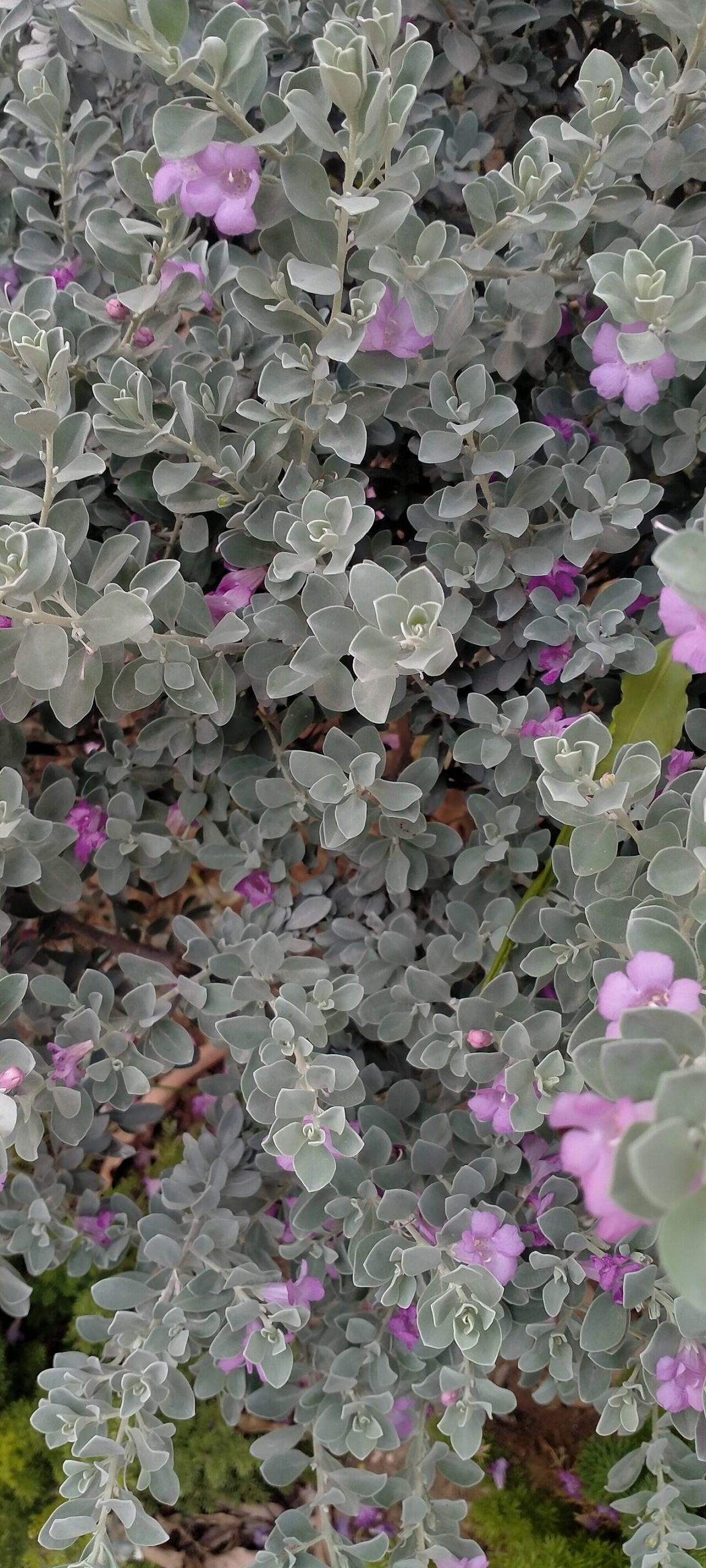
Leucophyllum frutescens, known as Cenizo, Texas Sage, Texas Ranger, Purple Sage, or Barometer Bush, is a tough, silver-leaved evergreen shrub native to the limestone hills and brushlands of South Texas and northeastern Mexico. It is the official State Native Shrub of Texas, and for good reason — few plants deliver as much landscape value for as little water. Cenizo is a member of the figwort family (Scrophulariaceae), and its relatives include snapdragons and beardtongues, visible in the shape of its tubular, two-lipped flowers.
The common name “Barometer Bush” refers to Cenizo’s signature trait: its magenta-pink flowers tend to burst open in a dense flush within a day or two of summer rain or a jump in humidity, even after weeks of drought-induced dormancy. Between bloom flushes, the plant’s dense, rounded form and soft gray-white foliage provide year-round structure and color contrast in a xeric landscape, whether or not it is in flower.
Cenizo thrives on neglect. It wants heat, full sun, and sharply drained, alkaline soil, and it resents regular irrigation and rich garden soil far more than it resents drought. Gardeners in its native Chihuahuan Desert and South Texas Plains range, and in similarly hot, dry, alkaline-soil regions elsewhere, will find it one of the lowest-maintenance flowering shrubs available, provided the natural urge to water and fertilize it is resisted.
Identification
Cenizo is a rounded, densely branched evergreen shrub, typically 4 to 8 feet tall and equally wide in the landscape, though old, unpruned wild specimens can reach larger proportions on favorable sites.
Bark & Stems
Young stems are covered in the same fine, silvery hairs (trichomes) as the leaves, aging to grayish-brown, slightly fissured bark on older wood. The branching is dense and twiggy, giving the shrub a tight, rounded natural silhouette even without pruning.
Leaves
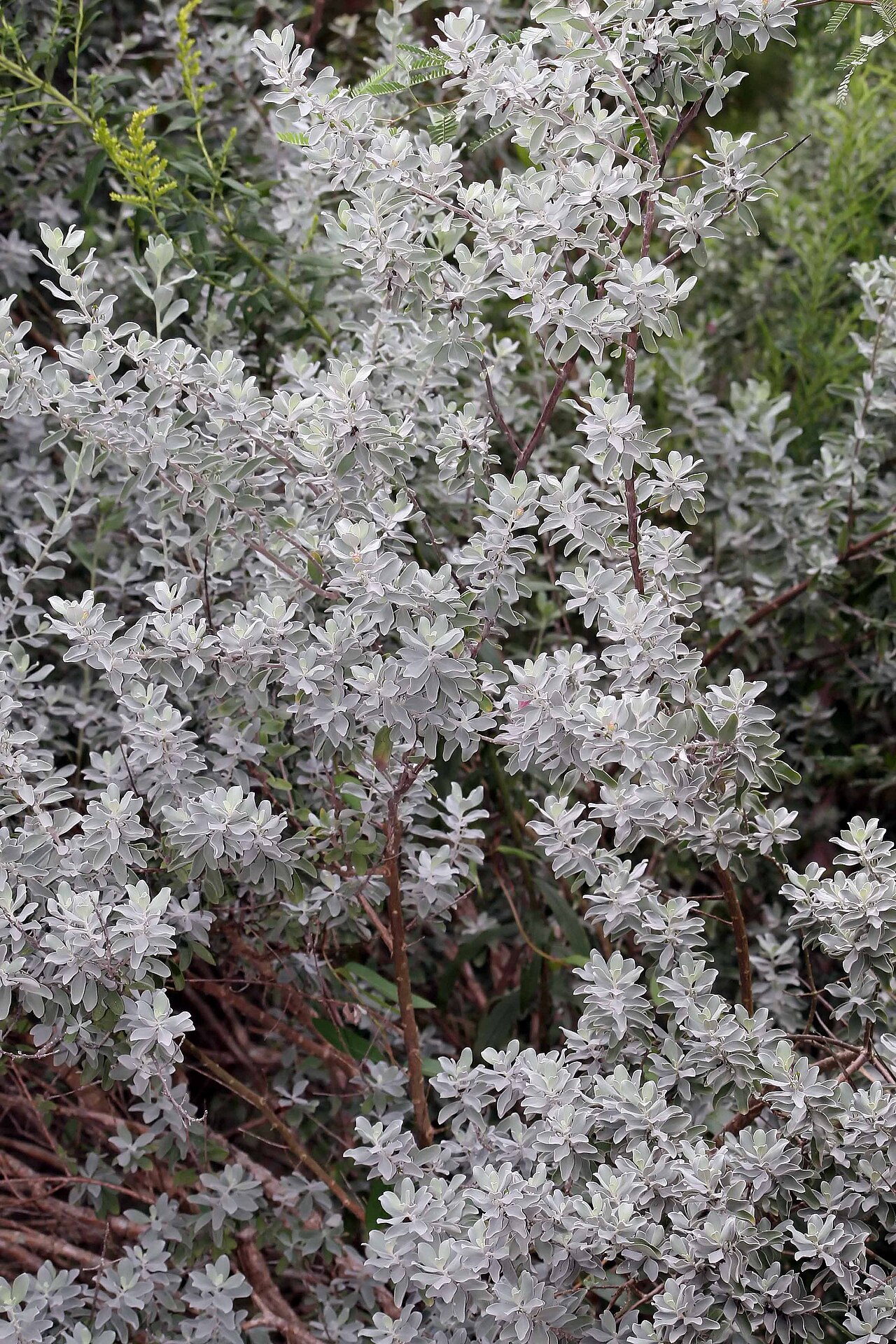
Leaves are small, oval to spoon-shaped, about ½ to 1 inch long, and densely covered in silvery-white hairs that give the whole plant its characteristic ash-gray color — “cenizo” is Spanish for “ashen” or “gray.” This dense hair coat reflects intense desert sun and reduces water loss, letting the plant hold its leaves year-round even through extended drought. Leaves are arranged alternately or in small clusters along the stem.
Flowers
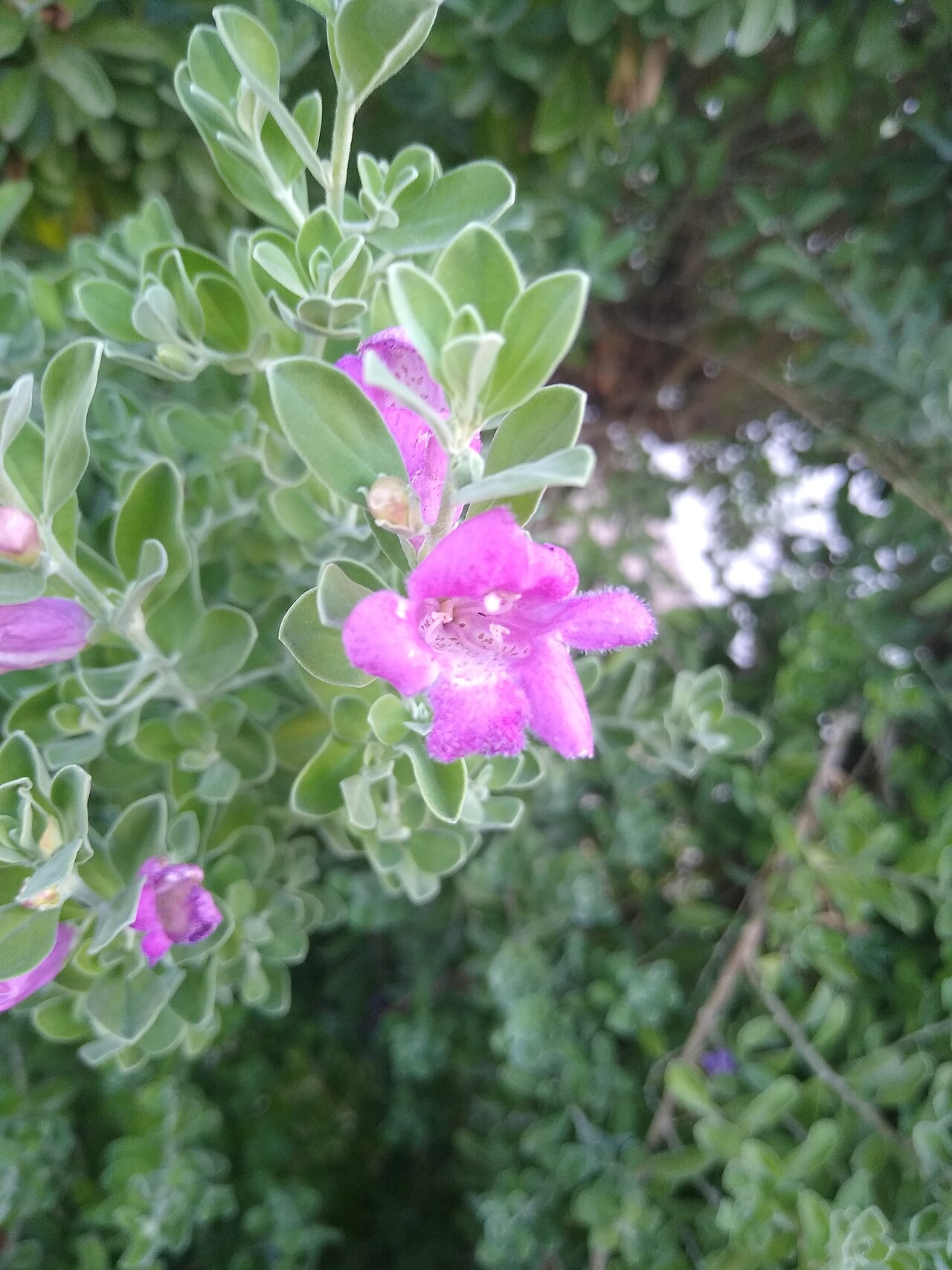
Flowers are tubular and bell-shaped, about ¾ to 1 inch long, with a flared, two-lipped mouth in shades of magenta, pink, or occasionally lavender or white in some horticultural selections. They emerge from the leaf axils in dense flushes, most dramatically within a day or two of summer rain or a sharp rise in atmospheric humidity, then fade over the following week until the next trigger. Established plants can bloom intermittently from late spring through fall.
Fruit & Seeds
The fruit is a small, dry, two-chambered capsule that splits open to release numerous tiny seeds once mature. Capsules are inconspicuous against the gray foliage and are rarely a feature gardeners notice or collect from.
Quick Facts
| Scientific Name | Leucophyllum frutescens |
| Family | Scrophulariaceae (Figwort) |
| Plant Type | Evergreen Shrub |
| Mature Height | 4–8 ft |
| Mature Spread | 4–8 ft |
| Growth Rate | Moderate |
| Sun Exposure | Full Sun |
| Water Needs | Low; drought tolerant once established |
| Soil Type | Caliche, limestone, or rocky, well-drained soils |
| Soil pH | 7.0–8.5 (neutral to alkaline) |
| Bloom Time | Late spring through fall, triggered by rain/humidity |
| Flower Color | Magenta-pink (lavender or white in some selections) |
| Fall Color | Evergreen silver-gray foliage year-round |
| Fruit | Small dry capsule |
| Deer Resistant | Yes |
| USDA Hardiness Zones | 8–11 |
Native Range
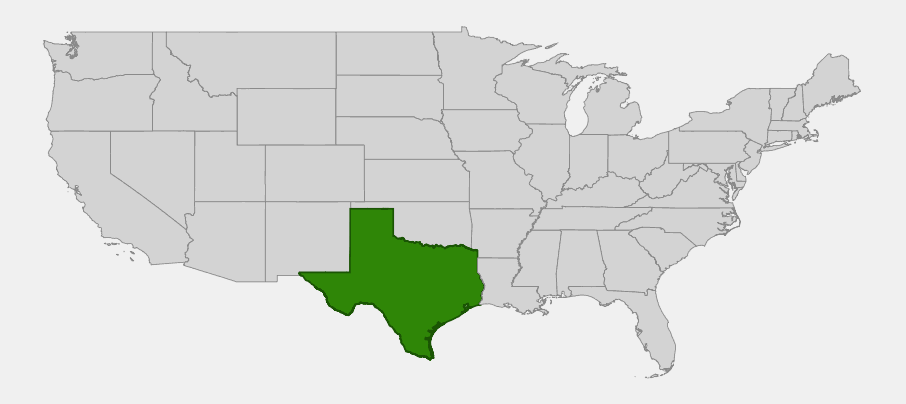
Cenizo is native to the Chihuahuan Desert and adjacent brushlands of South Texas, concentrated in the Trans-Pecos, Edwards Plateau, South Texas Plains, and Gulf Coast Prairies regions of the state, extending south into the Mexican states of Coahuila, Nuevo León, and Tamaulipas. In the United States it occurs naturally only in Texas; plants seen thriving as landscape specimens from Arizona to Florida are planted, not naturally occurring, outside their native range.
In the wild, Cenizo grows on dry limestone hillsides, caliche flats, and rocky brush country alongside other Chihuahuan Desert and Tamaulipan thornscrub species. It is strongly associated with calcareous, alkaline soils and tolerates heat, drought, and poor fertility that would stress most other flowering shrubs, but it does not tolerate consistently wet feet or acidic soil.
Because the species is so widely planted as an ornamental across the warmer parts of the country, gardeners outside Texas should be clear-eyed that they are growing a drought-tolerant exotic in their region, not restoring native habitat — a distinction worth keeping in mind when choosing where Cenizo fits into a native-plant landscaping plan.
📋 Regional plant lists featuring Cenizo: Cenizo’s South Texas and Trans-Pecos range falls outside the state-specific regions currently covered by our regional plant lists.
Note: Cenizo is native only to Texas (and adjacent northeastern Mexico). Although it is sold and planted widely across the warmer parts of the United States for its drought tolerance, it is not native anywhere outside this range, and it should be considered a non-native ornamental in gardens elsewhere.
Growing & Care Guide
Cenizo is prized by xeriscape and low-water gardeners precisely because it performs best when treated roughly. The most common way to kill it is kindness — too much water, too-rich soil, or too much shade all shorten its life or trigger root and fungal problems.
Light
Full sun is essential. Cenizo flowers sparsely and grows leggy and weak in shade; it wants at least six to eight hours of direct sun daily to maintain its tight, silver-gray form and reliable bloom flushes.
Soil & Water
Plant in sharply drained, alkaline soil — caliche, limestone rubble, or ordinary rocky or sandy garden soil all work, as long as water never pools around the roots. Once established (after the first one to two growing seasons), Cenizo needs little to no supplemental irrigation outside of extreme, prolonged drought. In clay soil or any site that stays damp, root rot is a serious risk; amend heavy soil with coarse gravel or plant on a raised berm instead of trying to improve drainage after the fact.
Planting Tips
Plant in spring or fall to allow roots to establish before the stress of summer heat or winter cold. Water deeply but infrequently during the first growing season, then taper off sharply. Avoid planting in a lawn irrigation zone or anywhere it will receive regular watering alongside thirstier plants — Cenizo’s root rot risk rises quickly with routine moisture.
Pruning & Maintenance
Cenizo naturally forms a neat, rounded shrub and needs little pruning to look good. Many landscapers shear it into tight geometric balls, but this repeated shearing reduces flowering and shortens the plant’s lifespan compared to light, selective pruning that preserves its natural form. If pruning, cut just after a bloom flush to remove awkward branches rather than shearing the whole plant on a schedule.
Propagation
Propagate from semi-hardwood cuttings taken in summer, which root readily in a well-drained rooting medium. Seed propagation is possible but slower and less commonly used by home gardeners than cuttings or nursery-grown container stock.
Landscape Uses
Cenizo’s combination of drought tolerance, year-round silver foliage, and showy bloom flushes makes it a workhorse in low-water landscaping:
- Xeriscape and water-wise gardens as a structural, low-maintenance anchor shrub
- Informal hedges and privacy screens when planted in a row and lightly pruned
- Rock gardens and caliche slopes where few other flowering shrubs will thrive
- Pollinator gardens paired with other Texas natives like Salvia and Zexmenia
- Foundation and street plantings in hot, reflected-heat sites other shrubs struggle with
Wildlife & Ecological Value
Within its native Texas brush country, Cenizo supports a range of desert and thornscrub wildlife, though its primary landscape value for most gardeners is pollinator support.
For Pollinators
The nectar-rich flowers are highly attractive to native bees, honeybees, and hummingbirds, particularly during bloom flushes that follow rain. In regions where it is native, Cenizo’s bloom timing — often unpredictable and tied to rainfall rather than a fixed calendar date — provides an opportunistic nectar pulse that pollinators can exploit between the blooms of more seasonally predictable plants.
Birds
The dense, twiggy growth form offers good nesting cover and shelter from desert heat for small birds, and hummingbirds are frequent visitors to the tubular flowers during bloom.
Mammals
Cenizo’s dense branching provides shelter for small desert mammals, and its drought tolerance means it remains a reliable structural feature in brush country even during extended dry spells when other cover plants die back.
Ecosystem Role
As a long-lived, deeply rooted shrub adapted to shallow, rocky, alkaline soils, Cenizo helps stabilize thin desert soils on slopes and caliche flats, and its evergreen structure provides year-round shelter in a landscape where many other shrubs are seasonal or sparse.
Cultural & Historical Uses
Cenizo has long been recognized by Texans and northern Mexican communities for its weather-predicting behavior, earning the folk name “Barometer Bush” because of its tendency to burst into bloom in advance of or immediately following rain. Ranchers and rural communities in South Texas have traditionally watched for a Cenizo bloom flush as an informal, locally trusted sign that rain had recently fallen or was likely on the way.
The plant’s resilience in difficult, rocky, alkaline terrain made it a familiar fixture of ranch and roadside landscapes long before it became a mainstream nursery plant, and it has been selected and bred into numerous ornamental cultivars — including compact and white- or lavender-flowered forms — that are now sold throughout the warmer regions of the United States.
In 1999, Cenizo was formally designated the official State Native Shrub of Texas by the Texas Legislature, a recognition of both its cultural familiarity and its outsized role in low-water Texas landscaping.
Frequently Asked Questions
Why is Cenizo called Barometer Bush?
Because it tends to burst into a dense flush of flowers within a day or two of rain or a sharp rise in humidity, long-time observers in Texas have used its bloom as an informal, folk-level predictor of recent or approaching rain.
Is Cenizo native outside of Texas?
No. Cenizo’s natural range in the United States is limited to Texas, with the rest of its native range in adjacent northeastern Mexico. It is planted widely elsewhere for its drought tolerance, but it is not native outside this range.
Why did my Cenizo die after I started watering it more?
Cenizo is highly susceptible to root rot in consistently moist or poorly drained soil. Once established, it needs very little supplemental water; regular irrigation, especially in heavy soil, is one of the most common causes of decline in cultivated plants.
How do I keep Cenizo from getting leggy?
Give it full sun — Cenizo grown in part shade stretches toward light and produces fewer flowers. Light, selective pruning after a bloom flush, rather than frequent shearing into a tight ball, also helps maintain a denser natural form over time.
Is Cenizo deer resistant?
Yes. Deer generally avoid Cenizo’s fuzzy, aromatic foliage, which makes it a reliable choice in areas with heavy deer browsing pressure.

Looking for a nursery that carries Cenizo?
Browse our native plant nursery directory: Texas