
Climbing Aster (Ampelaster carolinianus)
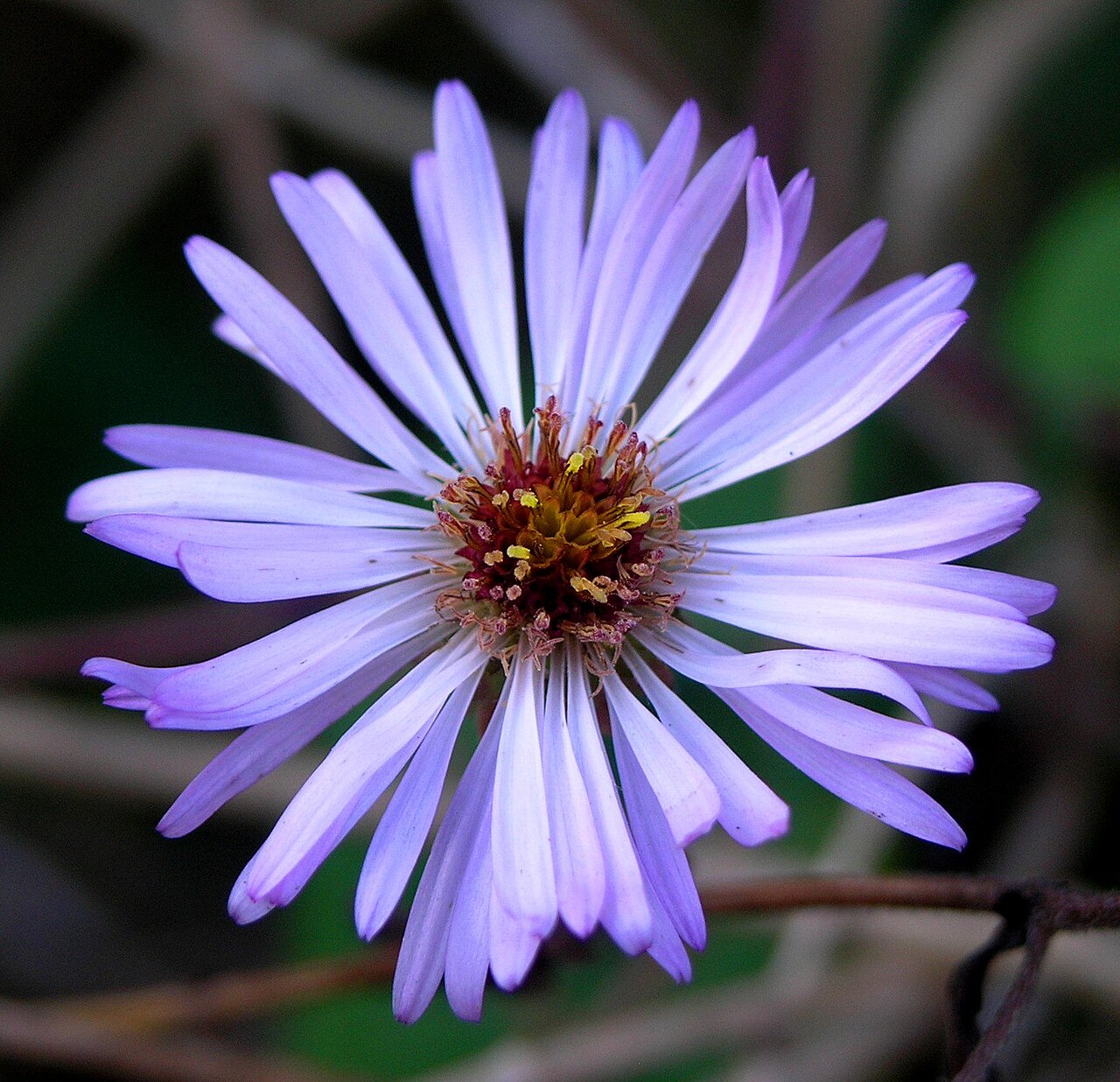
Ampelaster carolinianus, commonly called Climbing Aster or Carolina Climbing Aster, is an unusual native member of the aster family found in wetland edges of the Southeastern Coastal Plain. Unlike the familiar upright asters of meadows and roadsides, climbing aster is a woody-based, sprawling shrub whose long, arching canes scramble over neighboring shrubs and fences, reaching 6 to 12 feet or more when given something to lean on. It is the sole species in its genus, a true botanical oddity among the otherwise herbaceous North American asters.
What climbing aster lacks in abundance it makes up for in autumn drama. From October into December, long after most other natives have finished blooming, its tangled canes erupt into hundreds of small, lavender-pink, daisy-like flowers with bright yellow centers. The late bloom time makes it an important nectar source for migrating butterflies and the last bees of the season, at a point in the year when little else is flowering in its native marsh-edge habitat.
In the garden, climbing aster rewards gardeners in the warmer parts of the Southeast who have a fence, trellis or shrub to let it ramble over. It asks for little beyond consistent moisture and a sunny spot, and it is rarely offered outside of specialty native plant nurseries, which makes finding one worth the effort for anyone building a fall-blooming wildlife garden near the Gulf or South Atlantic coast.
Identification
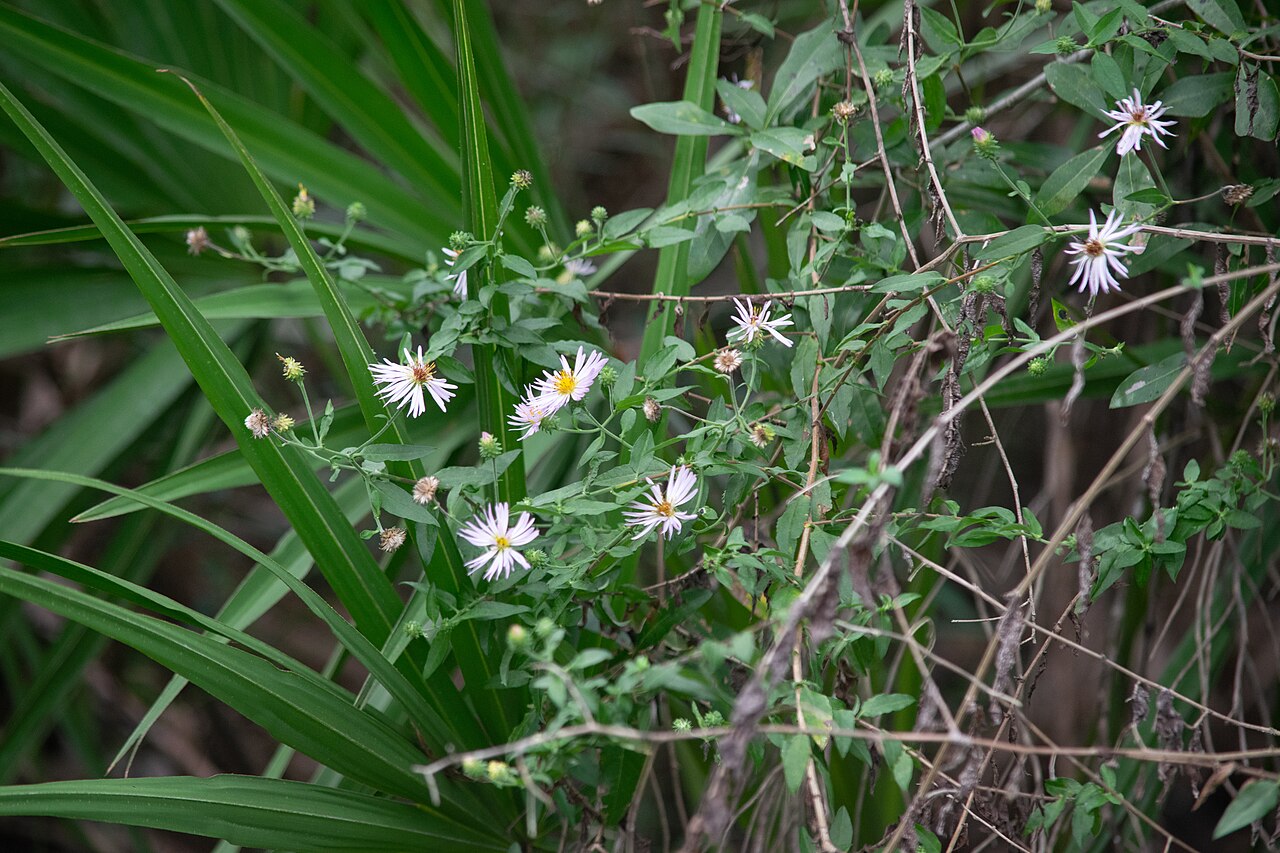
Climbing aster is best described as a scrambling, semi-woody shrub rather than a true vine — it has no tendrils or twining stems, and instead leans and arches over whatever is nearby, including its own older growth. A single plant can form a broad, tangled mound 4 to 6 feet tall when unsupported, or send canes 10 feet and more up into an adjacent shrub or along a fence line.
Stems
The stems are slender, wiry and woody at the base, becoming green and more flexible toward the tips. They branch repeatedly and often root where they touch moist soil, which lets an established plant slowly spread outward. Older stems develop a thin, grayish-brown bark.
Leaves
Leaves are narrow, lance-shaped and 1 to 3 inches long, arranged alternately along the stem. They are somewhat fleshy or leathery in texture, a trait typical of plants growing in brackish or seasonally wet soils, with smooth to slightly toothed margins. The foliage is a dull to medium green and provides a fine, airy backdrop to the flowers.
Flowers & Fruit
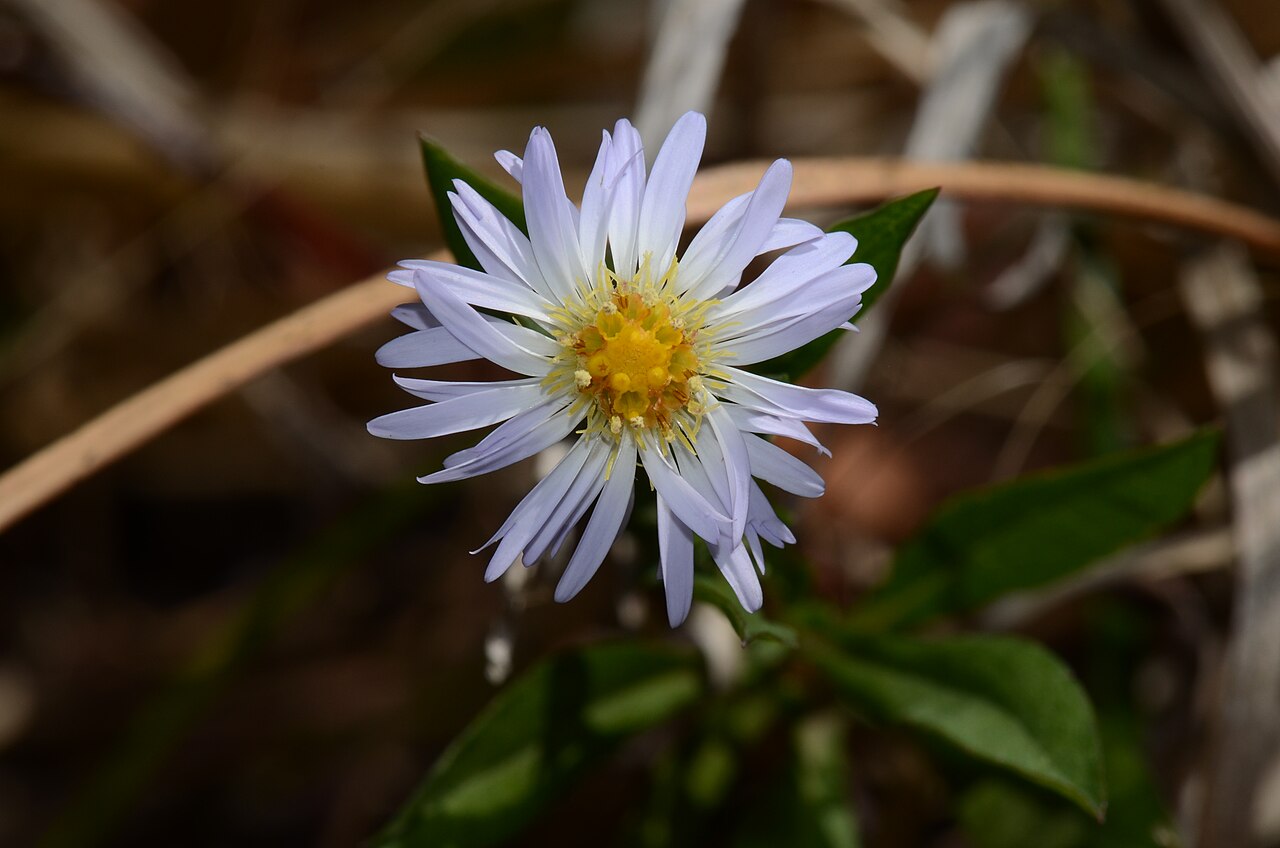
The flower heads are typical aster-family daisies, about 1 inch across, with 15 to 30 narrow, lavender to pale violet-pink ray florets surrounding a central disc of yellow florets that often ages to reddish-purple. Flowers are borne in profuse, branching clusters along the length of each cane, so a blooming plant can appear to be almost entirely covered in flowers for several weeks. After pollination, the flowers give way to small, dry, tufted seeds (achenes) typical of the aster family, dispersed by wind.
Quick Facts
| Scientific Name | Ampelaster carolinianus |
| Family | Asteraceae (Aster) |
| Plant Type | Semi-woody scrambling shrub |
| Mature Height | 4–6 ft unsupported; canes to 10–12 ft on a support |
| Growth Rate | Moderate to fast once established |
| Sun Exposure | Full Sun to Part Shade |
| Water Needs | Moist to wet; tolerates occasional brackish water |
| Soil Type | Moist to wet sand, muck or loam; tolerates seasonal flooding |
| Soil pH | Slightly acidic to neutral |
| Bloom Time | October – December |
| Flower Color | Lavender-pink with yellow center |
| Fall Color | None notable; valued for fall flowers instead |
| Deer Resistant | Moderate |
| USDA Hardiness Zones | 8–10 |
Native Range
Climbing aster is native to brackish and freshwater marsh edges of the Southeastern Coastal Plain, with its core range running from coastal North Carolina and South Carolina south through Georgia and the length of Florida, with an additional, somewhat disjunct population along the Mississippi coast. It is uncommon throughout its range and is considered rare in several of the states where it occurs, so wild populations should never be disturbed or collected from.
Typical habitat is the shrubby border between salt or brackish marsh and higher ground — the edges of tidal creeks, hammock margins, and the brushy fringes of coastal swamps, where the plant can scramble up into wax myrtle, buttonbush or groundsel tree. It also appears along the margins of freshwater marshes and wet prairies further inland in Florida. Because this habitat band is naturally narrow and under constant pressure from coastal development, climbing aster is far less common in the landscape than many of its Southeastern neighbors.
Climbing aster is not known to be weedy or aggressive outside of this native range; its restricted distribution and specific wetland-edge habitat requirements mean it rarely spreads into disturbed or upland sites even where it is cultivated.
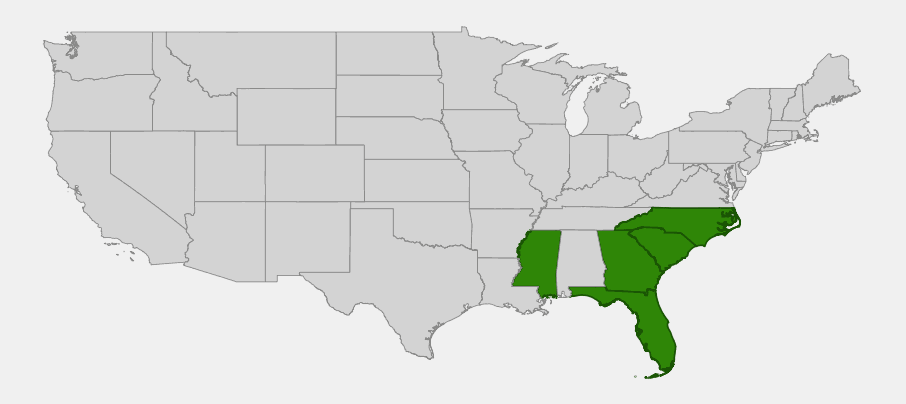
📋 Regional plant lists featuring Climbing Aster: North Carolina & South Carolina · Georgia, Alabama & Mississippi
Growing & Care Guide
Climbing aster is easy to please once you understand that it wants to be wet at the roots and given something to climb through. It is not a plant for dry upland beds, but in the right spot it is low-maintenance and spectacular in bloom.
Light
For the heaviest bloom, give climbing aster full sun to light shade. Plants in more shade will still flower but produce fewer blossoms and a looser, leggier habit. Along the coast it tolerates the intense reflected light of open marsh edges without any trouble.
Soil & Water
This species wants consistently moist to wet soil and will tolerate standing water for short periods, as well as occasional brackish splash near tidal areas. It is not drought tolerant and will decline in dry upland soil. A rain garden, pond margin, ditch bank or low spot that collects runoff is an ideal planting site. Regular irrigation can substitute for natural wetland moisture in a typical garden bed.
Planting Tips
Give climbing aster a fence, arbor, or sturdy shrub to scramble through, since it has no means of clinging on its own and will simply sprawl across the ground without support. Space plants 4 to 6 feet from their support to allow the canes room to reach it. Spring planting from container stock gives roots a full growing season to establish before the first bloom.
Pruning & Maintenance
Cut plants back hard — to within a foot or so of the ground — in late winter after the last flowers have faded, since bloom occurs on new growth produced that same year. This keeps the plant from becoming a woody tangle and encourages the vigorous new canes that flower best. Climbing aster has no significant pest or disease problems in cultivation.
Landscape Uses
Good uses for climbing aster include:
- Rain gardens and pond edges where soil stays consistently moist
- Trained on a fence or arbor for a late-season flowering screen
- Coastal gardens tolerant of occasional brackish splash
- Pollinator gardens needing a fall nectar source
- Naturalized plantings along ditches and low wet spots
Wildlife & Ecological Value
Climbing aster’s late bloom time makes it disproportionately valuable to pollinators, filling a gap in the nectar calendar after most other Coastal Plain wildflowers have finished for the year.
For Pollinators
The flowers are a magnet for migrating and late-season butterflies, including Gulf Fritillaries, sulphurs, and skippers passing through coastal Florida and Georgia in the fall. Bees of many kinds, including the season’s last native bees and honeybees, visit heavily for both nectar and pollen. In its native marsh-edge habitat, climbing aster can be one of the few significant nectar sources available by November.
For Birds
The small, tufted seeds attract seed-eating songbirds such as sparrows and finches through the winter months. The dense, tangled growth habit also provides cover for small birds foraging along marsh edges.
Ecosystem Role
As a shrub that roots where its stems touch damp ground, climbing aster helps stabilize the soft, transitional soils at the border of tidal and freshwater marshes, a zone that is often vulnerable to erosion. Its presence signals a relatively undisturbed marsh-edge community, since it does not persist well where habitat has been heavily altered.
Cultural & Historical Uses
Climbing aster has no significant recorded history of use by Indigenous peoples or in folk medicine, likely reflecting both its restricted habitat and its relatively narrow, scattered distribution. It has, however, a long history as a curiosity among Southeastern botanists, prized for being the only vining or scrambling member of its family in the region and for its unusually late bloom time.
In recent decades, climbing aster has found a modest following among native plant gardeners and specialty nurseries in Florida and the coastal Southeast, valued for exactly those same traits: a fall-flowering native that does something no other regional aster does.
Frequently Asked Questions
Is climbing aster actually a vine?
Not technically. It has no tendrils or twining stems to grip a support on its own. Instead, it sends out long, flexible canes that lean and scramble over nearby shrubs, fences or trellises, so it needs to be tied in or woven through a support if you want it to climb rather than sprawl.
Can climbing aster grow outside of wet soil?
It tolerates average garden moisture if watered regularly, but it will not thrive in dry, well-drained upland soil the way many other native asters do. Consistent moisture is the single most important factor in success with this species.
Why does climbing aster bloom so late?
Its bloom time, from October into December, is a distinctive trait of the species and likely an adaptation to its coastal marsh habitat. The late flowers give it access to pollinators with little competition from other blooming plants at that time of year.
Is climbing aster hard to find at nurseries?
Yes, it is not widely sold outside of specialty native plant nurseries in Florida and the coastal Southeast. Its narrow native range and specific wet-soil requirements have kept it out of the mainstream nursery trade, though demand among native gardeners has grown.
Does climbing aster spread aggressively?
No. It spreads slowly by rooting where stems touch moist soil, but it is not considered weedy or invasive, even in cultivation outside its immediate native range.

Looking for a nursery that carries Climbing Aster?
Browse our native plant nursery directory: Florida & Georgia · South Carolina · North Carolina · Mississippi