Arkansas Blue Star (Amsonia hubrichtii)
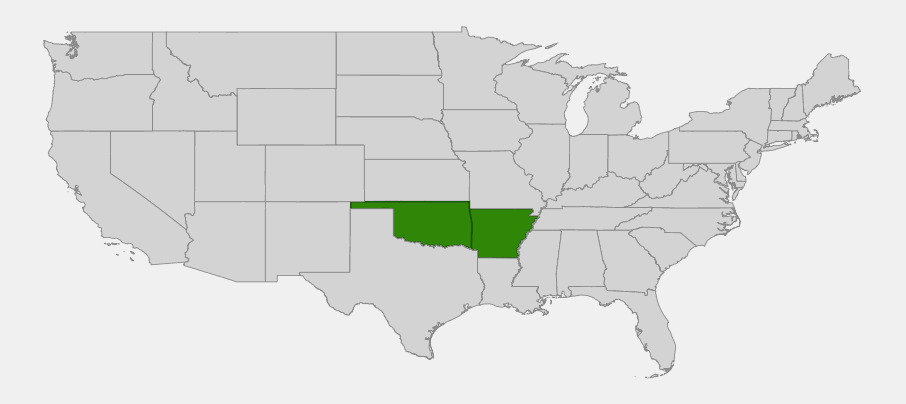
Amsonia hubrichtii, known as Arkansas Blue Star or Threadleaf Blue Star, is a herbaceous perennial wildflower with one of the most restricted native ranges of any plant widely grown in American gardens. It was discovered in 1942 by naturalist Leslie Hubricht along the Ouachita River in Garland County, Arkansas, and in the wild it is found only in a handful of counties in the Ouachita Mountains of west-central Arkansas and adjacent eastern Oklahoma.
Despite that narrow origin, Arkansas blue star has become a mainstay of American perennial gardens, prized for a rare combination of traits: clusters of pale, star-shaped blue flowers in spring, a tidy mound of extremely fine, needle-like foliage all summer, and one of the most reliable, brilliant golden-yellow fall color displays of any native perennial. It was the Perennial Plant Association’s Plant of the Year in 2011, a testament to how far this Ouachita Mountains native has traveled from its tiny original range.
In the garden, Arkansas blue star is about as low-maintenance as native perennials get: plant it once in full sun and reasonably good soil, and it will return reliably for decades, asking for little beyond an occasional spring trim to keep its form tidy. For gardeners in Arkansas and Oklahoma in particular, it is a chance to grow a true local, a species whose entire wild population sits within a short drive of home.
Identification
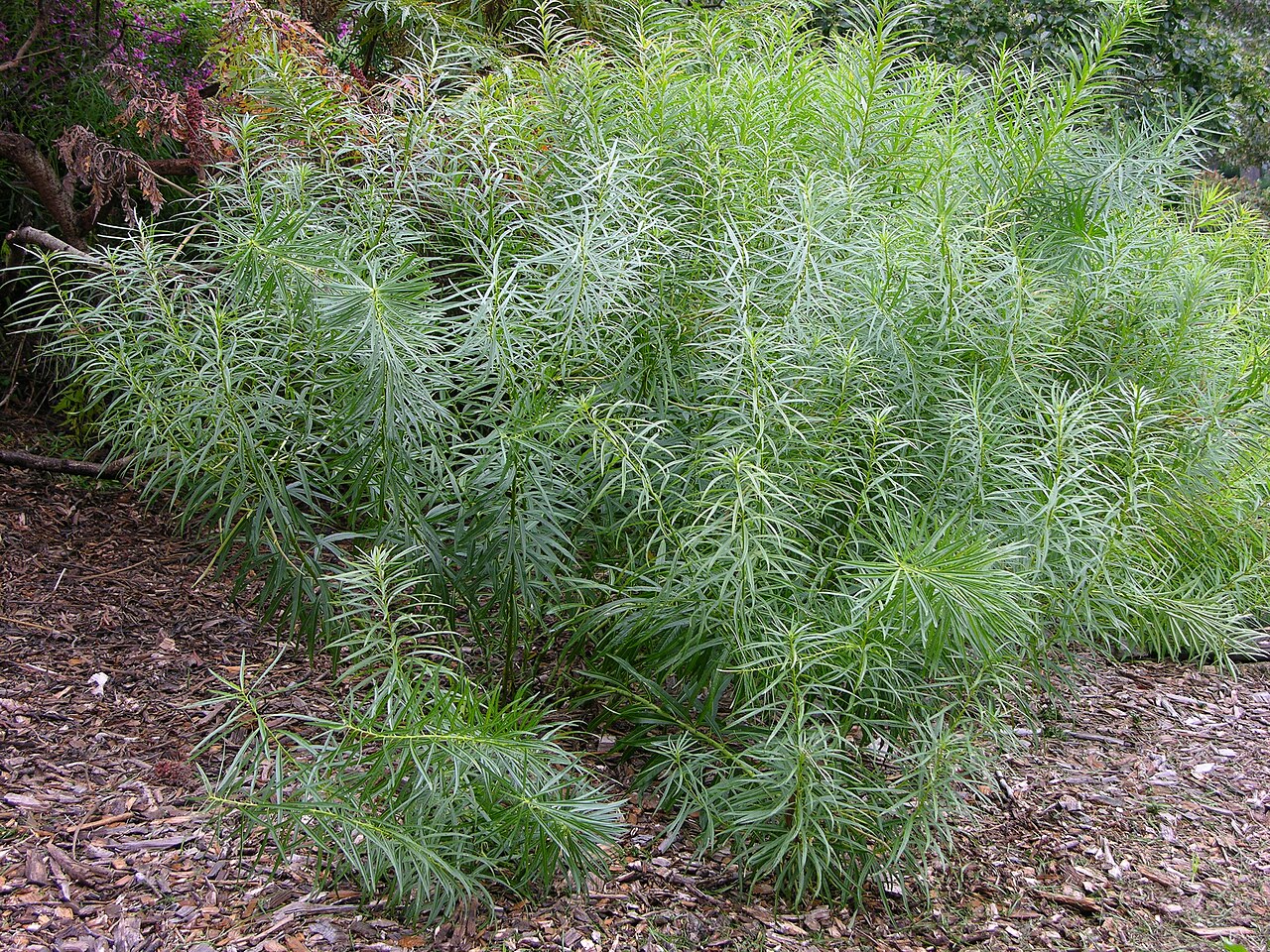
Arkansas blue star forms a dense, rounded clump of upright to slightly arching stems, typically 2 to 3 feet tall and as wide, with a fine, feathery texture unlike almost any other perennial in the garden.
Stems
Stems are herbaceous, numerous, and emerge from a woody crown each spring, dying back to the ground after frost. They are light green, slender, and branch somewhat toward the top of the plant where the flower clusters form.
Leaves
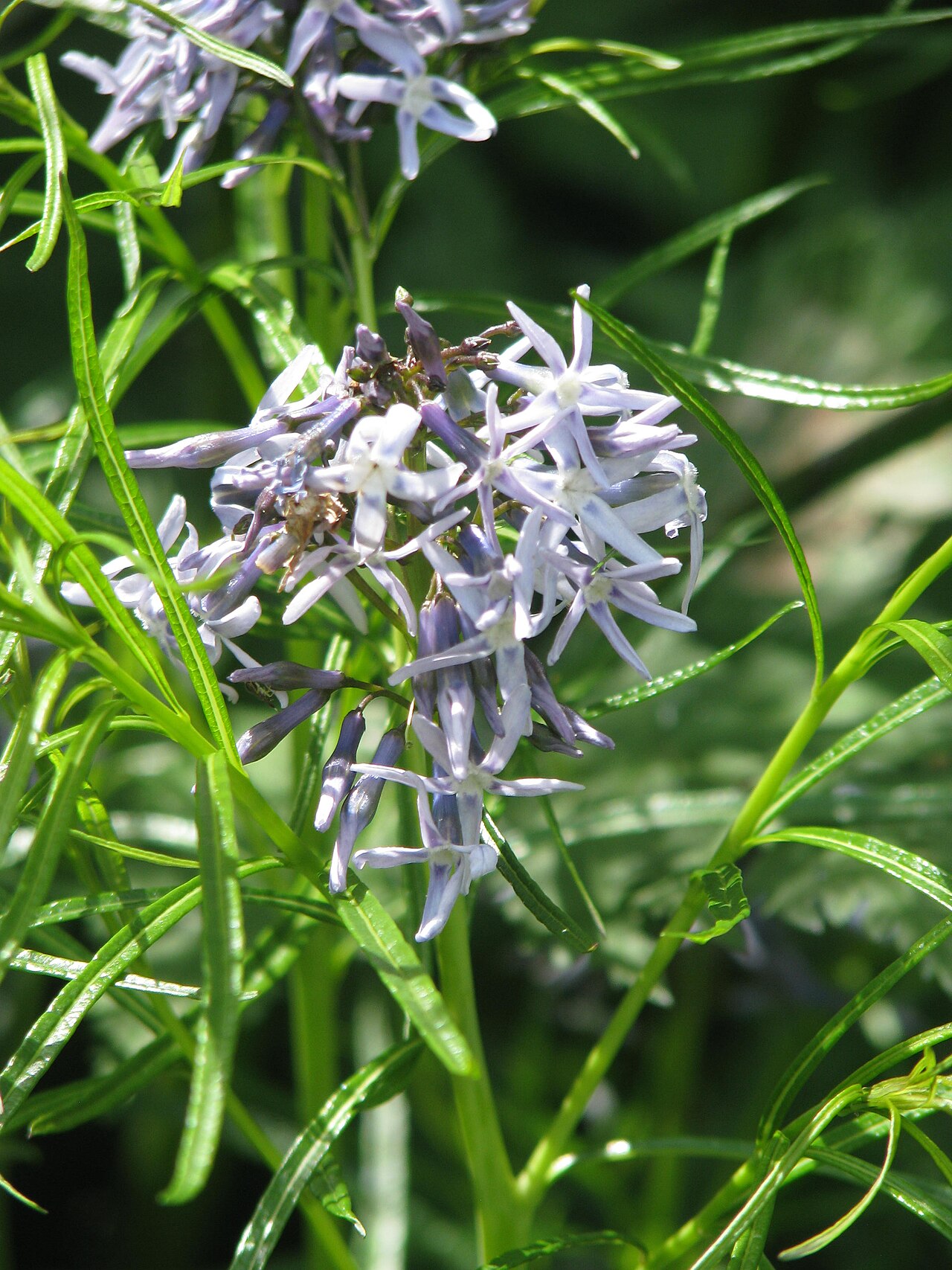
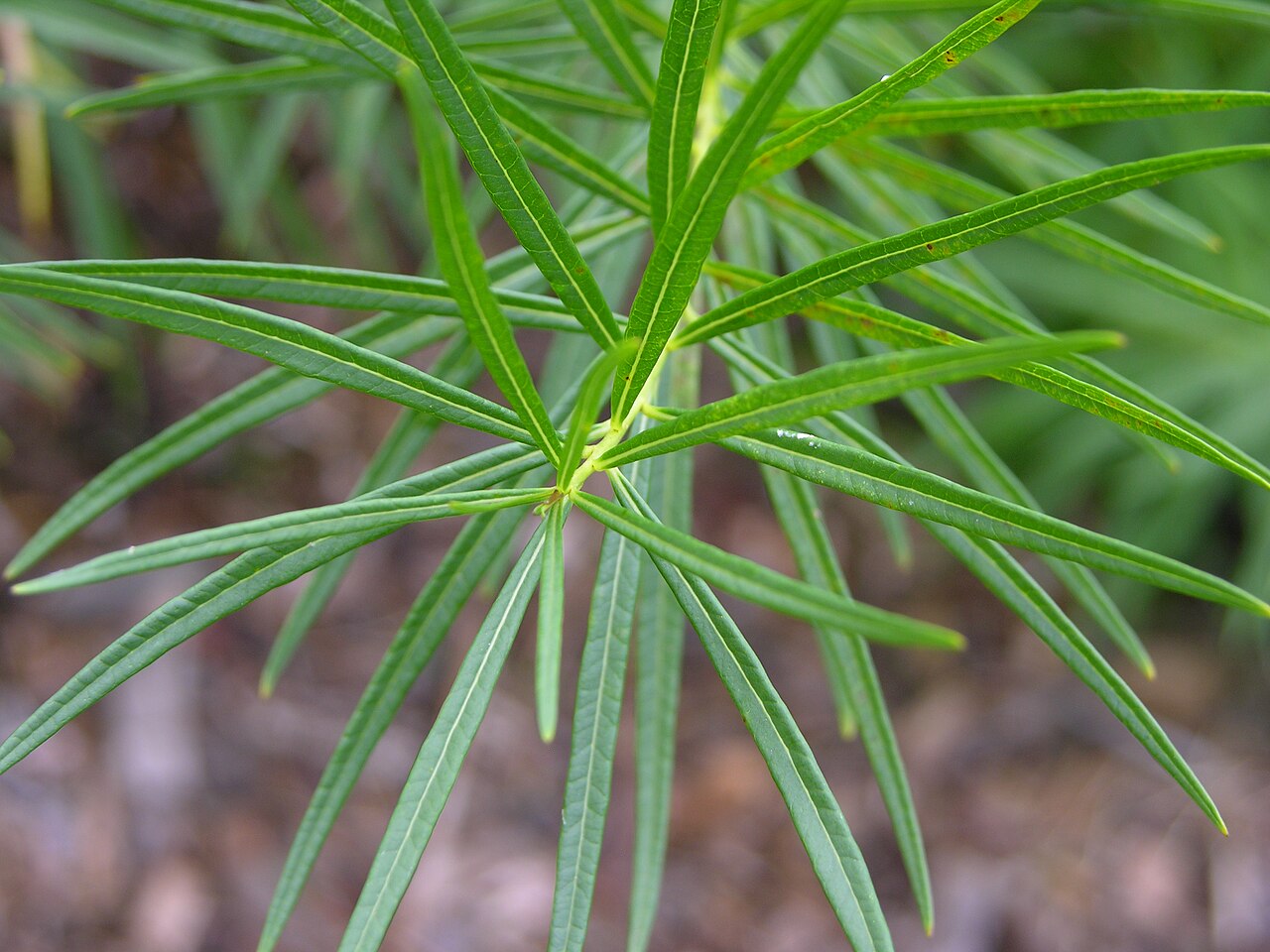
The leaves are the plant’s signature feature: thread-like, needle-narrow, and only about 1/8 inch wide but up to 4 inches long, giving the whole plant a soft, airy, almost conifer-like texture that is unique among perennial wildflowers. The foliage stays fresh green through summer and then turns a vivid, uniform golden yellow in autumn, a display that rivals many shrubs and small trees.
Flowers & Fruit
In mid-spring, clusters of small, star-shaped flowers open at the stem tips, each about ½ inch across with five narrow, pale powder-blue petals. The flower clusters are held just above the foliage for two to three weeks before the plant settles into its long season of fine summer texture. After bloom, narrow seed pods (follicles) develop, splitting open later in the season to release the seeds.
Quick Facts
| Scientific Name | Amsonia hubrichtii |
| Family | Apocynaceae (Dogbane) |
| Plant Type | Herbaceous perennial |
| Mature Height | 2–3 ft |
| Mature Spread | 2–3 ft |
| Growth Rate | Moderate |
| Sun Exposure | Full Sun to Part Shade |
| Water Needs | Average; drought tolerant once established |
| Soil Type | Well-drained sand, loam or rocky soil |
| Soil pH | Slightly acidic to neutral |
| Bloom Time | April – May |
| Flower Color | Pale powder blue |
| Fall Color | Brilliant golden yellow |
| Deer Resistant | Yes |
| USDA Hardiness Zones | 5–8 |
Native Range
Arkansas blue star is a true Interior Highlands endemic, native only to the Ouachita Mountains of west-central Arkansas and a small adjoining area of southeastern Oklahoma. In Arkansas, it is documented from only about seven counties, almost entirely within the Ouachita Mountains Natural Division, with the bulk of known populations found within the Ouachita National Forest.
Its natural habitat is quite specific: gravel bars, rocky streambanks, and glade-like openings along rivers and creeks in the Ouachita Mountains, where seasonal flooding and thin, rocky soil keep competing vegetation low. These riparian gravel-bar habitats flood periodically, which helps disperse the plant’s seeds downstream and keeps the open, sunny conditions it needs.
Though its wild range is tiny, Arkansas blue star is not considered threatened; the great majority of its known populations sit on protected National Forest land, and the species has proven easy to propagate, which has removed any pressure to collect from wild sites. It is, however, found nowhere in nature outside this small corner of the Ouachitas, so the plants widely sold and grown across the country all trace back to this one region.
📋 Regional plant lists featuring Arkansas Blue Star: Arkansas, Louisiana, Eastern Oklahoma & Eastern Texas
Growing & Care Guide
Arkansas blue star is one of the most forgiving native perennials available, tolerating a wide range of garden conditions far removed from its specialized gravel-bar origins, as long as it gets enough sun.
Light
Full sun produces the densest, most compact habit and the best fall color. In part shade, plants grow taller and looser and may need support or an early-summer trim to avoid flopping open. At least six hours of direct sun is recommended for the signature golden fall display.
Soil & Water
This species adapts to average to lean garden soil and is notably drought tolerant once its deep root system is established, a holdover from its gravelly, well-drained native habitat. It also tolerates occasional wet conditions. Avoid heavy, poorly drained clay that stays saturated through winter, which can lead to crown rot.
Planting Tips
Plant in spring or fall, spacing clumps 2 to 3 feet apart to allow for their eventual mature width. Arkansas blue star resents being disturbed once established, so choose its permanent location carefully rather than planning to divide or move it often. It is slow to establish in the first year or two but becomes long-lived and essentially maintenance-free afterward.
Pruning & Maintenance
Cutting the whole clump back by about one-third after flowering in late spring keeps the mound dense and compact through summer and prevents the floppy, open habit that can develop in richer soil or more shade. Old flowering stems can otherwise be left standing through winter for structure, then cut to the ground in late winter before new growth emerges.
Landscape Uses
Arkansas blue star excels in:
- Perennial borders as a season-long textural anchor
- Mass plantings for a unified fall-color display
- Rock gardens and gravel beds echoing its native habitat
- Low-maintenance and xeric gardens once established
- Cut foliage for its fine texture in arrangements
Wildlife & Ecological Value
Arkansas blue star supports pollinators during its spring bloom and provides season-long garden structure that benefits small wildlife, though its primary ecological value in the wild is tied to its specialized river-gravel habitat.
For Pollinators
The spring flowers attract native bees, bumblebees, and occasionally butterflies and hummingbird moths seeking early-season nectar. Though the bloom period is relatively brief, it coincides with a time when many pollinators are actively foraging after winter dormancy.
Ecosystem Role
In its native Ouachita Mountains habitat, Arkansas blue star is one of the specialized plants adapted to the harsh, periodically flooded gravel-bar environment, helping stabilize these dynamic streamside soils with its fibrous root system. Because this habitat type is naturally limited, the species serves as something of an indicator of healthy, undammed Ouachita streams.
Deer and Rabbit Resistance
Like other members of the dogbane family, Arkansas blue star contains a milky sap that most mammalian browsers find distasteful, making it reliably deer- and rabbit-resistant in the garden, a trait that has added to its popularity in areas with heavy deer pressure.
Cultural & Historical Uses
Arkansas blue star has no significant history of traditional use, largely a reflection of its late scientific discovery in 1942 and its extremely narrow native distribution, which kept it unknown to science and largely unknown to horticulture for decades after its description.
Its modern story is entirely horticultural. Following its introduction into the nursery trade in the late twentieth century, it spread quickly among perennial gardeners for its fine texture and fall color, culminating in its selection as the Perennial Plant Association’s Plant of the Year in 2011. Today it is grown in gardens across a far wider range of climates than the small corner of Arkansas and Oklahoma it calls home in the wild.
Frequently Asked Questions
Why is it called “Arkansas” blue star if it also grows in Oklahoma?
The common name reflects where the species was first discovered and where most of its population occurs — the Ouachita Mountains of Arkansas — even though its native range extends into a small adjoining part of eastern Oklahoma as well.
Is Arkansas blue star invasive or weedy?
No. It spreads slowly by its root crown and self-seeds only modestly in the garden. It is not considered weedy or aggressive in cultivation anywhere in the country.
How long does the fall color last?
The golden-yellow display typically lasts two to three weeks in mid to late autumn, varying somewhat with local frost timing, and is considered one of the most reliable fall color shows among herbaceous perennials.
Does Arkansas blue star need to be divided?
Not usually. Established clumps can be left undisturbed for many years and often perform better when left alone, since the plant resents root disturbance and can be slow to recover from division.
Can it grow outside zones 5–8?
It has been grown successfully somewhat outside this range by experienced gardeners, but zones 5 through 8 represent its well-documented range of reliable winter hardiness and summer heat tolerance.