
Bishop Pine (Pinus muricata)
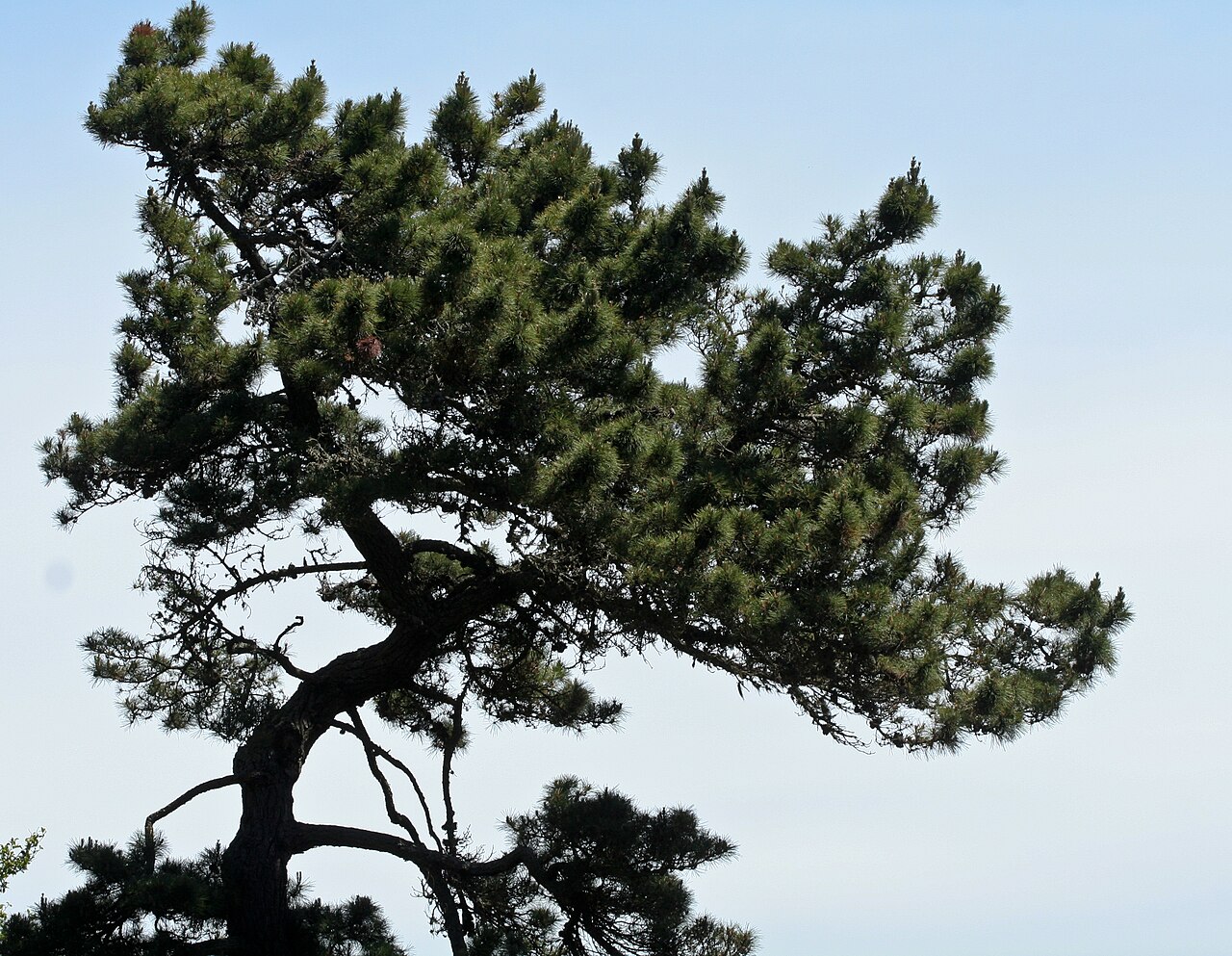
Pinus muricata, the Bishop Pine, is a tough, salt-tolerant conifer found only in scattered coastal pockets of California and a short stretch of Baja California, Mexico. Unlike wide-ranging pines, Bishop Pine survives as a series of disconnected populations strung along the fog belt from Humboldt and Mendocino counties south to San Luis Obispo and Santa Barbara, plus the Northern Channel Islands — each population shaped by the wind, salt spray and thin soils of its particular stretch of coast. Its name comes from the type locality near San Luis Obispo, historically called Mission San Luis Obispo de Tolosa, in an area once known as the Bishop’s land grant.
Like several other California closed-cone pines, Bishop Pine is strongly fire-adapted: many of its cones are serotinous, staying tightly sealed with resin for years and opening in large numbers only when heated by fire, which also clears the ground for seedlings. This makes the species a classic “boom and bust” coastal pioneer, often forming dense, even-aged stands that regenerate dramatically after a burn.
For gardeners along the California coast, Bishop Pine offers something few other trees can: genuine tolerance of salt spray, wind and poor soil, combined with a wild, picturesque, often wind-sculpted form that looks at home on a foggy bluff or sandy coastal lot.
Identification
Bishop Pine is a small to medium evergreen conifer, typically 40 to 80 feet tall, though exposed coastal trees are often shorter and dramatically wind-flagged, with branches swept to one side. Inland or more sheltered individuals tend to grow straighter and taller with a more rounded crown.
Bark & Stems
Bark is dark gray-brown to blackish, thick and deeply furrowed into irregular ridges on older trunks, while young branches are stout and often retain cones for years, giving older limbs a knobby, cone-studded look.
Leaves
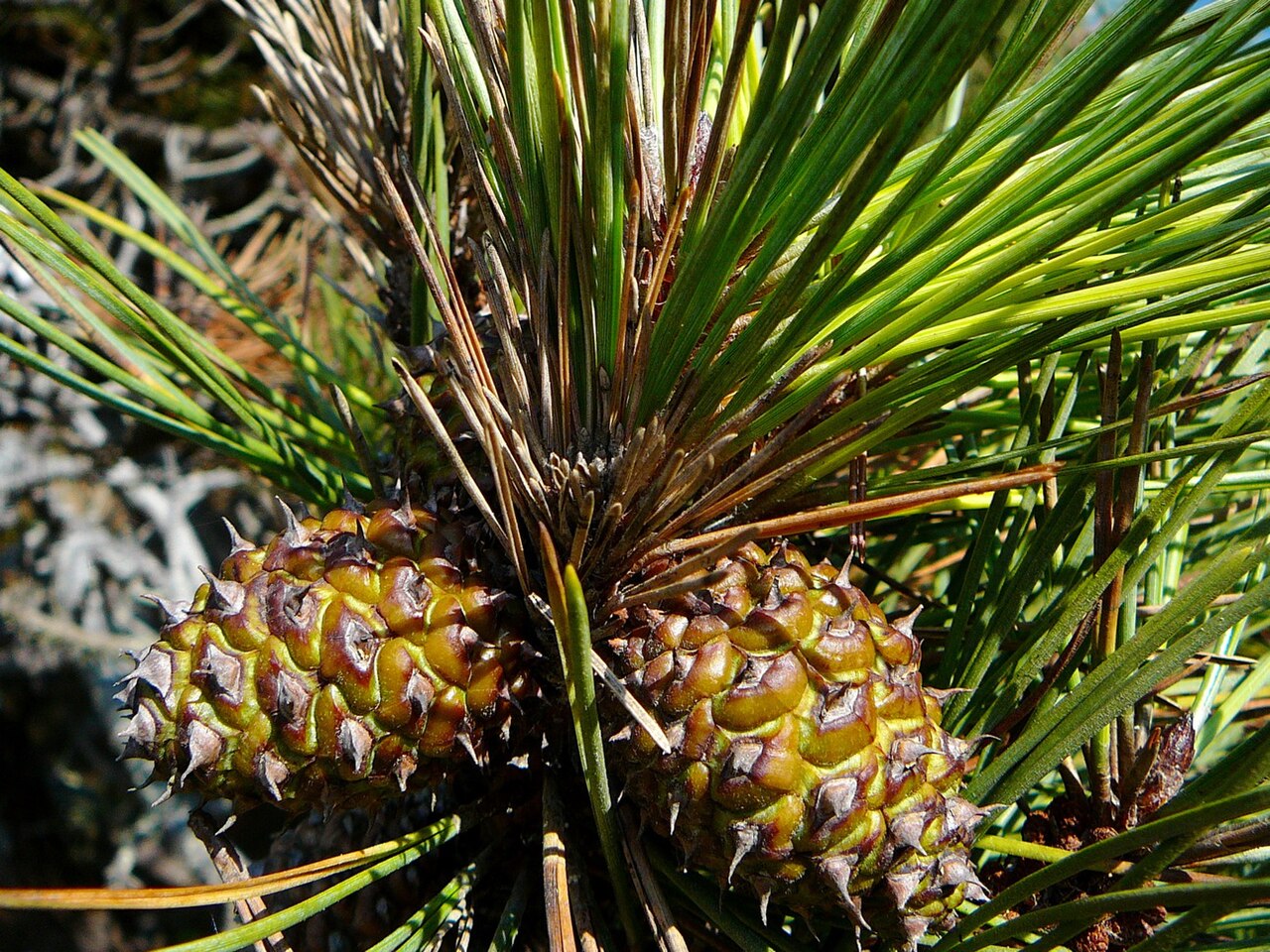
Needles are stiff, dark yellow-green, 4 to 6 inches long, and bundled in fascicles of two — a useful field mark that distinguishes it from the three-needle pines of the California mountains. Needles are often densely clustered toward branch tips.
Cones & Seeds
Cones are egg-shaped, asymmetrical at the base, 2 to 3.5 inches long, and armed with small, sharp prickles on each scale. Many populations are strongly serotinous, meaning cones stay sealed with resin for years — sometimes decades — remaining attached to the branch in dense whorled clusters until the heat of a fire melts the resin and triggers a mass release of seed. This serotiny varies by population; some southern stands open more readily without fire than northern ones.
Quick Facts
| Scientific Name | Pinus muricata |
| Family | Pinaceae (Pine) |
| Plant Type | Evergreen Coniferous Tree |
| Mature Height | 40–80 ft (shorter and wind-flagged on exposed bluffs) |
| Mature Spread | 20–35 ft |
| Growth Rate | Moderate to fast when young |
| Sun Exposure | Full Sun |
| Water Needs | Low once established; relies partly on coastal fog |
| Soil Type | Sandy, rocky, or poor soils; well-drained |
| Soil pH | 5.5–7.0 |
| Bloom Time | Spring (wind-pollinated; cones mature over two years) |
| Flower Color | N/A (inconspicuous reddish male cones) |
| Fall Color | None; evergreen |
| Fruit | Small prickly cones, 2–3.5 in, often serotinous |
| Deer Resistant | Yes |
| USDA Hardiness Zones | 7–10 |
Native Range
Bishop Pine is a California near-endemic, with a small additional population on Cedros Island and nearby Baja California, Mexico. Rather than a continuous range, it occurs as disjunct coastal populations: from southern Humboldt and Mendocino counties (including the well-known stands around Fort Bragg and Point Reyes in Marin County) south through Sonoma, Santa Cruz and Monterey counties, with further stands near San Luis Obispo, Santa Barbara, and on Santa Cruz and Santa Rosa islands in the Northern Channel Islands.
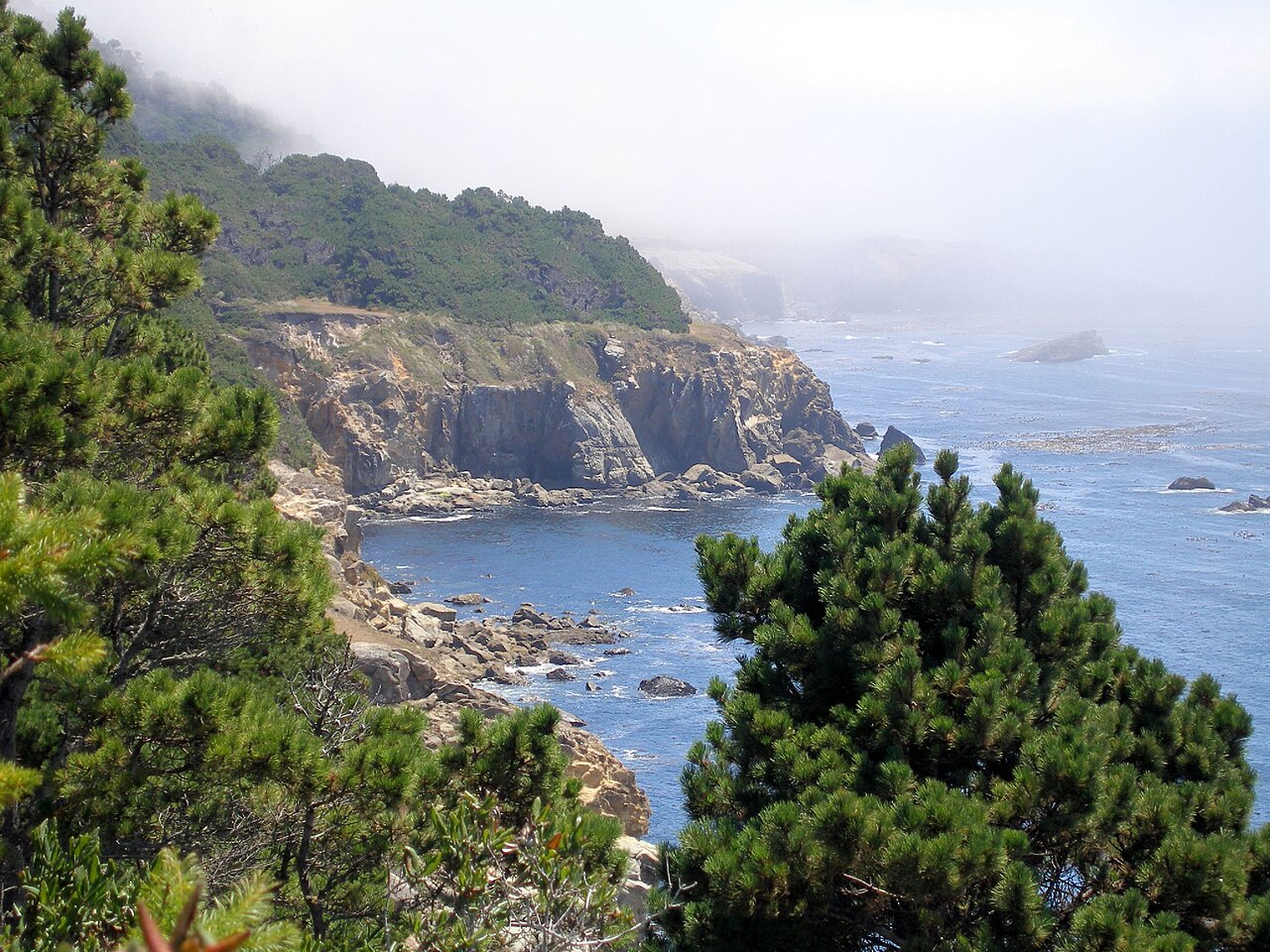
It grows almost entirely within reach of coastal fog, typically on bluffs, headlands, dunes, and sandy or rocky marine terraces close to the ocean, rarely venturing far inland. In many sites it forms dense, nearly pure stands on nutrient-poor soils where competition from other trees is limited, often alongside Coast Live Oak, Douglas-fir, coastal scrub, and in some areas Bishop Pine forest transitions directly into coastal prairie or dune scrub.
Fire plays a defining role in the species’ ecology: the serotinous cones that dominate many populations stay sealed for years, and a stand-replacing fire can trigger a massive, synchronized release of seed, regenerating an even-aged forest within a season. This boom-and-bust cycle is part of why Bishop Pine forests often look remarkably uniform in age across large areas.
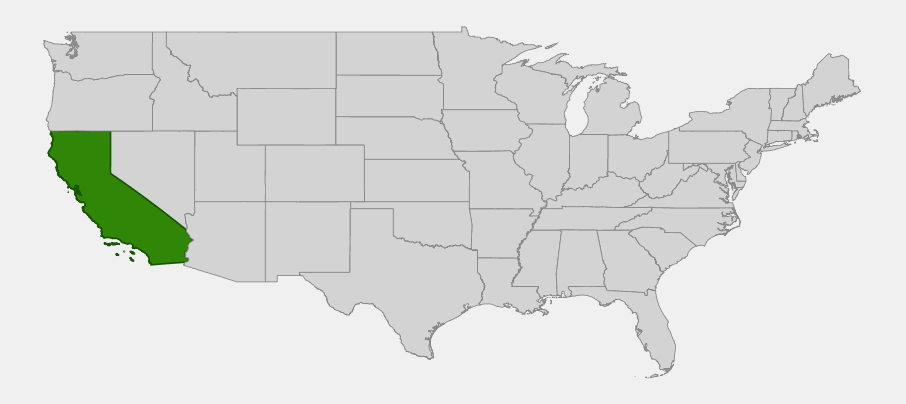
📋 Bishop Pine’s native range is limited to the California coast, which is not yet covered by one of our regional plant lists.
Growing & Care Guide
Bishop Pine is best suited to coastal California gardens where it can experience something close to its natural conditions: full sun, sandy or rocky soil, and regular exposure to wind and fog.
Light
Give it full sun. Bishop Pine is adapted to open, exposed coastal sites and does not thrive, nor develop its characteristic sculpted form, in shaded or crowded plantings.
Soil & Water
It is well suited to poor, sandy, or rocky soils and tolerates salt spray better than most pines, making it a strong choice directly along the coast. Water young trees to establish them, then taper off; established trees in fog-belt gardens often need little to no supplemental irrigation, though inland plantings away from coastal fog will need more regular watering.
Planting Tips
Plant container-grown trees in fall or early spring in a well-drained, sunny site; Bishop Pine does not transplant well as a large specimen, so start with a younger tree. Give it room to develop its naturally irregular, sometimes wind-sculpted form rather than crowding it among other trees.
Pruning & Maintenance
Minimal pruning is needed. Remove dead or damaged branches as they occur, but avoid heavy shaping, which works against the tree’s naturally wild, wind-shaped character. Watch for bark beetles and pitch canker in stressed or drought-weakened trees, both of which have affected wild Bishop Pine populations in parts of California.
Propagation
Propagation is by seed. Because many populations are serotinous, cones may need brief heat treatment (such as a short period in an oven at low temperature) to open and release viable seed, echoing the fire cues the species relies on in the wild.
Landscape Uses
- Coastal specimen tree tolerant of wind and salt spray
- Windbreak or screen on exposed coastal properties
- Dune and bluff stabilization in appropriate coastal settings
- Habitat restoration within its native fog-belt range
- Naturalistic or wild-style coastal gardens
Wildlife & Ecological Value
Bishop Pine forests, though limited in area, are an important and distinctive habitat type along the California coast.
For Birds
Dense Bishop Pine stands provide nesting and roosting habitat for raptors and songbirds, while woodpeckers and nuthatches forage in the bark, and seed-eating birds exploit cones that do open without fire.
For Mammals
Squirrels and other small mammals feed on Bishop Pine seed when cones open, and the dense cover of pure stands offers shelter for deer and other wildlife moving along the coastal fog belt.
For Pollinators
As a wind-pollinated conifer, Bishop Pine does not rely on insect pollinators, but the understory and edges of Bishop Pine forest often support coastal scrub and prairie wildflowers that are important nectar sources for native bees and butterflies.
Ecosystem Role
Bishop Pine is a textbook fire-adapted, serotinous conifer: many populations hold their seed crop sealed in resin-coated cones for years, releasing it in a synchronized pulse after fire clears competing vegetation. This boom-and-bust regeneration pattern creates the dense, even-aged stands typical of the species and makes it a key structural component of California’s coastal fog-belt forests, some of which are recognized as rare or sensitive natural communities.
Cultural & Historical Uses
Bishop Pine takes its common name from the area around present-day San Luis Obispo, historically associated with Mission San Luis Obispo de Tolosa and once known informally as the “Bishop’s” land, where early botanical specimens of the species were collected. The scientific name muricata, meaning “armed with sharp points,” refers to the small prickles covering each cone scale.
Coastal Indigenous peoples throughout Bishop Pine’s range, including communities within Pomo, Coast Miwok, and Chumash homelands, lived among and used coastal pine woodlands for wood, cover, and other resources, as they did with other regional conifers, though Bishop Pine’s naturally patchy, fire-dependent stands made it less central than some other native trees.
Today the species is best known to botanists and land managers for its striking fire ecology and to coastal homeowners and landscapers for its toughness in salt-sprayed, wind-exposed sites where few other trees perform well, as well as for the distinctive, often dramatically wind-sculpted form it develops on exposed headlands.
Frequently Asked Questions
Why do some Bishop Pine cones stay closed for years?
Many populations are serotinous, meaning their cones are sealed shut with resin and only open when heated by fire. This lets the species store years of seed safely on the tree, then release it all at once onto the open, nutrient-rich ground a fire leaves behind.
Is Bishop Pine the same as Shore Pine?
No. Bishop Pine (Pinus muricata) has needles in bundles of two and is limited to California and northern Baja California, while Shore Pine (Pinus contorta var. contorta) also has two-needle bundles but ranges much farther north along the Pacific Coast into Oregon, Washington, and Alaska; the two are sometimes confused but are distinct species.
Can Bishop Pine grow away from the coast?
It can be grown inland with regular irrigation, but it performs best and shows the most natural, resilient form in or near the coastal fog belt that shapes its native populations.
Does Bishop Pine tolerate salt spray?
Yes, notably well. It is one of the more salt-tolerant pines available for California coastal gardens, often planted specifically for its ability to handle direct ocean exposure.
Are Bishop Pine populations at risk?
Individual stands can be vulnerable to development pressure, pitch canker disease, and altered fire regimes, and because the species exists as scattered, genetically distinct populations rather than one continuous range, the loss of any single stand is ecologically significant.

Looking for a nursery that carries Bishop Pine?
Browse our native plant nursery directory: California