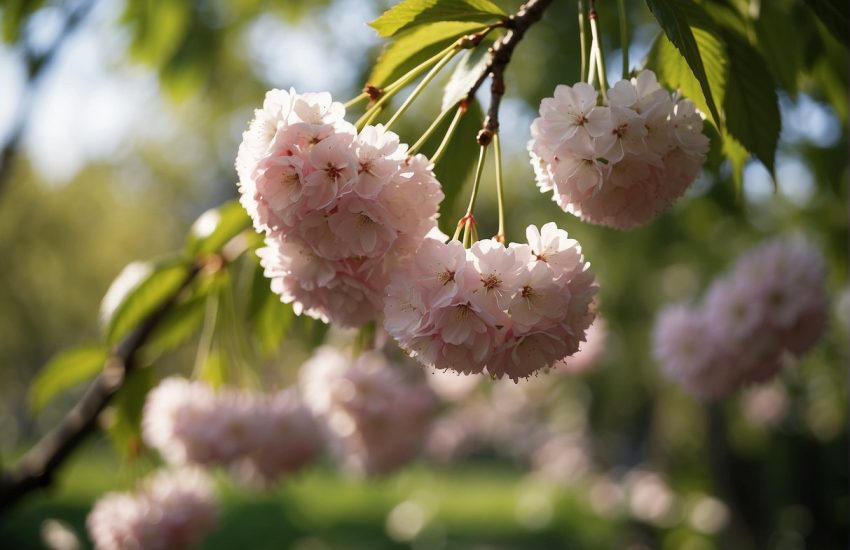
Trailing Phlox (Phlox nivalis)
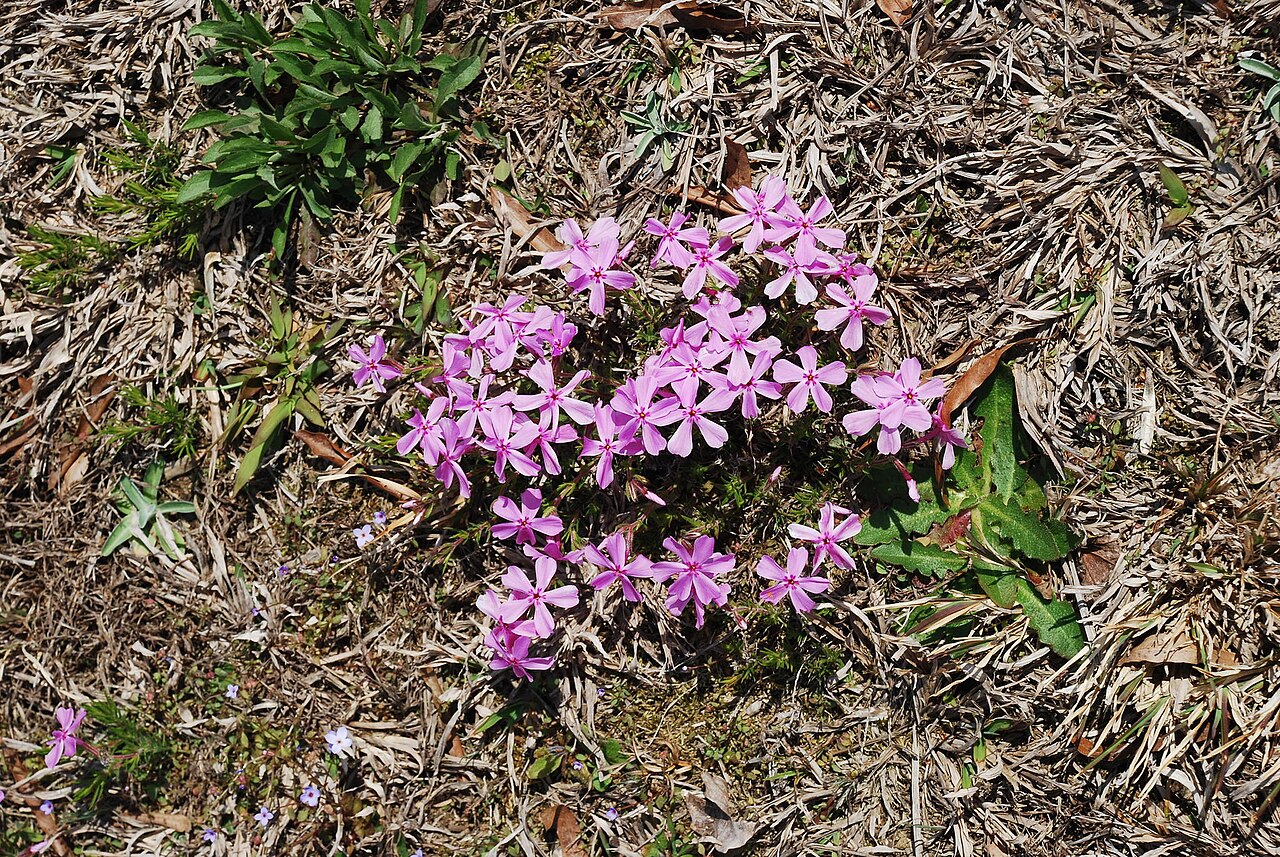
Phlox nivalis, commonly called trailing phlox or pineland phlox, is a low, mat-forming, semi-evergreen perennial of sandy pinelands and open woods across the Southeast. Unlike the taller, upright phlox species of moist meadows, trailing phlox hugs the ground, spreading into loose cushions of needle-like foliage that disappear into surrounding wiregrass outside of bloom season. In spring, those mats light up with abundant pink, lavender or white flowers held just above the foliage.
Trailing phlox is a plant of fire-maintained, well-drained habitats: longleaf pine sandhills, sandy oak-pine woods, and dry, open roadside margins on acidic, sandy soil. It depends on at least occasional disturbance or fire to keep competing vegetation low, since it cannot tolerate heavy shading or dense ground litter for long.
Identification
Trailing phlox forms a low, spreading mat or loose cushion, typically just 4 to 8 inches tall, with trailing stems that root where they touch the ground and slowly widen the clump over several seasons.
Leaves
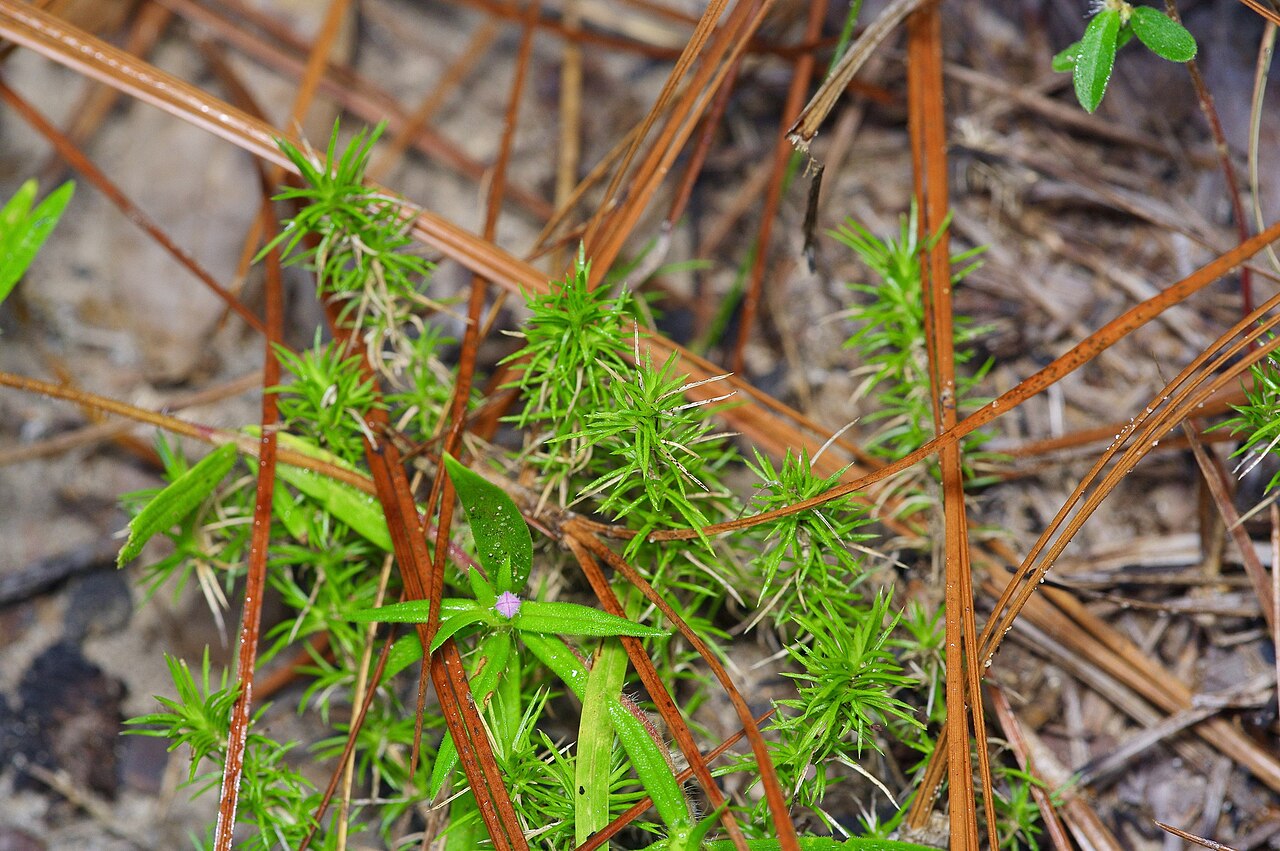
Leaves are small, narrow and needle-like to linear-lance-shaped, under an inch long, crowded along the trailing stems and often semi-evergreen, persisting through mild winters. The foliage has a slightly bristly, almost moss-like texture that blends into sandy ground cover when not in bloom.
Flowers
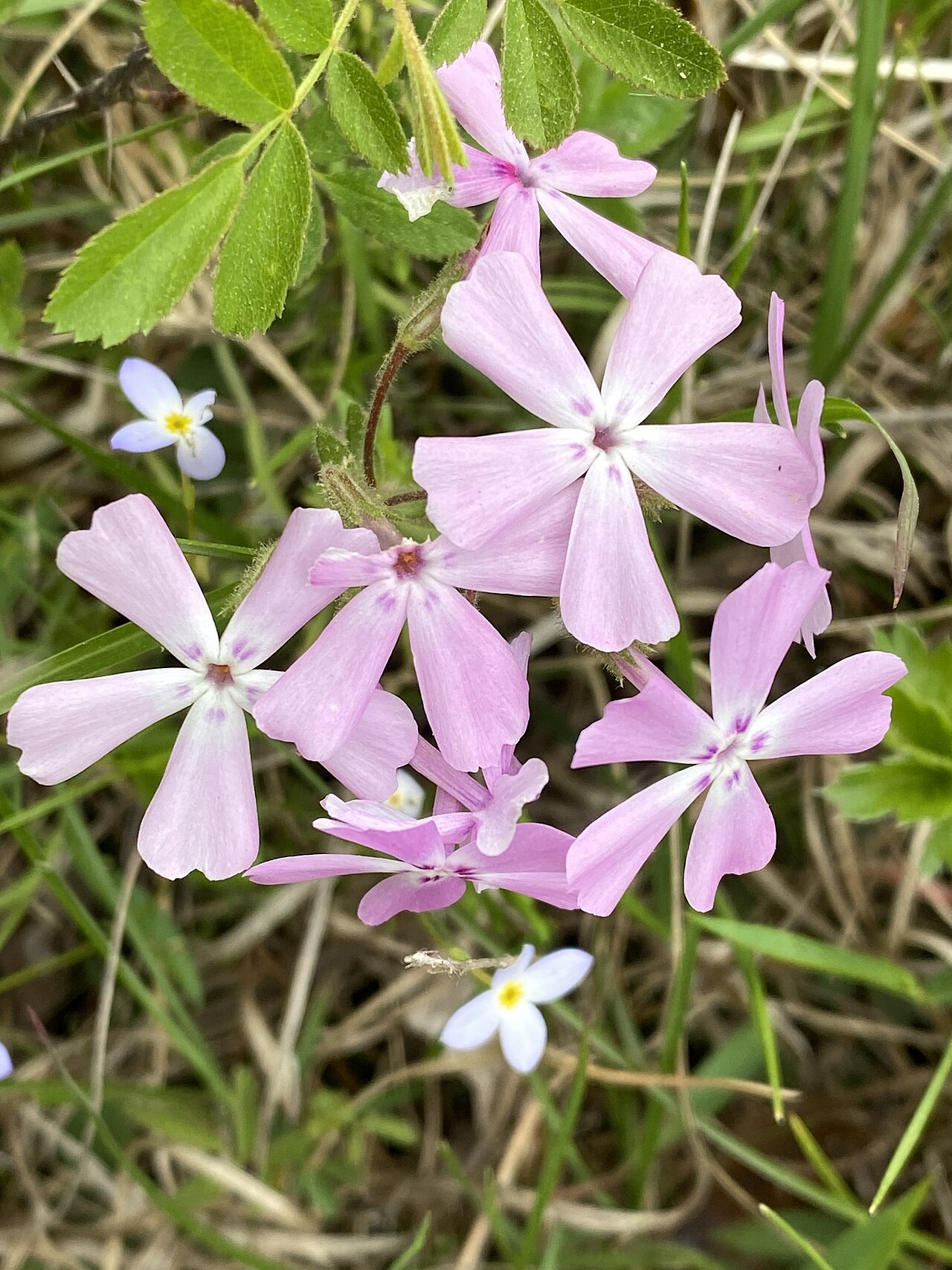
Flowers are five-lobed, roughly 3/4 to 1 inch across, and range from pink and lavender-pink to white, often with a darker eye at the throat. They are held on short stalks just above the foliage in small, loose clusters, smothering the mat in color at peak bloom in spring. The genus name Phlox comes from the Greek word for “flame,” a nod to the vivid color many species display.
Fruit & Seeds
Flowers are followed by small, three-chambered capsules that split open to release a few seeds near the parent plant. Most garden spread, however, comes from the trailing stems rooting as they creep, rather than from seed.
Quick Facts
| Scientific Name | Phlox nivalis |
| Family | Polemoniaceae (Phlox) |
| Plant Type | Mat-forming, semi-evergreen perennial subshrub |
| Mature Height | 4–8 in |
| Mature Spread | 1–2 ft, slowly spreading |
| Growth Rate | Slow to moderate |
| Sun Exposure | Full Sun to Light Shade |
| Water Needs | Low; good drainage essential |
| Soil Type | Sandy, well-drained, acidic soils |
| Soil pH | 5.0–6.5 (acidic) |
| Bloom Time | March – May |
| Flower Color | Pink, lavender-pink, or white |
| Fall Color | None notable; foliage semi-evergreen |
| Fruit | Small three-chambered seed capsules |
| Deer Resistant | Moderate |
| USDA Hardiness Zones | 6–9 |
Native Range
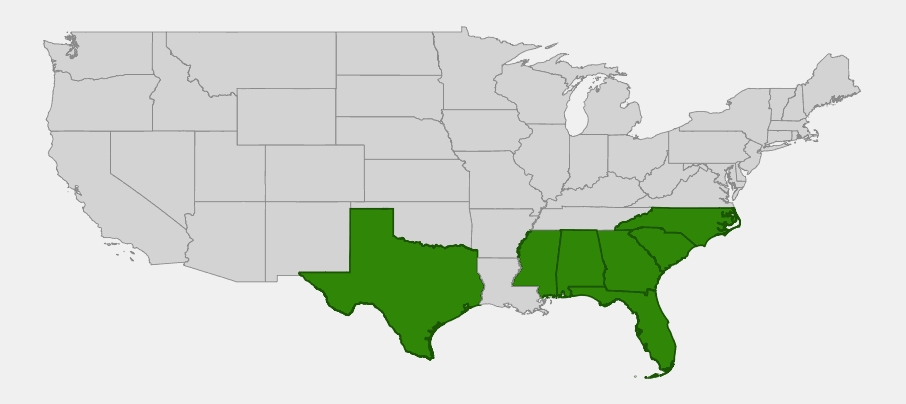
Trailing phlox is native to the southeastern Coastal Plain and Piedmont, from the Carolinas south through Georgia and Florida and west through Alabama and Mississippi into Texas. One distinctive population, Texas trailing phlox (Phlox nivalis subsp. texensis), is a federally endangered subspecies restricted to a handful of sandy pineland sites in a few East Texas counties.
Trailing phlox has sometimes been reported more broadly in older literature, but this profile follows current county-level distribution data and lists only states with confirmed native populations: North Carolina, South Carolina, Georgia, Florida, Alabama, Mississippi and Texas.
Within its range, trailing phlox is tied to dry, sandy, acidic sites: longleaf pine sandhills, sand pine scrub, dry oak-pine woods and open, sunny roadside or utility-corridor margins over sandy soil. It depends on periodic fire or other disturbance to keep the ground open, and populations can decline quickly where fire is suppressed and woody shrubs close in.
📋 Regional plant lists featuring Trailing Phlox: Arkansas, Louisiana, Eastern Oklahoma & Eastern Texas (native to the eastern Texas portion only) · North Carolina & South Carolina · Georgia, Alabama & Mississippi
Growing & Care Guide
Trailing phlox rewards gardeners who can offer it the lean, fast-draining conditions of its native sandhills — it is not a plant for rich, moisture-retentive garden beds.
Light
Full sun produces the densest, most floriferous mats. Light, high shade is tolerated, especially in hotter inland sites, but heavy shade thins the foliage and sharply reduces bloom.
Soil & Water
Sharp drainage is essential: lean, sandy, acidic soil mimics its native sandhill habitat. Established plants are quite drought tolerant and are easily killed by heavy, poorly drained or overly fertile soil, where they are prone to rot. Avoid rich garden loam and supplemental fertilizer.
Planting Tips
Plant in a raised bed, rock garden or sandy slope where water drains away quickly. Keep young plants watered through their first season to establish, then back off watering substantially — established plants prefer to stay on the dry side.
Pruning & Maintenance
Shear mats lightly after bloom to keep growth dense and compact. Keep encroaching taller vegetation, leaf litter and mulch away from the crown, since trailing phlox depends on open, uncluttered ground in the wild and can be smothered by heavy leaf litter in a garden bed.
Propagation
Propagate by division of rooted sections of the trailing stems, or by softwood cuttings taken after flowering. Seed is seldom used in cultivation.
Landscape Uses
- Rock gardens and sandy slopes where few other flowering perennials thrive
- Groundcover for lean, dry, sunny sites in native plant gardens
- Edging along dry garden paths or raised beds
- Longleaf pine and sandhill restoration plantings within its native range
- Container and trough gardens with fast-draining, sandy mix
Wildlife & Ecological Value
Trailing phlox is a modest but reliable early-season nectar source in a habitat — longleaf pine sandhills — that is itself one of the most imperiled and biodiverse plant communities in North America.
For Pollinators
The spring flowers attract native bees, small butterflies and day-flying moths, providing nectar early in the season when few other sandhill wildflowers are yet in bloom.
For Birds
The plant itself is not a notable food source for birds, but as part of the low, open ground layer of longleaf pine sandhills, it contributes to habitat structure favored by ground-nesting and insect-foraging birds of that ecosystem.
Ecosystem Role
As a fire-adapted ground layer species, trailing phlox is both an indicator and a beneficiary of well-managed, periodically burned sandhill and pine flatwoods habitat. Its decline in many areas tracks closely with decades of fire suppression, making it something of a signal species for sandhill ecosystem health.
Cultural & Historical Uses
Trailing phlox does not have a well-documented history of medicinal or utilitarian use; its significance has mostly been horticultural and ecological rather than practical. Native plant nurseries and rock gardeners in the Southeast have grown it for generations as a tough, low-maintenance groundcover suited to the region’s poor, sandy soils.
Its most notable modern significance is conservation-related: the Texas trailing phlox subspecies is federally listed as endangered, and habitat protection and fire management for the remaining populations are active conservation priorities in East Texas.
Frequently Asked Questions
Is trailing phlox the same as creeping phlox sold at garden centers?
No. Garden centers most often sell Phlox subulata (moss phlox) or Phlox stolonifera (creeping phlox) under similar names. Trailing phlox (Phlox nivalis) is a distinct species with its own native range in the Southeast and Texas, and unnotched flower petals.
Why did my trailing phlox die over winter?
Wet, poorly drained soil is the most common cause. This species is adapted to lean, fast-draining sandhill soils and is prone to crown rot in heavy or waterlogged ground, especially in winter.
Is Texas trailing phlox endangered?
Yes — Phlox nivalis subsp. texensis, a regional variant restricted to a few East Texas counties, is federally listed as endangered. The wider species is not federally listed but has declined in many areas due to fire suppression and habitat loss.
Does trailing phlox need fire to survive?
In the wild, yes, more or less — it depends on periodic fire or similar disturbance to keep competing shrubs and leaf litter from overtaking its low mats. In a garden setting, simply keeping the site open and free of heavy mulch achieves a similar effect.

Looking for a nursery that carries Trailing Phlox?
Browse our native plant nursery directory: North Carolina · South Carolina & Texas · Georgia & Florida · Alabama · Mississippi