
Velvet Mesquite (Prosopis velutina)
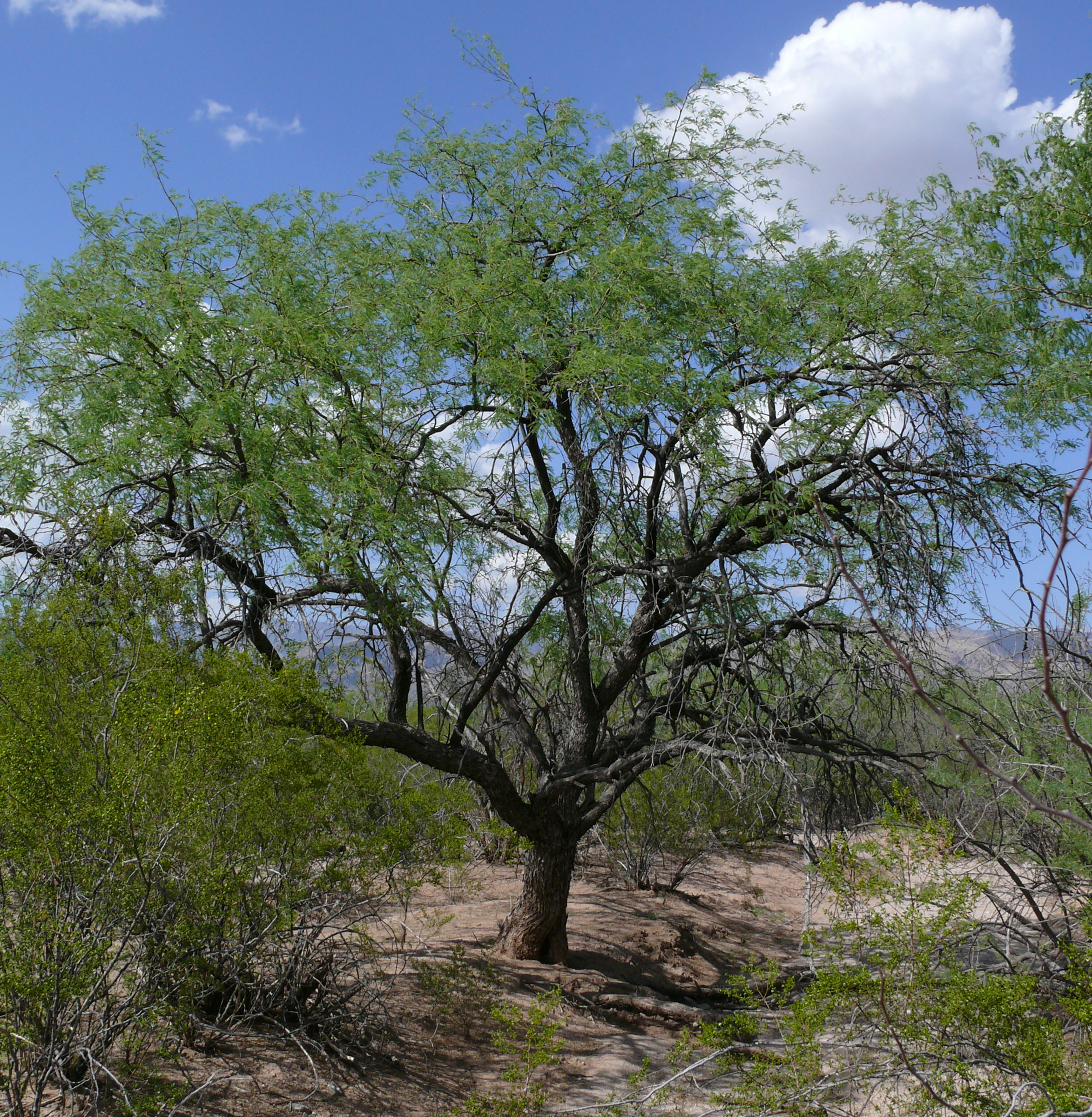
Prosopis velutina, the Velvet Mesquite, is the signature tree of the Sonoran Desert — a deep-rooted, thorny legume that turns dry washes and desert flats into shady bosques wherever its roots can reach groundwater. The “velvet” in its name comes from the fine, soft hairs (pubescence) that cover its twigs, leaflets, and young pods, giving the whole tree a slightly fuzzy, gray-green cast compared to its smoother relatives. Where water is available, it grows into a broad, rounded tree 20 to 30 feet tall; on drier upland sites it stays a many-stemmed thorny shrub.
Velvet mesquite is a nitrogen-fixing member of the pea family (Fabaceae) and one of the most ecologically important plants of the Arizona and New Mexico borderlands. Its fallen leaves and pods enrich desert soil, its canopy creates the only real shade for miles in some habitats, and its sugary pods feed everything from coyotes and javelina to ground squirrels. Dense streamside stands of velvet mesquite, called bosques, are now rare and are considered one of the most threatened habitat types in the American Southwest.
For desert gardeners, velvet mesquite is a workhorse: extremely drought tolerant once its taproot is established, tolerant of poor rocky or caliche soils, and a magnet for bees, birds, and other wildlife. It does carry stout thorns, so it is best sited away from paths, patios, and play areas, and it should never be planted directly over a septic line or shallow irrigation pipe, since the taproot will seek out any available water.
Identification
Velvet mesquite typically forms a single- or multi-trunked tree 20 to 30 feet tall and wide, though old streamside trees in favorable sites can reach 40 to 50 feet. On dry upland ground without reliable water it is often a dense, many-stemmed thorny shrub only 10 to 15 feet tall. The crown is broad, rounded, and airy, casting light, dappled shade rather than deep shade.
Bark & Twigs
Young bark is reddish-brown and smooth; mature bark turns dark gray-brown and breaks into rough, shaggy, furrowed plates. Twigs zigzag slightly from node to node and are covered in fine, velvety hairs when young. Paired thorns up to an inch long grow at the nodes, making the tree unpleasant to brush against and useful as a barrier planting.
Leaves
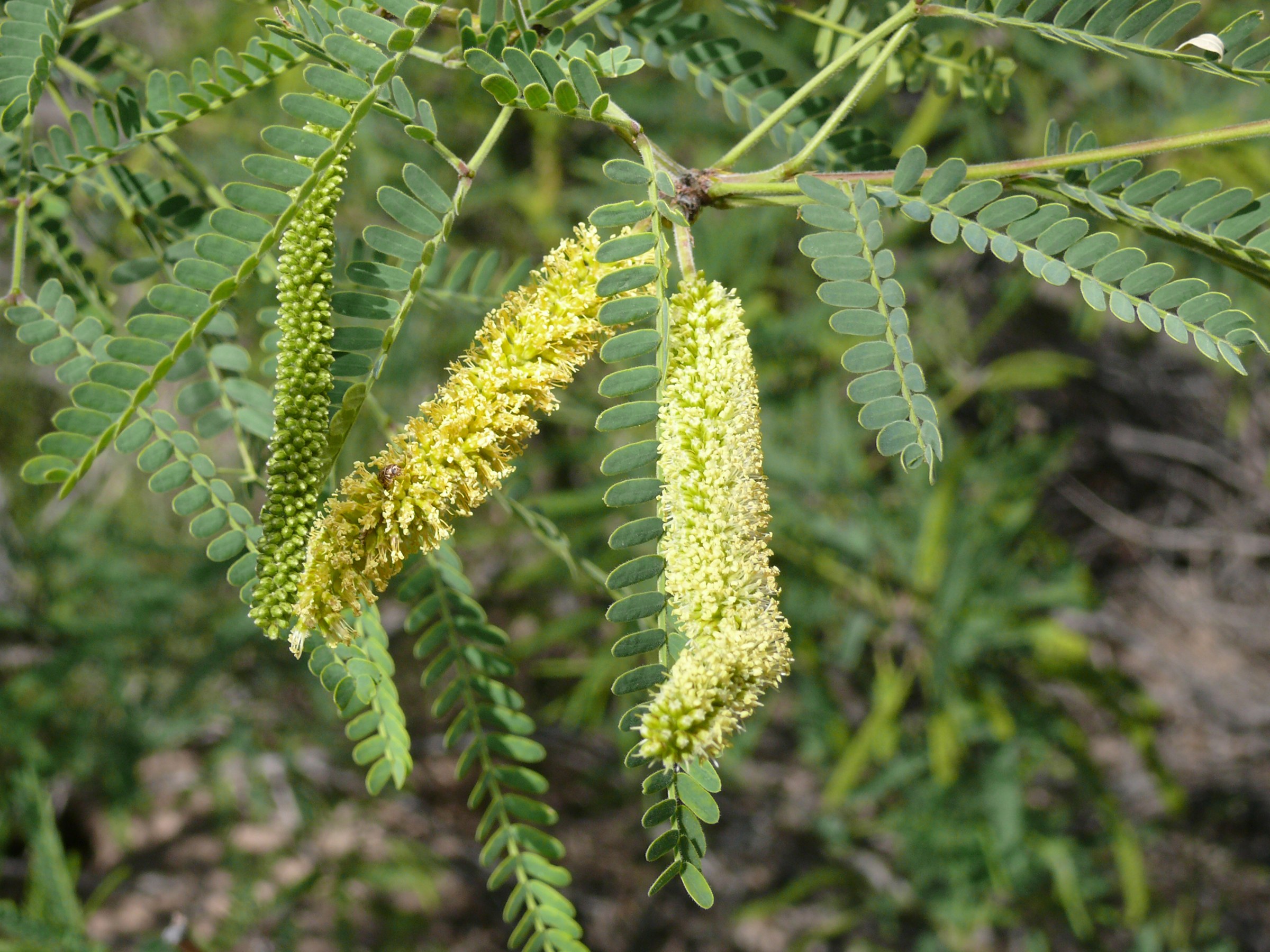
Leaves are bipinnately compound (twice-divided), typically with one or two pairs of pinnae, each bearing 14 to 24 pairs of small, narrow leaflets about a quarter to a half inch long. The foliage has a soft, velvety texture from fine hairs on the leaflets and leaf stalks — the feature that gives the species both its common and scientific names (velutina means “velvety” in Latin). The tree is drought-deciduous, dropping its leaves in prolonged dry spells and regrowing them quickly after rain.
Flowers & Fruit
Flowers appear in dense, cylindrical catkins 2 to 3 inches long, pale greenish-yellow and intensely fragrant, blooming mainly in April and May after the first flush of new leaves, with a possible second, lighter bloom after summer monsoon rains. Each tiny flower is inconspicuous on its own, but a tree in full bloom hums with bees. The fruit is a flattened, slightly curved legume pod 4 to 9 inches long, pale yellow and often streaked with purple-red as it ripens, constricted between the seeds like a string of beads. Pods ripen from midsummer into fall and are sweet and high in sugar.
Quick Facts
| Scientific Name | Prosopis velutina |
| Family | Fabaceae (Pea/Legume) |
| Plant Type | Drought-deciduous tree / large shrub |
| Mature Height | 20–30 ft (to 50 ft on favorable sites) |
| Mature Spread | 20–35 ft, broad and rounded |
| Growth Rate | Moderate to fast with available water |
| Sun Exposure | Full Sun |
| Water Needs | Low once established; deep taproot seeks groundwater |
| Soil Type | Sandy, gravelly or rocky, well-drained; tolerates caliche |
| Soil pH | 6.5–8.5 (tolerates alkaline soil) |
| Bloom Time | April – June, with a lighter rebloom after summer rain |
| Flower Color | Pale greenish-yellow |
| Fall Color | None; leaves drop green-yellow in drought |
| Fruit | Yellow bean-like pods, 4–9 in, ripening summer–fall |
| Deer Resistant | Moderate (thorny; pods are browsed by wildlife and livestock) |
| USDA Hardiness Zones | 8–11 |
Native Range
Velvet mesquite is native to the Sonoran Desert region of southern Arizona and southwestern New Mexico, with its range dipping into the far western, trans-Pecos corner of Texas and continuing south into Sonora and Chihuahua, Mexico. Within Texas it is limited to that narrow western strip; it is not native across the rest of the state, where honey mesquite (Prosopis glandulosa) takes over. It is one of the dominant trees of the Sonoran Desert, especially along desert washes, floodplains, and the lower bajadas below mountain ranges.
The best stands grow as streamside bosques along rivers such as the Santa Cruz and San Pedro, where a shallow water table lets trees reach true tree size and form dense, shady gallery forest. Away from permanent water, velvet mesquite still thrives as a smaller, shrubbier plant on desert flats and rocky slopes, relying on a taproot that can extend 50 feet or more down to reach groundwater. It commonly grows alongside saguaro, palo verde, ironwood, and creosote bush on the uplands, and with cottonwood and willow in the wetter bosque habitat.
Historic bosque forests along Southwestern rivers were cleared extensively for agriculture and fuelwood in the 1900s and have been further reduced by groundwater pumping, which lowers the water table below what mesquite roots can reach. Surviving bosques, such as those protected along the San Pedro River, are now recognized as rare and ecologically valuable habitat.
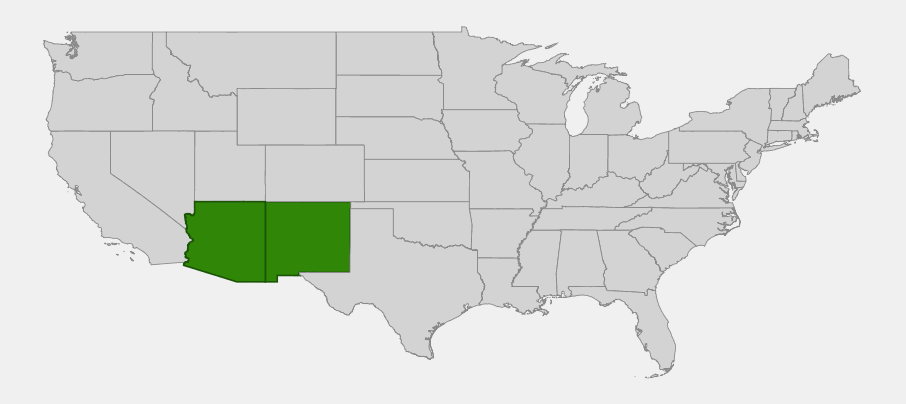
📋 Regional plant lists featuring Velvet Mesquite: Arizona & New Mexico
Growing & Care Guide
Velvet mesquite is about as low-maintenance as a desert shade tree gets, once it is through its first year or two of establishment. The main things to get right are siting it away from thorns-meet-people traffic and giving the young taproot room to grow straight down.
Light
Velvet mesquite needs full sun. It will not thrive or hold a good shape in shade, and seedlings that sprout under denser canopy usually stretch, weaken, and fail.
Soil & Water
It tolerates poor, rocky, sandy, or caliche-laden soils that would stunt most garden trees, and it strongly prefers soil on the alkaline side, which matches most desert ground. Established trees are extremely drought tolerant, drawing on a taproot that can reach down tens of feet to permanent groundwater. Young trees need regular deep watering for the first one to two years to encourage that taproot downward rather than outward; once established, supplemental water should be infrequent and deep rather than frequent and shallow, which encourages a shallow, less stable root system.
Planting Tips
Plant from a container with a straight, undamaged taproot — avoid pot-bound nursery stock, since a kinked or circling taproot can lead to a tree that blows over in wind years later. Stake loosely for the first season only if needed, and avoid staking tightly or for too long, which weakens trunk taper. Keep newly planted trees 10 to 15 feet from paving, walls, septic lines, and irrigation pipes; the questing taproot can lift pavement or infiltrate pipe joints seeking moisture.
Pruning & Maintenance
Prune while young to establish a strong single trunk or a well-spaced multi-trunk form, removing crossing or low-hanging thorny branches before they become hazards along paths. Mature trees need little pruning beyond removing dead wood. Always wear heavy gloves and eye protection; the thorns are stiff and sharp enough to puncture ordinary garden gloves.
Propagation
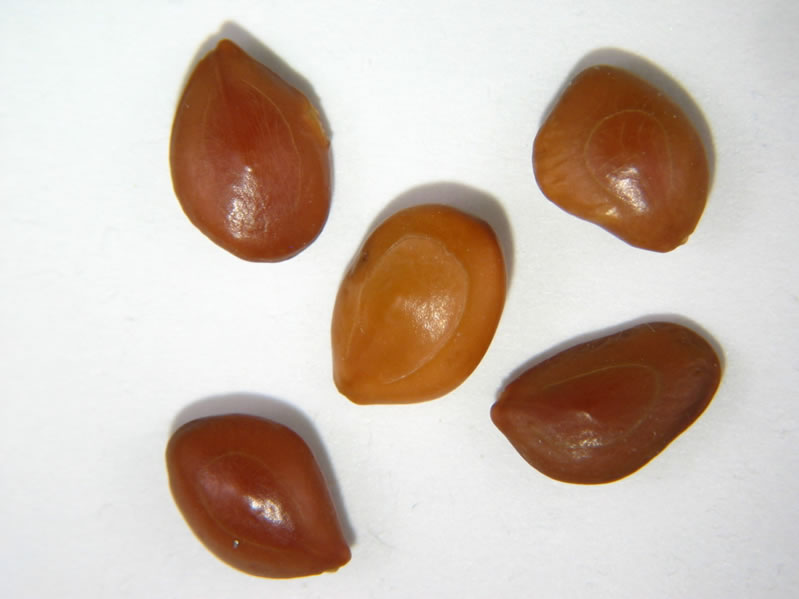
Velvet mesquite is grown from seed. The hard seed coat is naturally scarified by passing through the digestive tract of animals that eat the pods; gardeners can mimic this by nicking or sanding the seed coat, or soaking seed in hot water, before sowing in well-drained mix. Germination is usually fast once the seed coat is breached.
Landscape Uses
- Desert shade tree for patios, parking areas, and courtyards where filtered, dappled shade is wanted
- Wildlife and pollinator gardens, since the bloom draws heavy native bee activity
- Xeriscape and water-wise landscaping once established
- Erosion control and revegetation on disturbed desert sites
- Barrier or security plantings, taking advantage of the stout thorns, sited well away from foot traffic
- Riparian restoration along desert washes and historic bosque sites
Wildlife & Ecological Value
Few plants do more ecological work in the Sonoran Desert than velvet mesquite. As a nitrogen-fixing legume, it improves soil fertility beneath and around its canopy, creating “resource islands” where other desert plants establish more easily.
For Pollinators
The fragrant spring catkins are a major nectar and pollen source for native bees, including many specialist mesquite bees, as well as honeybees. A blooming mesquite can be audibly loud with bee activity on a warm spring morning, and mesquite honey is a prized regional product.
For Birds
The dense, thorny canopy provides safe nesting cover for desert birds such as verdins, curve-billed thrashers, and various sparrows and doves, which are protected from predators by the thorns. Many birds also eat the seeds and the insects the tree hosts.
For Mammals
Coyotes, javelina, desert cottontails, and numerous rodents eat the sweet, sugar-rich pods, helping disperse the hard seeds across the desert. Mule deer browse young growth, and the shade of mature bosque trees is important thermal cover for many desert mammals during the hottest parts of the day.
Ecosystem Role
Velvet mesquite bosques along desert rivers are considered one of the rarest and most threatened habitat types in the American Southwest, supporting disproportionately high levels of bird diversity compared to surrounding desert. As a deep-rooted phreatophyte, the species is also an indicator of accessible groundwater, and declining bosque health is often an early sign of groundwater overdraft.
Cultural & Historical Uses
Velvet mesquite has long been central to life in the Sonoran Desert. The Tohono O’odham and Akimel O’odham (Pima) peoples historically relied on mesquite pods as a staple food, drying and grinding the sweet pulp into a flour called pinole or mesquite meal, which was stored for use through the year. The hard wood was used for tools, bows, and construction, and burns hot and long as firewood, which made it valuable both for cooking and for blacksmithing in the historic Southwest.
Early Spanish and American settlers in Arizona likewise depended on mesquite wood for fuel, fence posts, and charcoal, and mesquite smoke became closely associated with regional barbecue traditions that continue today. Historic clearing of mesquite bosque for farmland and fuelwood, combined with groundwater pumping, dramatically reduced the extent of these forests along rivers such as the Santa Cruz.
Today, mesquite flour made from the pods has seen a revival among regional food producers and is sold as a gluten-free, high-protein flour; however, gardeners should never assume that pods collected from an unknown or landscaped tree are safe to eat without proper identification and preparation, since several mesquite species and hybrids can be confused with one another.
Frequently Asked Questions
Does velvet mesquite need a lot of water?
No. Once its taproot is established, usually after one to two years, velvet mesquite is highly drought tolerant and needs little or no supplemental irrigation in its native range. Young trees do need regular deep watering to get established.
Is velvet mesquite the same as honey mesquite?
No. Velvet mesquite (Prosopis velutina) is native to Arizona, New Mexico and the far western tip of Texas, while honey mesquite (Prosopis glandulosa) is native across most of Texas and the southern Plains. The two look similar but velvet mesquite has noticeably fuzzier, velvety foliage and pods.
Are the thorns dangerous?
The thorns are stiff, sharp, and up to an inch long, capable of puncturing skin, tires, and ordinary gloves. Plant velvet mesquite well away from paths, seating areas, and play spaces, and wear heavy gloves and eye protection when pruning.
Can you eat mesquite pods?
Historically, Indigenous peoples of the Sonoran Desert ground dried mesquite pods into a sweet flour, and mesquite flour is sold commercially today. This is a matter of historical and modern food use, not a general recommendation — correct species identification and proper drying and processing are essential, and pods should never be eaten raw off an unidentified tree.
Will mesquite roots damage my foundation or pipes?
The taproot can extend many feet down and sideways in search of water, and it will exploit cracks in pipes or foundations if moisture is leaking there. Keep plantings at least 10 to 15 feet from structures, septic systems, and irrigation lines, and avoid overwatering near hardscape.

Looking for a nursery that carries Velvet Mesquite?
Browse our native plant nursery directory: Arizona · New Mexico