
Hame (Antidesma pulvinatum)
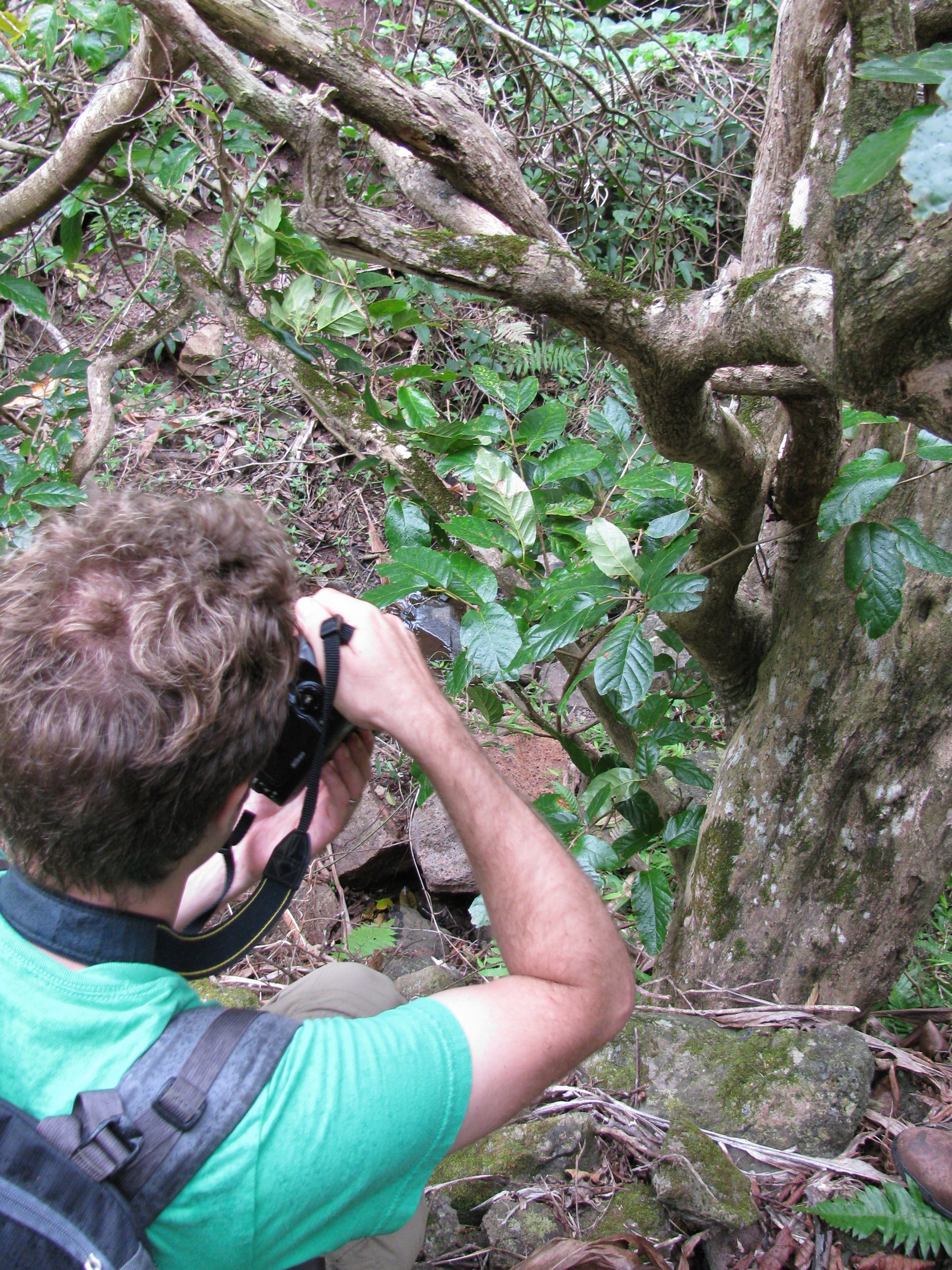
Antidesma pulvinatum, known in Hawaiian as Hame (also hamehame, haʻā, haʻāmaile, mehame, or mehamehame), is a small to medium-sized tree found only in the Hawaiian Islands, part of the spurge-relative family Phyllanthaceae. It is one of two native Hawaiian species that share the name hame — the other being the more widespread Antidesma platyphyllum — and the two are most reliably told apart by their leaf stalks: straight and elongated in A. pulvinatum, short and curved almost into a “C” shape in A. platyphyllum.
Hame is an endemic species, found nowhere else on Earth, occurring naturally in the dry to mesic forests of Oʻahu, Molokaʻi, Lānaʻi, Maui, and Hawaiʻi Island. It typically grows as a gnarled, often multi-trunked tree 15 to 30 feet tall with an equally wide spreading crown, its new leaves (liko) emerging in striking shades of bronze and red before maturing to glossy green. Like other members of its genus, hame is dioecious, with separate male and female trees; the small, inconspicuous cream to white flowers give way, on female trees, to loose hanging clusters of small berry-like drupes that ripen from green through red to dark purple or black.
Though it carries no federal or state endangered listing, hame is an increasingly uncommon sight in intact native dryland forest, much of which has been lost to development, grazing, and invasive species across the main Hawaiian Islands. For gardeners and restoration practitioners in Hawaiʻi, hame is valued both as an attractive, drought-tolerant accent or specimen tree and as a direct link to the dryland forest ecosystems that once covered far more of the islands than they do today.
Identification
Hame typically grows as a small, often multi-trunked tree or large shrub, usually 15 to 30 feet tall and nearly as wide, though it can reach medium-tree size on favorable sites. The trunk and branches are frequently twisted and gnarled, with gray, lichen-mottled bark, giving older specimens real sculptural character.
Leaves
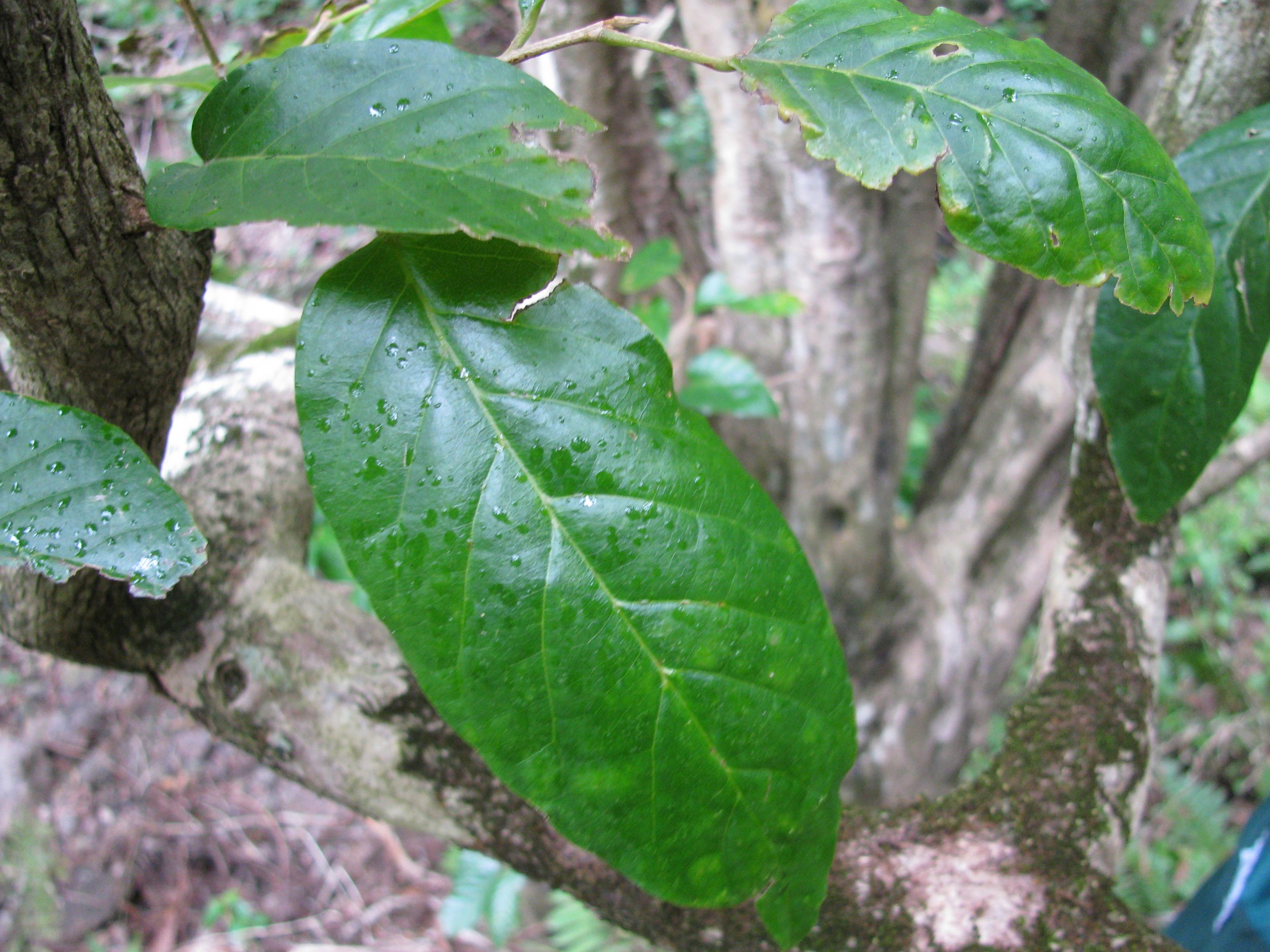
Leaves are simple, alternate, oval to elliptic, glossy on the upper surface, and typically 3 to 6 inches long, with a smooth or slightly toothed margin. The defining identification feature is the petiole, or leaf stalk: in hame (A. pulvinatum) it is straight and relatively long, whereas in its close relative A. platyphyllum — also called hame — the petiole is short and distinctly curved, almost C-shaped. New growth (liko) emerges in shades of bronze, reddish, or copper before maturing to a medium to light green, a trait that makes flushing branches conspicuous against the older, darker foliage.
Flowers
Hame is dioecious, meaning individual trees bear either male or female flowers, never both. The flowers themselves are small and not showy, cream to white in color, borne in slender spikes, and can appear over an extended period from late winter through fall on cultivated trees. Because the species relies on separate male and female trees for seed production, a single isolated tree will not set fruit.
Fruit
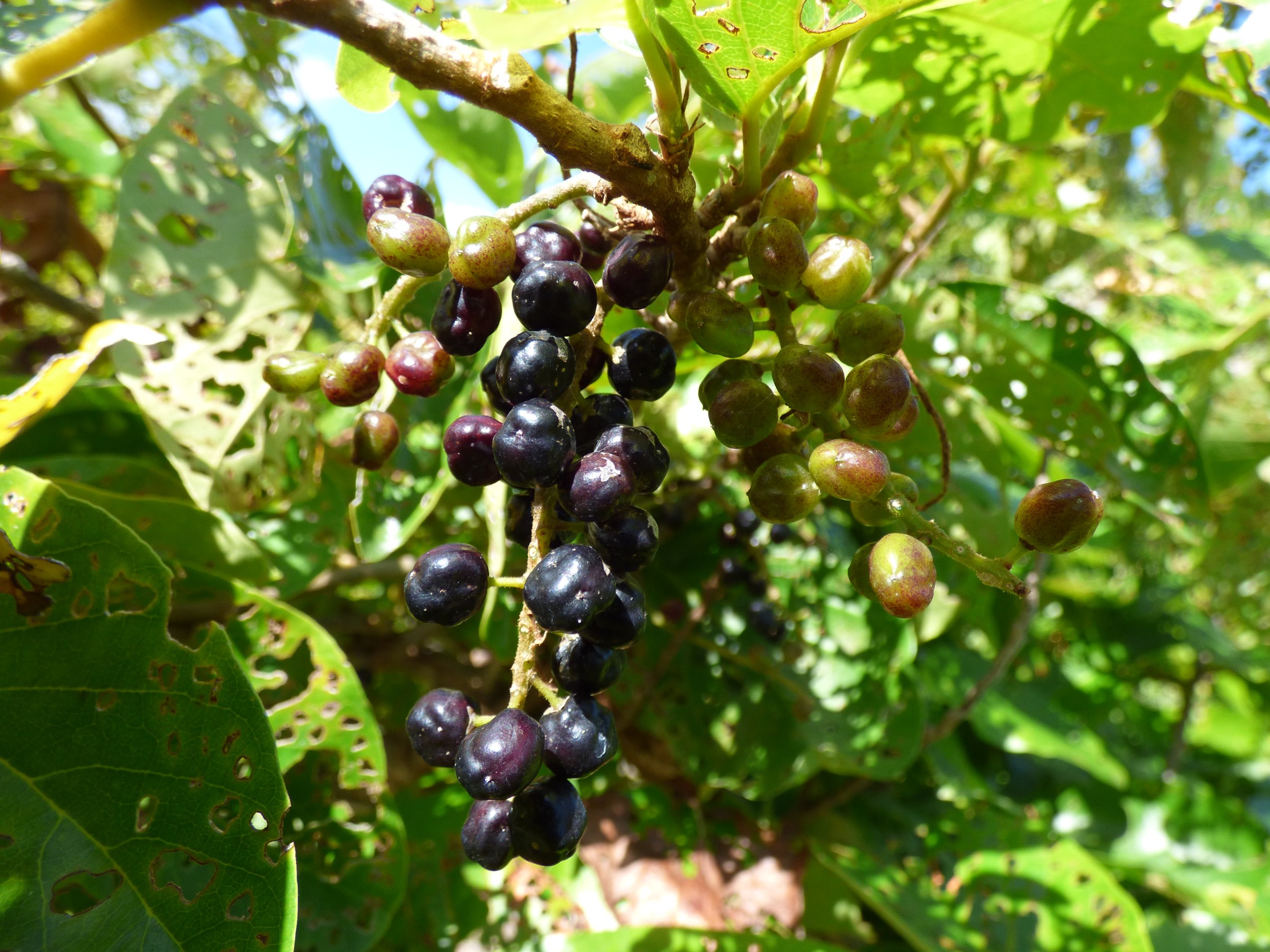
Female trees produce loose, hanging clusters of small, rounded drupes about ¼ inch across, ripening from green through shades of red to a deep reddish-purple or blackish color — visibly smaller than the fruit of A. platyphyllum. The ripe fruit is a favorite target of fruit-eating birds, which help disperse the seed through the forest.
Quick Facts
| Scientific Name | Antidesma pulvinatum Hillebr. |
| Family | Phyllanthaceae |
| Plant Type | Evergreen Tree / Large Shrub |
| Mature Height | 15–30 ft |
| Mature Spread | 15–20+ ft |
| Growth Rate | Slow to moderate |
| Sun Exposure | Full Sun to Part Sun |
| Water Needs | Low to Moderate; drought tolerant once established |
| Soil Type | Well-drained; clay or organic soils |
| Soil pH | Adaptable; neutral to slightly alkaline |
| Bloom Time | Nearly year-round on cultivated trees; peak February–October |
| Flower Color | Cream to white (not showy) |
| Fall Color | Evergreen; no fall color change |
| Fruit | Small reddish to dark purple-black drupes (female trees only) |
| Deer Resistant | Not applicable (no deer in Hawaiʻi); young trees susceptible to mealybugs, aphids and Chinese rose beetle |
| USDA Hardiness Zones | 10–11 |
Native Range
Hame is endemic to the Hawaiian Islands, meaning it occurs naturally nowhere else in the world. Within Hawaiʻi it is found on Oʻahu — most notably in the Waiʻanae Mountains and the southeastern end of the Koʻolau Mountains, where it is now rare — on East Molokaʻi, on Lānaʻi (including Maunalei Valley), on both West and East Maui, and on Hawaiʻi Island, where it ranges from near sea level up to around 4,000 feet. It is not known to be native to Kauaʻi or Niʻihau.
Across its range, hame occupies dry to mesic forest, typically from near sea level up to roughly 2,000 feet in elevation on most islands, extending higher on Hawaiʻi Island. It grows in leeward forests that receive relatively low rainfall, often alongside other dryland and mesic forest natives, and is adapted to the periodic drought stress typical of these increasingly rare Hawaiian ecosystems.
Hawaiian dry and mesic forests, the primary habitat for hame, are among the most reduced and threatened ecosystems in the islands, having lost the great majority of their original extent to development, agriculture, grazing, fire, and invasive plants and animals. Hame itself carries no federal or state endangered listing, but its reliance on this diminished habitat type means intact wild populations are increasingly restricted to remnant forest patches and protected reserves.
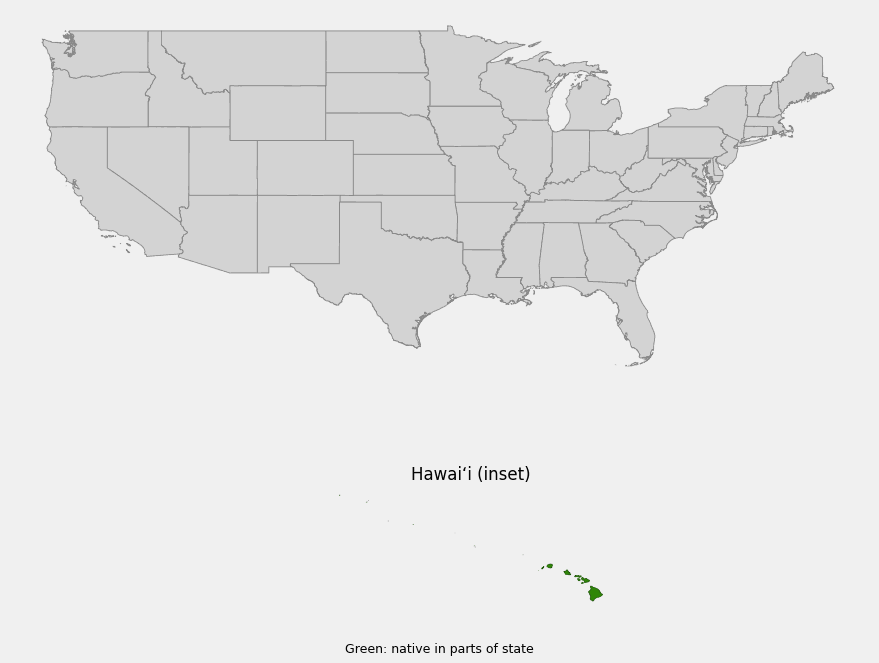
📋 Regional plant lists featuring Hame: Hawaii
Growing & Care Guide
Hame is a fairly easy, low-fuss tree for Hawaiʻi gardens once established, prized for its attractive form, colorful new growth, and its place as a genuine piece of native dryland forest brought into the landscape.
Light
Hame can grow in full sun or partial sun, but gardeners who have grown it widely in cultivation note that it tends to perform best with some partial sun rather than baking all-day exposure, developing a fuller, healthier canopy than trees pushed into the hottest, most exposed sites.
Soil & Water
Well-drained soil is important; hame tolerates both clay and more organic soils as long as drainage is adequate. Young trees benefit from regular watering to get established, but established hame is fairly drought tolerant, reflecting its native dry-to-mesic forest habitat, and watering can be reduced significantly once the root system is developed.
Planting Tips
Because hame is dioecious, a single tree will not produce fruit; if fruit and seed production (and the birds that come with it) are a goal, plant both a male and a female tree where space allows. Give young trees room for their eventual 15- to 20-foot-plus spread, and consider underplanting with other native dry-forest species for a more complete restoration-style planting.
Pruning & Maintenance
Hame needs little routine pruning beyond removing dead, crossing, or storm-damaged branches. Watch young trees for mealybugs and aphids, which can be managed by pruning off affected foliage, and for Chinese rose beetle, which chews ragged holes in the leaves if left unchecked; established trees generally tolerate light pest pressure without lasting harm.
Landscape Uses
Hame’s attractive, sculptural form and colorful new growth make it a useful landscape tree in several roles:
- Accent or specimen tree, showcased for its gnarled form and bronze-red new leaves
- Screening, where its spreading, multi-trunked habit fills space well
- Native dryland forest restoration plantings on appropriate leeward sites
- Wildlife and bird gardens, when both male and female trees are planted for fruit
- Cultural and educational landscapes highlighting native Hawaiian plants and their traditional uses
Wildlife & Ecological Value
As a component of increasingly scarce Hawaiian dry and mesic forest, hame plays a meaningful role in supporting native ecosystem function on the islands where it grows.
For Birds
The small, berry-like drupes produced by female trees are eaten by native and introduced fruit-eating birds, which in turn disperse the seed through the forest. In intact native forest, hame fruit would historically have contributed to the diet of native Hawaiian forest birds; today, given how fragmented these habitats have become, both native and non-native frugivorous birds make use of the fruit where it is available.
For Mammals
Hawaiʻi has no native land mammals apart from the Hawaiian hoary bat, which is not known to interact significantly with hame. The species’ main faunal relationships are with birds and insects rather than mammals.
For Pollinators
The small, not-showy flowers are visited by a range of insects typical of Hawaiian dry forest, though as with many Hawaiian plants the specific pollinator relationships are not as thoroughly documented as for many mainland species. The extended, near year-round bloom period on cultivated trees suggests the flowers provide at least an intermittent nectar and pollen resource over much of the year.
Ecosystem Role
Hame is one of several native tree species that together form the structural backbone of Hawaiian dry and mesic forest, an ecosystem type that has lost the vast majority of its original extent and is now considered one of the most endangered forest types in the world. Maintaining and restoring hame populations, alongside its close relative Antidesma platyphyllum and other native dryland species, supports the broader effort to conserve what remains of this critically diminished habitat.
Cultural & Historical Uses
Hame holds a documented place in early Hawaiian material culture. Its wood is exceptionally hard, heavy, and durable — dense enough to sink in water — and early Hawaiians used it to make tools such as kapa beaters, hut beams, javelins or spears, digging sticks (ʻōʻō), and scraping boards used in preparing olonā fiber. The reddish-brown wood was specifically valued for beating out olonā fiber into cordage and for other woodworking where strength and durability mattered.
The plant’s red fruit juice, mixed with oil from kamani (Calophyllum inophyllum), was used historically to produce a bright red dye for kapa (bark cloth), particularly for malo (loincloths). Historical ethnobotanical sources also record medicinal applications: chewed and swallowed leaves were used traditionally for vomiting spells, and the bark, combined with other plants, was used as a wash for ulcers and sores. These are recorded historical practices rather than guidance for modern use, since hame’s bark and leaf chemistry has not been studied or established as safe by modern standards.
Fossil evidence of hame has even been found preserved in volcanic ash from an ancient complex of vents on Oʻahu, in the Moanalua and Hālawa areas, underscoring how long this species has been part of the island’s natural history — likely well before Polynesian settlement, let alone its later use by Hawaiians for tools, dye, and traditional medicine.
Frequently Asked Questions
Is hame the same plant as the other “hame,” Antidesma platyphyllum?
No. Both are native Hawaiian trees in the genus Antidesma and both share the Hawaiian name hame, but they are distinct species. The most reliable way to tell them apart is the leaf stalk: straight and long in A. pulvinatum, short and curved almost C-shaped in A. platyphyllum. The two also occasionally hybridize where their ranges overlap.
Will a single hame tree produce fruit?
Not on its own. Hame is dioecious, with separate male and female trees, so a lone tree will flower but will not set fruit unless a tree of the opposite sex is growing nearby for pollination.
Is hame endangered?
Hame carries no federal or state endangered species listing. However, it depends on Hawaiian dry and mesic forest, one of the most reduced and threatened habitat types in the islands, so wild populations are increasingly limited to remnant forest patches even though the species itself is not formally listed.
How drought tolerant is hame?
Quite tolerant once established, reflecting its native habitat in relatively dry, leeward Hawaiian forest. Young trees need regular water to establish a strong root system, but mature hame handles extended dry periods well.
What was hame traditionally used for in Hawaiian culture?
Its very hard, dense wood was used for tools such as kapa beaters, digging sticks, spears, and hut beams, and its red fruit juice was mixed with kamani oil to dye kapa cloth red. Parts of the plant also had documented traditional medicinal uses, though these are historical practices, not modern guidance.

Looking for a nursery that carries Hame?
Browse our native plant nursery directory: Hawaii