
Deer Fern (Blechnum spicant)
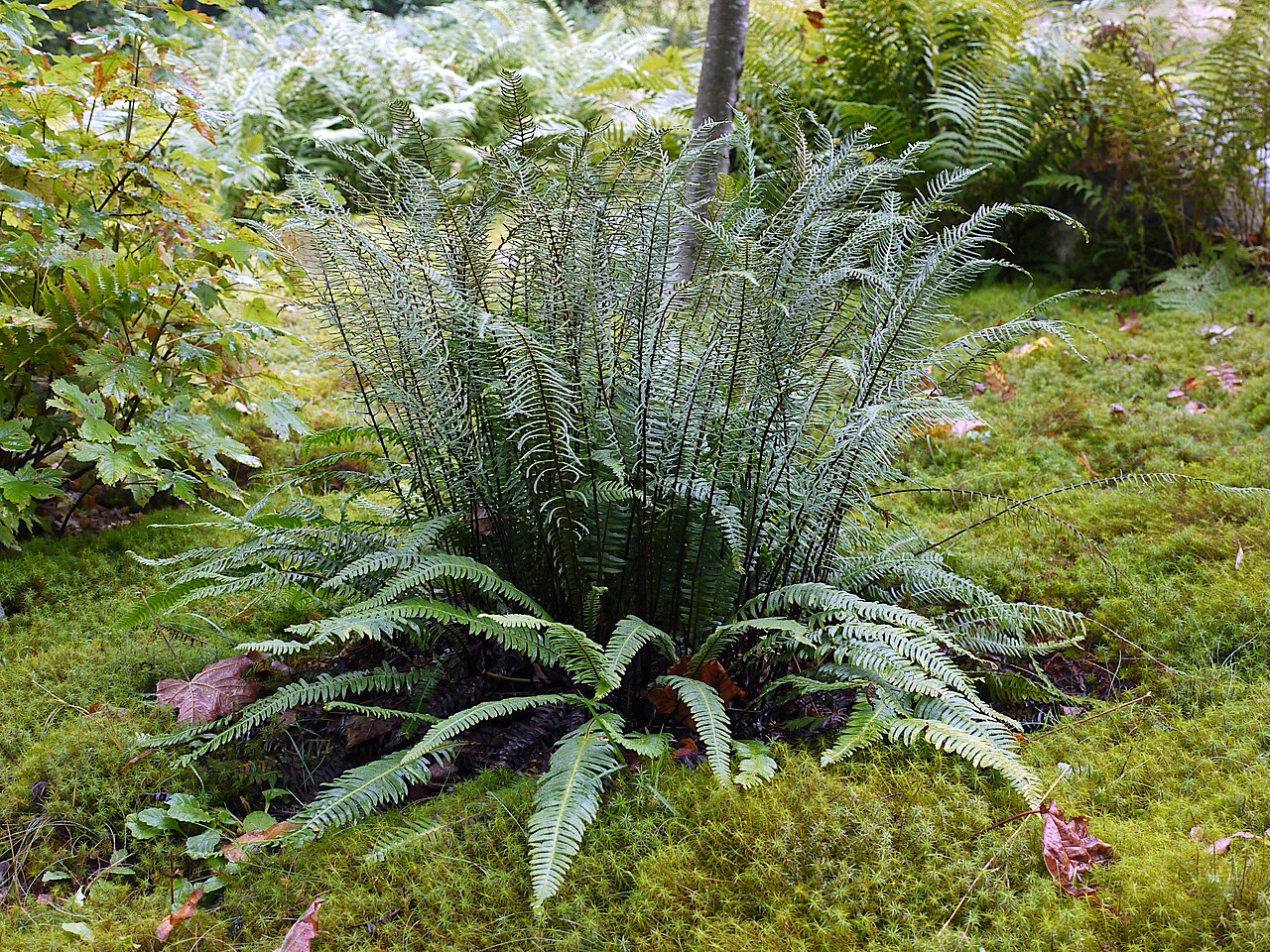
Blechnum spicant (also classified by some modern floras as Struthiopteris spicant), the Deer Fern, is a compact, evergreen native fern of the cool, wet coniferous forests of the Pacific Northwest and Alaska. It is one of the most distinctive ferns to identify in the woods, because unlike most ferns it produces two different kinds of fronds on the same plant: a low, spreading rosette of broad, leathery sterile fronds, and a cluster of taller, narrower, upright fertile fronds that rise from the center like a crown.
Deer fern earns its common name because deer, elk, and other browsers eat the sterile fronds, especially in winter when other green forage is scarce — the plant’s evergreen leaves make it one of the few consistently available browse plants through the cold, wet Pacific Northwest winter. For gardeners, that same evergreen, shade-loving nature makes it a dependable, handsome small fern for woodland gardens, shaded borders, and container plantings throughout its native range.
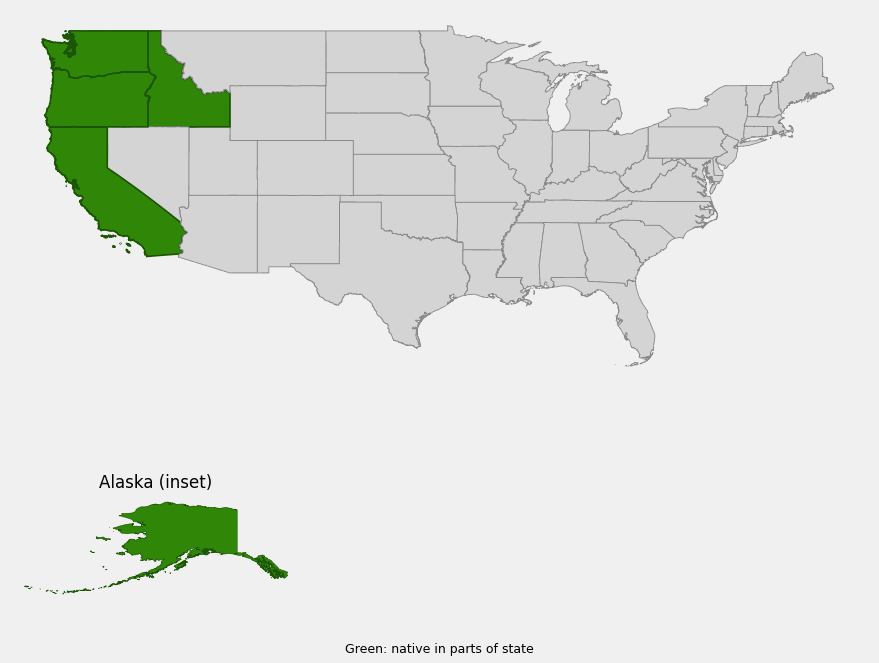
Deer fern grows natively along the Pacific coast from Alaska south through British Columbia, Washington, Oregon, and into northern and central coastal California and the Sierra Nevada, with a disjunct population reaching into the Idaho panhandle. It is predominantly a plant of the moist, mild country west of the Cascades, so inland and drier-climate gardeners should confirm it suits their site before planting.
Identification
Deer fern grows as a small to medium, clump-forming evergreen fern, typically 1 to 2½ feet tall, slowly expanding from a short, stout, scaly rhizome rather than spreading aggressively. Its most reliable identification feature is the clear difference between its two frond types.
Sterile Fronds
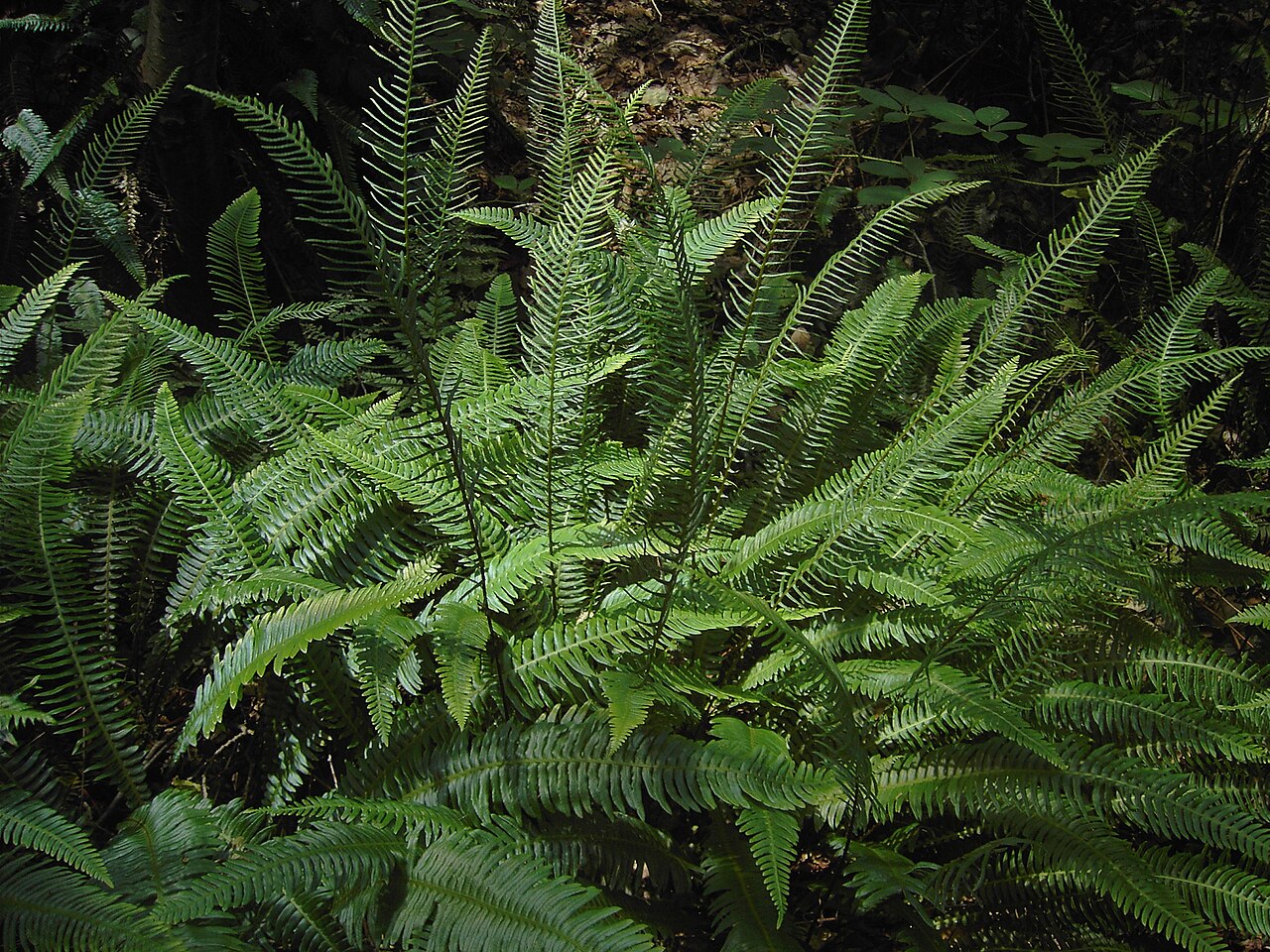
Sterile fronds are evergreen, leathery, and arch outward in a low, spreading rosette close to the ground. They are once-pinnate, with numerous narrow, parallel-sided pinnae (leaflets) attached directly to the frond’s central stalk, giving the frond a comb-like or feathery appearance. These fronds persist through winter, providing year-round greenery and browse.
Fertile Fronds
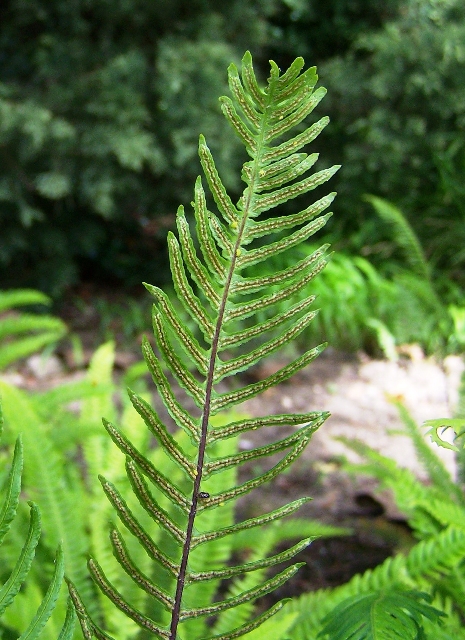
Fertile fronds are taller, narrower, and grow upright from the center of the clump, usually standing well above the surrounding sterile fronds. Their pinnae are much narrower and more widely spaced than those of the sterile fronds, giving fertile fronds a sparse, almost skeletal look by comparison. These fronds die back after releasing their spores and are typically shorter-lived than the evergreen sterile fronds.
Sori & Spores
On the undersides of the fertile fronds, narrow, continuous lines of spore-producing sori run along each side of the midrib of every pinna, nearly covering the underside of the narrow leaflet by late summer. This dimorphic (two-form) frond habit, combined with the plant’s low, clumping growth, makes deer fern easy to distinguish from other Pacific Northwest ferns such as sword fern or lady fern, neither of which produces such strongly differentiated fertile and sterile fronds.
Quick Facts
| Scientific Name | Blechnum spicant (L.) Sm. (syn. Struthiopteris spicant) |
| Family | Blechnaceae (Chain Fern) |
| Plant Type | Evergreen, clump-forming terrestrial fern |
| Mature Height | 1–2½ ft |
| Mature Spread | 1–2 ft; expands slowly, stays in a tidy clump |
| Growth Rate | Slow |
| Sun Exposure | Part Shade to Full Shade |
| Water Needs | Consistently moist; not drought tolerant |
| Soil Type | Humus-rich, well-drained forest soil |
| Soil pH | Acidic, about 4.5–6.0 |
| Bloom Time | None (ferns reproduce by spores, not flowers) |
| Fall Color | None (evergreen) |
| Fruit | None; spores borne in sori on fertile frond undersides, late summer |
| Deer Resistant | No — regularly browsed by deer and elk, especially in winter |
| USDA Hardiness Zones | 5–8 |
Native Range
Deer fern is native along the Pacific coast of North America, from southern Alaska and coastal British Columbia south through Washington and Oregon to the northern and central coast of California, with populations extending into the Sierra Nevada as far south as the Santa Cruz area. A separate, disjunct population occurs in the Idaho panhandle, in the moist “inland rainforest” pocket of forests east of the Cascades that share a wetter, maritime-influenced climate.
Across this range, deer fern is overwhelmingly a plant of the moist, mild country west of the Cascade crest — coniferous and mixed forests, stream banks, shaded ravines, and mossy rock outcrops with consistent rainfall and humidity. It is far less common, and largely absent, from the drier interior regions east of the Cascades outside of its isolated Idaho population.
📋 Regional plant lists featuring Deer Fern: Alaska · Western Oregon & Western Washington · Idaho, Eastern Oregon & Eastern Washington
Growing & Care Guide
Deer fern is a reliable, low-maintenance addition to a shaded Pacific Northwest or coastal California garden, as long as its need for shade and consistent moisture is met.
Light
Part shade to full shade suits deer fern best, mimicking the dappled to deep shade of a conifer forest floor. In cooler, consistently moist coastal gardens it can tolerate brighter light, but inland or in hot sun its fronds are prone to scorching.
Soil & Water
Deer fern needs humus-rich, acidic, well-drained soil that stays consistently moist — it does not tolerate drought or long dry spells, and foliage will brown and die back under prolonged dry conditions. A woodland soil amended with leaf mold or compost, and a steady mulch layer, replicates its natural forest-floor habitat well.
Planting Tips
Plant container-grown deer fern in fall or spring in a shaded bed with reliably moist soil. Because it grows slowly and stays in a tidy clump rather than spreading widely, it works well as a specimen plant, in small groupings, or massed as a low woodland groundcover where several plants are set 12 to 18 inches apart.
Pruning & Maintenance
Very little maintenance is needed. Remove tattered or winter-damaged sterile fronds in early spring before new growth emerges. The plant has no significant pest or disease problems when grown in appropriate shade and moisture.
Landscape Uses
Deer fern suits a range of shaded garden settings:
- Woodland gardens beneath conifers or deciduous shade trees
- Shaded borders and foundation plantings on the north side of a house
- Container and small-space plantings for shaded patios
- Streamside and ravine plantings with consistent moisture
- Native plant and wildlife gardens as winter browse for deer and elk
Wildlife & Ecological Value
Deer fern plays an outsized winter role in Pacific Northwest forest wildlife, thanks to its evergreen foliage at a time of year when little else stays green.
For Mammals
True to its name, deer fern is an important winter browse plant for black-tailed deer, mule deer, and elk, which rely on its evergreen sterile fronds when other forage is buried in snow or has died back. Smaller mammals use dense clumps for cover close to the forest floor.
For Birds & Other Wildlife
Low, evergreen fern clumps like deer fern provide year-round ground-level shelter for small birds, amphibians, and invertebrates in the moist forest understory, and contribute to the structural layering that supports forest floor biodiversity.
Ecosystem Role
As an evergreen understory plant, deer fern helps maintain humidity and shade at the forest floor through the dry season and provides year-round structure and cover in forests that are otherwise bare beneath deciduous shrubs in winter. Its presence is often used by foresters and ecologists as an indicator of consistently moist, undisturbed, mature forest conditions.
Cultural & Historical Uses
Indigenous peoples of the Pacific Northwest coast historically made limited use of deer fern, including chewing the young fronds or rhizome for their mildly sweet taste and using the fronds as a floor covering, bedding material, or liner in cooking pits, where the sturdy, leathery fronds held up well to heat and moisture. These were practical, everyday uses rather than medicinal treatments, and are included here as history rather than guidance for modern use.
Today deer fern is grown mainly as an ornamental woodland and shade garden plant, valued for its tidy evergreen form and distinctive two-frond habit rather than for any commercial or culinary use.
Frequently Asked Questions
Why does deer fern have two kinds of fronds?
The low, spreading evergreen fronds handle photosynthesis year-round, while the taller, upright fertile fronds are specialized for producing and releasing spores. Separating these functions between two frond types is a distinctive trait of this species and its closest relatives.
Will deer fern grow in full sun?
Not reliably. It is adapted to the shade of coniferous forests and generally needs part to full shade, with consistent moisture, to avoid leaf scorch — especially away from the cool, humid coast.
Is deer fern native outside the Pacific Northwest?
In North America, no — it is native only to the Pacific coast from Alaska to central California, plus a small disjunct population in the Idaho panhandle. (A related population of the same species also occurs naturally in Europe and parts of Asia.)
Is deer fern toxic?
No toxicity is documented for people or pets. It is readily browsed by deer and elk, and historical accounts describe people chewing the young fronds, though it is not grown or sold today as a food plant.
How much water does deer fern need?
It needs consistently moist soil and does not tolerate drought. In a garden setting, regular watering during dry summer months is essential, especially for plants not growing right along the coast.

Looking for a nursery that carries Deer Fern?
Browse our native plant nursery directory: Alaska · Washington · Oregon · California · Idaho