
Teddy Bear Cholla (Cylindropuntia bigelovii)
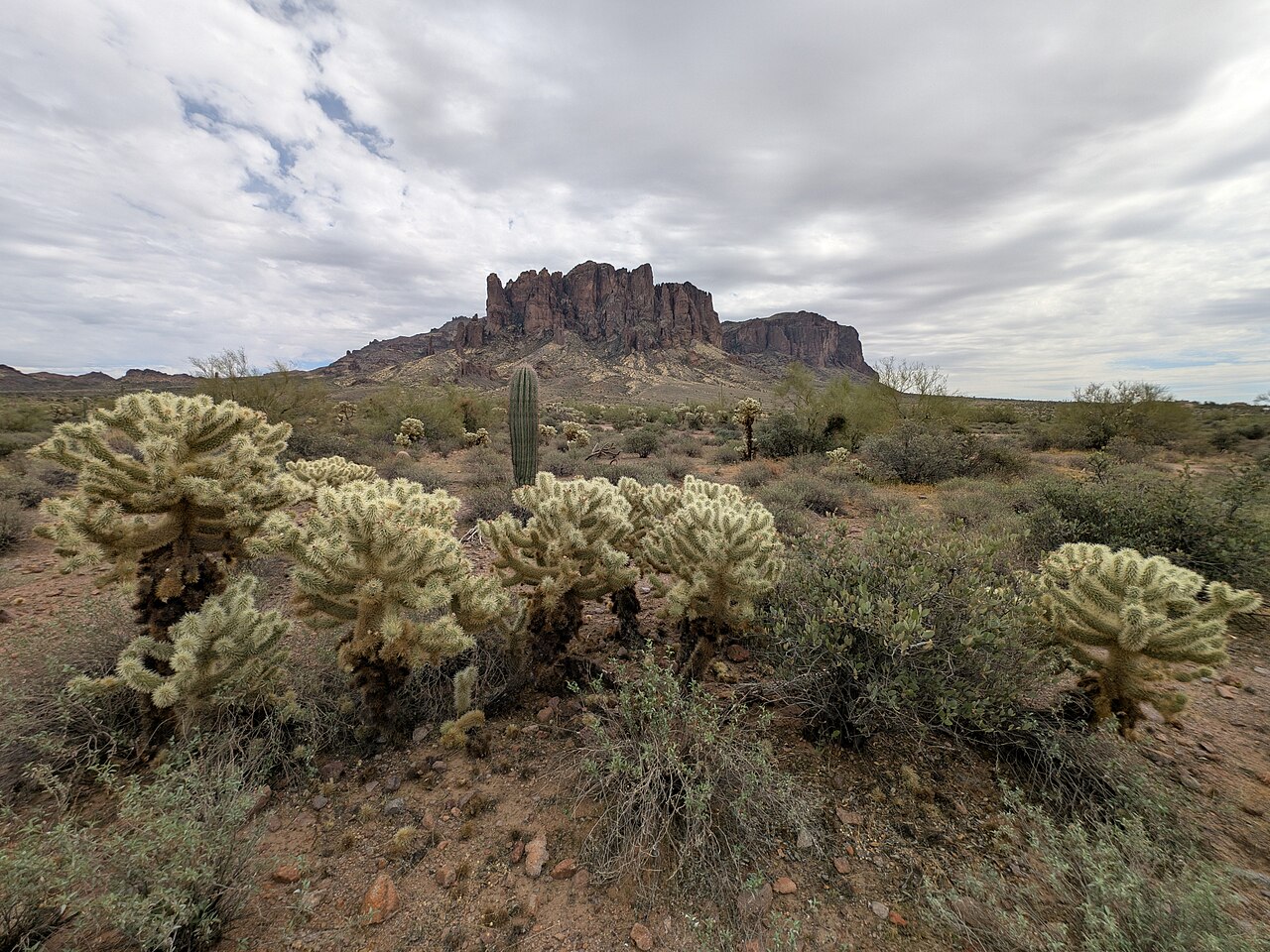
Cylindropuntia bigelovii, commonly called teddy bear cholla or jumping cholla, is one of the most recognizable cacti of the Sonoran and Mojave Desert lowlands. Dense, golden-spined joints stack into a shaggy, almost plush-looking silhouette that glows when backlit by morning or evening sun — the trait that earns it the “teddy bear” nickname and the reason photographers love it from a distance. Up close it is anything but cuddly: the spines are barbed, needle-sharp, and sit on joints that detach at the lightest touch, which is also where the “jumping” name comes from, even though the plant does not actually propel anything through the air.
In the wild, teddy bear cholla forms dense stands on rocky bajadas, desert pavement, and lower bajada slopes across the Sonoran and Mojave Deserts of Arizona, California, and Nevada, usually below about 2,500 feet elevation. It is a slow-growing, long-lived stem succulent that stores water in its jointed segments, has no true leaves, and relies entirely on an extensive, shallow root system to capture the desert’s infrequent rain. Single-trunked plants develop a short, woody, blackened trunk at the base topped by a mass of pale, spine-covered joints.
Teddy bear cholla is best suited to xeriscape and desert-themed gardens where it can be planted well away from walkways, patios, and anywhere children, pets, or bare ankles might brush against it. Handled with respect and placed thoughtfully, it is an outstanding low-water accent that provides structure, wildlife shelter, and genuine desert character that few other plants can match.
Identification
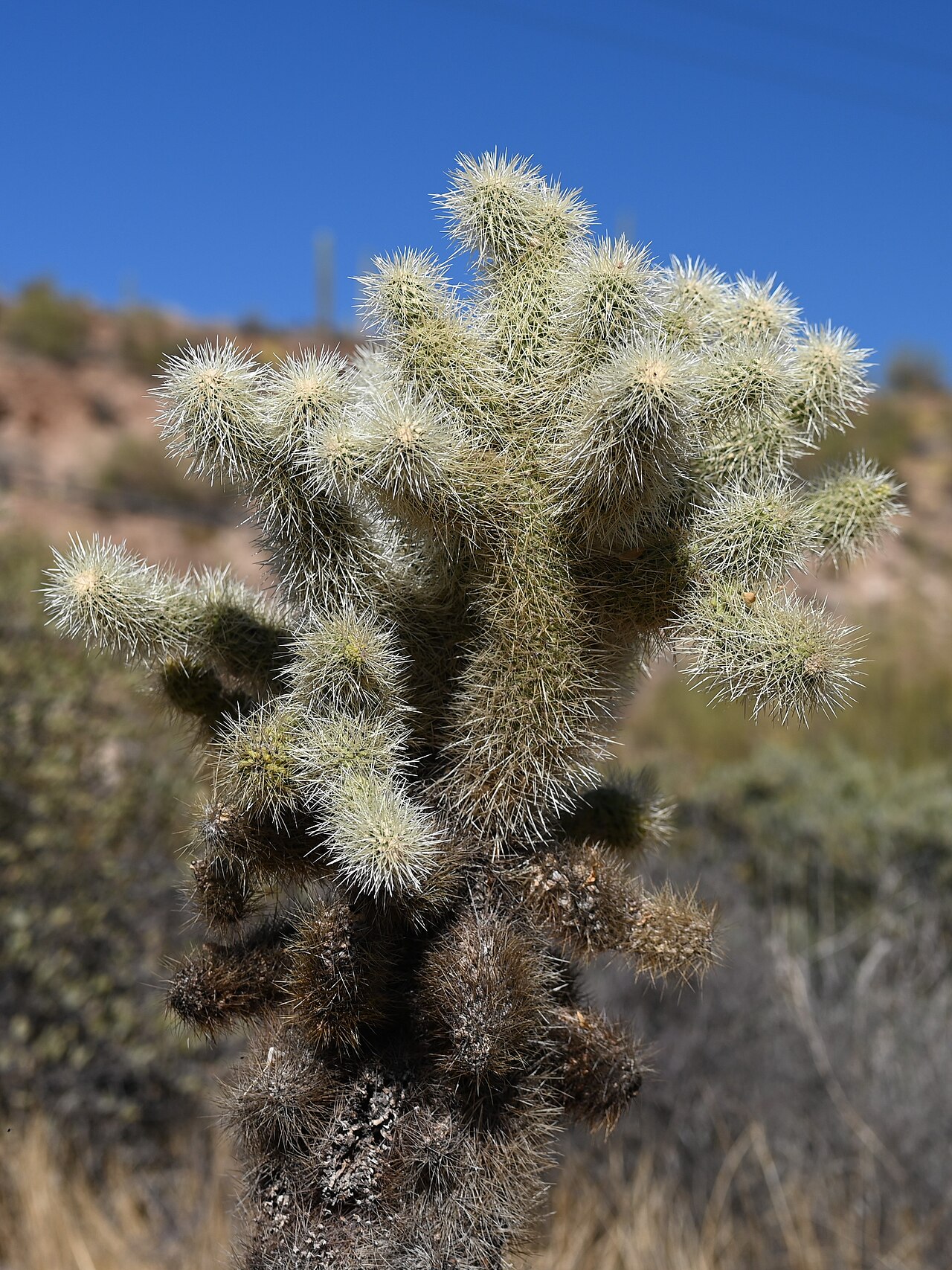
Teddy bear cholla typically grows 1.5 to 5 feet tall, occasionally reaching 8 feet in old, favorable sites, with a dense, cylindrical, shrubby form. Many plants are single-stemmed with a short trunk, while others branch low and form broad clumps. The lower stem segments often turn gray-black and woody with age, giving established plants a blackened “skirt” beneath the pale, bristling crown of younger joints.
Stems & Joints
The stem segments (joints) are cylindrical, 2 to 6 inches long and about 1 to 2 inches thick, covered almost completely by a dense mat of silvery-yellow spines that can hide the green stem tissue beneath. Each areole carries 6 to 12 spines up to 1.5 inches long, each one sheathed in a straw-colored papery covering that gives the whole plant its glowing, backlit appearance. The joints are only loosely attached and detach with the slightest contact — brushing a boot, a dog’s tail, or even a strong gust of wind is enough to dislodge one, which is the origin of the common name “jumping cholla.”
Flowers
Flowers appear from March through May, small (around 1 inch across) and greenish-yellow to pale lavender, opening from the tips of the upper joints. They are easy to overlook against the dense spine cover and are open for only a short period each day.
Fruit & Seeds
The fruit is a yellow-green, spineless or nearly spineless tuberculate pod about 1 inch long. Many populations of teddy bear cholla produce fruit that is sterile or only rarely viable; the species reproduces mainly vegetatively, when detached joints root readily wherever they land. This is the primary way dense stands expand over time.
Quick Facts
| Scientific Name | Cylindropuntia bigelovii |
| Family | Cactaceae (Cactus) |
| Plant Type | Stem succulent / cactus (shrub form) |
| Mature Height | 1.5–5 ft (occasionally to 8 ft) |
| Mature Spread | 2–4 ft |
| Growth Rate | Slow |
| Sun Exposure | Full sun |
| Water Needs | Very low; excellent drought tolerance |
| Soil Type | Rocky, gravelly, or sandy; sharply drained |
| Soil pH | 6.5–8.0 (neutral to alkaline) |
| Bloom Time | March – May |
| Flower Color | Greenish-yellow to pale lavender |
| Fall Color | None (evergreen stem succulent) |
| Fruit | Yellow-green tuberculate pod, often sterile |
| Deer Resistant | Yes (spines deter browsing) |
| USDA Hardiness Zones | 9–11 |
Native Range
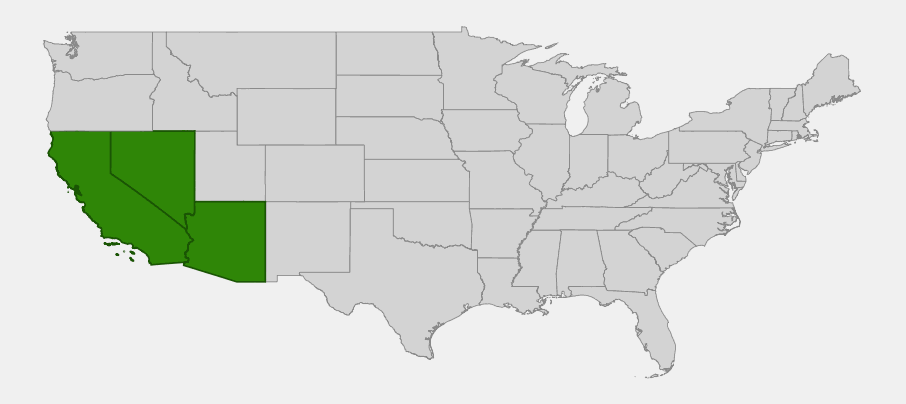
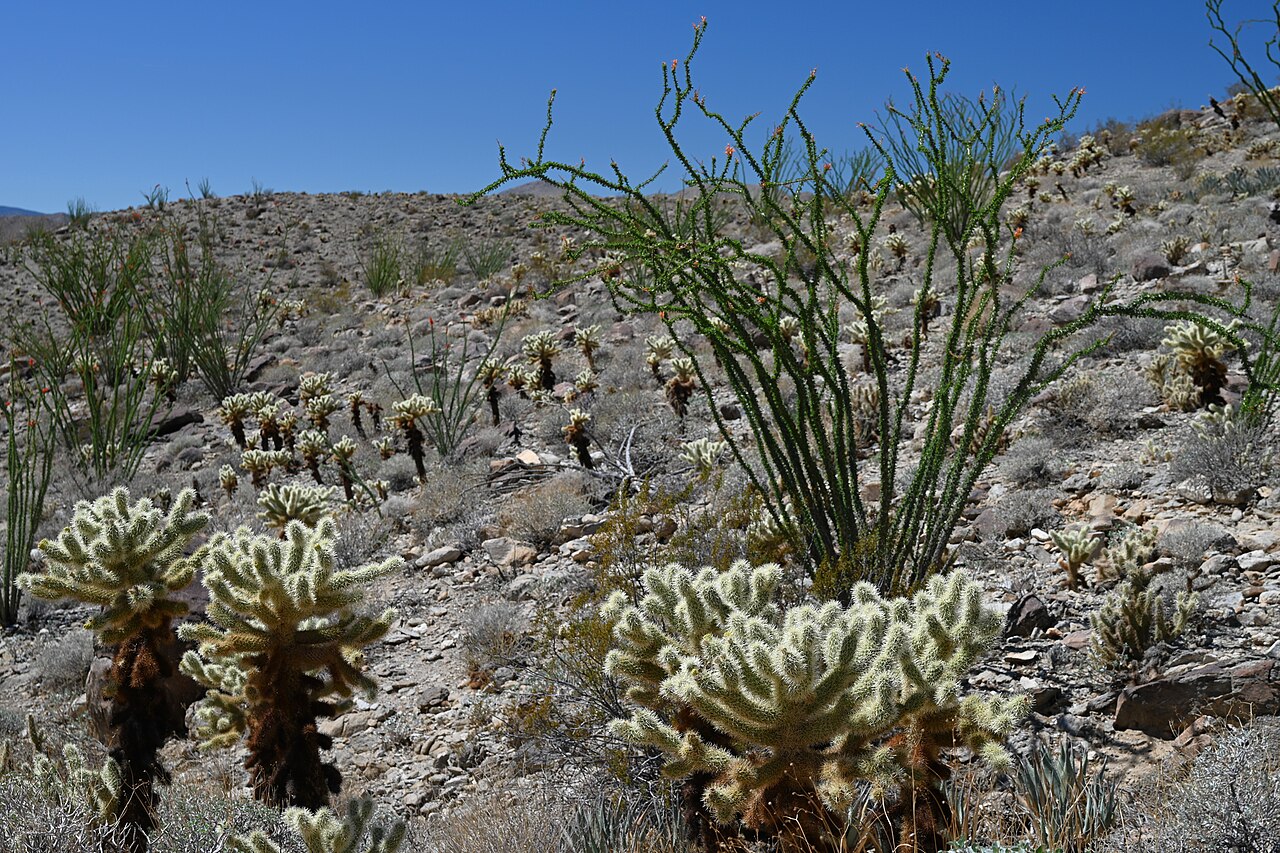
Teddy bear cholla is native to the Sonoran and Mojave Deserts of the American Southwest, occurring across low and mid-elevation desert in Arizona, southeastern California, and southern Nevada, and continuing south into Sonora and Baja California, Mexico. It is most abundant on rocky bajadas, alluvial fans, and desert pavement below roughly 2,500 feet, often alongside saguaro, ocotillo, creosote bush, and brittlebush.
Within this range it frequently forms extensive, nearly pure stands — “cholla gardens” — on south- and west-facing slopes with excellent drainage. These stands expand gradually as detached joints root nearby, so a dense patch you see today is often decades old and the product of slow vegetative spread rather than a single planting event.
Teddy bear cholla is sometimes grown as an ornamental well outside its native range, including in warm, dry gardens of the inland Southwest and in botanical collections worldwide. It has no history of escaping cultivation to become naturalized outside the desert Southwest, and should only be planted within or near its native range, where its water needs and winter hardiness match local conditions.
📋 Regional plant lists featuring Teddy Bear Cholla: Arizona & New Mexico
Growing & Care Guide
Teddy bear cholla rewards neglect. It is built for heat, drought, and poor soil, and the single fastest way to kill one is to plant it where it stays wet. Give it sun, sharp drainage, and distance from foot traffic, and it will outlive most other plants in the garden.
Light
Plant in full sun. It tolerates the most intense reflected heat found in a desert garden — against south-facing walls, in gravel beds, or on open rocky slopes — and will etiolate and weaken in significant shade.
Soil & Water
Sharp drainage is non-negotiable. Rocky, gravelly, or coarse sandy soil is ideal; heavy clay or any soil that holds moisture around the roots will rot this cactus. Established plants need no supplemental irrigation in their native range beyond natural rainfall. Newly planted specimens benefit from an occasional deep soak during the first year to encourage rooting, then should be weaned off entirely.
Planting Tips
Site teddy bear cholla at least 4 to 6 feet from walkways, patios, play areas, and anywhere pets or people regularly pass — detached joints lodge in skin, paws, and fur almost on contact and are genuinely painful and difficult to remove. Handle joints and nursery stock with long tongs or heavy leather gloves and a folded towel, never bare hands. Plant in fall or early spring in the low desert, firming the rocky soil around the root ball and leaving the base slightly proud of grade so water drains away from the crown.
Pruning & Maintenance
Little to no pruning is needed or recommended. If a joint must be removed, use long-handled tongs, drop it directly into a sealed container, and dispose of it in household trash — never toss cholla joints into a compost pile or wild area, where they will root and spread. Wear thick gloves and closed shoes whenever working near the plant, and keep a fine comb or stiff cardboard on hand for pulling embedded spines out of skin or clothing without using bare fingers.
Landscape Uses
- Xeriscape focal point in gravel or decomposed-granite beds
- Desert wildlife garden — dense joints offer secure nesting cover for birds
- Barrier or deterrent planting along property edges, kept well away from paths
- Rock garden accent paired with other low-water Sonoran Desert natives
- Botanical or specimen collection where its backlit glow can be appreciated from a safe distance
Wildlife & Ecological Value
Despite — or because of — its defenses, teddy bear cholla is an important structural plant in the desert community, offering shelter that few predators can penetrate.
For Birds
Cactus wrens and curve-billed thrashers frequently nest within the dense, spiny joints, where the barbed spines keep snakes, roadrunners, and other nest predators at bay. The plant’s silhouette also provides shaded perches and lookout points in otherwise open desert terrain.
For Mammals
Woodrats (packrats) often build their stick-and-debris middens at the base of teddy bear cholla, incorporating fallen joints into the outer walls as a defensive barrier against coyotes and other predators. Desert bighorn sheep and other large herbivores generally avoid browsing it, leaving it untouched compared to softer desert vegetation.
For Pollinators
The spring flowers, though small and short-lived, are visited by native bees and other desert pollinators during a season when few other bloom sources are available in the low desert.
Ecosystem Role
Teddy bear cholla stabilizes rocky slopes and bajadas with its shallow, wide-spreading root system, and its ability to reproduce by rooting detached joints lets it colonize disturbed ground quickly after erosion events. Dense stands create microhabitats with cooler, more humid conditions at the base that support small reptiles and invertebrates not found in the open desert nearby.
Cultural & Historical Uses
Indigenous peoples of the Sonoran Desert, including the Tohono O’odham and Seri, historically harvested the flower buds of various cholla species, including teddy bear cholla relatives, by carefully burning or brushing off the spines before roasting or boiling the buds as a traditional food, valued for their calcium content. This practice required specialized knowledge and tools to handle the plant safely and is described here as history, not a how-to guide — the spines remain hazardous and this is not a plant to forage casually.
The woody, hollow stem skeletons left behind after a dead cholla’s soft tissue decays were traditionally collected and used by regional artisans and craftspeople for walking sticks, lamp bases, and decorative items, prized for their striking lattice pattern once cleaned.
Because teddy bear cholla is widespread but slow-growing and easily damaged, Arizona law protects native cacti, including this species, from unauthorized removal: harvesting, transplanting, or collecting teddy bear cholla from the wild or from private land in Arizona without landowner permission and, in many cases, a state permit is prohibited under the Arizona Native Plant Law. Gardeners should always buy nursery-propagated stock rather than collecting from the desert.
Frequently Asked Questions
Why is it called “jumping cholla” if it can’t actually jump?
The joints detach so easily that the slightest brush of clothing, fur, or skin is often enough to pull one free and leave it attached to whatever touched it, creating the illusion that the cactus “jumped.” It’s really the joint’s loose connection to the plant, not any active movement by the cactus.
Is teddy bear cholla dangerous to pets?
Yes. Detached joints readily stick to paws, noses, and fur, and the barbed spines are painful to remove and can cause infection if left in place. Keep dogs and cats away from established plants, and remove any embedded spines promptly with tongs or a comb, seeking veterinary help for joints lodged near the eyes or mouth.
Can I legally dig up a teddy bear cholla I find in the desert?
No, not without permission. Arizona’s Native Plant Law protects teddy bear cholla and other native cacti from unauthorized collection on both public and private land. Buy nursery-grown plants instead of removing them from the wild.
How do I remove an embedded cholla joint safely?
Never pull it out with bare fingers. Use pliers, tongs, or a comb slid underneath the joint to lift it cleanly away in one motion, then check the skin carefully for stray spines, which can be lifted out with tweezers or wide tape.
Does teddy bear cholla need any winter protection?
Within its native range (USDA zones 9–11) it needs none; it is well adapted to desert winters with occasional light frost. It is not reliably hardy outside the warm, dry low desert and should not be planted where winters are wet and cold.

Looking for a nursery that carries Teddy Bear Cholla?
Browse our native plant nursery directory: Arizona · California · Nevada