
Golden Yarrow (Eriophyllum confertiflorum)
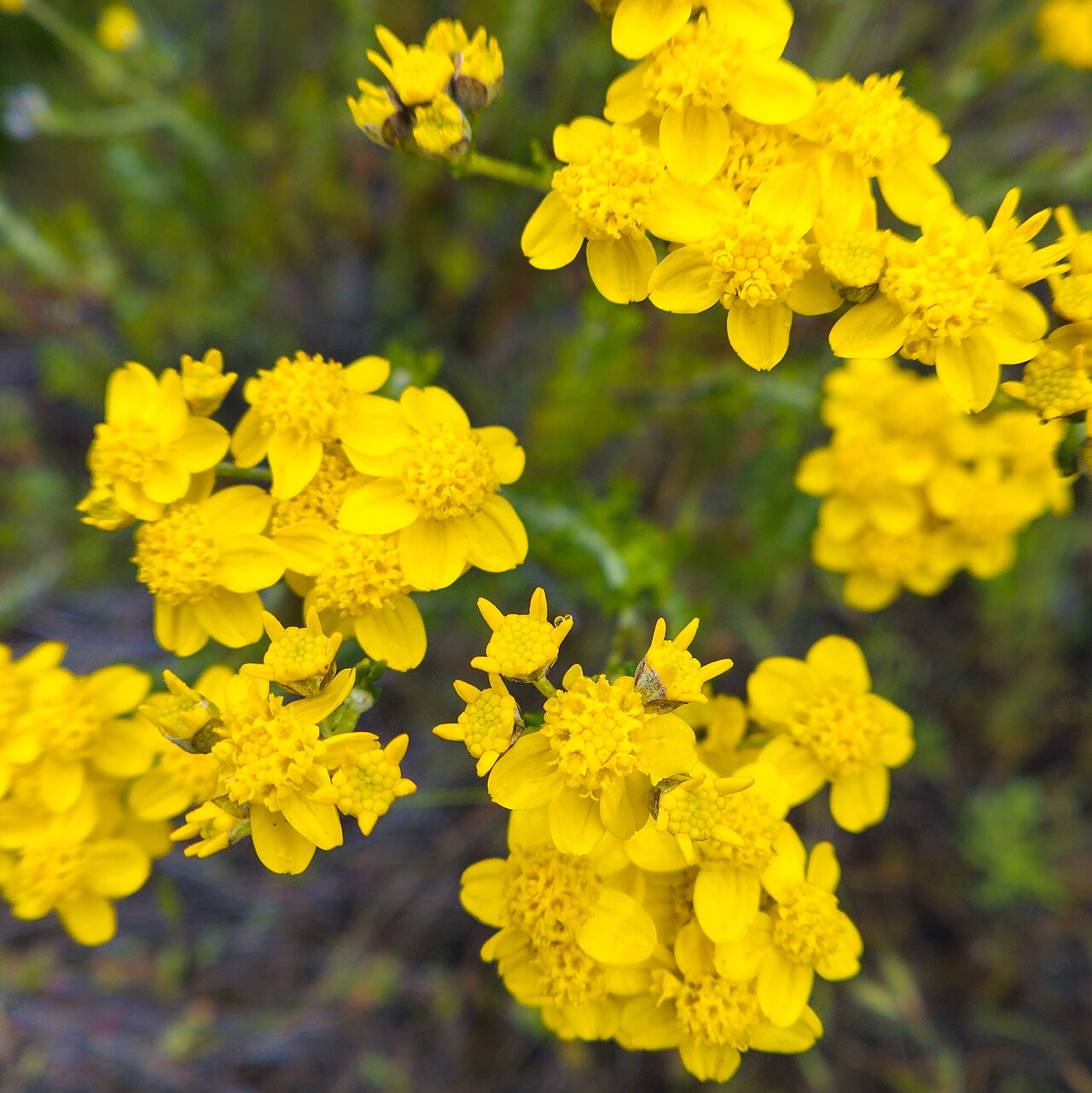
Eriophyllum confertiflorum, commonly called Golden Yarrow or Yellow Yarrow, is a tidy, woolly-leaved California subshrub that lights up chaparral and coastal sage scrub with dense, flat-topped clusters of bright yellow flowers each spring. Despite the name, it is not a true yarrow — true yarrow is Achillea millefolium, a different genus entirely in the same aster family, with white (not yellow) flowers and feathery, fern-like foliage. Golden Yarrow earned its common name simply because its clustered flower heads resemble true yarrow’s in shape, not because the two plants are closely related.
The genus name Eriophyllum means “woolly leaved,” and that’s the plant’s other standout trait: new growth is covered in fine white hairs, giving young leaves and stems a silvery, felted look that gradually turns greener to gray-green as the season progresses. Botanist Nancy Dale, writing about Southern California’s Santa Monica Mountains flora, described the plant’s growth pattern simply as “tidy” — an apt word for a subshrub that holds its rounded form well without much gardener intervention.
In the garden, Golden Yarrow is a reliable, low-water choice for sunny spots, valued as much for its long bloom and pollinator traffic as for its undemanding nature once established in well-drained soil.
Identification
Growth Habit
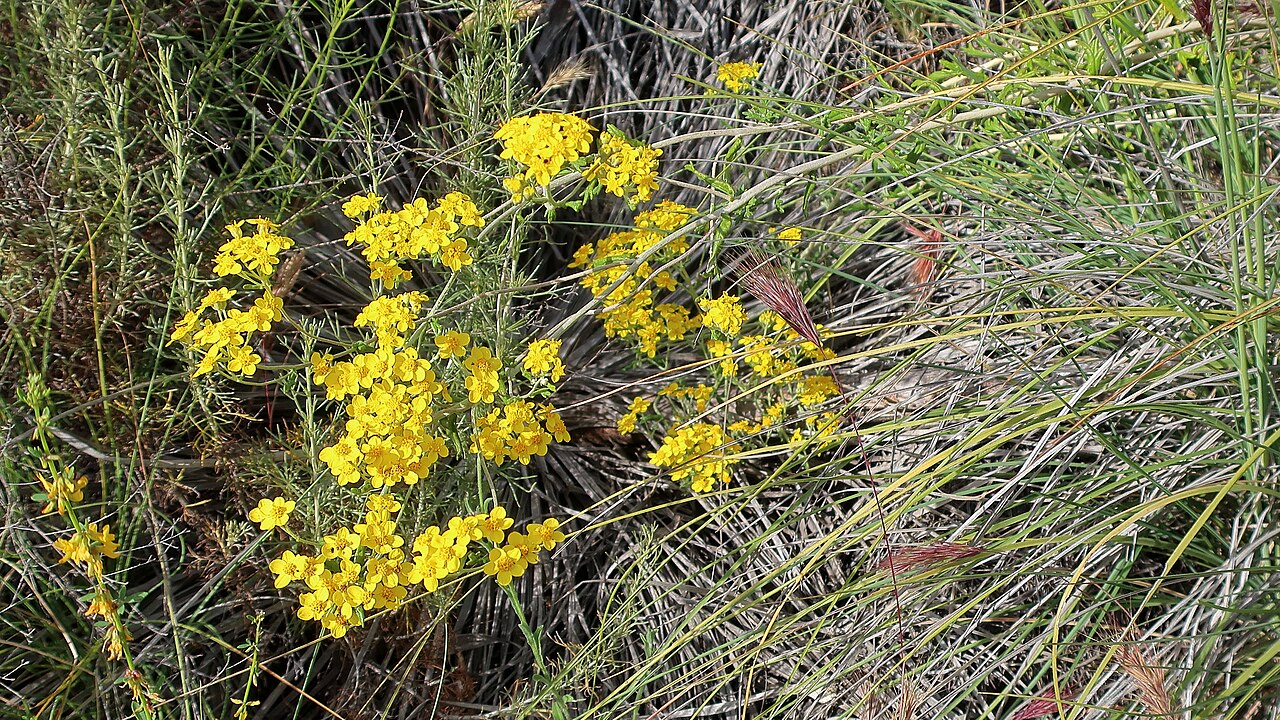
Golden Yarrow is a small, woody-based subshrub growing in clumps of many erect stems, typically exceeding 20 inches in height at maturity. The overall form is rounded and even — the “tidy” habit noted by botanists working in its native range.
Leaves
Leaves are alternate and deeply lobed, with 3 to 5 lobes per leaf. They emerge whitish, densely covered in woolly white hairs, then mature to a greenish to gray-green color as the hairs thin with age. This progression from silvery new growth to greener mature foliage is one of the plant’s more attractive seasonal features.
Flowers
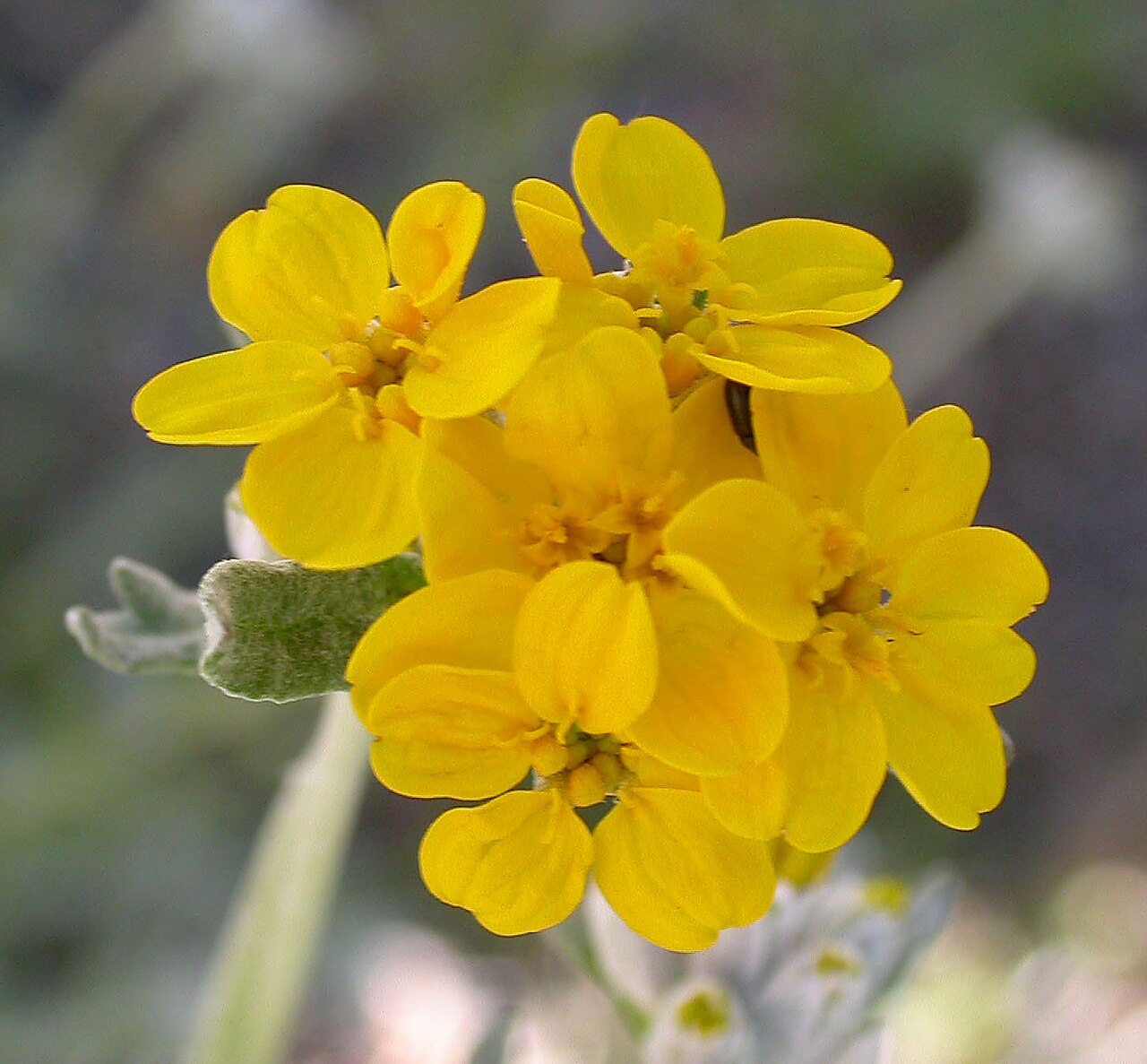
Flower heads are small — each about ⅜ inch across — but packed tightly in flat-topped clusters of up to 30 heads per stem tip, so the visual effect is a solid mass of bright golden yellow rather than individual blooms. Each head has both disc and ray florets, all yellow. Bloom runs long, from January into July depending on location and rainfall, with peak display typically in spring.
Fruit
The fruit is a small achene with a very short pappus, typical of the aster family and not a conspicuous feature of the plant.
Quick Facts
| Scientific Name | Eriophyllum confertiflorum |
| Family | Asteraceae (Aster/Sunflower) — not related to true yarrow (Achillea) |
| Plant Type | Woody-based perennial subshrub |
| Mature Height | 1.5–3 ft |
| Mature Spread | 1.5–3 ft, rounded clump |
| Growth Rate | Moderate |
| Sun Exposure | Full sun to light part shade |
| Water Needs | Low; dry once established |
| Soil Type | Well-drained, rocky to loamy |
| Soil pH | Neutral to slightly alkaline |
| Bloom Time | January to July, peak in spring |
| Flower Color | Bright golden yellow |
| Fall Color | None notable; gray-green foliage year-round |
| Fruit | Small achenes, not ornamentally significant |
| Deer Resistant | Generally yes |
| USDA Hardiness Zones | 8–10 |
Native Range
Golden Yarrow is native to California and Baja California, with its core range running through the Sierra Nevada foothills and the Coastal Ranges. In the Santa Monica Mountains it is a common sight in open, inland-facing sites away from the immediate coast. It is not native to Oregon or elsewhere outside California and Baja California.
Across this range, Golden Yarrow turns up in a number of plant communities — chaparral, coastal sage scrub, oak woodland edges, and open rocky or disturbed ground — generally in full sun at low to middle elevations. Several regional varieties are recognized, reflecting the species’ adaptation to different parts of its range, from the Sierra Nevada foothills to the immediate coast between Santa Barbara and Monterey.
This site’s regional plant lists don’t yet include a California list, so Golden Yarrow does not appear on any regional list.
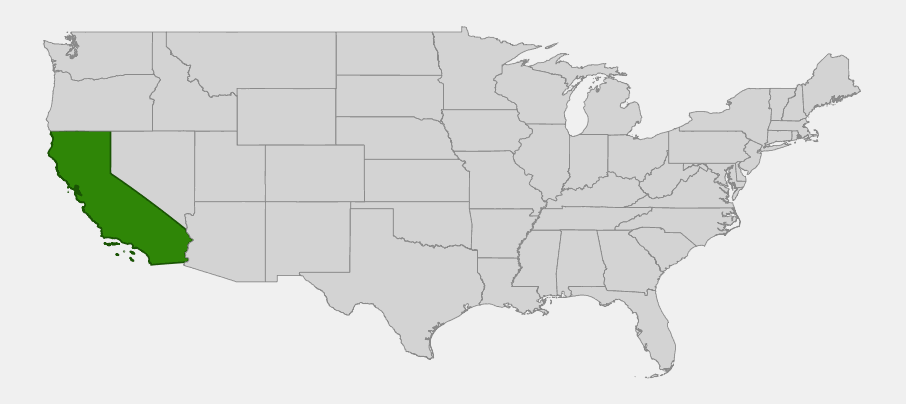
📋 Golden Yarrow’s native range is limited to California, which is not yet covered by one of our regional plant lists.
Growing & Care Guide
Golden Yarrow is an easy, forgiving shrub for gardeners working with the classic California dry-summer pattern — give it sun and drainage, and it largely takes care of itself.
Light
Full sun brings out the densest flowering and the most compact form. Light part shade is tolerated, especially in hotter inland gardens, but bloom will be somewhat reduced.
Soil & Water
Golden Yarrow wants well-drained soil — rocky, gravelly, or sandy loam all work — and very little supplemental water once established. It is a genuinely low-water plant adapted to long, dry California summers; overwatering, especially in heavier soils, is the most common way to lose this plant to root rot.
Planting Tips
Set out container plants in fall so roots can establish during the rainy season ahead of the first dry summer. Space plants about 2 to 3 feet apart to allow for their rounded mature spread. Good drainage matters more than soil fertility — this is not a plant that needs rich garden soil.
Pruning & Maintenance
Give plants a light shearing after the main spring bloom to maintain a tidy, compact shape and encourage denser growth the following season. Like many chaparral subshrubs, Golden Yarrow can become woody and sparse with age; a harder cutback in fall can rejuvenate older plants, though replacement every several years is also a reasonable low-effort option.
Landscape Uses
- Low-water borders and California native plant gardens
- Chaparral and coastal sage scrub restoration plantings
- Pollinator gardens, paired with other dry-summer natives
- Slope and bank plantings in full sun with fast drainage
- Rock gardens, where its compact form and foliage color work well
Wildlife & Ecological Value
Golden Yarrow’s long bloom window, running from midwinter into midsummer depending on location, makes it a valuable and dependable nectar source across much of the California growing season.
For Pollinators
The dense flower clusters attract a wide range of small native bees, butterflies, and beneficial flies, which find easy landing platforms and abundant nectar across the tightly packed flower heads. Its early start to bloom — as early as January in mild years — makes it an important early-season resource for pollinators emerging before most other wildflowers are in flower.
For Birds
Seed-eating songbirds take advantage of the small seeds produced after bloom, though the plant’s primary wildlife value is through its flowers and the insects they support rather than through its fruit.
Ecosystem Role
As a common, low-growing shrub throughout California chaparral and coastal sage scrub, Golden Yarrow contributes to the structural diversity of these plant communities and helps anchor soil on the often steep, rocky slopes where it grows alongside associates like chamise and California sagebrush.
Cultural & Historical Uses
Golden Yarrow does not carry a widely documented history of medicinal or culinary use among Indigenous peoples of California in the way that some chaparral plants do; its significance has been chiefly ecological and, more recently, horticultural. The common name reflects a visual comparison rather than any shared use or chemistry with true yarrow, Achillea millefolium, which does have a long history of use in various traditions.
Botanically, the species name confertiflorum is Latin for “densely flowered,” describing the tightly clustered flower heads that are the plant’s most recognizable feature. The genus name Eriophyllum, “woolly leaved,” points to the fine white hairs on new growth — a trait shared by other members of the genus found elsewhere in western North America.
In recent decades, Golden Yarrow has become a popular choice in California native plant horticulture, grown specifically for its reliability, low water need, and long bloom — qualities that made it well suited to the dry chaparral long before gardeners took notice.
Frequently Asked Questions
Is Golden Yarrow related to true yarrow (Achillea millefolium)?
No. Despite the shared common name, Golden Yarrow (Eriophyllum confertiflorum) is in a different genus from true yarrow (Achillea millefolium). They’re both in the aster family, but Golden Yarrow has yellow flowers and lobed leaves, while true yarrow has white flowers and feathery, fern-like foliage. The name comes from a resemblance in flower-cluster shape, not a close relationship.
How much water does Golden Yarrow need?
Very little once established — it’s adapted to California’s dry summers and generally needs no supplemental irrigation after its first year or two in the ground. Overwatering is a more common problem than underwatering.
How long does Golden Yarrow bloom?
It has an unusually long bloom season for a chaparral shrub, flowering anywhere from January to July depending on location and rainfall, with the heaviest display typically in spring.
Can Golden Yarrow be grown outside California?
It can be grown in similar dry-summer, Mediterranean-type climates, but it is only locally native within California and Baja California — plant it for wildlife habitat value only within that native range.
Does Golden Yarrow need pruning?
A light shearing after spring bloom keeps it compact and tidy; without occasional pruning, plants tend to become woody and open with age.

Looking for a nursery that carries Golden Yarrow?
Browse our native plant nursery directories: California