
Leafy Fleabane (Erigeron foliosus)
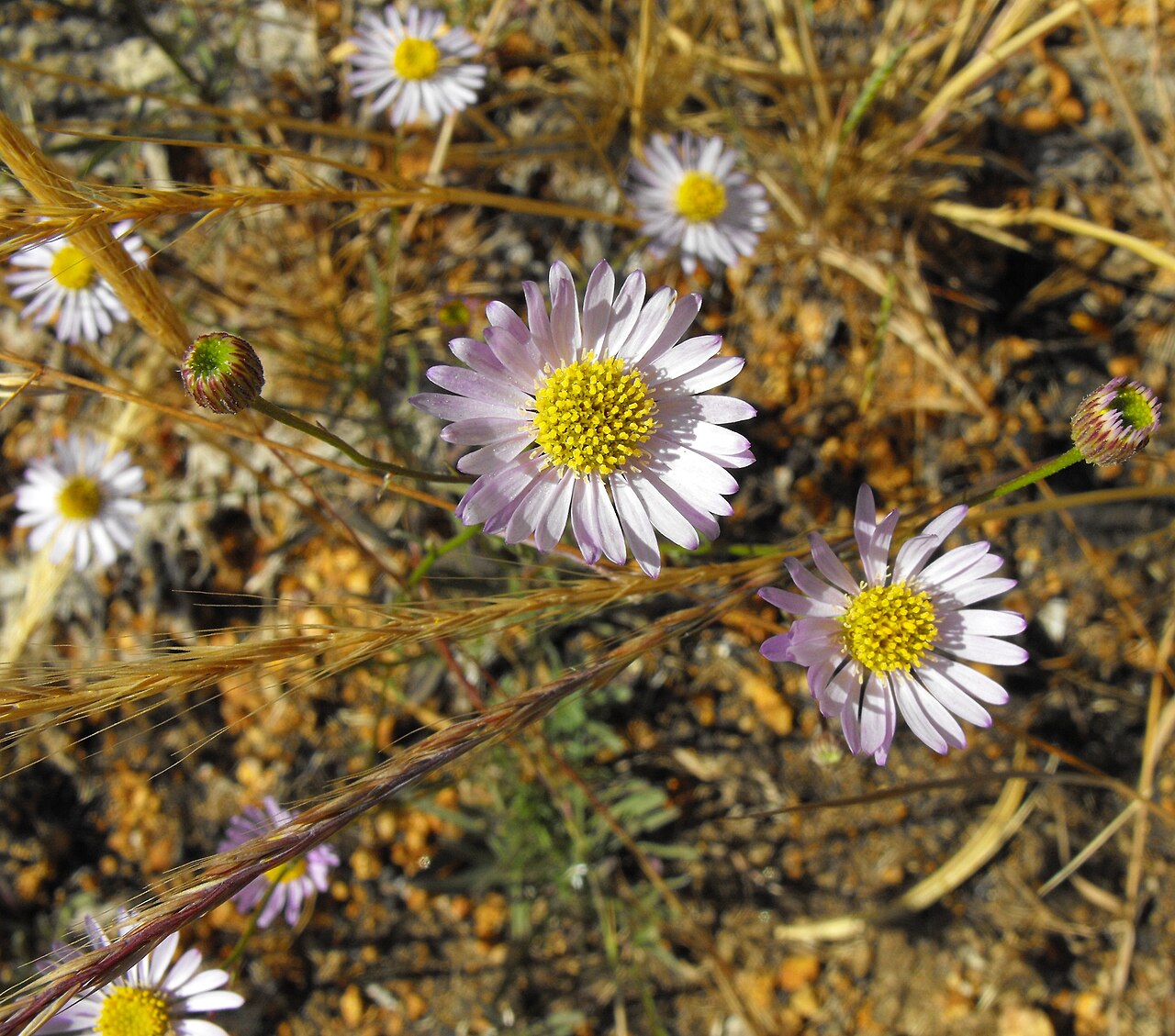
Erigeron foliosus, known as Leafy Fleabane or Leafy Daisy, is a small, tidy perennial wildflower of California’s chaparral and oak woodlands. It belongs to the aster family and produces an easy, extended show of daisy-like flowers — pale lavender to medium purple rays around a bright yellow center — on wiry, branching stems clothed in narrow leaves from base to tip.
It’s a modest plant in scale, usually staying under knee height, but it earns a place in dry native gardens by doing what showier plants often can’t: thriving in lean, rocky, summer-dry soil with essentially no irrigation once established. The common name “leafy” distinguishes it from other fleabanes with sparser foliage — here, the stems are evenly set with narrow leaves right up under the flower heads, giving the whole plant a full, bushy look even though individual stems are slender.
Leafy Fleabane blooms over a long season and draws a steady traffic of small native bees, syrphid flies, and butterflies, making it a reliable low-water pollinator plant for California gardens working within its narrow native range along the Pacific coast.
Identification
Growth Habit
Leafy Fleabane is an erect, clumping, woody-based perennial growing 8 inches to 3 feet tall, branching freely from a base of old woody roots. Plants form loose, rounded clumps rather than spreading by runners.
Leaves
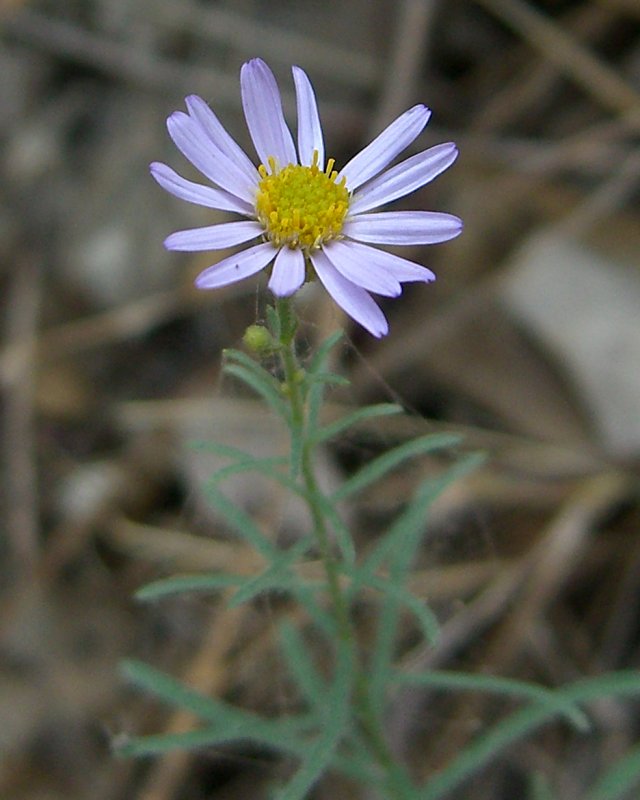
Leaves are evenly spaced along the entire stem — a key difference from fleabanes that cluster their leaves near the base. Leaf shape is variable even within a single plant, ranging from narrow and thread-like to wider and flat, and running ⅜ to 2¾ inches long. Foliage is green to gray-green and usually has a fine, slightly hairy texture.
Flowers
Each branch tip carries one to several flower heads, each about ½ to ⅝ inch across. A center of golden-yellow disc florets is ringed by up to 60 narrow ray florets in pale lavender to medium purple. Bloom runs long by chaparral standards, typically spring through early summer and sometimes again after fall rain.
Fruit
Like other asters, the flower head matures into a cluster of tiny, wind-dispersed seeds (achenes) tipped with fine bristles, typical of the fleabane and daisy group.
Quick Facts
| Scientific Name | Erigeron foliosus |
| Family | Asteraceae (Aster/Sunflower) |
| Plant Type | Herbaceous/woody-based perennial wildflower |
| Mature Height | 8 in – 3 ft |
| Mature Spread | 1–2 ft, clumping |
| Growth Rate | Moderate |
| Sun Exposure | Full sun to part shade |
| Water Needs | Low; dry once established |
| Soil Type | Rocky, gravelly or well-drained loam |
| Soil pH | Neutral to slightly alkaline |
| Bloom Time | Spring to early summer |
| Flower Color | Pale lavender to purple rays, yellow center |
| Fall Color | None notable |
| Fruit | Tiny wind-dispersed achenes |
| Deer Resistant | Generally yes |
| USDA Hardiness Zones | 8–10 |
Native Range
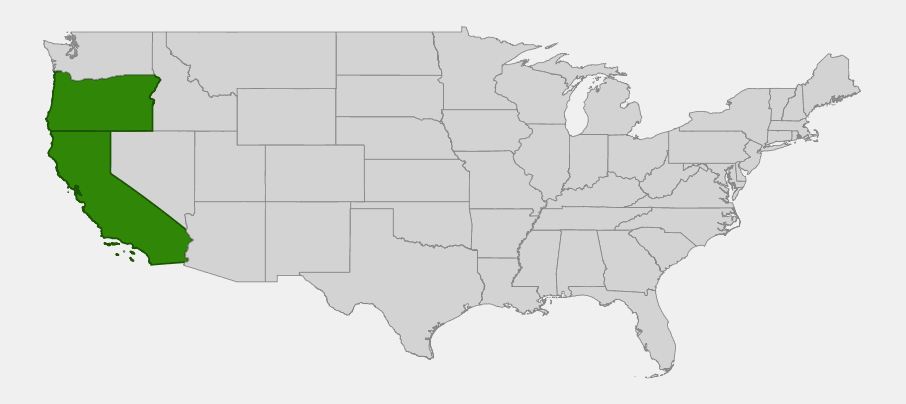
Leafy Fleabane is native to the Pacific coast from southwestern Oregon south through California to Baja California, with its heaviest concentration in the California Coast Ranges, Sierra Nevada foothills, and interior valleys. In Oregon it is confined to the far southwest corner, around the Klamath Mountains near the California border — it does not reach Washington.
Across this range it grows in chaparral, oak woodland, rocky talus slopes, and open, disturbed ground at low to moderate elevations, usually in full sun on thin or rocky soils. Several regional varieties are recognized, including forms restricted to the San Francisco Bay Area and to Mendocino and Del Norte counties, reflecting how finely the species has adapted to local conditions within its range.
This site’s regional plant lists don’t include a dedicated California list, so Leafy Fleabane’s native range is represented here through the Western Oregon & Western Washington list, which covers the small part of its range — far southwestern Oregon — that falls within this site’s regional coverage.
📋 Regional plant lists featuring Leafy Fleabane: Western Oregon & Western Washington (southwestern Oregon populations only)
Growing & Care Guide
Leafy Fleabane is built for the classic Mediterranean-climate garden: wet winters, bone-dry summers, and lean soil. It rewards gardeners who resist the urge to baby it.
Light
Full sun produces the most compact, floriferous plants. In part shade or where summers run hot, light afternoon shade can extend bloom and keep foliage from scorching, though flowering will be somewhat reduced.
Soil & Water
This plant wants exactly what chaparral offers: fast-draining, rocky or gravelly soil and minimal summer water. Established plants need little to no irrigation beyond natural rainfall and are a poor fit for regularly irrigated beds, where excess summer moisture can lead to root rot. If you garden on richer, heavier soil, raise the planting area or amend generously with coarse grit to improve drainage.
Planting Tips
Plant from containers in fall, so roots can establish during the rainy season before the first dry summer. Space plants 12 to 18 inches apart to allow for their rounded, clumping growth. Avoid summer irrigation once plants are through their first year — treat them the way the chaparral does, with water concentrated in the cool season.
Pruning & Maintenance
Cut plants back by about a third after the main bloom flush to tidy their form and often coax a second, lighter bloom. Woody-based perennials like this one benefit from being kept relatively compact; leggy, overgrown plants can be rejuvenated with a harder cutback in fall.
Landscape Uses
- Dry, low-water borders and rock gardens
- Chaparral or oak woodland restoration plantings
- Pollinator gardens where long bloom and low water matter
- Slope plantings on well-drained, sunny banks
- Mixed with other California natives such as golden yarrow and California sagebrush
Wildlife & Ecological Value
Leafy Fleabane’s extended bloom period makes it a dependable nectar source through the lean, dry months of the California growing season, when many other wildflowers have already finished.
For Pollinators
Flowers attract a wide range of small native bees, syrphid (hover) flies, and butterflies. Because the plant often blooms into early summer after showier spring annuals have faded, it helps bridge a gap in nectar availability for local pollinator populations.
For Birds
The small seeds that follow bloom are eaten by finches and other seed-eating songbirds, though the plant’s main wildlife contribution is through its flowers rather than its fruit.
Ecosystem Role
As a low, woody-based perennial scattered through chaparral and oak woodland understories, Leafy Fleabane adds structural diversity at ground level and helps hold soil on the rocky slopes where it typically grows, alongside its role as a pollinator plant.
Cultural & Historical Uses
Leafy Fleabane does not carry a significant documented history of medicinal, culinary, or craft use among Indigenous peoples of California, unlike some of its showier native neighbors. Its modern value is chiefly horticultural — as the native plant movement in California has grown, it has become a staple of low-water, chaparral-style gardens specifically for its long bloom and undemanding care.
The genus name Erigeron comes from Greek roots meaning “early” and “old man,” a reference to the early, fluffy seed heads some fleabane species produce — though in this species the effect is subtler than in some relatives. The species name foliosus is simply Latin for “leafy,” describing the evenly leaved stems that set this fleabane apart from others in the genus.
Today, Leafy Fleabane is mainly grown by native plant gardeners and used in habitat restoration projects within its California and southern Oregon range, valued for exactly the traits that made it successful in the wild: toughness, low water need, and a long season of flowers for pollinators.
Frequently Asked Questions
Is Leafy Fleabane the same as other fleabane species sold as natives?
No — there are many Erigeron species native to different parts of North America. Leafy Fleabane (Erigeron foliosus) is specific to California and the southwestern Oregon coast; other fleabanes, such as showy fleabane, are native to very different regions and should not be substituted if you’re gardening for local provenance.
Does Leafy Fleabane need regular watering once established?
No. It is adapted to the dry-summer chaparral climate and performs best with little to no irrigation after its first year. Regular summer watering can shorten its life by encouraging root rot.
How long does Leafy Fleabane bloom?
Typically from spring into early summer, sometimes with a lighter rebloom after fall rains if plants are cut back following the main flush.
Will Leafy Fleabane spread aggressively in my garden?
No. It is a clumping perennial that stays in place rather than spreading by runners or rhizomes; it may self-seed modestly in favorable conditions, but it is not an aggressive spreader.
Can I grow Leafy Fleabane outside California and southern Oregon?
It can be grown as a drought-tolerant garden perennial in similar Mediterranean or dry-summer climates, but it is only locally native within California and the Klamath area of southwestern Oregon — plant it for habitat value only within that range.

Looking for a nursery that carries Leafy Fleabane?
Browse our native plant nursery directories: California · Oregon