
Texas Lantana (Lantana urticoides)
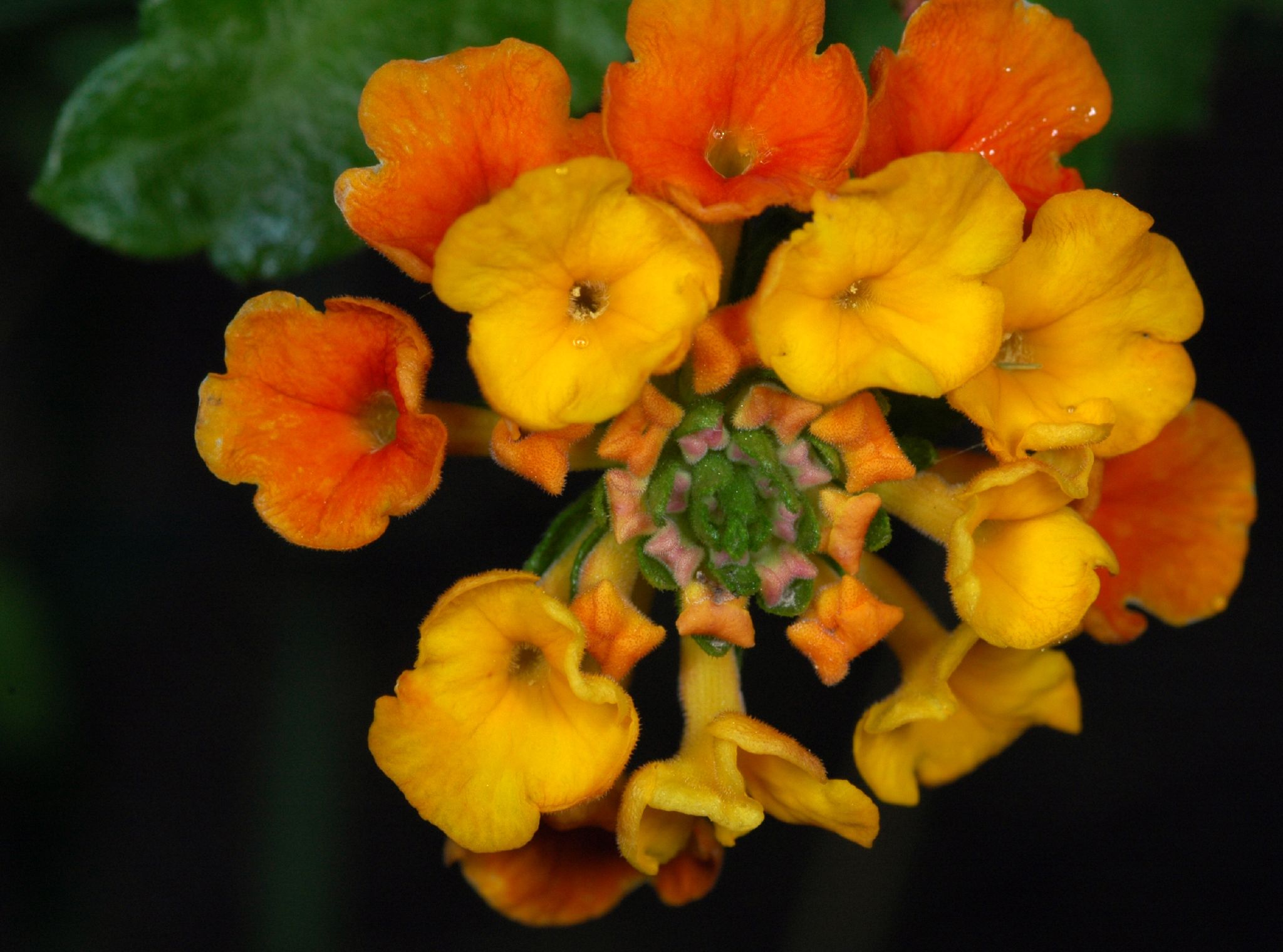
Lantana urticoides, commonly called Texas Lantana (and formerly known as Lantana horrida), is a tough, sun-loving native shrub of the southern Rio Grande Plains and nearby arid Southwest. It is the only lantana truly native to the United States, and it is worth knowing apart from the many colorful lantana cultivars sold at garden centers — most of which trace back to Lantana camara, a tropical American species that has become a damaging invasive weed across Florida, Hawaii, and other warm regions. Texas lantana, by contrast, belongs where it grows wild and supports local wildlife without the invasive baggage.
Growing 3 to 6 feet tall as a rounded, multi-branched shrub, Texas lantana produces rounded clusters of small tubular flowers that open yellow and age through orange to red, giving each cluster a two-toned, sunset-like look. It blooms over an extraordinarily long season, from spring frost through fall frost in favorable years, making it one of the most reliable nectar sources for butterflies and hummingbirds in Texas, New Mexico, and Arizona gardens.
Texas lantana thrives on neglect once established — it wants heat, sun, and sharp drainage, and resents coddling. It is an excellent choice for a xeric or wildlife garden in its native range, but gardeners should know that every part of the plant, and especially the unripe green berries, is toxic if eaten, so it needs thoughtful placement around children, pets, and grazing livestock.
Identification
Texas lantana is a woody, multi-stemmed shrub with an irregular, rounded to sprawling form. Stems are square in cross-section when young, a trait shared across the verbena family, and the whole plant has a distinctive pungent, musky odor when the foliage is bruised or crushed.
Stems
Young stems are four-angled and covered in short, rough hairs; older stems become rounder and woody, with bark that is light gray to light brown and tends to flake. Some populations bear small, blunt prickles along the stems, though this varies and is far less pronounced than on the invasive Lantana camara, which is typically more heavily armed.
Leaves
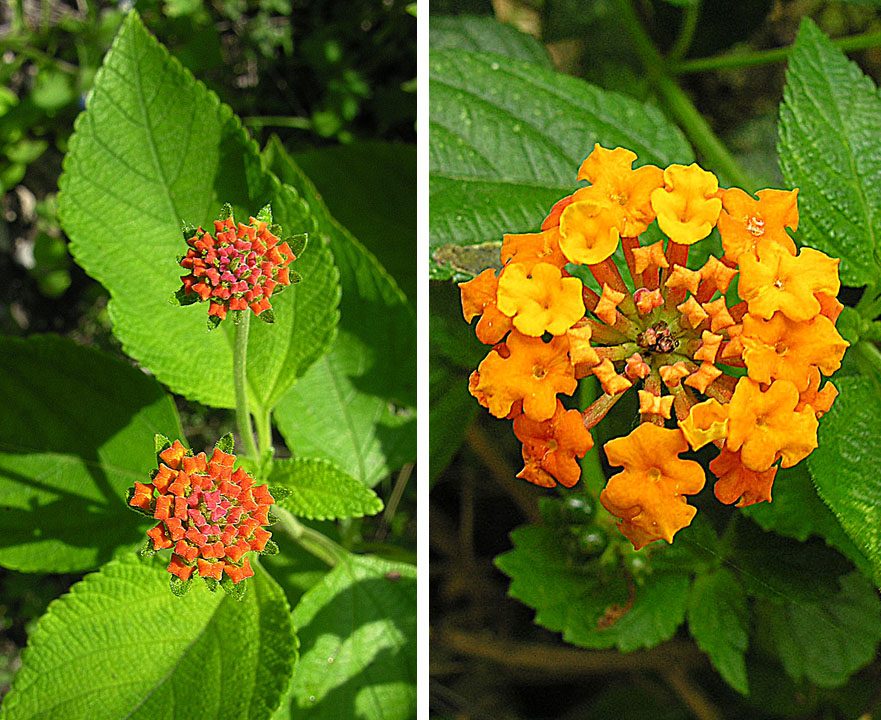
Leaves are opposite, broadly ovate, up to about 2.5 inches long, pointed at the tip and rounded to slightly heart-shaped at the base. The upper surface is noticeably rough to the touch, with a sandpapery texture from short stiff hairs, and the margins are coarsely toothed. Crushed foliage releases the plant’s characteristic strong, musky scent — a useful field clue when separating it from scentless or mildly scented lantana cultivars.
Flowers & Fruit
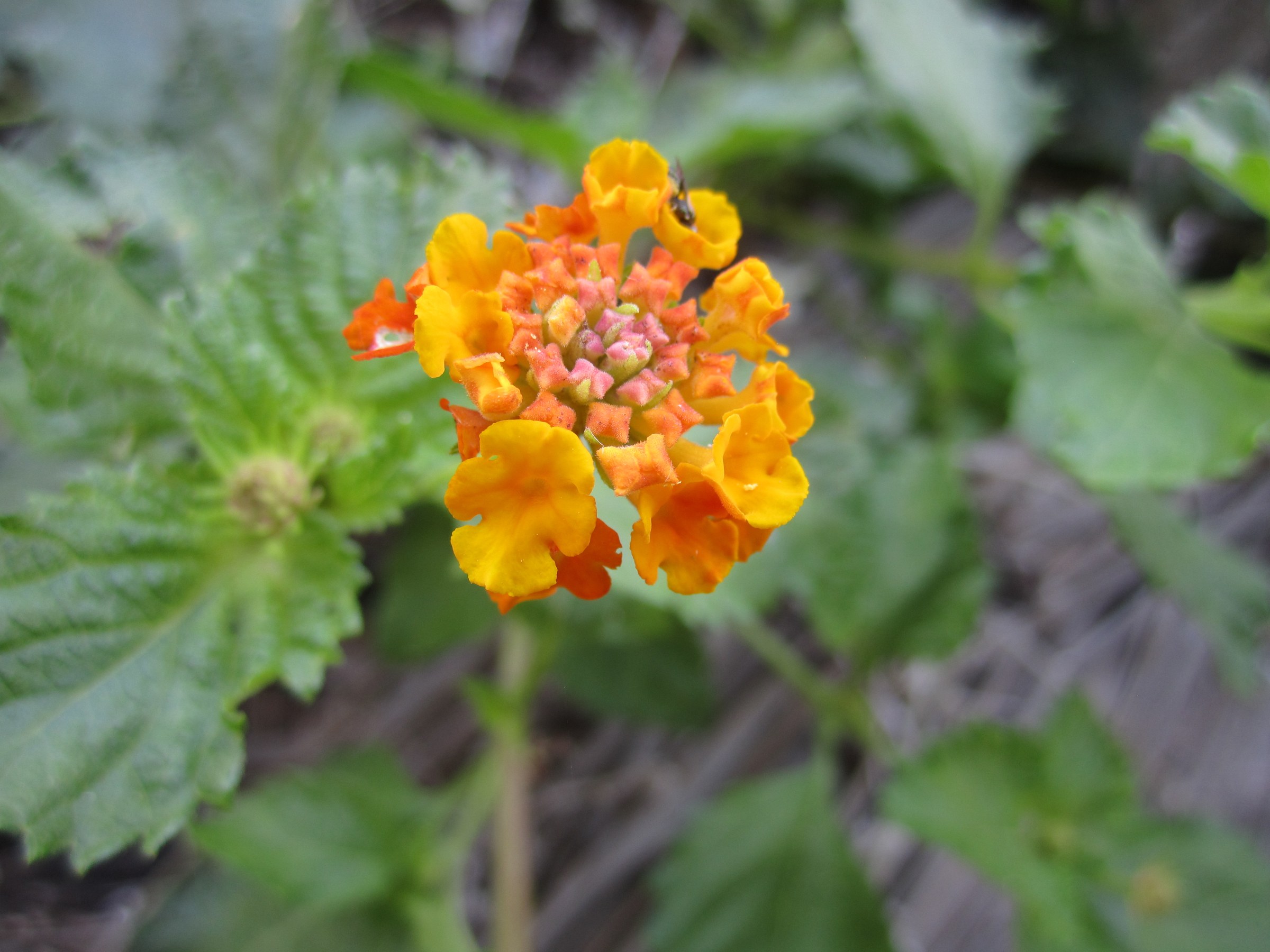
Flowers are small, tubular, and four-lobed, packed into dense, rounded clusters about an inch across at the ends of long stalks that rise above the foliage. Individual florets open a clear yellow and age to orange and finally red or reddish-orange, so each cluster typically shows two or three colors at once, from April into October or later where frost holds off. The fruit is a small, round, fleshy drupe that ripens from green through purple to glossy black; unripe green fruit is toxic and should never be eaten.
Quick Facts
| Scientific Name | Lantana urticoides (syn. Lantana horrida) |
| Family | Verbenaceae (Verbena) |
| Plant Type | Woody perennial shrub |
| Mature Height | 3–6 ft (occasionally taller in frost-free sites) |
| Mature Spread | 3–5 ft, rounded habit |
| Growth Rate | Fast in warm weather |
| Sun Exposure | Full Sun to Part Shade |
| Water Needs | Low to average once established; drought tolerant |
| Soil Type | Well-drained caliche, rocky, or sandy soils |
| Soil pH | Neutral to alkaline (about 6.5–8.0) |
| Bloom Time | April – October (until frost) |
| Flower Color | Yellow aging to orange and red |
| Fall Color | None notable; semi-evergreen to deciduous depending on winter cold |
| Fruit | Round black drupes; toxic, especially unripe green fruit |
| Deer Resistant | Yes |
| USDA Hardiness Zones | 8–11 (root-hardy to zone 7 in sheltered sites) |
Native Range
Texas lantana is native to south and central Texas, extending west into southern New Mexico and southern Arizona, and south into northeastern Mexico, the Rio Grande Plains, and parts of the Gulf Coast. Within Texas its native range is concentrated in the Rio Grande Plains, Edwards Plateau, Gulf Coastal Prairies, and South Texas brushlands; it is not naturally found throughout the entire state, and gardeners outside this core range should treat it as a regional specialty plant rather than an everywhere-native.
In the wild, Texas lantana grows in brushy thornscrub, open woodland edges, caliche outcrops, and disturbed or rocky ground with excellent drainage. It tolerates heat, drought, and poor soils that would stress most ornamental shrubs, and often grows alongside other tough South Texas natives in thorn-scrub and brush country plant communities.
A crucial native-range note: Texas lantana is widely confused with, and increasingly hybridized by, the invasive Lantana camara, a multicolored (often pink, red, and yellow together) tropical American lantana that has escaped cultivation across Florida, Hawaii, and other warm states and is listed as invasive in many of them. Because L. camara and its many cultivars are sold at nurseries throughout the Southwest and readily cross with wild Texas lantana, genetically pure native populations are becoming harder to find in some areas. Always confirm you are purchasing true Lantana urticoides, not a camara hybrid, when sourcing plants for habitat restoration.
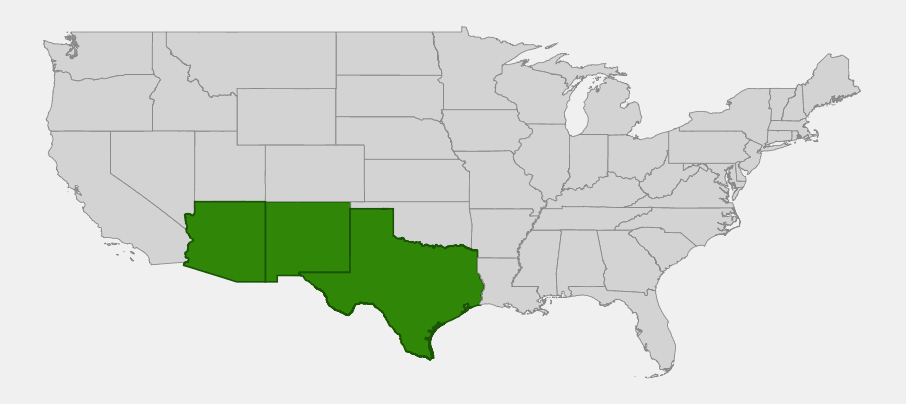
📋 Regional plant lists featuring Texas Lantana: Arizona & New Mexico
Growing & Care Guide
Texas lantana is one of the lowest-maintenance flowering shrubs you can plant within its native range — it wants heat, sun, and good drainage, and punishes overwatering and rich soil far more than it punishes neglect.
Light
Give Texas lantana full sun for the best bloom and the densest, most compact growth. It tolerates part shade but becomes leggy and flowers less profusely as shade increases. In the hottest parts of its range, a bit of afternoon relief is tolerated but not required — this is a plant built for intense summer heat.
Soil & Water
Plant in well-drained soil; Texas lantana is notably tolerant of poor, rocky, caliche, or alkaline soils that frustrate many other flowering shrubs. Water regularly during the first growing season to establish a deep root system, then taper off — established plants are quite drought tolerant and often do better with less frequent, deep watering than with regular shallow watering. Soggy or poorly drained soil is the fastest way to kill this plant, especially in winter.
Planting Tips
Set out container plants in spring after the danger of frost has passed, in a site with excellent drainage and full sun. Space plants 3 to 5 feet apart to allow for their rounded mature spread. In the colder parts of its hardiness range (zone 7b to 8a), Texas lantana often dies back to the ground in winter and resprouts from the root crown in spring, so treat it as a root-hardy perennial rather than a permanent woody framework shrub in those areas.
Pruning & Maintenance
Cut plants back hard in late winter or early spring, before new growth starts, to remove winter-damaged wood and encourage a dense, compact form; many gardeners cut the whole plant back by half or more each year. Deadheading spent flower clusters can encourage continued bloom, though the plant flowers so reliably through the season that deadheading is optional rather than essential. Wear gloves when pruning, since the foliage’s musky resins and rough texture can irritate sensitive skin.
Landscape Uses
- Butterfly and hummingbird gardens, where its long bloom season provides season-long nectar
- Xeriscaping and low-water gardens once established
- Mixed native shrub borders with Turk’s cap and cenizo
- Caliche and rocky slope plantings where few ornamentals will thrive
- Wildlife habitat restoration plantings in its native South Texas and Southwest range
Wildlife & Ecological Value
Texas lantana is one of the most valuable wildlife shrubs in its native range, prized for its exceptionally long bloom season and rich nectar production.
For Pollinators
The tubular flowers are a magnet for butterflies, including swallowtails, skippers, and queens, as well as native bees and other nectar-seeking insects. Because it blooms from spring through fall, Texas lantana fills nectar gaps when many other native flowers have finished for the season, making it an especially important late-season resource.
For Birds
Hummingbirds, especially migrating and wintering species in South Texas, regularly visit the flower clusters for nectar. Ripe black fruit is eaten by various songbirds, which help disperse the seed, though the unripe green fruit that birds generally avoid is the most toxic stage for mammals.
For Mammals
Texas lantana’s strong-smelling, somewhat bitter foliage and toxic fruit make it generally unpalatable and deer-resistant, which is part of why it persists and spreads so readily in browsed rangeland. This same toxicity, however, makes it a genuine hazard for livestock and pets that do eat it in quantity, as described below.
Ecosystem Role
As a dense, thorny-branched shrub of brush country, Texas lantana provides cover and nesting structure for small birds and other wildlife in open thornscrub habitat, while its extended bloom period helps support pollinator populations through the hottest, driest months of the South Texas growing season.
Cultural & Historical Uses
Texas lantana has a documented history of use in folk medicine among communities in its native range and in Mexico, where various lantana species were prepared for a range of traditional remedies. These were historical folk practices, not medically validated or currently recommended uses — the plant’s toxic compounds, including lantadene triterpenoids, make unsupervised internal use genuinely dangerous, and Plant Native does not endorse any medicinal use of this species.
More prominently, Texas lantana has a long horticultural history as a heat- and drought-tolerant garden plant across South Texas and the Southwest, valued by generations of gardeners well before the current wave of interest in native and pollinator-friendly landscaping. Texas Native Plant Society and Lady Bird Johnson Wildflower Center programs have highlighted it for decades as a model low-water, high-wildlife-value shrub for the region.
Its common confusion with ornamental Lantana camara cultivars is itself a modern chapter of the plant’s story: as camara cultivars spread through the nursery trade and into the wild, distinguishing and conserving genetically pure Texas lantana has become an active concern for native plant conservationists in Texas.
Frequently Asked Questions
Is Texas lantana poisonous?
Yes. All parts of the plant, especially the unripe green berries, contain toxic triterpenoid compounds (lantadenes) that can cause severe illness in people, pets, and livestock, including liver damage and photosensitization. Never eat any part of this plant, and keep young children and grazing animals away from fruiting plants.
How is Texas lantana different from the lantana sold at garden centers?
Most lantana sold in nurseries is Lantana camara or a camara hybrid, a tropical American species that has become invasive in Florida, Hawaii, and other warm, humid states. True Texas lantana (Lantana urticoides) is native only to South Texas, southern New Mexico, and southern Arizona, has a strong musky foliage scent, and does not share camara’s invasive record in its native region. Buy from a native plant nursery and ask specifically for Lantana urticoides.
Is Texas lantana invasive?
Within its native range in South Texas, New Mexico, and Arizona, Texas lantana is not considered invasive. However, outside that native range — and especially where it hybridizes with the invasive Lantana camara — caution is warranted, and gardeners outside the native range should choose regionally appropriate natives instead.
Will Texas lantana survive a hard freeze?
In the colder parts of its range it usually dies back to the ground after a hard freeze but resprouts from the root crown in spring, behaving like a root-hardy perennial. In its warmest native range it may stay semi-evergreen through mild winters.
Do hummingbirds like Texas lantana?
Yes, hummingbirds are frequent visitors, especially during migration and in winter in South Texas, where Texas lantana’s long bloom season provides a reliable nectar source when other flowers are scarce.

Looking for a nursery that carries Texas Lantana?
Browse our native plant nursery directory: Arizona · New Mexico · Texas