
Ouachita Blazing Star (Liatris compacta)
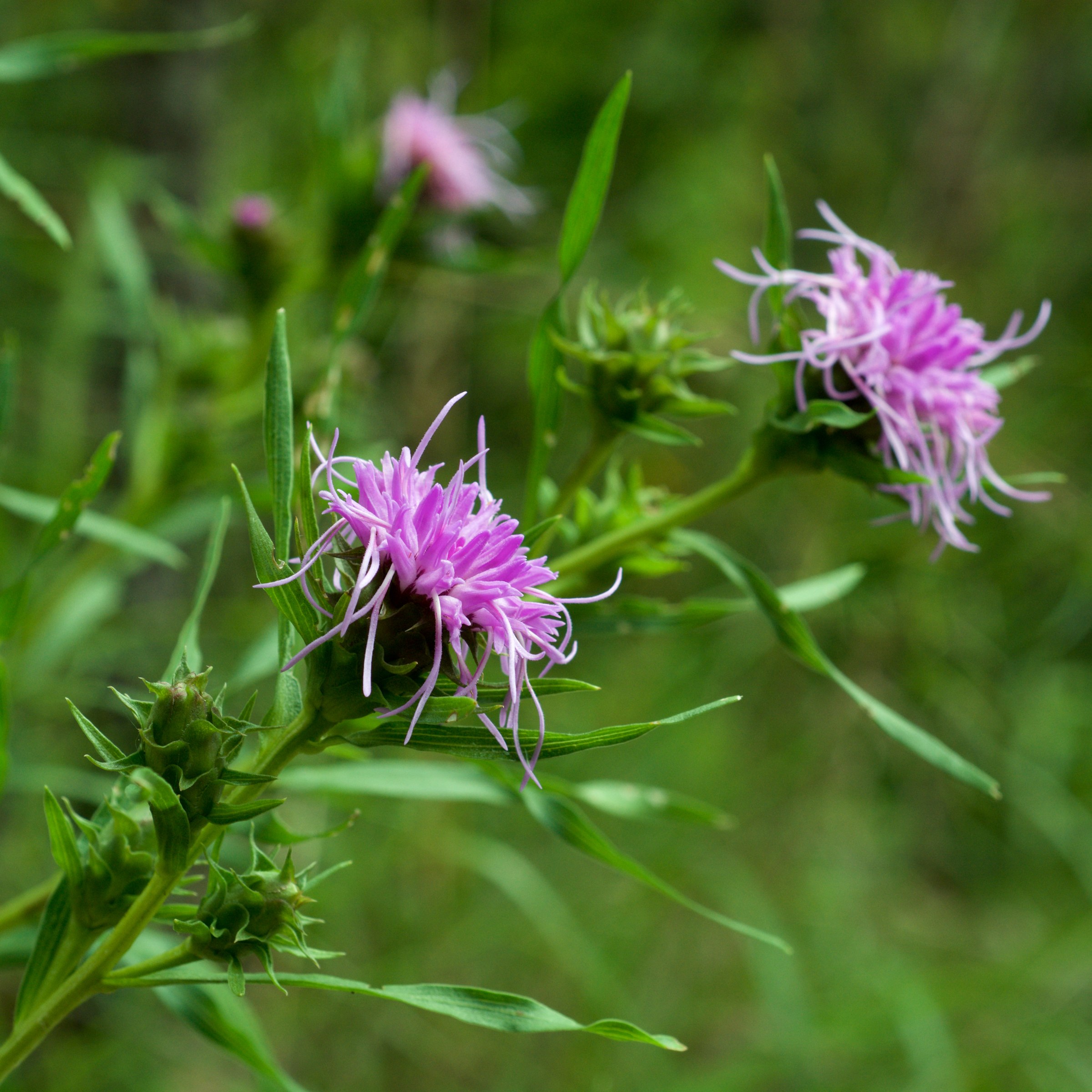
Liatris compacta, the Ouachita Blazing Star, is a clump-forming perennial wildflower found nowhere in the world except the Ouachita Mountains of west-central Arkansas and adjacent southeastern Oklahoma. It was long treated as a form of the much more widespread scaly blazing star, Liatris squarrosa, but botanists have since recognized it as its own species on the strength of its distinct flower structure, its particular taste for rocky sandstone and novaculite glades, and its isolation from the rest of the Liatris squarrosa complex. Within its small home range it can be locally abundant on open, rocky ridgetops, but because that range is so narrow, the species is considered globally rare.
Each plant grows from a corm-like rootstock and sends up one to several wiry, unbranched stems lined with narrow leaves. In late spring the stems top out at 1 to 2 feet and open into tight, bottlebrush-like clusters of lavender-pink, thread-petaled flower heads — the “blazing star” look shared by the whole genus. What sets this species apart in the field is timing: it is the earliest of the Ouachita blazing stars to flower, often opening in May while its relatives are still weeks from bloom, and it can continue sporadically into early fall.
For gardeners in the Ouachita region, Ouachita blazing star is a tough, drought-proof native for a sunny, well-drained spot — rock gardens, gravel beds and dry meadow plantings all suit it well. Because it is rare and narrowly endemic, every garden plant should come from a nursery that propagates its own stock from seed or division, never from material dug in the wild; removing plants from their native glades can measurably harm an already small, geographically confined population.
Identification
Ouachita blazing star is a small, clumping member of the aster family (Asteraceae) that is easiest to recognize by its combination of compact size, early bloom time and rocky glade habitat.
Stems & Roots
Plants arise from a swollen, corm-like underground stem that stores energy between growing seasons, a trait typical of the genus Liatris. Each corm produces one or more slender, upright, unbranched flowering stems 1 to 2 feet tall, often in tight clumps that slowly widen as the corm ages and offsets form.
Leaves
The leaves are narrow, grass-like and alternate, crowded most densely near the base of the stem and gradually thinning and shortening higher up, a growth pattern typical of blazing stars. They are smooth-margined and a dull to grayish green, suited to the dry, exposed, rocky sites where the species grows.
Flowers
Flower heads are packed into a dense, cylindrical to slightly flat-topped cluster (a “spike” in loose garden language) at the top of the stem. Each head is made up entirely of disc florets with long, thread-like lavender-pink petal lobes that give the cluster its fuzzy, “blazing” appearance; there are no true ray petals, as in other Liatris. Unlike the taller, more loosely flowered gayfeather (Liatris spicata) sometimes grown alongside it, Ouachita blazing star’s heads are more tightly clustered and less barbed-looking, and it begins flowering noticeably earlier than the other Liatris species sharing its Ouachita Mountain habitat.
Fruit & Seeds
Like other blazing stars, the fruit is a small, ribbed, one-seeded achene topped with a tuft of tawny bristles that carries it on the wind, typical of the aster family’s wind-dispersed seed strategy.
Quick Facts
| Scientific Name | Liatris compacta |
| Family | Asteraceae (Aster/Sunflower) |
| Plant Type | Herbaceous perennial wildflower |
| Mature Height | 1–2 ft |
| Mature Spread | 8–14 in clump |
| Growth Rate | Slow |
| Sun Exposure | Full Sun to Part Sun |
| Water Needs | Low; excellent drought tolerance |
| Soil Type | Rocky, shallow, well-drained sandstone, novaculite or shale |
| Soil pH | Slightly acidic to neutral |
| Bloom Time | May – September |
| Flower Color | Lavender-pink |
| Fall Color | None notable |
| Fruit | Small wind-dispersed achenes with bristly tufts |
| Deer Resistant | Yes |
| USDA Hardiness Zones | 6–8 |
Native Range
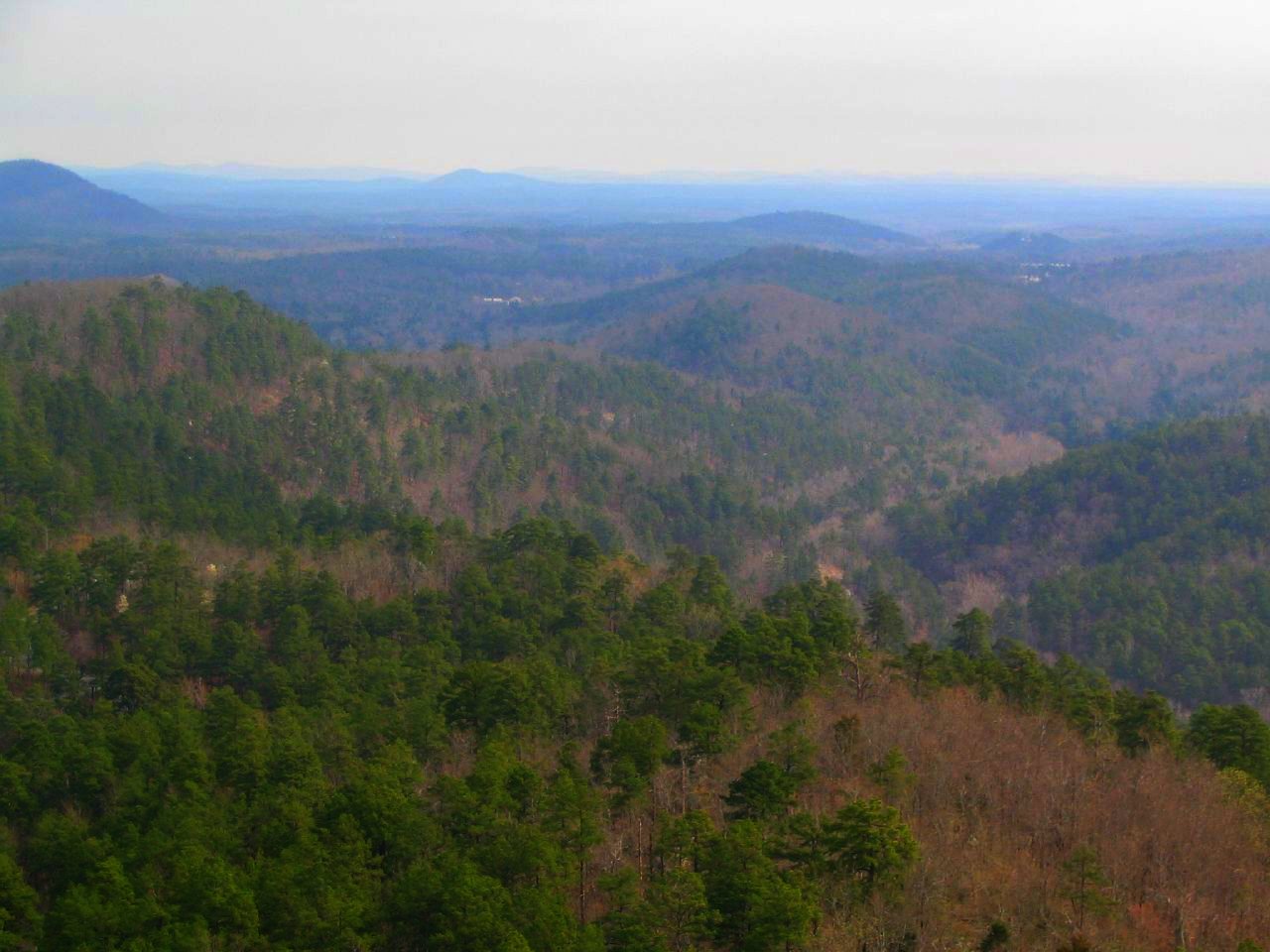
Ouachita blazing star is a true narrow endemic: its entire known native range lies within the Ouachita Mountains, a west-to-east fold-mountain range straddling the Arkansas-Oklahoma line. It is most frequent in west-central Arkansas, particularly around Hot Spring, Garland and the surrounding Ouachita counties, and it also occurs on comparable rocky ridges across the state line in southeastern Oklahoma. It is not known to occur naturally anywhere else in the United States.
Within that range it favors open, rocky woodlands and glades on ridgetops and upper slopes, especially where the underlying rock is sandstone, novaculite (a hard, fine-grained quartz rock the Ouachitas are famous for) or shale. These thin, well-drained, often sun-exposed soils support an open canopy that lets enough light reach the ground for this and other glade specialists to thrive.
Because the entire population is confined to one relatively small mountain range, the species is vulnerable to habitat loss from quarrying, development and fire suppression, which allows woody plants to shade out the open glades it needs. The Ouachita Mountains are also home to more than a dozen other plants found nowhere else, including Arkansas fameflower (Phemeranthus arkansanus) and Nuttall’s cornsalad (Valerianella nuttallii), making the range a regional priority for native plant conservation.
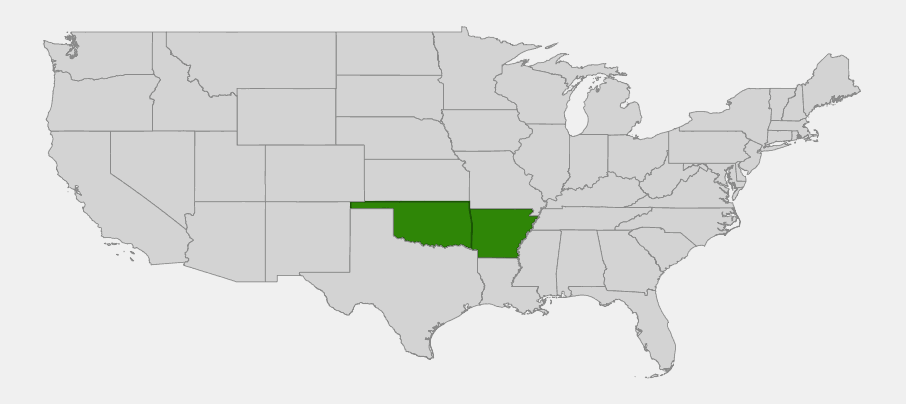
📋 Regional plant lists featuring Ouachita Blazing Star: Arkansas, Louisiana, Eastern Oklahoma & Eastern Texas
Growing & Care Guide
Because it comes from thin, rocky, well-drained glade soils, Ouachita blazing star is easiest to grow when its garden conditions echo that lean, sunny, fast-draining habitat rather than a rich, moist flower bed.
Light
Give it full sun to part sun. Plants grown in too much shade tend to flop and flower poorly; in its native glades it grows in fully open, rock-exposed sites with little canopy cover.
Soil & Water
Good drainage is the single most important factor. A gritty, rocky or sandy soil that dries out between rains suits it far better than heavy clay or a regularly irrigated bed. Established plants are very drought-hardy and need no supplemental water once settled in; soggy, poorly drained soil, especially in winter, is far more likely to kill a plant than drought.
Planting Tips
Plant container-grown corms in spring or fall into a raised bed, rock garden or gravel planting where water will not pool. Space plants roughly a foot apart to let the clumps fill in. Buy only from nurseries that propagate their own stock from seed or division — because the species is a rare, geographically confined endemic, wild-collected plants should never be purchased or dug, and any planting on public or private Ouachita Mountain land should leave existing wild clumps undisturbed.
Pruning & Maintenance
Little maintenance is needed. Cut spent flower stalks back in late fall or leave them over winter for seed-eating birds, then clear old growth in late winter before new shoots emerge. Plants rarely need dividing, but old clumps can be split in early spring if they become crowded.
Propagation
Propagate from ripe seed collected in fall and cold-stratified over winter before spring sowing, or by carefully dividing mature corm clusters in early spring. Seed-grown plants typically take two years to reach flowering size.
Landscape Uses
- Rock gardens and gravel beds that mimic its native glade habitat
- Dry meadow or prairie-style plantings on well-drained sites
- Pollinator gardens for early-season nectar before other blazing stars bloom
- Xeriscaping in Ouachita-region gardens needing little irrigation
- Native plant conservation gardens highlighting regional endemics
Wildlife & Ecological Value
Like other blazing stars, Ouachita blazing star is a valuable nectar source in its glade habitat, especially because it flowers earlier in the season than most of its Liatris relatives.
For Pollinators
The nectar-rich flower heads draw a wide range of bees, hoverflies and other insects. Liatris species are an especially important nectar source for migrating monarch butterflies, and the genus also hosts specialized flower moths such as Schinia gloriosa and Schinia sanguinea, which feed exclusively on blazing stars.
For Birds
Seed-eating songbirds such as goldfinches forage on the ripe, bristle-tufted achenes left standing into winter, making it worth leaving old flower stalks up through the colder months.
For Mammals
The foliage is generally left alone by deer, which makes it a reliable choice in gardens where browsing pressure is high.
Ecosystem Role
As a specialist of open, rocky Ouachita glades, this species is part of a distinctive community of sun-loving plants that depends on periodic disturbance — historically fire — to keep woody growth from shading out the thin-soiled openings. Its presence is often used by botanists as an indicator of healthy, intact glade habitat in the region.
Cultural & Historical Uses
Ouachita blazing star has not been separately documented in historical ethnobotanical records, since it was only recognized as distinct from the wider-ranging scaly blazing star in relatively recent botanical work. Blazing stars (Liatris) in general, however, have a long documented history of use among Indigenous peoples of the eastern and central United States, who historically used the corms of various species as a folk remedy for digestive complaints, giving the genus the old common name “colic root” in parts of its range.
This history is historical and ethnobotanical in nature, not a guide for present-day use. No part of the plant is known to be a food source, and the species should not be regarded as edible.
Today the main cultural value of Ouachita blazing star is as a symbol of the Ouachita Mountains’ unusual botanical diversity. Along with the other endemics found only in this range, it is increasingly featured in conservation outreach and native plant gardens that highlight the region’s rare flora.
Frequently Asked Questions
Is Ouachita blazing star the same plant as scaly blazing star?
No. It was once treated as a variety of Liatris squarrosa (scaly blazing star), but it is now recognized as its own species, Liatris compacta, based on differences in flower structure, habitat and its isolated range in the Ouachita Mountains.
Is it legal or responsible to dig Ouachita blazing star from the wild?
No. Because its entire population is confined to a small area of the Ouachita Mountains, removing wild plants can measurably harm an already limited population. Buy only nursery-propagated plants grown from seed or division, and leave wild clumps undisturbed.
How is it different from gayfeather (Liatris spicata)?
Gayfeather has taller, more loosely arranged flower spikes with many buds per stem, while Ouachita blazing star has shorter, more tightly clustered, less barbed-looking flower heads, and it blooms earlier in the season than other Liatris species sharing its habitat.
Will it grow outside the Ouachita Mountains region?
It can be grown in gardens elsewhere with similar rocky, well-drained, sunny conditions, but it is not native beyond Arkansas and Oklahoma and should not be planted in ways that risk it escaping into wild habitat outside its historic range.
Can Ouachita blazing star be eaten?
No part of the plant is a recognized food source, and it should not be treated as edible.
