
ʻAmaʻu (Sadleria cyatheoides)
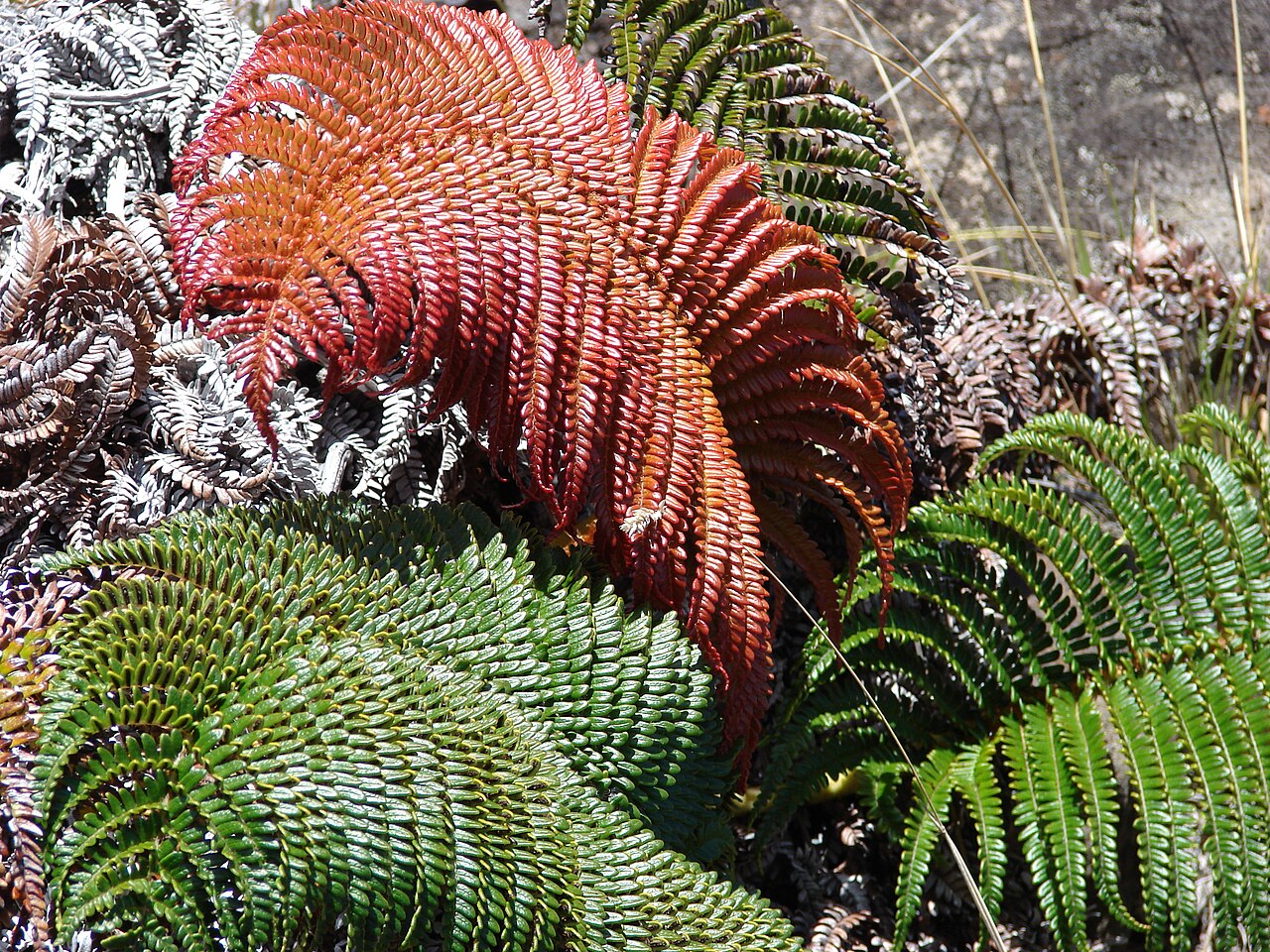
Sadleria cyatheoides, known to Hawaiians as ʻAmaʻu or ʻAmaʻumaʻu, is one of the most recognizable native ferns in the Hawaiian Islands — a tough, upright, small tree fern found everywhere from barren lava fields to shaded rainforest understory. Its most striking feature is color: new fronds unfurl a deep wine-red to orange, a natural sunscreen against intense tropical UV, before maturing into glossy dark green. This endemic member of the Blechnaceae (chain fern family) is found nowhere else on Earth, and it is woven deeply into Hawaiian place names, oral tradition, and material culture.
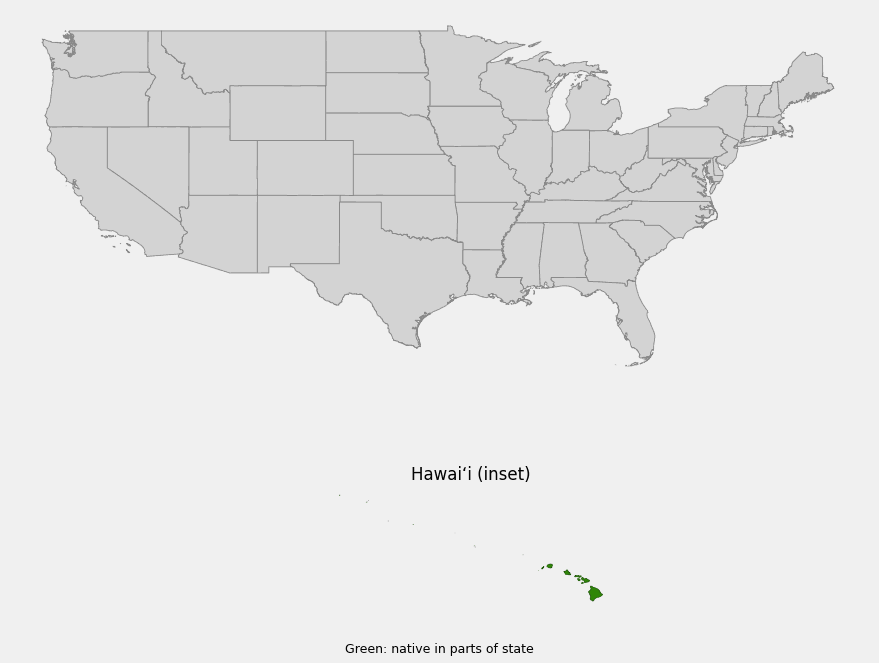
ʻAmaʻu is endemic to all the main Hawaiian Islands except Niʻihau and Kahoʻolawe, thriving across an extraordinary range of conditions — from fresh, bare lava flows where it is often the very first plant to take root, to open shrubland, to the shaded floor of wet montane forest, from near sea level to over 7,000 feet. Its fibrous, starch-filled trunk and hardy constitution allowed it to survive as a staple plant of both ecology and everyday Hawaiian life for centuries before Western contact.
For gardeners in Hawaii building a native landscape, ʻamaʻu is an excellent structural fern: slow-growing but long-lived, tolerant of both sun and shade depending on elevation, and a direct living link to the pioneer plant communities that first colonized the islands’ volcanic terrain. It is not winter-hardy outside Hawaii and is not a plant for mainland gardens.
Identification
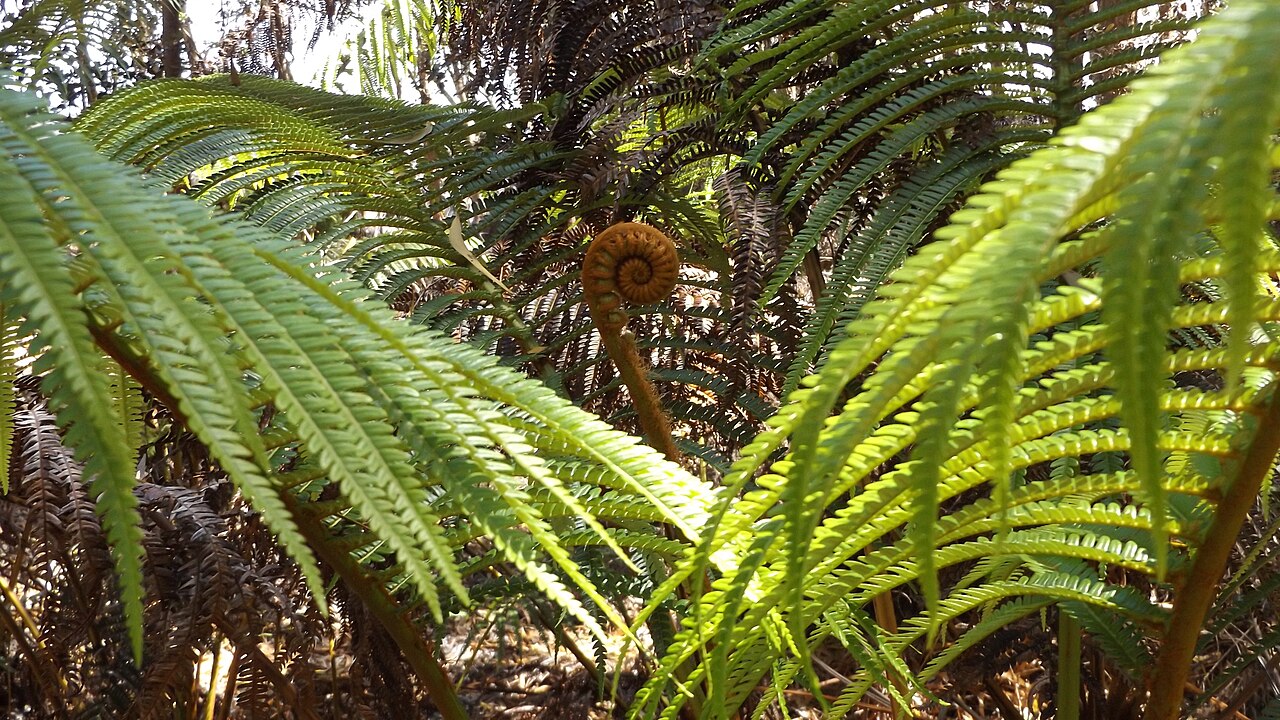
ʻAmaʻu grows as an upright or sometimes leaning fern reaching 3 to 13 feet tall, with a thick, fibrous trunk 3 to 4 inches across that is not true bark and wood but a dense mass of rhizome tissue packed with starchy pith. A skirt of old, dead, brown fronds often persists around the base as the plant ages.
Fronds
Fronds are erect rather than drooping, 22 to 118 inches long including the stipe, and once- to twice-pinnately divided, with 30 to 63 pairs of small leaflets (pinnules) per pinna. The leathery, blades are glossy dark green above and pale to whitish beneath at maturity, with veins that are nearly impossible to see on the underside — a key feature that separates ʻamaʻu from its close relative ʻamaʻu (Sadleria pallida), whose veins are clearly visible. New fiddleheads and young fronds are covered in soft, tan to brown hair-like scales called pulu, which wear away as the frond matures and unfurls into its mature red, then green, coloring.
Fruiting Structures
Like other ferns, ʻamaʻu reproduces by spores rather than flowers or seeds. The spore-producing structures, called sori, are long and linear, arranged in rows down the center of each pinnule on the underside of mature, fertile fronds, and are covered by a thin flap of tissue (the indusium) that opens inward.
Quick Facts
| Scientific Name | Sadleria cyatheoides |
| Family | Blechnaceae (Chain Fern) |
| Plant Type | Evergreen perennial fern (small tree fern form) |
| Mature Height | 3–13 ft (0.9–4 m) |
| Trunk Diameter | 3–4 in (7.5–10 cm) |
| Growth Rate | Slow |
| Sun Exposure | Full sun at high elevation; bright shade at low elevation |
| Water Needs | Moderate to high; consistent moisture and humidity |
| Soil Type | Cinder-rich, rocky, or organic volcanic soils; fast-draining |
| Soil pH | 5.5–6.5 (acidic) |
| Bloom Time | Non-flowering; spore-bearing year-round |
| Frond Color | Red when young, glossy dark green when mature |
| Fall Color | Not applicable; evergreen, no seasonal color change |
| Deer Resistant | N/A (no deer in Hawaii); vulnerable to feral pigs |
| USDA Hardiness Zones | 10–11 (Hawaii only) |
Native Range
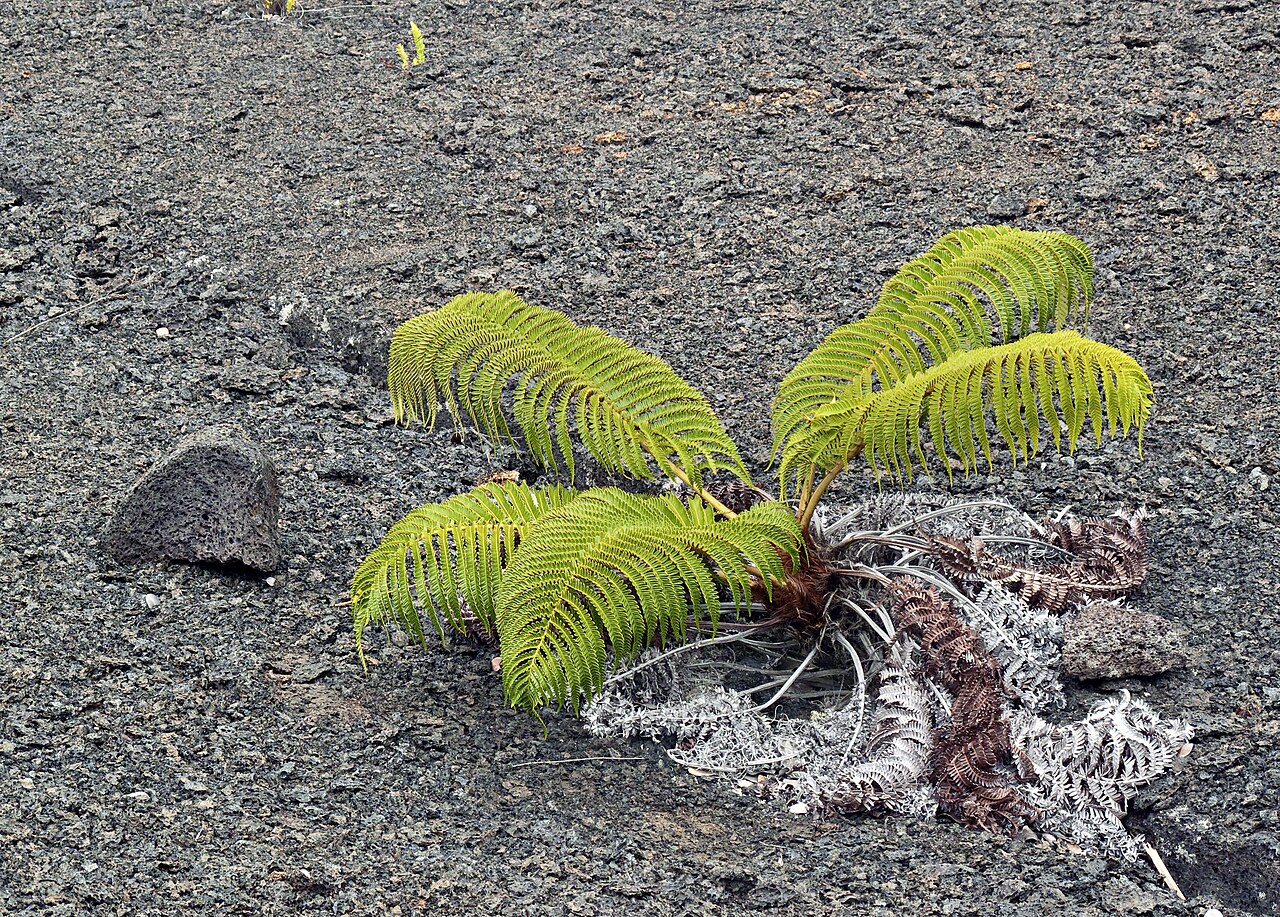
ʻAmaʻu is endemic to the Hawaiian Islands, found on all the main islands except Niʻihau and Kahoʻolawe. It is one of the most widely distributed native ferns in the archipelago, occurring from near sea level up to roughly 5,500 to 7,200 feet in elevation, and it is especially conspicuous at Hawaiʻi Volcanoes National Park, where it grows directly out of cracks in cooled lava at Kīlauea Iki Crater and around the Halemaʻumaʻu fire pit, which takes its name from this fern.
Ecologically, ʻamaʻu is a classic pioneer species: it is frequently one of the very first plants to establish on fresh lava flows, its decaying fronds building up organic matter that later allows seeds of ʻōhiʻa lehua (Metrosideros polymorpha) and other species to germinate and take hold. Beyond bare lava, it is equally at home in open shrubland, mesic forest, and wet montane forest understory, making it one of the most habitat-flexible native ferns in Hawaii.
Because ʻamaʻu depends on consistently humid air and does not tolerate hard frost, it is found only within Hawaii and has no native range on the U.S. mainland; it should not be confused with mainland ferns sold under similar common names.
📋 Regional plant lists featuring ʻAmaʻu: Hawaii
Growing & Care Guide
ʻAmaʻu is a rewarding but patient fern to grow, and its needs shift noticeably with elevation and climate — what works in cool, misty Volcano will scorch a plant in hot, dry Pearl City.
Light
At higher, cooler elevations, ʻamaʻu tolerates full, open sun without difficulty, just as it does on exposed lava fields in the wild. Below about 500 feet, however, direct sun is too harsh; choose a bright but shaded location instead to avoid scorched fronds.
Soil & Water
Plant in moist to wet, fast-draining soil or media — cinder-rich or rocky organic volcanic soils are ideal, though ʻamaʻu also tolerates heavier, rocky clay. In hot or dry sites, supplement with light, frequent misting several times a day, especially around midday, to keep humidity up and frond evaporation down; this mimics the moist, breezy conditions of its higher-elevation native habitat.
Planting Tips
ʻAmaʻu is slow-growing, so give it a permanent spot where it can develop its trunk and skirt of old fronds over many years. It performs best with steady humidity and wind movement at cool, high-elevation sites; at lower, hotter sites, pair it with afternoon shade and a misting system. Container-grown plants benefit from a balanced, controlled-release fertilizer with minor elements applied to the soil surface roughly every six months — never tilled into the media, which can damage the fern’s shallow, fibrous roots.
Pruning & Maintenance
Old, dead fronds naturally collect into a skirt around the trunk base, much like hāpuʻu. Leave this skirt in place, or trim it away with hand pruners if a tidier look is preferred, taking care not to damage the trunk or emerging side shoots. Watch for scale insects and the destructive two-spotted leafhopper, and inspect for a stem-boring weevil that has become a locally damaging pest in recent years. In forested areas, protect young plants from feral pigs, which dig up and eat the starchy trunk pith.
Landscape Uses
- Native Hawaiian landscaping as a structural accent fern with dramatic red new growth
- Lava rock and cinder gardens, mimicking its pioneer role on fresh flows
- Volcanic or mesic forest restoration plantings across Hawaii
- Shaded courtyard or understory planting at lower, hotter elevations
Wildlife & Ecological Value
As a pioneering native fern across much of Hawaii’s volcanic landscape, ʻamaʻu plays an outsized ecological role relative to its modest stature, particularly in the earliest stages of ecosystem development on new land.
For Pollinators
Ferns do not produce flowers or nectar, so ʻamaʻu offers no direct pollinator resource; its ecological contribution lies instead in habitat structure and soil building rather than floral reward.
For Birds
The dense fronds and old-frond skirt around mature plants provide cover and nesting shelter for native forest birds in wet and mesic forest understory, particularly where ʻamaʻu forms thickets alongside uluhe and other native ferns.
For Mammals
Feral pigs, though not native, readily dig up and consume the starchy trunk pith of ʻamaʻu, making wild stands near forested trails vulnerable to pig damage — one of the significant modern threats to native fern populations in Hawaii.
Ecosystem Role
ʻAmaʻu is one of the very first plants to colonize fresh lava flows, its roots gaining purchase in bare rock and its decaying fronds building the first thin layer of organic soil. That pioneering groundwork later allows the seeds of ʻōhiʻa lehua and other native species to germinate, making ʻamaʻu a foundational species in the long ecological succession that eventually produces Hawaii’s wet and mesic native forests.
Cultural & Historical Uses
Few native Hawaiian plants are as woven into language, legend, and daily life as ʻamaʻu. The fire pit within Kīlauea Crater, Halemaʻumaʻu, takes its name directly from this fern — “the house of the ʻamaʻu” — commemorating temporary shelters early Hawaiians are believed to have built from its fronds near the volcano. The fern was also one of the forms the pig god Kamapuaʻa could take at will, and a traditional saying held that when the leaves of ʻamaʻu bend toward the uplands, it is a sign that rain and flooding will follow, as the same winds that bow the fronds are pushing rain clouds inland.
Hawaiians put nearly every part of ʻamaʻu to practical use. The starchy pith of the trunk and the young, tender fronds were eaten roasted or steamed, serving as a food source, particularly in difficult times. The soft, hair-like pulu scales covering developing fiddleheads were harvested in the 1800s and shipped to California as stuffing for pillows and mattresses, much like the related pulu of hāpuʻu tree ferns. In kapa (bark cloth) making, frond stalks were beaten together with other fiber plants to help measure and mark the cloth, and the sap from rolled fronds was used both to moisten kapa and as an adhesive for repairs; juice extracted from the mashed outer trunk and young fronds was heated down into a concentrated red dye for coloring kapa. Fronds were also used for thatching houses when pili grass was scarce, and to cover and rainproof roof ridges and corners.
These are historical and traditional uses, not medical guidance; mashed ʻamaʻu preparations were also recorded in traditional Hawaiian medicine for ailments including asthma and skin sores, but such preparations required specific traditional knowledge and are documented here as cultural history rather than a recommendation.
Frequently Asked Questions
Can ʻamaʻu grow outside of Hawaii?
No. ʻAmaʻu is endemic to Hawaii and depends on the islands’ humid, frost-free volcanic environment. It is not hardy on the U.S. mainland and is not sold or planted outside Hawaii as a landscape fern.
How is ʻamaʻu different from the other Sadleria fern at this site?
This page covers Sadleria cyatheoides (ʻamaʻu), distinct from Sadleria pallida, also called ʻamaʻu. The clearest field difference is the leaf veins: they are easily visible on S. pallida but nearly invisible on S. cyatheoides, which also tends to grow larger, more upright, and more tree-like.
Why do new ʻamaʻu fronds turn red?
The red pigment in young, unfurling fronds is believed to act as a natural sunscreen, helping protect the tender new growth from intense tropical ultraviolet light before it hardens off and turns green.
Is ʻamaʻu endangered?
ʻAmaʻu is not considered rare and remains common across its Hawaiian range, including as a pioneer on fresh lava flows. Feral pig damage to wild stands is a localized concern, but the species as a whole is not currently at risk.
Can you eat ʻamaʻu?
Historically, yes — the starchy trunk pith and young fronds were eaten roasted or steamed by Hawaiians, particularly as a food source in lean times. It is not a plant grown or gathered as food today, and any foraging should rely on expert identification given the resemblance between native Sadleria species.

Looking for a nursery that carries ʻAmaʻu?
Browse our native plant nursery directory: Hawaii