Giant Coneflower (Rudbeckia maxima)
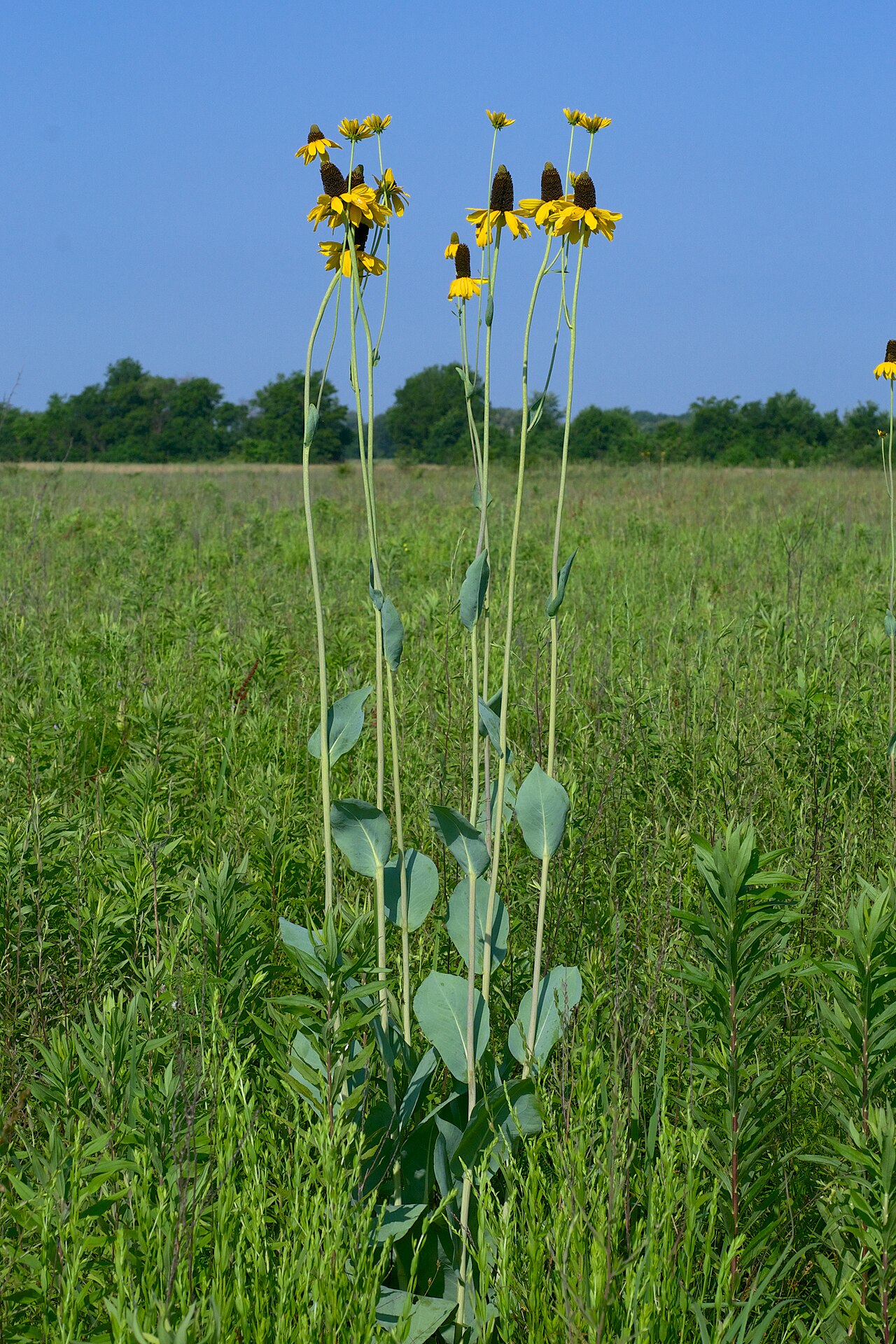
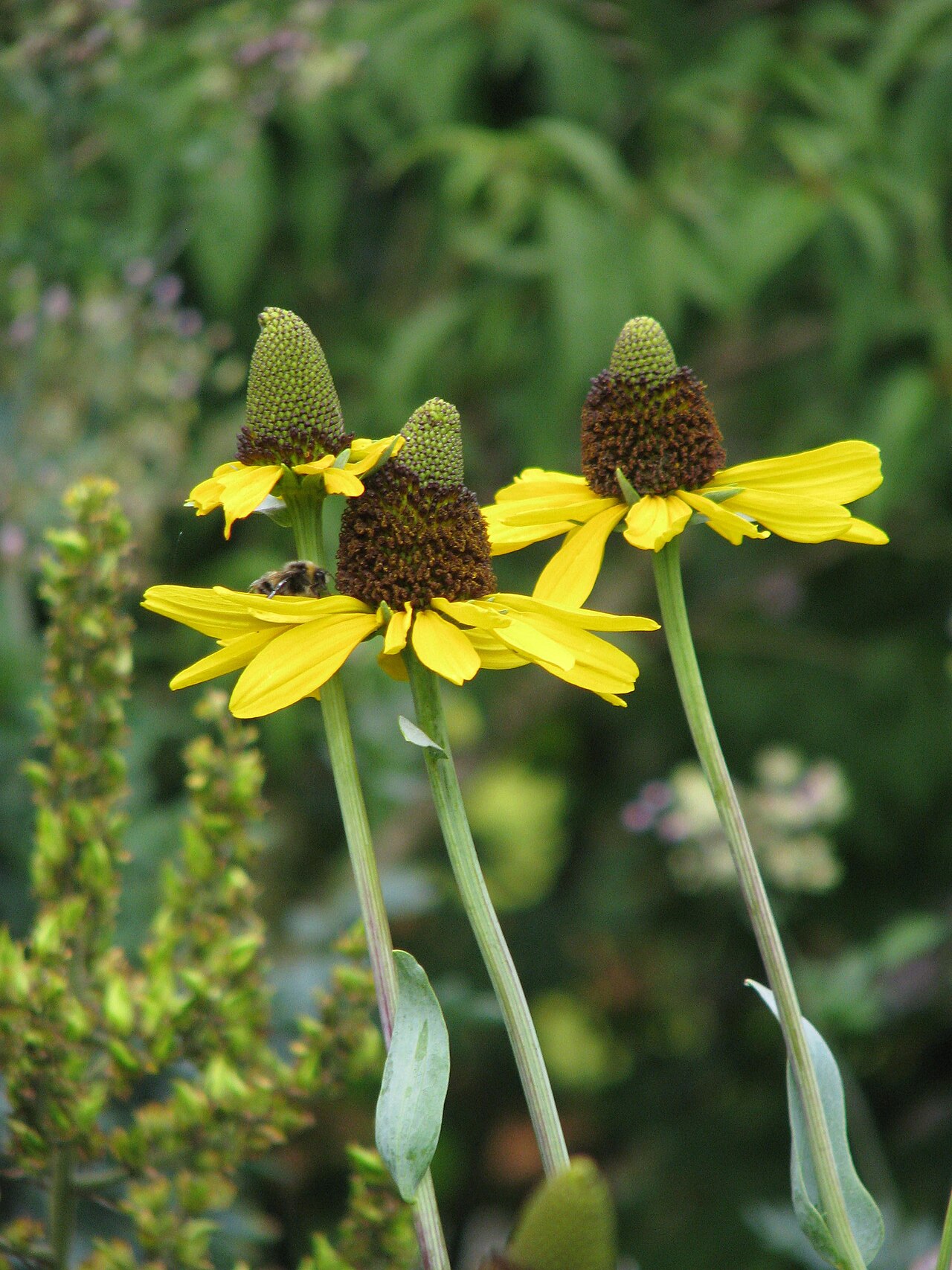
Rudbeckia maxima, known as Giant Coneflower or Great Coneflower, is one of the most dramatic native perennials of the south-central prairies — a plant that announces itself from across a field before you ever reach it. Giant Coneflower is unmistakable: broad, paddle-shaped, blue-green basal leaves the texture and size of cabbage leaves give rise to nearly leafless flower stalks that shoot 5 to 9 feet into the air, each tipped with a drooping ring of yellow ray florets wrapped around a tall, cylindrical, almost black central disc. This member of the aster family (Asteraceae) is a true showstopper in a native garden, and one of the tallest coneflowers in North America.
Giant Coneflower is native to a relatively small core range in the south-central United States — northeastern and eastern Texas, northwestern Louisiana, southwestern Arkansas, and southeastern Oklahoma — where it grows in moist open ground, low prairies, and the margins of wet meadows and ditches. It has since become a popular garden plant well outside this native range, cultivated as far away as the mid-Atlantic and Midwest; gardeners in those regions should know they are growing an introduced plant, however well it performs, and should watch for self-seeding beyond the garden bed.
In its native range, Giant Coneflower is a dependable, long-lived perennial for a sunny, moist border or rain garden, forming a tidy basal clump of glaucous leaves through most of the season before sending up its towering flower stalks in summer. Few native perennials deliver this much height and drama from a single plant, and its seed heads are a magnet for goldfinches well into winter.
Identification
Giant Coneflower forms a basal rosette of large, smooth, blue-green leaves from which one to several nearly naked flowering stems rise well above the foliage, typically reaching 5 to 9 feet tall, occasionally taller in rich, moist soil.
Leaves
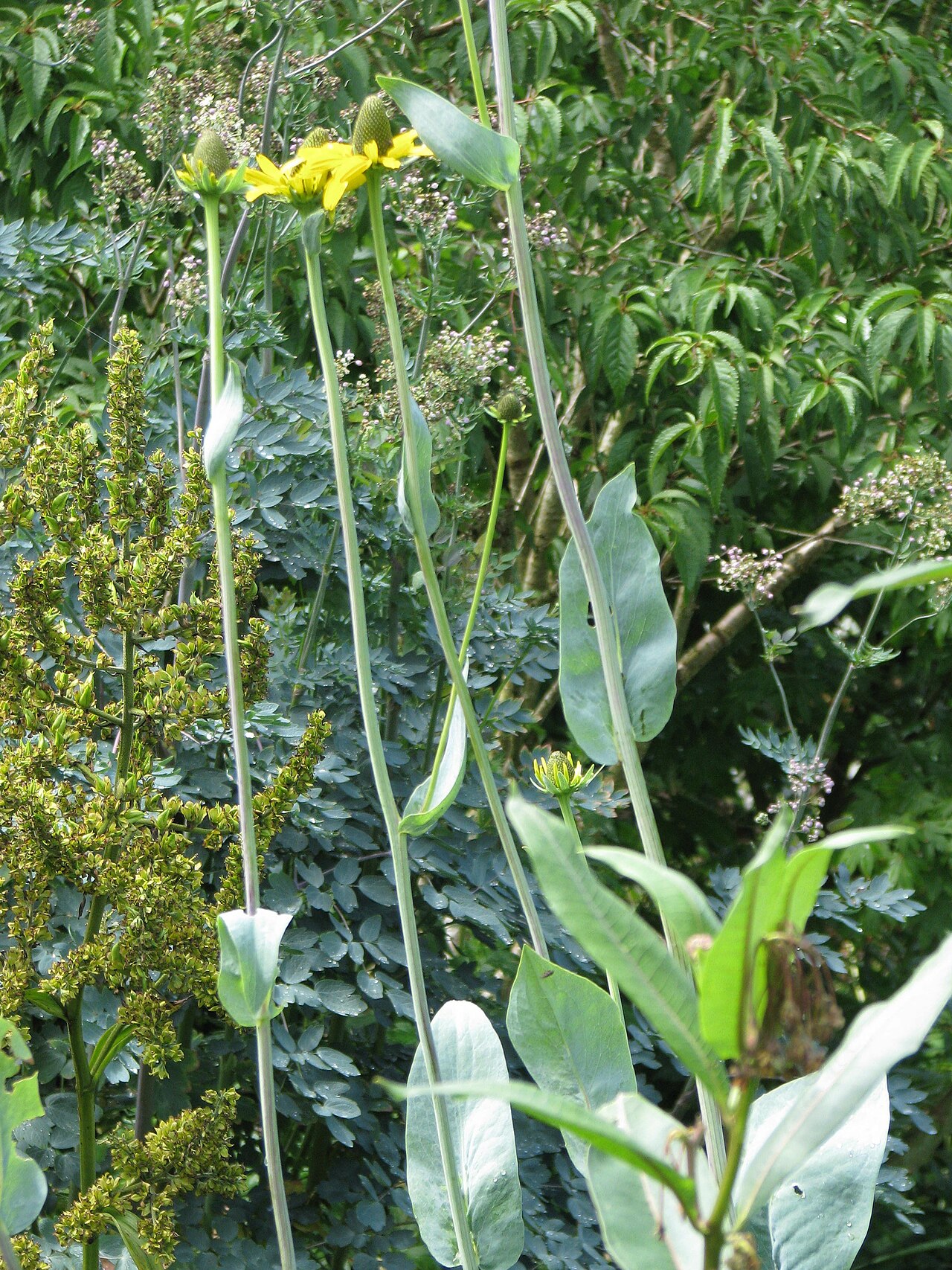
Basal leaves are large, oval to broadly lance-shaped, 8 to 20 inches long, smooth-edged to slightly toothed, and distinctly glaucous — covered in a waxy, pale blue-green bloom that gives the whole clump a silvery cast. Stem leaves are few, much smaller, and often clasp the stem directly, becoming sparser as the stalk rises; by the time it reaches the flower head, the upper stem is essentially bare.
Flowers
Each flower head sits alone at the top of a tall stalk, with 13 to 20 bright yellow ray florets that droop sharply downward soon after opening, surrounding a strikingly tall, narrow, cone-shaped disc of tiny greenish-brown to nearly black florets. The disc can reach 2 to 3 inches tall at maturity — taller and narrower than almost any other Rudbeckia — giving the plant its “giant” and “great” common names. Bloom runs from early summer into early fall, with the cones persisting as seed heads well after the petals fall.
Quick Facts
| Scientific Name | Rudbeckia maxima |
| Family | Asteraceae (Aster) |
| Plant Type | Herbaceous perennial wildflower |
| Mature Height | 5–9 ft (1.5–2.7 m) in bloom |
| Mature Spread | 2–3 ft basal clump |
| Growth Rate | Moderate to fast once established |
| Sun Exposure | Full sun to part shade |
| Water Needs | Moderate to high; tolerates seasonally wet soil |
| Soil Type | Moist, fertile loam or clay-loam |
| Soil pH | 5.5–7.5 |
| Bloom Time | June – August |
| Flower Color | Yellow rays, dark brown-black disc |
| Fall Color | Foliage dies back; persistent seed cones through winter |
| Fruit | Dry achenes in the tall seed cone |
| Deer Resistant | Yes, generally avoided |
| USDA Hardiness Zones | 5–9 |
Native Range
Giant Coneflower’s native range is compact compared to most Rudbeckia species: northeastern and eastern Texas, northwestern Louisiana, southwestern Arkansas, and southeastern Oklahoma. BONAP county-level mapping confirms a dense core of native populations in this four-state area, with scattered outlying counties nearby. Older records from South Carolina and Missouri represent introduced, naturalized populations rather than native occurrences, and should not be read as part of its original range.
Within its native range, Giant Coneflower favors moist, open ground — low prairies, pastures, wet meadow edges, roadside ditches, and the margins of open wooded areas — typically on sandy or silty soils that stay damp through much of the growing season. It is a plant of open, sunny, periodically wet ground rather than deep shade or dry upland sites.
Outside this core four-state range, Giant Coneflower is now widely cultivated as an ornamental across much of the eastern and midwestern United States for its striking height and bold texture. Gardeners well outside Texas, Louisiana, Arkansas, and Oklahoma are growing a non-native ornamental, not a regional native, even where it is sold at native plant nurseries.
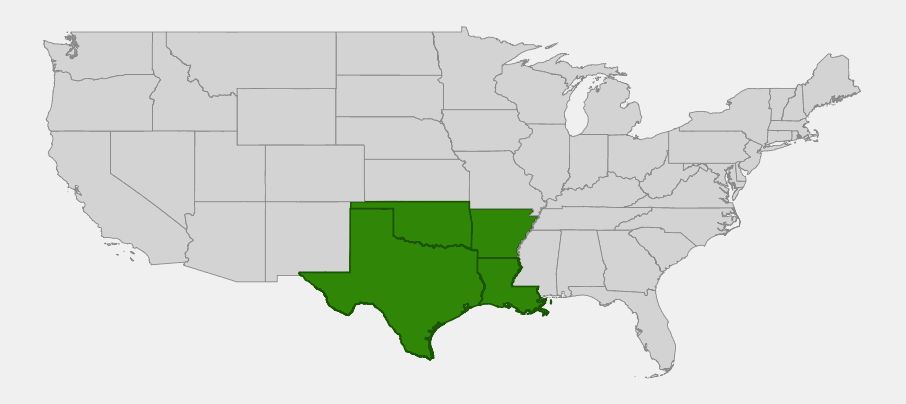
📋 Regional plant lists featuring Giant Coneflower: Arkansas, Louisiana, Eastern Oklahoma & Eastern Texas
Growing & Care Guide
Giant Coneflower is surprisingly easy to grow within its comfort zone of sun and moisture, rewarding minimal care with months of height and late-season interest.
Light
Full sun produces the sturdiest stems and the most abundant bloom, though the plant tolerates light, part-day shade, especially in the hottest part of its range. In too much shade, flower stalks tend to lean and may need staking.
Soil & Water
Give Giant Coneflower rich, consistently moist soil — it is naturally a plant of wet meadow margins and low ground, and it will not thrive in dry, fast-draining sites. It tolerates occasional standing water and clay soils better than most prairie perennials, making it a strong choice for rain gardens and low spots that stay damp after storms.
Planting Tips
Plant in spring after the soil has warmed, spacing clumps 2 to 3 feet apart to allow room for the broad basal leaves to spread. Choose a site at the back of a border or in an open, informal planting where the 6- to 9-foot flower stalks will not shade out neighboring plants. Within its native four-state range it is an excellent choice for restoration plantings in moist, open ground; outside that range, plant it with the understanding that it is an introduced ornamental, and avoid planting it near wild areas where it could escape and naturalize.
Pruning & Maintenance
Deadheading is unnecessary and discouraged — the tall seed cones are a major food source for finches through fall and winter and add strong winter structure to the garden. Cut stalks back to the basal rosette in late winter before new growth begins. Clumps can be divided every three to four years in early spring if they become crowded.
Landscape Uses
- Back-of-border accent for its dramatic height and bold, glaucous foliage
- Rain gardens and low wet spots that stay consistently moist
- Prairie and meadow restoration within its native range
- Pollinator and bird gardens — nectar in summer, seed in winter
- Cut flower gardens, valued for its unusual tall cone form
Wildlife & Ecological Value
Giant Coneflower’s towering flower stalks and persistent seed heads make it a strong contributor to pollinator and bird habitat across two full seasons.
For Pollinators
The nectar- and pollen-rich disc florets attract a wide range of native bees, honeybees, butterflies, and beneficial wasps throughout the long summer bloom period. The exposed, elevated flower heads make nectar and pollen easy to find for flying insects even amid tall surrounding vegetation.
For Birds
American Goldfinches are especially drawn to the dense, seed-packed cones, which persist well into winter and provide food after most other prairie plants have gone to seed. Other seed-eating songbirds forage on the heads as well, and the tall dried stalks offer winter perches.
For Mammals
Giant Coneflower’s bitter foliage makes it generally unpalatable to deer and rabbits, which is one reason it persists and spreads so visibly in grazed pastures within its native range.
Ecosystem Role
As one of the tallest native forbs in its range, Giant Coneflower adds vertical structure to low prairie and wet meadow plant communities, creating habitat layers used by both pollinators at bloom time and birds in the dormant season. Its tolerance of seasonally wet ground also makes it a useful indicator of low, poorly drained prairie sites.
Cultural & Historical Uses
Giant Coneflower has a far shorter documented history of use than many prairie natives, in part because its native range is comparatively small and it was not widely known to botanists and horticulturists until relatively recently. Nineteenth-century botanical collectors, including Thomas Nuttall, who formally described the species, encountered it in the moist prairies and bottomlands of the south-central United States during botanical expeditions through Arkansas and the surrounding region.
Unlike purple coneflower (Echinacea), Giant Coneflower has no significant documented history of Indigenous medicinal use; its historical significance is primarily botanical and, more recently, horticultural. Beginning in the late twentieth century, native plant nurseries and prairie restoration projects increasingly promoted Giant Coneflower for its architectural height and wildlife value, and it has since become a popular specimen plant in native and pollinator gardens well beyond its original four-state range.
Frequently Asked Questions
Is Giant Coneflower native to my state?
Only if you garden in eastern Texas, northwestern Louisiana, southwestern Arkansas, or southeastern Oklahoma. It is a popular ornamental elsewhere, but populations outside this four-state range are introduced, not native.
How tall does Giant Coneflower really get?
Flower stalks typically reach 5 to 9 feet in good, moist soil, towering well above the 1- to 2-foot basal clump of blue-green leaves — among the tallest of all Rudbeckia species.
Does Giant Coneflower spread aggressively?
It can self-seed readily in moist, open soil, especially outside its native range where there may be no local competition or herbivory to check it. Deadheading limits spread if that is a concern, though it reduces winter bird food.
Can Giant Coneflower handle wet soil?
Yes — it is naturally a plant of low prairies and wet meadow margins and tolerates occasional standing water far better than most sun-loving native perennials, making it a good rain garden choice.
Is Giant Coneflower the same as purple coneflower?
No. Giant Coneflower (Rudbeckia maxima) is a much taller plant with yellow rays and a tall black-brown disc, unrelated in appearance to Purple Coneflower (Echinacea purpurea), though both belong to the aster family and share the word “coneflower” in their common names.