Roughfruit Berry (Rubus lasiococcus)
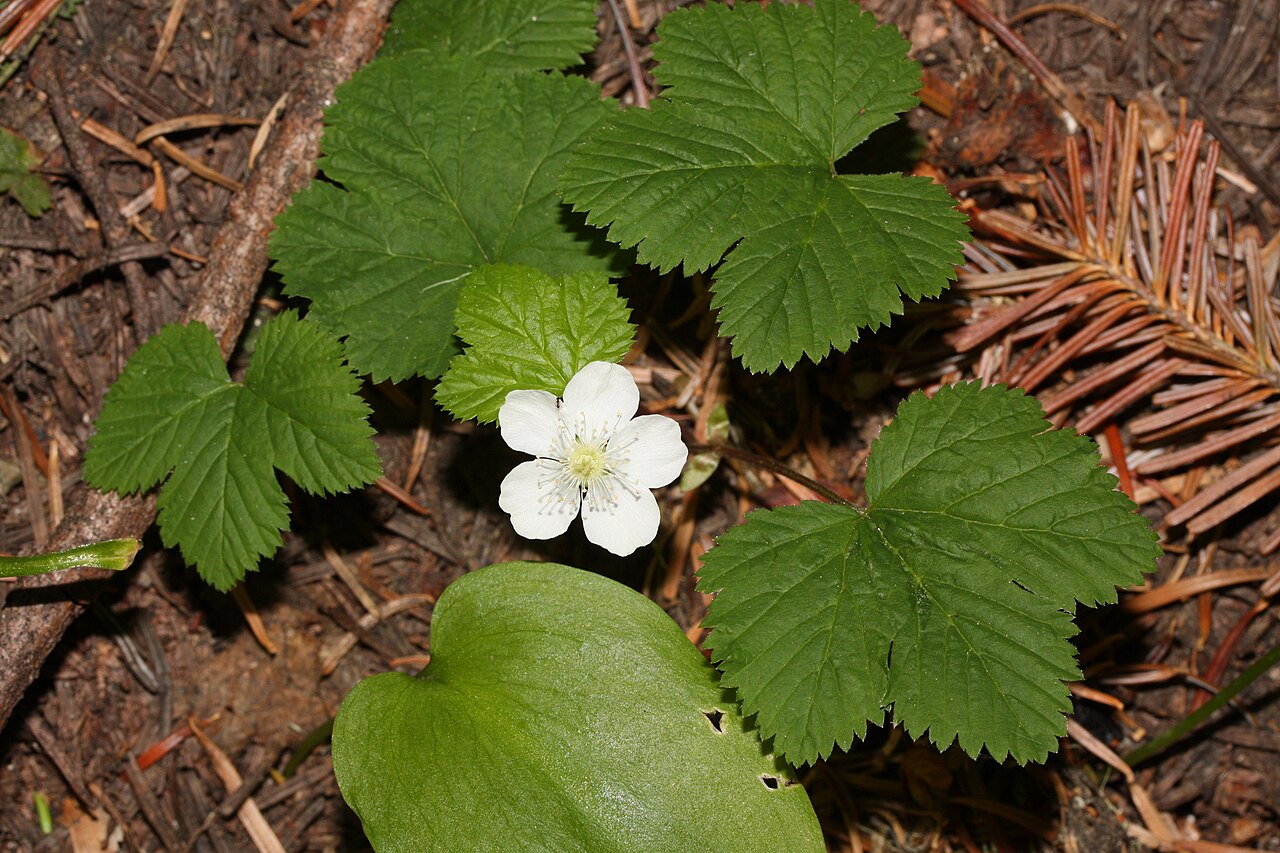
Rubus lasiococcus, commonly known as Roughfruit Berry or Dwarf Bramble, is a diminutive, thornless member of the rose family (Rosaceae) that carpets the shaded floor of mountain forests in the Pacific Northwest. Unlike its thorny, upright cousins Salmonberry and Blackcap, this creeping groundcover never rises more than a few inches off the ground, sending out slender runners that root wherever they touch moist soil or rotting wood. It is easy to overlook until its small white flowers or bristly red berries catch the eye against a mat of maple-shaped leaves.
Roughfruit Berry is native to the coastal mountains and western slope of the Cascade Range from southern British Columbia through Washington and Oregon into the Klamath and North Coast Ranges of northern California. It thrives in the cool, moist understory of old conifer forests — often alongside mountain hemlock, Shasta red fir, and Douglas-fir — at middle elevations where deep shade and heavy leaf litter keep taller, more aggressive plants at bay.
For gardeners restoring a shaded native woodland floor, Roughfruit Berry offers something few other plants can: a genuinely low, evergreen-adjacent groundcover that asks for almost nothing once established. It is not a plant for borders or open beds, but tucked beneath established conifers or along a shaded woodland path, it quietly fills in gaps left by fallen needles and rotting logs, exactly as it does in the wild.
Identification
Roughfruit Berry is a trailing, mat-forming subshrub, typically only 2 to 6 inches tall, though its slender stolons can extend several feet across the forest floor. The stems are round, thornless, and sparsely hairy, rooting at the nodes wherever they contact moist duff — this is how a single plant can slowly spread into a loose, low carpet.
Leaves
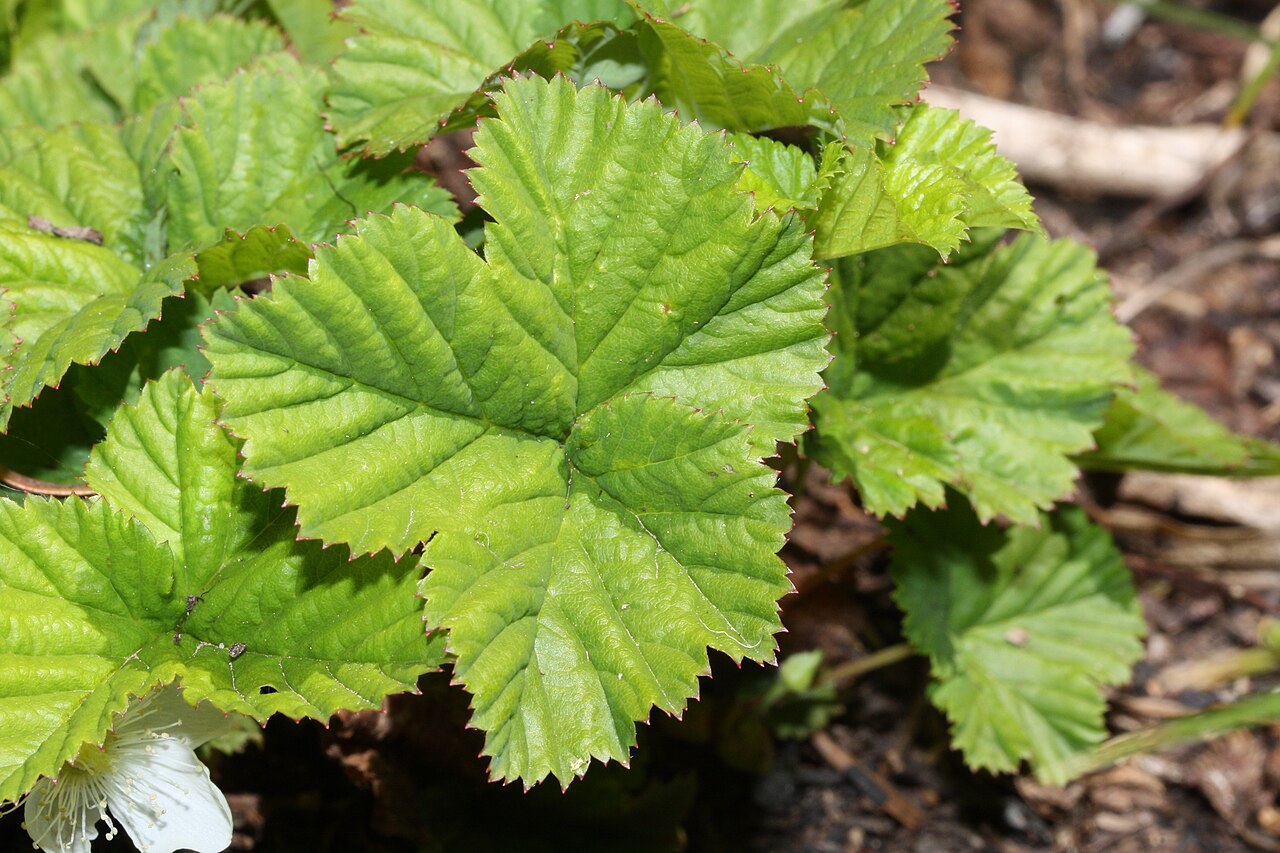
Leaves are deciduous and borne on short petioles, each one deeply three-lobed or divided into three broadly rounded, toothed leaflets 1 to 2½ inches across. The leaf base is distinctly heart-shaped (cordate), and the margins are coarsely, doubly toothed. Leaves are sparsely hairy on the veins beneath but otherwise smooth, a soft medium green that stays fresh through the shaded growing season before dying back in fall.
Flowers
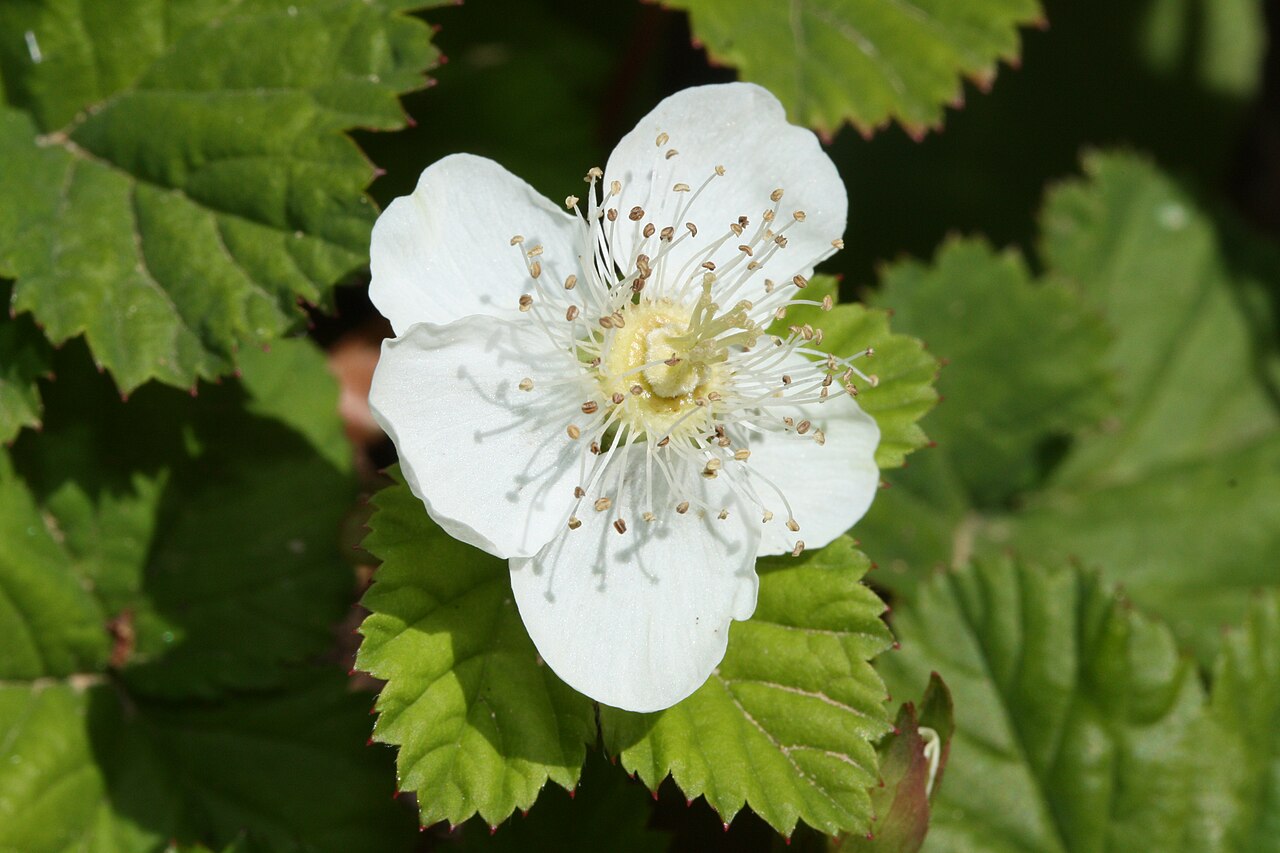
From late spring into summer, solitary or paired flowers appear on short, upright side branches above the foliage. Each flower has five broad, white petals up to about half an inch long surrounding a cluster of pale filaments and a dense, hairy ovary at the center — a feature that gives the species both its fuzzy-looking fruit and its scientific name (lasios, “hairy,” plus coccus, “berry”).
Fruit
The fruit is a small, hemispheric drupelet cluster about half an inch across, bright red when ripe and covered in fine, soft hairs that give it a slightly fuzzy, raspberry-like look. Unlike the firm aggregate of a blackberry, the loosely coherent drupelets often fall apart individually or in small clumps rather than staying bound to the stem, so ripe berries are easy to miss among the leaf litter.
Quick Facts
| Scientific Name | Rubus lasiococcus |
| Family | Rosaceae (Rose) |
| Plant Type | Trailing, deciduous subshrub / groundcover |
| Mature Height | 2–6 in (5–15 cm) |
| Mature Spread | Several feet via rooting stolons |
| Growth Rate | Slow to moderate |
| Sun Exposure | Full shade to part shade |
| Water Needs | Moderate to high; consistent moisture |
| Soil Type | Moist, humus-rich forest soil; tolerates rotting wood |
| Soil pH | 5.0–6.5 (acidic) |
| Bloom Time | May – August |
| Flower Color | White |
| Fall Color | Leaves die back, no notable color |
| Fruit | Small, hairy red drupelet clusters |
| Deer Resistant | No (browsed occasionally, low impact) |
| USDA Hardiness Zones | 6–8 |
Native Range
Roughfruit Berry’s native range runs along the coastal and Cascade mountains of the Pacific Northwest, from southern British Columbia south through western Washington and western Oregon to the Klamath and North Coast Ranges of northern California. County-level distribution data from the Biota of North America Program confirms the species stays west of the Cascade crest throughout this range — it is not documented from the drier interior forests of eastern Washington or eastern Oregon.
Within that range, Roughfruit Berry grows at middle to subalpine elevations, generally between about 2,600 and 6,500 feet (800–2,000 m), in moist to seasonally dry, semi-open conifer forest, subalpine meadow edges, and occasionally along shaded roadsides and trails. It is a regular associate of mountain hemlock and Shasta red fir forest in the southern part of its range, and of Douglas-fir and western hemlock stands farther north and at lower elevations.
Because it depends on consistent shade, cool temperatures, and a thick organic duff layer to spread, Roughfruit Berry is essentially confined to intact, mature forest understory. It does not persist in open, disturbed, or heavily logged sites, which makes it a useful indicator of relatively undisturbed montane forest conditions.
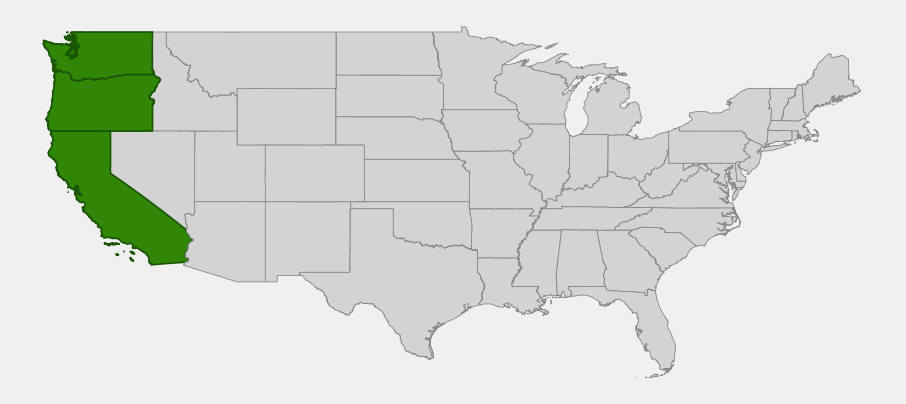
📋 Regional plant lists featuring Roughfruit Berry: Western Oregon & Western Washington
Growing & Care Guide
Roughfruit Berry is a specialist, not a generalist — it rewards gardeners who can offer it the cool, shaded, consistently moist conditions of a native conifer understory, and it will sulk or fail outright anywhere hotter or drier.
Light
Full to partial shade is essential. In the wild it is found beneath a closed or semi-open conifer canopy; direct afternoon sun, especially in summer, will scorch the leaves and dry out the shallow-rooted stolons. Deep, dappled shade beneath established trees is ideal.
Soil & Water
Plant Roughfruit Berry in humus-rich, consistently moist, acidic soil that mimics a forest floor — a thick layer of leaf litter or conifer duff over loam is close to perfect. It does not tolerate drought or compacted clay. Regular watering during dry summer spells is necessary outside of consistently moist coastal or montane sites; mulching with shredded bark or leaf litter helps retain the soil moisture it depends on.
Planting Tips
Source plants or divisions from a native plant nursery rather than collecting from the wild, since wild stands are slow to recover from disturbance. Plant in fall or early spring beneath established conifers or in a shaded woodland bed, spacing plants 12 to 18 inches apart to let the stolons fill in naturally over a season or two. Avoid open, sunny, or windy sites.
Pruning & Maintenance
Little maintenance is needed beyond occasional thinning if the mat spreads beyond its intended area. Because stems root at the nodes, unwanted runners can simply be cut and lifted. Leave fallen leaves and needles in place around the planting; the organic litter layer is part of what keeps the roots cool and moist.
Landscape Uses
- Woodland groundcover beneath established conifers where little else will grow
- Native shade garden companion planting beneath Douglas-fir or hemlock
- Forest restoration plantings on montane sites with intact canopy
- Erosion-limiting cover on shaded slopes with consistent moisture
- Rustic woodland paths, tucked along the shaded edges
Wildlife & Ecological Value
Though diminutive, Roughfruit Berry contributes quietly to the forest floor community it inhabits, offering nectar, cover, and a small but reliable late-summer food source in habitats where ground-level resources are often scarce.
For Pollinators
The white spring and summer flowers attract native bees and small flies that forage in the shaded forest understory, a layer of habitat where blooming plants are relatively uncommon. For early- and mid-season pollinators working shaded montane forest, these flowers are a small but dependable nectar source.
For Birds
Ground-foraging birds such as towhees and thrushes take the soft, hairy berries where they find them scattered across the duff, helping disperse seed through the forest understory.
For Mammals
Small mammals, including chipmunks and various rodents that forage on the forest floor, eat the berries and foliage opportunistically. The dense mat also offers low ground-level cover for small animals moving through the understory.
Ecosystem Role
As a low, shade-tolerant groundcover restricted to relatively undisturbed forest, Roughfruit Berry helps stabilize the thin organic layer on the forest floor and fills a ground-level niche in mature conifer stands that few other flowering plants occupy. Its dependence on an intact canopy and duff layer also makes it a useful indicator species for assessing forest health and disturbance history.
Cultural & Historical Uses
Roughfruit Berry has left a much lighter mark on regional ethnobotany than its showier relatives Salmonberry and Thimbleberry, in part because its berries are small, scattered, and easily lost in the leaf litter. Documented traditional use is limited, but historical botanical accounts from the Pacific Northwest note that the berries were occasionally eaten fresh by Indigenous peoples and early settlers traveling through the mountain forests where the plant grows, more as an incidental trailside snack than a managed food source.
Early 20th-century regional plant catalogs and herbarium records, including surveys of the flora of Mount Rainier and the Cascade Range, document Roughfruit Berry primarily as a botanical curiosity of the deep forest floor rather than a plant of practical use, reflecting its low stature and sparse fruit production compared to other native brambles.
Today, Roughfruit Berry is grown almost exclusively by native plant enthusiasts and restoration practitioners interested in recreating authentic montane forest floor plant communities, rather than for any ornamental or culinary tradition.
Frequently Asked Questions
Can you eat Roughfruit Berry fruit?
Yes, the small red berries are edible and have historically been eaten fresh by people traveling through its mountain forest habitat, though they are sparse, soft, and easily overlooked among the leaf litter rather than a reliable foraging crop.
Is Roughfruit Berry the same as Dwarf Bramble?
Yes. Roughfruit Berry and Dwarf Bramble are both common names for Rubus lasiococcus; “Roughfruit Berry” is the USDA PLANTS database’s preferred common name.
Does Roughfruit Berry have thorns?
No. Unlike many Rubus species, Roughfruit Berry is unarmed — its stems are smooth and thornless, which helps distinguish it from thorny blackberries and raspberries in the same genus.
Will Roughfruit Berry grow in a sunny garden bed?
No. It is a true shade specialist adapted to the cool, moist floor of conifer forests, and it will struggle or die in full sun or in soil that dries out during summer. It needs consistent shade and moisture to thrive.
Why is it called Roughfruit Berry?
The name refers to the fine, dense hairs covering the small drupelets that make up each berry, which give the fruit a rough or fuzzy texture compared to the smoother fruit of related brambles.

Looking for a nursery that carries Roughfruit Berry?
Browse our native plant nursery directory: Oregon · Washington