
Cleveland Sage (Salvia clevelandii)
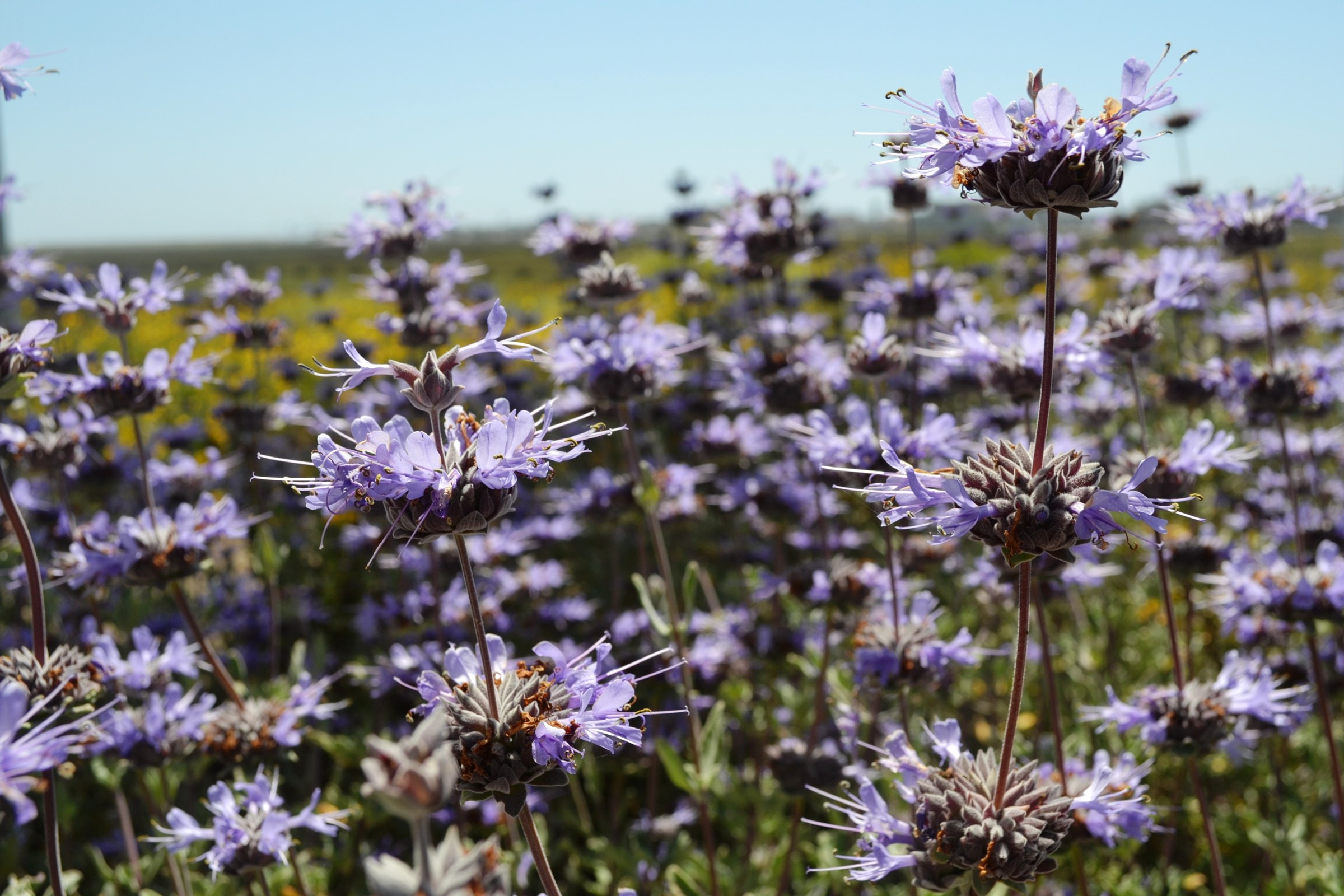
Salvia clevelandii, commonly known as Cleveland Sage, fragrant sage, or blue sage, is an aromatic evergreen shrub found only in a narrow strip of Southern California and immediately adjacent northern Baja California. Named for San Diego botanist and civic leader Daniel Cleveland, who collected specimens and sent them to Harvard botanist Asa Gray in the 1870s, this sage has become one of the most recognizable and beloved shrubs of the coastal sage scrub and chaparral plant communities it calls home. Rub a leaf between your fingers and the reason for its common name becomes obvious: a sweet, resinous fragrance released by the glandular hairs covering every stem and leaf.
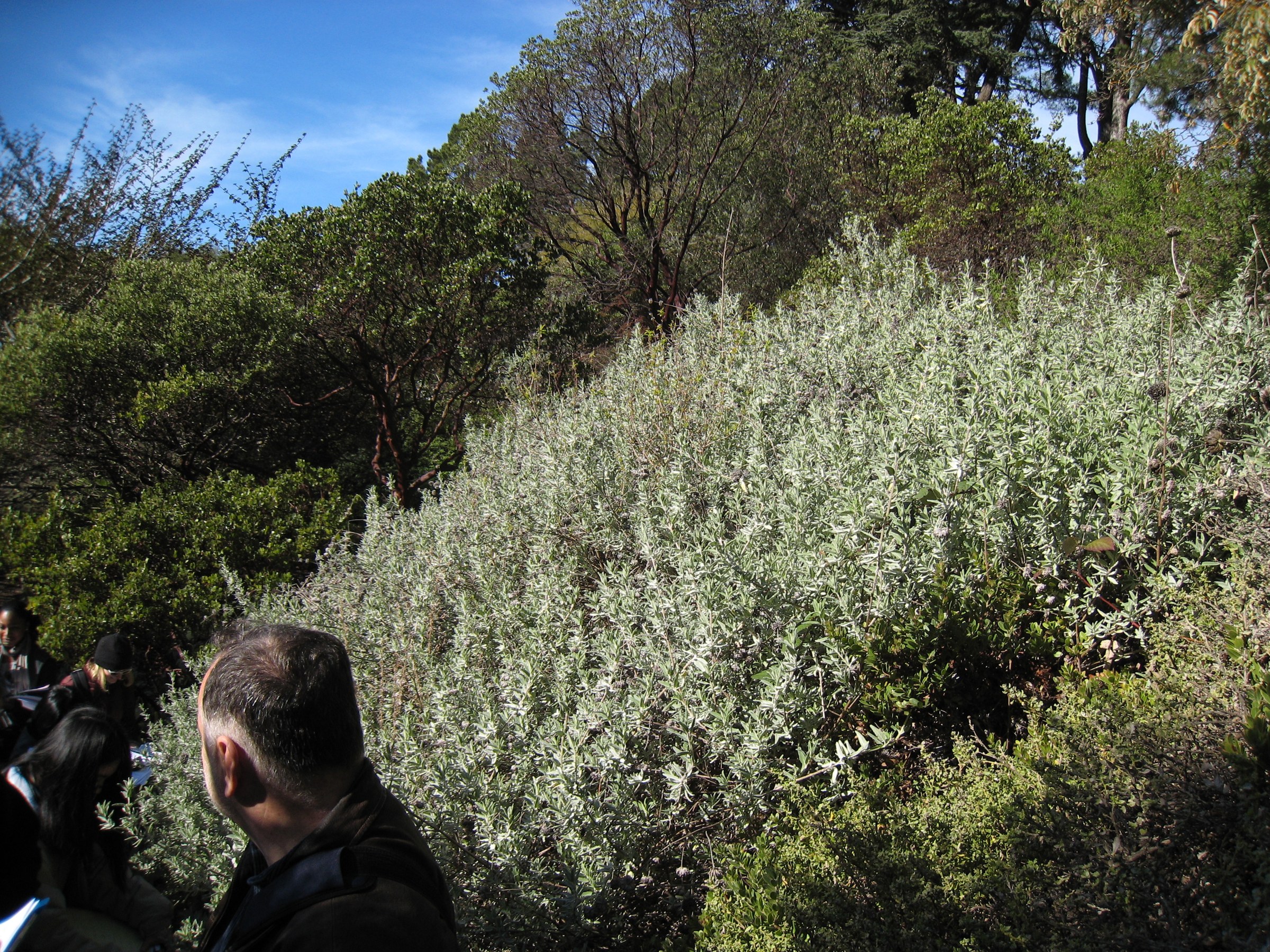
In the wild, Cleveland Sage grows as a rounded, mounding shrub 3 to 5 feet tall and often wider, with gray-green, crinkled (rugose) leaves that stay fragrant and silvery year-round. From late spring into summer, it sends up tall flower spikes studded with whorls of amethyst-blue blossoms, arranged in tiers along the stem like small pompoms. Few native California shrubs draw more pollinator traffic — native bees, honeybees, hummingbirds, and butterflies move from whorl to whorl in a steady hum on a warm June morning.
Cleveland Sage has become a backbone plant of California native and water-wise gardening, prized for its drought tolerance, deer resistance, and long bloom season, but the wild species itself is increasingly uncommon as coastal sage scrub habitat in San Diego, Riverside, and Orange counties is lost to development. Planting the straight species — not just the many garden hybrids it has parented — helps support the pollinators and habitat structure that depend on it.
Identification
Cleveland Sage is a woody-based evergreen shrub or subshrub, typically 3 to 5 feet (1–1.5 m) tall and similar in spread, though it can reach 6 feet under good conditions. Its form is loose and rounded, with many slender, square (as in all mints) stems radiating from the base.
Stems
Young stems are green to gray and covered in fine hairs and resin glands that make the whole plant feel slightly sticky and intensely aromatic when brushed. Older stems at the base become woody and gray-brown. The square cross-section of the stems is a quick field mark of the mint family (Lamiaceae).
Leaves
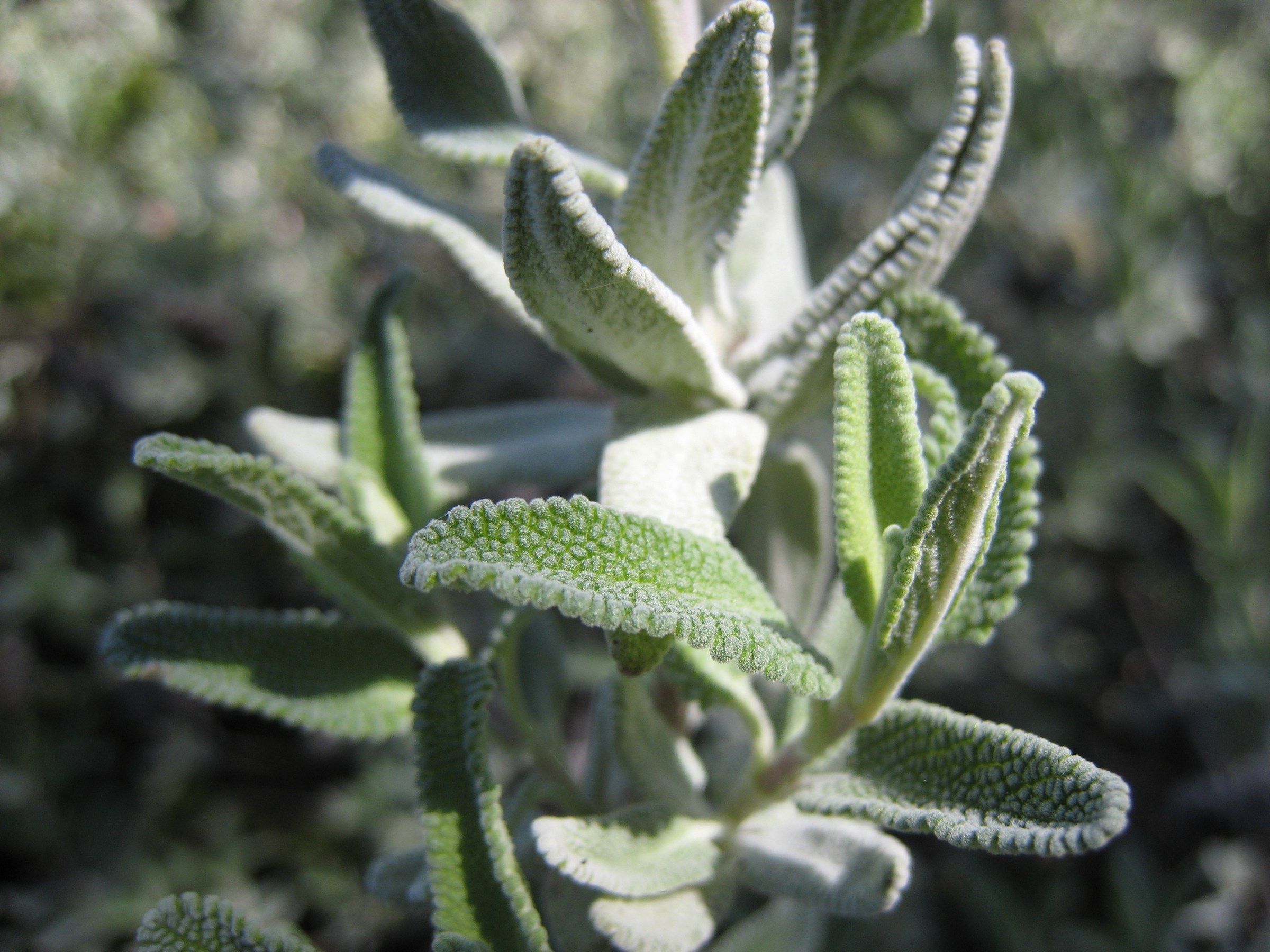
Leaves are opposite, oblong to ovate, less than 1 inch (2.5 cm) long, with a crinkled (rugose), deeply veined surface and finely scalloped edges. They are gray-green to silvery, densely hairy, and studded with tiny oil glands that give the foliage its strong, sweet-resinous scent — often described as a blend of sage, citrus, and eucalyptus. The leaves persist year-round, making this an excellent evergreen structural plant.
Flowers
Flowers appear in distinct whorls (verticillasters) spaced along upright flowering stalks that rise 12 inches or more above the foliage. Each whorl holds several tubular, two-lipped flowers in shades of lavender to deep amethyst-blue, occasionally with whitish throats. Bloom runs from May into July, sometimes with a lighter rebloom in fall after rain. The flowering stems persist as attractive dried seed heads well into winter, valued by small birds for their seed.
Fruit & Seeds
Like other mints, Cleveland Sage produces small, dry nutlets (four per flower) that remain cupped in the persistent calyx after the petals fall. These tiny seeds are an important late-season food source for sparrows, finches, and other seed-eating birds, which often work over the dried flower spikes well into winter.
Quick Facts
| Scientific Name | Salvia clevelandii |
| Family | Lamiaceae (Mint) |
| Plant Type | Evergreen Shrub / Subshrub |
| Mature Height | 3–5 ft (0.9–1.5 m) |
| Mature Spread | 3–6 ft (0.9–1.8 m) |
| Growth Rate | Moderate to Fast |
| Sun Exposure | Full Sun |
| Water Needs | Low (drought tolerant once established) |
| Soil Type | Well-drained; sandy, rocky or loamy; tolerates poor soils |
| Soil pH | 6.0–7.5 (neutral to slightly acidic) |
| Bloom Time | May – July |
| Flower Color | Lavender to amethyst-blue |
| Fall Color | None (evergreen) |
| Fruit | Tiny dry nutlets in persistent calyx |
| Deer Resistant | Yes (aromatic, resinous foliage) |
| USDA Hardiness Zones | 8–10 |
Native Range
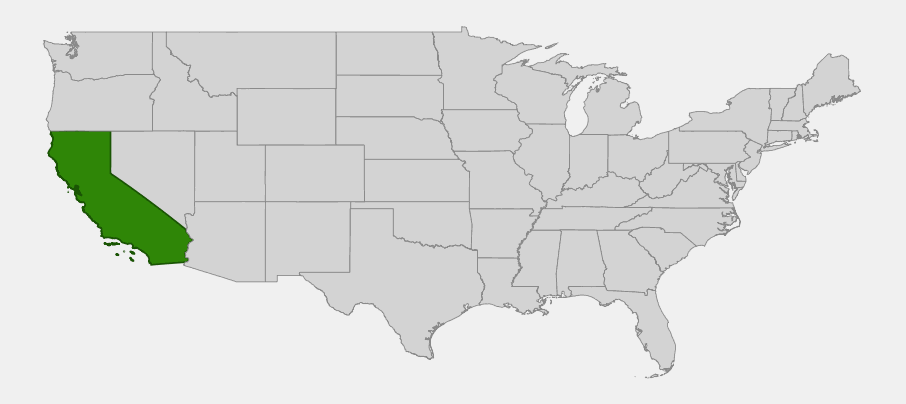
Cleveland Sage is a true Southern California endemic, found only from the coastal foothills and inland valleys of San Diego, Riverside, and Orange counties south into immediately adjacent northern Baja California, Mexico. Within the United States it does not occur naturally outside California — any plantings seen elsewhere in the country are garden specimens, not wild populations.
It grows at low to moderate elevations, generally below 3,000 feet (900 m), on dry slopes and ridgelines within coastal sage scrub and chaparral plant communities. These are classically Mediterranean-climate habitats: mild, wet winters and long, dry, often fire-prone summers, with soils that are typically shallow, rocky, and fast-draining.
Because coastal sage scrub is one of the most heavily developed habitat types in California — much of its historic range now underlies San Diego and Riverside suburbs — wild Cleveland Sage populations are considered vulnerable even though the species is not federally listed. Preserves such as those managed under San Diego’s Multiple Species Conservation Program protect some of the remaining stands.
📋 This species is not currently covered by one of our regional plant lists — see the full native plants directory for more Southern California natives.
Growing & Care Guide
Cleveland Sage is one of the easier California natives to succeed with, provided you resist the urge to baby it. It wants heat, sun, and lean soil — the same conditions that stress out many garden plants are exactly what this shrub thrives in.
Light
Plant in full sun. Cleveland Sage flowers most heavily and holds its tightest, most compact form in a hot, sunny spot. In partial shade it still survives but grows leggier and blooms less.
Soil & Water
Fast drainage is the single most important factor for long-term survival. Sandy, rocky, or decomposed-granite soils suit it best; heavy clay that stays wet is the most common cause of failure, usually from root rot. Established plants need little to no supplemental water in most of coastal and inland Southern California — in fact, established Cleveland Sage is often harmed more by summer watering than by neglect. Water deeply but infrequently during the first year to establish roots, then taper off.
Planting Tips
Plant in fall or early spring so roots can establish before the dry season. Space plants 4 to 6 feet apart to allow for their mature spread and good air circulation, which helps prevent fungal problems in humid years. Avoid amending the planting hole with rich compost; Cleveland Sage performs best in lean, native soil.
Pruning & Maintenance
Prune lightly after the main bloom flush to encourage a second, lighter round of flowers and to keep the shrub compact — Cleveland Sage can become woody and sparse at the base if left entirely unpruned for several years. Avoid cutting hard into old, leafless wood, which the plant is slow to resprout from. Removing spent flower stalks in late summer tidies the plant, though leaving some through fall provides seed for birds.
Landscape Uses
Cleveland Sage earns its popularity across many garden styles:
- Pollinator gardens — few native shrubs draw more bees and hummingbirds
- Water-wise and xeriscape plantings once established
- Fire-wise landscaping as a low-fuel, well-spaced shrub when properly maintained
- Mixed chaparral or sage scrub restoration plantings
- Fragrance gardens, planted near paths where foliage can be brushed
- Slope stabilization on dry, sunny banks
Wildlife & Ecological Value
Few Southern California shrubs rival Cleveland Sage for sheer pollinator traffic during its bloom season, and its value extends well beyond the flowering months.
For Pollinators
The whorled flower spikes are a magnet for native bees, including carpenter bees and bumble bees, as well as honeybees, which forage so heavily on Cleveland Sage that beekeepers in San Diego County prize the resulting honey. Hummingbirds, particularly Anna’s and Allen’s Hummingbirds, regularly feed at the tubular flowers, and the long bloom window from late spring into summer provides nectar during a season when many other natives have finished flowering.
For Birds
Beyond hummingbirds working the flowers, finches and sparrows pick through the dried seed heads for the tiny nutlets long after bloom has finished, and the dense evergreen branching offers year-round cover and nesting structure for small songbirds.
For Mammals
The strongly aromatic, resinous foliage makes Cleveland Sage one of the more reliably deer-resistant native shrubs, a practical advantage in the many Southern California neighborhoods that border wildland areas with browsing deer.
Ecosystem Role
As a dominant or codominant shrub in coastal sage scrub, Cleveland Sage helps define the structure of a plant community that is itself one of the rarest and most threatened habitat types in California. Its evergreen canopy moderates soil temperature and moisture for understory plants, while its root system helps stabilize the loose, often erodible slopes typical of its habitat.
Cultural & Historical Uses
Cleveland Sage and its close relatives among the Southern California sages held a long-standing place in the plant knowledge of the Kumeyaay, Cahuilla, Luiseño, and other Indigenous peoples of the region, who used aromatic sages of this kind for seasoning, for brewing fragrant teas, and in ceremonial contexts as smudging or purification herbs — practices that remain living traditions among descendant communities today.
The species was formally described in 1874 as Audibertia clevelandii by botanist Asa Gray, honoring Daniel Cleveland, a San Diego lawyer and amateur botanist who spent two decades sending plant collections to Gray and helped found what became the San Diego Society of Natural History. The species was later placed in the genus Salvia under its current name.
In the twentieth century, Cleveland Sage became a foundation plant of the California native-plant gardening movement, prized for its fragrance, drought tolerance, and wildlife value. It has also been the parent of numerous popular garden hybrids — crosses with White Sage (Salvia apiana) and other California sages have produced cultivars sold widely in the nursery trade — though gardeners seeking to support the straight wild species specifically should look for plants labeled simply Salvia clevelandii rather than a named hybrid cultivar.
Frequently Asked Questions
Is Cleveland Sage the same plant as culinary sage?
No. Culinary sage (Salvia officinalis) is a Mediterranean species grown for cooking. Cleveland Sage is a California native grown primarily for its fragrance, flowers, and wildlife value, and is not the sage used in kitchens.
Does Cleveland Sage need regular watering once established?
No — and too much summer water is one of the most common ways gardeners lose this plant. Once established (usually after one full growing season), it typically needs no supplemental irrigation in coastal and inland Southern California gardens.
Is Cleveland Sage native anywhere outside California?
Within the United States, no — it is a California endemic. Its native range does extend a short distance south into northern Baja California, Mexico, but nowhere else in the U.S.
Why does my Cleveland Sage smell so strong?
The leaves and stems are covered in tiny glandular hairs that produce aromatic resins, a trait shared by many chaparral and coastal sage scrub plants as an adaptation to intense sun and herbivore pressure. Brushing against the foliage releases the scent, which many gardeners find similar to a blend of sage, mint, and citrus.
Will Cleveland Sage attract hummingbirds to my garden?
Yes, reliably. Its tubular flowers are well suited to hummingbird feeding, and the long bloom period from late spring into summer makes it one of the more dependable hummingbird plants for a Southern California native garden.

Looking for a nursery that carries Cleveland Sage?
Browse our native plant nursery directory: California