
Pacific Aster (Symphyotrichum chilense)
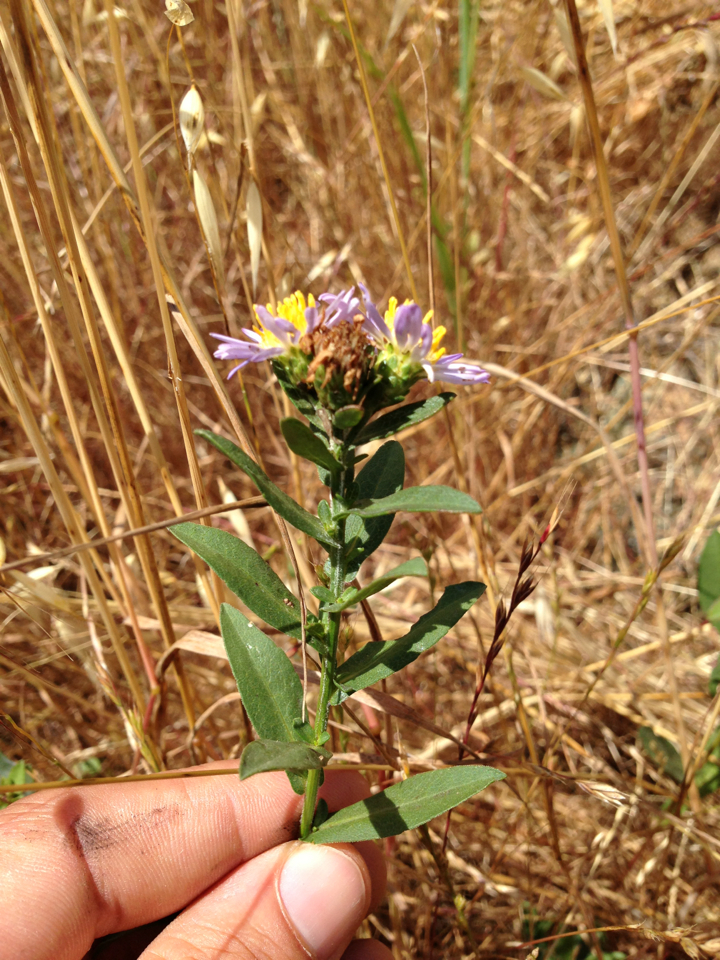
Symphyotrichum chilense, commonly called Pacific Aster (also known as California aster), is a rhizomatous perennial wildflower native to the coastal strip of the West Coast, from British Columbia south through Washington, Oregon, and California. This member of the aster family (Asteraceae) is a late-season bloomer, producing abundant lavender-to-purple, daisy-like flowers with bright yellow centers from summer into fall, when most other wildflowers in its habitat have already finished flowering.
Pacific aster spreads by rhizomes to form loose colonies 1 to 3 feet tall, with narrow, slightly fuzzy leaves along upright, slender stems. It is a tough, adaptable plant found in habitats ranging from coastal bluffs and dunes to grassland, open woodland, and disturbed roadsides, tolerating both the salty winds of the immediate coast and the clay soils of inland valleys within its range. Its rhizomatous habit means it can spread readily where happy, making it useful for naturalizing in larger native plantings but one to site thoughtfully in smaller, more formal gardens.
Because its late-season flowers provide a critical nectar source for migrating butterflies and other pollinators preparing for winter, Pacific aster is a valuable addition to coastal and near-coastal native plant gardens, meadow plantings, and pollinator habitat restorations throughout its range. It pairs especially well with other late bloomers, extending a garden’s floral display well past the point when most spring and summer wildflowers have gone to seed.
Identification
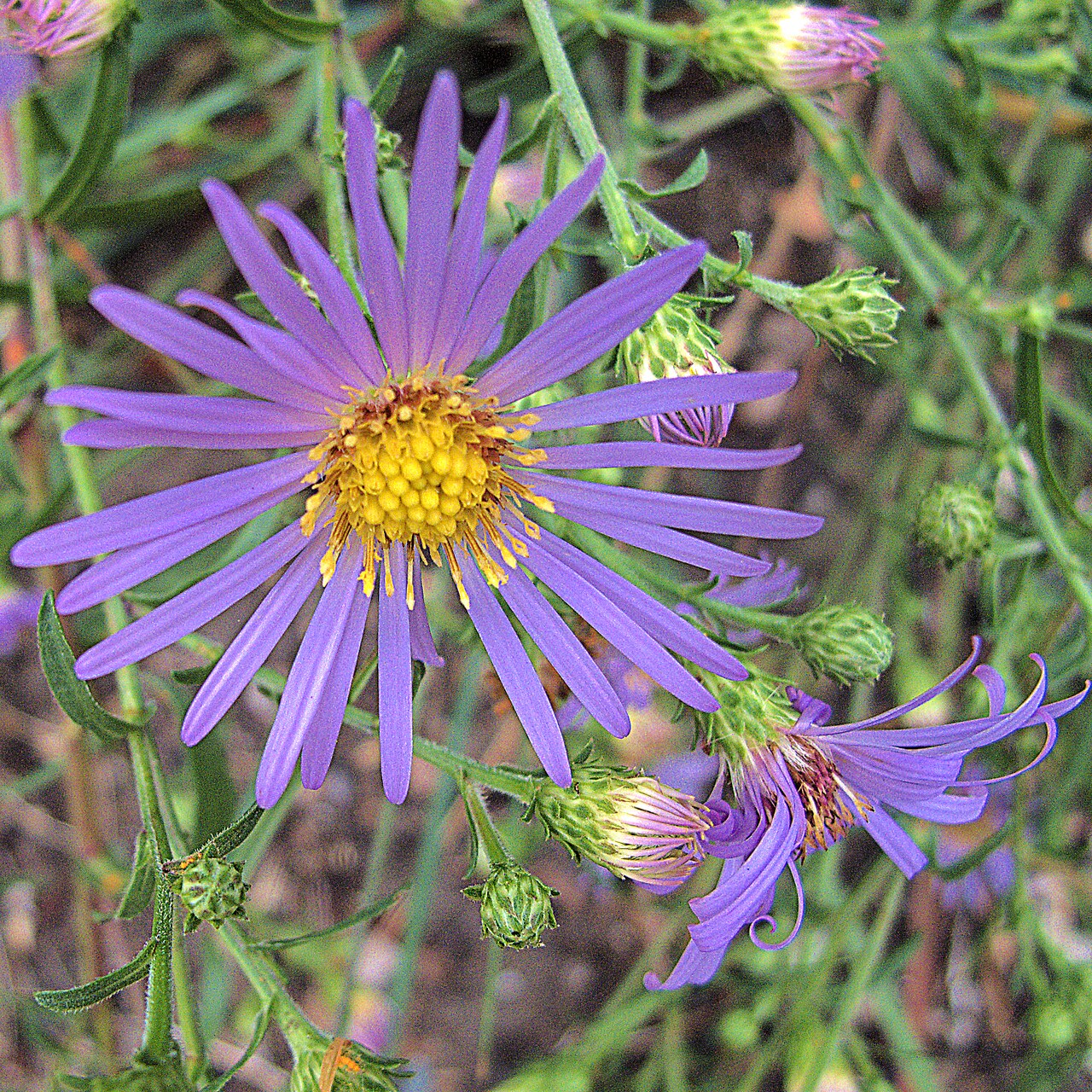
Pacific aster is best recognized by its abundant, small lavender-blue daisy flowers blooming from late summer into fall, paired with narrow, slightly rough-textured leaves on upright stems.
Stems & Leaves
Stems are slender, upright to somewhat sprawling, 1 to 3 feet tall, often branching near the top where flower heads cluster. Leaves are narrow, lance-shaped to oblong, 2 to 5 inches long, with smooth to slightly toothed margins, and a somewhat rough or slightly hairy texture to the touch. Lower leaves are often larger and may wither by bloom time, while upper leaves are smaller and more numerous near the flower clusters.
Flowers
Flower heads are 1 to 1.5 inches across, with 20 to 50 narrow ray florets in shades of pale lavender to deep violet-blue surrounding a central disk of bright yellow florets that often darkens to reddish-brown as the flower ages. Blooms are borne in loose, branching clusters at the stem tips from July through October, with peak bloom typically in late summer and early fall.
Fruit & Seeds
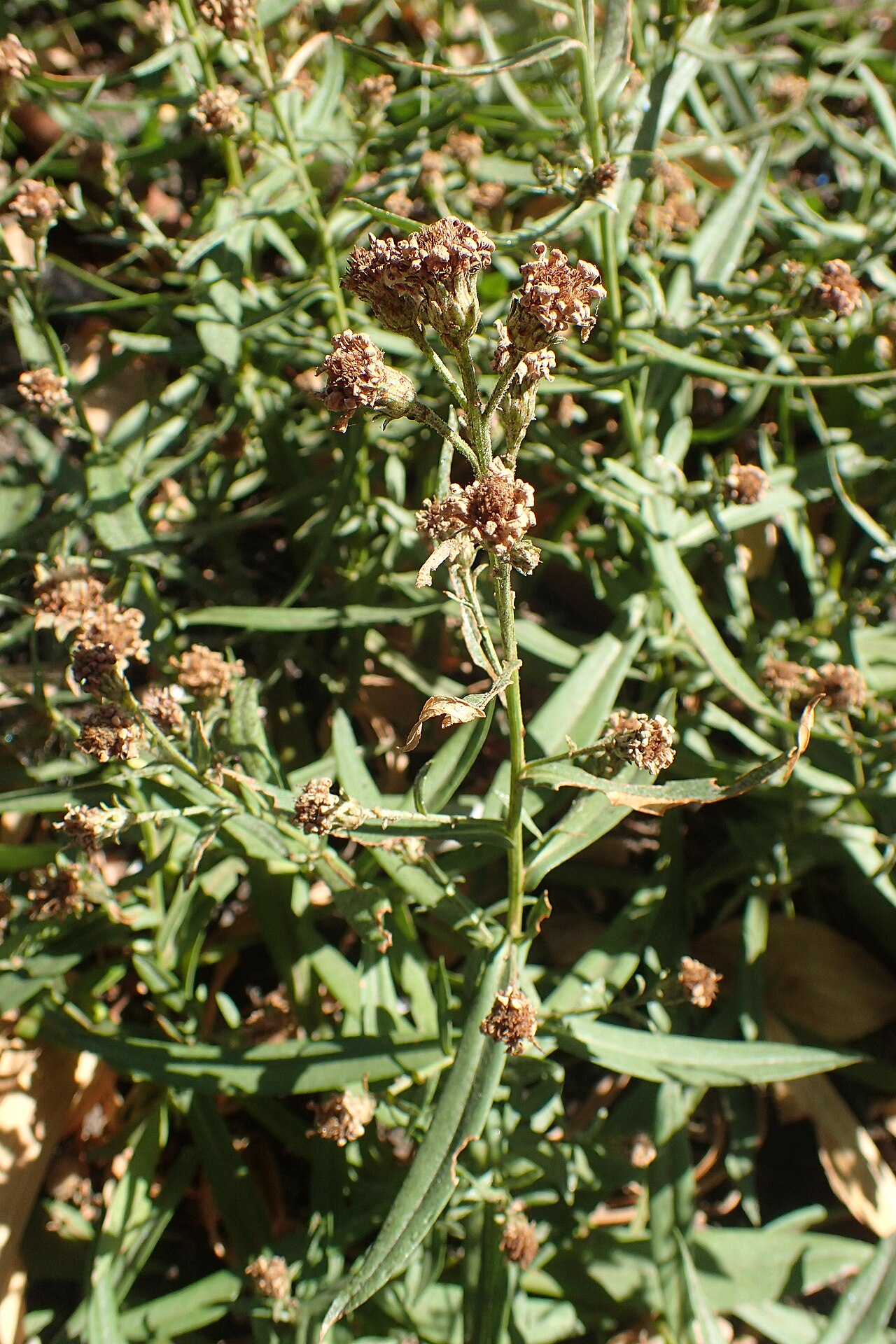
Like other asters, Pacific aster produces small, dry, one-seeded fruits called cypselae, each topped with a tuft of fine bristles (pappus) that aids wind dispersal. The spent flower heads turn brown and fluffy as the seeds mature and disperse through fall and into winter, as shown in the photo below.
Quick Facts
| Scientific Name | Symphyotrichum chilense (syn. Aster chilensis) |
| Family | Asteraceae (Aster family) |
| Plant Type | Herbaceous Perennial Wildflower |
| Mature Height | 1–3 ft |
| Mature Spread | Spreads by rhizome; colonies of variable width |
| Growth Rate | Moderate to Fast (rhizomatous) |
| Sun Exposure | Full Sun to Part Shade |
| Water Needs | Low to Moderate |
| Soil Type | Sandy to clay; well-drained to moderately moist |
| Soil pH | 6.0–7.5 (slightly acidic to neutral) |
| Bloom Time | July – October |
| Flower Color | Lavender to violet-blue with yellow center |
| Fall Color | Not significant (herbaceous die-back) |
| Fruit | Small wind-dispersed cypselae with bristly pappus |
| Deer Resistant | Moderate |
| USDA Hardiness Zones | 7–10 |
Native Range
Pacific aster is native to the West Coast of North America, found from southwestern British Columbia south through western Washington and Oregon to California, including the Channel Islands and coastal areas as far south as Santa Barbara and Ventura counties. Within California, it occurs mainly in coastal and near-coastal counties rather than the state’s interior deserts or high mountains.
It grows in a variety of open, often disturbed or seasonally moist habitats, including coastal bluffs, dunes, grasslands, marsh edges, open woodland, and roadsides, typically at low to moderate elevations near the coast. It is notably tolerant of salt spray and sandy, nutrient-poor soils, which helps explain its abundance in beach and bluff-top plant communities.
Pacific aster is sometimes grown in gardens well inland or outside the West Coast, but it should be treated as a regional native specific to the Pacific Coast rather than a native plant elsewhere in the country.
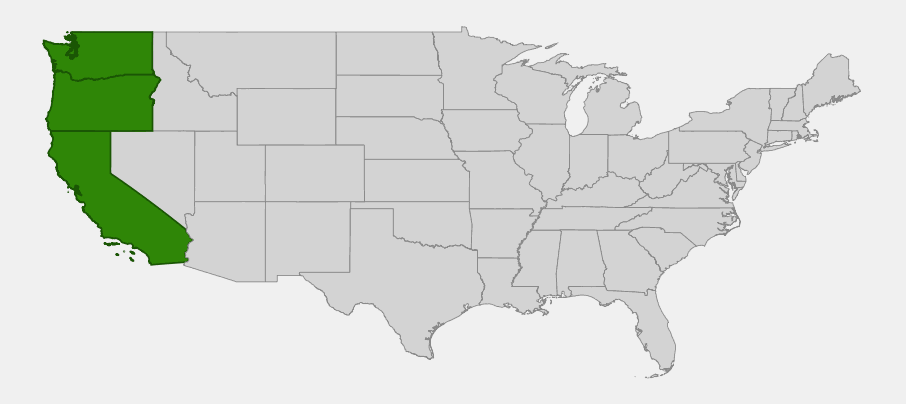
📋 Regional plant lists featuring Pacific Aster: Western Oregon & Western Washington
Growing & Care Guide
Pacific aster is an easygoing, low-fuss wildflower for coastal and near-coastal gardens, rewarding minimal care with months of late-season color right when most other flowers have finished.
Light
Full sun produces the most compact growth and heaviest flowering, though Pacific aster also tolerates part shade, particularly in hotter inland sites within its range, where some afternoon shade can reduce stress and prolong bloom.
Soil & Water
This species adapts to a wide range of soils, from sandy coastal dune soil to heavier clay, and tolerates both consistently moist and seasonally dry conditions once established. It needs only light supplemental water beyond normal rainfall in coastal climates, making it a reasonable low-water choice for native and pollinator gardens near the coast.
Planting Tips
Plant container stock or divisions in fall or early spring. Because Pacific aster spreads by rhizome, give it room to roam in naturalistic plantings, or install a below-ground barrier if spread needs to be contained in smaller garden beds. Space plants 12 to 18 inches apart for a quickly filling-in colony.
Pruning & Maintenance
Cut stems back to the ground in late winter after seed heads have provided food for birds and winter interest. Deadheading spent flowers through the bloom season can extend flowering further, though it is not required for a healthy planting. Divide crowded colonies every few years in fall or early spring to maintain vigor.
Propagation
Pacific aster is easily propagated by dividing established rhizomes in fall or early spring, which is faster and more reliable than starting from seed. Seed can also be sown in fall for natural cold stratification over winter, germinating the following spring.
Landscape Uses
Pacific aster fills an important late-season niche in coastal native plantings:
- Pollinator and butterfly gardens, especially for late-season nectar
- Coastal meadow and dune restoration plantings
- Naturalized borders where rhizomatous spread is welcome
- Mixed native perennial beds paired with earlier-blooming wildflowers
- Erosion control on stabilized coastal slopes and bluffs
Wildlife & Ecological Value
Pacific aster plays an outsized ecological role for its size, thanks largely to the timing of its bloom during a critical late-season gap in nectar availability.
For Pollinators
The late-summer and fall flowers are an important nectar source for native bees, honeybees, and migrating butterflies, including monarchs moving through coastal California on their way to overwintering sites, at a time when many other nectar sources have already dried up for the season.
For Birds
Seed-eating birds such as finches and sparrows feed on the ripening seed heads through fall and winter, and the dense colonies provide cover for small ground-foraging birds in open coastal habitats.
For Mammals
Small mammals occasionally browse the foliage, and the dense rhizomatous growth contributes to soil stabilization that benefits burrowing species in dune and bluff habitats.
Ecosystem Role
As a rhizomatous colonizer of open and disturbed coastal ground, Pacific aster helps stabilize sandy and eroding soils while providing a late-season pulse of nectar that supports pollinator populations heading into winter, making it a quietly important piece of coastal plant community resilience.
Cultural & Historical Uses
Documented traditional use of Pacific aster is limited compared to more prominent California native plants, though some coastal Indigenous communities are recorded as having used related aster species in minor medicinal preparations as part of broader regional plant knowledge. Because specific, well-documented uses for this exact species are scarce, any such applications should be understood as historical ethnobotanical practice rather than guidance for present-day use.
In more recent decades, Pacific aster has become appreciated primarily through the lens of habitat restoration and native landscaping, valued by California and Pacific Northwest gardeners for its reliable late-season bloom and ease of care in coastal gardens.
Frequently Asked Questions
Is Pacific Aster the same as California aster?
“California aster” is a common alternate name sometimes used for this species, though it is more precisely called Pacific aster since its range extends north through Oregon, Washington, and into British Columbia, not just California.
Does Pacific Aster spread aggressively?
It spreads by rhizome and can form expanding colonies where conditions suit it, so it is best given room to naturalize or contained with a root barrier in smaller, more formal garden beds.
When does Pacific Aster bloom?
It blooms from July through October, with peak flowering typically in late summer and early fall, making it one of the latest-blooming native wildflowers in its coastal range.
Is Pacific Aster good for pollinators?
Yes — its late-season flowers are an important nectar source for native bees and migrating butterflies, including monarchs, at a time when few other coastal wildflowers are still blooming.
Can Pacific Aster grow away from the coast?
It can be grown inland with adequate water, but it is native specifically to coastal and near-coastal habitats of California, Oregon, and Washington, and is not a native plant elsewhere.

Looking for a nursery that carries Pacific Aster?
Browse our native plant nursery directory: California · Oregon · Washington