
Georgia Aster (Symphyotrichum georgianum)
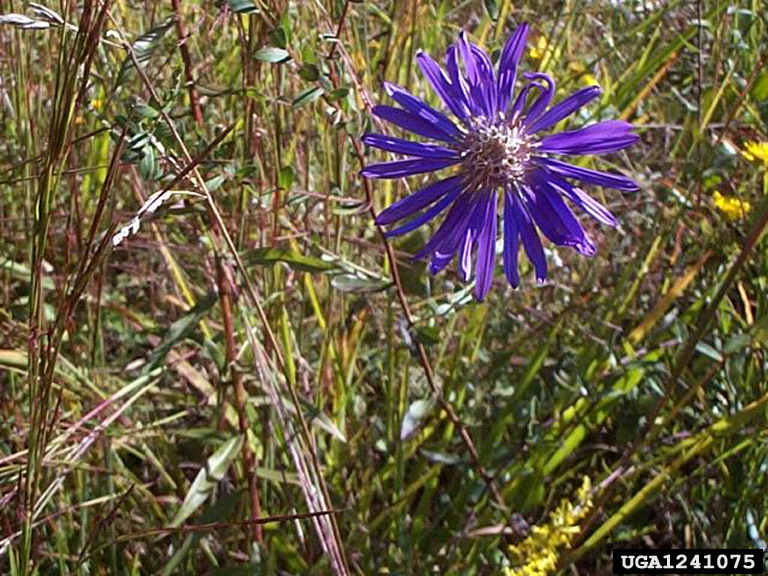
Symphyotrichum georgianum (formerly Aster georgianus), commonly known as Georgia Aster, is a rare rhizomatous perennial in the Asteraceae family found only in a narrow band of the southeastern Piedmont and adjacent coastal plain. It is immediately recognizable among native asters for its unusually large flower heads — up to 2 inches across — in a deep, almost electric purple that botanists have described as “dark reddish purple” to “lavender violet.” Few native wildflowers put on a more dramatic late-season show.
Georgia aster is a relict of the open, fire-maintained post oak-savanna and oak-pine woodlands that once covered much of the Piedmont before fire suppression and agriculture reshaped the landscape. It persists today as a clump-forming perennial 1 to 3 feet tall, spreading slowly by rhizomes to form small colonies of woody stems, usually along woodland edges, utility rights-of-way, roadsides, and other periodically disturbed, sunny openings where competition from taller vegetation stays in check.
This is a genuinely rare plant — only around 146 populations are known to remain, and it is tracked as Vulnerable by NatureServe and listed as threatened in Georgia. It was formerly under consideration for federal candidate status before a multi-state Candidate Conservation Agreement helped keep it off the federal endangered species list. Because of its rarity, Georgia aster should only be grown from nursery-propagated stock or seed collected with landowner permission — never dug or collected from the wild.
Identification
Georgia aster forms colonies of upright, woody-based stems arising from spreading rhizomes, typically reaching about 1 to 3 feet tall. The stems, leaves, and flower bracts are covered in tiny stalked glands (stipitate glands), which give the plant a faintly sticky, textured feel up close.
Leaves
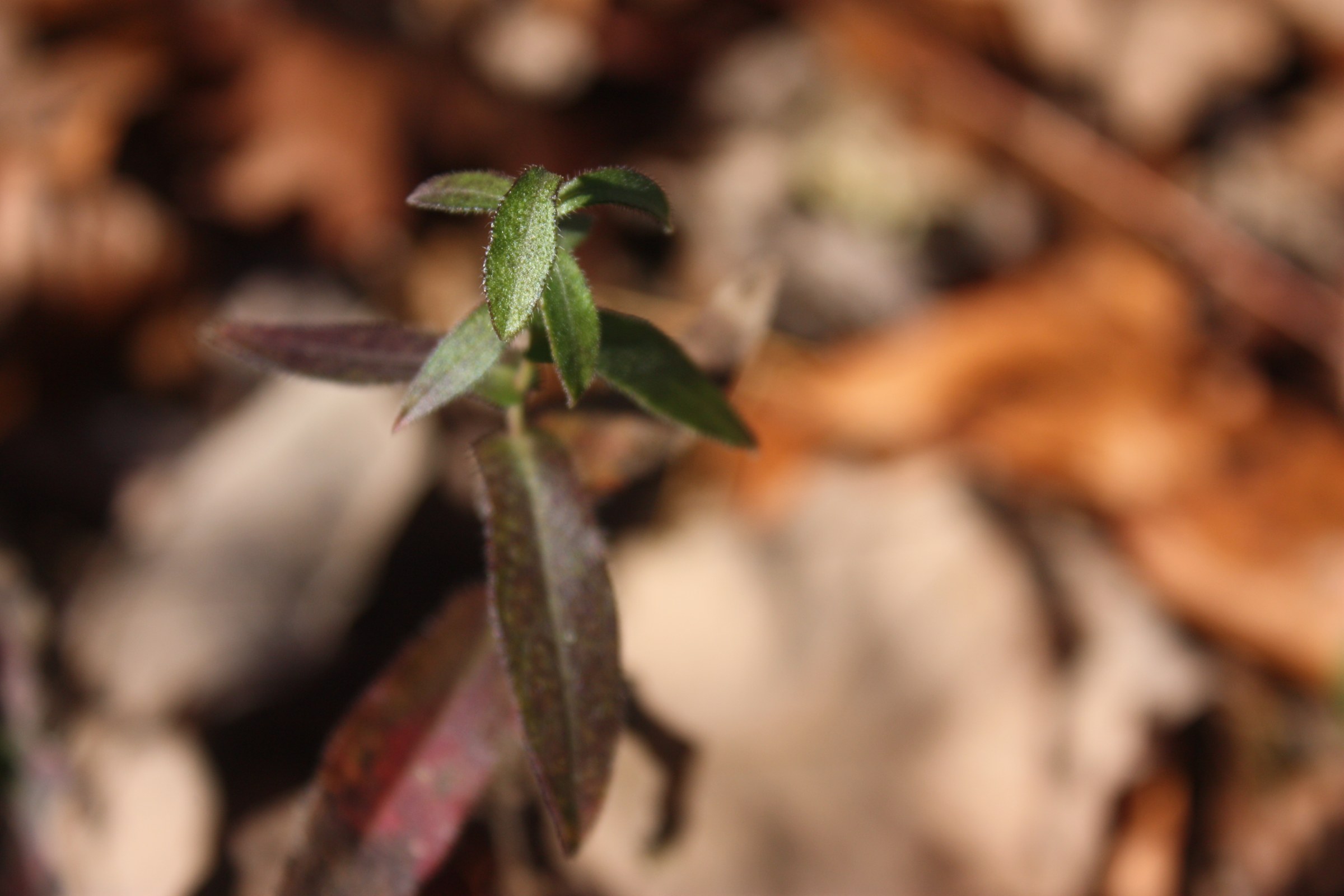
The leaves are thick and dark green, oblong to lance-shaped, up to about 2¾ inches long and ¾ inch wide, with margins that are smooth or lightly toothed. They are sessile or nearly so along the stem, becoming smaller near the flower heads.
Flowers
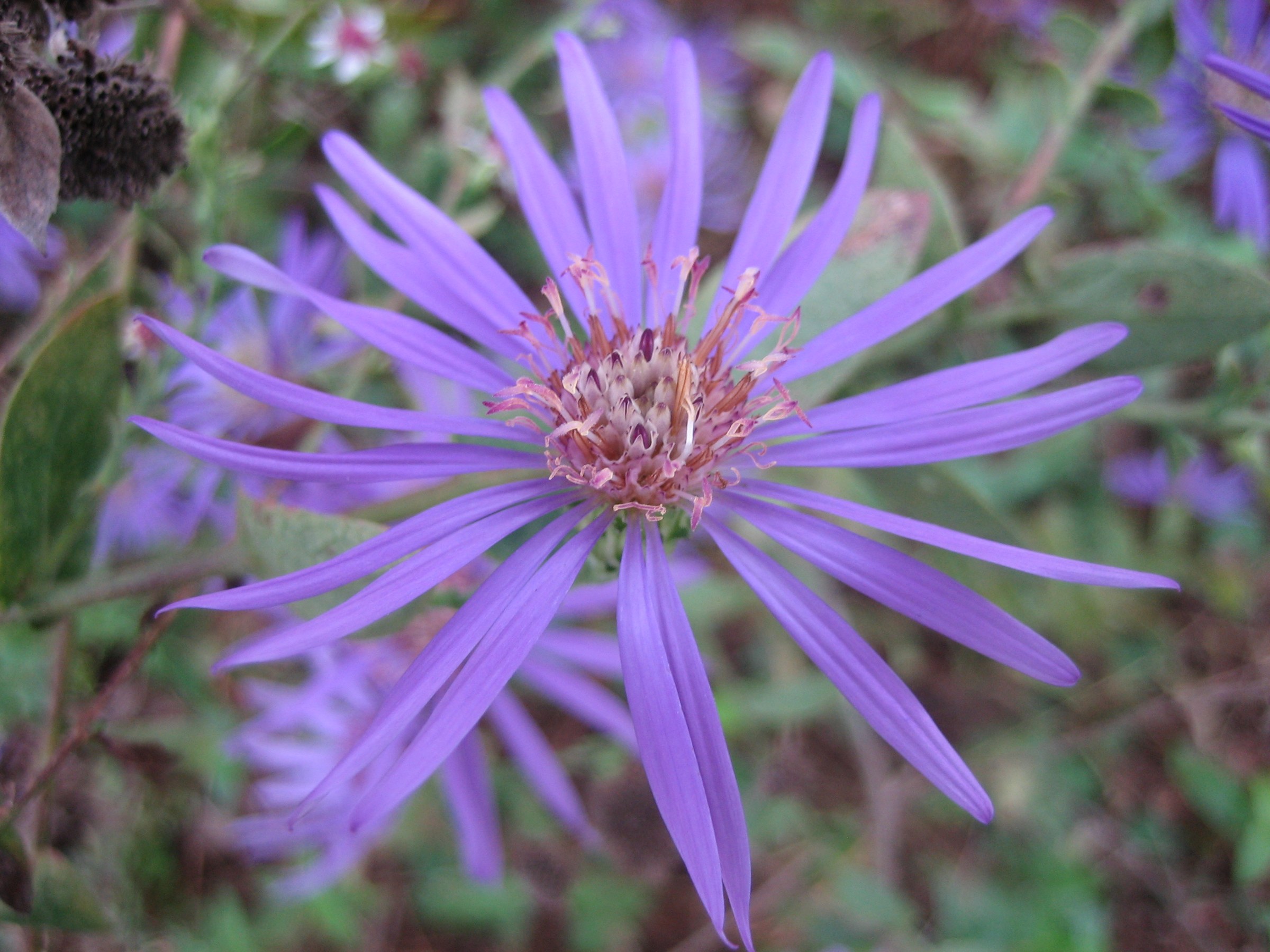
Flower heads are borne singly or in small, loose clusters on rough-haired stalks, each head 2 to 2½ inches across — notably larger than most other native asters. Ray florets number roughly 20 to 35 per head, each up to ¾ inch long, in a deep lavender-violet to dark reddish-purple. The central disk florets are white to purplish, aging to a dull purple-brown. Bloom occurs in October and November, later than most other regional asters, making it an important late-season nectar source.
Fruit & Seeds
Like other asters, the fruit is a small dry achene topped with a tuft of bristles (pappus) that aids wind dispersal, maturing a few weeks after flowering.
Quick Facts
| Scientific Name | Symphyotrichum georgianum (syn. Aster georgianus) |
| Family | Asteraceae (Aster) |
| Plant Type | Herbaceous Perennial Wildflower |
| Mature Height | 1–3 ft |
| Mature Spread | 1–2 ft, slowly spreading by rhizomes |
| Growth Rate | Slow to moderate |
| Sun Exposure | Full Sun to Part Shade |
| Water Needs | Moderate; good drought tolerance once established |
| Soil Type | Well-drained clay, loam or sandy soils |
| Soil pH | Slightly acidic to neutral |
| Bloom Time | October – November |
| Flower Color | Deep lavender-violet to dark reddish-purple |
| Fall Color | Foliage stays green through bloom, then browns after frost |
| Fruit | Small bristle-tipped achenes |
| Deer Resistant | Somewhat; deer may browse young growth |
| USDA Hardiness Zones | 6–9 |
Native Range
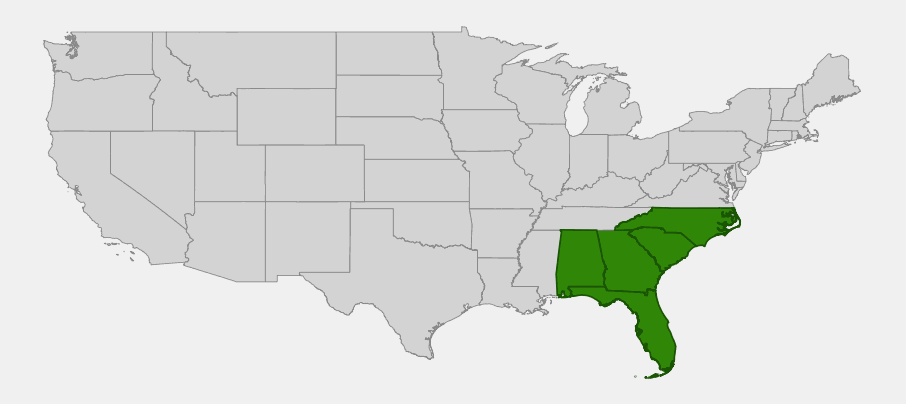
Georgia aster is native to a limited portion of the southeastern United States, centered on the Piedmont region of Georgia, Alabama, North Carolina, and South Carolina, with scattered historical populations in Florida that may now be extirpated. It is a true regional specialist: unlike many Symphyotrichum species that range across much of the continent, Georgia aster’s entire global population is concentrated in this one area.
Within its range it grows in oak-pine woodlands, woodland margins, and the type of open, grassy understory that was once maintained by frequent, low-intensity wildfire across the historic post oak savanna. Today it survives mostly in remnant woodland openings, power-line and highway rights-of-way, and other sites where periodic mowing or clearing substitutes for the fire regime the species evolved with.
Habitat loss from development, fire suppression, herbicide use along roadsides, and the gradual closing-in of woodland canopy are the primary threats to the roughly 146 known remaining populations. Because its range is so restricted, gardeners outside the Piedmont region of Georgia, Alabama, and the Carolinas should not expect it to be locally native, and Florida gardeners in particular should note the species may no longer persist in the wild there.
📋 Regional plant lists featuring Georgia Aster: Georgia, Alabama & Mississippi · North Carolina & South Carolina
Growing & Care Guide
Because Georgia aster is a rare species, home gardeners within its native range have an unusual opportunity to directly support its conservation by planting nursery-propagated stock. It is not a difficult plant to grow once you give it the open, sunny conditions it needs.
Light
Full sun produces the most compact growth and the heaviest bloom. Georgia aster tolerates part shade, especially at the edge of open woodland, but plants become leggier and flower less abundantly as shade increases.
Soil & Water
This species is adaptable to a range of well-drained soils, from clay loam to sandy loam, and prefers a slightly acidic to neutral pH. It is moderately drought tolerant once established, reflecting its native habitat in seasonally dry Piedmont woodland openings, but benefits from regular watering through its first growing season.
Planting Tips
Plant container stock in spring or fall, spacing plants about 18 to 24 inches apart to allow for slow spread by rhizomes. Only source plants or seed from reputable native plant nurseries that propagate Georgia aster responsibly — never collect from wild populations, which are already under pressure.
Pruning & Maintenance
Cut stems back to the ground in late winter after the foliage has died back. Periodic light disturbance — an occasional mowing or clearing of competing vegetation, mimicking the historical fire regime — helps keep colonies vigorous and open to sunlight.
Propagation
Georgia aster can be propagated by division of the rhizomatous clumps in early spring, or by seed collected in late fall once the fluffy pappus indicates ripeness. Divisions establish and bloom the fastest.
Landscape Uses
- Native wildflower gardens as a dramatic late-season bloomer
- Pollinator gardens where its large flowers draw late-foraging bees and butterflies
- Woodland edge plantings that mimic its natural savanna-edge habitat
- Conservation plantings on private land within its historic range
Wildlife & Ecological Value
As one of the latest-blooming native wildflowers in its range, Georgia aster fills a critical gap in the fall nectar calendar.
For Pollinators
The large, nectar-rich flower heads attract a wide range of late-season bees, including bumble bees and other native bees, along with butterflies and other nectaring insects building reserves before winter or migration.
For Birds
Seed-eating songbirds feed on the ripened achenes through late fall and into winter where plants are left standing.
Ecosystem Role
Georgia aster is an indicator species for the open, fire-maintained woodland habitat that once dominated much of the Piedmont. Its presence signals a healthy, periodically disturbed understory, and conserving it often means conserving the broader savanna-woodland community it depends on.
Cultural & Historical Uses
Georgia aster has no significant documented history of use by Indigenous peoples or early settlers, likely owing to its naturally limited range and relative inconspicuousness outside of its brief, spectacular autumn bloom. Its modern significance is primarily botanical and conservation-related rather than historical.
In the early 2010s, botanists from the U.S. Fish and Wildlife Service, U.S. Forest Service, and North Carolina Botanical Garden undertook coordinated seed-collection expeditions across the North Carolina Piedmont to study the species’ genetics and safeguard seed from known populations, work that fed directly into the multi-state Candidate Conservation Agreement that has helped keep the species off the federal endangered species list.
Today, Georgia aster is best known among native plant enthusiasts and conservationists as a flagship species for Piedmont woodland restoration, and as a reminder of how fire suppression and habitat fragmentation can quietly erode even a plant’s entire global range.
Frequently Asked Questions
Is Georgia aster endangered?
It is not currently listed under the federal Endangered Species Act, but it is tracked as Vulnerable by NatureServe and listed as threatened in Georgia. It was formerly considered for federal candidate status before a Candidate Conservation Agreement among multiple states helped stabilize its outlook. It remains a genuinely rare plant with only around 146 known populations.
Can I dig up Georgia aster from the wild?
No. Given its rarity, wild populations should never be collected from. Always source plants or seed from nurseries that propagate Georgia aster responsibly, and only within its native Piedmont range.
How is Georgia aster different from other purple asters?
Its flower heads are notably larger than most native asters — up to 2½ inches across — and a deeper, richer purple. It also blooms later, in October and November, after many other asters have finished.
Will Georgia aster spread aggressively in my garden?
No. It spreads slowly by rhizomes, forming a modest clump over several years rather than running aggressively. It is easy to keep in bounds.
Does Georgia aster need full sun?
It flowers best in full sun but will grow and bloom, somewhat less vigorously, in part shade, particularly at a woodland edge similar to its natural habitat.

Looking for a nursery that carries Georgia Aster?
Browse our native plant nursery directory: Alabama · Florida & Georgia · North Carolina · South Carolina