California Black Oak (Quercus kelloggii)
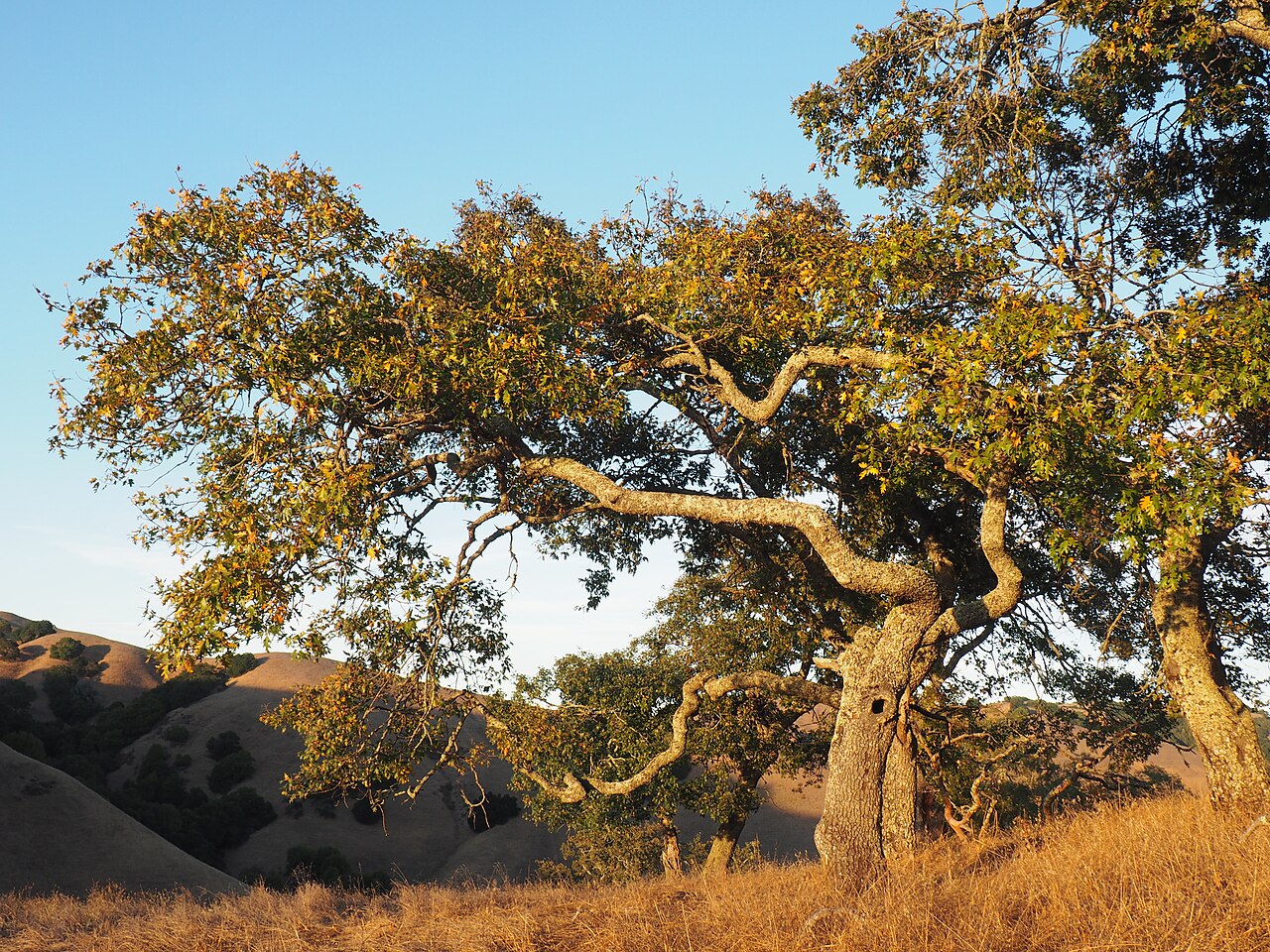
Quercus kelloggii, the California Black Oak, is the only deciduous “red oak” native to California’s mountains and foothills, instantly recognizable by its deeply cut, bristle-tipped leaves and the attractive gold-to-bronze fall color they turn before dropping. Native to California and southwestern Oregon, it is a dominant tree of mixed-conifer forests across much of the Sierra Nevada, Klamath Mountains, and Coast Ranges, often forming extensive pure stands at mid elevations.
Black oak is a medium to large tree, typically 40 to 80 feet tall, with a broad, rounded crown and thick, deeply furrowed dark bark on older trunks. Unlike California’s evergreen live oaks, it drops its leaves each winter, and its acorns — rich in oil and historically a dietary staple for Indigenous peoples throughout its range — are an important food source for deer, bears, and numerous bird species.
For gardeners and land managers in California’s foothill and mountain regions, black oak is a valuable, long-lived shade tree that brings genuine fall color, outstanding wildlife value, and strong drought tolerance once established, making it one of the best deciduous native trees for naturalistic woodland and forest-edge plantings at middle elevations.
Identification
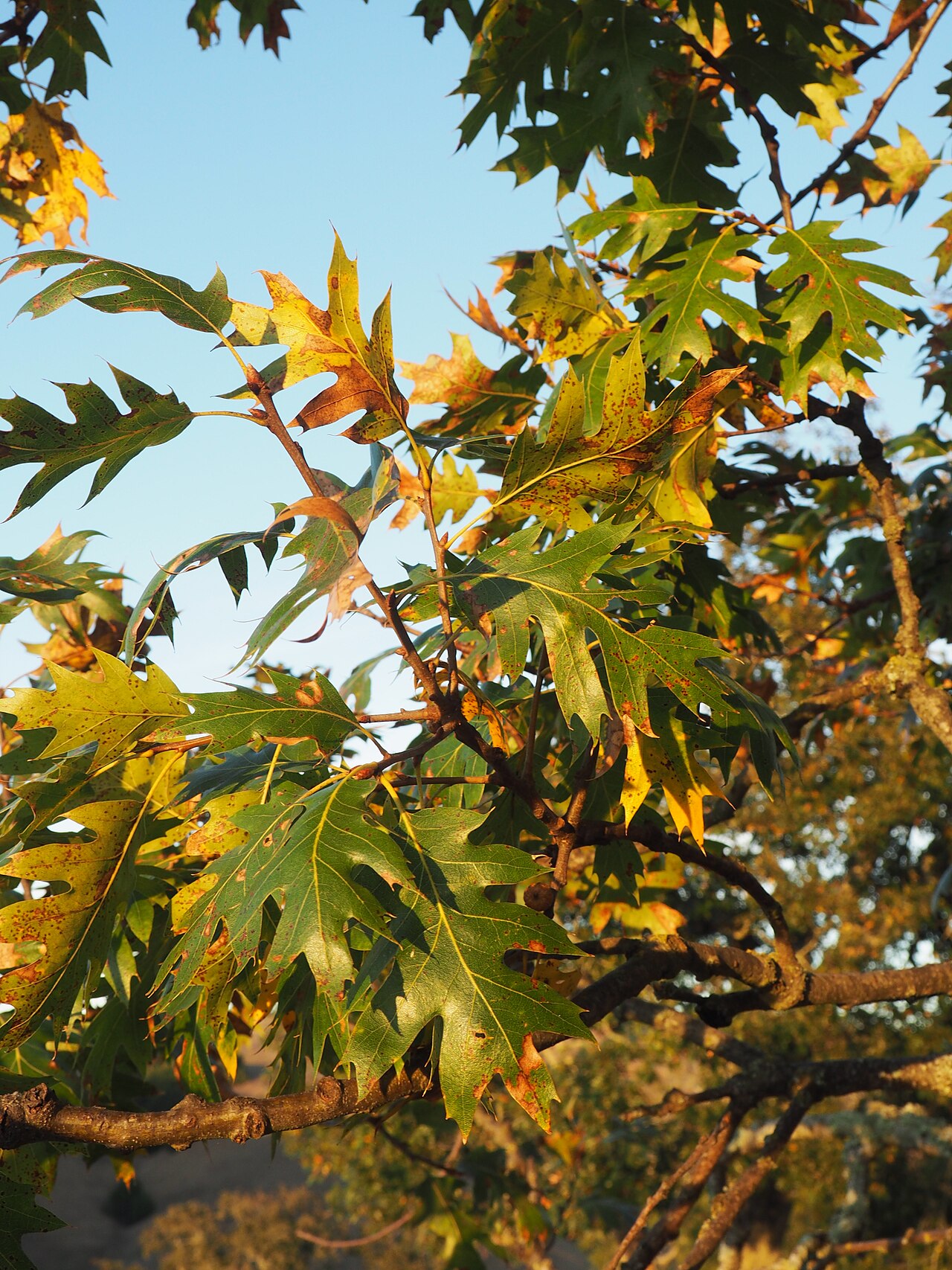
California black oak is easiest to identify by its deeply lobed, bristle-tipped leaves — a red-oak-group feature absent from valley oak and blue oak — combined with its deciduous habit and a strong association with mixed-conifer forest rather than open savanna.
Bark & Stems
Young bark is smooth and dark gray; mature bark becomes thick, nearly black, and deeply furrowed into irregular ridges, a texture quite different from the thinner, checkered bark of valley and blue oak. The inner bark is distinctly yellow-orange, a feature historically used for a yellow dye.
Leaves
Leaves are deciduous, alternate, 3 to 8 inches long, with 5 to 7 deep lobes, each tipped with a small bristle, characteristic of the red oak group. The upper surface is glossy dark green; leaves turn gold, orange, or bronze in fall before dropping, offering the best true fall color among California’s common native oaks.
Flowers
Male flowers hang in slender yellow-green catkins 3 to 4 inches long that appear with new leaves in spring; female flowers are small and inconspicuous, wind-pollinated like other oaks.
Fruit & Seeds
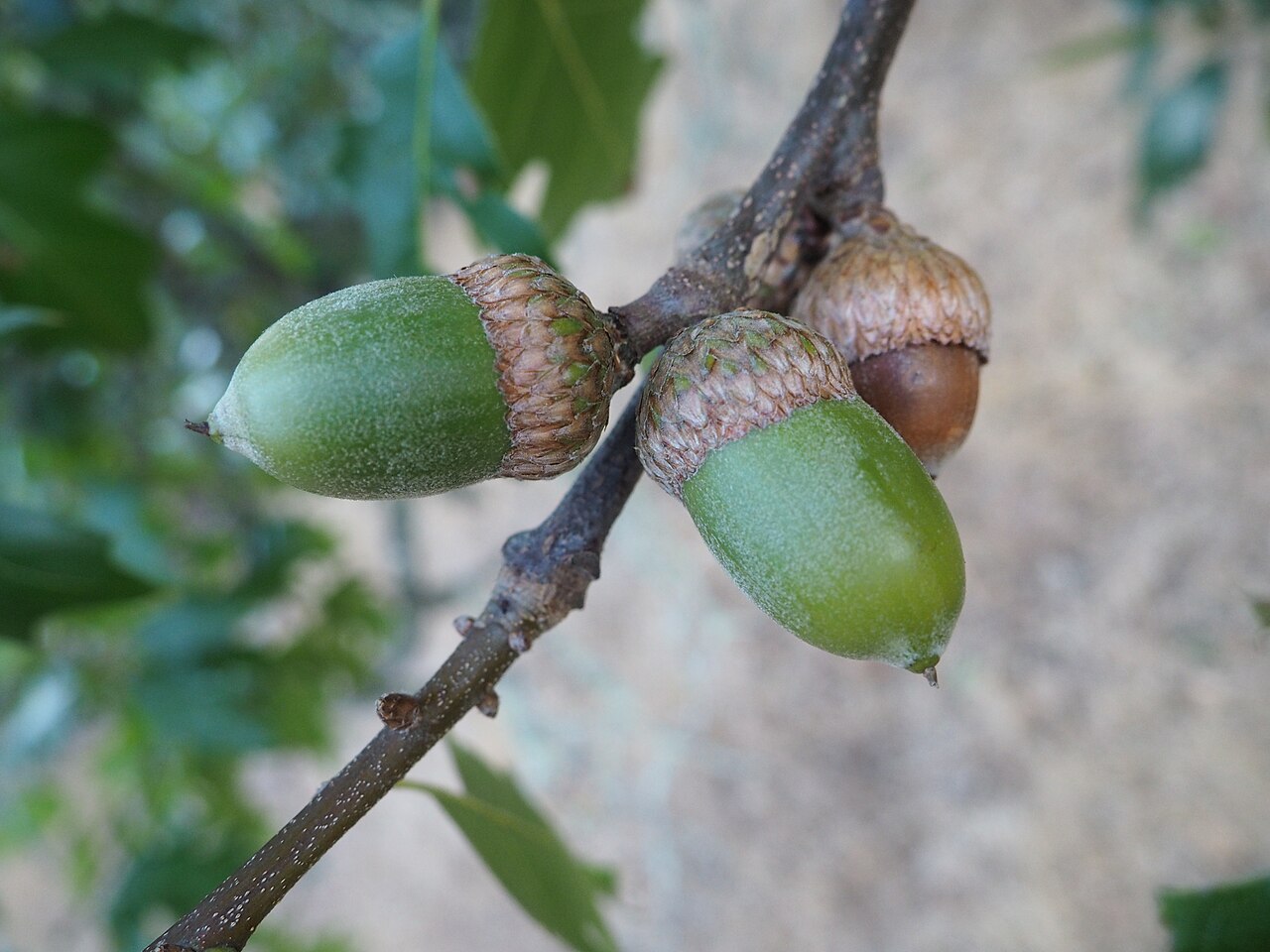
Acorns are 1 to 1.5 inches long, barrel-shaped, with a deep, bowl-like scaly cap covering up to half the nut, and take two years to mature — a trait shared with other red oaks. The kernel is notably higher in oil content than white oak acorns such as valley oak’s, which made it a prized food source but also means it requires more thorough leaching to remove bitterness before eating.
Quick Facts
| Scientific Name | Quercus kelloggii |
| Family | Fagaceae (Beech/Oak) |
| Plant Type | Deciduous tree |
| Mature Height | 40–80 ft |
| Mature Spread | 30–60 ft |
| Growth Rate | Moderate; long-lived (often 100–200+ years) |
| Sun Exposure | Full Sun to Part Shade |
| Water Needs | Low to moderate once established |
| Soil Type | Well-drained mountain and foothill soils; loam to rocky |
| Soil pH | Slightly acidic to neutral |
| Bloom Time | April – May (catkins with new leaves) |
| Flower Color | Yellow-green (inconspicuous) |
| Fall Color | Gold, orange and bronze |
| Fruit | Barrel-shaped acorn, 1–1.5 in, takes two years to mature |
| Deer Resistant | Moderate (seedlings browsed; acorns heavily favored by deer) |
| USDA Hardiness Zones | 6–9 |
Native Range
California black oak is native to California and southwestern Oregon. Its range runs from the Klamath Mountains and Cascade foothills of southwestern Oregon south through the Coast Ranges and the full length of the Sierra Nevada to the Transverse and Peninsular Ranges of Southern California, with scattered populations continuing into northern Baja California, Mexico. It is not native to Nevada.
Black oak typically occupies mid-elevation mixed-conifer forest, from roughly 2,000 to 8,000 feet depending on latitude, where it grows alongside ponderosa pine, Douglas-fir, and incense cedar, often forming extensive pure stands on drier south-facing slopes within the conifer belt. It also occurs at lower elevations in the Coast Ranges and in drier oak woodland transition zones, overlapping with blue oak and interior live oak in places. The species is notably more shade-tolerant as a young tree than valley or blue oak, allowing it to establish and persist within a forest understory before reaching the canopy.
Black oak is of particular cultural and ecological importance in Sierra Nevada forests, where its acorns were a primary food staple for many California Indigenous nations and remain a key wildlife food source today. Fire suppression and the increasing dominance of shade-tolerant conifers in many Sierra forests have reduced black oak’s relative abundance in some areas over the past century, prompting active forest management interest in maintaining black oak stands.
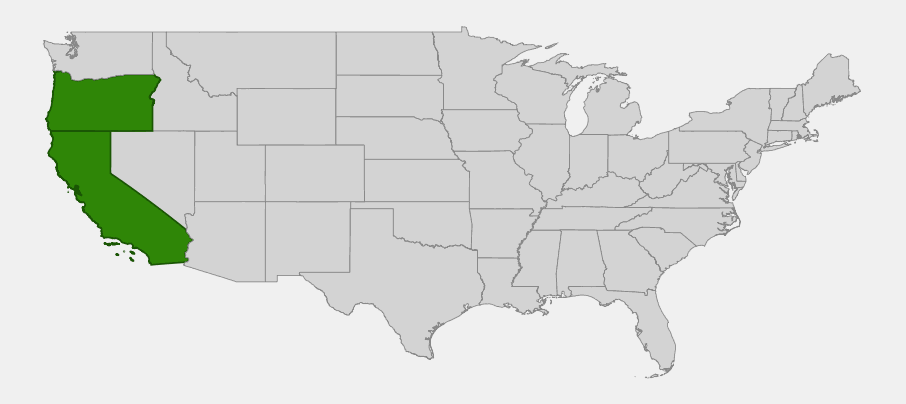
📋 Regional plant lists featuring California Black Oak: California & Nevada · Western Oregon & Western Washington
Growing & Care Guide
California black oak is a satisfying shade tree for mountain and foothill gardens, offering more fall interest than most California native oaks while remaining tough and drought-adapted once established.
Light
Black oak grows best in full sun to light shade. Young trees tolerate more shade than valley or blue oak, reflecting their natural ability to establish beneath a conifer canopy before eventually reaching full sun as the surrounding forest opens up or the tree grows taller.
Soil & Water
This species prefers well-drained mountain and foothill soils, from loam to rocky ground, and does not tolerate waterlogged conditions. It is drought tolerant once established, needing supplemental water mainly during the first two to three years; established trees in its natural elevation range generally thrive on seasonal precipitation alone, though occasional deep watering helps during exceptional drought.
Planting Tips
Plant acorns in fall soon after they ripen, or set out container stock in fall or early winter so roots establish before summer heat arrives. Because deer favor both the seedlings and the acorns themselves, protect young plants with a cage for the first several years. Black oak is best suited to foothill and mountain elevations within its natural range; it is not usually well adapted to hot, low-elevation Central Valley gardens.
Pruning & Maintenance
Established black oaks need minimal pruning beyond removing dead or crossing branches in the dormant season. As with other California oaks, avoid changing grade, irrigation patterns, or soil conditions within the root zone of mature trees, which are sensitive to disturbance and summer moisture around the root crown.
Landscape Uses
- Shade tree for foothill and mountain properties, with genuine fall color
- Mixed-conifer and oak woodland restoration in Sierra Nevada and Klamath region projects
- Wildlife habitat plantings, especially for deer and acorn-dependent birds
- Forest-edge and naturalistic plantings alongside ponderosa pine and Douglas-fir
- Specimen tree for its handsome branching and autumn display
Wildlife & Ecological Value
As one of the most productive acorn-bearing trees in California’s mountain forests, black oak anchors a significant share of the wildlife food web across its elevation range.
For Pollinators
Though wind-pollinated, black oak’s abundant foliage supports a wide range of native insects, which in turn provide food for insect-eating birds and other pollinator-adjacent species throughout the forest.
For Birds
Acorn woodpeckers rely heavily on black oak acorns for their communal granary trees, and the species is also important to band-tailed pigeons, Steller’s jays, and a variety of woodpeckers and cavity-nesting birds that use its often large, old trunks for nest sites.
For Mammals
Black oak acorns, higher in oil content than those of white oaks like valley oak, are a preferred fall food for black-tailed and mule deer, black bears building fat reserves before winter, and numerous small mammals. This high value made black oak acorns one of the most important wild foods gathered by California’s mountain and foothill Indigenous peoples historically.
Ecosystem Role
Within Sierra Nevada and Klamath mixed-conifer forests, black oak adds structural and species diversity to otherwise conifer-dominated stands, supports a different wildlife community than pure conifer forest, and its persistence is an active focus of forest management aimed at maintaining oak-conifer diversity under changing fire regimes.
Cultural & Historical Uses
California black oak acorns were among the most important traditional foods for Indigenous peoples throughout the Sierra Nevada, Klamath, and northern Coast Ranges, including the Miwok, Maidu, Yurok, and Karuk, who gathered, dried, stored, and leached the oil-rich acorns before grinding them into meal for acorn mush and bread. Because of their higher oil content compared with white oak acorns, black oak acorns were especially prized, and many mountain communities actively tended and burned beneath favored black oak groves to encourage acorn production and ease of harvest.
The inner bark’s yellow-orange color was used historically as a source of dye, and the wood, while hard and heavy, saw only modest commercial use for firewood and rough construction, since its often twisted grain and tendency to check made it less suitable for fine lumber than other hardwoods of the era.
Today, black oak groves on tribal and public lands throughout California continue to be managed with traditional ecological knowledge, including prescribed burning practiced by California tribes to maintain healthy, productive acorn-bearing stands — a living connection between contemporary forest stewardship and millennia of Indigenous land management.
Frequently Asked Questions
Is California black oak the same as other “black oaks”?
No. “Black oak” is also a common name for the unrelated eastern Quercus velutina. California black oak (Quercus kelloggii) is a distinct western species found only in California, southwestern Oregon, and a small part of northern Baja California.
How long do black oak acorns take to mature?
Two years, unlike the single-season acorns of valley oak and blue oak. This two-year cycle is typical of oaks in the red oak group, to which black oak belongs.
Can I eat black oak acorns?
Yes, after thorough leaching to remove the bitter tannins, following the traditional processing long used by California’s Indigenous peoples. Because black oak acorns are higher in oil and tannin than white oak acorns, they generally require more leaching and are not a casual garden food source without proper preparation.
Does black oak have good fall color?
Yes — it offers the best true fall color of California’s common native oaks, with leaves turning gold, orange, and bronze before dropping in late fall.
What elevation is best for planting black oak?
Black oak is best suited to foothill and mountain elevations within its natural range, roughly 1,000 to 8,000 feet, and is not well adapted to hot, low-elevation valley gardens where blue oak or valley oak would be a better native choice.

Looking for a nursery that carries California Black Oak?
Browse our native plant nursery directory: California · Oregon