California Goldfields (Lasthenia californica)
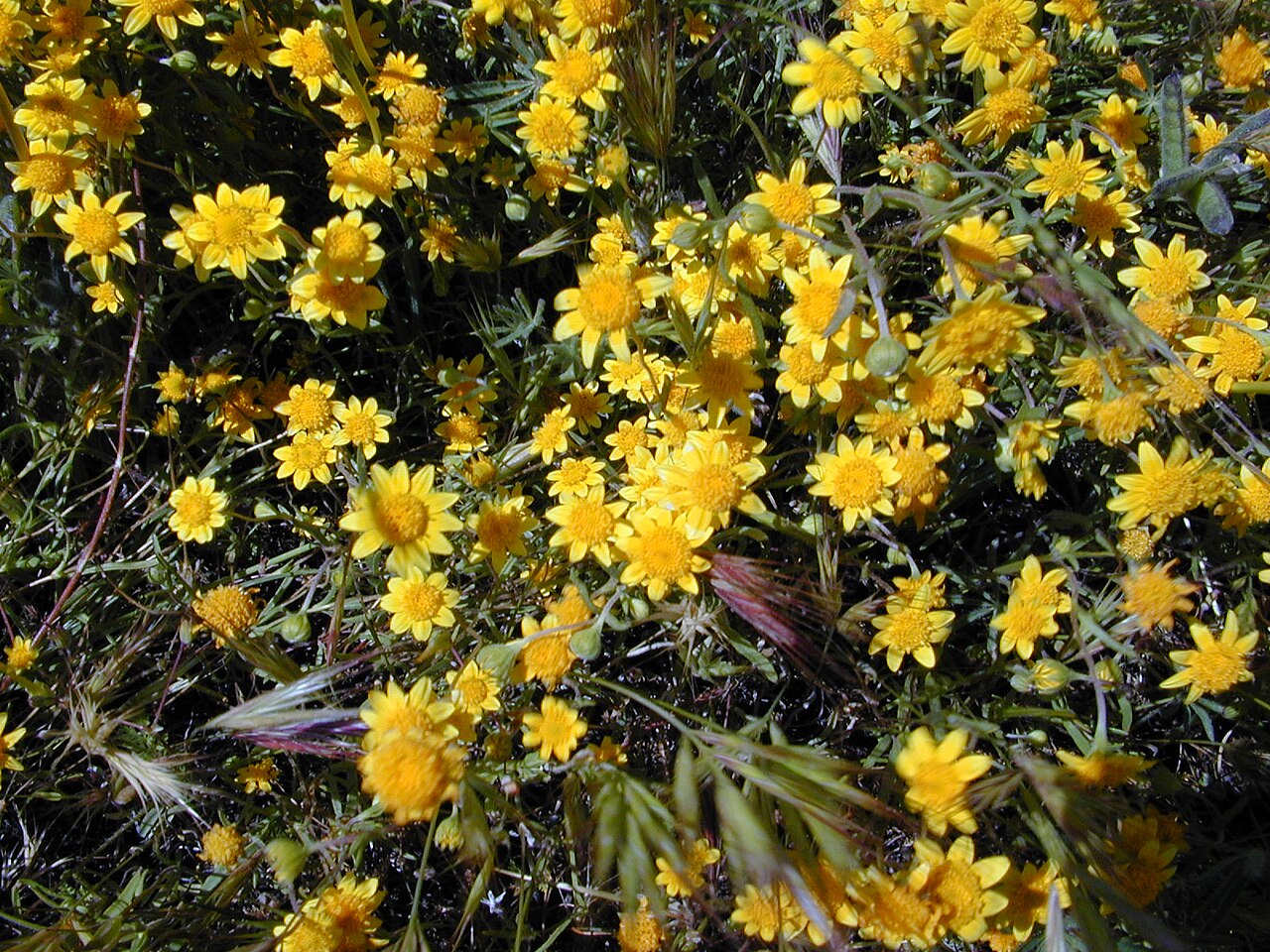
Lasthenia californica, known as California goldfields, is the small, brilliant-yellow daisy responsible for the solid gold carpets that spread across California’s grasslands, deserts, and coastal bluffs each spring. A member of the sunflower family (Asteraceae), goldfields is one of the shortest and most densely flowering of California’s wildflower annuals, often covering entire fields so thoroughly that the ground itself seems to disappear beneath a sheet of color.
Individually, goldfields plants are modest: thin, low stems just a few inches tall, topped with small daisy flowers barely an inch across. But goldfields rarely grows alone. It germinates and blooms in enormous, synchronized populations, and it is this collective display, often stretching unbroken across acres of valley floor or hillside, that has made goldfields one of the signature sights of the California wildflower season, frequently photographed alongside California poppy in the Antelope Valley and other famous bloom locations.
In the garden, goldfields brings that same concentrated color to a smaller scale: scattered through a meadow planting, massed as a seasonal groundcover, or mixed with other low annuals for a classic California spring display. It asks for almost nothing beyond sun and a wet winter, and it reseeds freely once established.
Identification
California goldfields is a low annual forb, usually 2 to 12 inches tall, with slender, often branching stems that can be either erect or sprawling depending on growing conditions. Dense populations create a short, even carpet of bloom, while scattered individual plants show a more open, wiry habit.
Leaves
Leaves are narrow, linear to thread-like, and arranged oppositely along the lower stem, usually 1 to 2 inches long. They are often lightly hairy and have a soft, grayish-green cast that contrasts with the bright flowers above. Basal leaves may be slightly broader than the upper stem leaves.
Flowers
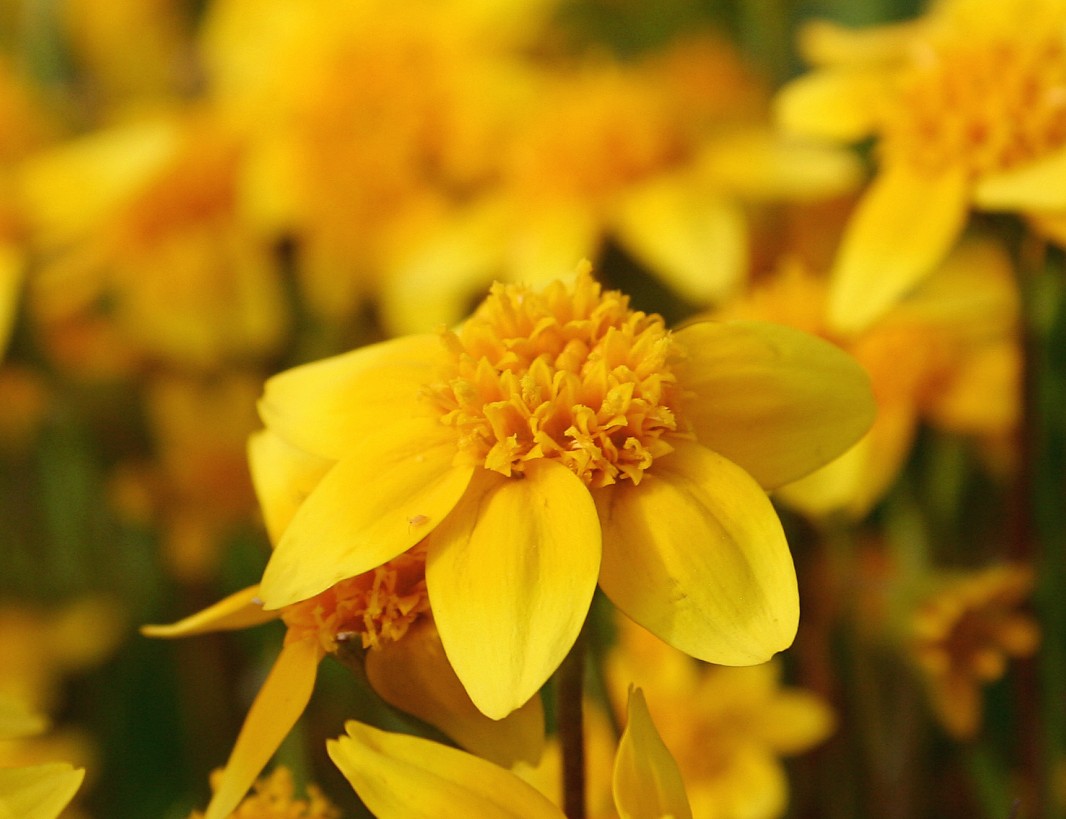
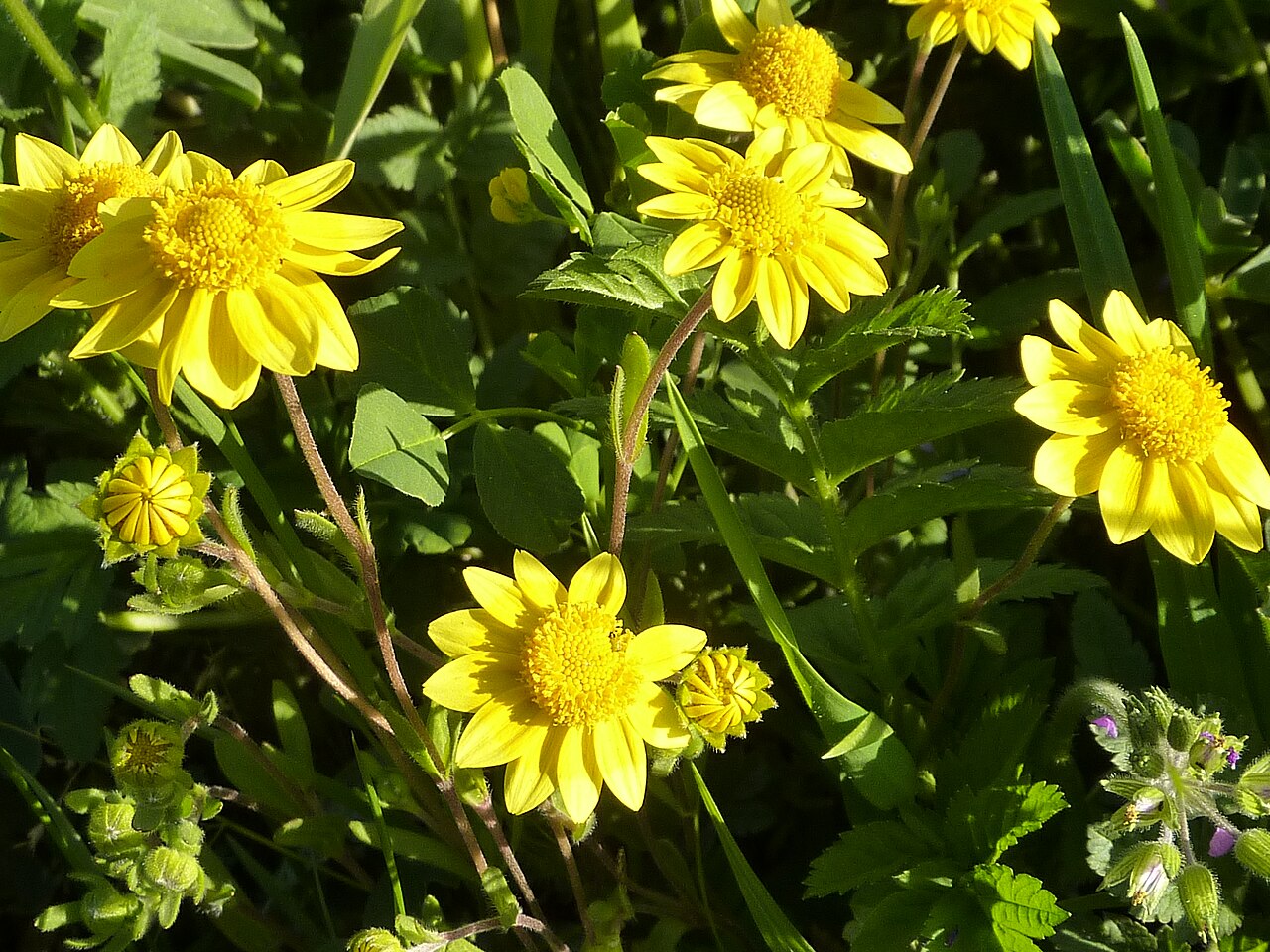
Each flower head is a small, solid-yellow daisy about ½ to 1 inch across, with both the ray petals and the central disc colored a uniform bright yellow, unlike many related composites that show a contrasting disc color. Ray flowers typically number 6 to 13 per head. Flower heads are borne singly at the tips of slender stalks, and a single healthy plant can produce dozens of blooms over its flowering period, opening in close succession so that a stand stays solidly gold for weeks rather than flushing all at once.
Fruit & Seeds
Pollinated flowers form small, narrow achenes, often with a reduced or absent pappus depending on the population. Seed set is prolific in a good year, and the tiny seeds persist in the soil seed bank, which is part of why goldfields populations can appear suddenly and in huge numbers after a wet winter following a dry spell.
Quick Facts
| Scientific Name | Lasthenia californica |
| Family | Asteraceae (Sunflower) |
| Plant Type | Annual Wildflower |
| Mature Height | 2–12 in (5–30 cm) |
| Mature Spread | 4–8 in (10–20 cm) |
| Growth Rate | Fast (completes life cycle in one season) |
| Sun Exposure | Full Sun |
| Water Needs | Low once established; benefits from winter-spring rain |
| Soil Type | Clay, loam, or sandy soils; tolerates poor ground |
| Soil pH | 6.0–7.5 (adaptable) |
| Bloom Time | February – May |
| Flower Color | Solid bright yellow |
| Fall Color | Not applicable (annual, dies back by early summer) |
| Fruit | Small achenes |
| Deer Resistant | Generally yes; not a preferred browse plant |
| USDA Hardiness Zones | 8–10 (grown as a reseeding annual) |
Native Range
California goldfields is native to California and Oregon, where it is one of the most widespread and locally abundant spring annuals. In California it occurs across most of the state at low to moderate elevation: the Coast Ranges, the Central Valley and surrounding foothills, the Transverse and Peninsular Ranges, and parts of the Mojave Desert. In Oregon, its range is concentrated in the western part of the state, reaching into the Willamette Valley and southwestern valleys and foothills.
Goldfields is a specialist of open, sunny ground with minimal competing vegetation, and it reaches its greatest abundance in places where natural or historical disturbance keeps grasses and shrubs from closing in: vernal pool margins and the surrounding swales, valley and foothill grasslands, coastal bluffs and headlands, and desert washes and flats.
Because goldfields relies on a healthy soil seed bank and open ground, populations can be dramatically larger in wet years following drought, when competing annual grasses are temporarily suppressed. This boom-and-bust pattern is a defining feature of its ecology and the reason some of California’s most famous “super bloom” wildflower events are dominated by goldfields in combination with California poppy.
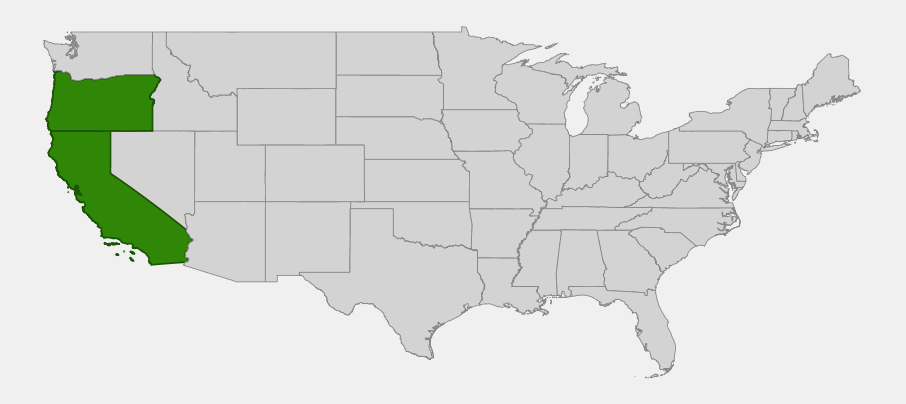
📋 Regional plant lists featuring California Goldfields: California & Nevada · Western Oregon & Western Washington
Growing & Care Guide
California goldfields is simple to grow and well suited to anyone wanting a fast, dense carpet of spring color with minimal upkeep. Like most California winter annuals, success comes down to matching its natural germination and bloom schedule.
Light
Plant goldfields in full sun. It is adapted to open, exposed ground and flowers far more densely and evenly there than in any amount of shade, where plants stretch thin and bloom sparsely.
Soil & Water
Goldfields is adaptable across clay, loam, and sandy soils and tolerates compacted or nutrient-poor ground better than most garden annuals; heavily enriched soil is unnecessary and can encourage weak, floppy growth. Water needs are low: let winter and spring rainfall do most of the work, watering only to supplement a dry spell during active growth. Once plants begin setting seed in late spring, stop watering and allow the planting to dry down naturally, which also helps control fungal issues in a wet garden setting.
Planting Tips
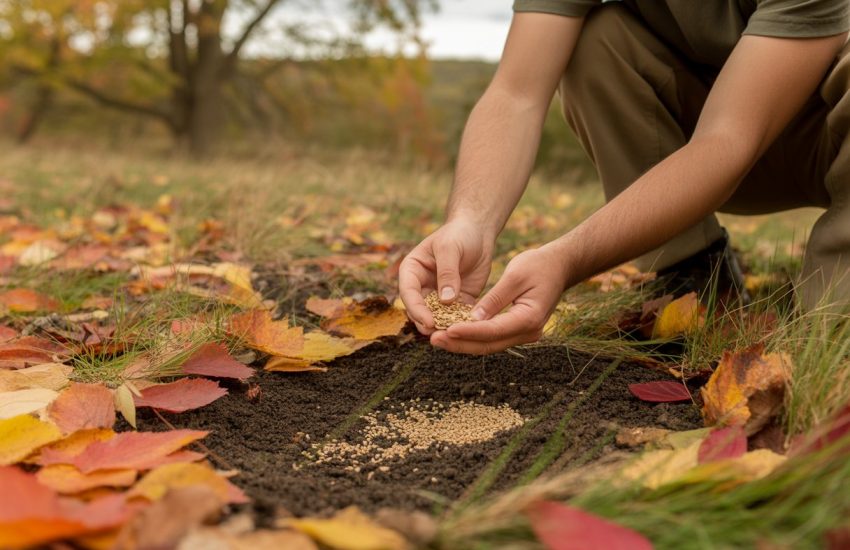
Direct-sow seed in fall after the first soaking rain, scattering it over bare, cleared ground and raking lightly for good soil contact; no stratification is needed. Because goldfields forms such dense stands in the wild, it can be sown more thickly than many other wildflower seed mix components for a fuller, more uniform carpet effect. It combines especially well with California poppy, whose orange contrasts strikingly with goldfields’ solid yellow.
Pruning & Maintenance
No pruning is needed. Let plants flower, set seed, and dry naturally; clearing the dried stand too early removes next year’s seed crop. Once fully browned and crisp, spent plants can be cut back or raked away, ideally after shaking loose seed back over the bed.
Propagation
Propagation is from seed. Collect dry seed heads once they have fully browned, store seed cool and dry, and sow the following autumn. Fresh, locally collected seed germinates readily without any special treatment.
Landscape Uses
- Wildflower meadows as a dense, low groundcover of color
- Mixed with California poppy for the classic gold-and-orange spring combination
- Pollinator gardens as an early, abundant nectar source
- Erosion control on open slopes during the rainy season
- Vernal pool margin plantings in restoration-style gardens
- Seasonal color between young native shrubs and perennials
Wildlife & Ecological Value
Despite its small size, California goldfields is an ecological heavyweight during its brief bloom window, thanks to the sheer scale at which it flowers across the landscape.
For Pollinators
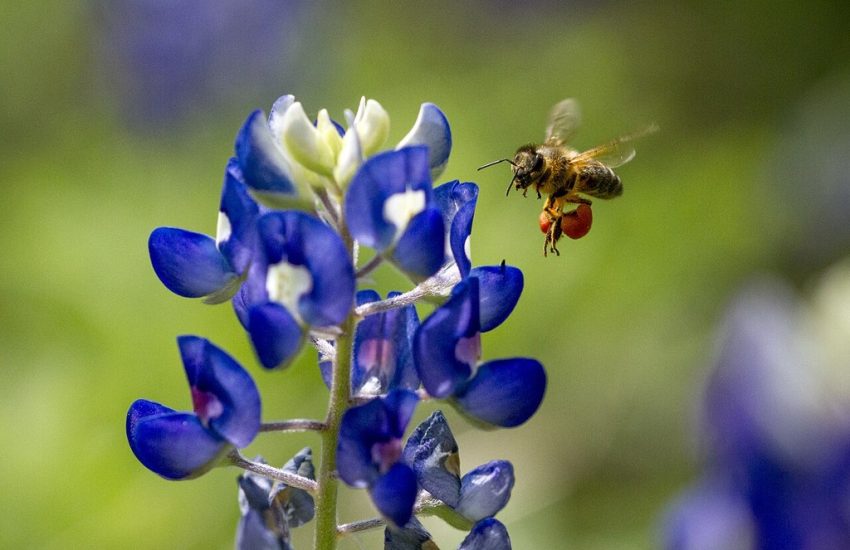
Goldfields is an important early-season nectar and pollen source for a wide range of native bees, including specialist bees that time their own emergence to coincide with the goldfields bloom, as well as syrphid flies, beetles, and other small pollinating insects. The dense, synchronized flowering provides a concentrated food source at a critical point in spring when many pollinators are just becoming active.
For Birds
As goldfields stands dry down and set seed, the tiny achenes become a food source for seed-eating grassland birds, adding to the broader pulse of annual wildflower seed available through late spring.
For Mammals
Small mammals forage through goldfields stands for seed and tender young growth, though the plant is not a primary food source for larger browsers and is generally avoided by deer.
Ecosystem Role
Goldfields is a keystone component of California’s vernal pool and grassland annual communities, its massive, synchronized blooms supporting pollinator populations and contributing heavily to the soil seed bank that allows these ecosystems to rebound after drought or disturbance. Its shallow, fibrous root system also helps stabilize open soil through the rainy season until deeper-rooted perennials take hold.
Cultural & Historical Uses
California goldfields does not have a well-documented history of medicinal or material use; its significance lies chiefly in its role as one of the defining wildflowers of the California spring landscape. The vast gold-colored fields that gave the plant its common name have been remarked on since the earliest written accounts of California’s spring bloom, and the name itself reflects just how completely the species can color a landscape when conditions align.
Goldfields is a regular feature of California’s best-known wildflower destinations, often forming the dense yellow backdrop behind the more photographed orange of California poppy in places like the Antelope Valley California Poppy Reserve, and it remains one of the most reliable and recognizable sights of the state’s spring “super bloom” events in wet years.
In recent decades, goldfields has become a standard component of California native wildflower seed mixes used in restoration projects, roadside plantings, and home gardens, valued for the fast, reliable color it brings to newly seeded ground while longer-lived native plants establish.
Frequently Asked Questions
Why is it called goldfields?
The name comes from the plant’s habit of covering entire fields, hillsides, and valley floors in a solid sheet of bright yellow bloom when conditions are favorable, an effect visible from a distance as an unbroken field of gold.
Is California goldfields easy to grow from seed?
Yes. Direct-sow seed over bare, sunny ground in fall and let winter rain trigger germination; no stratification or special treatment is required, and established plantings reseed themselves readily.
Does California goldfields need regular watering?
No. It relies mainly on winter and spring rainfall once established and needs little to no supplemental water, especially as it begins to dry down and set seed in late spring.
What grows well with California goldfields?
California poppy is the classic companion, its orange flowers contrasting beautifully with goldfields’ solid yellow. Tidy tips, lupine, and owl’s clover are also common natural associates that work well together in a wildflower meadow planting.
Will goldfields come back every year on its own?
As an annual, individual plants die back after setting seed, but a planting that is allowed to drop seed before cleanup will typically reseed itself and return the following spring with little or no replanting needed.

Looking for a nursery that carries California Goldfields?
Browse our native plant nursery directory: California · Oregon