Point Reyes Ceanothus (Ceanothus gloriosus)
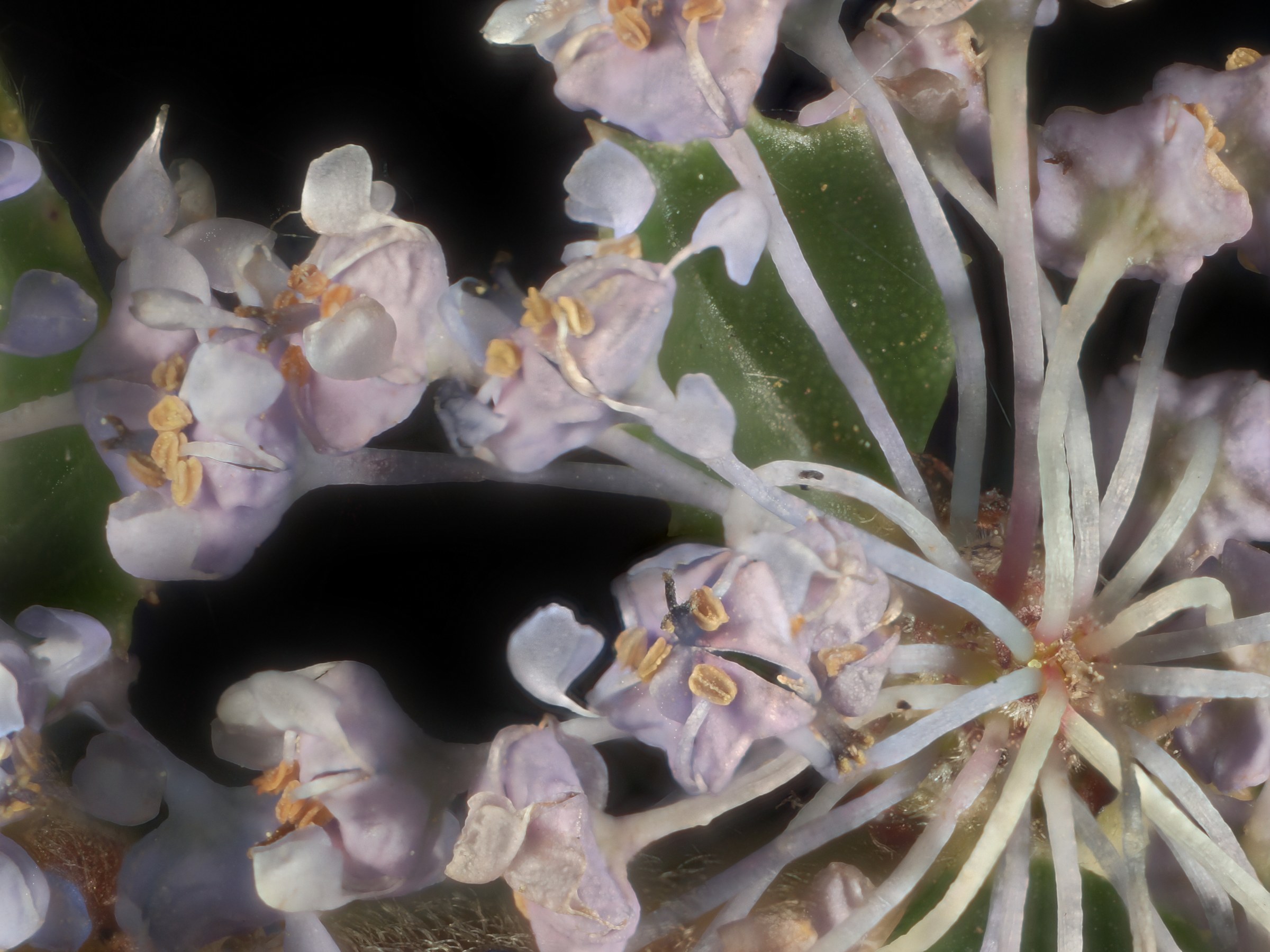
Ceanothus gloriosus, commonly called Point Reyes ceanothus, is a low, spreading evergreen shrub endemic to a narrow stretch of the Northern California coast, where it forms dense mats or mounds across exposed bluffs and stabilized dunes. Unlike the larger, upright Ceanothus of the inland chaparral, Point Reyes ceanothus has adapted to a life close to the ground, shaped by constant wind, salt spray, and the thin, often sandy soils of its coastal habitat.
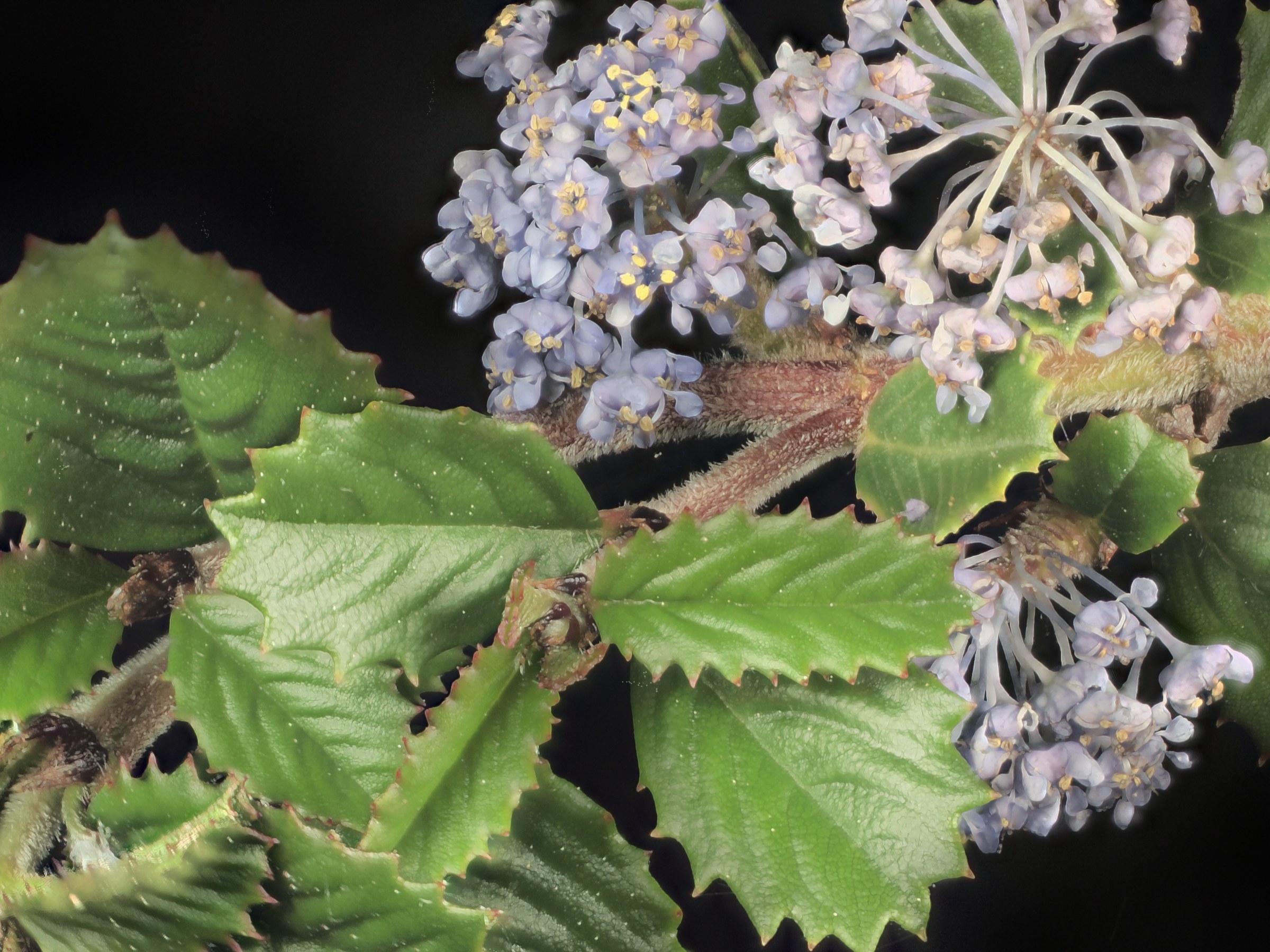
The species is immediately recognizable by its glossy, holly-like leaves with spiny-toothed margins and its showy clusters of lavender-blue to deep violet-blue flowers that cover the plant in a dramatic spring display. This striking bloom, combined with its naturally low, ground-hugging form, made Point Reyes ceanothus one of the earliest California native shrubs to be widely adopted by horticulture, and several garden-worthy selections — including the popular ‘Anchor Bay’ and ‘Heart’s Desire’ cultivars — trace back to wild-collected forms of this species.
Because its native range is so limited — essentially the Point Reyes Peninsula and nearby stretches of the Sonoma and Mendocino coast — Point Reyes ceanothus is a genuinely special plant for coastal California gardeners, offering a true locally native ground-covering shrub that thrives in exactly the tough coastal conditions that challenge so many other plants.
Identification
Point Reyes ceanothus is a low-growing, mat-forming to mounding evergreen shrub, typically 1 to 3 feet tall but spreading 4 to 10 feet or more across, hugging close to the ground in its most wind-exposed coastal sites and mounding somewhat higher in more sheltered gardens.
Stems
Branches are flexible when young, rooting readily where they touch the ground in favorable moist, sandy conditions — a trait that helps the species form dense, spreading colonies on stabilized dunes and coastal bluffs. Older wood becomes gray-brown and semi-rigid.
Leaves
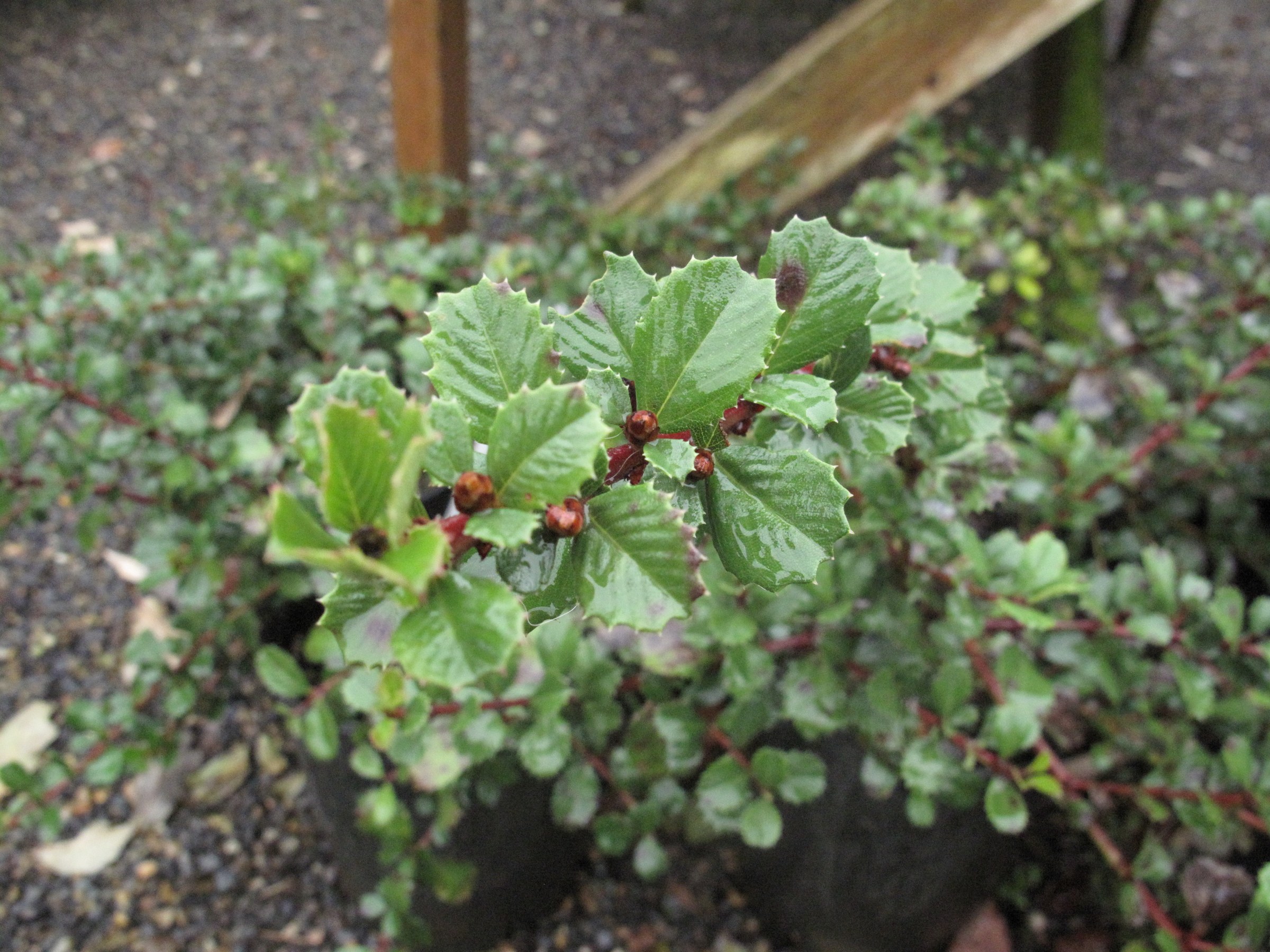
The evergreen leaves are glossy, dark green, oval to elliptical, and ½ to 1½ inches long, with distinctly spiny-toothed margins that give the foliage a holly-like appearance — one of the most reliable identification features for the species. Leaves are alternately arranged and leathery in texture, an adaptation to the salt spray and drying coastal winds of its habitat.
Flowers
Rounded to slightly elongated flower clusters appear at branch tips in mid to late spring, typically March through May, in shades ranging from pale lavender-blue to a rich, deep violet-blue — among the most vividly colored flowers in the genus. The blooms are showy enough to cover much of the plant and draw heavy pollinator activity during peak bloom.
Fruit & Seeds
Following bloom, the plant produces small, three-lobed seed capsules, often with short projections, that dry and split explosively to disperse seed a short distance from the parent plant. As with other chaparral and coastal-scrub Ceanothus, the hard seed coat allows seed to persist in the soil for years, aiding recovery after fire or other disturbance.
Quick Facts
| Scientific Name | Ceanothus gloriosus |
| Family | Rhamnaceae (Buckthorn) |
| Plant Type | Evergreen Shrub (prostrate to mounding) |
| Mature Height | 1–3 ft |
| Mature Spread | 4–10 ft |
| Growth Rate | Moderate to fast |
| Sun Exposure | Full Sun to Part Shade |
| Water Needs | Low once established |
| Soil Type | Sandy or well-drained; tolerates poor soil |
| Soil pH | 6.0–7.5 |
| Bloom Time | March – May |
| Flower Color | Lavender-blue to deep violet-blue |
| Fall Color | Evergreen, glossy dark green year-round |
| Fruit | Small three-lobed seed capsules |
| Deer Resistant | Moderate |
| USDA Hardiness Zones | 8–10 |
Native Range
Point Reyes ceanothus is a California coastal endemic with a narrow native range limited to Marin, Sonoma, and Mendocino counties, centered on the Point Reyes Peninsula and extending along the immediate coast and adjacent headlands to the north. It does not occur naturally outside this limited stretch of the Northern California coast.
Within this range, the species grows on coastal bluffs, stabilized dunes, and in coastal scrub communities directly exposed to salt spray and persistent onshore winds, as well as in somewhat more sheltered pine and Douglas-fir woodland edges slightly inland from the immediate coast. It is closely tied to the cool, fog-influenced climate of its native coastline and does not tolerate the heat and drought extremes found farther inland.
Point Reyes ceanothus is not native to the rest of California, Oregon, or Nevada; gardeners outside Marin, Sonoma, and Mendocino counties are growing an introduced ornamental, albeit one well suited to similar cool coastal climates elsewhere.
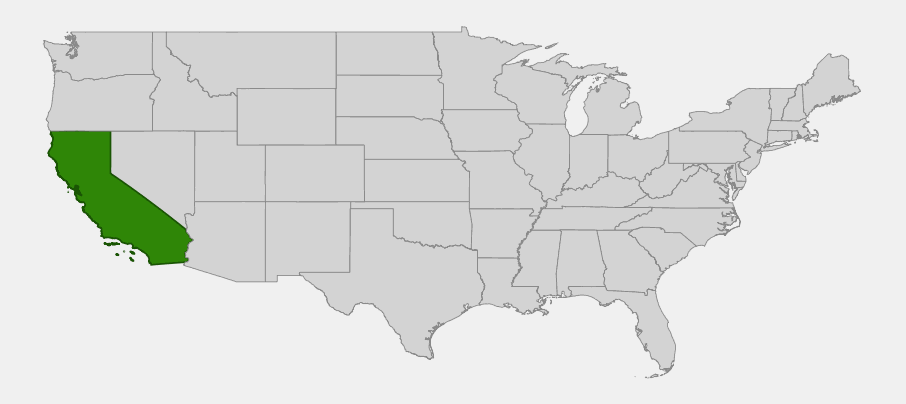
📋 Regional plant lists featuring Point Reyes ceanothus: California & Nevada
Growing & Care Guide
Point Reyes ceanothus is an excellent choice for coastal California gardens, offering a genuinely low, spreading native shrub that handles wind, salt, and sandy soil with ease.
Light
Full sun along the immediate coast produces the densest growth and heaviest bloom; in warmer or more inland gardens, part shade helps the plant cope with heat it is not naturally adapted to.
Soil & Water
This species is naturally adapted to sandy, well-drained coastal soils and performs best where drainage is sharp. Water regularly during the first year to establish, then reduce sharply; established plants need little supplemental water along the coast but may need occasional deep watering in hotter, drier garden settings away from coastal fog. Avoid heavy clay soils and any site where water collects, as root rot is a serious risk.
Planting Tips
Set out small container plants in fall to take advantage of winter rains. Because this species spreads wide relative to its height, give it 6 to 10 feet of room, or use it intentionally as a large-scale groundcover on a slope or bank. It generally performs best in gardens with cooler summers and benefits from the moderating influence of coastal fog; expect more stress on this species in hot inland valleys.
Pruning & Maintenance
Minimal pruning is needed. Light shaping after bloom can tidy the plant’s form, but avoid cutting into old, leafless wood, which this species does not reliably resprout from. Established plants are otherwise low-maintenance once settled into well-drained soil.
Landscape Uses
- Large-scale groundcover on slopes and banks
- Coastal and seaside gardens tolerant of wind and salt
- Erosion control on sandy or dune-adjacent sites
- Low-water, low-maintenance border or foundation planting
- Wildlife and pollinator garden accent
Wildlife & Ecological Value
Despite its small native range, Point Reyes ceanothus plays a meaningful role in the coastal scrub communities of Marin, Sonoma, and Mendocino counties.
For Pollinators
The dense, showy spring flower clusters attract substantial numbers of native bees and other pollinating insects at a time when coastal scrub bloom is building toward its spring peak, making it a valuable nectar source along its limited native coastline.
For Birds
The low, dense mat of branches and foliage provides good ground-level cover for small birds foraging and sheltering in coastal scrub, while the seed capsules offer incidental forage.
For Mammals
Small mammals use the dense, spreading growth for cover from predators, and deer browse the foliage to a moderate degree, particularly new growth.
Ecosystem Role
As a nitrogen-fixing shrub, Point Reyes ceanothus helps enrich the often sandy, nutrient-poor soils of coastal bluffs and dunes where it grows. Its spreading, rooting branches help stabilize loose dune and bluff soils against wind and water erosion, making it ecologically important for coastal soil stability within its narrow native range.
Cultural & Historical Uses
As a narrow coastal endemic restricted to Marin, Sonoma, and Mendocino counties, Point Reyes ceanothus does not carry an extensive documented record of use distinct from the broader pattern recorded for California Ceanothus species generally. Coast Miwok and other Indigenous peoples of the North Bay coast lived among communities where related Ceanothus shrubs were valued, in the general regional practice shared across many California tribes, for their saponin-rich flowers as a mild natural lather when crushed with water.
The species gained its primary cultural significance in the twentieth century through horticulture rather than traditional use. Botanists and native-plant growers recognized its naturally low, spreading form and vivid flower color as unusually well suited to garden use, and selections made from wild Point Reyes-area populations — most notably the cultivars ‘Anchor Bay’ and ‘Heart’s Desire’ — became some of the most widely planted California native groundcover shrubs in coastal gardens from the mid-twentieth century onward.
Today Point Reyes ceanothus remains closely associated with the Point Reyes National Seashore and surrounding protected coastal lands, where it is valued both as a conservation priority for its restricted range and as a horticultural ambassador for California native coastal gardening.
Frequently Asked Questions
Is Point Reyes ceanothus rare or endangered?
It is not federally listed, but its native range is naturally very limited — restricted to Marin, Sonoma, and Mendocino counties — which makes locally sourced wild populations worth protecting even though the species is well established in cultivation.
Can Point Reyes ceanothus grow outside coastal California?
It can be grown as an ornamental in other mild, well-drained gardens, but it performs best in cool, fog-influenced coastal climates similar to its native range; hot, dry inland conditions are more stressful for it.
Why does it have holly-like leaves?
The spiny-toothed, glossy leaf margins are thought to be an adaptation to its exposed coastal habitat, and they offer a reliable way to distinguish it from other low-growing Ceanothus species.
How wide does Point Reyes ceanothus spread?
Mature plants commonly spread 4 to 10 feet or more while staying only 1 to 3 feet tall, making it one of the more effective native shrubs for large-scale groundcover use.
Does it need full sun?
Along the immediate coast, full sun gives the best bloom and form; in hotter or more inland gardens, afternoon shade helps reduce heat stress on this coast-adapted species.

Looking for a nursery that carries Point Reyes Ceanothus?
Browse our native plant nursery directory: California