Showy Penstemon (Penstemon spectabilis)
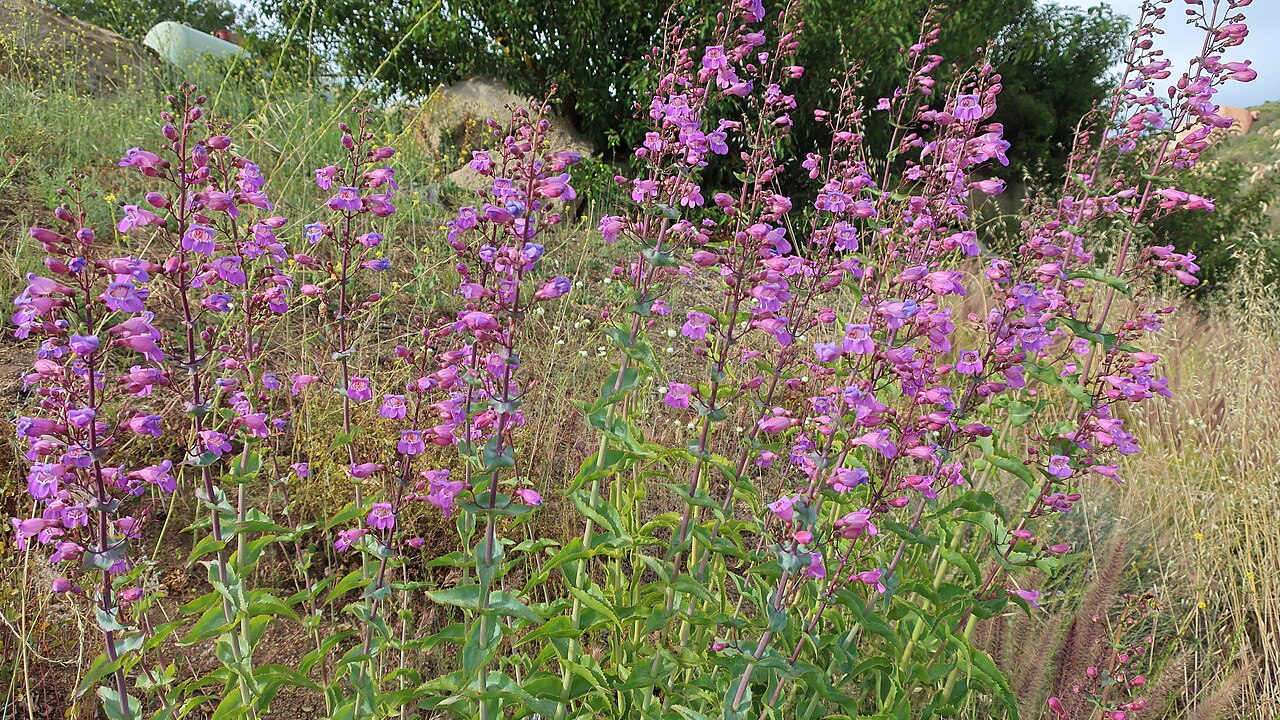
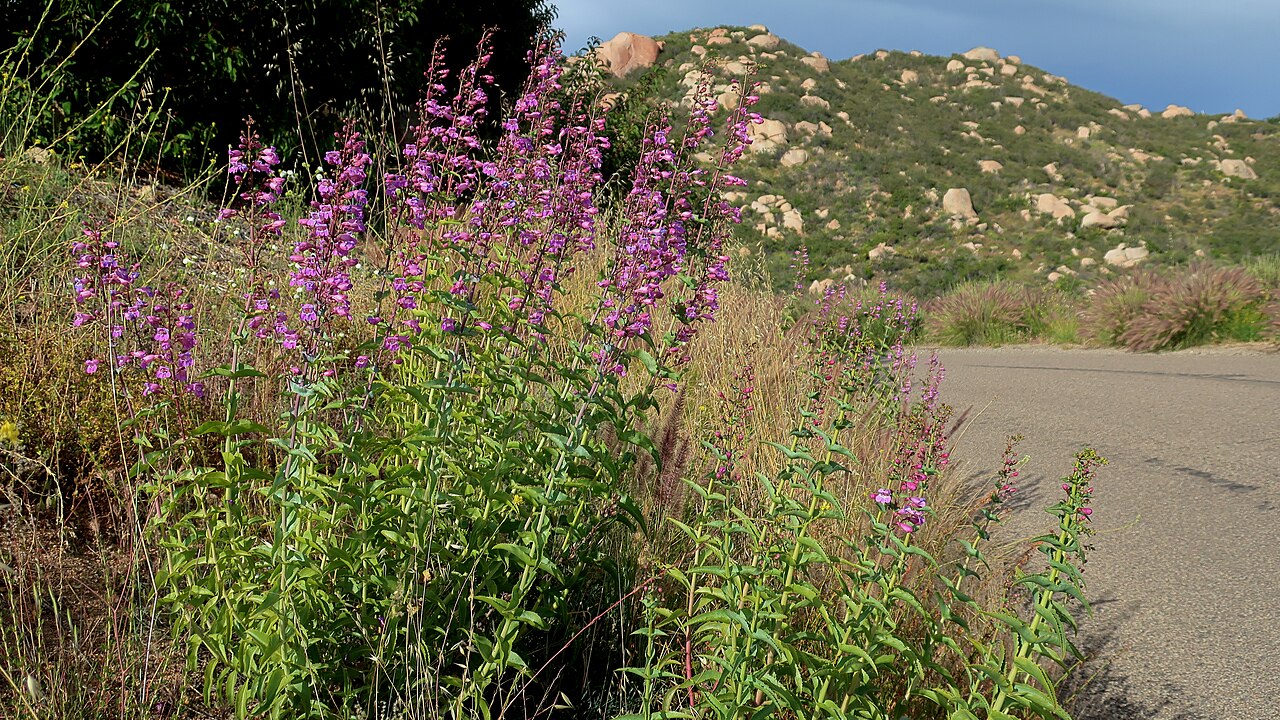
Penstemon spectabilis, commonly called showy penstemon, is a tall, dramatic perennial wildflower native to the dry mountains and foothills of Southern California. In spring its thick, branching flower stalks rise 2 to 4 feet, sometimes more, carrying dozens of large, funnel-shaped flowers in shades of lavender-blue to deep purple-pink, often with a striking two-tone effect on the lower lip. Few California native perennials put on a more eye-catching show, and the plant lives fully up to its species name, which means “showy” or “spectacular” in Latin.
Showy penstemon grows wild on dry, rocky slopes and in chaparral and coastal sage scrub through the Transverse and Peninsular ranges of Southern California, extending south into northern Baja California. It is a true dry-summer, winter-rain Mediterranean-climate plant, going dormant or semi-dormant through the hottest months and flushing new growth with the return of cool weather.
For gardeners in Southern California and similar dry-summer climates, showy penstemon is one of the showiest and easiest native perennials to grow, provided it gets the sharp drainage it needs. Its tall bloom spikes are a magnet for hummingbirds and large bees, and a well-placed clump can anchor an entire section of a dry native border for months each spring.
Identification
Showy penstemon is best identified by the combination of its tall, branched flower spikes, large two-lipped tubular flowers, and the way opposite pairs of leaves clasp the stem without a stalk, a classic feature of many beardtongues.
Growth Habit
Plants form a basal rosette or low clump of foliage from which tall, often woody-based flowering stems rise, typically 2 to 4 feet tall and sometimes taller in favorable sites. Stems are upright to somewhat sprawling and branch in the upper portion where the flower clusters form.
Leaves
Leaves are opposite, bluish-green to gray-green, somewhat thick and leathery, and clasp the stem directly without a leaf stalk (a trait called sessile or perfoliate). Basal leaves are broader and sometimes toothed, while the upper stem leaves are narrower and more lance-shaped.
Flowers
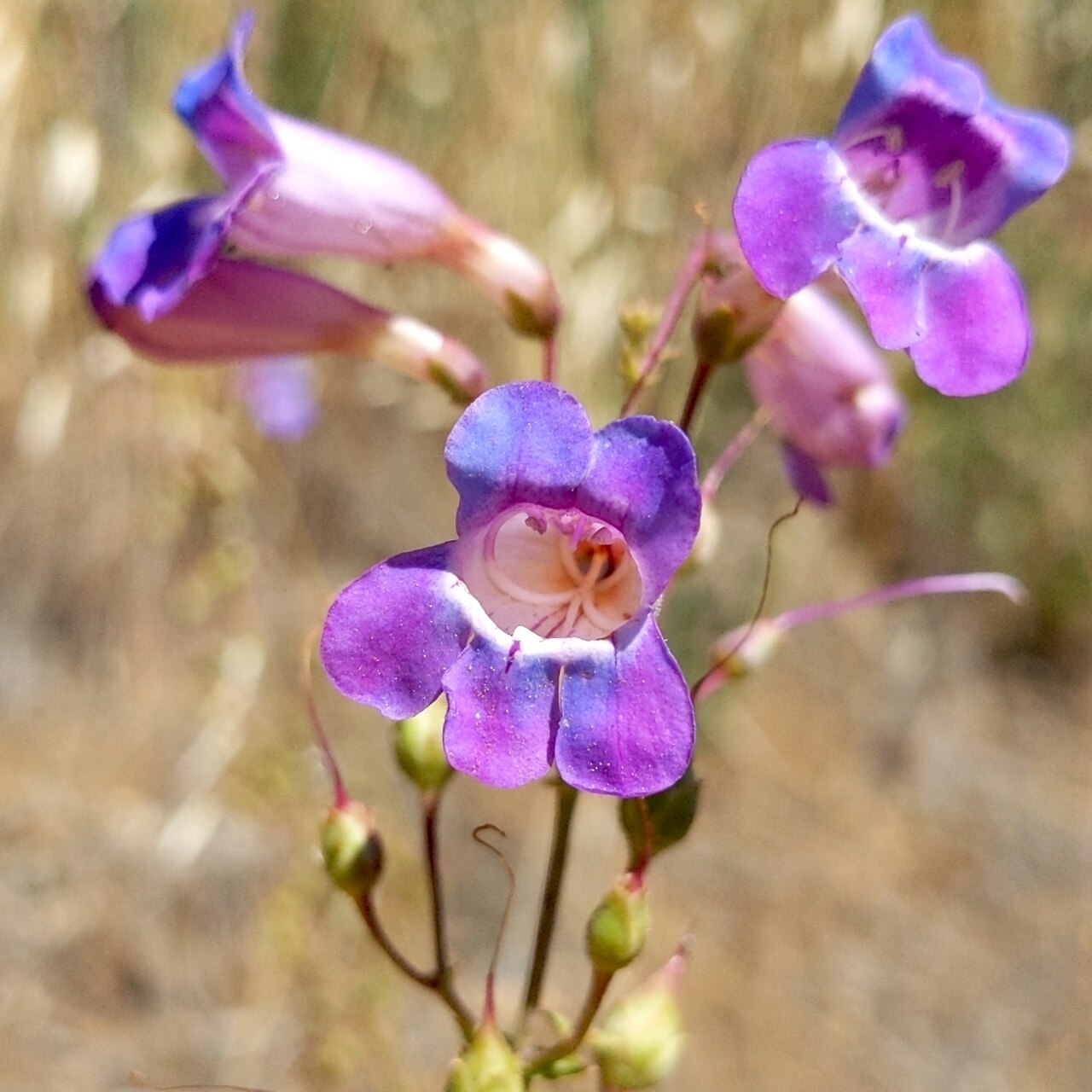
Flowers are large for a penstemon, 1 to 1.5 inches long, tubular and strongly two-lipped, in shades ranging from pale lavender-blue to vivid violet-blue or purple-pink, often with a paler, sometimes whitish throat. They are arranged in dense, branched clusters along the upper third or more of each flowering stem, opening from the bottom up over several weeks. Bloom runs chiefly from April through June.
Fruit & Seed
After bloom, flowers give way to small, dry, two-chambered capsules that split open to release numerous tiny seeds. The dry seed stalks often persist into summer and can be left standing for a naturalistic winter silhouette or cut back for tidiness.
Quick Facts
| Scientific Name | Penstemon spectabilis |
| Family | Plantaginaceae (formerly Scrophulariaceae) |
| Plant Type | Perennial herb / subshrub |
| Mature Height | 2–4 ft (occasionally more in bloom) |
| Mature Spread | 1.5–3 ft |
| Growth Rate | Moderate to fast |
| Sun Exposure | Full Sun |
| Water Needs | Low once established; drought tolerant |
| Soil Type | Fast-draining sandy, gravelly or rocky soil |
| Soil pH | Neutral to slightly alkaline (about 6.5–7.5) |
| Bloom Time | April – June |
| Flower Color | Lavender-blue to violet-purple |
| Fall Color | None; gray-green foliage year-round |
| Fruit | Small dry capsules with numerous tiny seeds |
| Deer Resistant | Mostly yes |
| USDA Hardiness Zones | 8–10 |
Native Range
Showy penstemon is native to Southern California, found through the Transverse and Peninsular mountain ranges, from the Santa Monica and San Gabriel mountains south through San Diego County, with its range continuing into northern Baja California, Mexico. Within the United States it is found only in California.
Typical habitat is dry, sunny, rocky or gravelly ground on slopes and in canyons, within chaparral, coastal sage scrub and dry foothill plant communities, generally at low to middle elevations below about 4,500 feet. It thrives in exactly the lean, fast-draining soils and long dry summers typical of Southern California’s Mediterranean climate.
Note that this species shares the common name “showy penstemon” with the unrelated Penstemon speciosus of the Great Basin and Sierra Nevada; the two are native to different regions and are not interchangeable in the garden or in restoration planting.
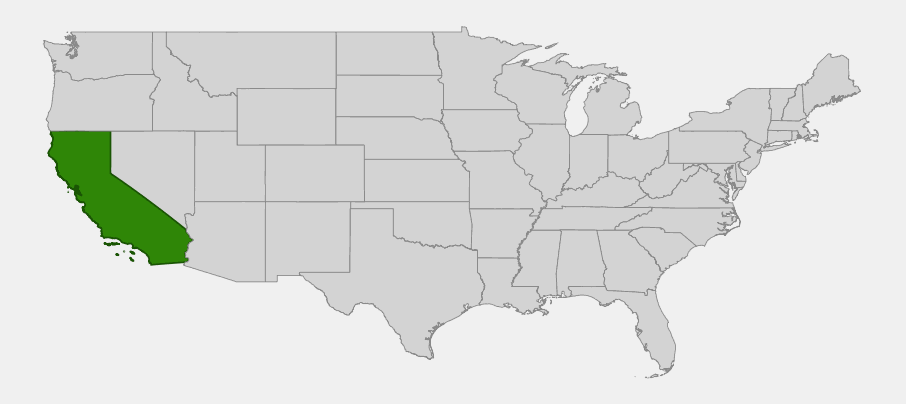
📋 Regional plant lists featuring Showy Penstemon: California & Nevada
Growing & Care Guide
Showy penstemon rewards gardeners who respect its need for fast drainage and full sun with one of the most spectacular spring flower displays among California native perennials.
Light
Plant in full sun. Showy penstemon is adapted to the open, sun-baked slopes of Southern California’s chaparral and performs poorly, with weak, sparse flowering, in shade.
Soil & Water
Drainage is the single most important factor for success. Plant in sandy, gravelly or rocky soil, or amend heavy clay generously with coarse grit; in slow-draining ground this species is prone to root and crown rot, especially with summer water. Water regularly the first year to establish roots, then cut back sharply; established plants want little to no summer irrigation and are best treated as a true dry-garden perennial that relies mainly on winter rain.
Planting Tips
Plant in fall so roots can establish over the cool, moist winter months ahead of the dry season. Choose a site with sharp drainage, such as a slope, raised bed or rock garden, and avoid low spots where water collects. Space plants 18 to 24 inches apart to allow for their eventual height and spread.
Pruning & Maintenance
Cut spent flower stalks back after bloom to tidy the plant and, in some cases, encourage a secondary flush of flowers. In its native range the species is often relatively short-lived, persisting a handful of years before declining, so many gardeners let a few plants go to seed each year to keep a planting going. Avoid heavy fertilizing, which tends to produce weak, floppy growth.
Propagation
Showy penstemon is usually grown from seed, which benefits from a period of cold-moist stratification before sowing in late winter. Softwood cuttings taken in spring are also possible and root reasonably well in a fast-draining mix, offering a way to propagate particularly good color forms.
Landscape Uses
- Dry slopes and rock gardens, where sharp drainage lets the plant perform at its best
- Hummingbird gardens, as one of the showiest spring nectar sources for a dry Southern California border
- Chaparral and coastal sage scrub restoration within its native Southern California range
- Vertical accents among lower-growing natives like California buckwheat and deergrass
- Cut flowers, since the tall spikes hold up well in arrangements
Wildlife & Ecological Value
Showy penstemon’s large, nectar-rich flowers make it one of the standout wildlife plants of the Southern California chaparral spring bloom.
For Pollinators
Large native bees, including carpenter bees and bumble bees, are frequent and effective pollinators of the big tubular flowers, which are well suited to large-bodied bee visitors. Hummingbirds are also drawn strongly to the flowers, especially where they occur in dense stands.
For Birds
Beyond hummingbirds, which feed directly on nectar, the dried seed capsules provide a minor food source for small seed-eating birds in late summer, and the structure of the dried flower stalks offers perching spots.
For Mammals
Showy penstemon is generally left alone by deer and rabbits, a useful trait in gardens near wildland edges where browsing pressure can be heavy.
Ecosystem Role
As one of the tallest and most conspicuous spring-blooming perennials in its chaparral and coastal sage scrub habitat, showy penstemon helps anchor the spring nectar supply for the Southern California pollinator community during a critical period before the dry summer sets in.
Cultural & Historical Uses
Showy penstemon has little recorded history of traditional food or medicinal use among the Indigenous peoples of its Southern California range; most documented ethnobotanical uses of penstemons in the region involve other, more widespread species. Its primary significance, both historically and today, has been ornamental, admired for the vivid color and striking form of its flower spikes.
In more recent decades, showy penstemon has become an increasingly popular subject in California native plant horticulture and habitat restoration, prized both for its wildlife value and its dramatic garden presence, and it is a familiar plant in demonstration gardens across the Southern California region it calls home.
Frequently Asked Questions
Is “showy penstemon” always the same plant?
No. The common name “showy penstemon” is applied to at least two different species: Penstemon spectabilis, the Southern California species covered here, and Penstemon speciosus, native to the Great Basin and Sierra Nevada. Always check the scientific name when buying or planting.
Why did my showy penstemon die after a couple of years?
This species can be relatively short-lived in gardens, especially with too much summer water or heavy soil. Letting a few plants set seed each year, or taking cuttings, helps keep a planting going over time.
Does showy penstemon need staking?
Established, well-sited plants in lean soil and full sun usually stand up well on their own. Floppy growth is more often a sign of too much fertilizer, water or shade than a trait of the species itself.
How much water does showy penstemon need?
Very little once established. Water during the first year to establish roots, then rely mainly on winter rain; this species is prone to root rot with regular summer irrigation, especially in heavier soils.
Do hummingbirds really visit showy penstemon?
Yes, enthusiastically. The large, tubular, brightly colored flowers are well matched to hummingbird pollination, and this species is considered one of the better hummingbird plants among Southern California native perennials.

Looking for a nursery that carries Showy Penstemon?
Browse our native plant nursery directory: California