Deergrass (Muhlenbergia rigens)
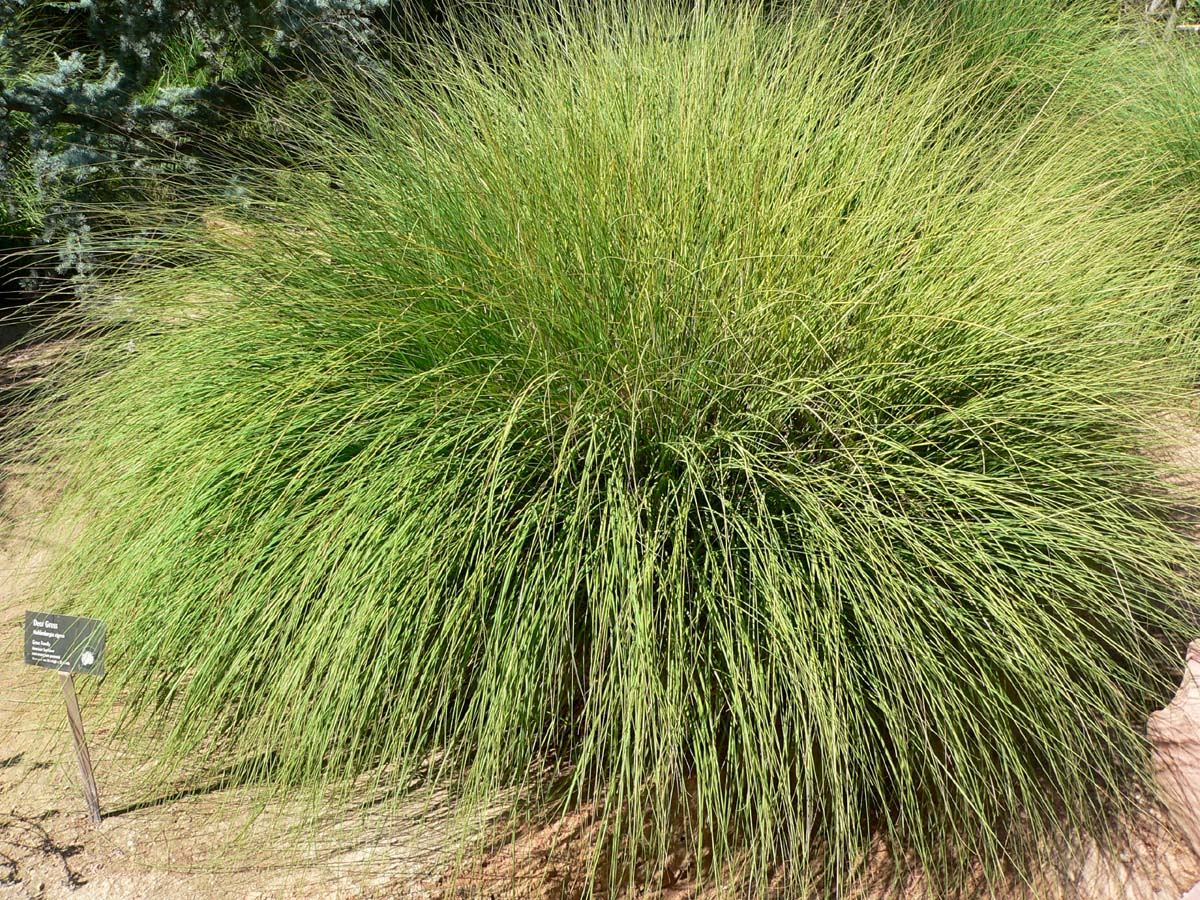
Muhlenbergia rigens, commonly known as Deergrass, is a warm-season perennial bunchgrass native to the dry washes, chaparral slopes, and oak woodlands of the Southwest. Few native grasses do as much work in a landscape for as little upkeep: a single clump builds into a tidy, symmetrical dome of narrow silvery-green blades that erupts each summer into a fireworks display of slender, upright seed spikes. The species belongs to the Poaceae (grass family) and carries no toxicity concerns for people, pets, or livestock.
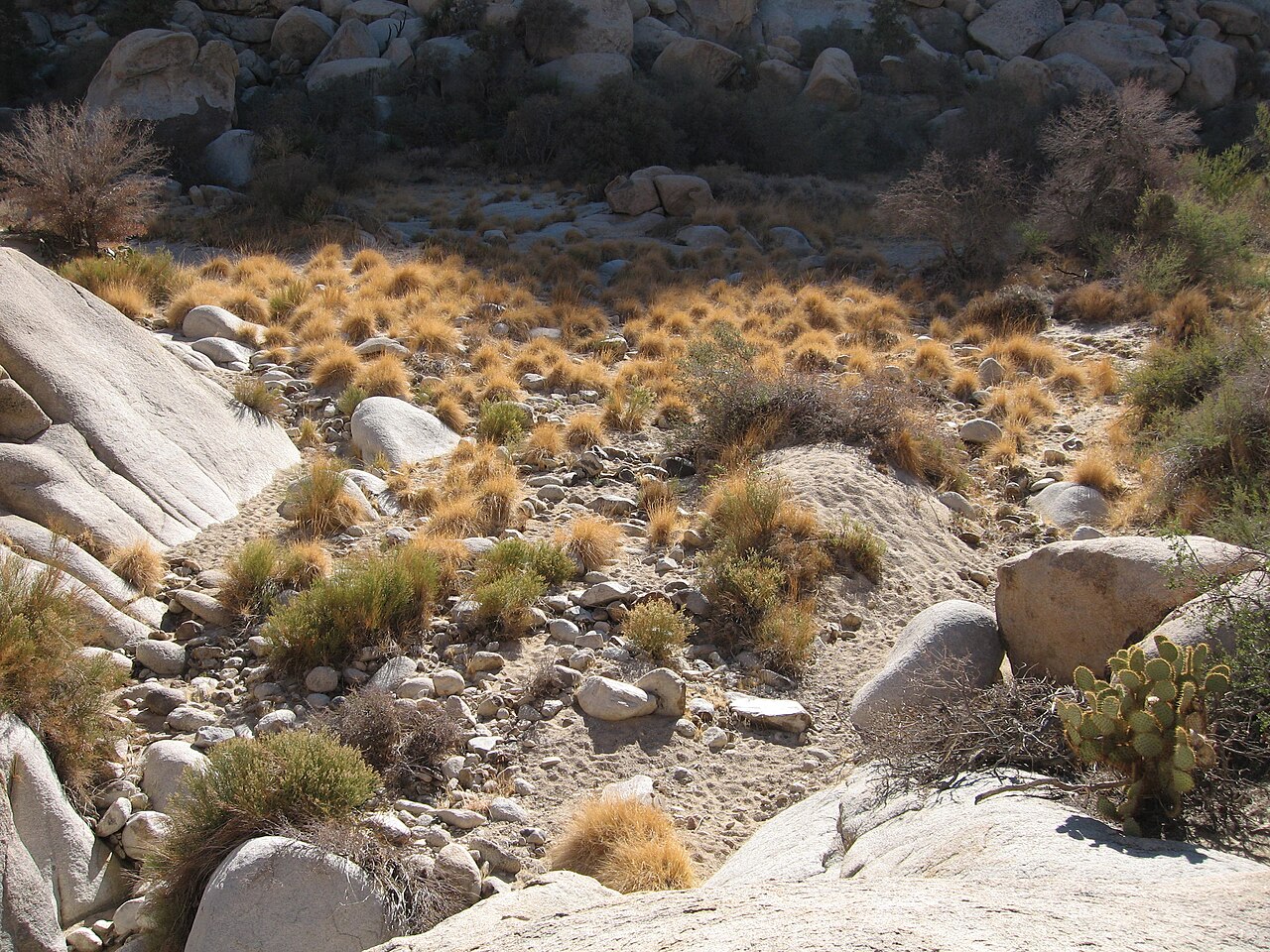
In the wild, deergrass is a foundation plant of dry streambeds, canyon bottoms, and the understory of oak and chaparral communities from central California east through the desert Southwest into west Texas. Its dense, fibrous root system binds soil on slopes and along intermittent watercourses, and the plant tolerates both seasonal flooding and long summer drought — a combination that makes it unusually resilient once established. Mature clumps can live for decades, slowly expanding into broad, sculptural mounds.
Deergrass has also long been one of the most important basketry materials for California Indigenous peoples, who selectively burned stands to encourage the long, straight flowering stalks prized by weavers. Today it remains a mainstay of water-wise, fire-conscious landscaping throughout its native range, valued equally for its clean architectural form, its toughness, and the cover and seed it provides to wildlife.
Identification
Deergrass forms a dense, symmetrical clump of narrow, in-rolled basal leaves that radiate outward and arch gracefully, typically reaching 2 to 3 feet tall and wide in foliage alone. From midsummer into fall, slender, unbranched flowering stalks rise well above the foliage, often to 4 or 5 feet, giving the whole plant a distinctive fountain or starburst silhouette that is easy to recognize from a distance, even along a highway median or dry creek bank.
Leaves
The basal leaves are narrow (less than ¼ inch wide), flat to in-rolled, and 1 to 3 feet long, colored a silvery light green to gray-green that can take on purplish tones under stress or in cooler weather. They are tough and somewhat wiry to the touch, arising in a dense tuft from a woody base (the plant does not spread by rhizomes, so it stays in a tight clump rather than running).
Flowers & Seed
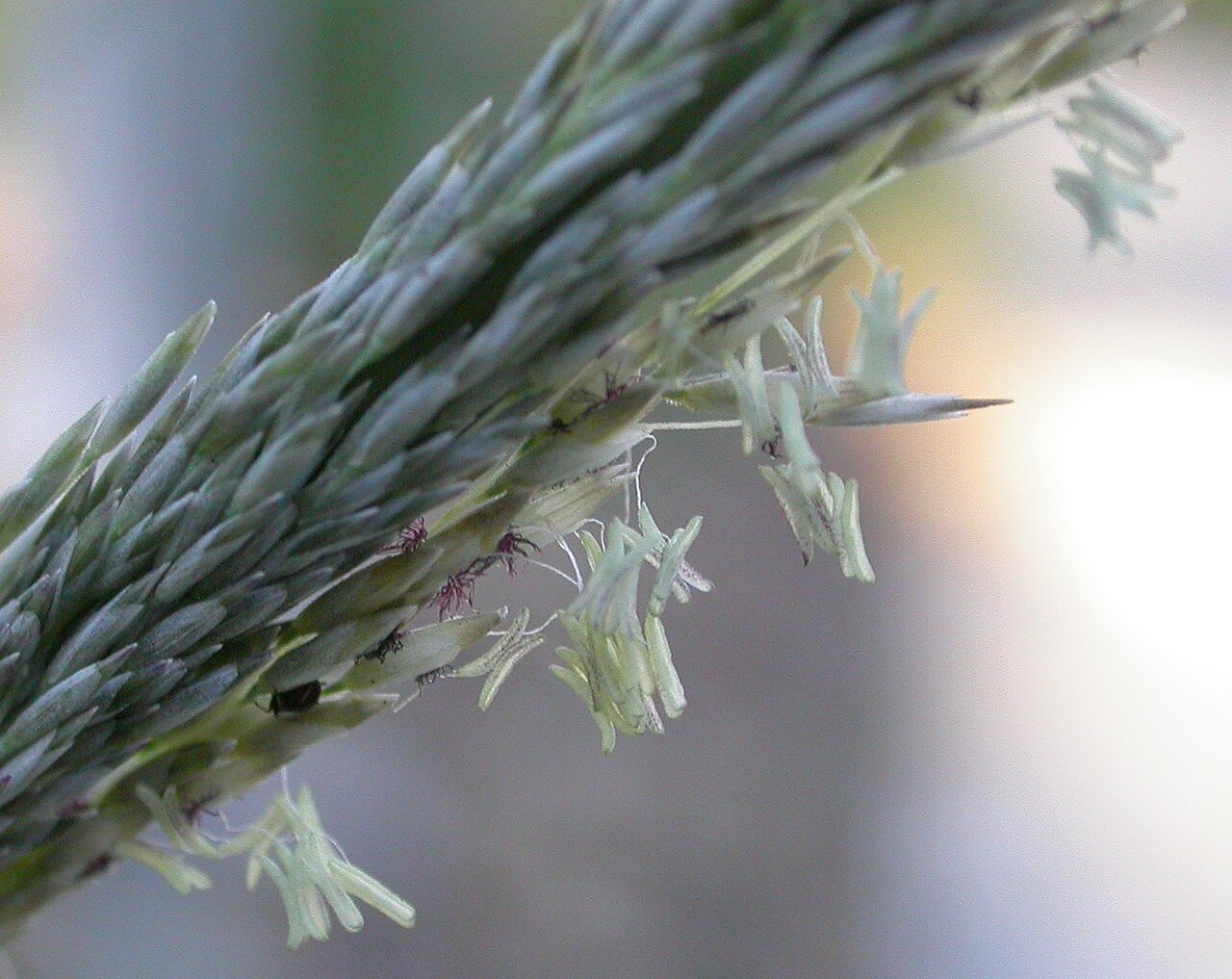
The inflorescence is a narrow, spike-like panicle 8 to 20 inches long, held well above the foliage on slender, mostly unbranched stems. Each spikelet carries a single awnless floret; the overall effect is a dense, bottlebrush-like wand that starts green to purplish and fades to straw-gold as it matures and sets seed in fall. The flower stalks persist through winter, adding structure to the dormant-season garden before they are cut back or burned in late winter.
Quick Facts
| Scientific Name | Muhlenbergia rigens |
| Family | Poaceae (Grass) |
| Plant Type | Warm-Season Perennial Bunchgrass |
| Mature Height | 2–3 ft foliage; flower spikes to 4–5 ft |
| Mature Spread | 3–4 ft |
| Growth Rate | Moderate |
| Sun Exposure | Full Sun (tolerates light shade) |
| Water Needs | Low once established; tolerates occasional flooding |
| Soil Type | Sandy to loamy, well-drained; adaptable |
| Soil pH | 6.0–8.0 (adaptable, tolerates alkaline) |
| Bloom Time | June – October |
| Flower Color | Green to purplish, fading to straw-gold |
| Fall Color | Tan/gold seed spikes persist through winter |
| Fruit | Small grass seed (caryopsis), not showy |
| Deer Resistant | Yes (mature foliage is tough and unpalatable) |
| USDA Hardiness Zones | 7–11 |
Native Range
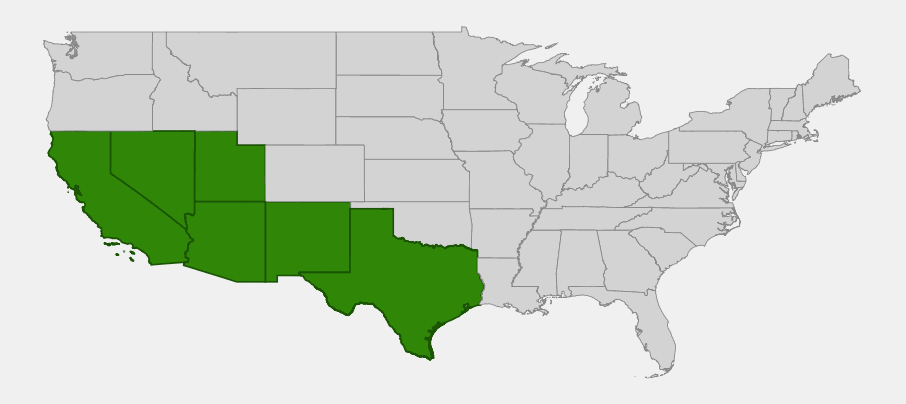
Deergrass is native to the dry Southwest, where its range extends from central and southern California east through southern Nevada, Utah, and Arizona into New Mexico and the far western edge of Texas near the Trans-Pecos. In California, the BONAP county-level record shows it reaching as far north as Shasta County, following canyons, washes, and foothill grasslands on both sides of the Central Valley. It is absent from the true deserts of its range except where seasonal water collects, and it does not occur natively east of the Rockies.
Deergrass grows from near sea level to around 7,000 feet in elevation, most often along intermittent streambeds, canyon bottoms, and seasonally moist flats within chaparral, oak woodland, mixed conifer, and desert grassland communities. It tolerates brief flooding during winter rains but cannot survive standing water or permanently saturated soil, which limits it to well-drained sites even where moisture is seasonally abundant.
Much of deergrass’s present distribution in California reflects centuries of Indigenous land management: tribes across the state regularly burned stands to stimulate the long, straight flowering stalks used in coiled basketry, and that cultivation likely expanded and maintained populations well beyond what fire and flooding alone would sustain. The species remains common and is not considered rare anywhere in its native range.
📋 Regional plant lists featuring Deergrass: Arizona & New Mexico · Utah & Western Colorado
Growing & Care Guide
Deergrass is one of the easiest and most forgiving native grasses to grow, and it has become a staple of water-wise landscaping across the Southwest for good reason: plant it, give it a season to settle in, and then mostly leave it alone.
Light
Deergrass performs best in full sun, where its form stays tight and its seed stalks stand upright. It also tolerates light or dappled shade — useful under oaks or other open-canopy trees — but plants in heavier shade tend to grow looser and flop over more in bloom.
Soil & Water
This grass is remarkably adaptable, growing in sandy, loamy, or clay soils as long as drainage is reasonable. It tolerates occasional winter flooding along a wash or rain garden swale but will not survive in permanently soggy ground. Once established — usually after one full growing season of regular watering — deergrass needs little to no supplemental irrigation in most of its native range, though an occasional deep soak in extended summer drought keeps clumps looking their best. It also shows good tolerance for salt spray and reclaimed irrigation water, making it useful along roadsides and in coastal plantings.
Planting Tips
Plant from containers in fall or early spring to take advantage of winter and spring rains. Space plants a minimum of 2 feet apart if you want individual clumps to remain distinct, or closer for a continuous drift. Water regularly through the first growing season; after that, taper off irrigation gradually rather than cutting it off abruptly.
Pruning & Maintenance
Deergrass needs little upkeep beyond an occasional haircut. Without periodic fire or cutting, old plants accumulate a thatch of dead leaves and flower stalks that can become a fire hazard; cutting the clump back to a few inches every year or two (in late winter, before new growth starts) keeps it tidy and vigorous. Avoid fertilizing, which tends to produce weak, floppy growth and encourage weed competition instead.
Landscape Uses
Deergrass earns its keep in many garden roles:
- Specimen or accent plant for its sculptural, fountain-like form
- Erosion control on slopes and along streambanks, thanks to its deep, fibrous roots
- Xeriscape and water-wise gardens once established
- Habitat restoration to displace weedy annual grasses
- Dry creek beds and rain gardens that see seasonal flooding
- Mass plantings along roadsides, medians, and commercial landscapes
Wildlife & Ecological Value
Deergrass contributes structure and food to Southwest plant communities well beyond what its modest water needs would suggest.
For Pollinators
As a wind-pollinated grass, deergrass does not rely on insect pollinators, but its dense basal clumps provide shelter for ground-nesting native bees and other beneficial insects, and the plant serves as an overwintering host for a number of moth and butterfly species as well as ladybugs.
For Birds
The abundant seed produced on each flowering spike feeds a variety of seed-eating birds through fall and winter, and the dense tussocks offer cover for ground-foraging species.
For Mammals
True to its common name, young deergrass shoots are browsed by mule deer, and the dense clumps provide important cover for deer during fawning season. Horses and cattle will also graze young growth, though mature plants become too tough and fibrous to be very palatable, which is part of why the species holds up so well under grazing pressure.
Ecosystem Role
Deergrass’s extensive, fibrous root system stabilizes soil along washes and slopes and helps the plant act as a natural filter for sediment, herbicides, and other runoff — a trait that has drawn interest for use in agricultural and urban stormwater remediation. Dense stands also help outcompete invasive annual grasses that have displaced native bunchgrass communities across much of California and the Southwest, making deergrass a frequent choice in habitat restoration work.
Cultural & Historical Uses
Deergrass holds deep cultural significance among California Indigenous peoples, for whom its long, straight flowering stalks were the single most important material in coiled basketry. A traditional coiled basket could require well over 3,000 individual stalks, and tribes across the state actively managed deergrass stands through periodic controlled burning, both to clear old thatch and to stimulate the production of the long, unbranched stems prized by weavers.
Among the Zuni people of the Southwest, deergrass stalks were attached to ceremonial plume offerings presented to anthropic deities, reflecting the plant’s broader significance across Indigenous cultures of the region, not only in California.
This long history of cultivation and selective burning is thought to have shaped deergrass’s present-day abundance and distribution: much of what looks like untouched wild habitat likely reflects centuries of deliberate tending. That legacy continues today in restoration and cultural-fire projects that reintroduce traditional burning to maintain healthy deergrass stands.
Frequently Asked Questions
Is deergrass evergreen?
It is semi-evergreen to evergreen in milder parts of its range, holding silvery-green foliage through most of the year, though the color can dull and take on purplish or tan tones during cold snaps or extended drought.
How much water does deergrass need once established?
Very little. In its native range, established clumps typically need no supplemental irrigation beyond normal rainfall, though an occasional deep watering during extreme summer drought keeps the foliage looking fresher.
Does deergrass spread aggressively?
No. It grows as a tight, non-spreading bunchgrass rather than by rhizomes or stolons, so it stays where you plant it and will not run through a garden bed the way some grasses do. It does reseed modestly where conditions favor germination.
When should I cut back deergrass?
Cut old clumps back to a few inches in late winter, before new growth starts, every one to two years. This removes accumulated dead thatch, reduces fire risk, and keeps the plant vigorous.
Is deergrass deer resistant despite its name?
Mature deergrass is largely deer resistant because the older leaves are too tough and fibrous to be appealing, but deer will browse the tender young shoots in spring, and the dense clumps are valued as cover during fawning season.

Looking for a nursery that carries Deergrass?
Browse our native plant nursery directory: California · Nevada & New Mexico · Utah & Texas · Arizona