Glory of Texas (Thelocactus bicolor)
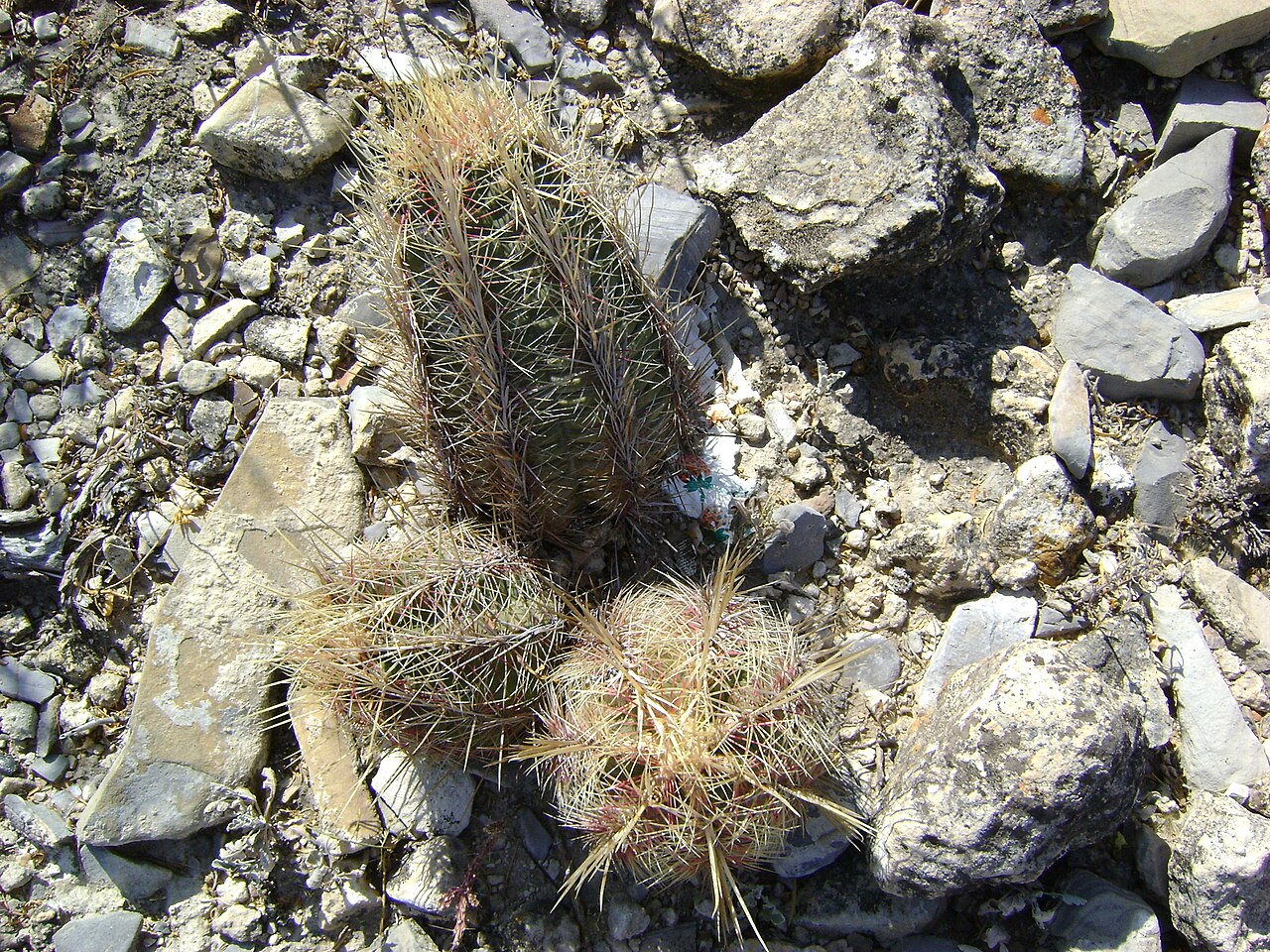
Thelocactus bicolor, commonly called Glory of Texas, is a small, solitary barrel-shaped cactus native to the limestone hills and gravel flats of the Trans-Pecos and South Texas borderlands. It is one of the showiest small cacti in the state, producing large silky, magenta-to-pink flowers with a deep red throat that can rival the size of the entire plant body. Despite its striking bloom, Glory of Texas spends most of the year as an unassuming gray-green knob tucked among rocks, relying on dense, colorful spines rather than foliage to catch the eye.
This cactus belongs to the Cactaceae family and grows as a single, rounded-to-cylindrical stem rarely more than 6 to 8 inches tall, ribbed and armed with stout, banded spines that range from pale straw to deep rose-red. It is a true desert specialist, found on thin, rocky, well-drained soils over limestone or caliche in the Chihuahuan Desert scrub of far West and South Texas, often growing half-hidden among surrounding stones where only the spine cluster gives it away.
Glory of Texas is slow-growing and long-lived, and because of its beauty it has long been popular with cactus collectors — wild populations in parts of its range have been reduced by over-collection. For a xeriscape or rock garden in its native region, it is an excellent, low-water accent that rewards patience with one of the most dramatic flowers of any small native cactus.
Identification
Glory of Texas is usually a solitary, globose to short-cylindrical cactus, though old plants occasionally branch at the base to form small clusters. The stem reaches about 3 to 6 inches in diameter and up to 8 inches tall, with 8 to 13 prominent, spiraling ribs broken into distinct tubercles.
Spines
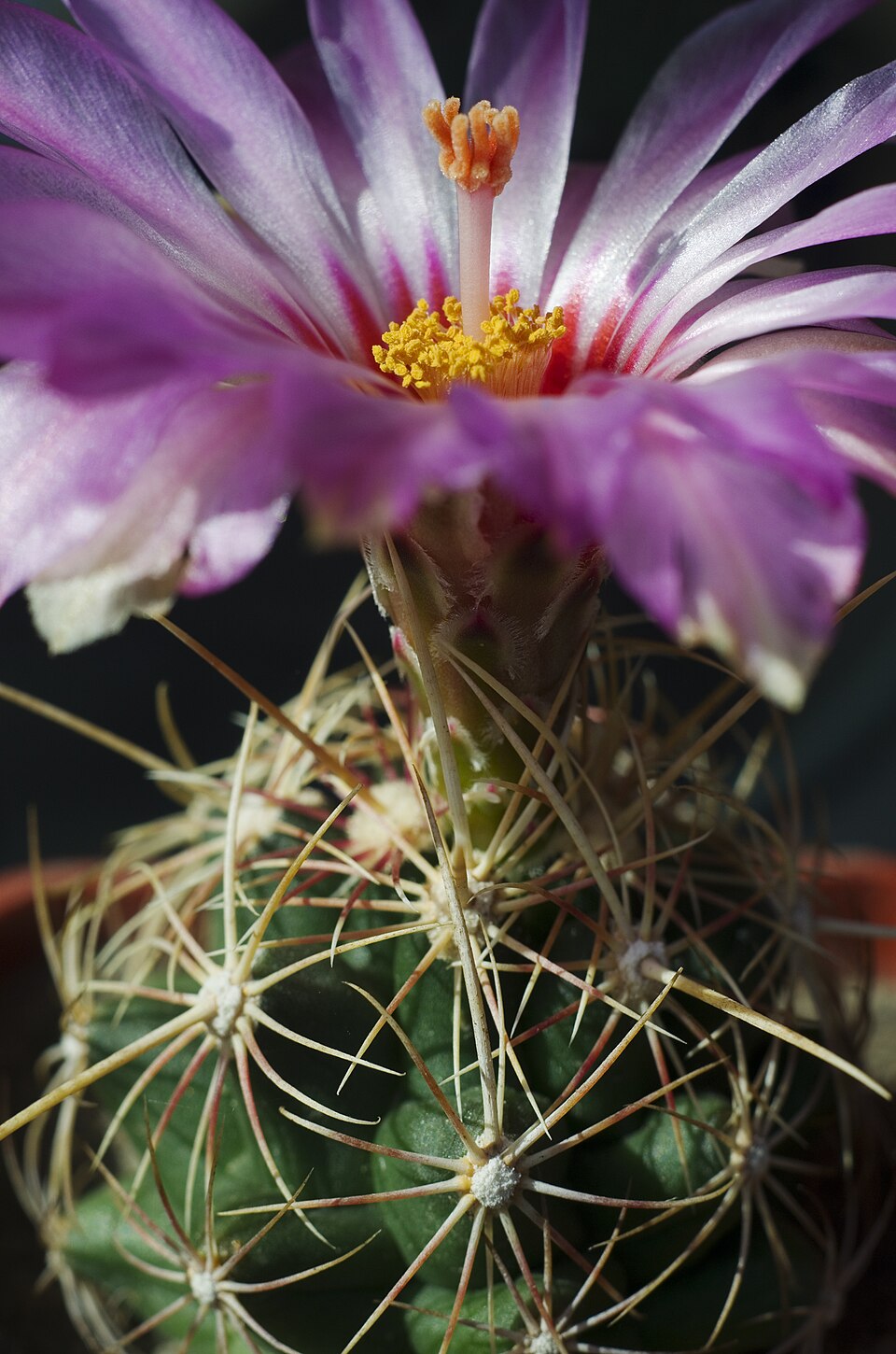
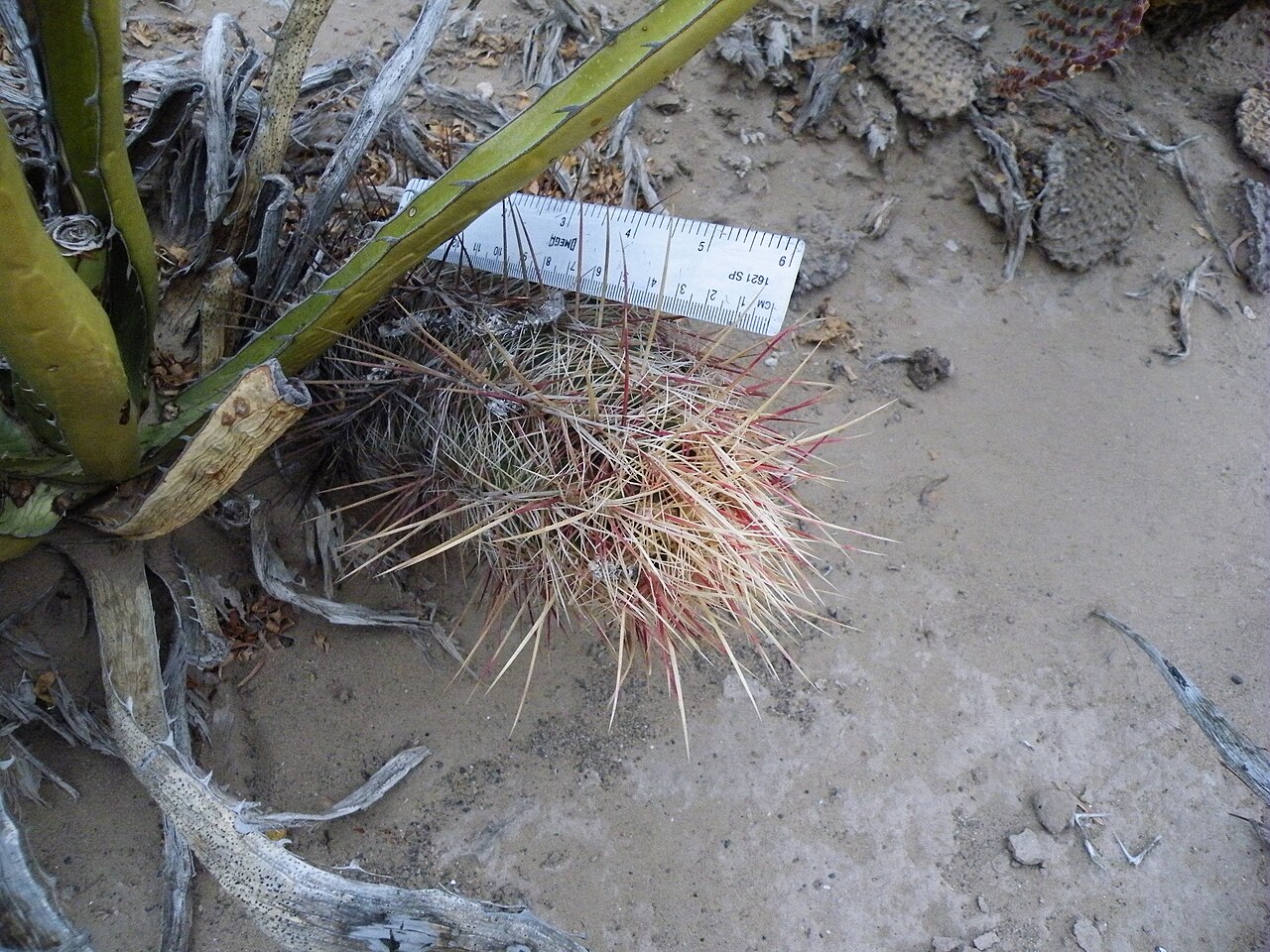
The spination is the plant’s most distinctive feature: each areole bears 6 to 10 stout, straight to slightly curved radial spines and one to several longer central spines, the lower central often flattened and conspicuously banded with alternating cream, tan, and reddish-pink bands. Spine color is variable across populations, from pale straw-yellow to deep rose, giving the whole plant a mottled, almost woven look that blends into surrounding gravel.
Flowers
Flowers emerge from the crown in spring and are large relative to the plant — 2 to 4 inches across — with satiny, pointed tepals that shade from pale lavender-pink at the tips to a vivid magenta or carmine band at the throat. The stamens are tipped in gold-orange, and the flowers open fully only in strong sun, closing again at night and on overcast days. Each bloom lasts just a few days, but a healthy plant produces a succession of flowers over several weeks.
Fruit & Seeds
After flowering, the plant produces small, dry, woolly fruits that split open to release numerous tiny black seeds. Fruits are inconspicuous compared to the flowers and are mostly of interest to seed-collecting enthusiasts rather than wildlife.
Quick Facts
| Scientific Name | Thelocactus bicolor |
| Family | Cactaceae |
| Plant Type | Perennial Cactus |
| Mature Height | 4–8 in |
| Mature Spread | 3–6 in |
| Growth Rate | Slow |
| Sun Exposure | Full Sun |
| Water Needs | Very Low |
| Soil Type | Rocky, caliche or limestone gravel; very well-drained |
| Soil pH | 7.0–8.5 (neutral to alkaline) |
| Bloom Time | April – June |
| Flower Color | Magenta-pink with deep red throat |
| Fruit | Small, dry, woolly capsule |
| Deer Resistant | Yes |
| USDA Hardiness Zones | 8–10 |
Native Range
Glory of Texas is native to South and West Texas, where it occupies limestone hills, caliche flats, and rocky desert scrub of the Rio Grande Plains and the Trans-Pecos, extending south into the adjoining Chihuahuan Desert states of Coahuila and Nuevo León, Mexico. In Texas it is most reliably documented from Big Bend country east through the brushlands along the Rio Grande.
Within this range it grows on thin, mineral soils derived from limestone or caliche, almost always on open, unshaded ground with sparse surrounding vegetation — low desert scrub, sotol grassland, or creosote flats. Elevations run from near sea level along the lower Rio Grande up to around 5,000 feet in the Trans-Pecos highlands.
Because of its popularity with collectors, wild Glory of Texas has been over-collected in parts of its range, and some populations are now scarce. Gardeners in its native region are encouraged to buy only nursery-propagated plants and to leave wild specimens undisturbed.
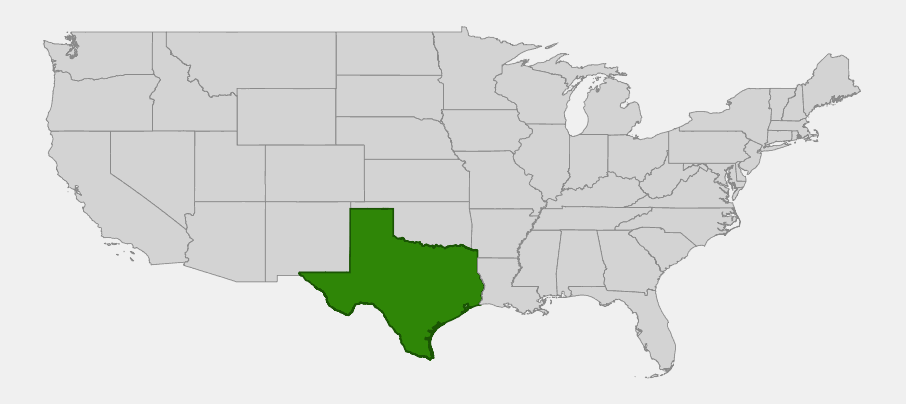
📋 Regional plant lists featuring Glory of Texas: South and West Texas
Growing & Care Guide
Glory of Texas is a rewarding but unhurried garden plant. It wants exactly the conditions of its native limestone flats: intense sun, sharp drainage, and minimal fuss. Gardeners outside its native caliche soils should focus on drainage above all else.
Light
Give this cactus full, unobstructed sun. It flowers best and stays compact with at least 6 to 8 hours of direct light daily; in too much shade it stretches, loses spine color, and blooms poorly.
Soil & Water
Drainage is non-negotiable. Plant in a gritty, mineral mix — a blend of coarse sand, crushed limestone or decomposed granite, and a small amount of native soil works well. In a pot, use a standard cactus mix cut with extra pumice or perlite. Water deeply but infrequently during the growing season (roughly every 2 to 3 weeks in summer), letting the soil dry completely between waterings, and withhold water almost entirely from late fall through winter. Overwatering, especially in heavy or poorly drained soil, is the most common cause of rot.
Planting Tips
Set plants slightly proud of grade, with the base of the stem sitting a little above the surrounding soil line, and mulch with gravel rather than organic mulch to keep moisture away from the stem. A rock garden, raised bed, or gravel bed mimicking caliche flats is ideal. Avoid planting in lawn irrigation zones or anywhere runoff collects.
Pruning & Maintenance
No pruning is needed. Remove old, shriveled fruit capsules if desired for tidiness. Watch for mealybugs in the wool at the crown and treat promptly with isopropyl alcohol on a cotton swab if seen. The plant is otherwise essentially pest- and disease-free when grown dry.
Propagation
Glory of Texas is propagated from seed, which germinates readily in warm weather sown on a gritty, sterile mix and kept lightly moist until seedlings establish. Older clustering specimens can occasionally be divided at the base, though single-stemmed plants cannot be divided.
Landscape Uses
- Rock gardens and gravel beds mimicking caliche desert flats
- Container and trough plantings on a sunny patio
- Xeriscape accents paired with other low-water Texas natives
- Collector specimen plantings for cactus and succulent enthusiasts
Wildlife & Ecological Value
Like most small desert cacti, Glory of Texas plays a modest but genuine role in the Chihuahuan Desert food web, mainly through its flowers.
For Pollinators
The large, brightly colored flowers attract native bees and other pollinating insects, which are drawn to the exposed ring of gold stamens at the flower’s center. Because blooms are large relative to the plant, a single flowering cactus can be a disproportionately attractive nectar source on bare desert ground where few other plants are in bloom at the same time.
For Wildlife
The dense spine armor deters browsing by deer and javelina, and low-growing cacti like this one provide limited cover for small reptiles and invertebrates on open gravel flats. Rodents occasionally gnaw at the stem in dry periods for moisture, though this is uncommon.
Ecosystem Role
As a small, slow-growing succulent anchored in thin desert soils, Glory of Texas contributes to the patchy vegetation structure typical of Chihuahuan Desert scrub, helping stabilize caliche and gravel surfaces against erosion in a landscape where plant cover is naturally sparse.
Cultural & Historical Uses
Glory of Texas has no significant recorded history of use as food or medicine by Indigenous peoples of the region, unlike larger, fleshier cacti such as prickly pear. Its small size and dense spination made it impractical as a food source.
Its modern significance is almost entirely horticultural. Since the mid-20th century, Glory of Texas has been one of the most sought-after small cacti among collectors worldwide for its outsized, two-toned flowers, and numerous named forms and varieties have been selected for spine color and pattern. This popularity has been a double-edged sword: demand drove extensive wild collecting through the late 1900s, placing pressure on some Texas and Mexican populations before nursery propagation became widespread.
Today, responsibly propagated Glory of Texas is widely available through cactus and succulent nurseries, and buying nursery-grown stock remains the best way to enjoy this species while protecting the wild plants that still dot the limestone hills of South and West Texas.
Frequently Asked Questions
Is Glory of Texas easy to grow?
Yes, once its drainage needs are met. The main requirements are full sun, gritty mineral soil, and restrained watering — it is not a plant for heavy clay or regularly irrigated beds.
Why isn’t my Glory of Texas flowering?
The most common causes are insufficient direct sun, soil that stays too moist, or a plant that is still immature. Established plants in full sun with dry winters typically flower reliably each spring.
Can Glory of Texas survive freezing winters?
It tolerates light freezes typical of its native Texas range (USDA zones 8–10) as long as soil is dry going into cold snaps; wet, cold soil is far more damaging than cold alone.
Is it legal to dig up Glory of Texas in the wild?
No. Like other native Texas cacti, removing plants from the wild without landowner permission is both ecologically harmful and often illegal. Always buy nursery-propagated specimens.
How can I tell Glory of Texas from other small Texas cacti?
The combination of a solitary, ribbed stem under 8 inches tall, thick banded spines in cream, tan, and pink tones, and large silky magenta flowers with a deep red throat is distinctive among Texas’s small barrel-type cacti.

Looking for a nursery that carries Glory of Texas?
Browse our native plant nursery directory: Texas