Spanish Dagger (Yucca treculeana)
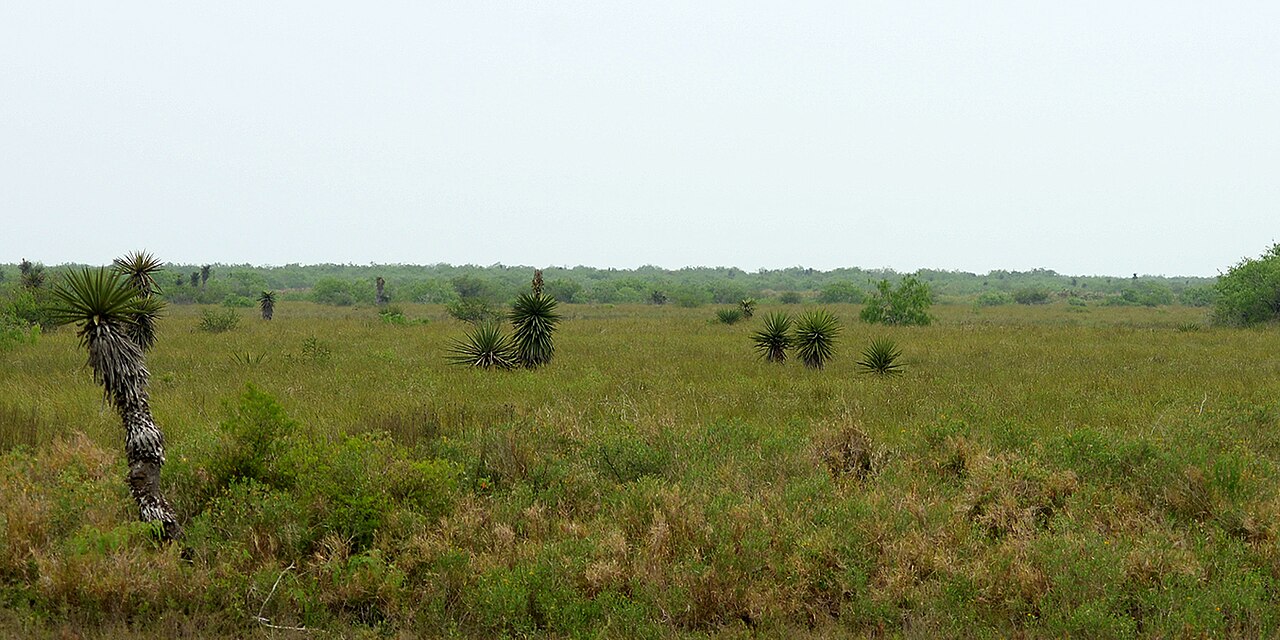
Yucca treculeana, commonly known as Spanish Dagger or Trecul yucca, is a bold, architectural native of South Texas, forming a single or branched woody trunk topped with a dense rosette of rigid, blade-like leaves tipped in needle-sharp points. In spring it sends up a massive, creamy-white flower spike that can rival the plant’s own height, making it one of the most dramatic native bloomers of the Rio Grande brushlands.
Unlike many smaller yuccas, Spanish Dagger develops a true trunk over time, eventually reaching 10 to 15 feet or more, with older specimens branching into multi-headed candelabra forms. Its thick, blue-green to gray-green leaves are stiff and heavily armed, true to its common name — handling this plant demands respect and sturdy gloves.
Spanish Dagger is extremely drought and heat tolerant, thriving on the thin caliche and sandy soils of South Texas brush country. For a xeriscape, security planting, or bold architectural accent within its native range, few native plants make as strong a statement with as little water.
Identification
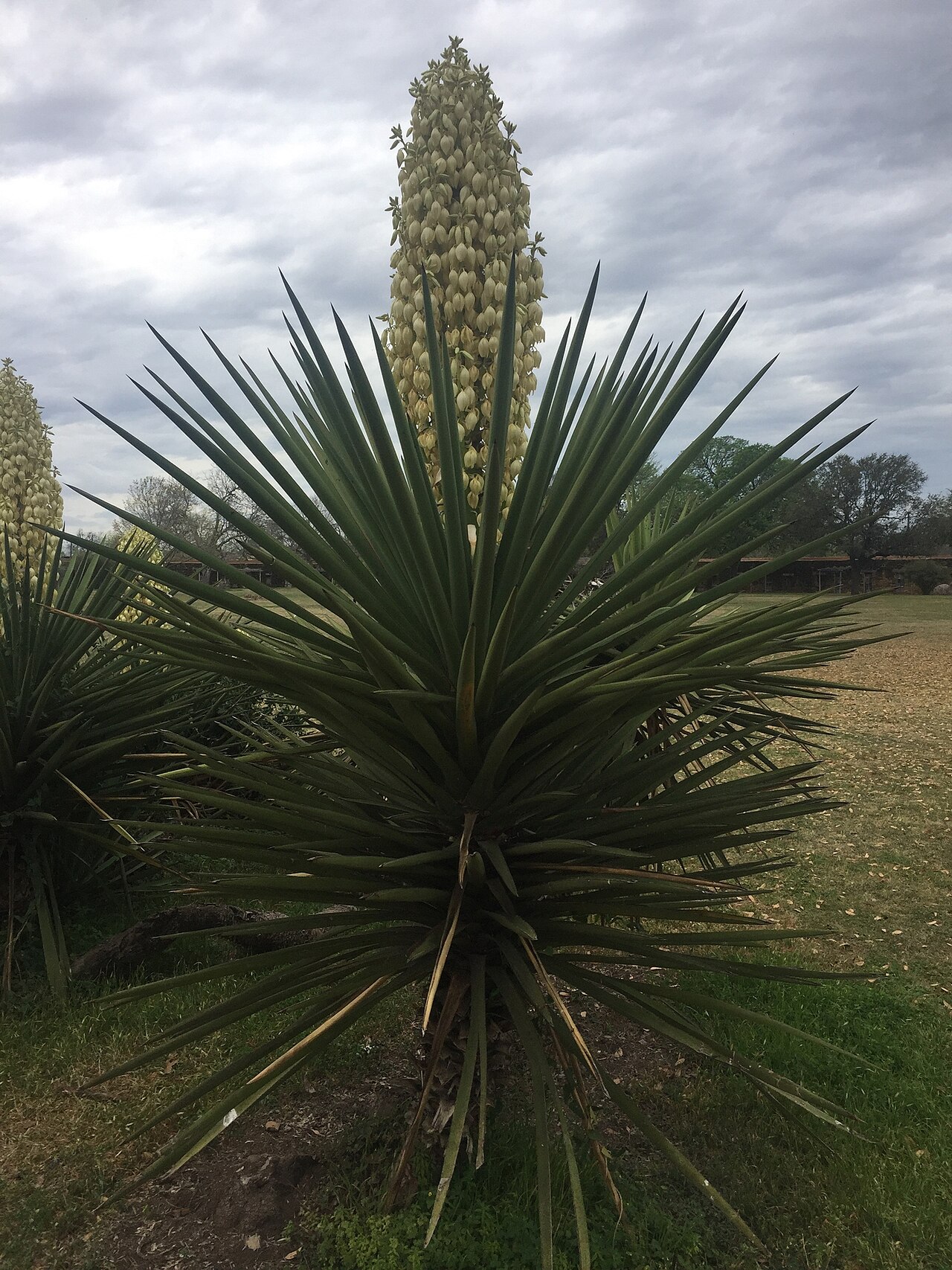
Spanish Dagger grows as a single-trunked or branching woody plant, starting as a stemless rosette and gradually developing a visible trunk with age, reaching 10 to 15 feet tall (occasionally taller) with a trunk diameter of 8 to 16 inches. Old trunks are rough and persistently clothed in dried, reflexed dead leaves lower down, or bare and gray where leaves have fallen away.
Leaves
The leaves are rigid, blade-like, 2 to 4 feet long and 1.5 to 2.5 inches wide, blue-green to dull gray-green, with smooth or very finely toothed margins and a wickedly sharp terminal spine. They radiate in a dense rosette at the crown, and older leaves below the active growing tip bend downward and persist as a dry, straw-colored skirt around the trunk unless trimmed.
Flowers
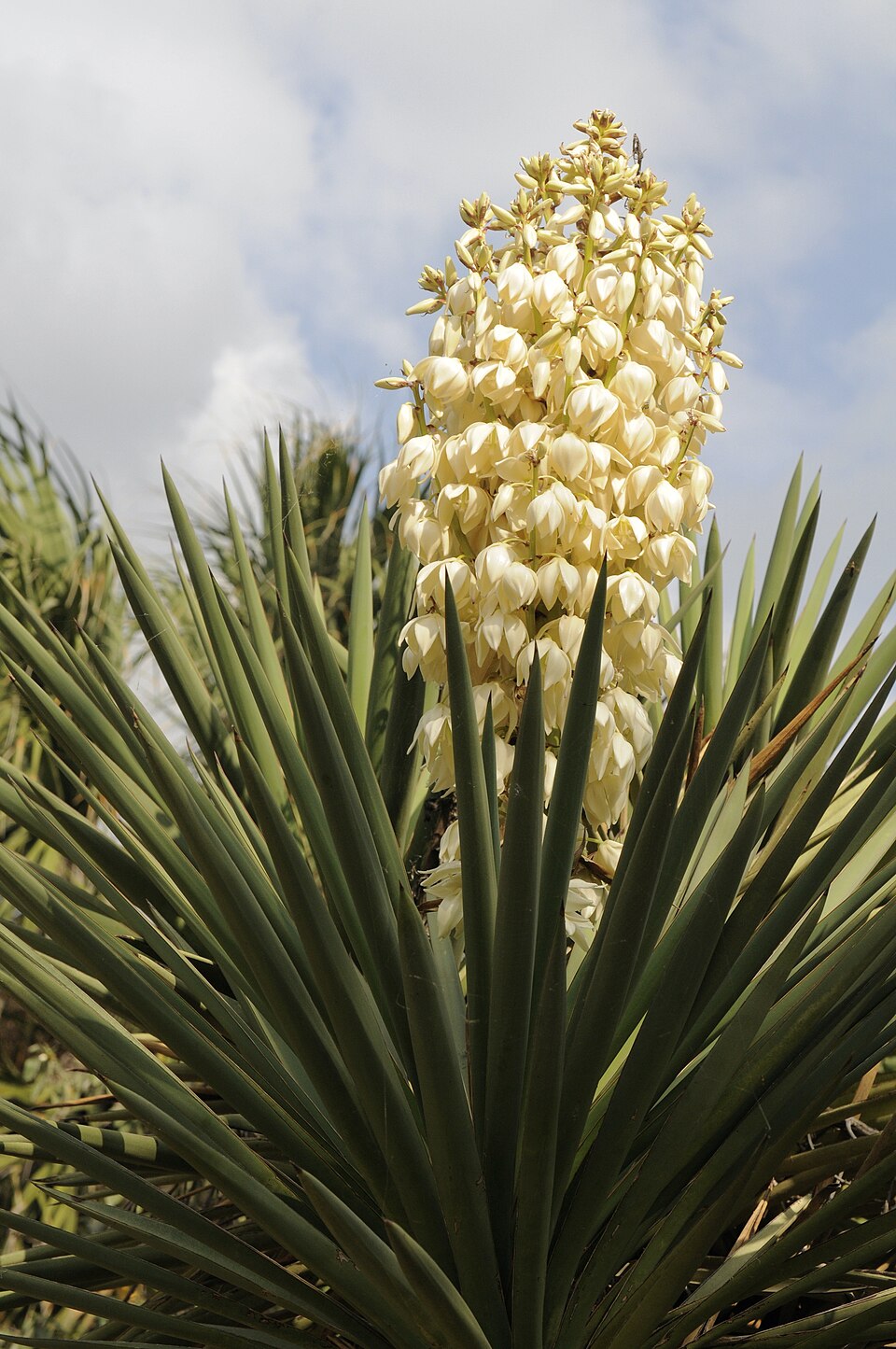
In spring, a massive, dense, upright flower spike emerges from the crown, often 2 to 4 feet tall and packed with hundreds of waxy, bell-shaped, creamy-white flowers, sometimes tinged purple at the base. The inflorescence is so heavy with blooms that it can appear almost solid white from a distance, towering well above the leaf rosette.
Fruit & Seeds
Pollinated flowers develop into large, fleshy, non-splitting fruit capsules 3 to 5 inches long, green ripening to brown, containing flat black seeds in a somewhat sweet, pulpy interior — a key difference from desert yuccas with dry, splitting capsules.
Quick Facts
| Scientific Name | Yucca treculeana |
| Family | Asparagaceae (Agave subfamily) |
| Plant Type | Evergreen Tree-like Shrub |
| Mature Height | 10–15 ft (to 20+ ft old specimens) |
| Mature Spread | 4–8 ft |
| Growth Rate | Slow |
| Sun Exposure | Full Sun |
| Water Needs | Very Low |
| Soil Type | Sandy, caliche, or well-drained loam |
| Soil pH | 6.5–8.5 |
| Bloom Time | March – May |
| Flower Color | Creamy white, sometimes purple-tinged at base |
| Fruit | Large, fleshy, non-splitting capsule |
| Deer Resistant | Yes |
| USDA Hardiness Zones | 8–11 |
Native Range
Spanish Dagger is native to South Texas, where GBIF specimen records and USDA documentation concentrate its U.S. range in the brushlands, coastal prairies, and sandy plains of the Rio Grande Valley and the South Texas Plains, extending south into the adjoining Mexican states of Tamaulipas and Nuevo León. It occurs across much of the coastal bend and southern brush country, from Corpus Christi south through the lower Rio Grande Valley.
Within this range it grows on open grassland, coastal prairie, and thornscrub on sandy or caliche-derived soils, typically from near sea level to a few hundred feet in elevation. It is a conspicuous, long-lived feature of South Texas rangeland, often persisting as scattered individuals across grazed pastures.
Although sometimes reported near the Texas-New Mexico border in cultivation or historical records, confirmed wild native populations are concentrated in South Texas; gardeners elsewhere in the Southwest should treat this species as a South Texas native rather than assume it is native to their specific area.
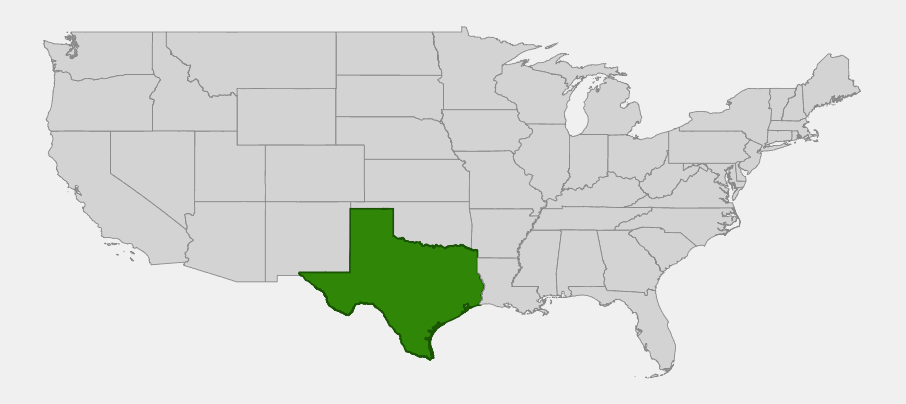
📋 Regional plant lists featuring Spanish Dagger: South and West Texas
Growing & Care Guide
Spanish Dagger is a low-maintenance, long-lived accent plant for South Texas landscapes, asking for little beyond sun and drainage once established.
Light
Plant in full sun. This species flowers and grows most vigorously in open, unshaded conditions typical of its native coastal prairie and brushland habitat.
Soil & Water
Spanish Dagger tolerates a wide range of well-drained soils, from deep sand to caliche-based clay loam, and is highly drought tolerant once established, needing supplemental water only during the first year or two after planting. Avoid heavy, poorly drained soils and overwatering, which can lead to root and crown rot.
Planting Tips
Site Spanish Dagger well away from walkways, driveways, and play areas — the leaf tips are genuinely dagger-sharp and can cause serious puncture injuries. Allow ample room for the plant’s eventual trunk height and spread, and consider that the persistent skirt of dead leaves (if not trimmed) adds further bulk at the base.
Pruning & Maintenance
Dead, drooping lower leaves can be trimmed close to the trunk for a tidier, more formal look, or left in place for a more naturalistic, wildlife-friendly form that also makes the trunk harder to approach. Use thick gloves and eye protection when working near this plant. It is otherwise essentially maintenance-free and pest-resistant.
Propagation
Propagation is most reliably done from seed collected from ripe fruit, cleaned and sown in a well-drained mix. Offsets or basal suckers, when present, can sometimes be separated and transplanted, though Spanish Dagger suckers less freely than many smaller yuccas.
Landscape Uses
- Architectural focal points in xeriscape and South Texas native landscapes
- Security plantings beneath windows or along property lines, where its spines deter intrusion
- Coastal and sandy-soil gardens tolerant of salt spray and heat
- Wildlife gardens — flowers, fruit, and structure support native species
Wildlife & Ecological Value
Spanish Dagger plays an outsized ecological role in South Texas brush country relative to its relatively limited range, supporting a specialized set of pollinators and providing structure in open rangeland.
For Pollinators
Like all yuccas, Spanish Dagger depends on a tightly coevolved relationship with yucca moths (Tegeticula species), which are the plant’s primary and often sole effective pollinators; the moths lay eggs in the flowers while simultaneously pollinating them, and their larvae develop by feeding on a portion of the resulting seeds. The abundant spring flowers also attract a range of other insects seeking nectar.
For Birds & Mammals
The fleshy fruit is eaten by a variety of mammals and birds, which help disperse the seeds, and javelina in particular are known to feed on fallen fruit. Ground-dwelling wildlife and ground-nesting birds use the dense, spine-protected base of mature clumps for cover from predators.
Ecosystem Role
As one of the most conspicuous perennial structures in open South Texas rangeland, Spanish Dagger provides vertical structure and refuge in otherwise low grassland and brush habitat, and its long lifespan makes individual plants persistent landscape features over many decades.
Cultural & Historical Uses
Indigenous peoples of South Texas and northeastern Mexico used Spanish Dagger extensively: the tough, fibrous leaves were processed into cordage, basketry, mats, and sandals, while the roots — rich in saponins — were pounded and used as a natural soap and shampoo, a practice also documented for many other yucca species across the Southwest.
The sweet, fleshy fruit was eaten fresh, roasted, or dried for storage by regional Indigenous groups, and the flower buds and flowers themselves have historically been prepared as a cooked vegetable in parts of its range, a use that continues in some traditional Mexican regional cuisine today.
The common name “Spanish Dagger” reflects the plant’s formidable, blade-like leaves, a trait early Spanish-speaking settlers of South Texas found impossible to ignore. Today the species remains a signature plant of South Texas ranch country and is widely planted as a bold, low-water ornamental throughout its native region.
Frequently Asked Questions
Is Spanish Dagger dangerous to plant near a house?
The leaf tips are extremely sharp and can cause serious puncture wounds, so it should be planted well away from walkways, doors, and areas where people or pets pass closely. Many homeowners plant it as a deterrent beneath windows for exactly this reason.
Can you eat the fruit of Spanish Dagger?
Yes, the ripe, fleshy fruit is edible and was historically eaten fresh, roasted, or dried by Indigenous peoples of the region. Positively confirm identification before eating any wild fruit.
Why hasn’t my Spanish Dagger flowered?
Young plants can take several years to reach flowering size and may not bloom every single year even once mature. Full sun and good drainage encourage more consistent flowering.
How is Spanish Dagger pollinated?
By yucca moths in a highly specialized mutualism — the moths are essentially the plant’s only effective pollinators, and in turn their larvae depend on developing yucca seeds for food, making the two species mutually dependent.
How fast does Spanish Dagger grow, and how tall does it get?
Growth is slow, often just a few inches of trunk height per year, but mature plants can eventually reach 10 to 15 feet or more over many decades, developing a true woody trunk unlike smaller, stemless yucca species.

Looking for a nursery that carries Spanish Dagger?
Browse our native plant nursery directory: Texas