Chaparral Whitethorn (Ceanothus leucodermis)
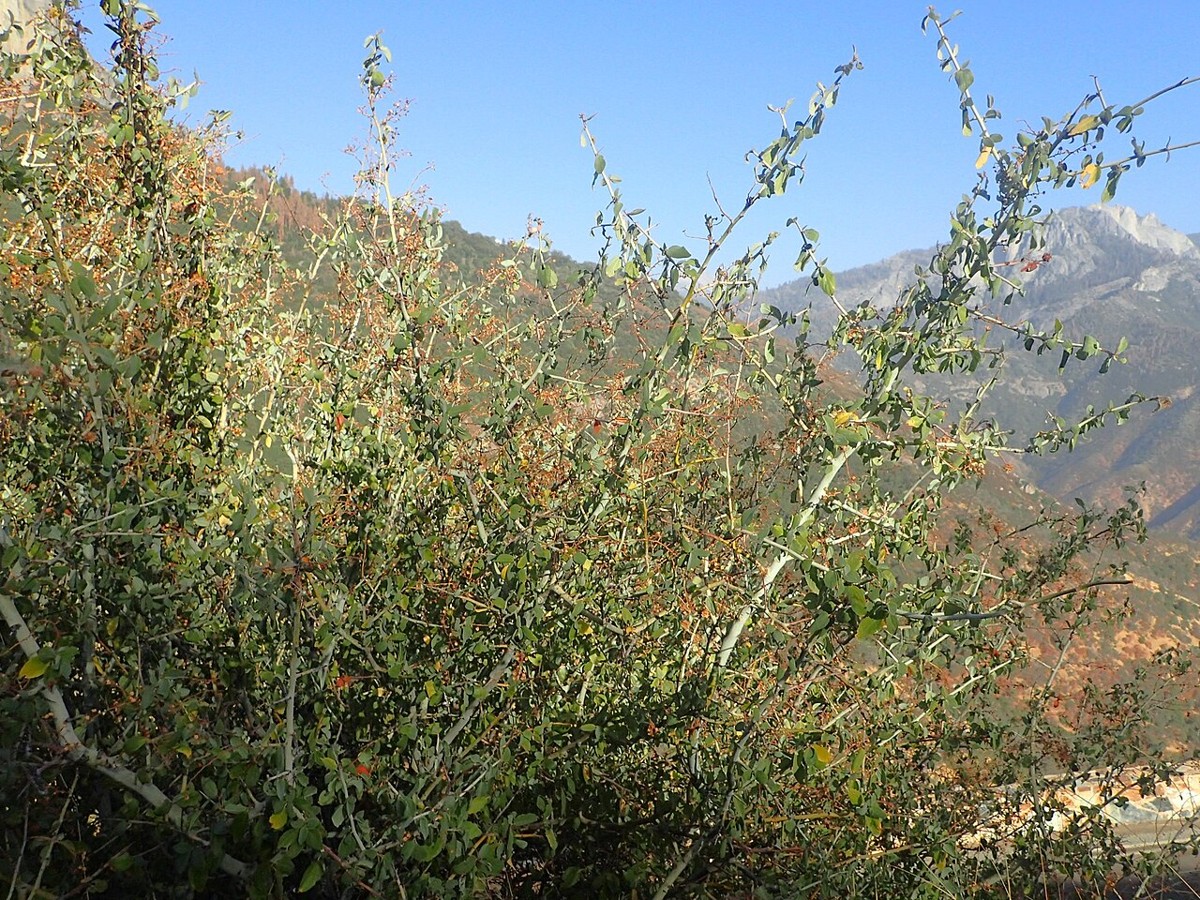
Ceanothus leucodermis, commonly called Chaparral whitethorn, is a rigid, spine-tipped evergreen shrub of the Rhamnaceae (buckthorn) family and one of the most widespread ceanothus species across California’s mountains and foothills. Its pale, whitish-gray bark and stiffly interlacing, thorn-tipped branches give the plant its common name and make dense stands genuinely difficult to walk through — a trait well known to hikers and firefighters alike.
Growing 3 to 12 feet tall depending on site conditions, Chaparral whitethorn forms tangled, impenetrable thickets on dry slopes throughout the Sierra Nevada foothills, Coast Ranges, and Transverse and Peninsular Ranges of Southern California. In late spring its pale blue to lavender flower clusters cover the plant, turning whole hillsides into a hazy wash of color at a time of year when most chaparral shrubs have already finished blooming.
For native plant gardeners with room for a tough, drought-proof barrier shrub, Chaparral whitethorn offers genuine toughness and excellent wildlife value, though its spiny branches mean it is better suited to naturalistic slopes and wildlife hedgerows than to spaces near paths or play areas. It asks for almost nothing beyond sun and good drainage, and it thrives across a wider elevation range than most of its chaparral relatives.
Identification
Chaparral whitethorn is a rigid, densely branched evergreen shrub, typically 3 to 12 feet tall, with a tangled, interlocking branch structure that forms dense, often impenetrable thickets.
Bark & Stems
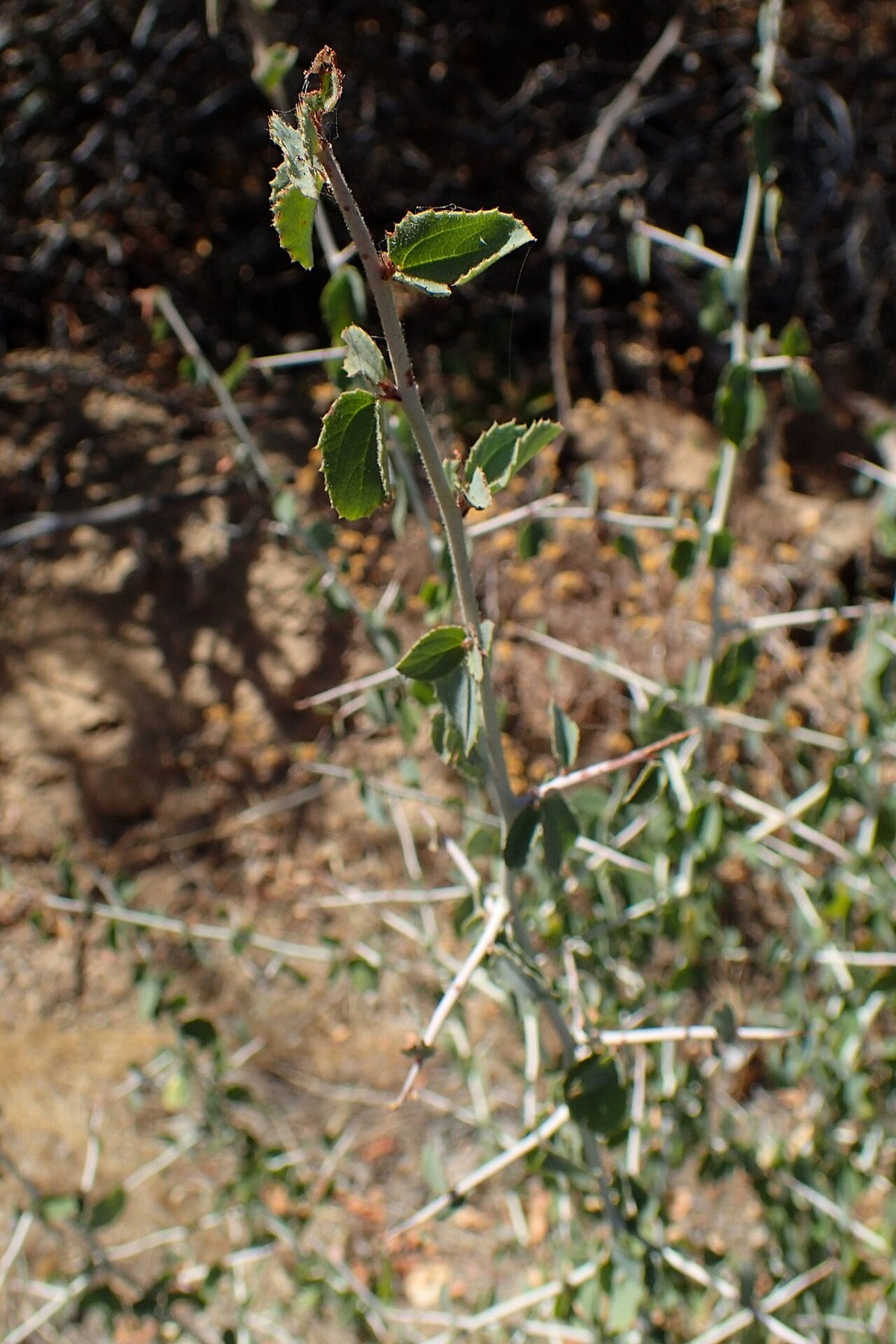
The stems are pale gray to whitish, giving the shrub a bleached, silvery look even from a distance — the source of its common name. Branches are stiff and end in sharp, thorn-like spines, a defensive structure that discourages browsing and makes mature thickets formidable to push through.
Leaves
Leaves are small, 1/2 to 1 1/4 inches long, oval with finely toothed margins, and arranged alternately on the stem. They are a dull gray-green, often somewhat leathery, and smaller and less glossy than the leaves of greenbark ceanothus, helping the plant conserve water through long dry summers at higher, more exposed sites than many other chaparral shrubs tolerate.
Flowers
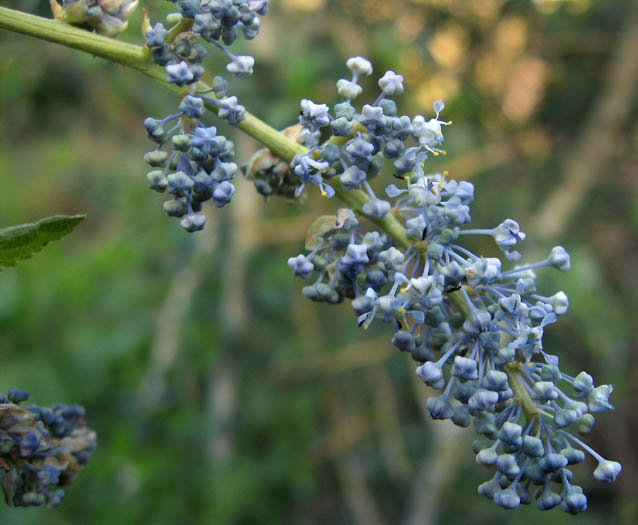
Flowers are small and clustered into dense, rounded to short cylindrical panicles 1 to 3 inches long, ranging in color from pale blue to lavender or occasionally white. Bloom occurs later than many chaparral ceanothus species, typically April through June, extending the native nectar season into early summer.
Fruit & Seeds
The fruit is a small, sticky, three-lobed capsule about 1/4 inch across that ripens from green to brown and splits explosively to eject seeds a short distance from the parent plant. Like other chaparral ceanothus, seeds accumulate in a persistent soil seed bank and germinate in large numbers after fire exposes them to heat and chemical cues.
Quick Facts
| Scientific Name | Ceanothus leucodermis |
| Family | Rhamnaceae (Buckthorn) |
| Plant Type | Evergreen Shrub |
| Mature Height | 3–12 ft |
| Mature Spread | 4–10 ft |
| Growth Rate | Moderate |
| Sun Exposure | Full Sun |
| Water Needs | Low (very drought tolerant once established) |
| Soil Type | Lean, well-drained soils; rocky, granitic or clay |
| Soil pH | 6.0–7.5 (neutral to slightly acidic) |
| Bloom Time | April – June |
| Flower Color | Pale blue to lavender |
| Fall Color | Evergreen (none) |
| Fruit | Small, sticky, three-lobed brown capsules |
| Deer Resistant | Yes (thorny, less palatable than many shrubs) |
| USDA Hardiness Zones | 7–10 |
Native Range
Chaparral whitethorn is native to California, occurring widely across the Sierra Nevada foothills, the inner and outer South Coast Ranges, and the Transverse and Peninsular Ranges of Southern California. It is one of the more broadly distributed chaparral ceanothus species within the state, found from Shasta County south to San Diego County, and it is not native to Nevada or any state outside California.
Within this range, Chaparral whitethorn grows across a wide elevation band, from around 1,000 feet in the foothills up to roughly 6,000 feet in the lower mixed-conifer belt, typically on dry, rocky or gravelly slopes in chaparral, foothill woodland, and the lower edges of yellow pine forest.
Like most chaparral shrubs, Chaparral whitethorn is strongly fire-adapted. Mature plants are killed by fire, but the long-lived seed bank they leave in the soil germinates heavily after a burn, often producing dense young stands that dominate recently burned slopes for years before being thinned by competition and subsequent fires.
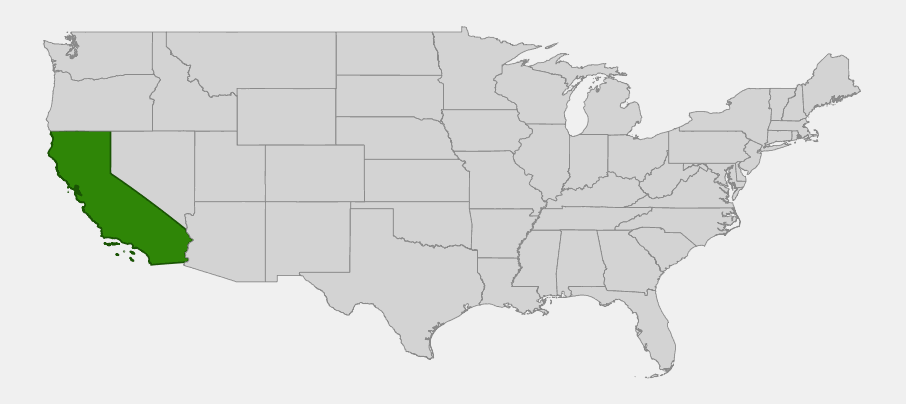
📋 Regional plant lists featuring Chaparral whitethorn: California & Nevada
Growing & Care Guide
Chaparral whitethorn is one of the toughest native shrubs for dry, exposed sites, tolerating poor rocky soil, intense summer heat, and long dry spells that would stress most garden plants.
Light
Full sun produces the densest, most compact growth and heaviest flowering. In partial shade the shrub tends to grow more open and leggy, reaching for available light.
Soil & Water
Lean, fast-draining soil is essential — rocky, granitic, or clay soils that would be considered poor for most garden plants suit this species well. Water occasionally during the first year or two to establish roots, then reduce sharply; established plants are highly drought tolerant and generally need no supplemental summer water in a typical California climate. As with other chaparral ceanothus, overwatering is the most common cause of decline in cultivated plants.
Planting Tips
Plant young container stock in fall before winter rains begin. Because the branches are spine-tipped, site Chaparral whitethorn away from paths, patios, and areas where people or pets brush past regularly, and give it room — 6 to 10 feet of spacing — to develop its naturally sprawling, thicket-forming habit.
Pruning & Maintenance
Minimal pruning is needed or recommended; light shaping after bloom can control size, but avoid cutting into old bare wood, which this species does not reliably resprout from. Wear sturdy gloves when working near this plant, as the thorn-tipped branches can scratch.
Landscape Uses
Chaparral whitethorn is best used where its toughness and thorny structure are assets rather than obstacles:
- Wildlife barrier hedgerows that deter foot traffic while sheltering birds and small mammals
- Difficult, rocky slopes where few other plants will establish without irrigation
- Chaparral restoration plantings in foothill and lower montane settings
- Deer-resistant borders in gardens with heavy browsing pressure
- Naturalistic wildlife gardens away from high-traffic areas
Fire Ecology
Chaparral whitethorn is an obligate seeder: fire kills mature plants outright, and the species depends entirely on its persistent soil seed bank for post-fire recovery. Heat and smoke-related chemical cues trigger mass germination after a burn, and young whitethorn stands often dominate recently burned slopes within the chaparral and foothill woodland zone before other species regain ground.
Wildlife & Ecological Value
Chaparral whitethorn’s wide elevation range and late bloom period make it an important link in the seasonal nectar supply of California’s foothill and mountain chaparral communities.
For Pollinators
Its April-to-June bloom extends well past the flowering window of earlier-blooming chaparral ceanothus, supplying nectar and pollen to native bees, honeybees, and butterflies through late spring when many other chaparral shrubs have already finished flowering.
For Birds
Dense, thorny thickets provide outstanding protective cover and nesting habitat for chaparral birds such as wrentits, California quail, and various sparrows, which can shelter inside the tangled branches safe from most predators.
For Mammals
The thorny branches discourage heavy browsing by deer compared with less defended shrubs, though deer and other herbivores will still take tender new growth after fire. Small mammals use the dense thickets for cover and travel corridors between more open areas.
Ecosystem Role
Like other Ceanothus species, Chaparral whitethorn fixes atmospheric nitrogen through symbiotic Frankia bacteria in its roots, enriching the often nutrient-poor soils of California’s chaparral and foothill woodlands. Its rapid post-fire regeneration from seed helps stabilize slopes and rebuild habitat structure in the critical years following a burn.
Cultural & Historical Uses
Indigenous peoples across the Sierra Nevada foothills and California’s interior Coast Ranges were familiar with Chaparral whitethorn as part of the broader chaparral plant community they managed through seasonal and deliberate burning to encourage useful plants and game forage. As with several related California Ceanothus species, the saponin-rich flowers of whitethorn relatives were sometimes worked into a mild lather with water for washing.
The dense, thorny thickets Chaparral whitethorn forms were also recognized practically as natural barriers and boundary markers across foothill landscapes long before formal land surveys, a role the plant still fills informally in rural and wildland areas today.
In modern native landscaping, Chaparral whitethorn is valued less as an ornamental centerpiece and more as a functional, low-maintenance shrub for difficult sites, restoration plantings, and deer-resistant hedgerows where its toughness and defensive structure are genuine assets.
Frequently Asked Questions
Why is it called “whitethorn”?
Its stems are pale gray to whitish, and mature branches end in sharp, thorn-like spines — together giving the shrub a bleached, thorny appearance that inspired the common name.
Is Chaparral whitethorn deer resistant?
Largely yes. Its thorny branches make it less palatable and harder to browse than many chaparral shrubs, though deer may still eat tender new growth, especially on young post-fire seedlings.
How tall does Chaparral whitethorn grow?
Typically 3 to 12 feet, with height varying by site conditions — plants on exposed, rocky ridges tend to stay more compact, while those in sheltered canyons can grow taller and more open.
Does Chaparral whitethorn resprout after fire?
No. Like most chaparral ceanothus, it is an obligate seeder — mature plants are killed by fire, and recovery comes entirely from the dense bank of seeds stored in the soil, which germinate heavily after a burn.
Is Chaparral whitethorn native to Nevada?
No. Despite its inclusion on the California & Nevada regional plant list, it is native only to California, across the Sierra Nevada foothills, Coast Ranges, and Southern California mountains.

Looking for a nursery that carries Chaparral whitethorn?
Browse our native plant nursery directory: California