Desert Apricot (Prunus fremontii)
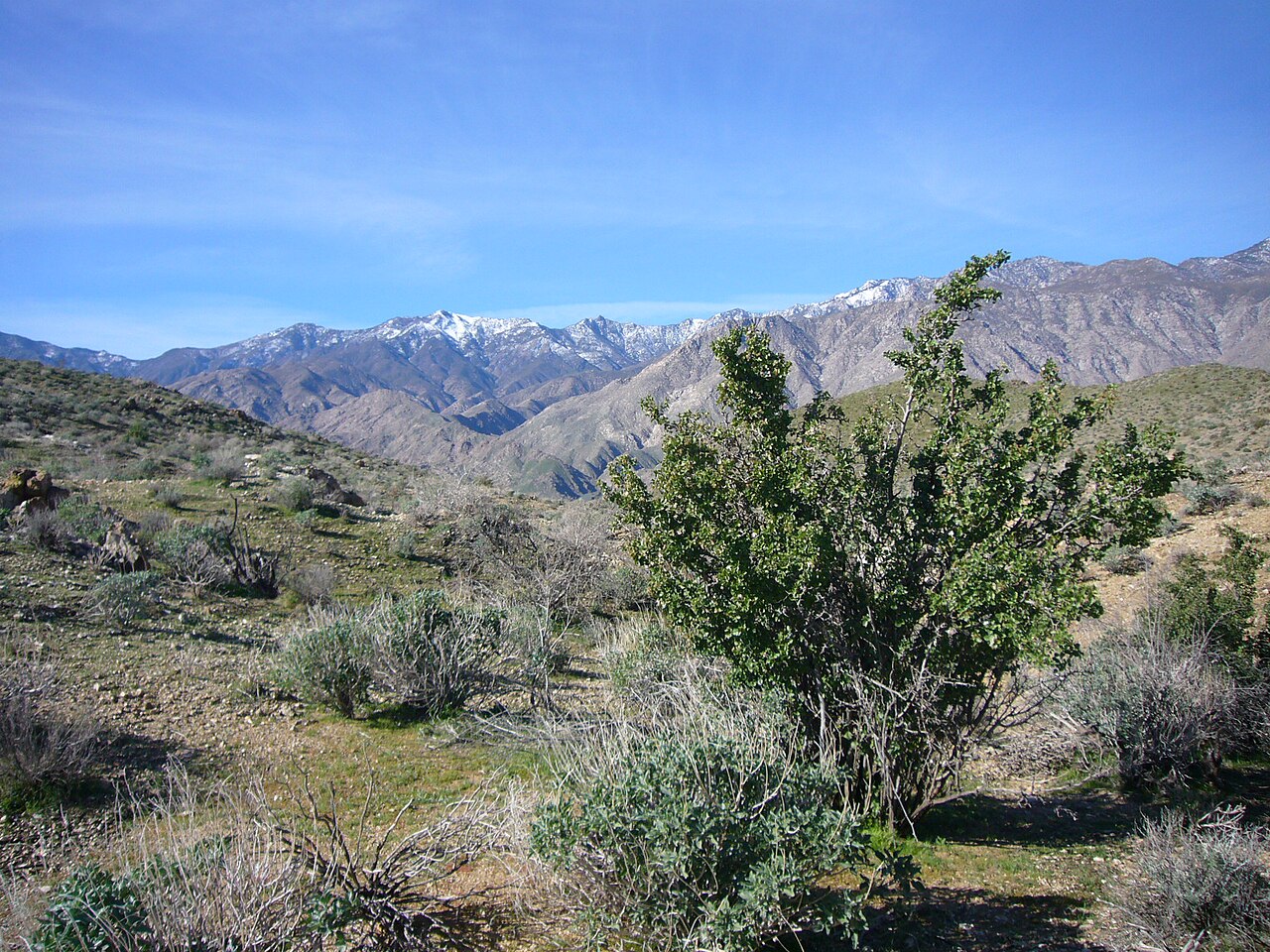
Prunus fremontii, commonly known as desert apricot, is a small, drought-adapted shrub or shrubby tree found only in a narrow band of Southern California where the chaparral gives way to desert. Despite the name and its membership in the same genus as the cultivated apricot, this is a wild, tough desert plant — not a fruiting orchard tree — valued by native gardeners for its very early, honey-scented white spring flowers and its ability to thrive on almost no water.
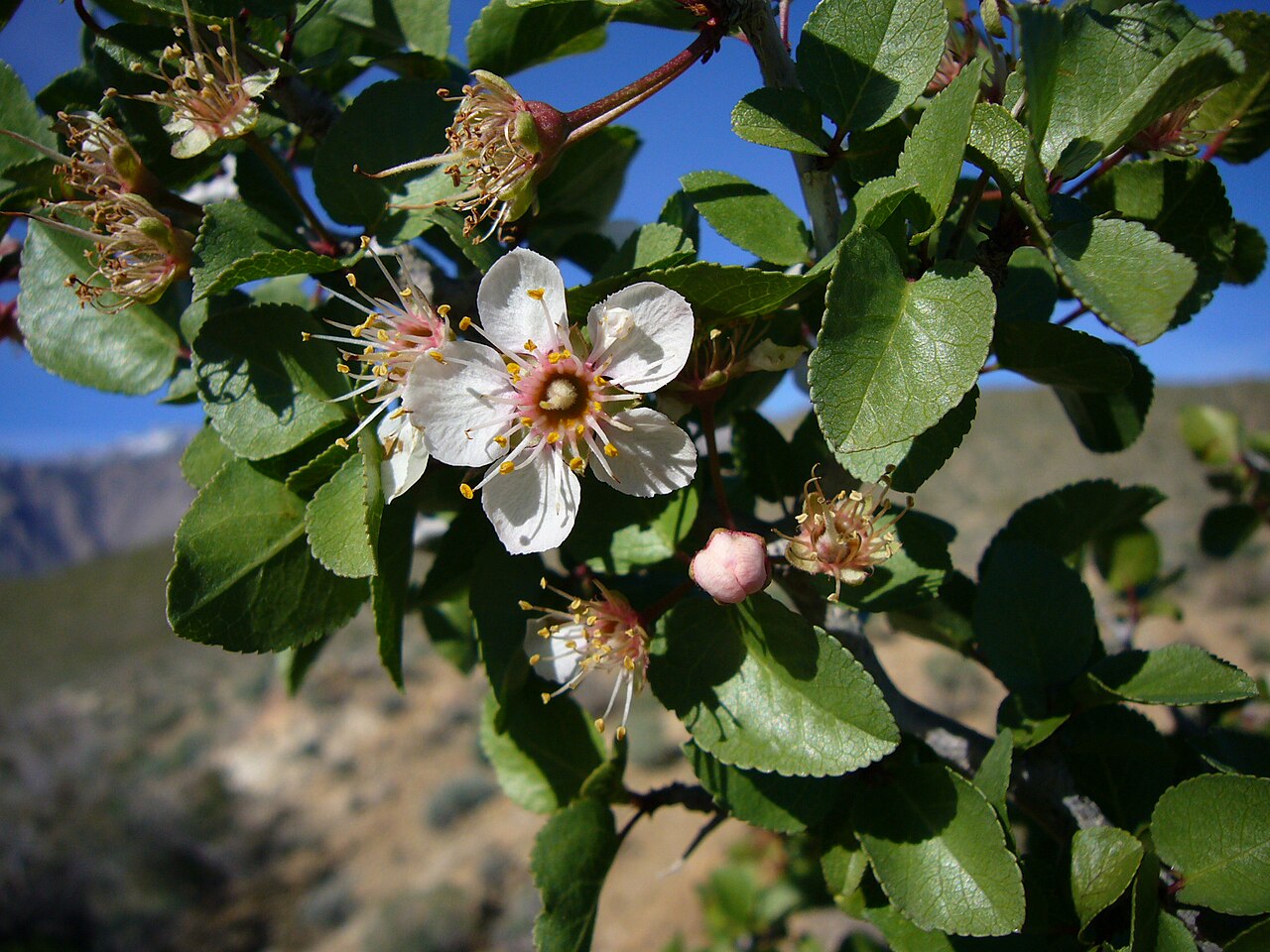
Growing 6 to 15 feet tall with pale, smooth bark and a twiggy, somewhat spiny branch structure, desert apricot is one of the first native shrubs to bloom each year, often flowering in late winter before its leaves fully emerge. The simple white, five-petaled blossoms are a welcome, fragrant surprise on bare desert-edge slopes, and they draw in early-season pollinators at a time when little else is flowering.
Desert apricot has a genuinely narrow native range, restricted to the dry foothills and canyons along the desert-facing slopes of the Peninsular Ranges in California. It is not found wild anywhere else, and gardeners outside this specific zone — even elsewhere in the California desert or in neighboring states — are growing it well outside its home range, though it performs reliably as an ornamental anywhere with hot, dry summers and good drainage.
Identification
Desert apricot grows as a many-branched, somewhat open shrub or small tree, typically 6 to 15 feet tall, with smooth, pale gray to tan bark. Branches are stiff and often tipped with short spines, especially on younger wood, giving mature plants a twiggy, slightly thorny silhouette in winter when bare.
Leaves
Leaves are small, oval to rounded, ½ to 1 inch long, with finely toothed margins and a somewhat leathery texture. They are deciduous, dropping during the hottest, driest part of summer as a drought-survival strategy — a trait sometimes called drought deciduousness — and re-emerging with the late-winter flowers or shortly after.
Flowers
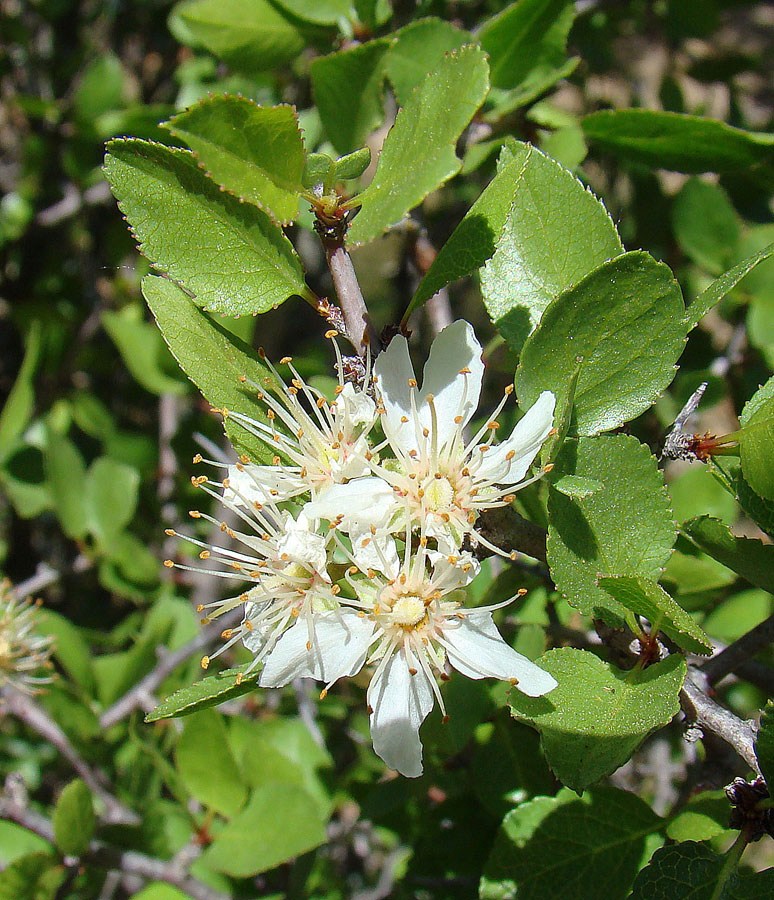
The flowers are classic small stone-fruit blossoms: five white petals surrounding a cluster of numerous yellow-tipped stamens, about ½ to ¾ inch across, borne singly or in small clusters directly on the bare or newly leafing twigs. Bloom typically occurs from February into April, often among the earliest native shrubs to flower in its range, and the blossoms carry a light, sweet fragrance.
Fruit & Seeds
Fruit is a small, dry, fuzzy drupe about ½ inch long, resembling a miniature apricot but with very little flesh around the single large seed (pit). The thin flesh dries out quickly on the shrub rather than becoming juicy, and it is not used as a food crop; wildlife and rodents take what fruit is produced, and the hard pits persist on the ground beneath mature shrubs.
Quick Facts
| Scientific Name | Prunus fremontii |
| Family | Rosaceae (Rose) |
| Plant Type | Drought-Deciduous Shrub / Small Tree |
| Mature Height | 6–15 ft |
| Mature Spread | 6–12 ft |
| Growth Rate | Slow to Moderate |
| Sun Exposure | Full Sun |
| Water Needs | Very Low |
| Soil Type | Well-drained; rocky, sandy or gravelly |
| Soil pH | 6.5–8.0 (neutral to alkaline) |
| Bloom Time | February – April |
| Flower Color | White |
| Fall Color | None (drought-deciduous; drops leaves in summer) |
| Fruit | Small, dry, fuzzy drupe; not a food fruit |
| Deer Resistant | Yes |
| USDA Hardiness Zones | 8–10 |
Native Range
Desert apricot has one of the most restricted native ranges of any widely cultivated California shrub. It is confined to the desert-facing slopes and canyons of the Peninsular Ranges in Southern California — chiefly San Diego, Riverside and Imperial counties — where chaparral and pinyon-juniper woodland transition into the Colorado and Mojave desert edges. It is not native to any other U.S. state.
Within this narrow zone, desert apricot grows on dry, rocky or gravelly slopes and canyon washes, often alongside other desert-edge shrubs in open, sun-baked sites that receive very little summer moisture. It tolerates the sharp temperature swings and prolonged drought typical of the desert transition zone better than most other members of its genus.
Because the species is so narrowly distributed in the wild, it is considered uncommon outside of a handful of known populations, and some occurrences are on protected or limited-access lands. Gardeners and restoration projects outside San Diego, Riverside and Imperial counties — including elsewhere in California — should treat desert apricot as an adapted regional ornamental rather than a local native, even though it is a true California native species.
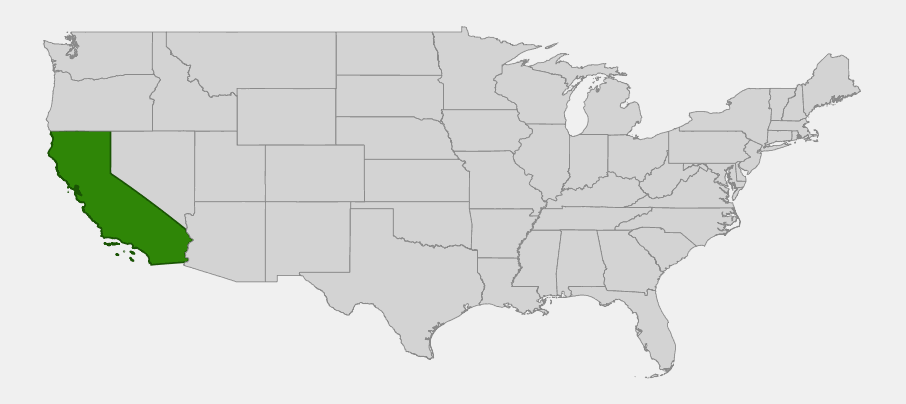
📋 Regional plant lists featuring Desert apricot: California & Nevada
Growing & Care Guide
Desert apricot is a specialist for hot, dry gardens. It rewards minimal intervention and struggles if treated like a typical ornamental shrub with regular water and rich soil.
Light
Full sun is essential. This is a plant of open, exposed desert-edge slopes, and it will become sparse and weak in shaded or crowded conditions.
Soil & Water
Sharp drainage is critical — desert apricot is adapted to rocky, gravelly desert soils and will not tolerate standing water or heavy clay. Established plants need very little supplemental water and, in fact, often do best with none at all once their root systems are developed; their natural drought-deciduous habit (dropping leaves in the hottest months) is a feature, not a sign of stress. Overwatering is the most common way gardeners lose this species.
Planting Tips
Plant young container stock in fall or early winter so roots can establish before the first dry season. Choose the hottest, sunniest, best-drained spot in the garden — a south-facing rocky slope mimics its native habitat closely. Because mature plants develop spiny twigs, site them away from paths where people brush past.
Pruning & Maintenance
Little pruning is needed beyond removing dead wood. Avoid shaping the plant into a dense, over-irrigated shrub form; its naturally open, twiggy structure is well adapted to its desert-edge habitat and heavy pruning or feeding can push soft new growth that is more vulnerable to pests and disease.
Landscape Uses
Desert apricot suits a specific but valuable garden niche:
- Waterwise and desert-adapted gardens in hot, dry, low-elevation sites
- Winter and early-spring bloom — flowers ahead of most other native shrubs
- Wildlife and pollinator gardens that need very early-season nectar
- Specimen planting on rocky slopes where its open form can be appreciated
- Habitat restoration within its narrow native range in San Diego, Riverside and Imperial counties
Wildlife & Ecological Value
Desert apricot’s main ecological contribution is timing: its very early bloom fills a gap when few other native plants in its desert-edge habitat are flowering.
For Pollinators
The late-winter and early-spring flowers are an important nectar and pollen source for native bees and other early-emerging insects at a time of year when floral resources are otherwise scarce in the desert transition zone.
For Birds
The dense, twiggy branching offers cover for small birds, and the sparse fruit crop, along with insects drawn to the flowers, provides incidental forage.
For Mammals
Rodents and other small mammals consume the dry fruit and disperse the hard seeds. The spiny twigs offer some protection from browsing, helping young plants establish in areas with grazing pressure.
Ecosystem Role
As one of relatively few shrubs adapted to the harsh conditions of the desert-chaparral transition zone, desert apricot helps stabilize steep, rocky slopes in a habitat type that is itself uncommon and sensitive to disturbance. Its narrow native range makes populations ecologically significant out of proportion to their small total area.
Cultural & Historical Uses
Despite sharing a genus with the cultivated apricot, desert apricot’s small, dry, meager fruit was never developed as a food crop, and there is no established tradition of eating it; any resemblance to orchard apricots is in name and flower only. Documented traditional use of this species specifically is limited in the ethnobotanical record, likely reflecting both its narrow range and its minimal, low-flesh fruit.
The species’ main historical significance lies in its ecological role within the narrow, specialized habitat it occupies — the desert-edge transition zone of the Peninsular Ranges — rather than in any documented cultural use. Today it is primarily of interest to native plant enthusiasts, waterwise gardeners and conservationists working within its restricted native range.
Frequently Asked Questions
Can you eat desert apricot fruit?
No — unlike the cultivated apricot, desert apricot produces a small, dry, mostly pit fruit with very little flesh. It was never developed as a food source and is not grown or recommended for eating.
Why does my desert apricot drop its leaves in summer?
This is normal, healthy behavior called drought deciduousness. Dropping leaves during the hottest, driest months is a water-conservation strategy, not a sign the plant is dying; new leaves return with cooler weather and the following bloom.
Is desert apricot native to the wider California desert, or just a few counties?
Just a few counties. Its true wild range is limited to the desert-facing slopes of San Diego, Riverside and Imperial counties in the Peninsular Ranges. It is not native elsewhere in California or in other desert states, even though it is often grown as an adapted ornamental beyond that range.
How much water does desert apricot need once established?
Very little to none. This is one of the more extremely drought-tolerant native California shrubs, and established plants typically need no supplemental irrigation at all in appropriate climates.
Is desert apricot deer resistant?
Yes, generally. The spiny twig structure discourages browsing, which is useful in gardens where deer pressure limits other shrub choices.

Looking for a nursery that carries Desert Apricot?
Browse our native plant nursery directory: California