Desert Almond (Prunus fasciculata)
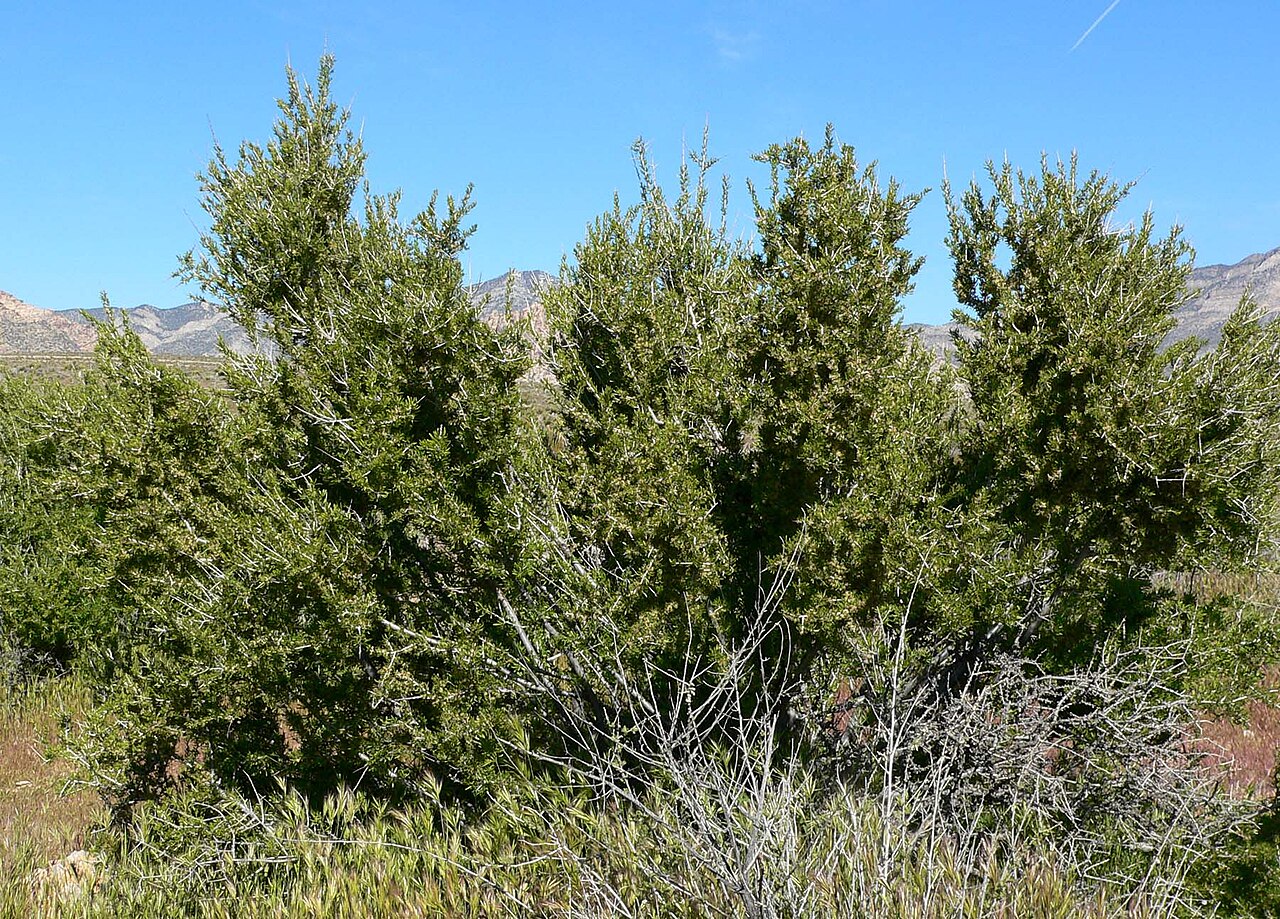
Prunus fasciculata, commonly called desert almond, is a wiry, intricately branched desert shrub found across the Mojave and Sonoran deserts of California, Nevada and Arizona. Like its relative the desert apricot, this is a wild desert shrub bearing almost no resemblance to its cultivated namesake — the true nut-bearing almond is a different species entirely — but it shares the same genus and the same tiny, fragrant, early-spring flowers that make the whole Prunus clan so valuable to desert pollinators.
Desert almond typically forms a dense, rounded shrub 3 to 8 feet tall, built from a tangle of stiff, grayish, spine-tipped twigs that create excellent cover even when the plant is leafless. Its small clusters (“fascicles,” the source of the species name) of tiny, narrow gray-green leaves and small white to pale pink flowers appear together in late winter, drawing in bees at a time when flowering plants are scarce across the open desert.
For desert gardeners, desert almond is an exceptionally tough, low-water shrub that provides structure, early pollinator forage and wildlife cover with essentially no care. It is especially valuable in large, informal desert-adapted landscapes, where its tangled, twiggy form reads naturally alongside creosote bush, brittlebush and other classic Mojave and Sonoran desert natives.
Identification
Desert almond grows as a dense, rounded to irregular shrub, typically 3 to 8 feet tall and equally wide, built from numerous rigid, intricately branching, grayish twigs that often end in sharp spines. The overall silhouette is wiry and tangled, giving the plant excellent year-round structure even without leaves.
Leaves
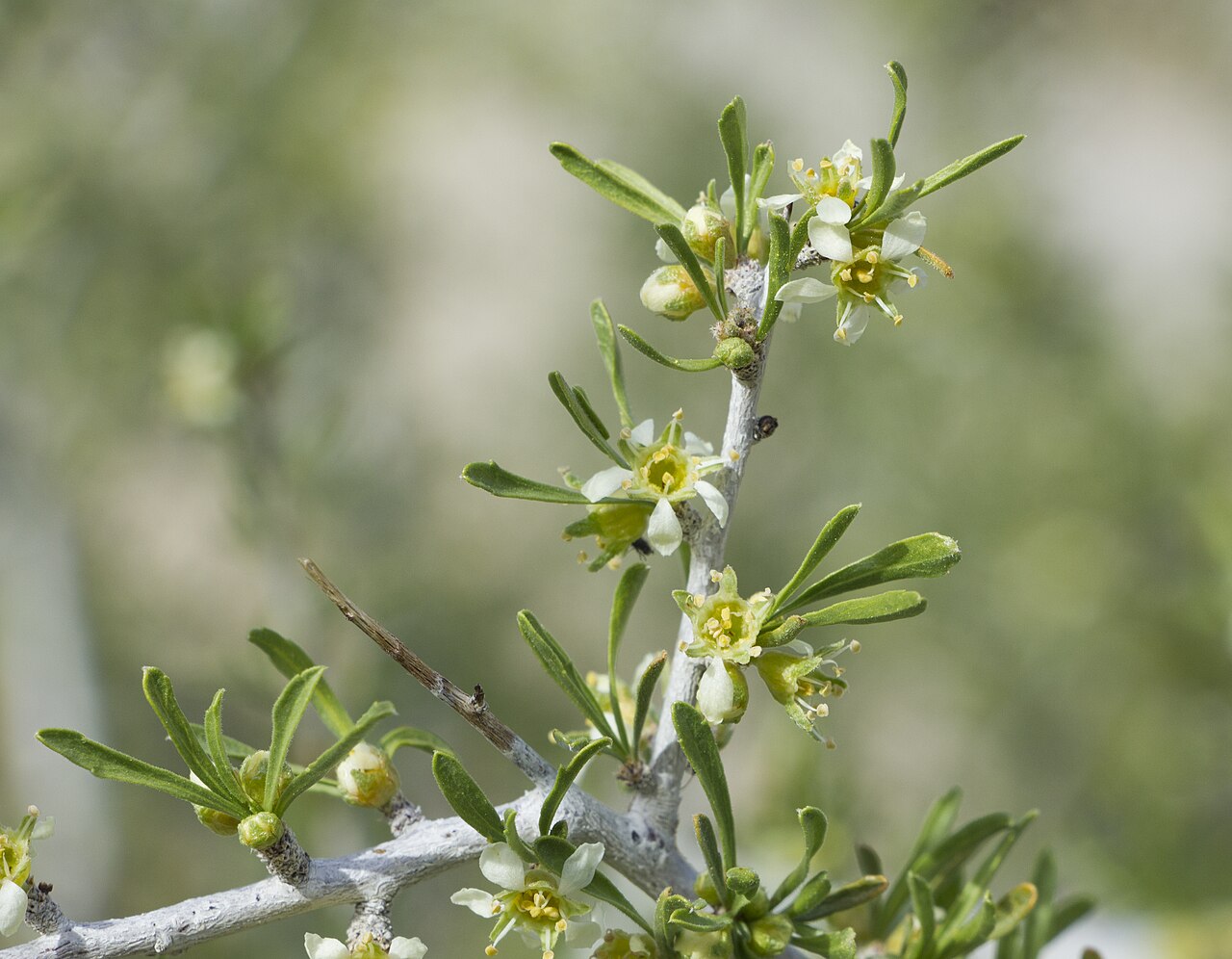
Leaves are small, narrow, and gray-green, typically under an inch long, borne in small clustered bundles (fascicles) along the twigs — the feature that gives the species its scientific name. They are drought-deciduous, dropping in the driest part of summer and re-emerging with the late-winter bloom.
Flowers
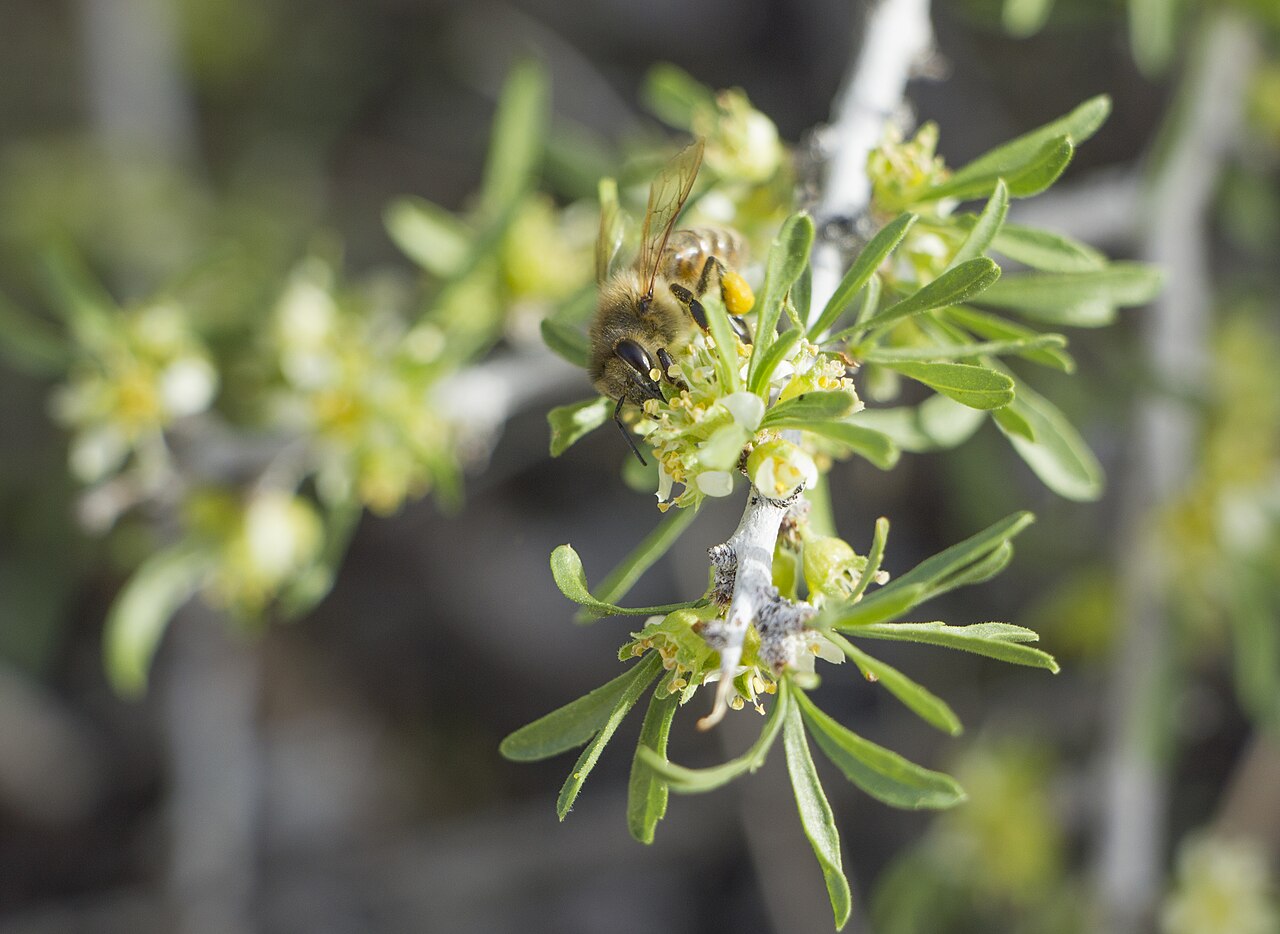
Small, five-petaled flowers in white to very pale pink appear in clusters directly on the twigs in late winter to early spring, usually before or alongside the new leaves. Though individually small, the flowers are abundant enough to cover the whole shrub and carry a light, sweet fragrance that draws bees from a distance.
Fruit & Seeds
The fruit is a small, dry, fuzzy drupe about ⅓ to ½ inch long with thin, inedible flesh over a single hard pit, similar in structure to a miniature almond or apricot. Fruit matures in late spring to early summer and is consumed primarily by rodents and birds rather than people.
Quick Facts
| Scientific Name | Prunus fasciculata |
| Family | Rosaceae (Rose) |
| Plant Type | Drought-Deciduous Shrub |
| Mature Height | 3–8 ft |
| Mature Spread | 3–8 ft |
| Growth Rate | Slow |
| Sun Exposure | Full Sun |
| Water Needs | Very Low |
| Soil Type | Well-drained; sandy, rocky or gravelly |
| Soil pH | 7.0–8.5 (neutral to alkaline) |
| Bloom Time | February – April |
| Flower Color | White to pale pink |
| Fall Color | None (drought-deciduous; drops leaves in summer) |
| Fruit | Small, dry, fuzzy drupe; not a food fruit |
| Deer Resistant | Yes |
| USDA Hardiness Zones | 7–10 |
Native Range
Desert almond is native across the Mojave and Sonoran deserts, including desert regions of Southern California, southern Nevada, and western and central Arizona, extending into adjacent parts of Baja California and Sonora, Mexico. It generally occupies the broad band of low to middle desert elevations below the pinyon-juniper zone.
Within this range, it grows on dry washes, rocky slopes, alluvial fans and desert flats, typically alongside other classic warm-desert shrubs. It tolerates extreme heat, intense sun and very low rainfall, and its tangled, spiny growth form likely provides some protection from browsing in an environment with few large shrubs to hide among.
Though broadly distributed across the warm deserts, desert almond is strictly a desert species; it is not native to coastal, Central Valley, or higher-elevation mountain habitats within the same states, and gardeners outside the true desert zones are growing an adapted desert ornamental rather than restoring local native habitat.
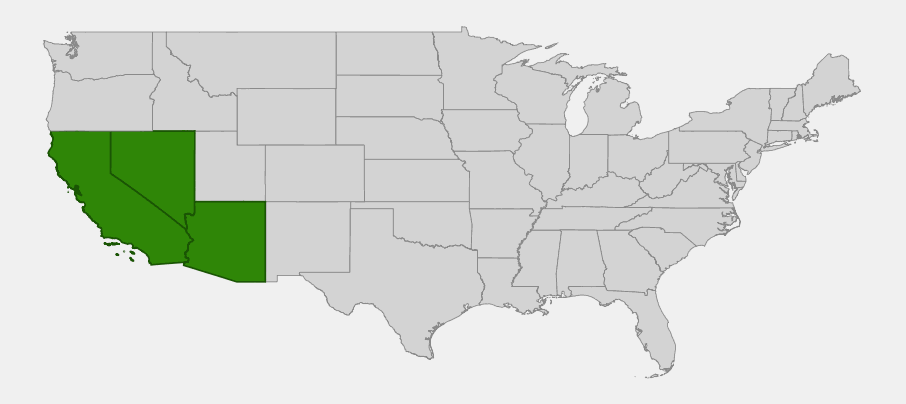
📋 Regional plant lists featuring Desert almond: California & Nevada · Arizona & New Mexico
Growing & Care Guide
Desert almond is built for extreme conditions and performs best when gardeners resist the urge to pamper it with extra water or rich soil.
Light
Full sun is required. This is an open-desert shrub with no tolerance for shade, and it will become sparse and weak in shaded sites.
Soil & Water
Sharp drainage is essential — desert almond is adapted to sandy, rocky or gravelly desert soils and alkaline conditions, and it will not tolerate heavy, wet, or poorly drained ground. Established plants need very little to no supplemental water even in the hottest desert gardens; occasional deep watering during the first year or two helps establishment, after which irrigation should be minimal. Overwatering is the primary cause of failure in cultivation.
Planting Tips
Plant container stock in fall or early winter to take advantage of cooler temperatures and any winter rainfall for establishment. Because mature plants are dense and spiny, site desert almond away from walkways and seating areas. Space plants 4 to 8 feet apart for natural, informal desert plantings.
Pruning & Maintenance
Minimal pruning is needed; remove dead wood as desired, but avoid heavy shaping, since the plant’s naturally tangled form is both its wildlife value and its best desert-garden look. It tolerates extreme heat and poor soil without issue and has few serious pests or diseases in its native range.
Landscape Uses
Desert almond fits naturally into several desert garden roles:
- Waterwise desert landscaping for hot, low-elevation gardens
- Wildlife hedgerow — dense, spiny structure shelters birds and small mammals
- Early-season pollinator forage when little else is blooming
- Erosion control on dry washes and alluvial slopes
- Naturalistic desert restoration plantings alongside creosote bush and brittlebush
Wildlife & Ecological Value
Desert almond’s value to desert wildlife centers on its very early bloom time and its dense, protective structure.
For Pollinators
The late-winter to early-spring flowers are heavily visited by honeybees and native bees, providing a critical nectar source at a time when few other desert plants are flowering. The fragrance and abundance of bloom make it one of the more reliably bee-visited native shrubs in its range.
For Birds
The dense, spiny, tangled branching provides excellent nesting and roosting cover for small desert birds, offering protection from both predators and the intense desert sun. Some birds also take advantage of the small fruit crop.
For Mammals
Rodents and other small mammals eat the fruit and disperse the hard seeds, and the spiny structure offers some protection for young plants against browsing by larger herbivores.
Ecosystem Role
As a widespread, drought-adapted shrub of the Mojave and Sonoran deserts, desert almond adds structural diversity to desert scrub communities that can otherwise be dominated by a few very common species like creosote bush. Its early bloom helps sustain pollinator populations through the lean, cold tail end of the desert winter.
Cultural & Historical Uses
Like its relative the desert apricot, desert almond’s small, dry fruit with minimal flesh was never developed as a food crop, despite the common name’s suggestion of kinship with the cultivated almond, which is an entirely different species. Documented ethnobotanical use of this specific species is limited in the historical record.
Historically, the plant’s significance has been primarily ecological: a durable, widespread component of Mojave and Sonoran desert scrub that has provided early-season pollinator forage and wildlife cover across a wide swath of the American Southwest for millennia. In recent decades it has also gained a modest following among native-plant gardeners seeking authentic, low-water desert landscaping.
Frequently Asked Questions
Can you eat desert almond’s fruit or seeds?
No. Despite the name, desert almond’s fruit is small, dry and essentially fleshless, and it is not related to the cultivated almond crop. It is not grown or recommended as a food source.
Why does my desert almond look bare for part of the year?
This is normal. Desert almond is drought-deciduous, dropping its small leaves during the hottest, driest stretch of summer to conserve water, then releafing with the late-winter bloom.
How much water does desert almond need?
Very little. Once established, this genuinely low-water desert native typically needs no regular irrigation in appropriate desert climates; overwatering is the most common cause of decline in cultivation.
Is desert almond good for pollinators?
Yes, notably so. Its abundant, fragrant late-winter flowers are heavily visited by honeybees and native bees at a time when few other desert plants are blooming, making it a valuable early-season forage source.
Is desert almond deer resistant?
Yes. Its dense, spiny twig structure discourages browsing, which is useful in desert gardens where rabbits and other herbivores can be a challenge for softer-leaved plants.

Looking for a nursery that carries Desert Almond?
Browse our native plant nursery directory: California · Nevada · Arizona