Spiny Redberry (Rhamnus crocea)
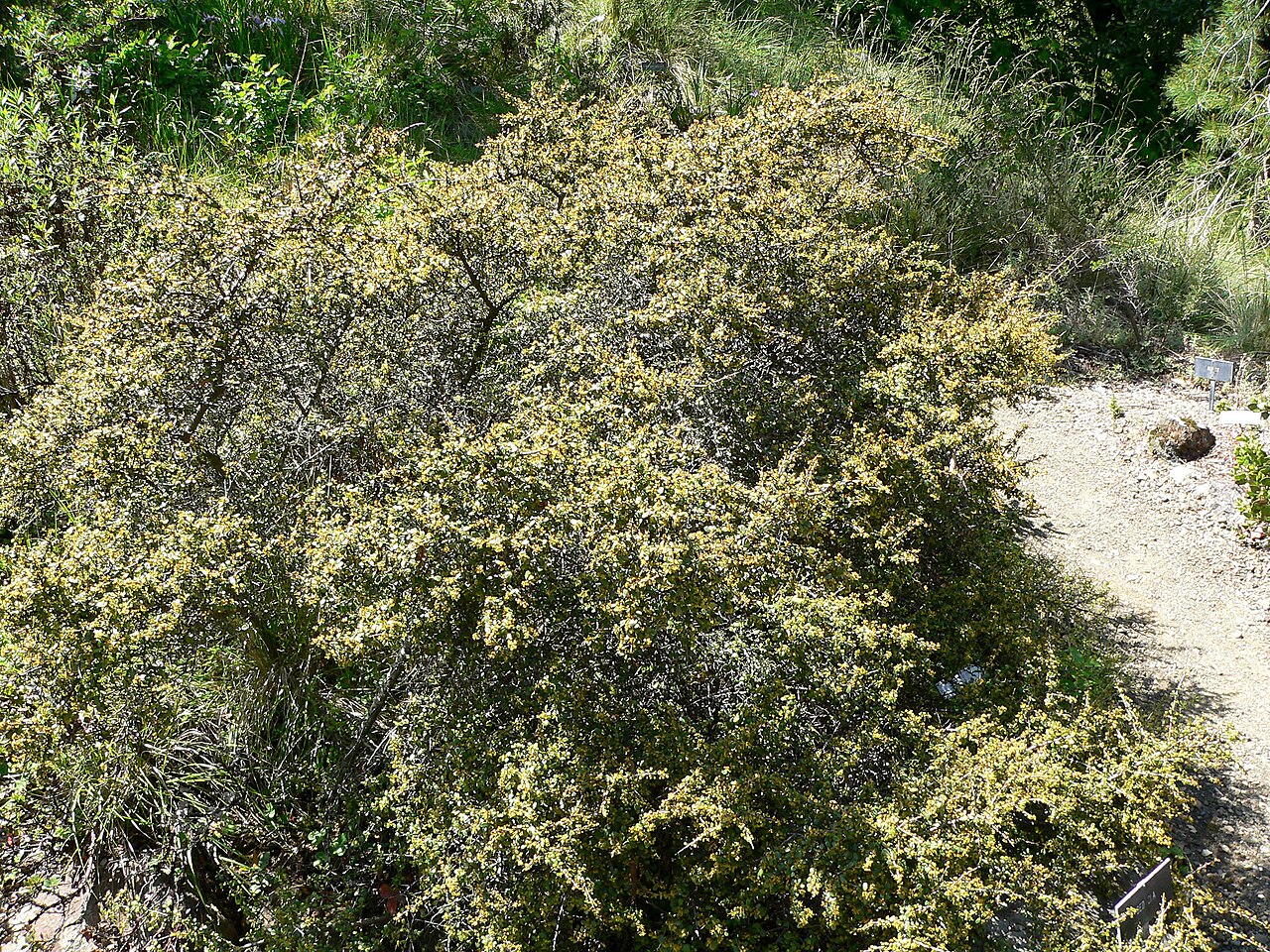
Rhamnus crocea, commonly called spiny redberry or redberry buckthorn, is a compact, tenacious evergreen shrub of California and Arizona’s dry foothills and chaparral. It is one of the smallest-leaved members of the California buckthorn group, forming a tight, twiggy mound studded with small, stiff, spine-tipped leaves and, in season, bright orange-red berries that light up an otherwise subdued shrub.
Typically reaching just 2 to 8 feet tall, spiny redberry rarely dominates a landscape visually, but it is an exceptionally durable, low-water shrub that holds its ground on the driest, rockiest slopes where many showier natives struggle. Its tight branching and spiny leaf tips also make it a useful, if prickly, habitat shrub — dense enough to shelter small birds from predators, yet low-maintenance enough to need almost no care once established.
Spiny redberry is closely related to, and sometimes confused with, hollyleaf redberry (Frangula ilicifolia); the two were historically treated as varieties of a single species and still intergrade where their ranges overlap. Spiny redberry tends to have smaller leaves and a more compact, twiggy habit, making it a good choice for tight spaces where hollyleaf redberry would grow too large.
Identification
Spiny redberry grows as a dense, rounded to irregular evergreen shrub, usually 2 to 8 feet tall, with rigid, intricately branched twigs that often end in a sharp spine. The tight branching pattern gives the shrub a compact, almost gnarled appearance even on young plants.
Leaves
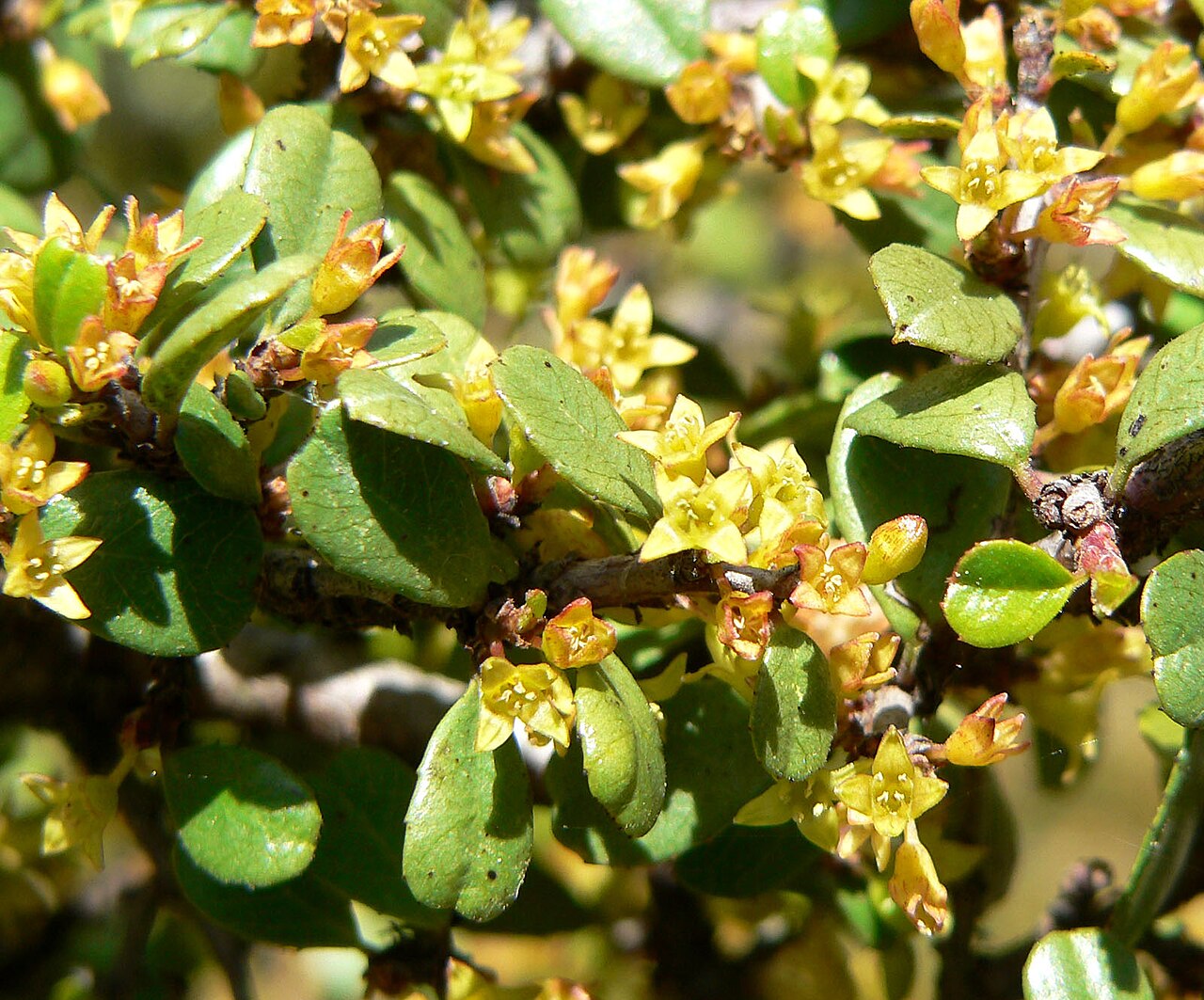
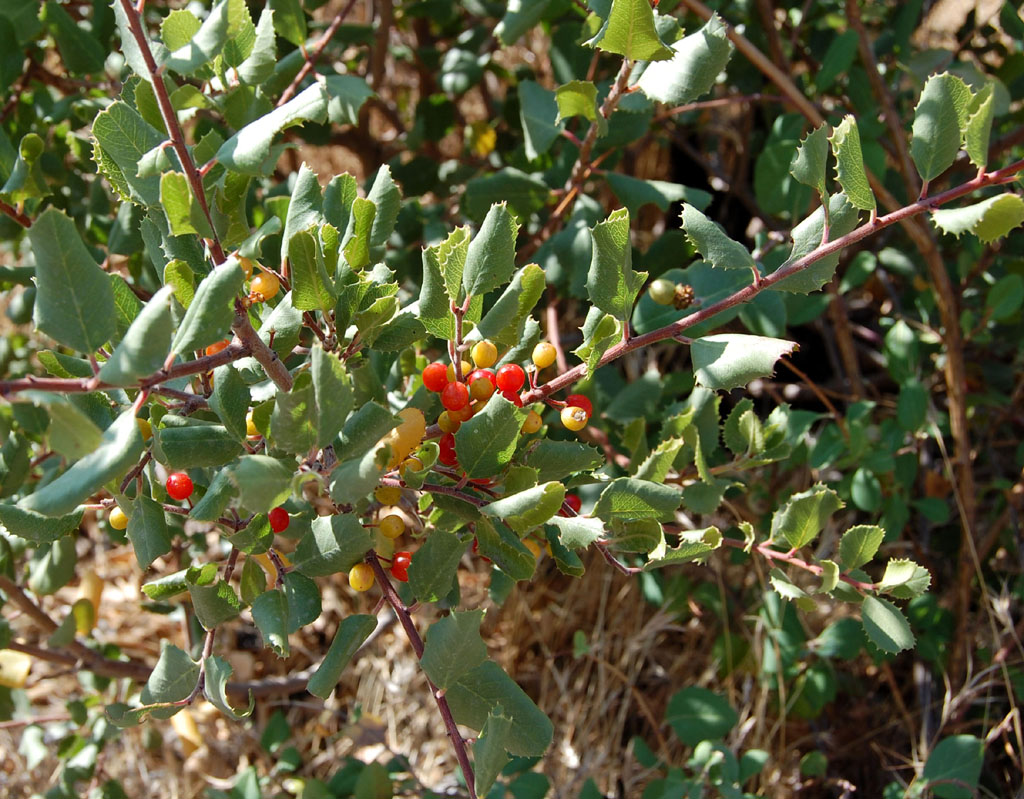
Leaves are small — typically ⅓ to 1 inch long — oval to nearly round, leathery, and glossy dark green above, with finely toothed to nearly smooth margins and a short spine at the leaf tip. They are noticeably smaller than the leaves of hollyleaf redberry, a useful field mark for telling the two species apart where they grow side by side.
Flowers
Small, star-shaped, greenish-yellow flowers appear in late winter to spring, clustered tightly along the twigs at leaf axils. Though individually tiny, the flowers can be abundant enough to give the whole shrub a pale yellow-green cast when in full bloom, and they draw in a range of small native pollinators.
Fruit & Seeds
The fruit is a small, round drupe, about ¼ inch across, ripening through shades of yellow and orange to bright translucent red, usually in summer. Each berry contains one to two seeds. The berries are produced in loose clusters and tend to color unevenly on the same branch, so ripe red, orange and still-green fruit are often visible together.
Quick Facts
| Scientific Name | Rhamnus crocea |
| Family | Rhamnaceae (Buckthorn) |
| Plant Type | Evergreen Shrub |
| Mature Height | 2–8 ft |
| Mature Spread | 3–8 ft |
| Growth Rate | Slow |
| Sun Exposure | Full Sun to Part Shade |
| Water Needs | Low |
| Soil Type | Well-drained; rocky, sandy or clay-loam |
| Soil pH | 6.0–8.0 (neutral to alkaline) |
| Bloom Time | February – April |
| Flower Color | Greenish-yellow |
| Fall Color | None (evergreen) |
| Fruit | Orange to translucent red berries |
| Deer Resistant | Yes (spiny twigs discourage browsing) |
| USDA Hardiness Zones | 8–10 |
Native Range
Spiny redberry is native to coastal and interior Southern and central California, extending through the Coast Ranges, Transverse Ranges, and foothills surrounding the Central Valley, and south into Arizona, where it occupies similar dry, low-elevation slopes. It generally keeps to lower elevations than hollyleaf redberry and favors drier, more open sites.
Within its range, spiny redberry grows in chaparral, coastal sage scrub, and dry oak woodland, typically on rocky or gravelly slopes and canyon sides with excellent drainage. It is well adapted to the long, rainless California summer and resprouts from its root crown after fire, allowing populations to persist through repeated burn cycles.
Because spiny redberry and hollyleaf redberry overlap extensively and intergrade where their ranges meet, some regional floras and nursery sources have historically lumped them together as varieties of one species; gardeners and restoration projects should confirm which species they are actually working with, particularly in areas near the zone of overlap.
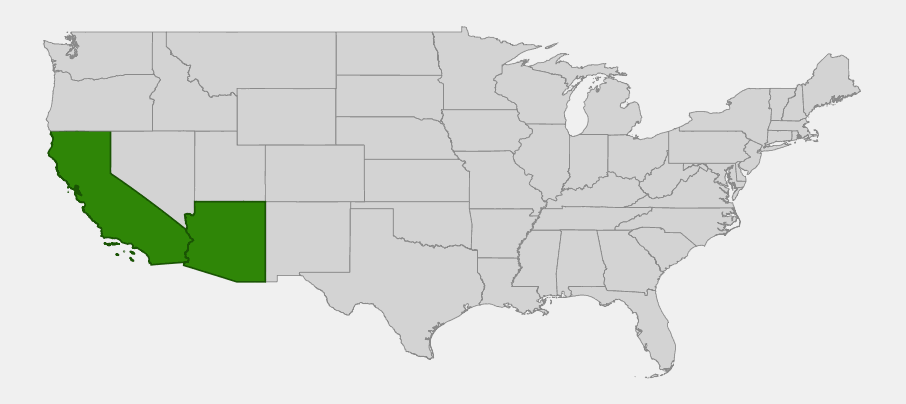
📋 Regional plant lists featuring Spiny redberry: California & Nevada · Arizona & New Mexico
Growing & Care Guide
Spiny redberry is a slow but exceptionally tough shrub, well suited to gardeners who want a genuinely low-water, low-maintenance native for a difficult, sun-baked spot.
Light
Full sun produces the tightest, most compact growth and the best flowering and fruiting, though the species also tolerates part shade in hot interior gardens.
Soil & Water
Sharp drainage is essential; spiny redberry is adapted to thin, rocky chaparral soils and performs poorly in heavy, wet ground. Once established, it needs little to no supplemental summer water in coastal and foothill California gardens — a rare trait that makes it valuable for genuinely waterwise landscaping. Avoid regular irrigation near the root crown, which invites rot.
Planting Tips
Plant from containers in fall to allow roots to establish during the rainy season. Because it grows slowly and stays compact, spiny redberry works well in smaller garden spaces where hollyleaf redberry or other larger chaparral shrubs would eventually outgrow the site. Space plants 3 to 6 feet apart for a naturalistic grouping.
Pruning & Maintenance
Little pruning is required. The shrub’s naturally tight, twiggy form rarely needs shaping; remove dead wood as needed. Because growth is slow, avoid heavy cutting, which the plant is slow to recover from. It is largely free of serious pests and diseases.
Landscape Uses
Spiny redberry’s small size and toughness suit it to several garden roles:
- Low, drought-tolerant foundation shrub for hot, dry sites
- Wildlife hedgerow — spiny twigs provide safe cover for small birds
- Rock gardens and dry slopes where its compact habit fits tight spaces
- Fire-wise landscaping as part of a defensible, low-fuel planting scheme
- Chaparral restoration on disturbed or eroding slopes
Wildlife & Ecological Value
Despite its modest size, spiny redberry contributes real value to chaparral wildlife, especially as cover and summer forage.
For Birds
The berries are eaten by a variety of chaparral and foothill birds, including California towhees, thrashers and mockingbirds, offering fruit during the dry summer months when little else is producing. The dense, spine-tipped branching provides secure nesting and roosting cover that discourages larger predators.
For Mammals
Small mammals browse the fruit and use the tight branching structure for shelter. The spiny twigs discourage heavy browsing by deer, helping the species persist even under grazing pressure that can suppress less defended shrubs.
For Pollinators
The abundant small spring flowers attract native bees and other small pollinating insects, offering an early-season nectar source in chaparral communities where flowering can otherwise be sparse in late winter.
Ecosystem Role
As a fire-adapted, slow-growing shrub that resprouts from its root crown, spiny redberry contributes to the long-term structural stability of chaparral plant communities through repeated fire cycles. Its tolerance of poor, rocky soils also allows it to anchor slopes that would otherwise be prone to erosion.
Cultural & Historical Uses
Documented traditional use of spiny redberry specifically is limited in the ethnobotanical record compared to some other California shrubs. As with its relative hollyleaf redberry, the fruit is not established as a safe food, and no reliable historical medicinal use has been documented for this species specifically; any mention of buckthorn-family medicinal bark refers to other species, such as cascara, not to spiny redberry.
Historically, spiny redberry’s main significance has been ecological rather than cultural — a persistent, slow-growing component of California and Arizona chaparral that has anchored dry slopes and fed wildlife through countless fire-and-regrowth cycles. Its toughness and modest size have more recently made it a quiet favorite in waterwise and fire-resistant native landscaping.
Frequently Asked Questions
Can you eat spiny redberry berries?
No — the berries are not established as a safe food and should be left for wildlife rather than eaten.
How can I tell spiny redberry from hollyleaf redberry?
Look at leaf size: spiny redberry has notably smaller leaves (often under an inch) and a tighter, more twiggy, spine-tipped growth habit, while hollyleaf redberry (Frangula ilicifolia) has larger, more sharply spine-toothed leaves and a looser form. The two overlap in range and occasionally intergrade, so some individuals can be hard to tell apart.
Is spiny redberry a good choice for a small garden?
Yes. Its slow growth rate and compact mature size (often under 6 feet) make it one of the better chaparral shrubs for small spaces where larger natives would eventually crowd out neighboring plants.
Does spiny redberry need regular watering once established?
No. It is genuinely drought-tolerant once its roots are established, and regular summer irrigation is more likely to cause problems, especially root rot in heavy soil, than to benefit the plant.
Is spiny redberry deer resistant?
Yes. The spine-tipped twigs discourage browsing, making it a dependable choice in gardens with significant deer pressure.

Looking for a nursery that carries Spiny Redberry?
Browse our native plant nursery directory: California · Arizona