Cleveland’s Penstemon (Penstemon clevelandii)
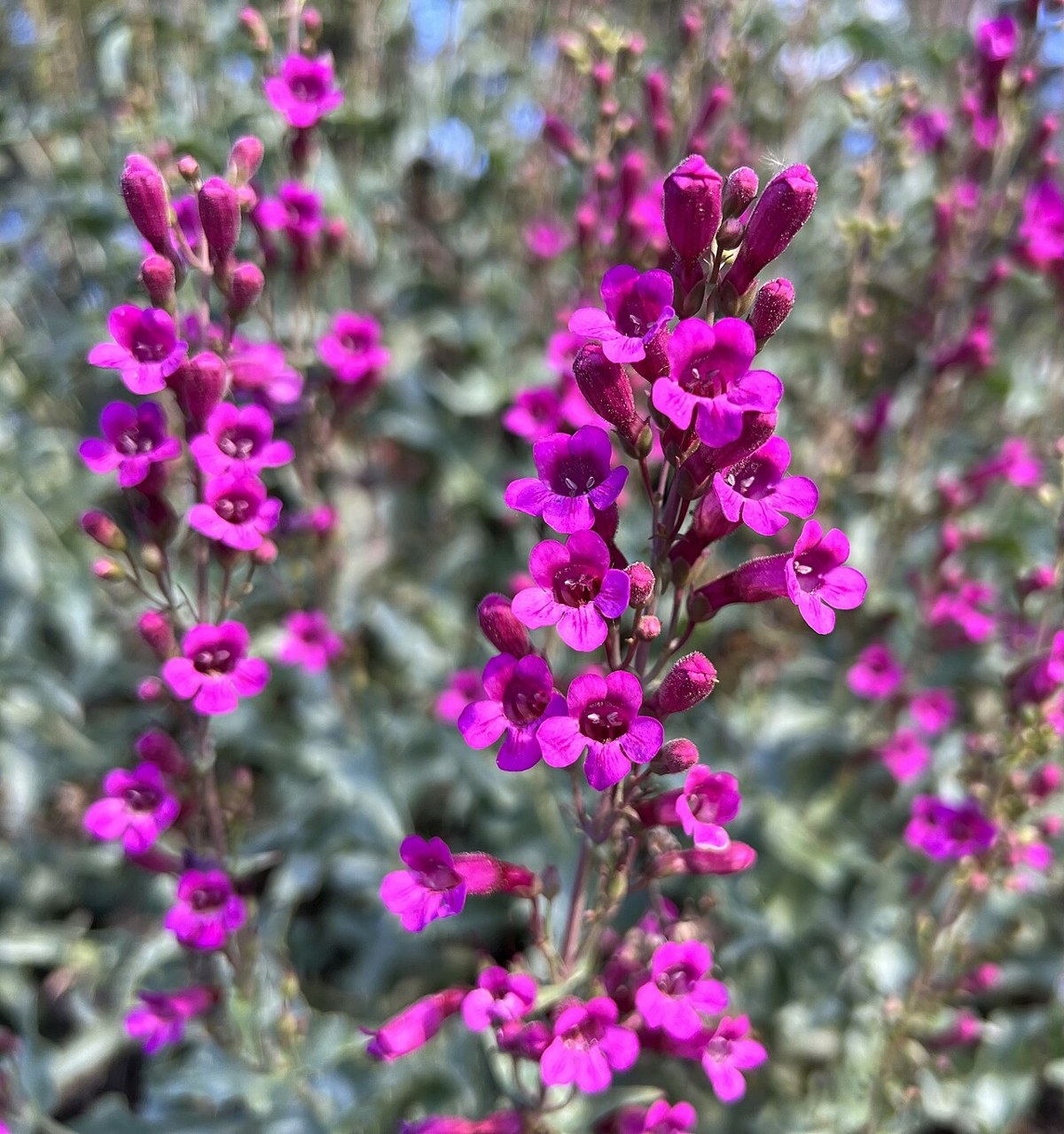
Penstemon clevelandii, known as Cleveland’s penstemon or Cleveland’s beardtongue, is a compact perennial subshrub found on the dry slopes and desert edges of San Diego County, California, and adjacent northern Baja California. Named for the 19th-century botanist Daniel Cleveland, a founder of the San Diego Society of Natural History, this penstemon is one of the showiest small-statured members of its genus in Southern California, producing dense whorls of vivid magenta-pink flowers each spring.
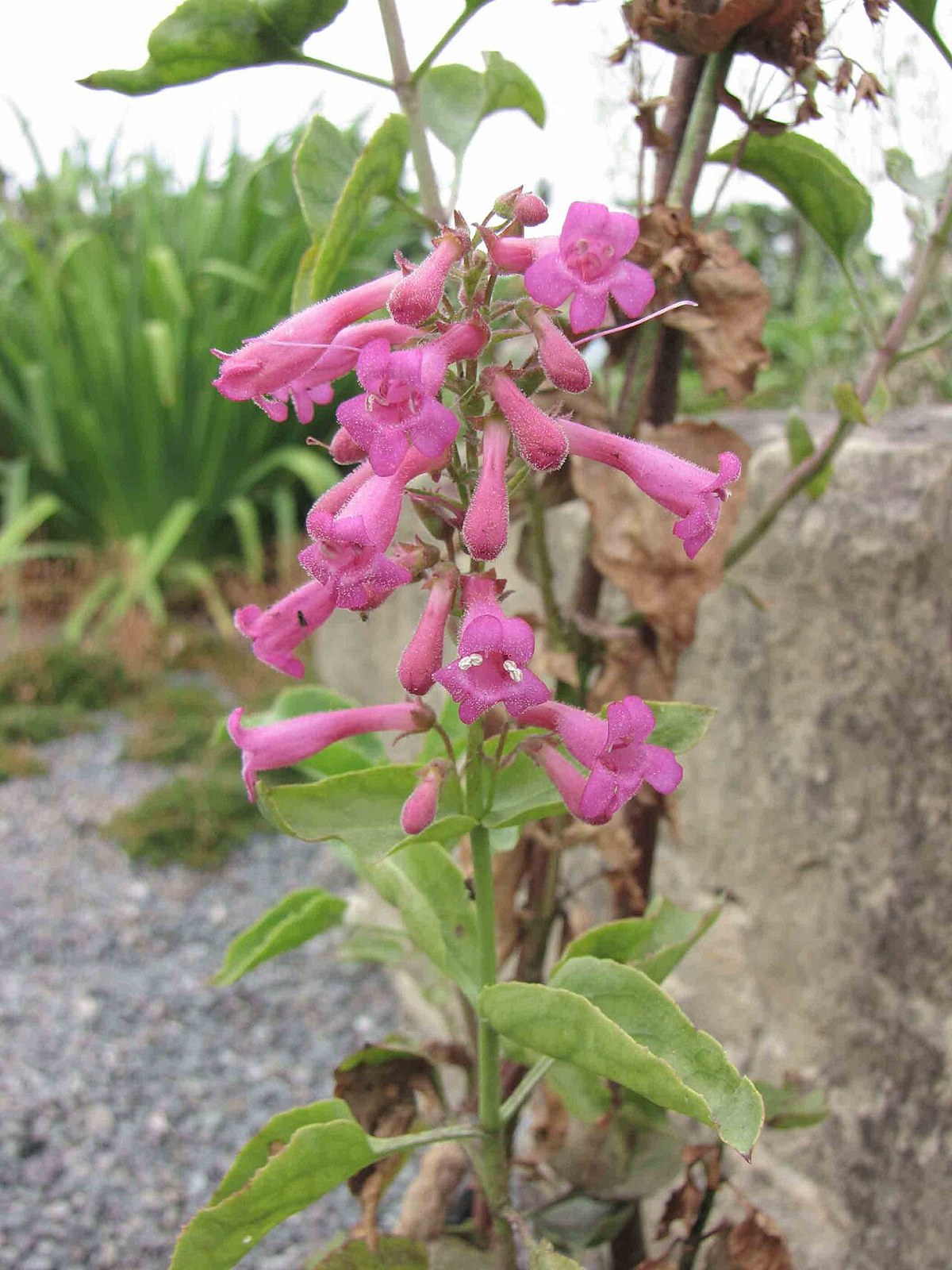
Unlike the tall, wand-like penstemons of the Rocky Mountains, Cleveland’s penstemon stays low and shrubby, rarely topping 2 to 3 feet, with gray-green, somewhat succulent leaves that clasp the stem. The flowers appear in tight, candelabra-like clusters along the upper stems, opening over several weeks in March through May and drawing hummingbirds from first bloom. The color is striking even among California’s showy spring wildflowers — a saturated rose-magenta rather than the more muted lavender or blue-purple typical of many western penstemons.
In the garden, Cleveland’s penstemon is a favorite of hummingbird and water-wise gardeners throughout coastal and inland Southern California. It asks for sharp drainage and minimal summer water, rewarding restraint with a long season of nectar-rich bloom and a tidy, long-lived subshrub form that holds its own in a rock garden or dry border.
Identification
Cleveland’s penstemon is a woody-based perennial subshrub, typically 1 to 3 feet tall and somewhat wider, with multiple stems rising from a persistent woody crown. The stems are stiffly upright to slightly sprawling, becoming woody at the base with age while the upper growth remains herbaceous and dies back somewhat after flowering.
Leaves
Leaves are opposite, thick and somewhat fleshy, gray-green to blue-green, oval to lance-shaped, 1 to 2½ inches long, with coarsely toothed margins. The upper leaves often clasp the stem directly without a petiole, a trait shared with several other desert-adapted penstemons and useful for identification.
Flowers
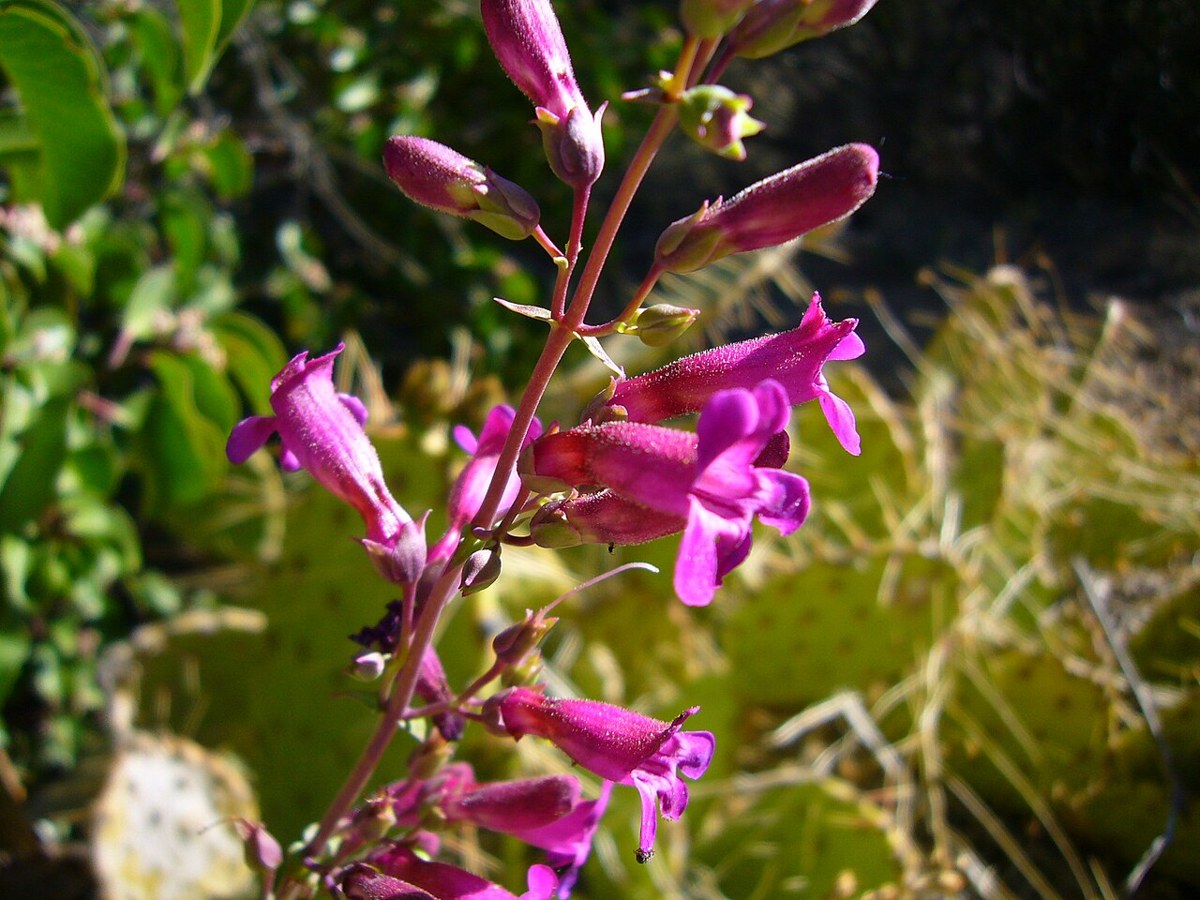
Flowers are arranged in dense, whorled clusters (verticillasters) stacked along the upper few inches of each flowering stem, giving the inflorescence a layered, candelabra-like appearance. Individual flowers are tubular, strongly two-lipped, 1 to 1¼ inches long, in a rich magenta to rose-purple that deepens toward the throat. The corolla is inflated near the mouth and glandular-hairy on the outer surface. Bloom occurs from March into May, occasionally extending into early summer at higher elevations within its range.
Fruit & Seeds
Flowers mature into small, two-chambered capsules that split open to release numerous fine seeds by mid to late summer. Like most penstemons, the capsules are dry and inconspicuous, persisting on the dried flowering stalks well after the petals have dropped.
Quick Facts
| Scientific Name | Penstemon clevelandii |
| Family | Plantaginaceae (Plantain) |
| Plant Type | Perennial subshrub |
| Mature Height | 1–3 ft |
| Mature Spread | 1–2 ft |
| Growth Rate | Moderate |
| Sun Exposure | Full Sun |
| Water Needs | Very Low once established |
| Soil Type | Fast-draining; rocky, sandy or decomposed granite |
| Soil pH | 6.5–8.0 (neutral to slightly alkaline) |
| Bloom Time | March – May |
| Flower Color | Magenta to rose-purple |
| Fall Color | None (gray-green foliage year-round) |
| Fruit | Small dry capsules (inconspicuous) |
| Deer Resistant | Yes |
| USDA Hardiness Zones | 8–10 |
Native Range
Cleveland’s penstemon is native to San Diego County, California, where county-level records confirm its presence on dry slopes and desert-edge habitats, with its range continuing south into northern Baja California, Mexico. It is a narrow-range Southern California endemic within the United States, not recorded as native in any other state.
It grows on dry, rocky or gravelly slopes in chaparral, coastal sage scrub, and the desert-facing transition zone where these plant communities meet the Colorado Desert, typically from near sea level to around 4,000 feet elevation. It favors open, sunny sites with excellent drainage rather than dense shrub cover.
Because its native range is so geographically narrow, Cleveland’s penstemon is primarily of interest to gardeners within or near San Diego County and similar dry, mild-winter climates; it is not a widely planted or naturalized species elsewhere in California.
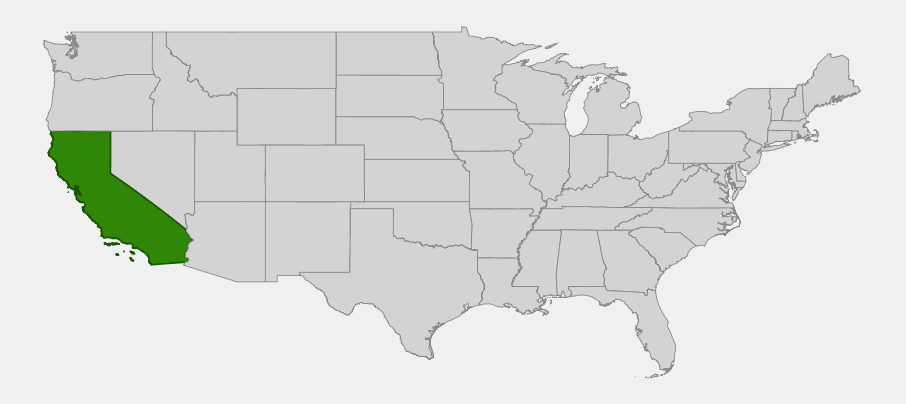
📋 Regional plant lists featuring Cleveland’s Penstemon: California & Nevada
Growing & Care Guide
Cleveland’s penstemon is an easy, long-lived garden subject as long as its one non-negotiable requirement is met: sharp drainage. Give it that, and it asks for very little else.
Light
Full sun is essential. This is a plant of open, sun-baked slopes, and it will grow leggy and bloom poorly in shade. Coastal gardeners can give it the sunniest spot available; inland gardeners should still choose full sun, since the species is well adapted to heat as long as its roots stay dry.
Soil & Water
Fast drainage is critical — rocky, sandy, or decomposed-granite soils suit it best, and heavy clay should be amended generously or avoided. Water deeply but infrequently during the first year to establish roots, then taper off; mature plants need little to no supplemental water during the dry season and are prone to root rot if kept consistently moist, especially in summer.
Planting Tips
Plant in fall so roots can establish during the cool, wet winter months typical of its native range. Space plants 18 to 24 inches apart, and avoid low spots where water collects after rain. Raised beds, rock gardens, or slopes are ideal settings.
Pruning & Maintenance
Cut back spent flowering stems after bloom to tidy the plant and encourage fuller growth the following season. Older plants benefit from a light renewal pruning in late winter to keep the woody base from becoming too sparse. Avoid summer pruning or heavy watering, which can stress the plant during its natural dry-season rest.
Landscape Uses
- Hummingbird gardens — an early and reliable spring nectar source
- Rock gardens and raised beds with sharp drainage
- Dry slopes where few other flowering natives thrive
- Water-wise borders paired with buckwheats and sages
- Desert-edge and chaparral restoration plantings
Wildlife & Ecological Value
Cleveland’s penstemon blooms early in the Southern California wildflower season, making it an important nectar source before many summer-blooming natives have started.
For Pollinators
The tubular, glandular-hairy flowers are well suited to hummingbird pollination, while native bees also visit for nectar and pollen, sometimes entering the tube directly and sometimes landing on the lower lip as a platform.
For Birds
Anna’s and Costa’s hummingbirds are frequent visitors during the March-to-May bloom period, and the plant’s early flowering helps bridge the gap between winter and the main spring wildflower bloom.
For Mammals
The gray-green, somewhat bitter foliage is not a preferred browse for deer or rabbits, making this a dependable choice in gardens with wildlife pressure.
Ecosystem Role
As a low, drought-adapted subshrub on open rocky slopes, Cleveland’s penstemon helps stabilize thin desert-edge soils and adds structural diversity to chaparral and coastal sage scrub plant communities that are otherwise dominated by larger, denser shrubs.
Cultural & Historical Uses
Cleveland’s penstemon commemorates Daniel Cleveland, a San Diego lawyer and naturalist who helped found the San Diego Society of Natural History in the 1870s and supported early botanical exploration of the region. The species was described from material collected during this period of intensive cataloging of Southern California’s flora.
There is no significant documented history of the plant as a food, fiber, or medicinal resource; its historical importance lies mainly in its role as one of the showier, more easily recognized wildflowers of the San Diego County backcountry, noted by early botanists for its vivid color against the muted tones of the surrounding chaparral.
In recent decades it has become a staple of California native plant nurseries specializing in drought-tolerant and hummingbird-friendly landscaping, reflecting a broader shift toward water-wise gardening in Southern California.
Frequently Asked Questions
How is Cleveland’s penstemon different from other California penstemons?
Its stacked, whorled clusters of magenta flowers and compact, woody-based subshrub form set it apart from taller, wand-like penstemon species. Its restricted native range in San Diego County and Baja California also makes it more regionally specific than many other western penstemons.
Does Cleveland’s penstemon need regular watering?
No. Once established, it needs very little supplemental water and is prone to problems if kept too moist, especially in summer. Occasional deep watering during extended drought is usually all it needs.
Is it deer resistant?
Yes, the gray-green foliage is generally left alone by deer and rabbits, making it a reliable choice in gardens where browsing pressure is a concern.
When does Cleveland’s penstemon bloom?
Typically from March into May, making it one of the earlier-blooming penstemons in Southern California gardens and an important nectar source before the main spring wildflower season peaks.
Can it be grown outside San Diego County?
It can be grown in other parts of coastal and inland Southern California with similar mild, dry-summer conditions and sharp drainage, but it is not naturally adapted to climates with humid summers, heavy clay soils, or hard winter freezes.

Looking for a nursery that carries Cleveland’s Penstemon?
Browse our native plant nursery directory: California