Desert Beardtongue (Penstemon pseudospectabilis)
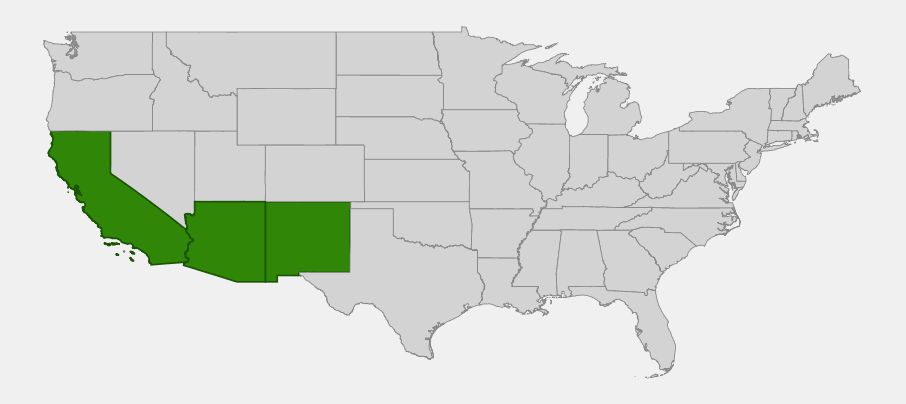
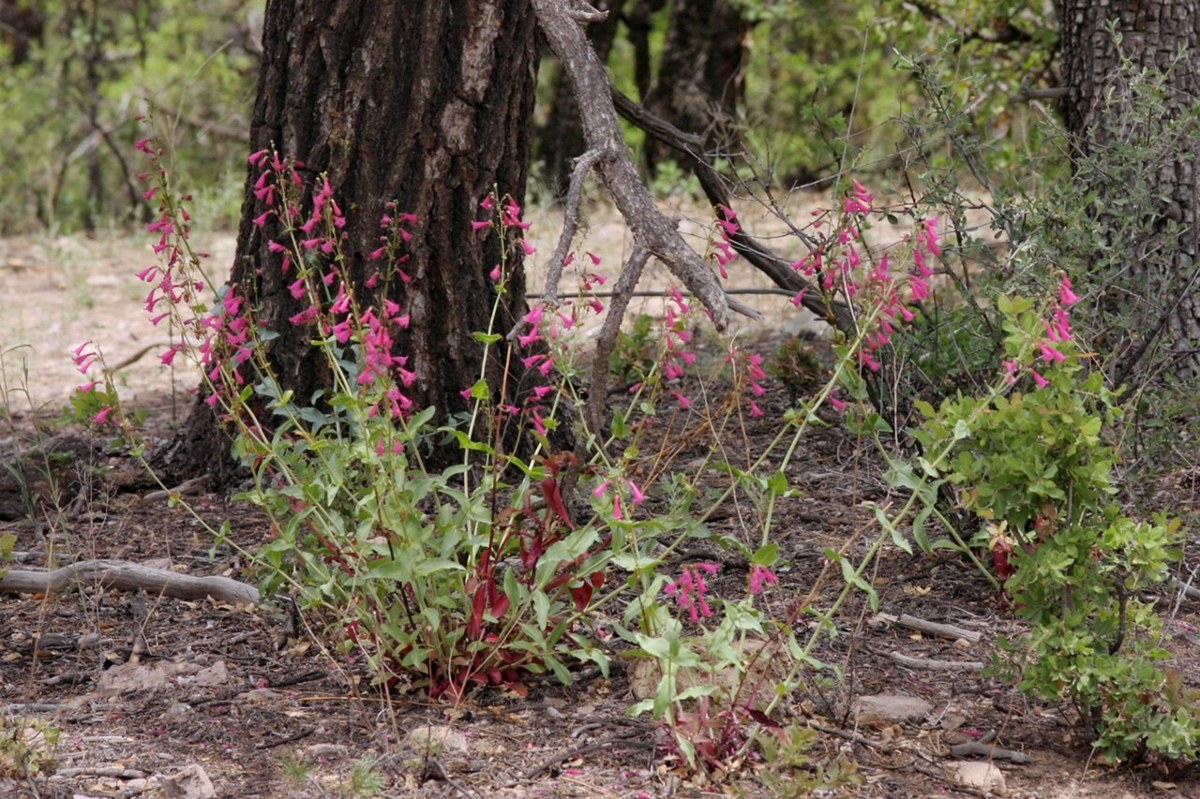
Penstemon pseudospectabilis, commonly called desert beardtongue or desert penstemon, is a showy perennial of the Sonoran and Mojave Desert transition zone, native to Arizona, New Mexico, and the desert mountains of extreme southeastern California. It is one of the most vivid spring-blooming penstemons of the Southwest, sending up tall spikes of bright pink to magenta tubular flowers from a rosette of blue-green, often perfoliate leaves.
The species name pseudospectabilis — “false showy” — refers to its resemblance to the related showy penstemon (Penstemon spectabilis) of coastal Southern California, though the two occupy largely separate ranges and habitats. Desert beardtongue favors the rocky washes, desert grasslands, and pinyon-juniper foothills of the interior Southwest, often appearing in dramatic numbers at the base of boulders or along dry streambeds after a wet winter.
In the garden, desert beardtongue is a standout choice for xeriscaping across Arizona and New Mexico, valued for its drought tolerance, its brilliant color, and its exceptional appeal to hummingbirds. The waxy, blue-green foliage remains attractive even out of bloom, and the plant tends to self-sow readily in open, well-drained ground, often forming loose colonies over time.
Identification
Desert beardtongue is an herbaceous perennial subshrub, typically 2 to 4 feet tall (occasionally to 5 feet in favorable conditions), with one to several upright flowering stems rising from a basal rosette of leaves. The plant has a somewhat shrubby, clump-forming habit and a waxy, blue-green cast to its foliage that distinguishes it from many other desert wildflowers at a distance.
Leaves
Leaves are opposite, thick and leathery, lance-shaped to triangular, 2 to 4 inches long, with sharply toothed margins. The upper stem leaves are often perfoliate — fused at the base so the stem appears to pass directly through the leaf blade — a distinctive trait shared with a handful of other desert penstemons and a useful identification mark.
Flowers
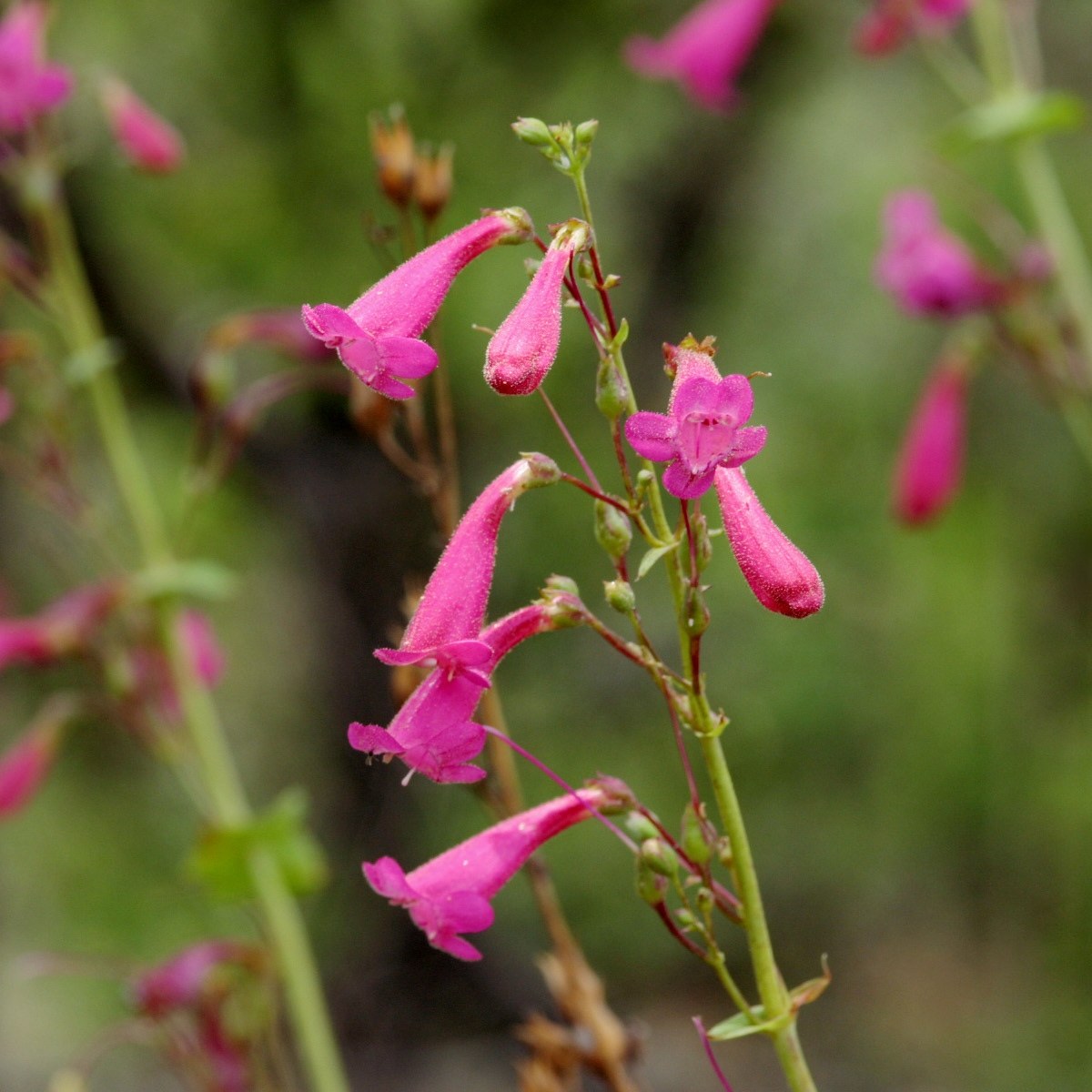
Flowers are borne in showy, elongated spikes (thyrses) along the upper half of each stem, each flower 1 to 1¼ inches long, tubular and strongly two-lipped, in vivid shades of bright pink to magenta with a paler, often white-streaked throat. The corolla flares open at the mouth, and the flowers are held somewhat horizontally to nodding along the stem. Bloom typically runs from March into May, with a secondary flush possible after summer monsoon rains in its Arizona and New Mexico range.
Fruit & Seeds
Flowers give way to small, two-chambered capsules that dry and split open to release numerous tiny seeds by summer. The dried seed stalks often persist into the following season and the species readily self-sows in open, undisturbed ground.
Quick Facts
| Scientific Name | Penstemon pseudospectabilis |
| Family | Plantaginaceae (Plantain) |
| Plant Type | Perennial subshrub |
| Mature Height | 2–4 ft (to 5 ft) |
| Mature Spread | 1–2 ft |
| Growth Rate | Moderate to fast |
| Sun Exposure | Full Sun |
| Water Needs | Very Low once established |
| Soil Type | Fast-draining; rocky, gravelly or sandy |
| Soil pH | 6.5–8.0 (neutral to alkaline) |
| Bloom Time | March – May, with a possible fall rebloom |
| Flower Color | Bright pink to magenta |
| Fall Color | None (blue-green foliage year-round) |
| Fruit | Small dry capsules (inconspicuous) |
| Deer Resistant | Yes |
| USDA Hardiness Zones | 6–10 |
Native Range
Desert beardtongue is native to Arizona and New Mexico, where it is widespread across the desert and transition zones, and to the desert mountains of extreme southeastern California, including ranges such as the New York and Providence Mountains, confirmed by California native plant survey records. Its range extends south into adjacent Sonora, Mexico.
It grows in desert washes, rocky slopes, desert grassland, and pinyon-juniper and oak woodland foothills, generally from about 2,000 to 6,000 feet elevation — higher than many true desert-floor wildflowers, which is why it is often found at the edges of canyons and in foothill terrain rather than on the open desert floor itself.
Within California, desert beardtongue is restricted to desert mountain habitat in the state’s southeastern corner and should not be assumed hardy or appropriate for coastal or Central Valley gardens; it is best suited to true desert and high-desert climates across its Arizona, New Mexico, and far southeastern California range.
📋 Regional plant lists featuring Desert Beardtongue: Arizona & New Mexico · California & Nevada
Growing & Care Guide
Desert beardtongue is one of the easiest and most rewarding penstemons for Southwestern xeriscaping, thriving on neglect once it has a season to settle in.
Light
Full sun is essential; this is a plant adapted to open desert and foothill terrain with little natural shade, and it blooms most heavily when given as much direct sun as possible.
Soil & Water
Sharp drainage is the key to success — rocky, gravelly, or sandy soils mimic its native washes and slopes. Water regularly during the first growing season to establish a deep root system, then reduce to occasional deep watering; established plants tolerate long dry spells and often need no supplemental irrigation beyond natural rainfall in much of their range. Poorly drained or consistently moist soil is the most common cause of failure.
Planting Tips
Plant in fall or early spring. Space plants 18 to 24 inches apart to allow for the clump’s eventual spread, and choose a site with excellent air circulation to reduce the risk of fungal issues during humid monsoon periods. Desert beardtongue self-sows readily in open gravel or decomposed granite, so bare ground nearby will often fill in on its own over a few seasons.
Pruning & Maintenance
Deadhead or cut back spent flower spikes after the main spring bloom to encourage a possible rebloom following summer monsoon rains in Arizona and New Mexico. Cut the whole plant back by about half in late winter to keep growth compact and vigorous; the species is generally short-lived (3 to 5 years) but readily replaces itself through self-sown seedlings.
Landscape Uses
- Hummingbird gardens — among the showiest nectar sources in desert landscaping
- Xeriscape and rock gardens requiring minimal irrigation
- Desert washes and dry slopes in naturalistic plantings
- Butterfly gardens — also visited by hairstreaks and other desert butterflies
- Pollinator meadows mixed with other desert perennials and grasses
Wildlife & Ecological Value
Desert beardtongue is a major nectar resource in the dry Southwest, where showy, hummingbird-adapted flowers are less common than in wetter climates.
For Pollinators
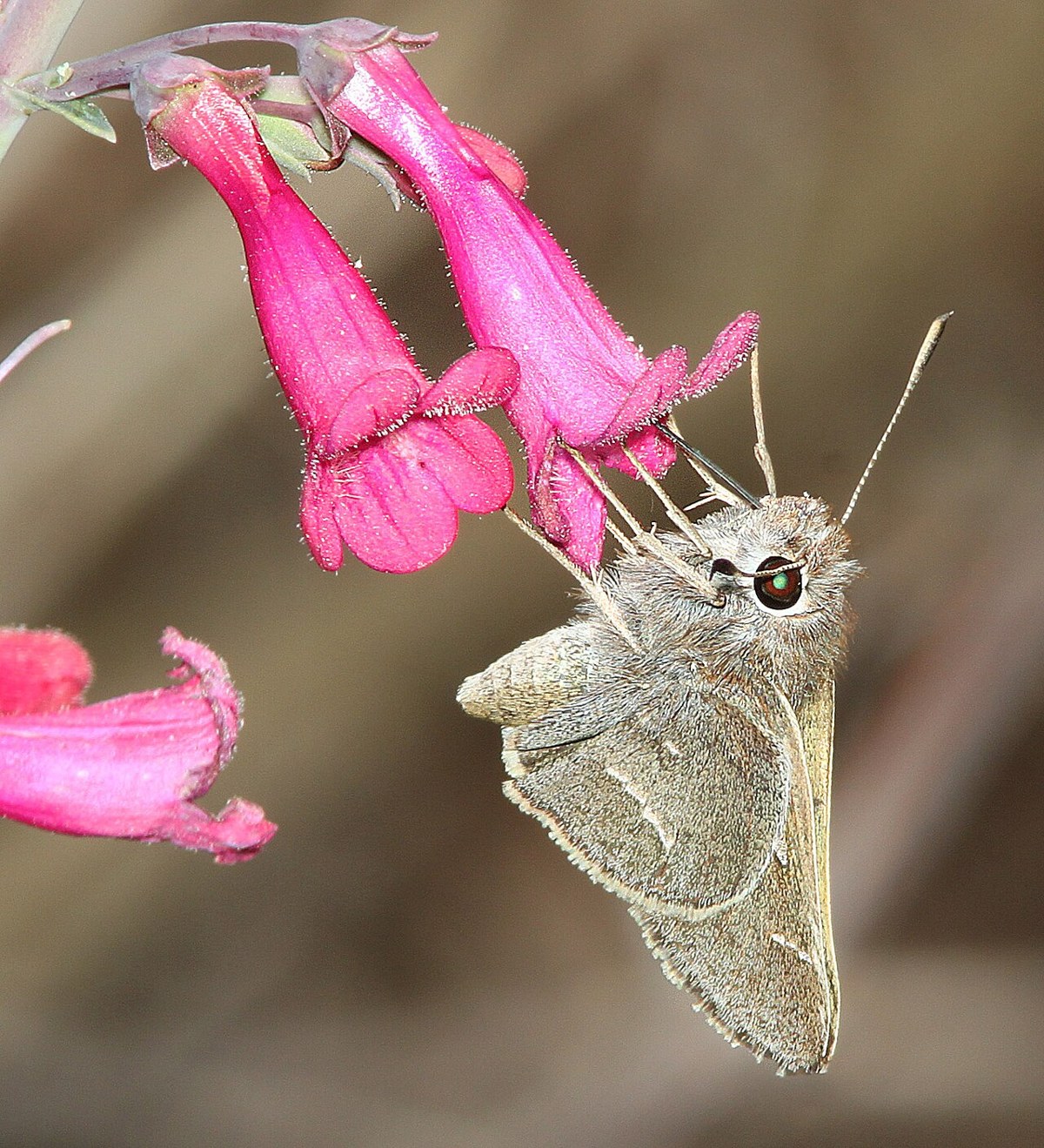
The tubular, brightly colored flowers are primarily pollinated by hummingbirds, but also attract native bees and butterflies, including hairstreaks, which have been photographed nectaring at the flowers alongside hummingbird visits.
For Birds
Black-chinned, broad-tailed, and Anna’s hummingbirds are regular visitors across the species’ Arizona and New Mexico range, timing their spring migration and breeding activity to coincide with peak bloom.
For Mammals
The leathery, somewhat bitter foliage is generally unpalatable to deer and rabbits, making this a reliable choice where browsing pressure limits other flowering perennials.
Ecosystem Role
By colonizing disturbed washes, rocky slopes, and canyon edges, desert beardtongue helps stabilize soil in erosion-prone terrain and adds a burst of color and nectar to desert plant communities during the relatively brief spring bloom window.
Cultural & Historical Uses
Desert beardtongue does not have a well-documented history as a major food, fiber, or medicinal plant among the Indigenous peoples of the Southwest in the way that some other regional species do; it is primarily noted in historical botanical accounts as a conspicuous and attractive component of the desert and foothill flora of Arizona and New Mexico.
The species was first described based on specimens collected in the American Southwest in the 19th century, and its name reflects early botanists’ recognition of its close resemblance to the related, more coastal Penstemon spectabilis — hence “pseudospectabilis,” or false-showy penstemon.
In more recent decades, desert beardtongue has become an important plant in the Southwestern native and xeriscape nursery trade, promoted for its drought tolerance, hummingbird appeal, and ability to add reliable spring color to low-water landscaping across Arizona and New Mexico.
Frequently Asked Questions
Is desert beardtongue native to California?
Yes, but only in a limited part of the state — the desert mountains of extreme southeastern California, such as the New York and Providence Mountains. It is far more widespread across Arizona and New Mexico.
How much water does desert beardtongue need?
Very little once established. Regular water during the first growing season helps it establish a deep root system, but mature plants are highly drought tolerant and can suffer from root rot if overwatered, especially in heavy or poorly drained soil.
Will desert beardtongue attract hummingbirds?
Yes — it is one of the most reliable hummingbird plants for Southwestern gardens, drawing black-chinned, broad-tailed, and Anna’s hummingbirds during its spring bloom.
How long does desert beardtongue live?
Individual plants are relatively short-lived, often 3 to 5 years, but the species self-sows readily in open, well-drained ground, so established plantings tend to persist and spread over time through new seedlings.
Does desert beardtongue rebloom after summer rains?
In Arizona and New Mexico, where summer monsoon rains are reliable, deadheaded plants will sometimes produce a lighter second flush of bloom after the rains begin, in addition to their main spring display.

Looking for a nursery that carries Desert Beardtongue?
Browse our native plant nursery directory: Arizona · New Mexico · California