Yellow Bush Penstemon (Keckiella antirrhinoides)
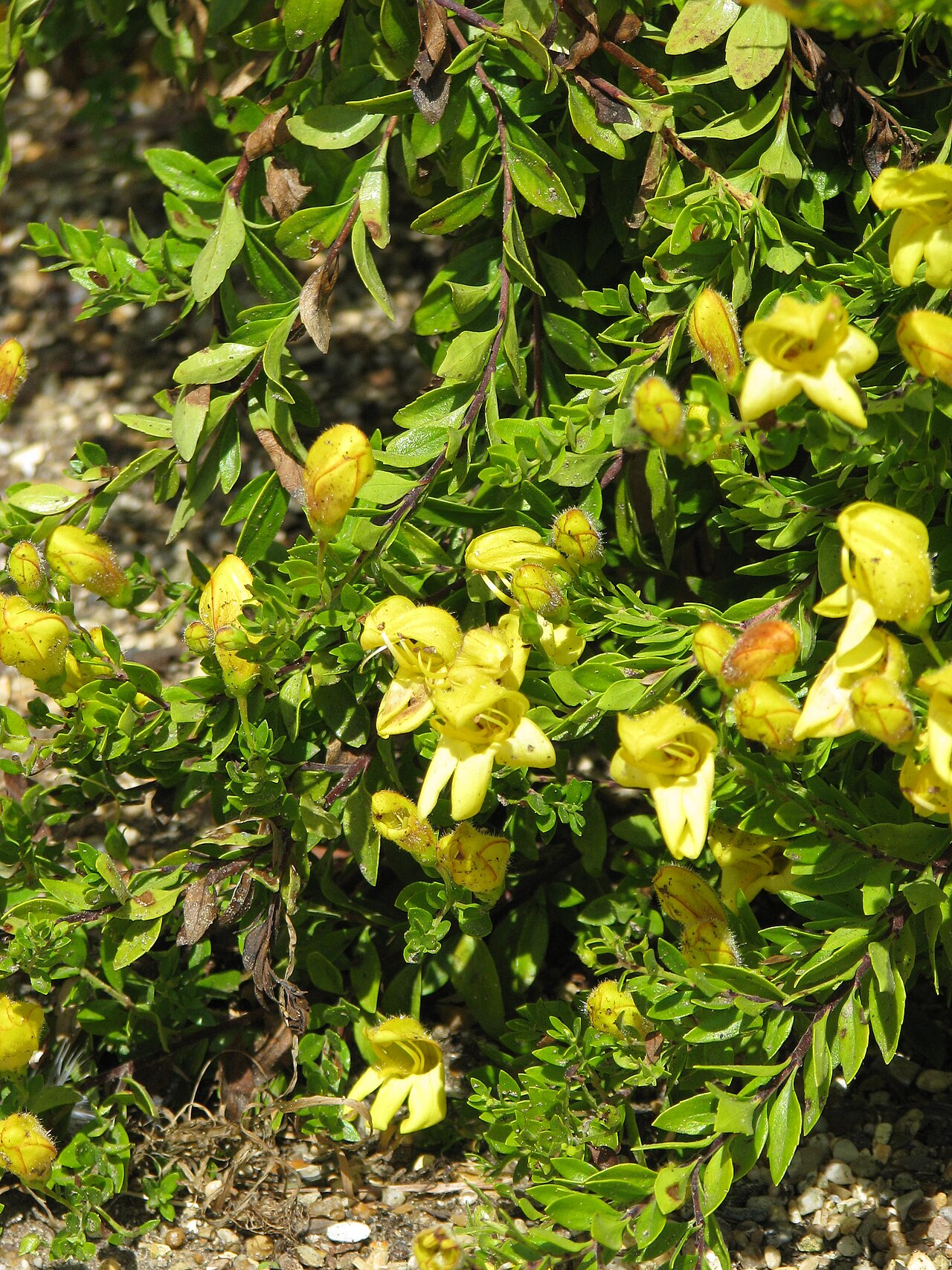
Keckiella antirrhinoides, commonly called yellow bush penstemon (also known as snapdragon penstemon or chaparral beardtongue), is a wiry, arching, evergreen-to-semi-deciduous shrub of the chaparral and desert transition zones of Southern California and central Arizona. Once classified within Penstemon, it was reclassified into the related genus Keckiella, but it retains the unmistakable snapdragon-shaped flowers that make the whole beardtongue tribe so recognizable — here in a bright, clear yellow rarely seen among native penstemons.
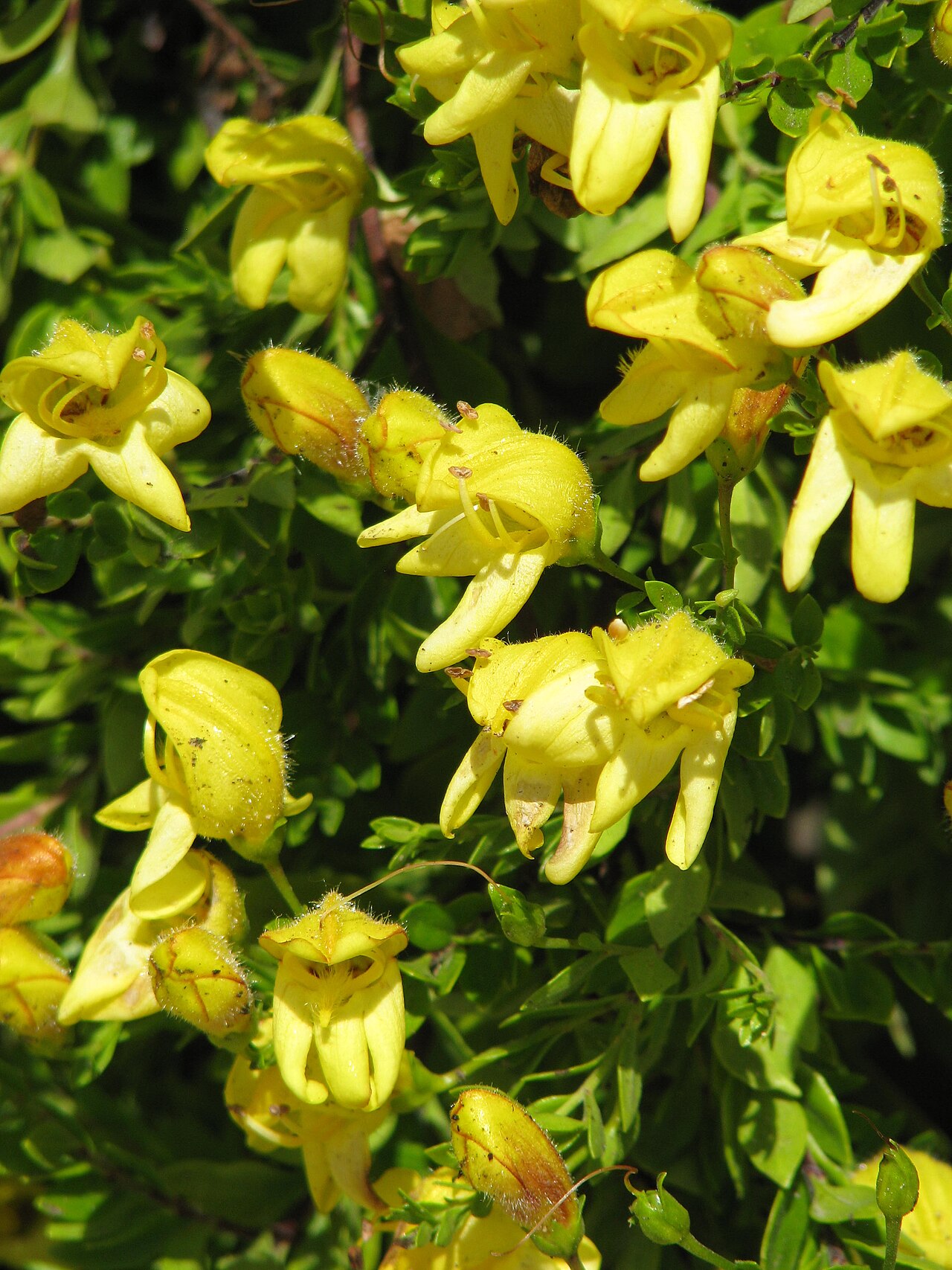
Growing 3 to 6 feet tall with slender, intricately branched stems and small, bright green leaves, yellow bush penstemon produces a profusion of tubular, two-lipped yellow flowers from spring into early summer, borne along the length of its arching branches rather than concentrated at the stem tips. The effect, at peak bloom, is a shrub-sized burst of gold that stands out sharply against the gray-greens and browns of surrounding chaparral.
Tolerant of poor, rocky soils and long summer drought, yellow bush penstemon is an excellent low-water choice for chaparral gardens, desert-edge plantings, and pollinator gardens throughout its native range, rewarding minimal care with months of cheerful, hummingbird- and bee-friendly bloom.
Identification
Yellow bush penstemon is a many-branched, semi-woody shrub 3 to 6 feet tall and often similarly wide, with slender, wiry stems that arch outward and downward, giving mature plants a loose, fountain-like form. The foliage is evergreen to semi-deciduous depending on summer drought severity, with plants often thinning out and dropping some leaves during the hottest months.
Bark & Stems
Stems are thin, numerous, and brownish-gray, branching repeatedly to create a dense, twiggy structure. The overall silhouette is airy rather than solid, allowing light to filter through even a mature specimen.
Leaves
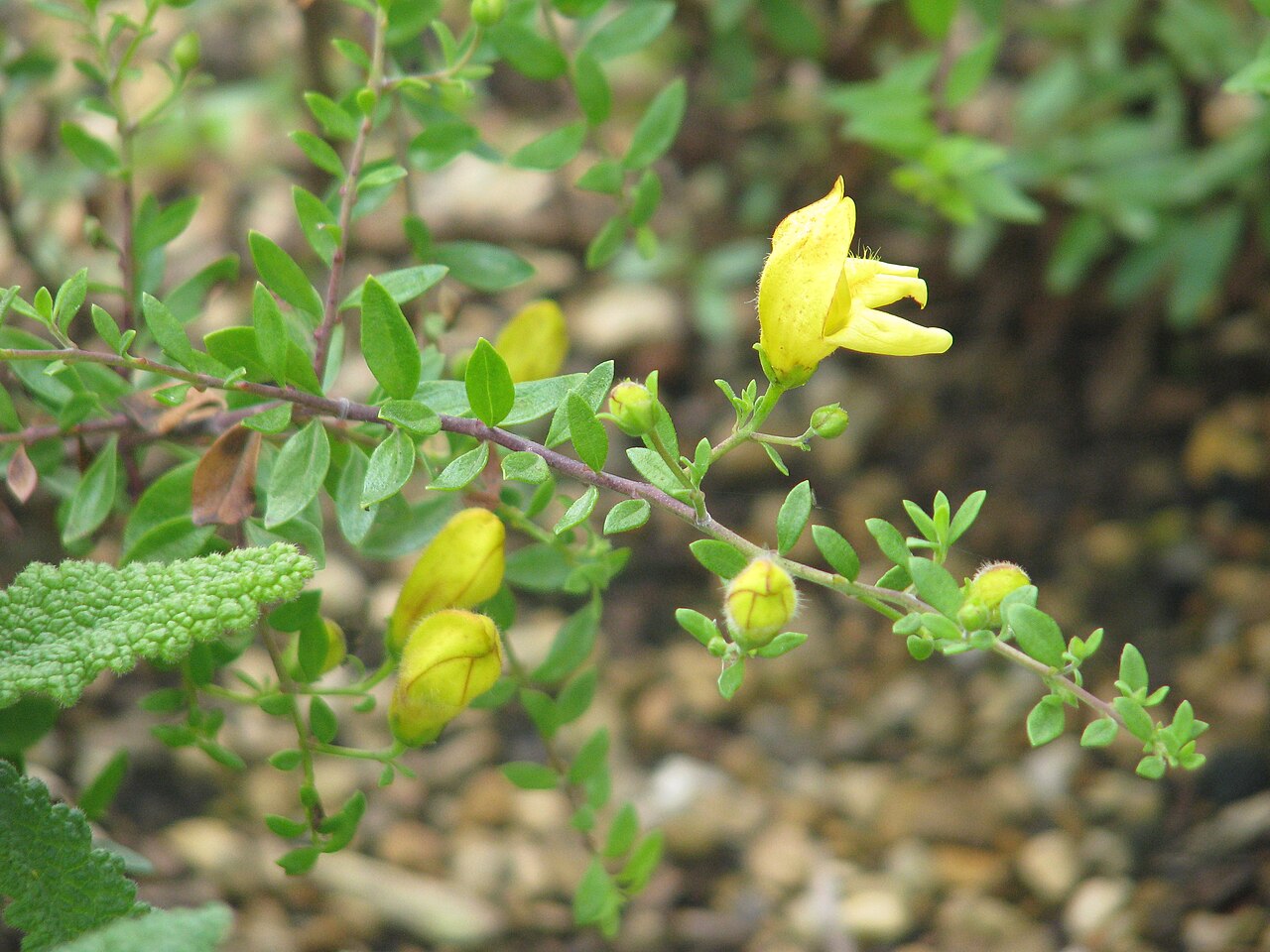
Leaves are small, opposite, and narrowly oval to lance-shaped, typically ½ to 1 inch long, with smooth or very finely toothed margins. Foliage is bright to medium green and relatively sparse along the wiry stems, giving the shrub an open, airy texture even when fully leafed out.
Flowers
Flowers are tubular and strongly two-lipped in classic snapdragon fashion, about ¾ to 1 inch long, in a clear, bright yellow that is unusual among California’s native penstemon relatives (most of which bloom in shades of blue, purple, pink, or red). Flowers are borne singly or in small clusters along the stems from the leaf axils, rather than in a single terminal spike, so the bloom display is spread generously across the whole plant. Bloom time runs from April through June, sometimes continuing sporadically into summer with adequate moisture.
Fruit & Seeds
Following flowering, the plant produces small, dry, two-chambered seed capsules that split open at maturity to release numerous tiny seeds. The capsules are inconspicuous and not ornamentally significant, in contrast to the showy flower display.
Quick Facts
| Scientific Name | Keckiella antirrhinoides (syn. Penstemon antirrhinoides) |
| Family | Plantaginaceae (Plantain, formerly Scrophulariaceae) |
| Plant Type | Evergreen to Semi-Deciduous Shrub |
| Mature Height | 3–6 ft |
| Mature Spread | 3–6 ft |
| Growth Rate | Moderate |
| Sun Exposure | Full Sun to Part Shade |
| Water Needs | Low; drought tolerant once established |
| Soil Type | Rocky, gravelly, or decomposed granite; well-drained |
| Soil pH | 6.5–8.0 |
| Bloom Time | April – June |
| Flower Color | Bright yellow |
| Fall Color | None notable; evergreen to semi-deciduous |
| Fruit | Small dry seed capsules, not ornamental |
| Deer Resistant | Moderate to Good |
| USDA Hardiness Zones | 8–10 |
Native Range
Yellow bush penstemon is native to Southern California, where it occurs widely through the South Coast Ranges, Transverse Ranges, Peninsular Ranges, and the edges of the Mojave and Colorado deserts, and to a separate area of central and western Arizona, extending into adjacent northern Baja California, Mexico. Despite sometimes being cited more broadly for Nevada, county-level distribution records do not support a confirmed native Nevada population, so gardeners there should verify local status before planting.
Within its confirmed range, yellow bush penstemon typically grows below about 5,000 feet elevation in chaparral, coastal sage scrub, desert transition scrub, and pinyon-juniper woodland, usually on dry, rocky slopes and washes. It is often found growing alongside California buckwheat, brittlebush, and various species of Ceanothus and sage, thriving in exactly the lean, sun-baked conditions that challenge many other garden shrubs.
Gardeners outside the chaparral belt of Southern California and central Arizona — particularly in cooler, wetter coastal or northern climates — should expect this heat- and drought-adapted species to perform poorly, as it is specifically suited to Mediterranean and desert-transition conditions.
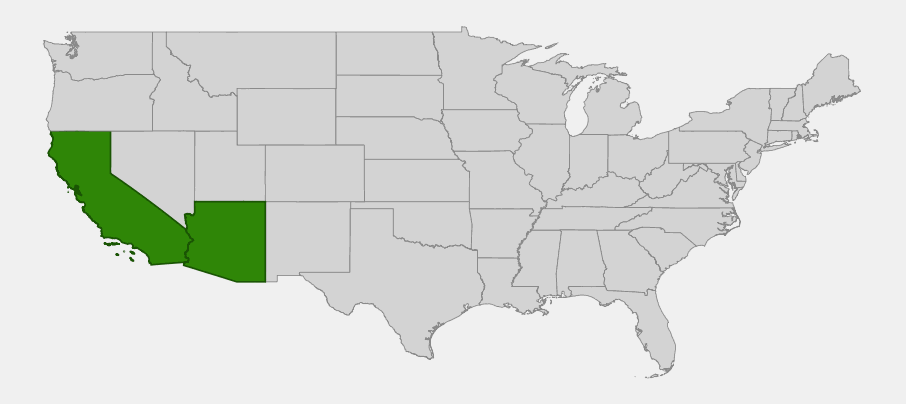
📋 Regional plant lists featuring Yellow bush penstemon: California & Nevada · Arizona & New Mexico
Growing & Care Guide
Yellow bush penstemon is a reliable, low-water performer for hot, dry gardens, offering a long bloom season with very little in the way of care once it is settled in.
Light
Plant in full sun for the densest, most floriferous growth. In hotter inland or desert gardens, light part shade during the hottest part of the day can help keep the foliage from looking stressed, though the species is fundamentally a full-sun chaparral plant.
Soil & Water
This species demands sharp drainage above all else — rocky, gravelly, or decomposed granite soils mimic its native habitat best. Water regularly through the first growing season to establish roots, then cut back significantly; established plants are highly drought tolerant and can suffer from root rot if watered too often, particularly in summer. A once-a-month deep soak during extended dry spells is usually more than sufficient for established plants.
Planting Tips
Install container plants in fall or early spring to take advantage of cooler temperatures and winter rainfall for establishment. Give plants room to develop their arching, fountain-like form — 4 to 6 feet of space is ideal — and avoid planting in low spots where water collects after rain.
Pruning & Maintenance
Light pruning after the main spring bloom helps maintain a tidy shape and can encourage a second flush of flowers later in the season. Remove dead or winter-damaged wood in early spring. The species generally shrugs off pests and disease when grown in appropriately lean, well-drained conditions.
Propagation
Propagate from seed sown in fall (no stratification typically required, though light scarification can help), or from semi-hardwood cuttings taken in late summer. Cuttings root reasonably well with rooting hormone in a fast-draining mix.
Landscape Uses
- Pollinator and hummingbird gardens — a long, reliable spring-to-summer bloom season
- Chaparral and desert-transition restoration plantings
- Low-water foundation or border shrub for hot, sunny sites
- Slope stabilization on dry, rocky banks
- Xeriscape and waterwise landscaping throughout its native range
Wildlife & Ecological Value
Yellow bush penstemon’s long, abundant bloom season makes it a significant nectar resource in the chaparral and desert-edge plant communities where it grows.
For Pollinators
The tubular flowers are well suited to native bees, including carpenter bees and bumblebees, which are strong enough to push into the two-lipped bloom to reach the nectar and pollen inside. The extended spring-to-summer bloom period provides a dependable nectar source through a season when many other chaparral plants have already finished flowering.
For Birds
Hummingbirds, including Anna’s and Costa’s hummingbirds in the warmer parts of its range, visit the yellow flowers regularly for nectar, despite yellow being a less typical hummingbird-attracting color than red — the tubular shape and nectar reward are enough to draw repeat visits.
For Mammals
The dense, wiry branching offers cover for small mammals and ground-dwelling wildlife moving through chaparral and desert-scrub habitat, though the plant is not a significant forage source for larger browsers.
Ecosystem Role
As a relatively long-blooming shrub in a plant community where many species flower briefly and in sequence, yellow bush penstemon helps extend nectar availability for pollinators through late spring and into summer. Its deep, drought-adapted root system also helps stabilize the rocky slopes and washes where it typically grows.
Cultural & Historical Uses
Documented ethnobotanical use of yellow bush penstemon by Indigenous peoples of Southern California and Arizona is limited compared with more prominent regional plants; it does not appear to have served as a significant food, medicine, or material source historically, and specific traditional uses are not well recorded in available ethnobotanical literature.
In modern horticulture, yellow bush penstemon has become a popular choice among California and Arizona native plant gardeners for its reliable, showy, and unusually long bloom period in a color uncommon among native penstemons. It is widely available through native plant nurseries serving Southern California and the low desert regions of Arizona, where it is valued for pollinator gardens and low-water landscaping alike.
The species carries no significant toxicity concerns for garden use, though — as with most chaparral shrubs grown for ornamental purposes — no part of the plant is used as food.
Frequently Asked Questions
Is yellow bush penstemon the same as other Penstemon species?
It was formerly classified as Penstemon antirrhinoides but is now placed in the related genus Keckiella. It still belongs to the broader beardtongue family and shares the classic tubular, two-lipped flower shape.
Is yellow bush penstemon native to Nevada?
It is sometimes cited for Nevada, but confirmed county-level native records support only California and Arizona (plus northern Baja California), so gardeners in Nevada should verify local native status before planting.
How much water does yellow bush penstemon need?
Very little once established. Regular watering during the first growing season helps it root in, after which it needs only occasional deep watering during extended drought and can suffer from root rot if overwatered, especially in summer.
Do hummingbirds visit yellow flowers like this one?
Yes. While hummingbirds often favor red tubular flowers, they readily visit yellow bush penstemon for its abundant nectar, and the shape of the flower is well suited to their feeding behavior regardless of color.
How long does yellow bush penstemon bloom?
Typically from April through June, with light pruning after the main flush sometimes encouraging additional sporadic blooms into summer, especially with occasional supplemental water.

Looking for a nursery that carries Yellow bush penstemon?
Browse our native plant nursery directory: California · Arizona