White-Flowered Currant (Ribes indecorum)
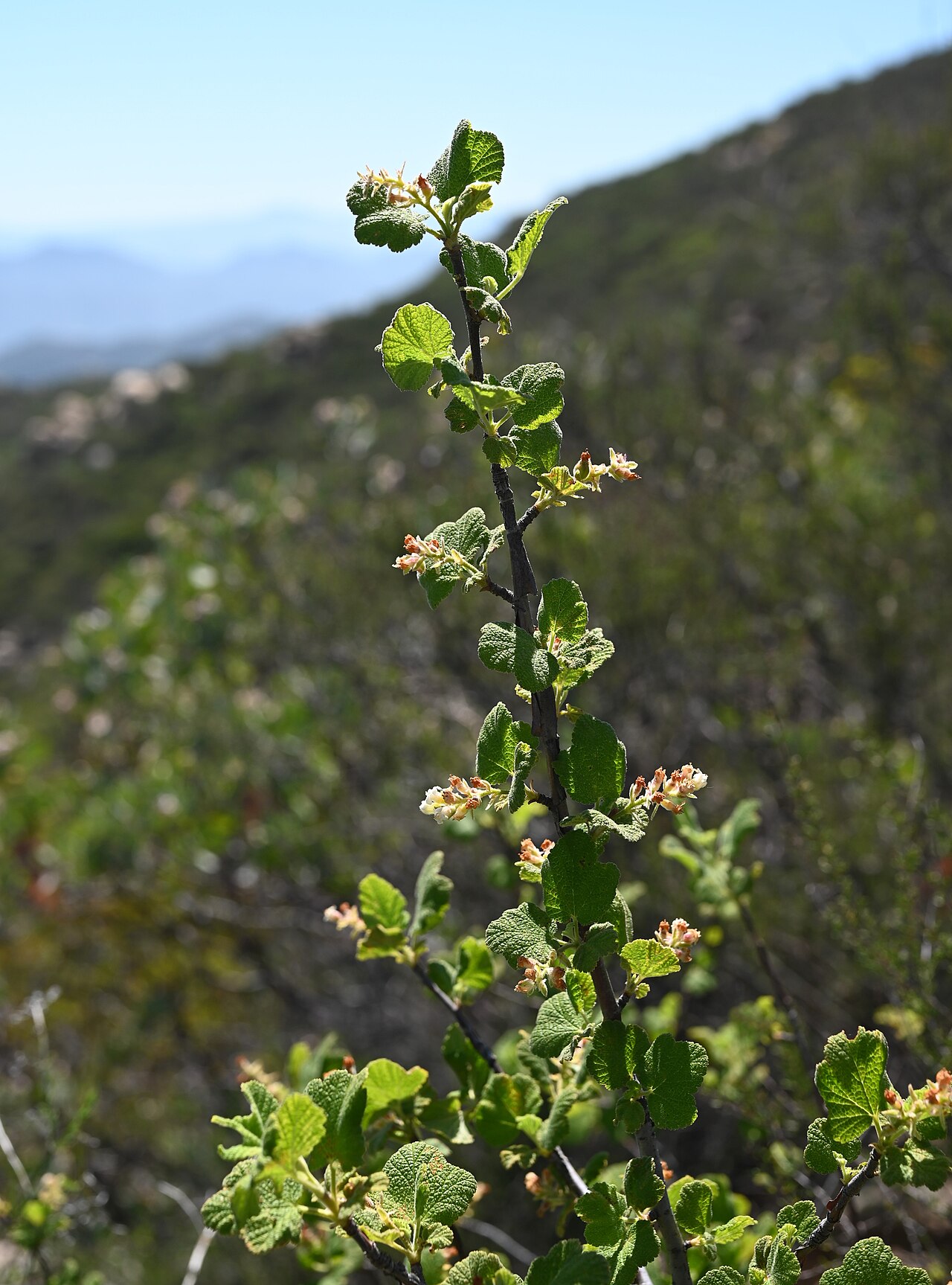
Ribes indecorum, known as white-flowered currant or white chaparral currant, is an upright, deciduous shrub found on the dry chaparral and coastal sage scrub slopes of Southern California and northern Baja California. Unlike its showier pink-flowered relative, chaparral currant (Ribes malvaceum), this species bears modest, creamy white to pale green flowers in dense, fuzzy clusters along tall, cane-like stems — a subtler but equally valuable addition to a native winter-and-spring garden.
Growing 4 to 10 feet tall with an upright, somewhat open, multi-caned habit, white-flowered currant produces rounded, felted gray-green leaves and clusters of small tubular flowers from late winter into early spring, followed by glandular-hairy black berries in summer. Like other California Ribes species adapted to a Mediterranean climate, it drops its leaves during the hottest, driest months to conserve water, leafing out again with the return of cool-season rain.
This tough, low-water shrub is well suited to Southern California chaparral gardens, hillside restoration plantings, and naturalistic hedgerows, offering early-season nectar for hummingbirds and native bees at a time when most other plants are dormant, with minimal demands on water or maintenance once established.
Identification
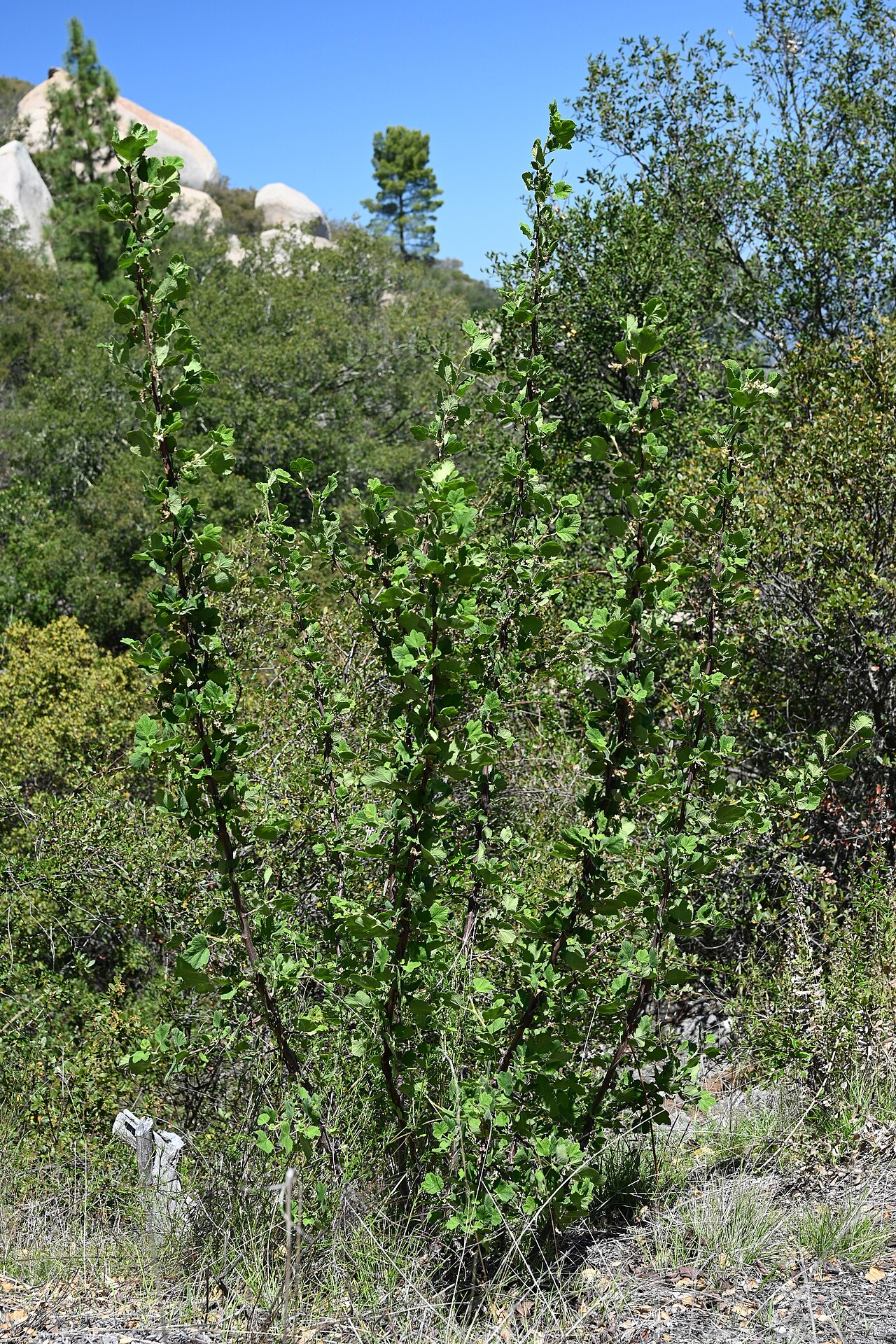
White-flowered currant is a deciduous, unarmed (thornless) shrub with an upright, multi-stemmed, somewhat leggy habit, typically reaching 4 to 10 feet tall and 4 to 8 feet wide. Its canes tend to grow straight and vertical before arching slightly at the tips, giving mature plants an airy, vase-like silhouette quite different from the lower, more mounding form of chaparral currant.
Bark & Stems
Young stems are slender, grayish, and finely hairy, maturing to smooth gray-brown bark. Like chaparral currant, the stems are unarmed, lacking the spines found in true gooseberries within the same genus.
Leaves
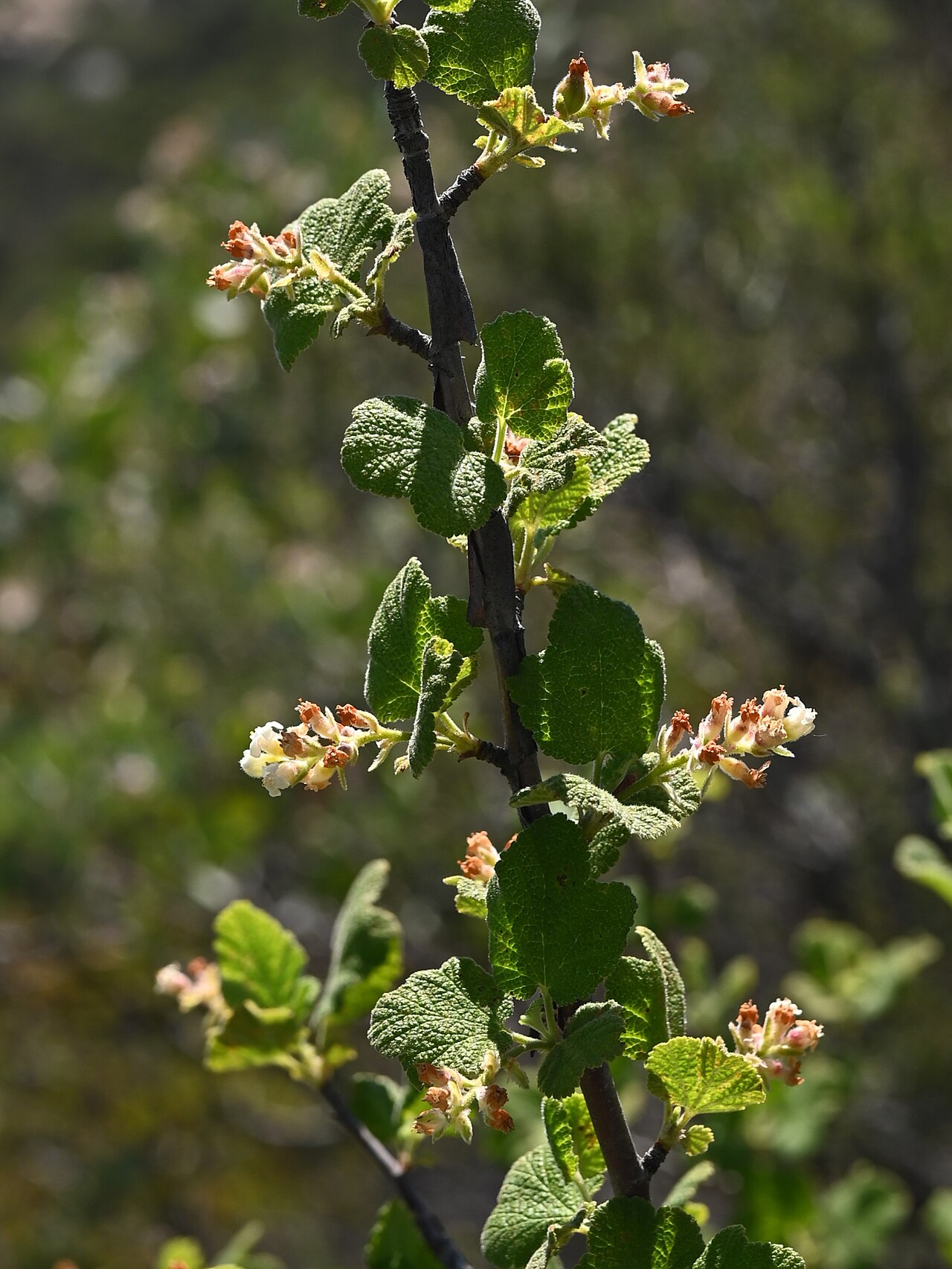
Leaves are simple, alternate, and rounded to shallowly three- to five-lobed, about 1 to 2½ inches across, with shallowly toothed margins. The foliage is grayish-green and softly felted with fine hairs on both surfaces, giving the whole plant a slightly dusty, silvery cast that helps it conserve moisture through the dry season. Leaves emerge with the late-winter flowers and are typically shed by midsummer as the plant goes dormant.
Flowers
Flowers are small, tubular, and creamy white to pale greenish-white, about ¼ to ⅜ inch long, held in dense, somewhat fuzzy-looking clusters of 10 to 25 blooms along the stems. Bloom time runs from January through April depending on elevation and winter rainfall, generally following somewhat later than the earliest chaparral currant bloom in the same region, which helps extend the overall nectar season for local pollinators.
Fruit & Seeds
The fruit is a small round berry, roughly ¼ to ⅓ inch across, covered in fine glandular hairs, ripening from green to dark purple-black by late spring or early summer. As with other wild currants, the berries are technically edible but seedy and resinous, and are consumed mainly by wildlife rather than people.
Quick Facts
| Scientific Name | Ribes indecorum |
| Family | Grossulariaceae (Currant) |
| Plant Type | Deciduous Shrub |
| Mature Height | 4–10 ft |
| Mature Spread | 4–8 ft |
| Growth Rate | Moderate |
| Sun Exposure | Part Shade to Full Sun (coastal) |
| Water Needs | Low; summer-deciduous and drought tolerant once established |
| Soil Type | Well-drained clay, loam, or decomposed granite |
| Soil pH | 6.0–7.5 |
| Bloom Time | January – April |
| Flower Color | Creamy white to pale greenish-white |
| Fall Color | Leaves drop in summer dormancy, not noted for fall color |
| Fruit | Small glandular-hairy black berries |
| Deer Resistant | Moderate |
| USDA Hardiness Zones | 9–10 |
Native Range
White-flowered currant is native to Southern California, ranging from around Santa Barbara County south through the South Coast Ranges, Transverse Ranges, and Peninsular Ranges to San Diego County, and continuing into northern Baja California, Mexico. It does not occur naturally north of the Santa Barbara area or outside this southern coastal and foothill belt.
Within this range, white-flowered currant typically grows below about 3,000 feet elevation on dry slopes and canyon sides in chaparral and coastal sage scrub, often alongside laurel sumac, toyon, California sagebrush, and various species of Ceanothus and sage. It favors open, sun-exposed hillsides more consistently than the somewhat shadier habitat often used by chaparral currant.
White-flowered currant is not native to the San Francisco Bay Area, the Central Coast, or anywhere outside Southern California and northern Baja; gardeners farther north should choose chaparral currant or another regionally appropriate Ribes species instead.
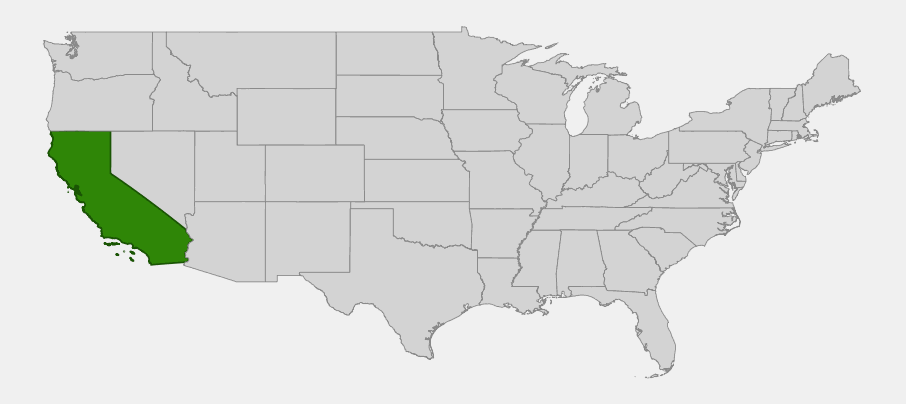
📋 Regional plant lists featuring White-flowered currant: California & Nevada
Growing & Care Guide
White-flowered currant is an easygoing, low-water shrub for Southern California gardens, asking for little beyond good drainage and a sunny-to-partly-shaded spot once it is established.
Light
Plant in full sun along the cooler coast, or part shade in hotter inland locations. Plants grown with some afternoon shade tend to hold their leaves a bit longer into the dry season and establish with less stress during the first summer.
Soil & Water
This species tolerates clay, loam, and decomposed granite soils as long as drainage is adequate. Water regularly for the first one to two growing seasons to build a deep, resilient root system; after that, established plants need little to no supplemental water and perform best with a dry summer rest. Overwatering in summer can invite root rot, a common issue for Mediterranean-climate native shrubs kept too wet year-round.
Planting Tips
Install container plants in fall with the first rains so roots can establish through the cool, moist winter ahead of summer drought. Because of its upright, cane-like habit, white-flowered currant works well toward the back of a border or massed in groups 4 to 6 feet apart, where its airy form reads well against lower, mounding chaparral shrubs.
Pruning & Maintenance
Minimal pruning is needed. Remove dead or weak canes at the base after flowering to keep the shrub looking tidy, and avoid heavy shearing, which disrupts its naturally upright form and removes next season’s flower buds. The species is generally trouble-free, though aphids occasionally appear on fresh winter growth.
Propagation
Propagate from hardwood cuttings taken during winter dormancy, or from seed collected from ripe summer berries and cold-stratified before sowing in late winter. As with chaparral currant, cuttings root readily in a well-drained mix with rooting hormone.
Landscape Uses
- Chaparral and coastal sage scrub restoration plantings
- Winter-blooming hummingbird and pollinator gardens
- Background or screening shrub thanks to its upright, cane-like form
- Low-water foundation plantings in Southern California gardens
- Slope and hillside stabilization
Wildlife & Ecological Value
Though less flashy than its pink-flowered cousin, white-flowered currant provides much the same seasonal wildlife benefits within its more southerly range.
For Pollinators
The late-winter to early-spring flowers attract native bees and other early-season pollinators at a time when relatively few chaparral plants are in bloom, helping extend the overall nectar season alongside earlier-blooming chaparral currant.
For Birds
Anna’s hummingbirds and other nectar-feeding birds visit the tubular flowers through the winter and early spring bloom period. Ripe summer berries are eaten by robins, mockingbirds, and other fruit-eating songbirds common to Southern California chaparral and scrub habitats.
For Mammals
Coyotes, foxes, and other small mammals consume the ripe berries and help disperse seeds across the landscape, much as they do with other native Ribes species in the region.
Ecosystem Role
As a reliable late-winter bloomer, white-flowered currant helps extend the nectar season in Southern California’s chaparral and coastal sage scrub communities. Its upright, airy structure adds vertical complexity to shrubland that is otherwise dominated by lower, rounded shrub forms, and its summer dormancy reflects the same drought-avoidance strategy common to many Mediterranean-climate natives in the region.
Cultural & Historical Uses
Indigenous peoples of Southern California, including groups across the Transverse and Peninsular Ranges, had some familiarity with native Ribes species as minor food sources, though white-flowered currant’s seedy, resinous berries made it a lesser-used resource compared with other regional fruits. Documentation specific to this species is limited compared with more widely utilized native plants of the region.
In modern horticulture, white-flowered currant has become an increasingly popular choice among Southern California native plant growers and restoration practitioners, valued for its drought tolerance, its structural contrast to more rounded chaparral shrubs, and its contribution to winter and early-spring pollinator habitat. It is commonly available through native plant nurseries serving the Los Angeles, San Diego, and Inland Empire regions.
The berries are edible in small quantities but are rarely gathered today for food; the species’ primary value now lies in habitat restoration and native landscaping rather than any harvest tradition.
Frequently Asked Questions
How is white-flowered currant different from chaparral currant?
White-flowered currant has cream to pale greenish-white flowers and a taller, more upright, cane-like form, while chaparral currant (Ribes malvaceum) has showier pink flowers and a lower, more mounding habit. The two species’ ranges overlap in parts of Southern California.
Is white-flowered currant native to Northern California?
No. Its native range begins around Santa Barbara County and extends south through Southern California into northern Baja California; it does not occur naturally farther north.
Why does my white-flowered currant drop its leaves in summer?
This is expected. Like several other California Ribes species, it is summer-deciduous, shedding its leaves during the dry season and leafing out again with winter and spring rains.
Does white-flowered currant need regular watering?
Only while establishing. Once settled in, usually after one to two seasons, it needs little to no supplemental summer water and can suffer from root problems if watered too heavily during its dormant period.
Do hummingbirds visit white-flowered currant?
Yes. Anna’s hummingbirds, which overwinter in Southern California, visit the tubular winter and early-spring flowers for nectar, much as they do with the related chaparral currant.

Looking for a nursery that carries White-flowered currant?
Browse our native plant nursery directory: California