Canyon Liveforever (Dudleya cymosa)
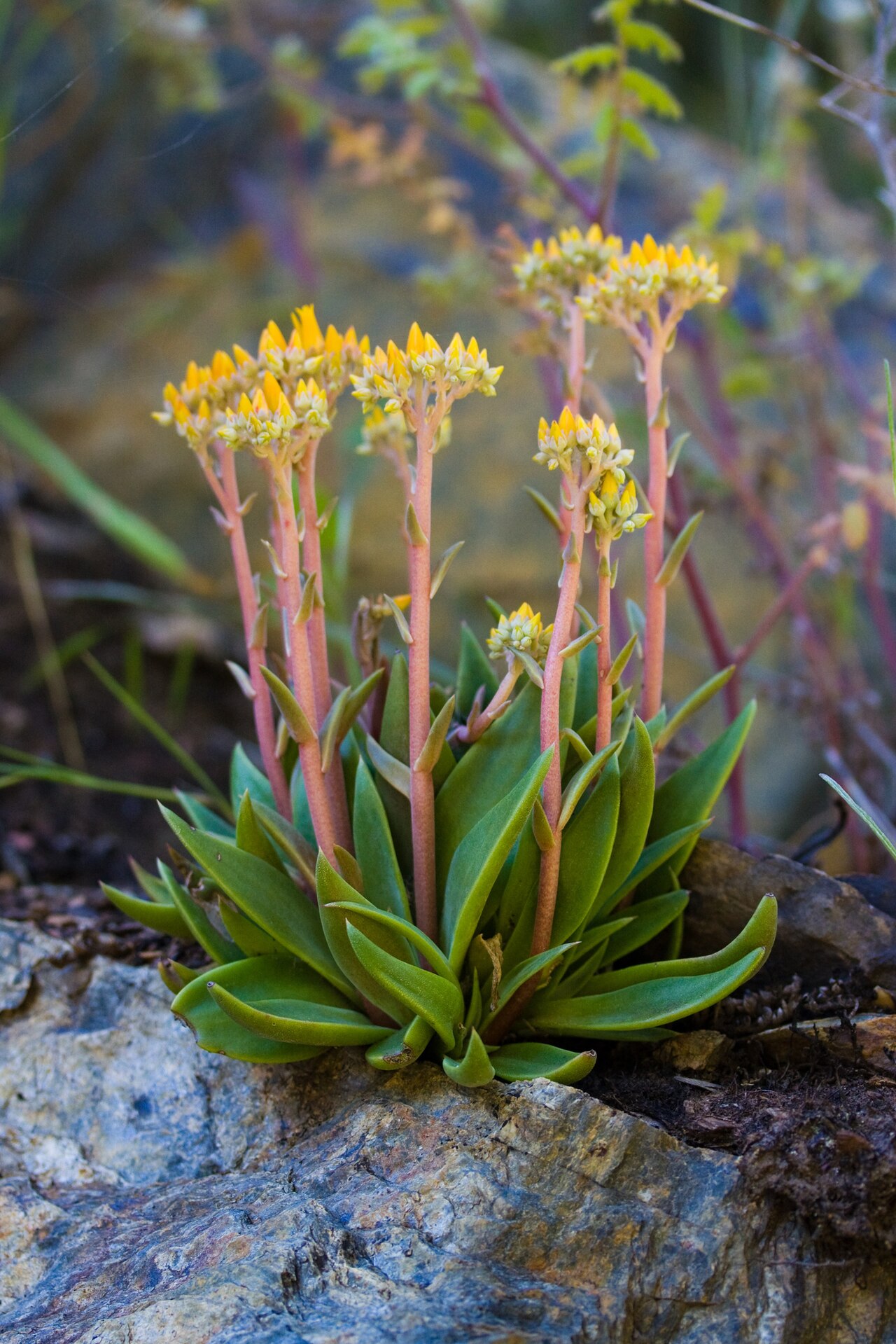
Dudleya cymosa, commonly known as canyon liveforever or canyon dudleya, is a small, variable, rock-dwelling succulent found across a wide swath of California from the inner North Coast Ranges and Sierra Nevada foothills south through the Transverse and Peninsular Ranges. Like other members of the genus, it is a true lithophyte — a plant adapted to root directly in cracks and ledges of exposed rock — and it is among the most widespread and taxonomically variable of California’s many Dudleya species, with botanists recognizing numerous subspecies across its range (including the Santa Monica Mountains dudleya and the Transverse Ranges liveforever).
The compact rosette of fleshy, blue-green to reddish leaves rarely exceeds a few inches across, but in late spring it sends up wiry, often brightly colored flower stalks topped with clustered, star-shaped flowers in shades of yellow, orange, or red. These flowers make canyon liveforever one of the showier California rock succulents, and its smaller size and broader elevation range — from near sea level into the mountains — set it apart from the larger, strictly coastal-to-foothill chalk liveforever (Dudleya pulverulenta).
In cultivation, canyon liveforever is an excellent choice for rock gardens, retaining walls, and container culture wherever sharp drainage can be provided. Because many of its subspecies are rare, localized, or sensitive to disturbance — and because wild Dudleya populations across California have suffered from illegal collection for the succulent trade — gardeners should always buy nursery-propagated plants rather than collecting from habitat.
Identification
Canyon liveforever is best recognized by its small, often colorful rosette and branching, multi-flowered stalks, though its appearance varies considerably across its many named subspecies and local populations.
Leaves & Rosette
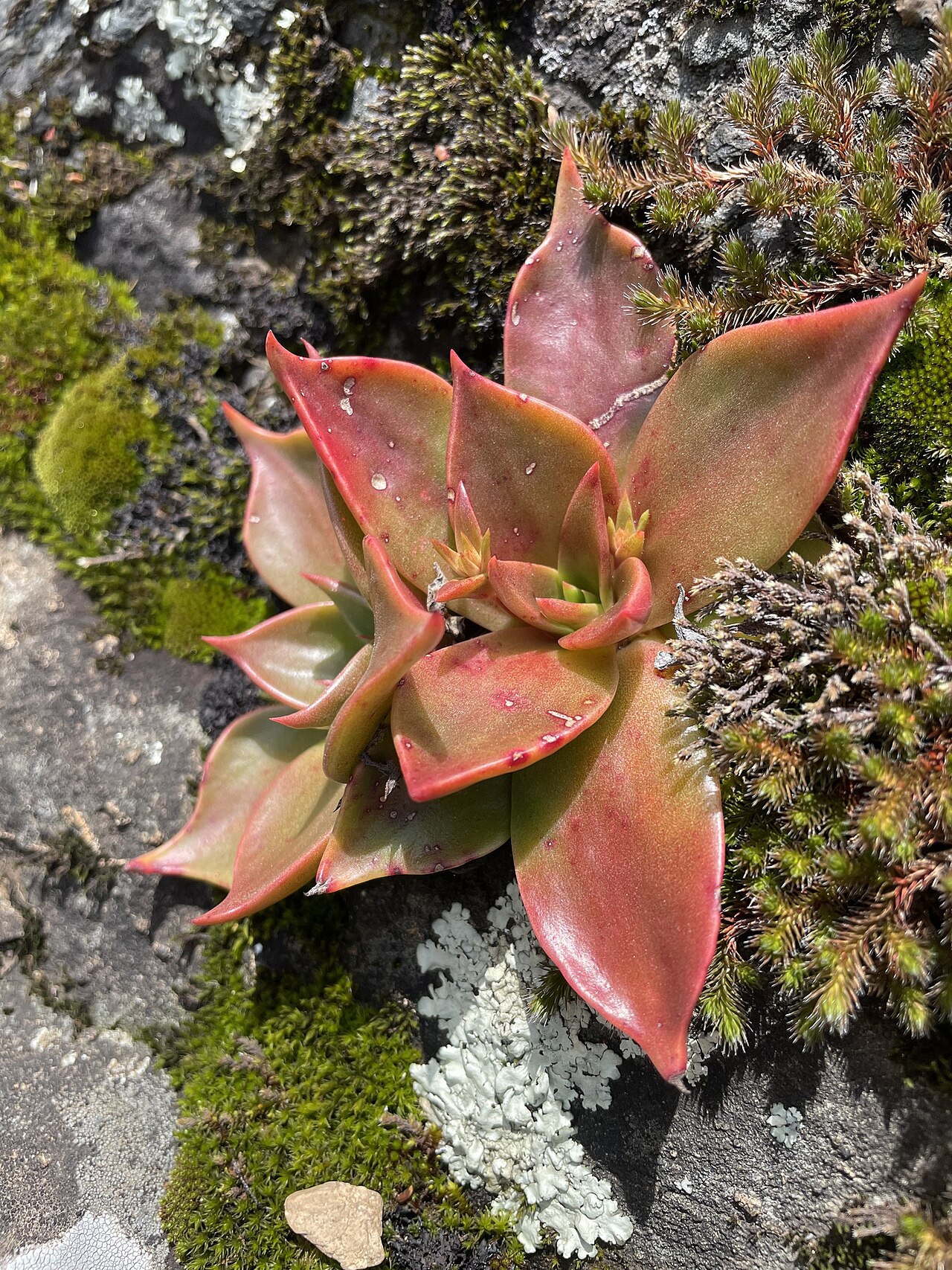
The rosette is compact, usually 2 to 6 inches across, composed of narrow to broadly lance-shaped, fleshy leaves that range from gray-green to blue-green and often flush reddish-bronze or pink under stress from sun, cold, or drought. Unlike the heavily powdered chalk liveforever, canyon liveforever typically has little to no white farina, giving the leaves a glossier, more colorful appearance. Rosettes often form small clumps where offsets develop at the base.
Flowers
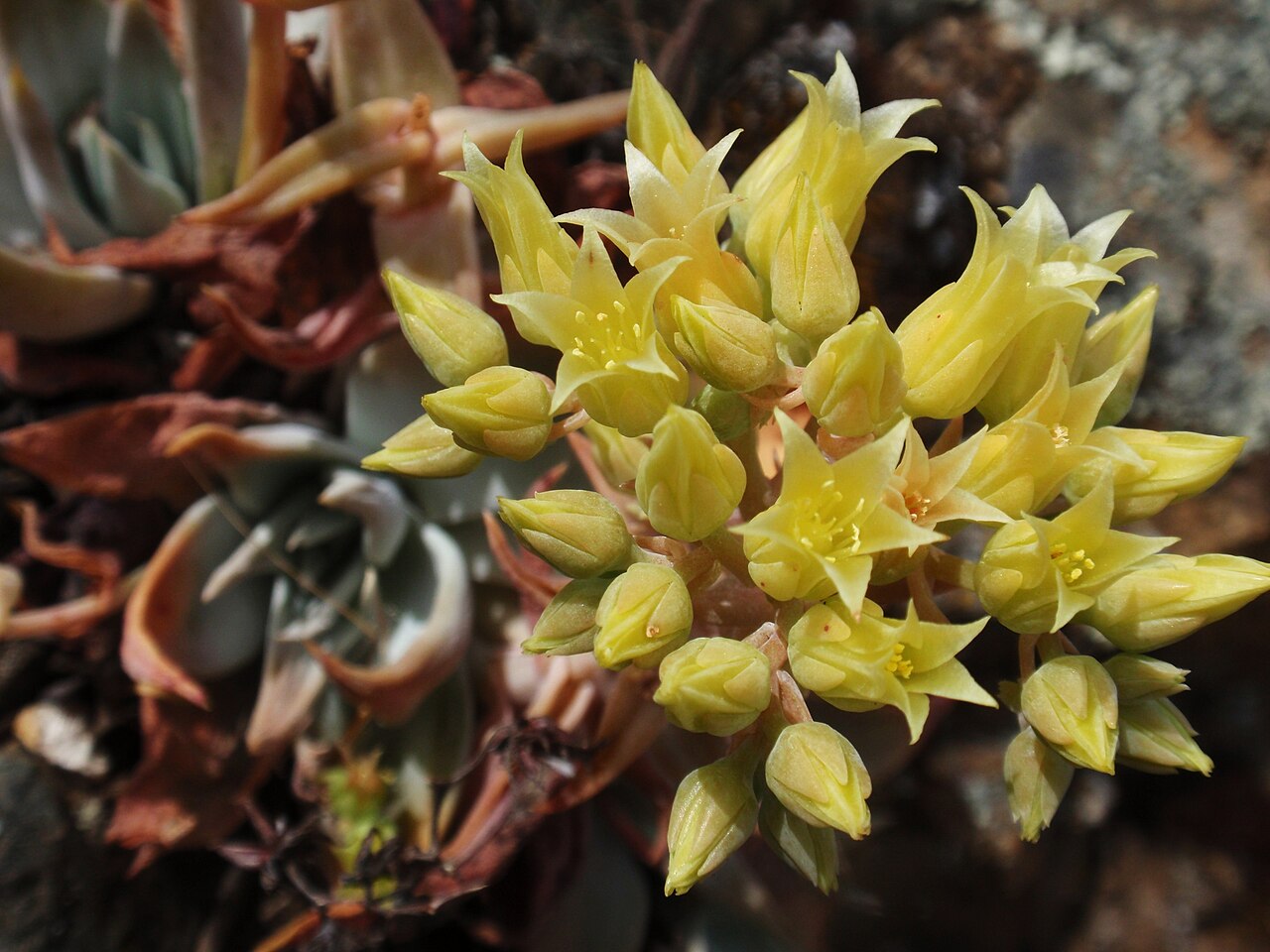
From April through July, depending on elevation, one or more slender, often reddish flowering stalks rise 4 to 16 inches above the rosette, branching into a loose, flat-topped or rounded cluster of flowers. Individual flowers are small, star-shaped, with five pointed petals in shades ranging from bright yellow and orange to red, depending on subspecies and population — a striking contrast to the muted reds of chalk liveforever.
Fruit & Seeds
Flowers mature into small clusters of dry, beaked follicles that split to release fine, dust-like seed, dispersed short distances by wind and rain down the same rock faces where the parent plant grows. Established rosettes are long-lived and may persist in a single crevice for many years, slowly forming small colonies through offsets.
Quick Facts
| Scientific Name | Dudleya cymosa |
| Family | Crassulaceae (Stonecrop) |
| Plant Type | Evergreen Succulent Perennial |
| Mature Height | Rosette 2–4 in; flower stalks 4–16 in |
| Mature Spread | 2–6 in |
| Growth Rate | Slow |
| Sun Exposure | Full Sun to Part Shade |
| Water Needs | Very low; summer-dry, winter-wet |
| Soil Type | Rock crevices, lean and sharply drained |
| Soil pH | 6.0–7.5 |
| Bloom Time | April – July |
| Flower Color | Yellow, orange, or red |
| Fall Color | Evergreen; leaves may flush bronze-red |
| Fruit | Small dry beaked follicles |
| Deer Resistant | Yes |
| USDA Hardiness Zones | 8–10 |
Native Range
Canyon liveforever is native to California, with one of the broadest distributions of any Dudleya in the state. It occurs from the inner North Coast Ranges and northern Sierra Nevada foothills south through the Central Coast Ranges, Transverse Ranges, and Peninsular Ranges into San Diego County, with numerous recognized subspecies tied to particular mountain ranges and canyon systems along the way.
Across this range, canyon liveforever is consistently a rock specialist: it is found wedged into cracks, ledges, and crevices of granite, sandstone, volcanic, and other rock outcrops in chaparral, foothill woodland, and lower montane habitats, typically from near sea level up to around 8,000 feet in the higher mountains. It often grows alongside mosses and lichens on shaded or partially shaded rock faces, particularly in canyons where some moisture persists longer into the dry season.
Because canyon liveforever includes many geographically restricted subspecies — some, like the Santa Monica Mountains dudleya, considered rare or locally endangered — gardeners and land managers should treat populations with care and avoid moving plant material between distant regions. The species as a whole is not found wild outside California.
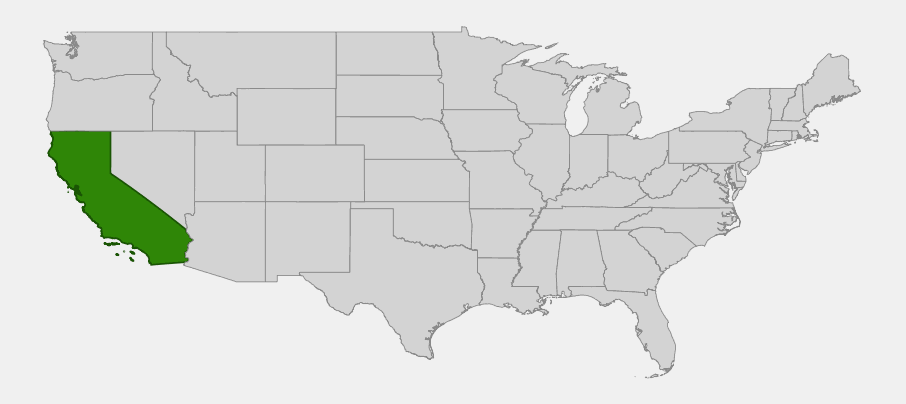
📋 Regional plant lists featuring Canyon Liveforever: California & Nevada
Growing & Care Guide
Canyon liveforever thrives under the same rock-garden conditions as its larger relative, chalk liveforever, but its smaller stature makes it especially well suited to container culture and tight crevice plantings.
Light
Full sun along the coast; part shade is better in hot inland gardens, where the rosettes can scorch in intense afternoon sun. In its wild canyon habitat it often grows on partially shaded rock faces, so dappled light works well in cultivation too.
Soil & Water
Sharp drainage is essential. Canyon liveforever is adapted to root in narrow rock cracks with minimal retained moisture and will rot in heavy, slow-draining soil. Follow its natural winter-wet, summer-dry cycle: water during the cool rainy season and withhold water almost entirely through the dry months. A gritty, mineral succulent mix amended with extra pumice or coarse sand works well in containers.
Planting Tips
Plant small nursery-grown rosettes in fall into rock crevices, a raised scree bed, or a shallow container with excellent drainage. Keep the crown slightly proud of the soil surface to prevent rot. Because many populations are subspecies-specific and some are locally rare, always buy nursery-propagated stock and avoid collecting from wild sites.
Pruning & Maintenance
Minimal care is needed. Remove spent flower stalks after seed set for tidiness, and keep leaf litter from accumulating around the crown. Watch for mealybugs in the tight leaf axils, especially on container-grown plants.
Landscape Uses
Canyon liveforever’s small scale makes it versatile in several settings:
- Crevice and trough gardens where its compact form fits tight spaces
- Rock walls and dry-stacked stone features
- Container and bonsai-style succulent displays
- Dry slope plantings paired with other California rock natives
- Pollinator gardens featuring its bright yellow-to-red summer flowers
Wildlife & Ecological Value
Like other rock-dwelling Dudleya, canyon liveforever contributes nectar and structure to otherwise sparse rock-face habitats across its wide California range.
For Pollinators
The clustered summer flowers attract native bees, butterflies, and occasionally hummingbirds, providing a nectar source on bare rock faces at a time of year when many other chaparral and foothill wildflowers have already finished blooming for the season.
For Birds & Mammals
Canyon liveforever offers limited direct forage for larger wildlife, but the rocky habitats it occupies — canyon walls, outcrops, and talus — commonly shelter lizards, small mammals, and ground-foraging birds that use the same crevices and ledges for cover.
Ecosystem Role
By establishing on bare rock with essentially no soil, canyon liveforever and its many subspecies add a reliable source of late-season nectar and a touch of plant cover to canyon walls and outcrops that would otherwise be nearly bare, contributing to the overall diversity of California’s chaparral and foothill rock communities.
Cultural & Historical Uses
Indigenous peoples across canyon liveforever’s wide California range would have encountered this small rock succulent throughout chaparral and foothill canyon country, though, like most Dudleya species, it was not a primary food, medicine, or material plant in the way that larger or more abundant native plants were. Its narrow habitat on cliff faces and canyon walls likely limited its practical use compared to more accessible species.
Canyon liveforever’s modern significance lies largely in horticulture and conservation botany. Its remarkable variability — recognized today in numerous geographically distinct subspecies, several of which are rare and have been the focus of conservation attention — has made it a subject of ongoing botanical study into how California’s complex topography has shaped the evolution of its rock-dwelling flora. Among rock-garden and succulent collectors, the species is valued for its compact size and the vivid yellow-to-red flower color variation found across its range.
Frequently Asked Questions
How is canyon liveforever different from chalk liveforever?
Canyon liveforever (Dudleya cymosa) is smaller, usually lacks the heavy white farina of chalk liveforever (Dudleya pulverulenta), and has yellow-to-red flowers rather than dusky red-to-pink ones. It also occurs at a wider range of elevations, extending well into the mountains.
Why does my canyon liveforever turn red?
Stress from intense sun, cold temperatures, or drought often triggers reddish or bronze pigmentation in the leaves — a normal and often desirable response, not a sign of disease, as long as the plant remains firm and healthy otherwise.
Can I collect canyon liveforever from the wild?
No. Many populations and subspecies are localized or rare, and wild Dudleya across California have been targeted by illegal poaching for the succulent trade. Always buy nursery-propagated plants.
Does canyon liveforever need winter protection?
In its native California range it tolerates light frost without protection. In colder climates outside its USDA zone 8–10 range, it is best grown in containers that can be moved under cover during hard freezes.
Why are there so many different-looking canyon liveforevers?
Dudleya cymosa is highly variable across its wide range and includes numerous recognized subspecies tied to specific mountain ranges, such as the Santa Monica Mountains dudleya and the Transverse Ranges liveforever, which differ in leaf color, size, and flower color.

Looking for a nursery that carries Canyon Liveforever?
Browse our native plant nursery directory: California