Chalk Liveforever (Dudleya pulverulenta)
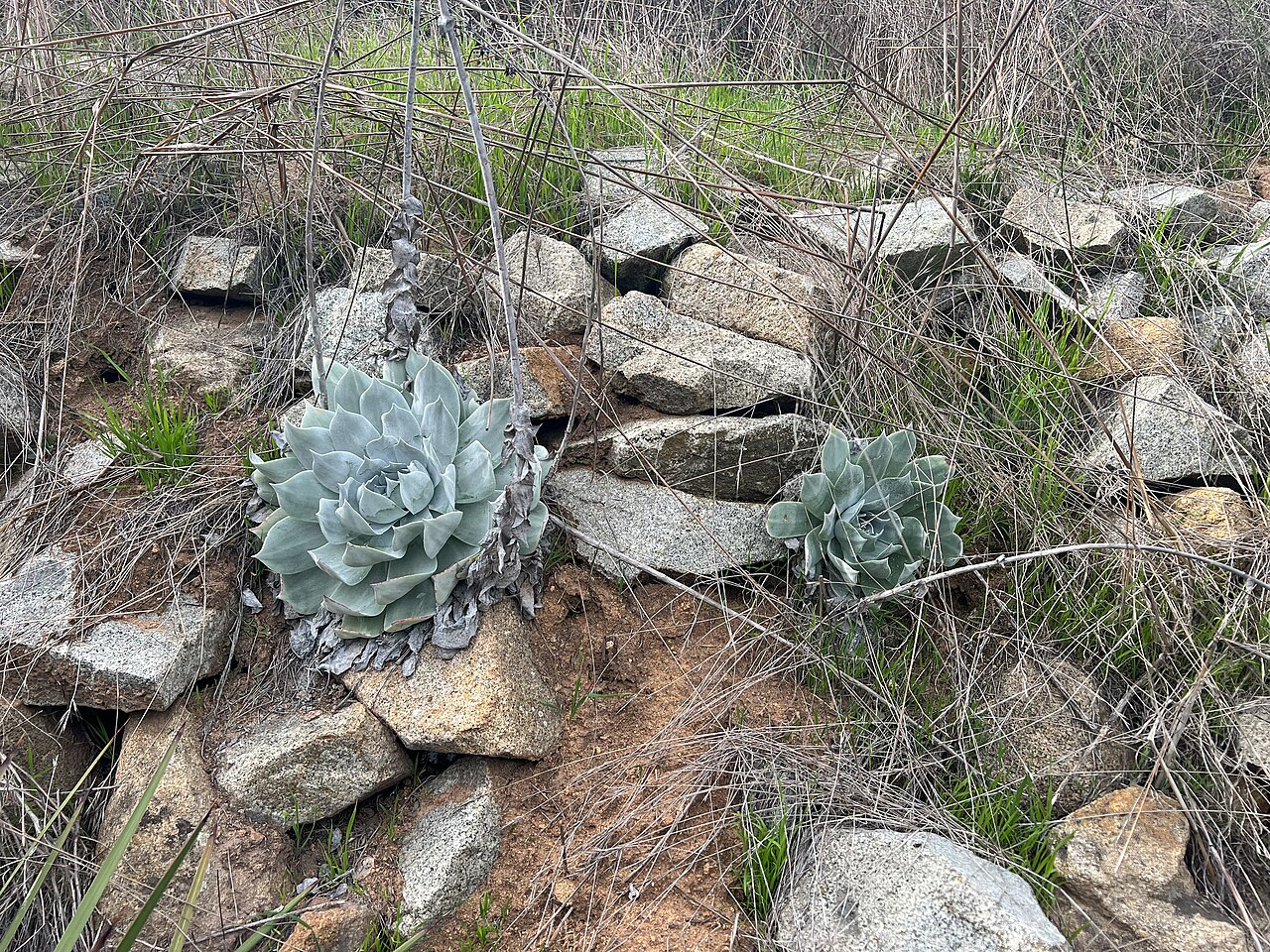
Dudleya pulverulenta, commonly called chalk liveforever or chalk dudleya, is one of California’s most striking rock-dwelling succulents, named for the dense, powdery white coating (farina) that covers its wide, pointed leaves. This coastal-sage and chaparral native grows almost exclusively wedged into cracks and ledges of granite, sandstone, and other rock outcrops, often on nearly vertical cliff faces where almost nothing else can root. It belongs to the Crassulaceae (stonecrop) family, the same family as sedums and echeverias, and is one of roughly two dozen Dudleya species found in California.
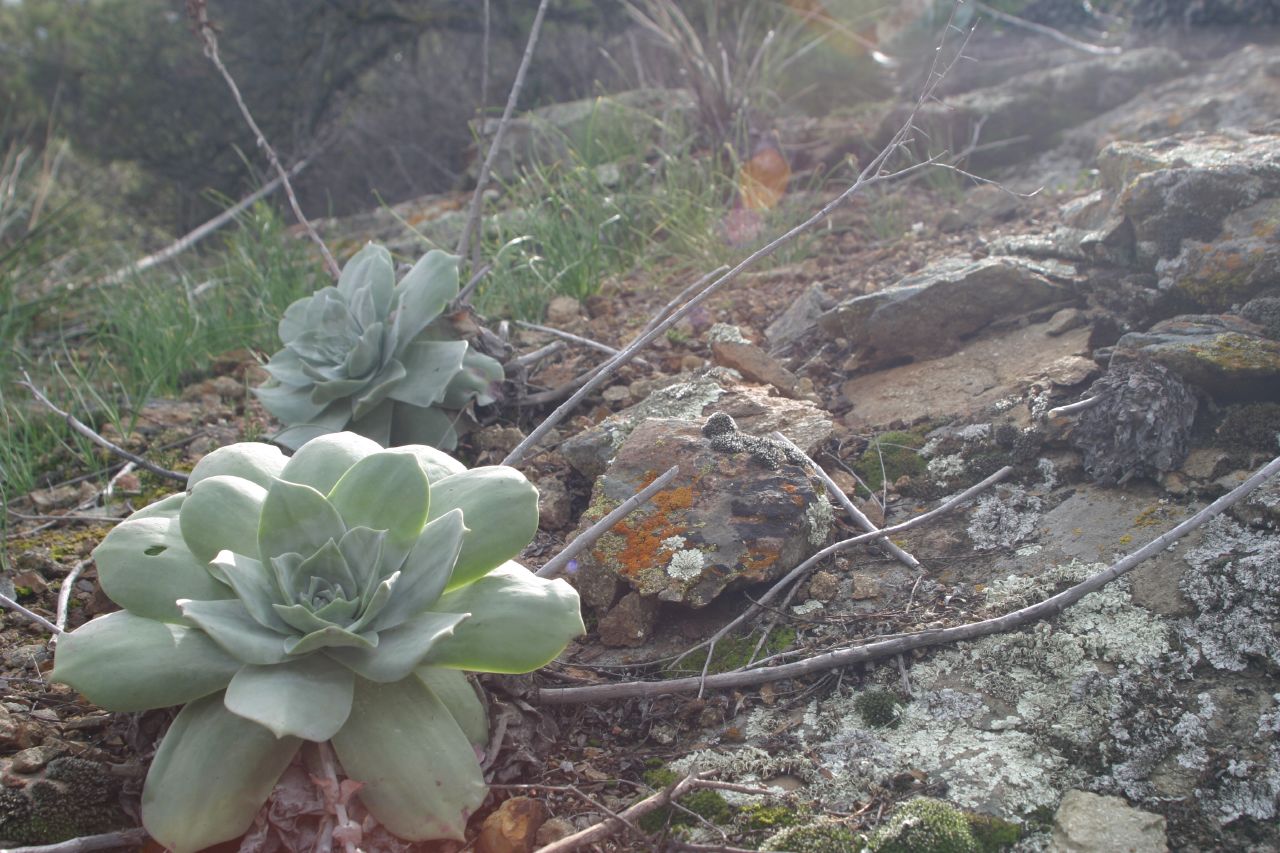
The rosette itself is the plant’s calling card: a tight spiral of broad, fleshy, silvery-white leaves up to a foot across, so heavily coated in farina that individual plants can appear almost luminous against dark rock. In late spring the rosette sends up a tall, arching, deep red flowering stalk lined with small star-shaped red to pink flowers, held out over the cliff edge in a dramatic display that draws hummingbirds from a distance.
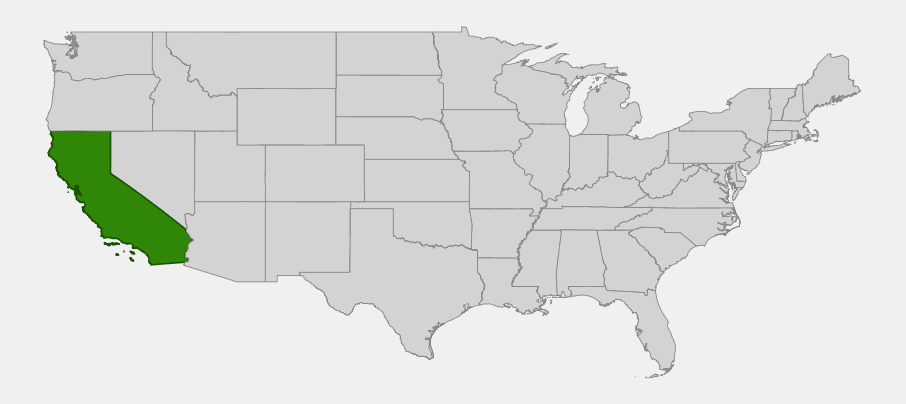
Chalk liveforever is native only to California (with closely related populations continuing south into northern Baja California, Mexico), concentrated along the Coast Ranges and inland-facing slopes from the Bay Area south through San Diego County. In the garden it is an excellent choice for rock gardens, retaining walls, and other dry, well-drained vertical or sloped sites where few other natives can establish — though, like all Dudleya, it resents summer water and heavy soil.
Identification
Chalk liveforever is identified by the combination of its large size, dense white farina, and tall red-flowered inflorescence — features that together separate it from most other California Dudleya species, many of which are considerably smaller or less heavily powdered.
Leaves & Rosette
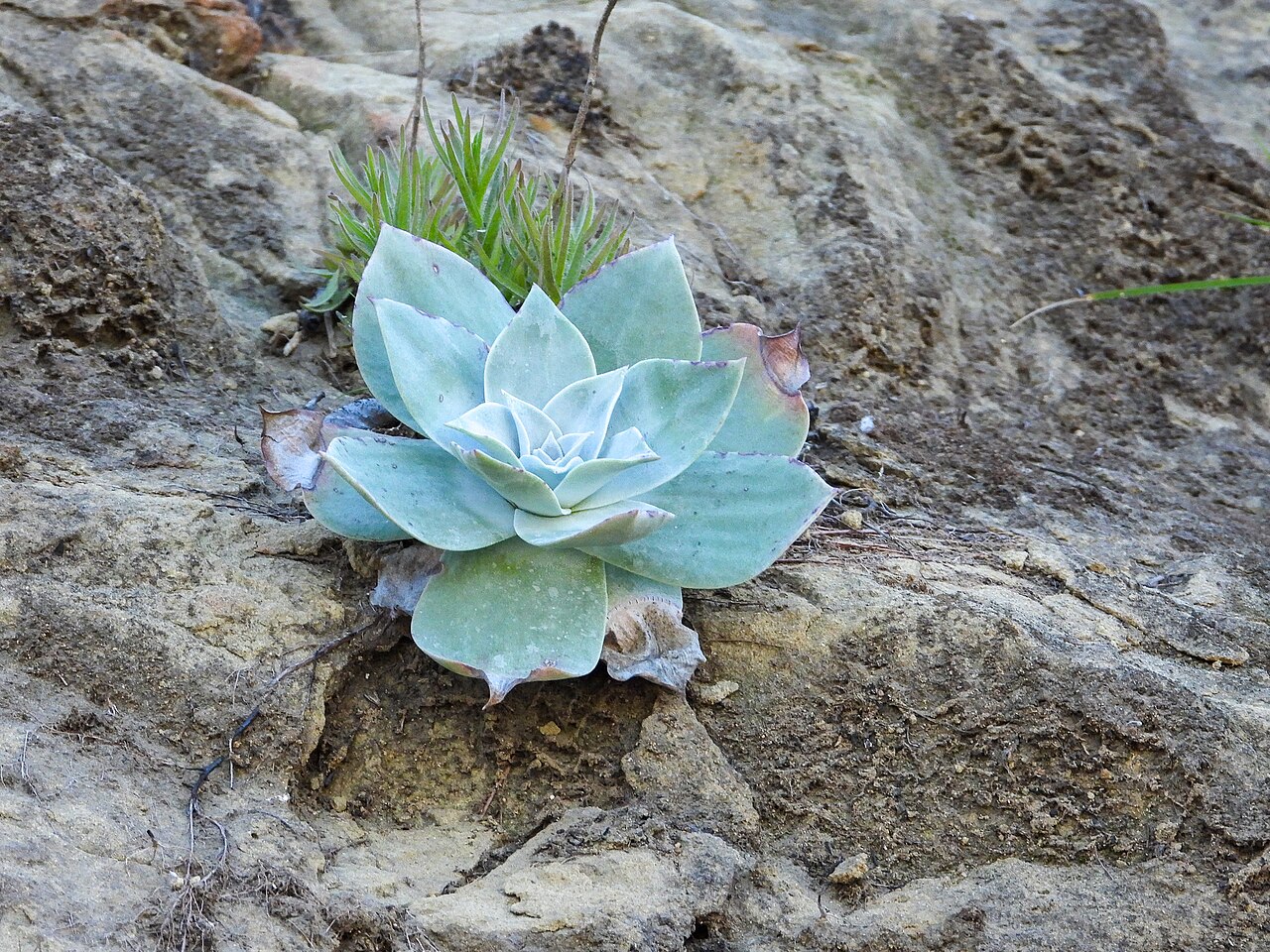
The rosette is composed of 20 to 40 broad, lance-shaped to triangular leaves, each 2 to 6 inches long and tapering to a sharp point, densely coated with a chalky white, waxy powder (farina) that the plant produces to reflect sunlight and reduce water loss. A mature rosette can reach 6 to 12 inches across and sits close to the rock surface, often with little visible stem. Older, dried lower leaves persist as a brown, papery skirt beneath the living rosette. The farina rubs off easily to the touch, revealing green tissue beneath — a useful but destructive identification trait best avoided on wild plants.
Flowers
In April through June, one or more thick, arching flowering stalks rise 1 to 2 feet from the center of the rosette, often turning deep reddish as they mature. Each stalk branches into a loose, one-sided cluster (cyme) of small, star-shaped flowers, typically dusky red to pink with five pointed petals, though yellow-flowered forms occur in some populations. The stalks often arch outward and downward from cliff faces, positioning the flowers for cliff-dwelling pollinators.
Fruit & Seeds
After flowering, each flower matures into a small cluster of dry, star-shaped follicles that split open to release numerous tiny dust-like seeds, dispersed by wind and rain along the same rock faces the parent plant occupies. Like other Dudleya, individual rosettes are long-lived perennials that may persist for many years once established in a stable rock crevice.
Quick Facts
| Scientific Name | Dudleya pulverulenta |
| Family | Crassulaceae (Stonecrop) |
| Plant Type | Evergreen Succulent Perennial |
| Mature Height | Rosette 4–8 in; flower stalks to 2 ft |
| Mature Spread | 6–12 in |
| Growth Rate | Slow |
| Sun Exposure | Full Sun to Part Shade |
| Water Needs | Very low; summer-dry, winter-wet |
| Soil Type | Rock crevices, lean and sharply drained |
| Soil pH | 6.0–7.5 |
| Bloom Time | April – June |
| Flower Color | Dusky red to pink (occasionally yellow) |
| Fall Color | Evergreen; no notable fall color |
| Fruit | Small dry star-shaped follicles |
| Deer Resistant | Yes |
| USDA Hardiness Zones | 9–11 |
Native Range
Chalk liveforever is native to California, found from the central Coast Ranges (roughly the San Francisco Bay Area southward) through the South Coast and Peninsular Ranges to San Diego County, with the range continuing into adjacent northern Baja California, Mexico. It is most abundant in the coastal and inland-facing foothills of southern California, where rocky outcrops are common.
Within this range, chalk liveforever is a specialist of exposed rock: granite boulders, sandstone cliffs, road cuts, and canyon walls in coastal sage scrub, chaparral, and oak woodland, typically from near sea level up into the lower mountains. It roots in shallow cracks and ledges with little accumulated soil, often on steep or vertical faces that exclude competing shrubs and grasses, which is part of why it persists in disturbed and undisturbed sites alike.
Chalk liveforever is not found growing wild outside California and Baja California, and should not be confused with the many other Dudleya species — some quite rare and narrowly endemic — that occupy similar rocky habitats elsewhere in the state. Because wild Dudleya populations have been targeted by illegal poaching for the international succulent trade, never collect plants from the wild; buy only nursery-propagated stock.
📋 Regional plant lists featuring Chalk Liveforever: California & Nevada
Growing & Care Guide
Chalk liveforever rewards gardeners who can replicate its native rock-crevice conditions: sharp drainage, lean soil, and dry summers. It is not a plant for standard garden beds or regular irrigation.
Light
Full sun to light part shade suits it well. Near the coast it tolerates more direct sun; in hot inland gardens, afternoon shade helps prevent leaf scorch, though the white farina itself provides significant sun protection.
Soil & Water
Sharp drainage is essential — chalk liveforever is adapted to root in narrow rock cracks with almost no retained moisture, and it will rot quickly in heavy or poorly drained soil, especially if watered in summer. Follow the plant’s natural winter-wet, summer-dry rhythm: provide water during the cool rainy season and withhold it almost entirely from late spring through fall. Plant on a slope, in a rock garden, or atop a retaining wall rather than in a flat bed.
Planting Tips
Plant small nursery-grown rosettes in fall, tucking roots into rock crevices or a well-drained raised bed mixed generously with coarse sand or gravel. Avoid burying the base of the rosette, which encourages crown rot. Because wild populations have suffered from illegal poaching, always source plants from reputable native-plant nurseries that propagate their own stock rather than collecting from habitat.
Pruning & Maintenance
Little maintenance is needed. Remove spent flower stalks after seed set if a tidier appearance is desired, and brush away accumulated leaf litter that can trap moisture against the crown. Avoid overhead watering, which washes off the protective farina and can promote fungal problems.
Landscape Uses
Chalk liveforever excels in a narrow but valuable set of garden situations:
- Rock gardens and crevice plantings where drainage is sharp
- Retaining walls and dry stacked-stone features
- Succulent and dry-garden design, paired with other summer-dormant natives
- Slope stabilization on steep, rocky, low-water sites
- Container culture in fast-draining succulent mix
Wildlife & Ecological Value
Chalk liveforever supports a specialized but important set of wildlife interactions tied to its unusual rock-face habitat.
For Pollinators
The tubular, nectar-rich flowers are a favorite of hummingbirds, which are the primary pollinators and often the only visitors able to reach nectar at the tips of cliffside flower stalks. Native bees and butterflies also visit, particularly in years with strong flowering.
For Birds & Mammals
Beyond hummingbird foraging, the rosettes themselves offer little direct forage value to larger wildlife, but the rocky habitats they occupy often support lizards and other small fauna that shelter among the same crevices. Ground squirrels and other rodents occasionally browse rosettes in dry years when other forage is scarce.
Ecosystem Role
Dudleya species like chalk liveforever occupy a plant-community niche that few other natives can fill: bare rock faces with almost no soil. By establishing there, they add a scarce source of nectar and structural cover to otherwise plant-free surfaces within chaparral and coastal sage scrub, and their persistence over decades makes them a stable feature of the rocky microhabitats they colonize.
Cultural & Historical Uses
Indigenous peoples of coastal and southern California, including Chumash, Tongva, and Kumeyaay communities, were familiar with Dudleya species across the region’s rocky terrain, though chalk liveforever itself was not a primary food or material plant in the way that acorns, yucca, or other more abundant species were. Various Dudleya species were occasionally used for minor purposes, including as a thirst-quenching chew from the succulent leaves in some ethnobotanical accounts, though such practices were not widespread or well documented for this particular species.
Chalk liveforever and its many California relatives gained broader attention in the 20th century among rock-garden and succulent enthusiasts, prized for the striking visual contrast of white, powdery rosettes against bare stone. In recent decades, native Dudleya species — including this one — have also become a conservation concern, as illegal collection for the international ornamental succulent trade has stripped wild populations from accessible coastal bluffs and outcrops in parts of California, prompting stronger legal protections and enforcement against poaching.
Frequently Asked Questions
Why is chalk liveforever covered in white powder?
The white coating, called farina, is a waxy substance the plant produces to reflect intense sunlight and reduce water loss through its leaves — an adaptation to growing on exposed, sun-baked rock with little available moisture.
Can I collect chalk liveforever from the wild?
No. Wild Dudleya populations, including this species, have been seriously impacted by illegal poaching for the succulent trade, and removing plants from habitat is both ecologically harmful and often illegal. Buy only nursery-propagated plants.
How much water does chalk liveforever need?
Very little, and only during the cool season. It is adapted to a winter-wet, summer-dry cycle and is highly prone to rot if watered during its summer dormancy.
Will chalk liveforever grow in regular garden soil?
Not well. It needs sharply drained, rocky or gravelly soil, ideally on a slope or in a crevice. Standard garden beds with regular irrigation are usually too wet and will cause the rosette to rot.
Is chalk liveforever the same as “hens and chicks”?
No. “Hens and chicks” usually refers to Sempervivum, a related but unrelated-origin genus from Europe. Chalk liveforever is a true California native in the genus Dudleya, distinguished by its larger size and heavy white farina.

Looking for a nursery that carries Chalk Liveforever?
Browse our native plant nursery directory: California