White Bursage (Ambrosia dumosa)
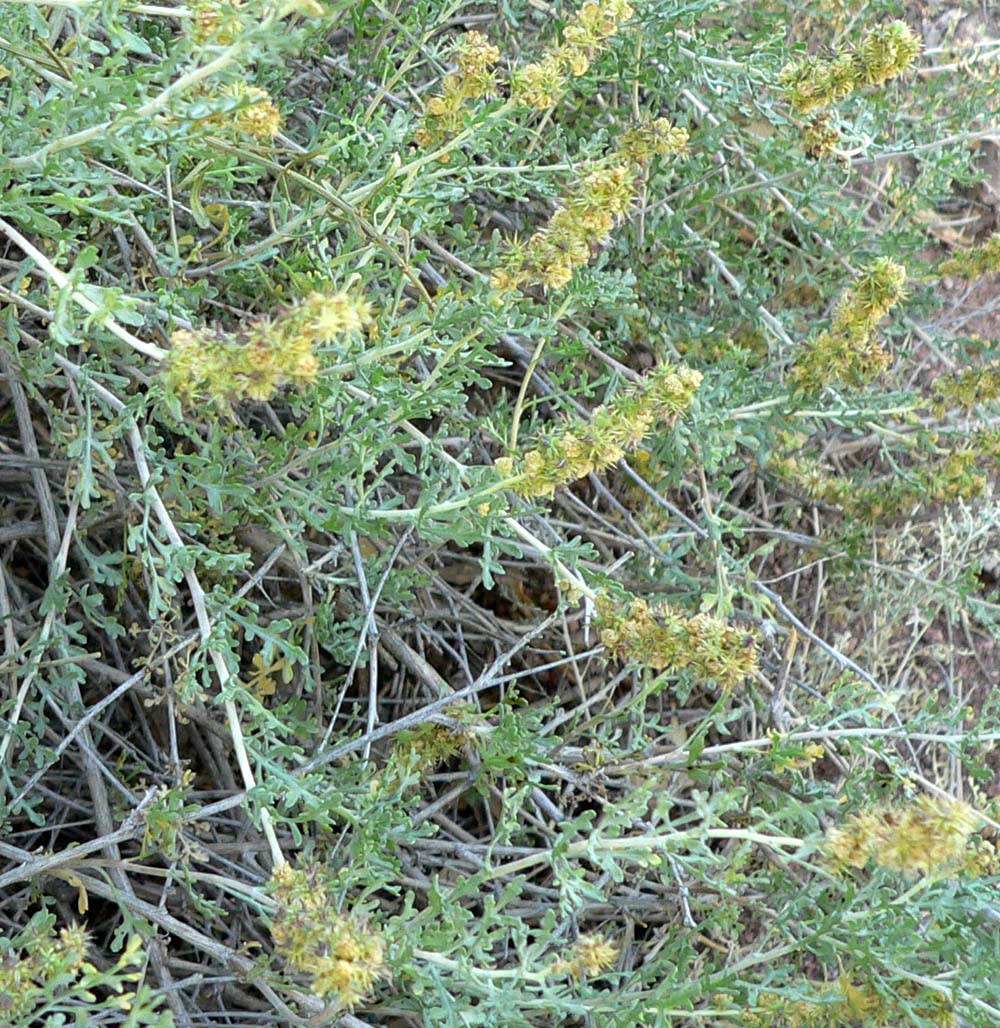
Ambrosia dumosa, called white bursage or burrobush, is one of the two most common shrubs in the Mojave and Sonoran Deserts — a small, rounded, gray-green plant so abundant that together with creosote bush it defines the classic look of the low desert floor. It belongs to the sunflower family (Asteraceae) and the genus Ambrosia, the ragweeds, though it bears little resemblance to a garden sunflower: its tiny, inconspicuous flower heads are wind-pollinated rather than insect-pollinated, just like its weedy eastern ragweed relatives.
White bursage grows as a dense, rounded, many-branched shrub rarely more than knee- to waist-high, covered in small, deeply lobed, gray-green leaves coated in fine white hairs that give the whole plant its pale, dusty appearance and its common name. It is superbly adapted to extreme drought, dropping its leaves completely during dry spells and regrowing them within days of rain — a trait that lets it survive where few other shrubs can.
Though rarely sold or planted ornamentally, white bursage is ecologically one of the most important plants of the low desert: it is a dominant “nurse plant” sheltering young cacti and desert wildflowers, a staple browse for desert tortoises and bighorn sheep, and a key structural element of creosote-bursage scrub, the signature plant community of the Mojave and Sonoran Deserts. It is included here primarily for its role in native habitat restoration and low-desert landscaping rather than as a typical garden ornamental.
Identification
White bursage is a low, rounded, intricately branched shrub typically 8 inches to about 3 feet (20–90 cm) tall. Young stems are covered in soft, gray-white hairs, giving new growth a silvery cast that fades somewhat as stems age and develop characteristic fine longitudinal ridges — a helpful identification clue even when the plant is leafless.
Leaves
The leaves are small, roughly oval in outline but one to three times pinnately divided or deeply lobed, giving them a fern-like or oak-leaf appearance. They range from about ¼ to 1½ inches (0.5–4 cm) long, are covered in the same soft gray-white hairs as the stems, and are typically clustered along short side branches. During extended drought the plant drops its leaves entirely — a drought-deciduous strategy that conserves water — but it can still be identified by its distinctively ridged, pale stems.
Flowers
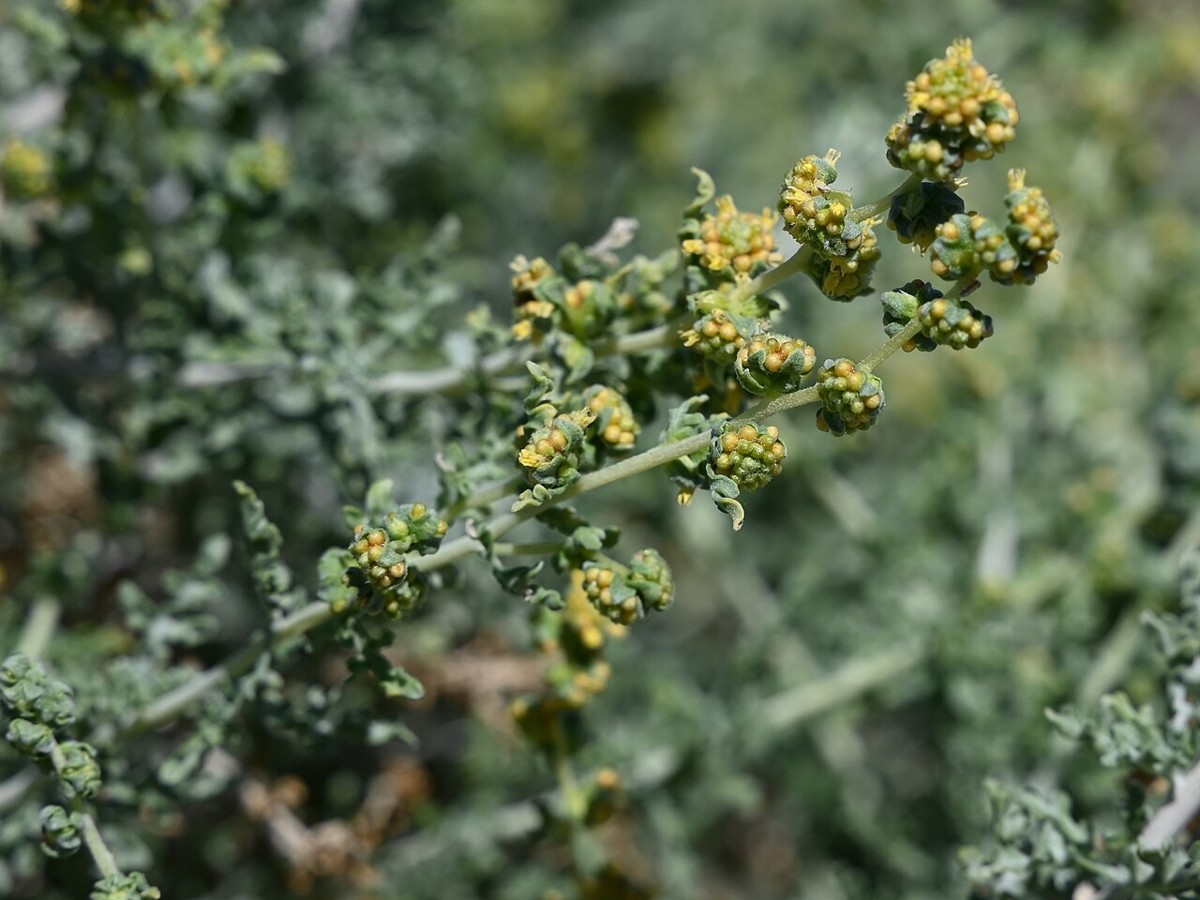
Like other ragweeds, white bursage carries separate male and female flower heads on the same plant (monoecious) rather than showy petaled blossoms. Small, button-like staminate (male) heads cluster toward the branch tips and release wind-borne pollen, while inconspicuous pistillate (female) heads with no petals form lower on the same branches. The flowers are easy to overlook and are not visited by pollinating insects in any meaningful way, since the plant relies entirely on wind for pollination.
Fruit & Seeds
The fruit is a small, hard, bur-like structure ranging from golden to purplish-brown, covered in 12 to 35 straight, flattened spines about ¼ to ⅓ inch (5–9 mm) long. These spiny burs catch in animal fur and clothing, aiding seed dispersal across the desert floor.
Quick Facts
| Scientific Name | Ambrosia dumosa (syn. Franseria dumosa) |
| Family | Asteraceae |
| Plant Type | Drought-Deciduous Desert Shrub |
| Mature Height | 0.7–3 ft (20–90 cm) |
| Mature Spread | 2–4 ft |
| Growth Rate | Slow |
| Sun Exposure | Full Sun |
| Water Needs | Very Low once established |
| Soil Type | Sandy or gravelly desert soil; sharp drainage |
| Soil pH | 7.0–8.5 (neutral to alkaline) |
| Bloom Time | February – April |
| Flower Color | Greenish-yellow (inconspicuous) |
| Fall Color | None (leaves drop gray-green in drought) |
| Fruit | Spiny bur, golden to purple-brown |
| Deer Resistant | Moderate (browsed by desert tortoise and bighorn sheep) |
| USDA Hardiness Zones | 8–11 |
Native Range
White bursage is native to the Mojave and Sonoran Deserts, with county-level records confirming it across the southern and eastern desert portions of California, essentially all of Nevada’s southern desert region, and most of Arizona. It is one of the most widespread and abundant shrubs of the low desert, often outnumbering every other species on the open desert floor.
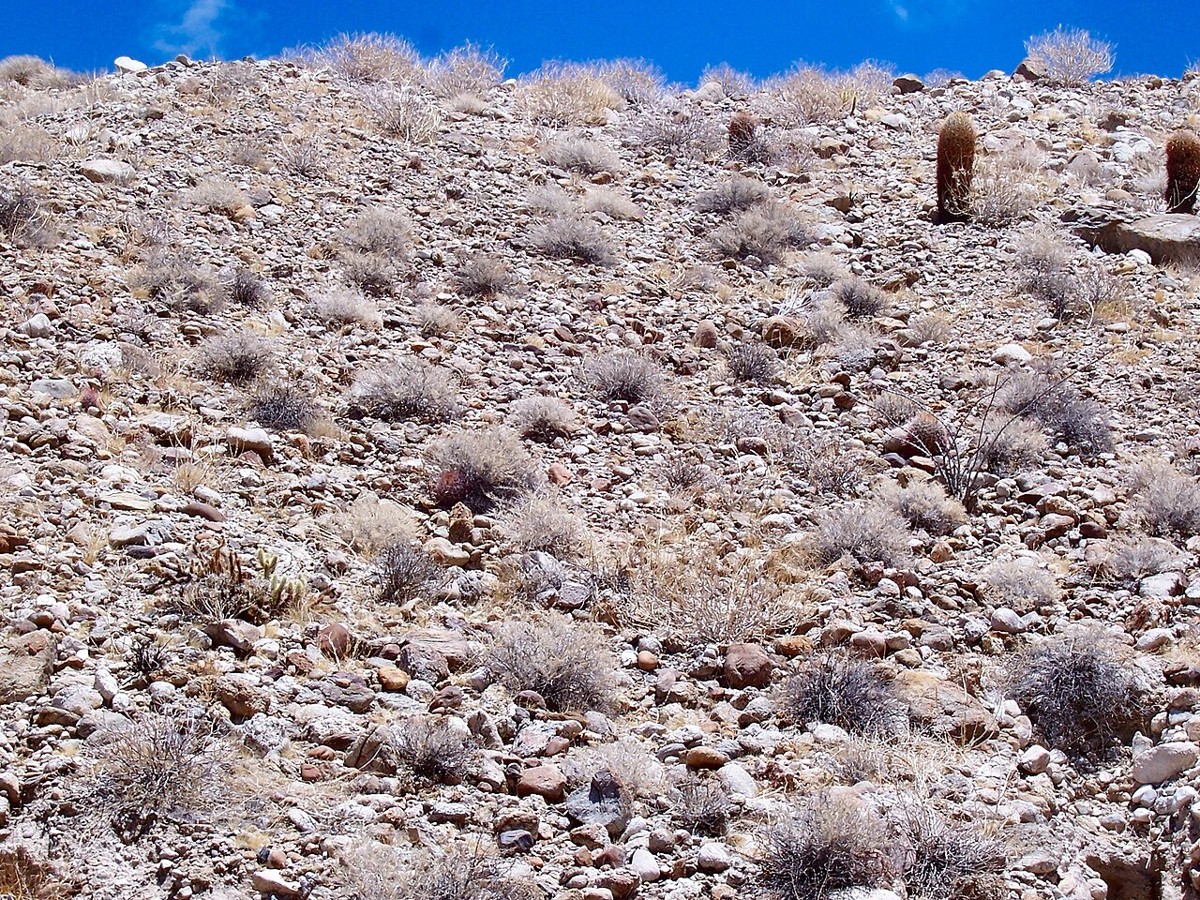
It typically grows on well-drained sandy and gravelly flats, bajadas (sloping alluvial fans), and rocky hillsides at low to moderate desert elevations, almost always alongside creosote bush (Larrea tridentata), with which it forms the classic “creosote-bursage scrub” plant community that covers vast stretches of the Mojave and Sonoran Deserts. Interestingly, white bursage and creosote bush tend to space themselves evenly apart through root competition and possibly allelopathic chemical interactions, producing the regularly spaced shrub pattern often visible from the air across the desert floor.
White bursage is not native outside the hot desert lowlands of the Southwest, and it is not a plant for cooler, wetter, or higher-elevation gardens.
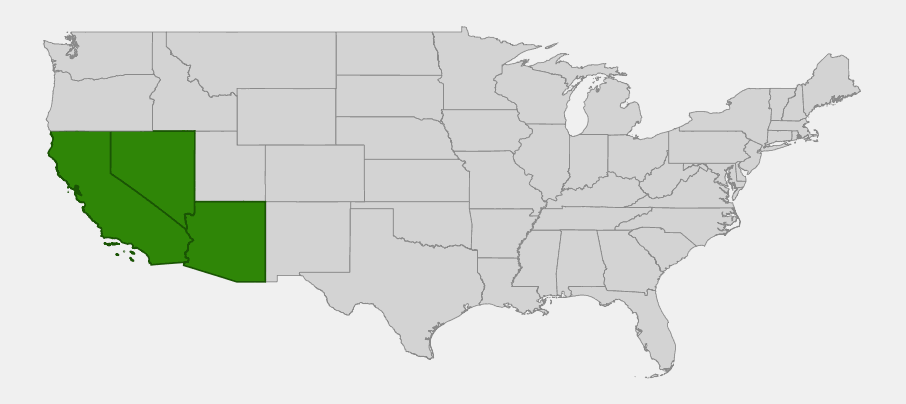
📋 Regional plant lists featuring White bursage: California & Nevada · Arizona & New Mexico
Growing & Care Guide
White bursage is almost never planted as a traditional garden ornamental, but it has real value in low-desert native plant gardens, habitat restoration, and erosion control projects where a tough, low, structural shrub is needed.
Light
Full sun is required. White bursage is adapted to some of the most intensely sunlit, exposed desert ground in North America and will not perform well in shade.
Soil & Water
Plant in sandy or gravelly, fast-draining soil with a neutral to alkaline pH. Established plants need essentially no supplemental irrigation and survive entirely on natural desert rainfall in most of their range; occasional deep watering may help young, newly planted specimens establish. Overly rich or moisture-retentive soil is not a good match for this plant.
Planting Tips
Set out young plants in fall to allow roots to establish before summer heat. Space plants generously, since in the wild white bursage tends to grow in evenly spaced stands rather than dense thickets — a natural spacing driven by root competition that is worth mimicking in a restoration planting.
Pruning & Maintenance
Little to no pruning is needed. The plant naturally drops and regrows its leaves with the rainfall cycle, so a “leafless” period is normal rather than a sign of poor health. Avoid the temptation to over-water a plant that appears to be struggling during drought dormancy.
Propagation
White bursage is usually propagated from seed collected from the spiny burs, though germination can be slow and irregular, reflecting the plant’s adaptation to the unpredictable rainfall of its native desert. Seedlings need full sun and very sharp drainage from the start.
Landscape Uses
- Low-desert native habitat restoration, especially paired with creosote bush
- Erosion control on open, sandy, or gravelly desert ground
- Wildlife and tortoise-friendly gardens in the low desert
- Background/structural shrub in a naturalistic desert landscape planting
Wildlife & Ecological Value
Despite its modest appearance, white bursage is one of the ecological backbones of the Mojave and Sonoran Desert, functioning as both food source and habitat structure across the desert floor.
For Pollinators
Because it is wind-pollinated rather than insect-pollinated, white bursage offers little direct nectar or pollen value to bees and butterflies. Its main ecological pollinator role is indirect: by acting as a nurse plant it helps establish the flowering annuals and cacti that do support desert pollinators.
For Birds
The dense branching of mature white bursage shrubs provides shelter and nesting cover for small desert birds, including sparrows and desert-adapted songbirds, especially in open terrain where taller vegetation is scarce.
For Mammals
White bursage is an important browse plant for desert bighorn sheep and desert tortoises, especially valuable during spring when its new leaf growth provides moisture and nutrition in an otherwise dry landscape. Black-tailed jackrabbits and various desert rodents also feed on its foliage and shelter beneath its branches from the sun and predators.
Ecosystem Role
White bursage is widely recognized as a keystone “nurse plant” of the low desert, its canopy providing shade, moisture retention, and protection from browsing that allows the seedlings of cacti such as saguaro and barrel cactus, as well as desert wildflowers, to establish beneath it. Together with creosote bush, it forms the dominant two-shrub plant community that structures enormous areas of the Mojave and Sonoran Deserts, influencing everything from soil chemistry to the distribution of desert wildlife.
Cultural & Historical Uses
White bursage has little documented history as a food or medicinal plant among Indigenous peoples of the region, in contrast to more productive desert resources such as mesquite, agave, or cactus fruit. Its primary traditional significance lies in its role as an indicator plant of desert habitat and as part of the broader creosote-bursage landscape that shaped traditional knowledge of the low desert’s seasons and resources.
Today, white bursage is recognized mainly for its scientific and ecological importance — it has been extensively studied by desert ecologists for its root competition dynamics with creosote bush and its role as a nurse plant — rather than for any ornamental, medicinal, or commercial use.
Frequently Asked Questions
Is white bursage the same plant as ragweed that causes hay fever?
White bursage belongs to the same genus, Ambrosia, as the ragweeds responsible for seasonal allergies, and its wind-borne pollen can trigger allergic reactions in sensitive individuals, particularly in spring. It is a different species from the common eastern ragweed, but shares the same wind-pollination strategy and allergenic pollen type.
Why does white bursage sometimes look completely dead?
It is drought-deciduous, meaning it drops all of its leaves during extended dry periods to conserve water. This is a normal survival strategy, not a sign the plant has died — new leaves typically return within days of rainfall.
Does white bursage have showy flowers?
No. Its flowers are small, greenish-yellow, and wind-pollinated rather than insect-pollinated, so they lack the colorful petals of typical garden flowers. The plant’s value is ecological and structural rather than ornamental.
Why is white bursage important even though it isn’t commonly planted in gardens?
It is one of the two dominant shrubs (along with creosote bush) of the Mojave and Sonoran Desert floor and serves as a critical “nurse plant” that shelters young cacti and wildflowers, in addition to providing food for desert tortoises and bighorn sheep.
Can white bursage be grown outside the low desert?
It is adapted specifically to hot, low-elevation desert conditions and is unlikely to thrive in cooler, wetter, or higher-elevation gardens. It is best used in native habitat restoration and xeriscaping within its natural low-desert range.

Looking for a nursery that carries White bursage?
Browse our native plant nursery directory: California · Nevada · Arizona