Coast Paintbrush (Castilleja affinis)
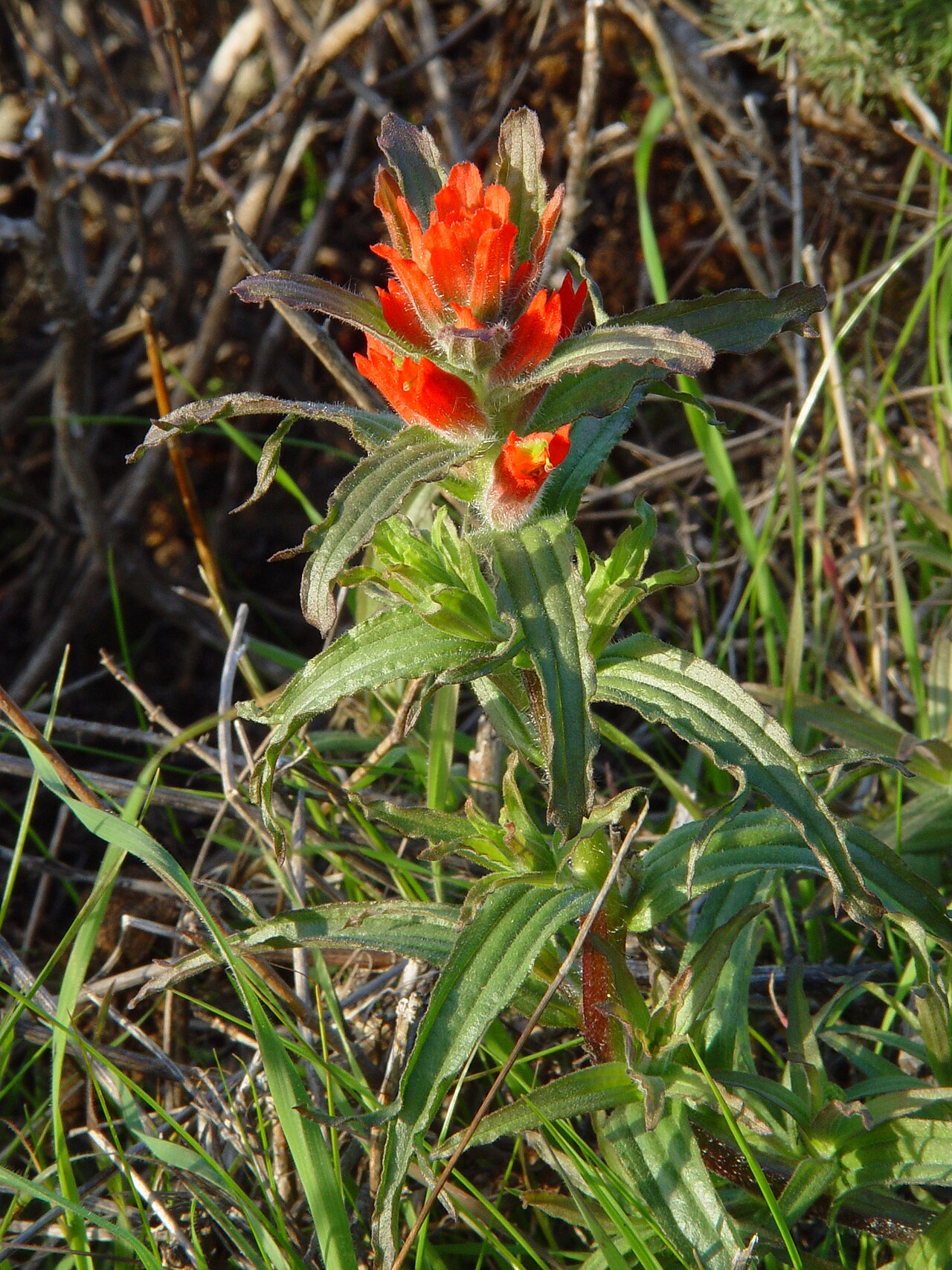
Castilleja affinis, commonly known as coast paintbrush or coast Indian paintbrush, is a hairy, upright perennial wildflower that lights up California’s coastal bluffs, grasslands, and chaparral openings with vivid red-orange flower spikes from late winter into summer. Like all paintbrushes, it is a member of the Orobanchaceae (broomrape family) and a root hemiparasite, tapping into the roots of neighboring grasses and shrubs — commonly lupines, bunchgrasses, and coastal scrub species — to supplement the water and minerals it draws from its own roots.
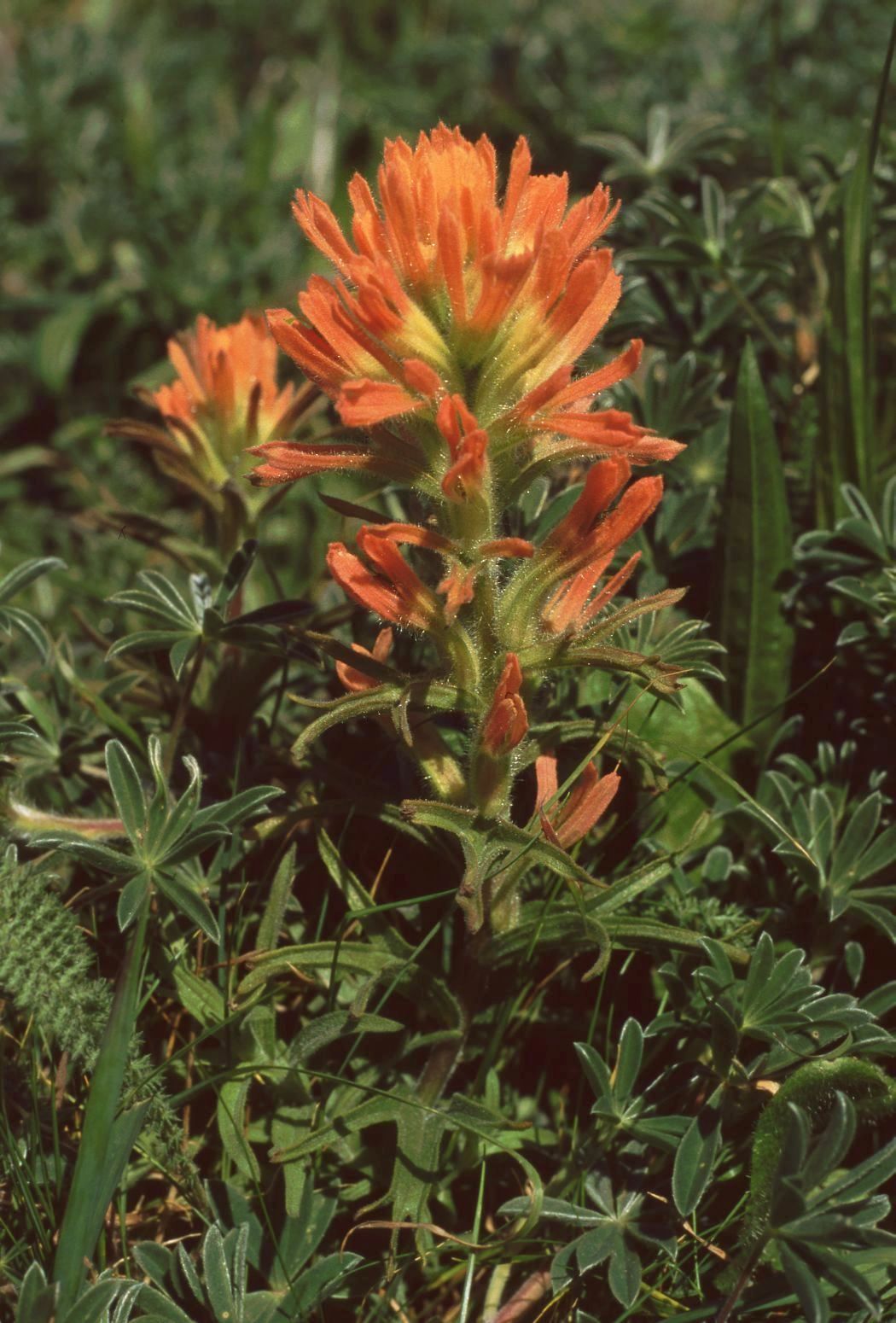
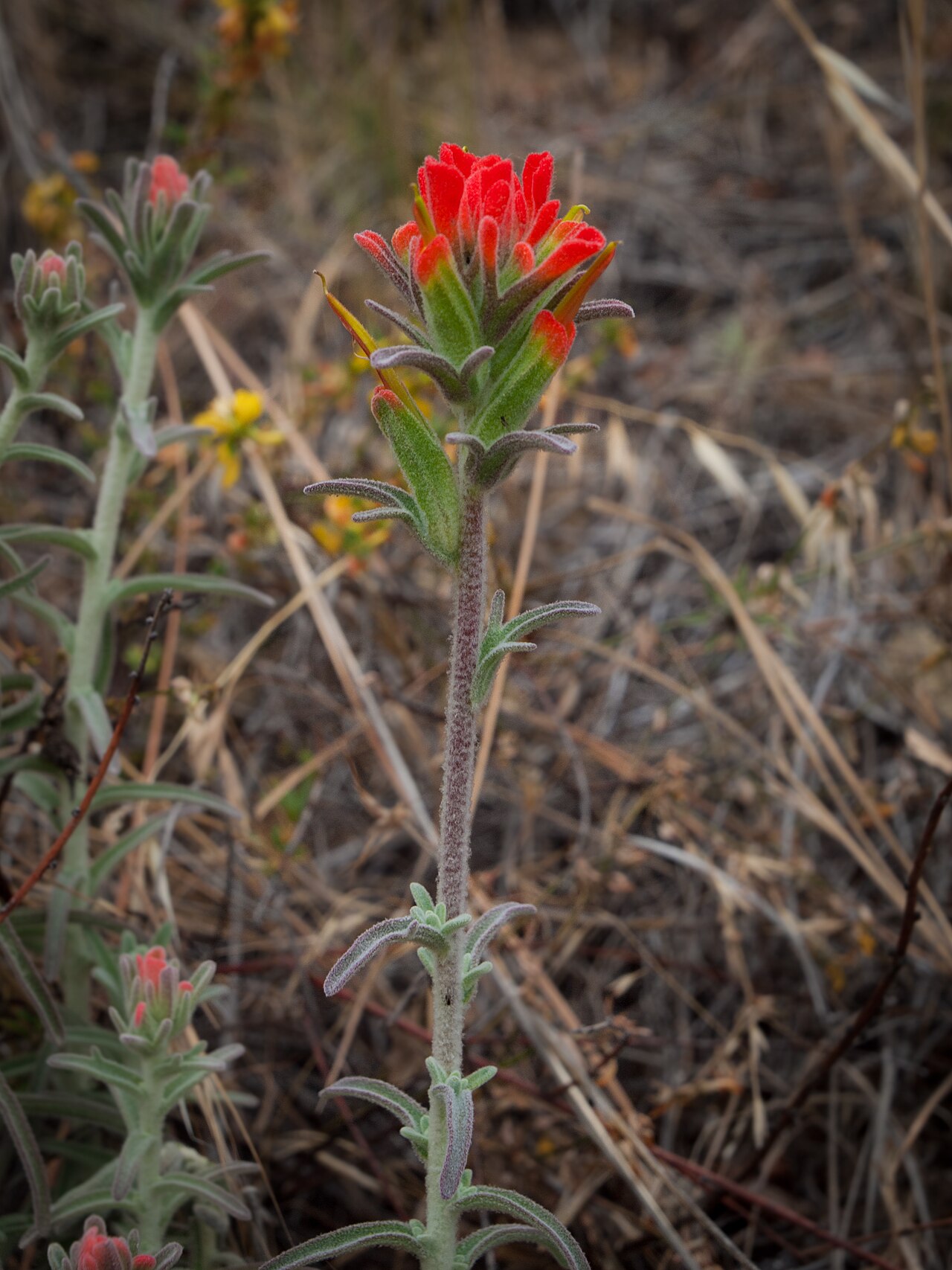
The plant grows as a clump of erect, leafy stems up to 2 feet tall, topped by a dense spike of color that, as in other paintbrushes, comes mostly from showy bracts rather than the true flowers, which are small, tubular, and partly hidden within the bracts. Bract color ranges from bright orange-red to yellowish, giving plant populations a somewhat variable look even within the same hillside.
Coast paintbrush is most at home on sea bluffs, coastal grassland, and dry hillsides throughout California, with a smaller, disjunct native presence recorded on the Washington coast. It rewards gardeners within its range with reliable, long-blooming color and strong hummingbird appeal, provided it is planted alongside suitable host species rather than alone.
Identification
Coast paintbrush is an erect, clump-forming perennial herb reaching 1 to 2 feet tall, with stems that are green to purplish and range from nearly hairless to quite hairy depending on the population.
Stems
Stems are upright, often several arising from a woody base, and covered in fine hairs that increase toward the flowering tips. Older plants develop a somewhat woody crown at the base even though the above-ground growth remains herbaceous in character.
Leaves
Leaves are variable in shape, up to about 3 inches long, narrow to lance-shaped, sometimes shallowly lobed near the stem tips, and often hairy, with a grayish-green cast that helps the plant handle dry, sun-exposed sites.
Flowers
The flower spike is made up of showy, hairy bracts ranging from bright orange-red to yellowish, each partly enclosing a small, tubular, two-lipped true flower that is greenish to purple, often lined with red or yellow. Several to many flowers are packed into a dense terminal spike that may bloom from late winter into summer depending on location and rainfall.
Fruit & Seeds
Flowers give way to small, dry capsules containing numerous tiny seeds, typical of the paintbrush genus. As a perennial, coast paintbrush regrows from its woody base each year rather than depending entirely on seed, though seed dispersal does help it colonize new ground.
Quick Facts
| Scientific Name | Castilleja affinis |
| Family | Orobanchaceae (Broomrape) |
| Plant Type | Herbaceous Perennial (Root Hemiparasite) |
| Mature Height | 1–2 ft |
| Mature Spread | 1–2 ft |
| Growth Rate | Moderate |
| Sun Exposure | Full Sun |
| Water Needs | Low |
| Soil Type | Rocky, sandy, well-drained |
| Soil pH | 6.0–7.5 (slightly acidic to neutral) |
| Bloom Time | February – July |
| Flower Color | Orange-red to yellowish bracts |
| Fall Color | None |
| Fruit | Small dry capsules, tiny seeds |
| Deer Resistant | Generally yes |
| USDA Hardiness Zones | 8–10 |
Native Range
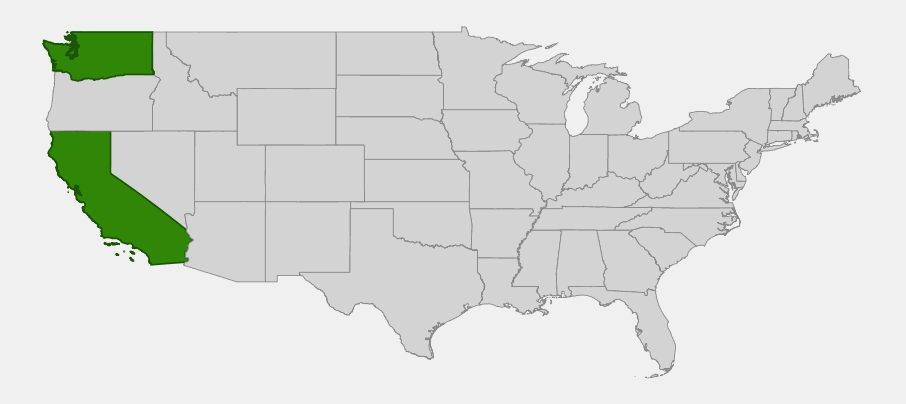
Coast paintbrush is native to California, where it is common and widespread across coastal bluffs, grassy hillsides, and chaparral and coastal-scrub openings from the north coast to the southern coastal counties. A smaller, disjunct native population is also documented on the Washington coast, recognized taxonomically as a distinct subspecies (ssp. litoralis) by some treatments.
Across its range, coast paintbrush favors open, sunny, well-drained sites: sea bluffs, dry grassy slopes, and the edges of coastal scrub and chaparral, from near sea level up to roughly 3,900 feet. It depends on a nearby community of host plants — commonly lupines, bunchgrasses, and coastal-scrub shrubs such as seaside daisy and seacliff buckwheat — for part of its nutrition.
County-level distribution records do not support coast paintbrush as a reliably native species in Oregon, despite its presence in the states on either side; gardeners there should treat it as a California (and, in limited coastal areas, Washington) native rather than assume it is native state-wide along the whole Pacific coast.
📋 Regional plant lists featuring coast paintbrush: California and Nevada · Western Oregon & Western Washington
Growing & Care Guide
Coast paintbrush can be a rewarding but slightly specialized addition to a California native garden, since its hemiparasitic habit means it performs best with the right plant neighbors rather than on its own.
Light
Grow in full sun, matching the open, exposed bluffs and hillsides where it grows wild. It can tolerate very light shade but blooms most heavily in full sun.
Soil & Water
Coast paintbrush prefers rocky or sandy soil with sharp drainage, consistent with its coastal bluff and dry-hillside habitat. Water occasionally during the first year or two to help the plant establish alongside its host, then reduce watering — established plants need little supplemental water beyond normal winter rainfall.
Planting Tips
Because coast paintbrush is a root hemiparasite, plant it near compatible hosts — lupines, native bunchgrasses, seaside daisy, or seacliff buckwheat are all good choices — rather than in isolation, where it often struggles. Set out container plants in fall or early spring, positioning them close enough to a host’s root zone to allow the paintbrush’s roots to make contact.
Pruning & Maintenance
Cut back spent flower stems after bloom to tidy the clump and may encourage additional flowering later in the season. Established plants need minimal other care; avoid heavy fertilization, which can disrupt the plant’s hemiparasitic balance with its host.
Landscape Uses
- Coastal bluff and dry hillside gardens alongside lupine and buckwheat
- Hummingbird gardens — the tubular flowers are a strong nectar draw
- Native wildflower meadows mixed with bunchgrasses and other perennials
- Coastal scrub restoration plantings
- Low-water perennial borders within its native coastal range
Wildlife & Ecological Value
Coast paintbrush is a valuable nectar source along California’s coast, blooming over a long season that spans from the tail end of winter into summer.
For Pollinators
The tubular flowers attract native bees and butterflies, while the extended bloom period makes coast paintbrush a dependable nectar source across much of the growing season in coastal grassland and scrub habitats.
For Birds
Hummingbirds are frequent visitors, drawn to the tubular, nectar-rich flowers typical of the paintbrush genus. Coast paintbrush is one of several native paintbrushes that help support hummingbird populations along the California coast.
For Mammals
The plant is not a major browse species; its hairy foliage and modest size make it a minor part of the diet of grazing mammals compared with the grasses and shrubs it often grows among.
Ecosystem Role
As a root hemiparasite, coast paintbrush interacts directly with the root systems of its host plants, which can help diversify plant competition dynamics within coastal grassland and scrub communities and contributes to the overall floristic richness of these habitats.
Cultural & Historical Uses
Like many paintbrushes, coast paintbrush does not have a well-documented history of use as food among Indigenous peoples of California, and caution is generally advised around consuming Castilleja species, which can accumulate selenium and other minerals absorbed from host plants through their parasitic roots.
The vivid, brush-like flower heads gave the genus its common English name and have long made paintbrushes some of the most recognizable and admired wildflowers of the California coast, frequently noted by botanists and naturalists documenting the region’s spring and summer bloom.
In more recent decades, coast paintbrush has become a popular subject in California native plant horticulture, valued both for its hummingbird appeal and its role in coastal bluff and scrub restoration projects.
Frequently Asked Questions
Why won’t my coast paintbrush grow well on its own?
Coast paintbrush is a root hemiparasite and performs best planted near a compatible host such as lupine, native bunchgrass, seaside daisy, or seacliff buckwheat. Planted entirely alone, it often struggles or fails to thrive.
Is coast paintbrush native to Oregon?
County-level distribution records do not support it as a reliably native species in Oregon, even though it occurs in California to the south and in limited coastal areas of Washington to the north.
Do hummingbirds like coast paintbrush?
Yes. The tubular, nectar-rich flowers are a strong draw for hummingbirds throughout the plant’s long bloom season from late winter into summer.
Can you eat coast paintbrush?
It is not used as a food plant. As with other paintbrushes, the hemiparasitic roots can take up minerals, including selenium, from host plants, so it should not be treated as edible.
What companion plants work best with coast paintbrush?
Lupines, native bunchgrasses, seaside daisy, and seacliff buckwheat are all documented hosts that support healthy growth and are good companions in a coastal native planting.

Looking for a nursery that carries coast paintbrush?
Browse our native plant nursery directory: California · Washington