Great Basin Sage (Salvia dorrii)
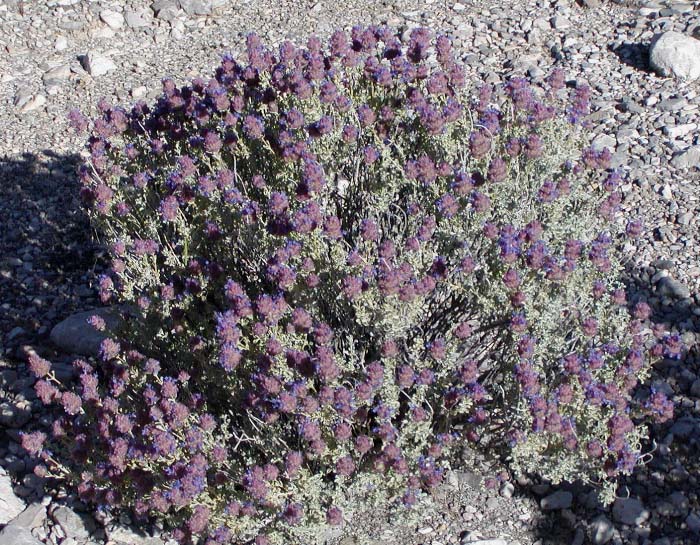
Salvia dorrii, commonly called Great Basin sage or purple sage, is a low, rounded subshrub of the Lamiaceae (mint) family that lights up the high desert in late spring with dense spikes of deep blue-violet flowers set off by rose-purple bracts. It is not related to the gray sagebrush (Artemisia tridentata) that dominates the same landscape, though the two often grow side by side and share a similar silvery look from a distance. Crush a leaf and the difference is obvious: Great Basin sage carries a sharp, resinous, almost minty fragrance distinct from sagebrush’s bitter, sagebrush-steppe smell.
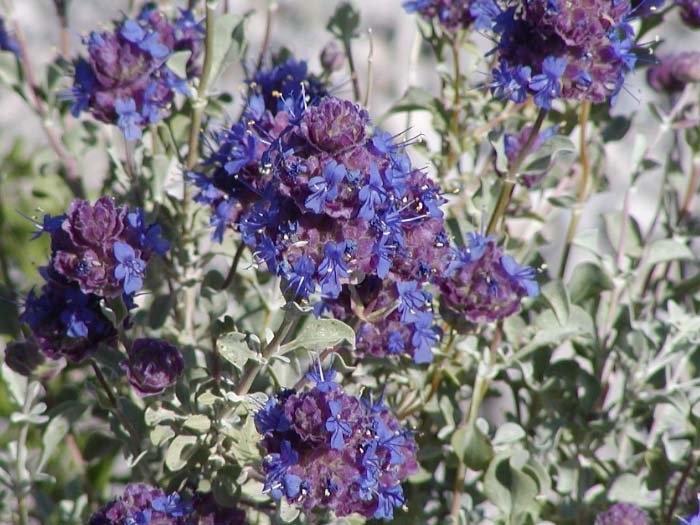
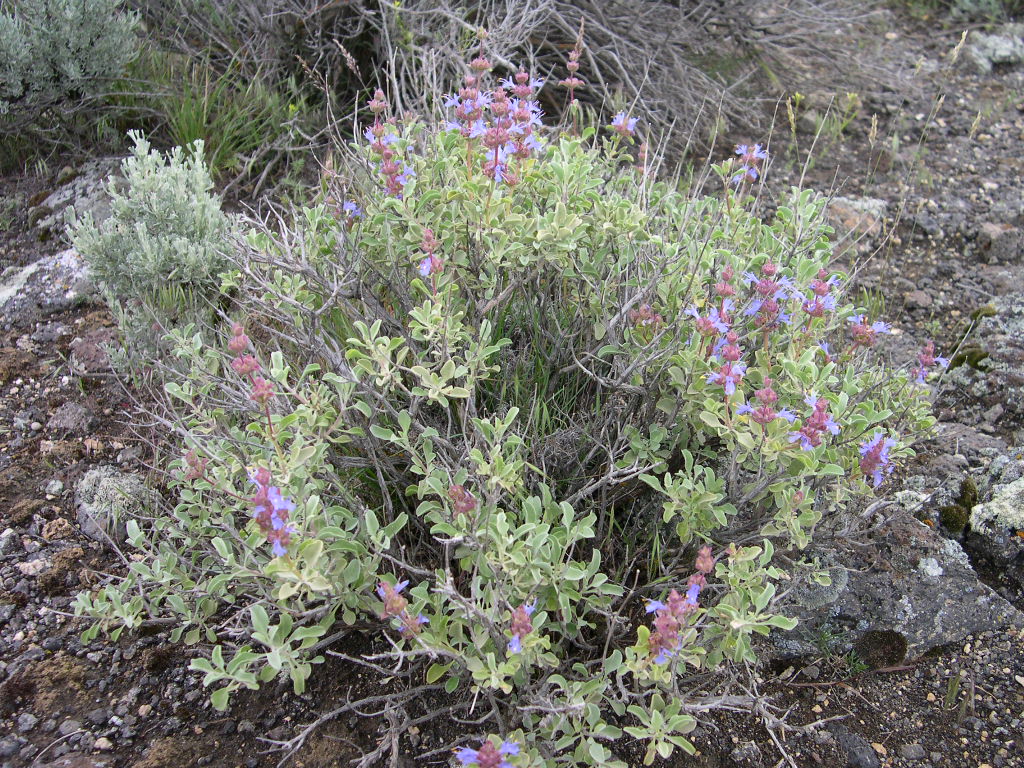
The plant forms a tidy, rounded mound 1 to 3 feet tall and often wider than tall, built from stiff, woody, often twisted branches clothed in small, spoon-shaped, silvery-gray leaves. From May into June, spikes of tubular blue to violet flowers emerge from purplish-pink calyxes, drawing hummingbirds and native bees to an otherwise sparse, rocky landscape. The combination of silver foliage and intense flower color has made it a favorite of xeriscape gardeners throughout the Great Basin and the desert Southwest.
Great Basin sage grows on dry, rocky slopes, scablands, and gravelly flats from the sagebrush steppe of the Columbia Basin south through the Great Basin to the Mojave and Sonoran desert edges. It demands sharp drainage and full sun, and it is intolerant of summer watering or heavy soils — conditions that make it a poor fit for conventional landscaping but an excellent choice for a true dry rock garden or native desert planting.
Identification
Great Basin sage is a low, many-branched subshrub, woody at the base with the current season’s growth often remaining somewhat herbaceous. It typically reaches 1 to 3 feet tall, occasionally to 4 feet, and spreads as wide or wider than its height, giving it a mounded, rounded silhouette. The stiff, often gnarled branches and gray-green color give the plant a weathered, long-lived appearance even on younger specimens.
Stems
Stems are woody, pale gray to tan, and rigid, frequently twisting as the plant ages. New growth is finely pubescent and glandular, which along with the leaves gives the whole plant its silvery cast and its resinous, sage-like scent when brushed or crushed.
Leaves
Leaves are small — typically ½ to 1¼ inches long — spoon-shaped (spatulate) to oblong, with smooth or slightly wavy margins and a silvery-gray surface covered in fine hairs and glandular dots. They are arranged oppositely along the stem and persist through much of the year, thinning in the driest months but not dropping entirely the way many desert shrubs do.
Flowers
Flowers appear in May and June in dense, spike-like clusters (verticillasters) at the branch tips. Each individual flower is tubular and bilaterally symmetrical, ⅜ to ¾ inch long, in shades of deep blue to blue-violet, held in a calyx that is often flushed rose-purple to magenta — a contrast that gives flowering plants their vivid, two-toned look from a distance.
Fruit & Seeds
Like other sages, the flowers give way to four small, smooth nutlets held inside the persistent calyx. The nutlets are tiny, brown, and relatively insignificant ornamentally, but they are an important late-summer food source for seed-eating birds and small mammals.
Quick Facts
| Scientific Name | Salvia dorrii |
| Family | Lamiaceae (Mint) |
| Plant Type | Evergreen-gray Subshrub |
| Mature Height | 1–3 ft (occasionally to 4 ft) |
| Mature Spread | 2–4 ft, often wider than tall |
| Growth Rate | Slow |
| Sun Exposure | Full Sun |
| Water Needs | Low |
| Soil Type | Dry, rocky or gravelly, sharply drained |
| Soil pH | 6.5–8.0 (neutral to alkaline) |
| Bloom Time | May – June |
| Flower Color | Blue to blue-violet, rose-purple calyx |
| Fall Color | None (silvery-gray year-round) |
| Fruit | Tiny brown nutlets, inconspicuous |
| Deer Resistant | Yes (aromatic foliage generally avoided) |
| USDA Hardiness Zones | 5–9 |
Native Range
Great Basin sage is native to the dry interior of the western United States, centered on the Great Basin and the sagebrush steppe of the Columbia Plateau. Its range runs from the eastern slopes of the Cascades in Washington and Oregon south through the Snake River Plain of Idaho, across most of Nevada and Utah, into eastern and southern California, and south into Arizona at the edge of the Mojave and Sonoran deserts.
Throughout this range it grows on dry, open, rocky or gravelly sites — scablands, talus slopes, alluvial fans, and the margins of sagebrush flats — almost always in full sun on soils that drain quickly after rain. It is a true high-desert plant, occurring from roughly 2,000 feet in the Columbia Basin up to around 9,000 feet in the mountains of the Great Basin and southern Rockies, often on sites too dry and rocky for sagebrush itself.
Great Basin sage is not native east of the Rockies, and gardeners in the Great Plains or the humid eastern and southeastern states should not expect it to survive summer humidity and heavier soils. Within its native range it is widespread and secure, and it is a dependable, long-lived component of undisturbed sagebrush-steppe and desert-scrub plant communities.
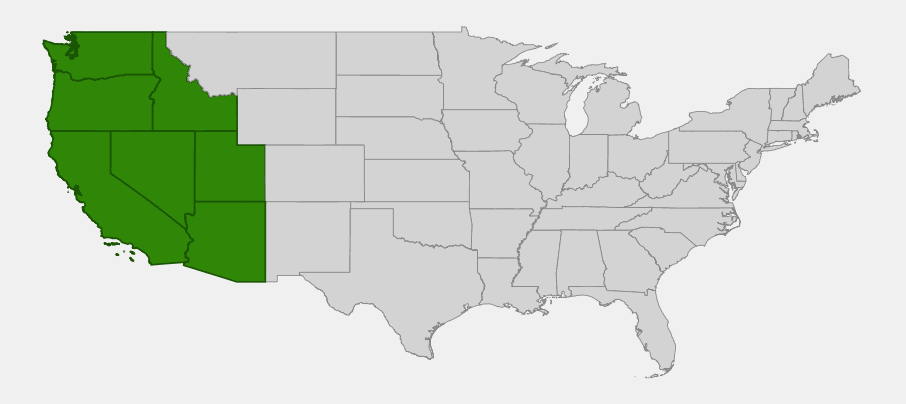
📋 Regional plant lists featuring Great Basin sage: California and Nevada · Idaho, Eastern Oregon & Eastern Washington · Utah and Western Colorado · Arizona & New Mexico
Growing & Care Guide
Great Basin sage is easy to grow correctly and almost impossible to grow in average garden conditions. Success depends entirely on recreating the sharp drainage and dry summers of its native rocky slopes.
Light
Plant it in full sun. This is a high-desert plant adapted to intense light and reflected heat from bare rock and gravel; even light afternoon shade will cause it to stretch, flop, and bloom poorly.
Soil & Water
Drainage is the single most important factor. Great Basin sage needs lean, rocky, or gravelly soil that sheds water quickly; it does not tolerate clay, heavy irrigation, or summer water once established. A raised bed, berm, or crushed-rock mulch over native soil works well in gardens with richer soil. Water occasionally during the first year to establish roots, then let the plant rely on natural rainfall — overwatering, especially in summer, is the most common cause of death in cultivation.
Planting Tips
Set out container plants in fall or early spring so roots can establish before summer heat. Space plants 2 to 3 feet apart to allow for their mounded spread. Avoid amending the planting hole with compost or rich soil, which holds moisture against the roots; work in coarse gravel or decomposed granite instead if the native soil is heavy.
Pruning & Maintenance
Lightly shear spent flower spikes after bloom to keep the mound tidy and encourage denser growth, but avoid cutting into bare old wood, which the plant is slow to resprout from. Established plants need little other care and are notably long-lived on undisturbed rocky sites.
Propagation
Great Basin sage is most reliably propagated from semi-hardwood cuttings taken in late summer, which root readily in a well-drained cutting mix. Seed germination is possible but slower and less predictable; seed benefits from cold stratification over winter, mimicking natural germination after snowmelt.
Landscape Uses
- Dry rock gardens and crevice gardens paired with other high-desert natives
- Xeriscaping — low water use once established
- Pollinator gardens for hummingbirds and native bees
- Deer-resistant plantings in foothill and rangeland gardens
- Slope and bank stabilization on dry, rocky grades
- Silver-foliage accent massed or as a specimen among boulders
Wildlife & Ecological Value
In the sparse plant communities of the Great Basin, Great Basin sage is a disproportionately important nectar and cover resource, blooming at a time when relatively few other desert shrubs are in flower.
For Pollinators
The tubular flowers are built for long-tongued pollinators, especially bumblebees and other native bees that can reach the nectar deep in the corolla. The vivid blue-violet color and spring bloom time make it one of the more conspicuous nectar sources in sagebrush-steppe habitat during late spring.
For Birds
Hummingbirds, particularly Black-chinned and Broad-tailed Hummingbirds, regularly visit the flowers for nectar as they migrate or nest through the Great Basin and Intermountain West. Seed-eating sparrows and finches later feed on the small nutlets.
For Mammals
The strongly aromatic, resinous foliage is generally avoided by deer and other browsers, which is part of why the shrub persists on heavily grazed rangeland where more palatable plants disappear. Small mammals use the dense branching for cover.
Ecosystem Role
As a long-lived, slow-growing shrub on some of the driest, rockiest ground in its range, Great Basin sage helps stabilize thin desert soils and adds structural and floral diversity to sagebrush-steppe communities that might otherwise be dominated by a single shrub species.
Cultural & Historical Uses
Indigenous peoples of the Great Basin and Columbia Plateau, including Great Basin Paiute, Shoshone, and Washoe communities, historically used the aromatic leaves of Great Basin sage in smudging and ceremonial practices, similarly to the way other sages are used across the West. The plant’s strong, resinous scent made it a recognizable and valued part of the high-desert landscape long before European contact.
The foliage was also used in some communities as a flavoring and in simple infusions, and the pliable young stems occasionally served minor craft purposes. These uses were practical and ceremonial rather than widely documented in written ethnobotanical records, and specific preparations varied by group and region.
In more recent history, Great Basin sage has become valued in rangeland restoration for its drought tolerance and resistance to grazing pressure, and it has been adopted by native-plant gardeners throughout the Intermountain West and California for its reliable, low-water color in rock gardens.
Frequently Asked Questions
Is Great Basin sage the same as sagebrush?
No. Great Basin sage (Salvia dorrii) is a true sage in the mint family, grown for its blue-violet flowers. Sagebrush (Artemisia tridentata) is in the aster family and has inconspicuous yellow-gray flowers. They often grow together and share a silvery look, but they are unrelated.
Will Great Basin sage grow in clay soil or a wet climate?
Not reliably. This species needs sharp drainage and dry summers; clay soil or regular irrigation, especially in warm weather, tends to rot the roots. It is best suited to true rock gardens or unirrigated slopes within its native range.
Do hummingbirds visit Great Basin sage?
Yes. The tubular blue-violet flowers are a reliable nectar source for migrating and nesting hummingbirds in the Great Basin and Intermountain West during the May–June bloom period.
Is Great Basin sage deer resistant?
Generally yes. Its strongly aromatic, resinous foliage is not a preferred browse for deer, which is one reason it persists on rangeland where more palatable native plants have been grazed out.
How do I propagate Great Basin sage at home?
Semi-hardwood cuttings taken in late summer root most reliably. Seed can be grown but needs winter cold stratification and germinates less predictably than cuttings.

Looking for a nursery that carries Great Basin sage?
Browse our native plant nursery directory: California · Nevada · Utah · Idaho · Oregon · Washington · Arizona