Coyotillo (Karwinskia humboldtiana)
Karwinskia humboldtiana, known as Coyotillo (and, in Mexico, tullidora — “the crippler”), is a spineless, many-branched shrub of the buckthorn family (Rhamnaceae) found in the brushlands of South and West Texas. It is an important plant for anyone spending time in Texas thornscrub to be able to recognize — not primarily for garden use, but because its fruit and leaves contain a potent neurotoxin responsible for documented poisoning of children, livestock, and goats.
This page exists to help with accurate identification and awareness, not to encourage planting. Coyotillo is a true Texas native with real ecological value in its home range, providing cover and, for wildlife that can tolerate its toxins, some food value, but it is not a plant to introduce into home landscapes, especially anywhere children, pets, or grazing animals have access.
Coyotillo typically grows as an inconspicuous, rounded shrub blending into mixed brush, which is part of what makes correct identification important — its dark, grape-like fruit can tempt the unwary, and its resemblance to other unrelated shrubs with edible fruit has led to real poisoning cases in Texas and Mexico.
Identification
Coyotillo grows as a spineless, multi-stemmed shrub typically 3 to 6 feet tall, occasionally taller, with slender, flexible branches and an unremarkable gray-brown bark.
Bark & Stems
Stems are slender, gray to grayish-brown, and lack any spines or thorns — a useful distinction from many of its thornscrub neighbors. Young twigs are flexible and finely hairy.
Leaves
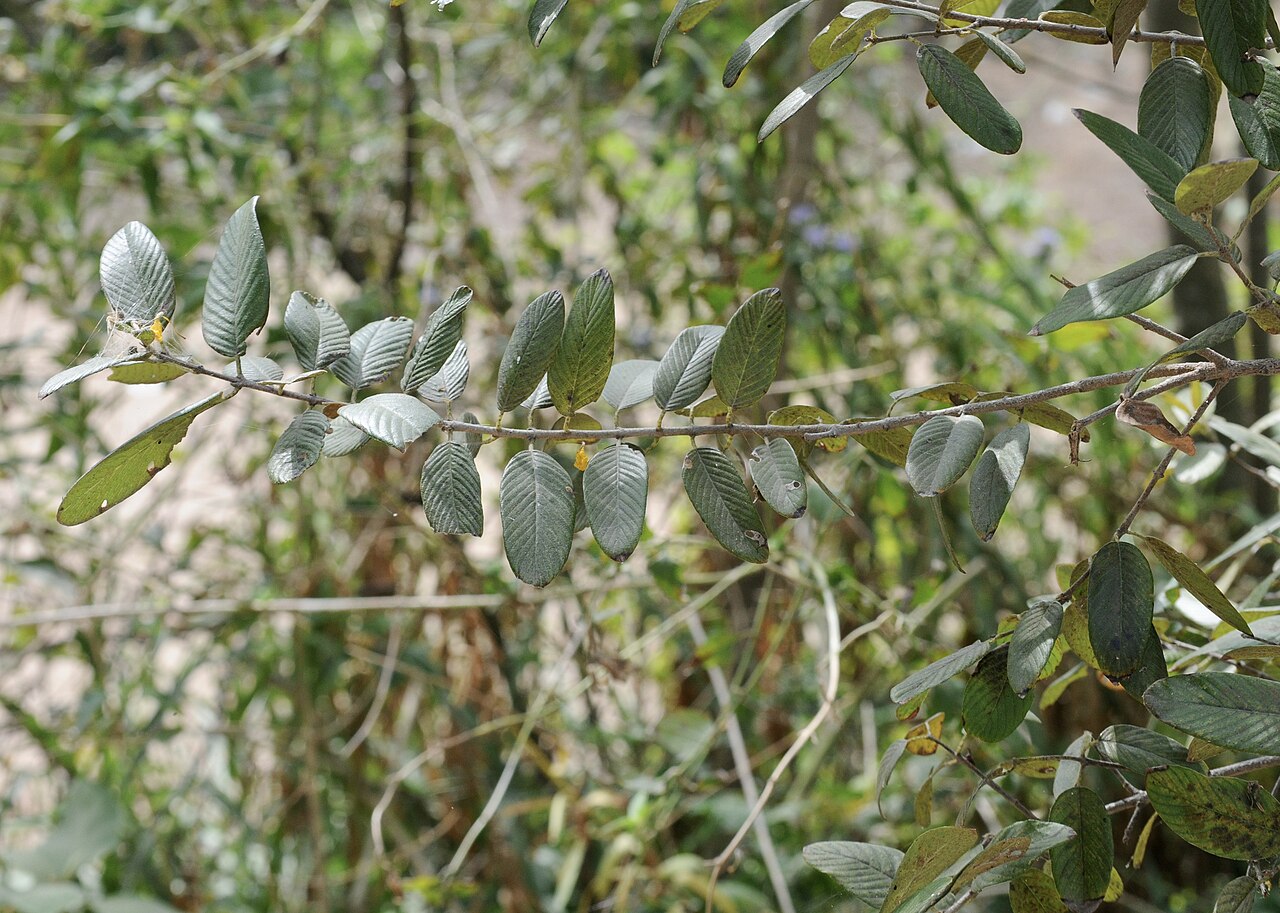
The most reliable identifying feature is the leaf: leaves are opposite (or occasionally sub-opposite), elliptical to oblong, 1 to 3 inches long, with smooth (untoothed) margins and strongly impressed, closely parallel lateral veins that run from the midrib all the way to the leaf margin — a distinctive “ribbed” look that separates Coyotillo from similar-looking brush species. Leaf color ranges from dull green to silvery-green, often with a slightly felted texture on the underside.
Flowers
Flowers are small, inconspicuous, greenish-yellow, and borne in small clusters in the leaf axils. They are easy to overlook and are not a significant ornamental feature.
Fruit & Seeds
The fruit is a round, fleshy drupe about 3/8 to 1/2 inch across, ripening from green to black and superficially resembling a small grape or dark berry. The fruit, and especially the seed inside it, along with the leaves, contain quinone-type neurotoxins that cause a serious, sometimes permanent, demyelinating nerve disorder in humans and livestock. Cases of paralytic poisoning in children who ate the fruit, and in goats and other livestock that browsed the leaves, are documented throughout the plant’s Texas and Mexico range.
Quick Facts
| Scientific Name | Karwinskia humboldtiana |
| Family | Rhamnaceae (Buckthorn) |
| Plant Type | Deciduous to Semi-Evergreen Shrub |
| Mature Height | 3–6 ft (1–2 m), occasionally taller |
| Mature Spread | 3–6 ft |
| Growth Rate | Slow to moderate |
| Sun Exposure | Full Sun to Part Shade |
| Water Needs | Low |
| Soil Type | Caliche, limestone, rocky or sandy; well-drained |
| Soil pH | Neutral to alkaline |
| Bloom Time | Spring–summer |
| Flower Color | Greenish-yellow |
| Fall Color | None notable |
| Fruit | Black, grape-like drupe; highly toxic, not edible |
| Deer Resistant | Generally avoided by browsers due to toxicity |
| USDA Hardiness Zones | 8b–11 |
Native Range
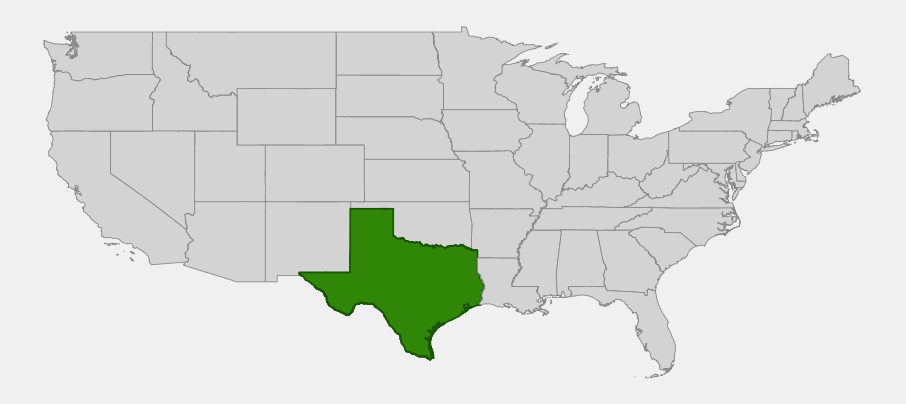
Coyotillo is native to South and West Texas, with documented native populations concentrated in the brushlands of the Rio Grande Plain and in scattered limestone and caliche habitats further west toward the Trans-Pecos and Edwards Plateau margins. From Texas its range extends south through most of Mexico.
Within Texas, Coyotillo grows as an inconspicuous component of mixed thornscrub and brush country, typically on well-drained, rocky or caliche-derived soils. It tends to occur scattered among other native shrubs rather than forming dense pure stands, which is part of why it is easy to overlook until you know what to look for.
Because of its toxicity, Coyotillo is best appreciated as a plant to recognize in the wild rather than one to cultivate. This page documents it for identification and safety awareness; it is not recommended for home or livestock-accessible landscapes anywhere.
📋 Regional plant lists featuring Coyotillo: South and West Texas
Growing & Care Guide
Because of its documented toxicity to children and livestock, PlantNative does not recommend cultivating Coyotillo in home landscapes, community gardens, or anywhere livestock, pets, or children might have access to the fruit or foliage. The notes below are provided for identification, land management, and brush-clearing context rather than as planting encouragement.
Light & Site
Where it occurs naturally, Coyotillo grows in full sun to light shade on well-drained, rocky or caliche soils typical of South and West Texas brushland, tolerating heat and drought without difficulty.
Land Management Notes
Ranchers and landowners managing brush in Coyotillo’s native range should be able to identify the plant so it can be fenced out of pastures or paddocks where livestock, especially goats and sheep, might browse the leaves. Removing or avoiding areas with heavy Coyotillo growth is a more practical response than attempting to eradicate it across a whole property, since it is a native, naturally occurring component of the brush community.
If You Find It on Your Property
Coyotillo does not need to be eliminated from wild or semi-wild land — it is a native plant filling a role in the thornscrub ecosystem — but it should be kept away from areas where children play, pets roam off-leash, or grazing animals have unsupervised access, and fruit should never be picked or tasted under any circumstances.
Wildlife & Ecological Value
Despite its danger to people and livestock, Coyotillo plays a legitimate role in the Texas thornscrub ecosystem it evolved within.
For Wildlife
Some wildlife species appear more tolerant of the plant’s toxins than domestic livestock and people, and Coyotillo fruit is consumed by certain birds and small mammals in its native range as part of the broader thornscrub food web, though documentation of exactly which species safely eat it is limited.
For Cover
As an unremarkable but persistent shrub layer component, Coyotillo adds to the structural density of thornscrub brush that shelters ground-dwelling birds, small mammals, and reptiles from predators and weather extremes.
Ecosystem Role
Coyotillo is a naturally occurring, native part of South and West Texas brush communities. Its toxicity is an evolved defense that likely deters certain herbivores and seed predators, and its removal is not an ecological goal — the concern is purely about managing human and livestock exposure, not about the plant’s legitimate place in the landscape.
Cultural & Historical Uses
Coyotillo has a long and well-documented history as a cause of poisoning rather than as a beneficial-use plant. Its Spanish name tullidora — “the crippler” — reflects generations of recognition in Texas and Mexico that eating the fruit or, less commonly, exposure to the leaves could cause a slow-onset paralysis, historically most often seen in children who ate the tempting dark fruit and in goats that browsed the foliage during drought when other forage was scarce.
Despite — or perhaps because of — this toxicity, some historical folk-medicine traditions in Mexico used carefully controlled, small preparations of the plant for specific purposes; these uses are documented in ethnobotanical literature as history, not as a safe or recommended practice, since the margin between a folk dose and a dangerous dose with this plant’s neurotoxins is not well established by modern standards.
Today Coyotillo’s primary significance is as a plant ranchers, parents, and land managers in South and West Texas are taught to recognize, so that its distinctive opposite, ribbed leaves and small black fruit can be identified and avoided rather than mistaken for a safer, edible-fruited shrub.
Frequently Asked Questions
Is Coyotillo fruit poisonous?
Yes, seriously so. The fruit, and especially its seed, along with the leaves, contain neurotoxins that have caused documented cases of paralysis in children and livestock. Never eat the fruit or allow children or animals access to it.
How can I tell Coyotillo apart from other brush shrubs?
Look for opposite leaves (most similar thornscrub shrubs have alternate leaves) with closely spaced, strongly impressed parallel veins running all the way to a smooth, untoothed margin, combined with the absence of spines on the stems.
Should I remove Coyotillo from my property?
Not necessarily — it is a native plant with a legitimate ecological role. The safer approach is to identify it, keep livestock and children away from areas where it fruits heavily, and fence pastures accordingly rather than trying to eliminate a naturally occurring native shrub.
Can livestock safely graze near Coyotillo?
Documented poisoning cases, especially in goats, show that browsing the leaves can be dangerous, particularly during drought when other forage is limited and animals turn to less palatable plants. Fence off or monitor areas with significant Coyotillo growth.
Is Coyotillo related to Cascara (Rhamnus purshiana)?
Yes — both belong to the buckthorn family, Rhamnaceae, though they are different genera with very different properties. Cascara’s bark has a historical laxative use, while Coyotillo’s fruit and leaves are dangerously neurotoxic; the two should not be confused or treated as interchangeable in any way.

Looking for a nursery that carries South Texas native plants?
Browse our native plant nursery directory: Texas