Blue Curls (Phacelia congesta)
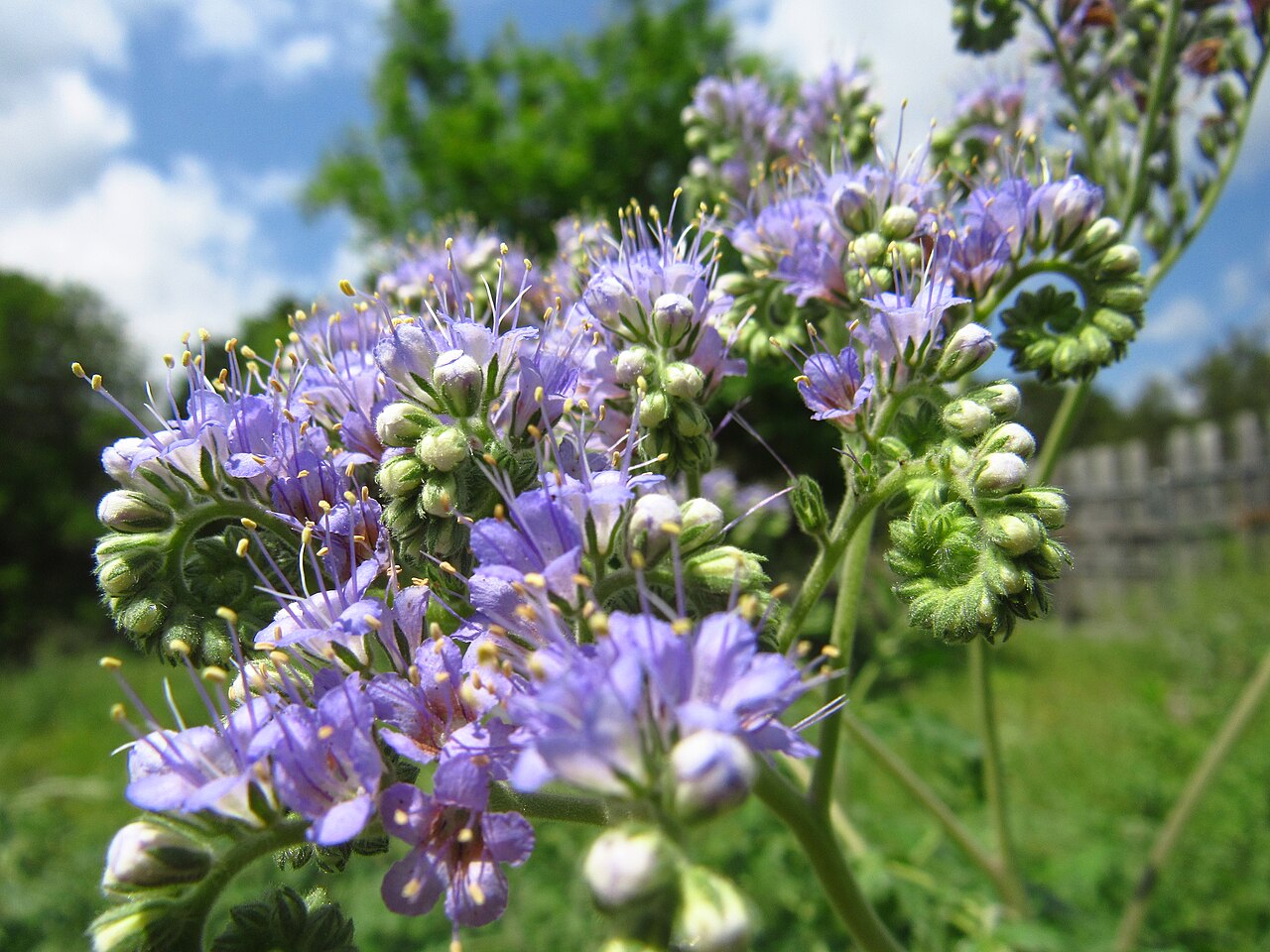
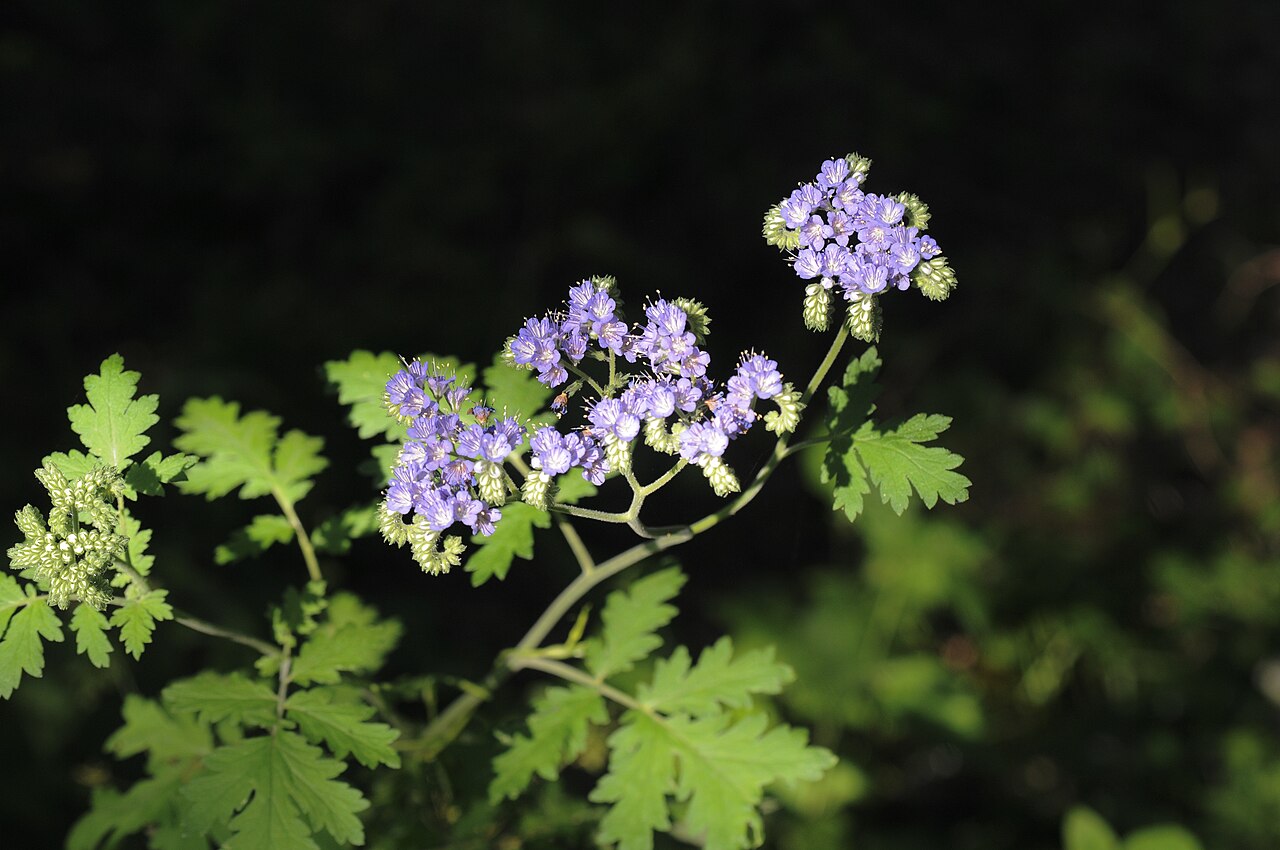
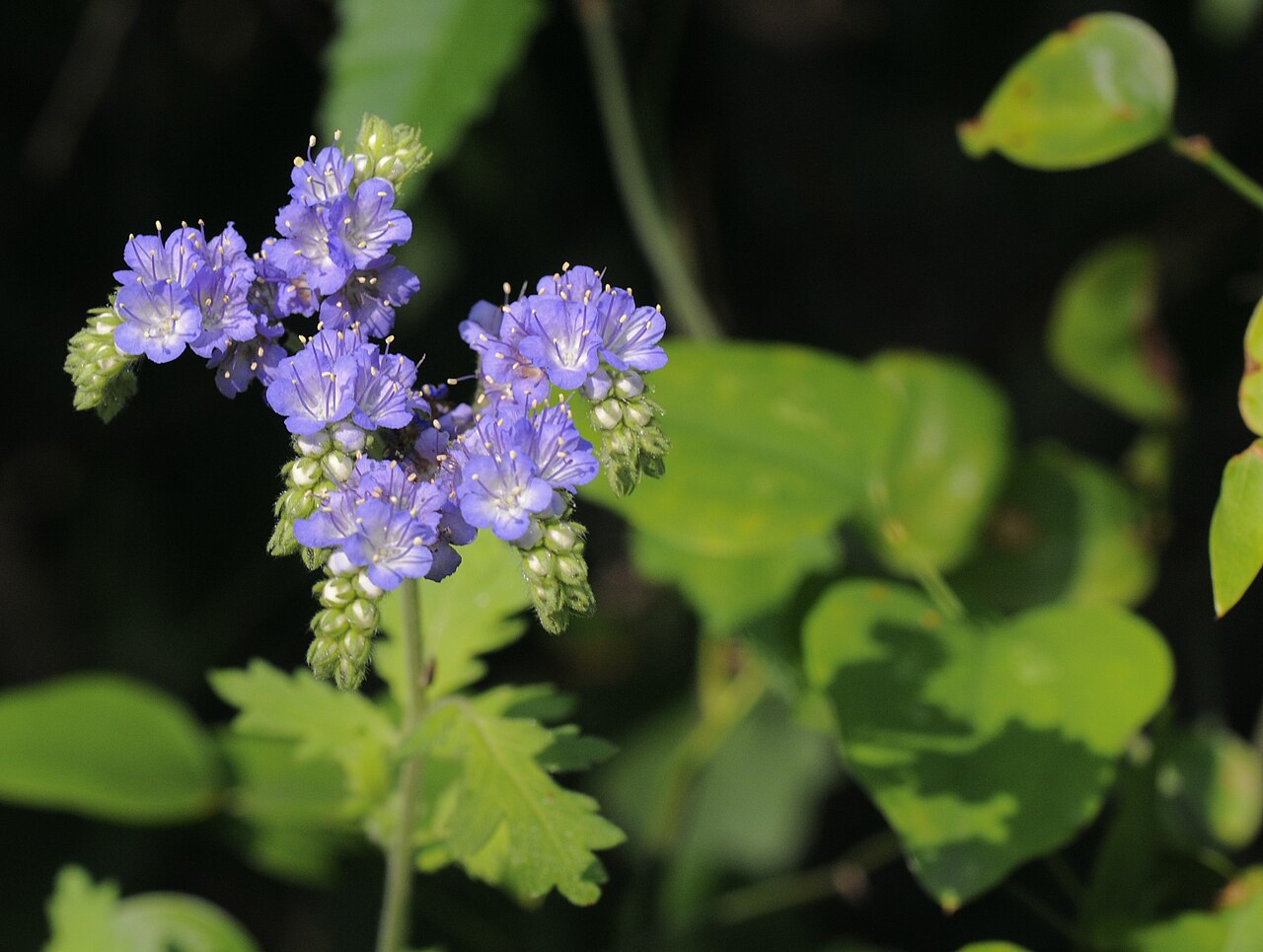
Phacelia congesta, commonly called Blue Curls or caterpillar phacelia, is a cheerful spring wildflower found across much of Texas and Oklahoma. Its small, lavender-blue, bell-shaped flowers cluster along tightly coiled stems that uncurl gradually as new buds open, a flower arrangement called a scorpioid cyme that looks remarkably like a fern fiddlehead or a caterpillar curled at rest — hence both common names.
From March into May, blue curls can turn whole roadsides, fields and woodland edges into hazy sheets of soft blue-purple, especially in years with good spring rain. The flowers are small individually, rarely more than half an inch across, but they are produced in such abundance along each coiling stem that the plant reads as a solid patch of color from a distance.
Blue curls is an easygoing annual or biennial wildflower for a Texas native garden, needing nothing more than a sunny spot and reasonable drainage. It self-sows readily where it’s happy, so a single planting often becomes a reliable, low-effort spring feature that returns on its own year after year.
Identification
Blue curls grows as an upright to somewhat sprawling annual or biennial herb, 1 to 3 feet tall, with soft, finely hairy stems and foliage.
Stems
Stems are slender, branching and covered in soft, glandular hairs that can be slightly sticky to the touch. Plants often lean or sprawl somewhat as they grow, especially in looser soil or with some shade.
Leaves
Leaves are soft, deeply lobed to almost fern-like in outline, with toothed segments, alternating along the stem. The deeply cut leaf shape is a useful identification clue, distinguishing blue curls from phacelias with simpler, unlobed leaves.
Flowers
The small, bell-shaped flowers are purple to lavender-blue, with a rim deeply lobed into five parts, and five stamens that protrude noticeably beyond the petals, giving each flower a slightly fuzzy, star-like look. Flowers are arranged in dense, one-sided, coiled clusters (scorpioid cymes) that resemble a fiddlehead fern or a curled caterpillar before they unfurl as the buds progressively open. Bloom runs from March through May, peaking in April across most of its range.
Fruit & Seeds
After flowering, each small capsule splits open to release a handful of tiny, pitted seeds. Plants that have finished flowering and set seed typically die back by early summer, completing their life cycle as a true annual (or occasionally overwintering as a biennial rosette in milder areas).
Quick Facts
| Scientific Name | Phacelia congesta |
| Family | Boraginaceae (Borage/Waterleaf) |
| Plant Type | Annual to biennial wildflower |
| Mature Height | 1–3 ft |
| Mature Spread | 1–2 ft, often sprawling |
| Growth Rate | Fast |
| Sun Exposure | Full Sun to Part Shade |
| Water Needs | Average; appreciates spring moisture |
| Soil Type | Gravelly, sandy or loamy soils; well-drained |
| Soil pH | Neutral to slightly alkaline (about 6.5–8.0) |
| Bloom Time | March – May |
| Flower Color | Lavender-blue to purple |
| Fall Color | None; plant dies back after seed set |
| Fruit | Small seed capsules, late spring |
| Deer Resistant | Moderate |
| USDA Hardiness Zones | 7–9 (grown as a reseeding annual) |
Native Range
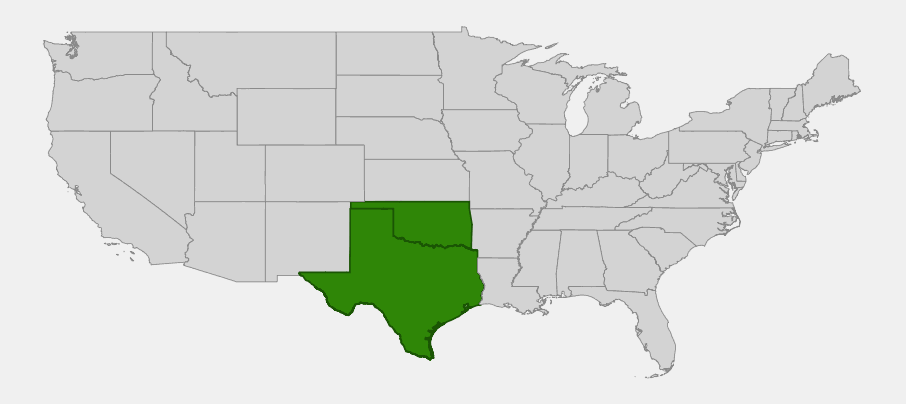
Blue curls is native to Texas and Oklahoma, where it is common across the southern, central and western parts of Texas and scattered through central and southern Oklahoma, with its range thinning out toward the edges of both states.
It favors open, sunny ground with gravelly, sandy or loamy soil: prairies, meadows, roadsides, ditches, woodland edges and other lightly disturbed sites. It often grows alongside other spring wildflowers on limestone-influenced soils of the Edwards Plateau and Hill Country, as well as on sandier ground farther east.
In good years, blue curls can form dense colonies that carpet open ground in soft blue, especially where periodic disturbance (mowing, grazing or occasional fire) keeps taller vegetation from closing in and shading it out.
📋 Regional plant lists featuring Blue Curls: South & West Texas
Growing & Care Guide
Blue curls is one of the easiest Texas spring wildflowers to grow from seed, asking for little beyond sun and decent drainage.
Light
Full sun produces the densest, most compact flowering, though blue curls tolerates light shade, especially at the edge of oak woodlands where it often grows in the wild. In too much shade it stretches and sprawls with fewer flowers.
Soil & Water
Gravelly, sandy or loamy soils with good drainage suit it best, reflecting its preference for open, well-drained ground in the wild. Average spring moisture helps it bloom fully; established colonies tolerate the normal dry-down of a Texas early summer without extra watering, after which the plants complete their cycle and die back.
Planting Tips
Direct-sow seed in fall, which mimics its natural germination cycle after seed drops in late spring and sits through summer dormancy before cool-season rains trigger germination. Scatter seed onto loosened soil and press in lightly; avoid deep burial. Once established, a planting usually maintains itself through self-sowing.
Pruning & Maintenance
None needed during the growing season. After bloom and seed set, plants decline and can be pulled or left to decompose in place; leaving some seed heads in place ensures a good return crop the following spring.
Propagation
Propagate by seed sown in fall for spring bloom. No stratification is typically required in its native range, where seed naturally experiences a summer-dormant, fall-germinating cycle.
Landscape Uses
- Spring wildflower meadows alongside Texas bluebonnets and other cool-season natives
- Naturalized plantings under open oak canopies and along woodland edges
- Pollinator gardens that need early-season nectar before summer bloomers take over
- Roadside and right-of-way seeding, where its colony-forming habit shines
- Informal cottage borders, where its soft blue haze complements bolder spring colors
Wildlife & Ecological Value
Blue curls provides an important early-season nectar and pollen source at a time of year when many pollinators are just becoming active.
For Pollinators
The flowers attract a wide range of native bees, honeybees, small butterflies and beneficial flies, with the long, protruding stamens making pollen easy for visiting insects to collect. Its early bloom window makes it a valuable resource for emerging spring pollinators.
For Birds
Seed-eating birds forage on the small seeds once capsules mature in late spring, though the seeds are tiny and not a major food source compared to larger-seeded prairie plants.
For Mammals
Blue curls is not a primary browse plant for deer or livestock, and its glandular, slightly sticky foliage likely discourages heavy grazing.
Ecosystem Role
As an early, fast-cycling annual, blue curls helps cover open or disturbed ground through spring, adding early floral diversity before summer grasses and forbs take over, and its dense colonies can help suppress bare-ground erosion during the wet season.
Cultural & Historical Uses
Blue curls has no significant recorded history of use by Indigenous peoples or early settlers as food or medicine, and it is not mentioned in traditional ethnobotanical accounts the way some more widespread prairie plants are.
Its main cultural role today is as a well-loved, if lesser-known, component of Texas spring wildflower displays, often blooming alongside bluebonnets and winecups in roadside and prairie settings, and increasingly included in regional native-seed mixes for its easy establishment and reliable color.
Frequently Asked Questions
Why are blue curls flowers arranged in a coil?
This coiled arrangement, called a scorpioid cyme, is a common flowering structure in the borage family. Buds form in a tight spiral that gradually straightens and opens from the base outward as flowers mature, resembling a fiddlehead fern or curled caterpillar.
Is blue curls an annual or a perennial?
It is an annual in most of its range, completing its life cycle from fall germination to spring bloom to summer seed set and death within about a year; in milder areas it can behave as a short-lived biennial.
When should I plant blue curls seed?
Sow seed in fall. This matches the plant’s natural cycle, in which seed shed in late spring germinates with the arrival of cooler, wetter fall weather and overwinters as a small rosette before blooming the following spring.
Will blue curls reseed itself in my garden?
Yes, readily, as long as some seed capsules are allowed to mature and drop before the plants are removed. Many Texas gardeners maintain a patch indefinitely just by leaving some seed heads in place each year.
Is blue curls the same as other “blue curls” plants sold in nurseries?
No. The common name “blue curls” is also used for unrelated plants, such as woolly blue curls (Trichostema lanatum), a California native shrub in the mint family. Always check the scientific name, Phacelia congesta, when buying seed or plants.