Woolly Paintbrush (Castilleja lanata)
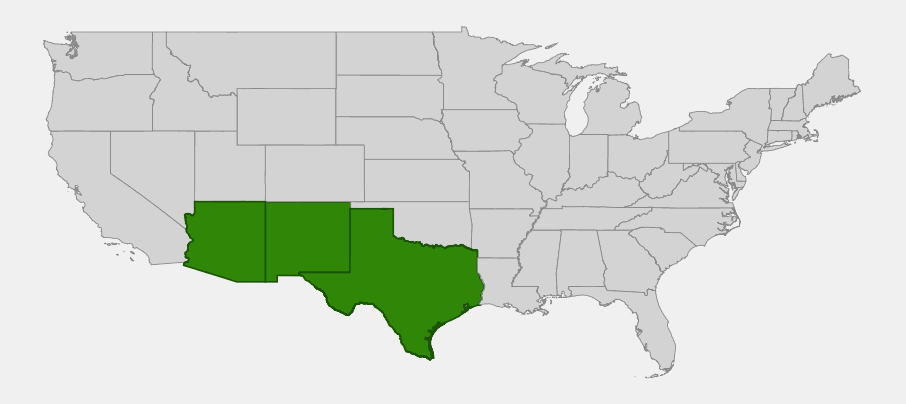
Castilleja lanata, commonly called woolly paintbrush or white-woolly Indian paintbrush, is a striking perennial wildflower of the dry rocky hills along the US–Mexico borderlands, found in the Trans-Pecos region of Texas, the bootheel and southwest of New Mexico, and the southeastern corner of Arizona. Every part of the plant above ground, stems, leaves and bud tips alike, is covered in dense, felted white hairs, giving the whole plant a soft, silvery-gray cast that makes the fiery red-orange bracts at the tips of its flowering stems even more vivid by contrast.
Like all paintbrushes, what looks like the “flower” of woolly paintbrush is mostly colored bract tissue; the true flowers are small, tubular and greenish, tucked discreetly inside. Also like other Castilleja, this species is a hemiparasite: its roots tap into the roots of nearby shrubs and grasses to draw extra water and minerals, a strategy common on the lean, rocky desert-grassland and oak-woodland soils where it grows.
Woolly paintbrush is not yet common in cultivated native gardens, in part because paintbrushes are notoriously difficult to establish without a living host plant nearby, but it is a worthwhile and visually dramatic addition to a dry, rocky Chihuahuan Desert-style planting in its home range, especially paired with the bunchgrasses and low shrubs it naturally parasitizes.
Identification
Woolly paintbrush grows as an upright to sprawling perennial herb, typically 8 to 20 inches tall, often forming several stems from a woody base.
Stems & Leaves
Stems and leaves are densely covered in matted white hairs (technically “lanate” or woolly pubescence, the source of both the species name and the common name), which gives the whole plant a soft gray-white appearance even before it flowers. Leaves are narrow and linear to lance-shaped, mostly untoothed, though some leaves near the flowering tips may show a few narrow lobes.
Flowers & Bracts
The showy part of the plant is the cluster of floral bracts at each stem tip, colored red to red-orange (occasionally more orange-yellow), with narrow pointed lobes at the tip of each bract. The true flowers are tubular, greenish to pale yellow, two-lipped, with a narrow, beak-like upper lip (the galea) that projects beyond the bracts; they are small and easy to overlook against the much more conspicuous colored bracts. Bloom season runs from roughly March through October, peaking after spring and summer rains.
Roots
Like other paintbrushes, woolly paintbrush is a root hemiparasite: its roots form connections (haustoria) with the roots of neighboring plants, especially shrubs and bunchgrasses, to supplement its own water and nutrient uptake. It still photosynthesizes and can survive without a host, but it typically grows larger and flowers more reliably when rooted near compatible neighbors.
Quick Facts
| Scientific Name | Castilleja lanata |
| Family | Orobanchaceae (Broomrape) |
| Plant Type | Perennial hemiparasitic wildflower |
| Mature Height | 8–20 in |
| Mature Spread | 10–18 in |
| Growth Rate | Slow to moderate |
| Sun Exposure | Full Sun |
| Water Needs | Low; drought tolerant once established |
| Soil Type | Dry, rocky, well-drained limestone or igneous soils |
| Soil pH | Neutral to alkaline |
| Bloom Time | March – October |
| Flower Color | Red-orange bracts; true flowers greenish |
| Fall Color | None notable |
| Fruit | Small dry capsules with numerous tiny seeds |
| Deer Resistant | Generally yes (bitter foliage) |
| USDA Hardiness Zones | 7–9 |
Native Range
Woolly paintbrush is native to a relatively narrow borderlands belt: the Trans-Pecos region of far west Texas, the bootheel and southwestern counties of New Mexico, and the southeastern corner of Arizona, continuing south into the mountains of northern Mexico. Within this range it is considered secure (ranked G5 globally and S5 in New Mexico), meaning it is not a species of conservation concern, even though its US footprint is limited to these three southwestern states.
Typical habitat is dry, rocky slopes and hillsides on limestone or volcanic substrates, from desert grassland up through oak savanna and into the lower pinyon-juniper zone, generally between about 4,000 and 7,000 feet in elevation. It grows in the open, sun-baked ground typical of Chihuahuan Desert grassland and borderland “sky island” foothills, usually alongside droughtadapted shrubs, bunchgrasses and other wildflowers whose roots its own roots can tap into as a hemiparasite.
Because it depends on both the right dry, alkaline soil and the presence of compatible host plants nearby, woolly paintbrush does not transplant or establish as easily as non-parasitic wildflowers. It remains uncommon in cultivation, and most garden success with paintbrushes comes from direct seeding into an already-established bed of native grasses and shrubs rather than planting isolated nursery specimens.
📋 Regional plant lists featuring Woolly Paintbrush: South and West Texas · Arizona & New Mexico
Growing & Care Guide
Woolly paintbrush is rewarding but genuinely challenging to grow, mainly because of its hemiparasitic habit. Gardeners in its native range who understand this quirk can succeed with it; gardeners expecting it to behave like an ordinary perennial usually find it disappointing.
Light
Plant it in full sun. This is an open, exposed-ground species from desert grassland and rocky hillsides, and it needs strong direct light to grow and bloom well; shaded plants are weak and rarely flower.
Soil & Water
Give it dry, rocky, alkaline, fast-draining soil, mimicking the limestone and volcanic ground it grows on in the wild. It needs very little supplemental water once established and resents soggy or rich garden soil, where root rot quickly sets in. Light, infrequent watering during an unusually dry establishment period is usually all it needs.
Planting Tips
Success starts with having an established host nearby. Sow seed directly into soil that already supports the roots of native bunchgrasses (such as grama grasses) or droughthardy shrubs like winterfat or snakeweed, rather than trying to grow woolly paintbrush alone in a pot or a bare, newly dug bed. Because the seedlings need to contact a host root early on, transplanting bare-root or container-grown paintbrush is usually far less successful than direct seeding into an existing native planting.
Pruning & Maintenance
Little to no pruning is needed; deadheading spent bract clusters can tidy the plant but is not required for rebloom. Avoid fertilizing, since this species is adapted to lean, undisturbed desert-grassland soil, and added nutrients tend to favor the host plants’ competitors rather than help the paintbrush itself.
Propagation
Woolly paintbrush is propagated almost exclusively by seed, surface-sown or barely covered in fall so that winter cold and moisture can help break dormancy, directly into or beside an already-rooted stand of compatible host grasses or shrubs. Because of its dependence on a host connection, it is rarely divided or propagated vegetatively.
Landscape Uses
- Chihuahuan Desert and borderland gardens seeded among native grama grasses
- Rocky, sunny slopes where few showy perennials can establish
- Wildflower meadows paired with other regional natives for seasonal color
- Pollinator plantings that already include winterfat or snakeweed as host shrubs
- Native seed-mix restoration on disturbed desert-grassland sites within its range
Wildlife & Ecological Value
Like other paintbrushes, woolly paintbrush contributes bright, nectar-rich color to a landscape that can otherwise be fairly muted for much of the growing season.
For Pollinators
The tubular flowers, though small and mostly hidden by the showy bracts, are visited by hummingbirds and long-tongued native bees able to reach the nectar at the base of the corolla tube. Paintbrushes as a genus are well known as hummingbird plants, and woolly paintbrush’s spring-through-fall bloom period makes it a useful nectar source across a long stretch of the season.
For Birds
Hummingbirds, especially migrants passing through the borderland sky islands, are the main avian visitors, drawn by the red-orange bract clusters that function as a strong visual signal even though they are not the true flower.
For Mammals
The bitter, woolly foliage is not a preferred browse for deer or livestock, which helps the plant persist on grazed rangeland where more palatable species are stripped down. Paintbrush species are also known to take up compounds, including selenium, from certain host and soil sources in some regions, which is one more reason grazing animals generally avoid them.
Ecosystem Role
As a root hemiparasite, woolly paintbrush is woven directly into the below-ground life of the desert-grassland community rather than existing as an independent plant; its presence signals an intact web of native grasses and shrubs for it to draw from, and its flowers add a pollinator resource to open rocky ground that otherwise supports relatively few showy wildflowers.
Cultural & Historical Uses
Woolly paintbrush itself has little species-specific documentation in the historical or ethnobotanical record, which is typical for a narrow-range borderlands species that was never common enough, or close enough to major population centers, to be widely gathered or recorded. Other, more widespread Castilleja species have documented uses among Indigenous peoples of the Southwest, chiefly as dye plants and in various ceremonial contexts, but these records should not be assumed to apply directly to this particular species.
Because paintbrushes as a genus can take up minerals, including selenium, from certain soils and host plants, they have not been treated as food plants, and no responsible modern source recommends eating any Castilleja species. Woolly paintbrush’s primary significance today is ecological and horticultural: as a striking, hummingbird-attracting wildflower of the Chihuahuan Desert borderlands that botanists and native-plant gardeners are still learning to propagate reliably outside its narrow native range.
Frequently Asked Questions
Why is woolly paintbrush hard to grow in a garden?
It is a root hemiparasite, meaning it taps into the roots of nearby grasses and shrubs for part of its water and nutrients. Without a suitable host plant already established nearby, seedlings often fail to thrive, which is why direct seeding into an existing native planting works better than transplanting isolated specimens.
What plants make good hosts for woolly paintbrush?
In the wild it is typically found rooted near native grama grasses, winterfat and snakeweed. Seeding it into a bed that already has these or similar native dryland species gives it the best chance of making the root connections it needs.
Is woolly paintbrush native to my state?
It is native only to far west Texas (Trans-Pecos), southwestern New Mexico and southeastern Arizona, plus adjacent northern Mexico. It is not documented as native anywhere else in the United States.
Is woolly paintbrush safe to eat?
No Castilleja species should be eaten. Paintbrushes can take up minerals, including selenium, from certain soils and host plants, and none are recommended as food.
Why does woolly paintbrush look so silvery-white?
Its stems and leaves are covered in dense, felted white hairs, a woolly pubescence that gives the plant its species name (lanata, meaning “woolly”) and helps it reflect intense desert sun and reduce water loss.

Looking for a nursery that carries Woolly Paintbrush?
Browse our native plant nursery directory: Texas · New Mexico · Arizona