Padre’s Shooting Star (Primula clevelandii)
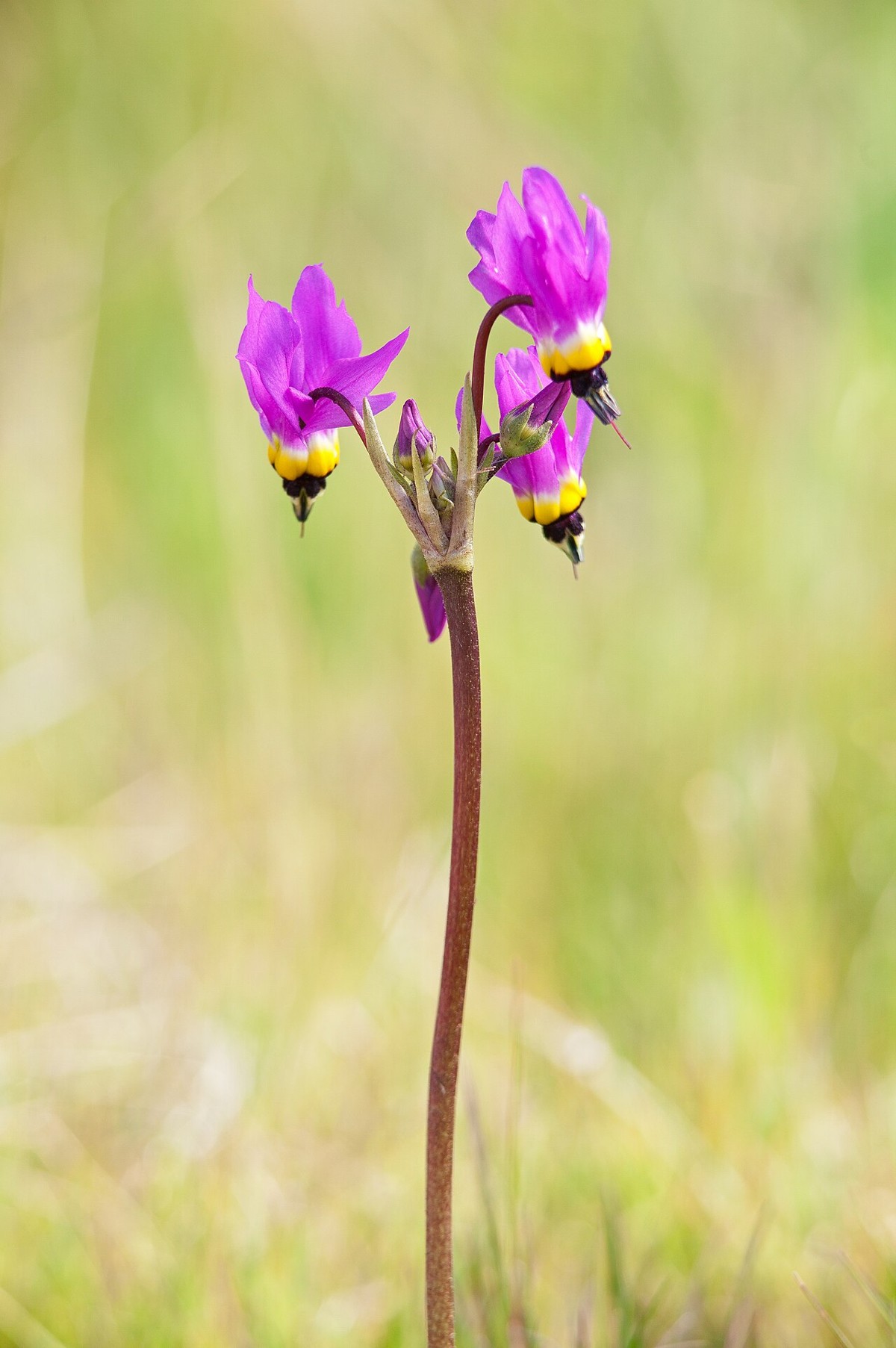
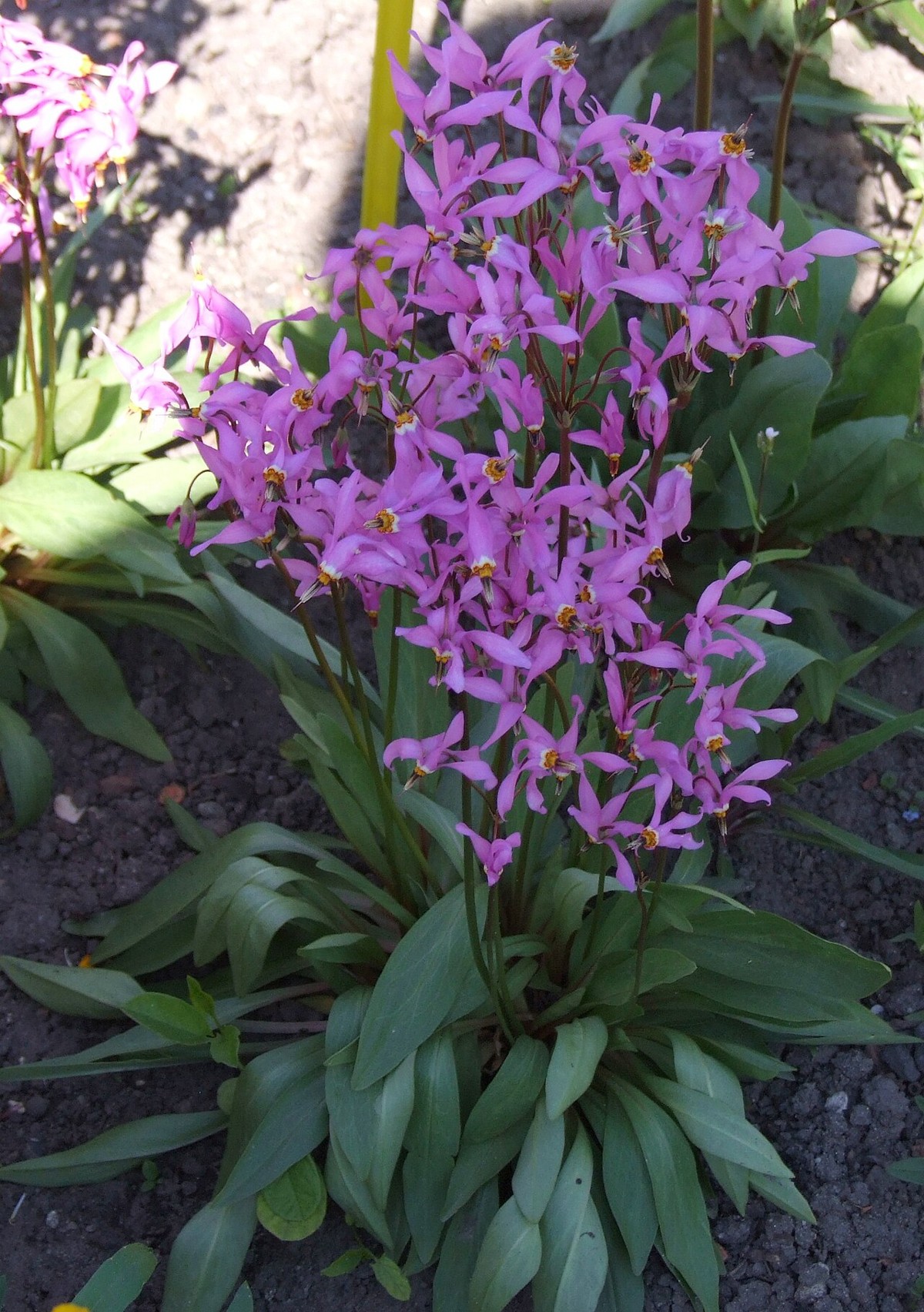
Primula clevelandii (long known as Dodecatheon clevelandii), the padre’s shooting star, is a small, early-blooming perennial wildflower found only in California. Its reflexed, dart-shaped flowers — magenta to lavender petals swept sharply backward above a dark, pointed beak of fused stamens — give the whole plant the look of a shooting star frozen in flight, a shape it shares with its close relatives across western North America.
Padre’s shooting star is one of the first wildflowers to bloom each year, often flowering from January through April while winter rains are still falling, well before most other California natives get started. It grows from a short rootstock with a basal rosette of leaves, sending up several leafless flowering stems each topped with a loose cluster of nodding blooms. After flowering and setting seed in late spring, the plant usually goes dormant for the dry summer, disappearing underground until the rains return.
In the garden, padre’s shooting star is a charming addition to a California native rock garden, border, or container where its early, dramatic flowers can be appreciated up close before most other perennials wake up. Because it goes fully dormant in summer, it pairs well with later-blooming companions that can fill the space it leaves behind.
Identification
Padre’s shooting star is a low, clump-forming perennial, with a basal rosette of leaves and flowering stems that rise 4 to 16 inches above the foliage.
Leaves
The leaves form a flat basal rosette, each leaf spoon-shaped to oblong with a smooth or slightly wavy margin, tapering into a short winged stalk. They are fresh green, somewhat fleshy, and typically 2 to 6 inches long, appearing in late winter ahead of the flowers and dying back after the plant sets seed.
Flowers
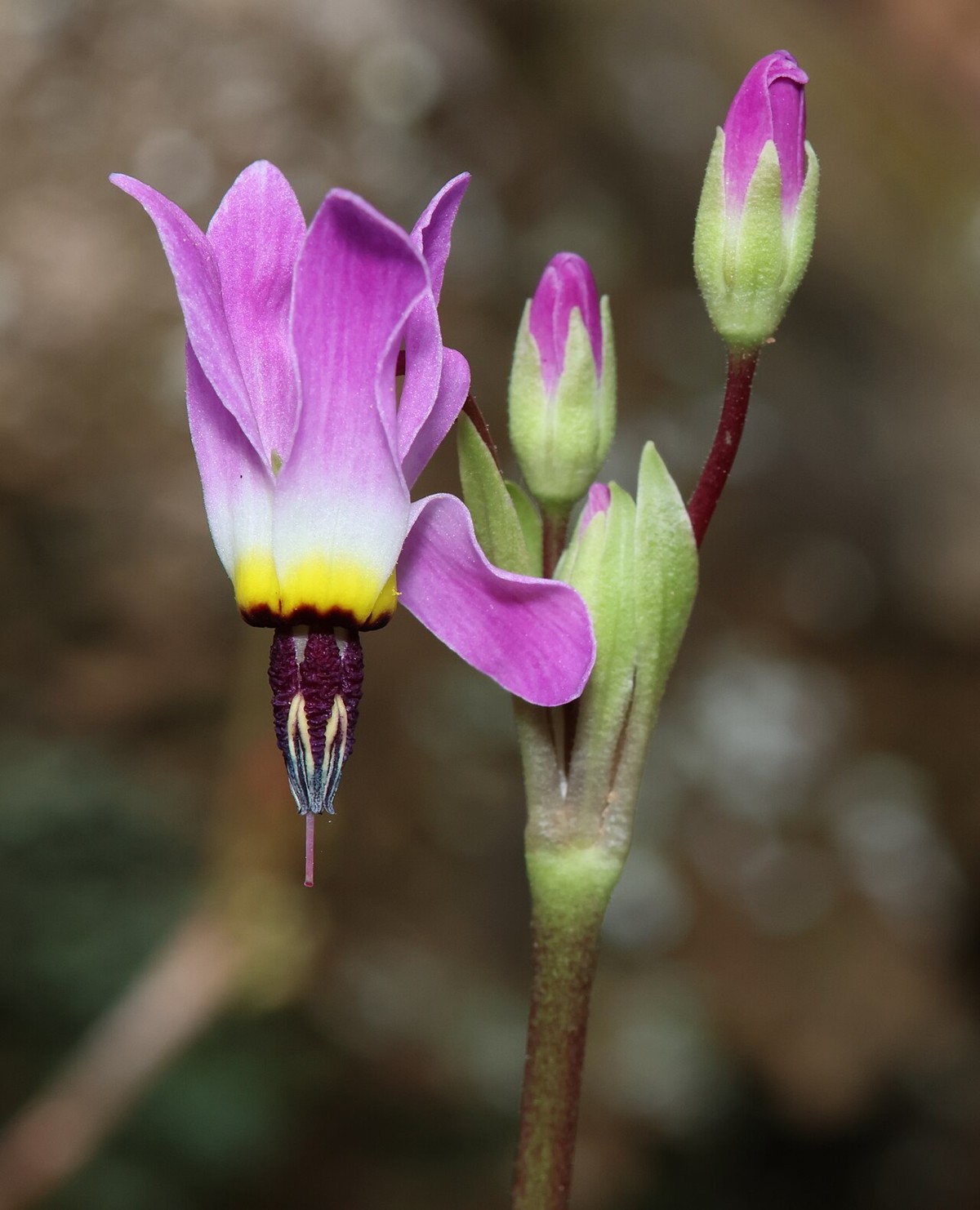
Each leafless flowering stem carries a loose cluster, or umbel, of several nodding flowers at its tip. The four or five petals are strongly reflexed, swept back and upward away from the flower’s face, in shades of magenta-pink to pale lavender, often with a yellow or white band and dark purple ring at the base of the petals. The stamens are fused into a dark, pointed cone pointing downward — the “shooting star” beak — usually deep purple to near-black, sometimes with yellow anther tips.
Fruit & Seed
After pollination, each flower develops into a small, upright, cylindrical seed capsule that splits open at the top to release numerous tiny seeds as it dries in late spring, around the same time the foliage begins to yellow and the plant enters summer dormancy.
Quick Facts
| Scientific Name | Primula clevelandii (syn. Dodecatheon clevelandii) |
| Family | Primulaceae (Primrose) |
| Plant Type | Perennial wildflower, summer-dormant |
| Mature Height | 4–16 in in bloom |
| Mature Spread | 4–8 in rosette |
| Growth Rate | Fast in season, then dormant |
| Sun Exposure | Full Sun to Part Shade |
| Water Needs | Moist in winter/spring; dry (dormant) in summer |
| Soil Type | Well-drained clay, loam or gravelly soil |
| Soil pH | Neutral to slightly acidic |
| Bloom Time | January – April |
| Flower Color | Magenta-pink to lavender with a dark purple stamen cone |
| Fall Color | None; dormant by fall |
| Fruit | Small upright capsules, spring |
| Deer Resistant | Generally yes |
| USDA Hardiness Zones | 8–10 |
Native Range
Padre’s shooting star is native to California, found mainly in the Coast Ranges, Transverse Ranges, and Channel Islands from the San Francisco Bay Area south through Southern California, with its range continuing into northern Baja California, Mexico (not shown on the U.S. map below). It is a plant of grassy and rocky slopes rather than the Central Valley floor or deserts.
Typical habitat includes open grasslands, coastal sage scrub, oak woodland edges, and rocky outcrops or seasonally moist flats that dry out by summer. It takes advantage of winter and spring rains to grow, flower, and set seed quickly before the dry season, then survives summer drought underground as a dormant rootstock.
Padre’s shooting star has no broad federal or state conservation listing, though some island and coastal populations are more localized and can be sensitive to development, grazing pressure, and competition from invasive annual grasses that crowd out native spring ephemerals.
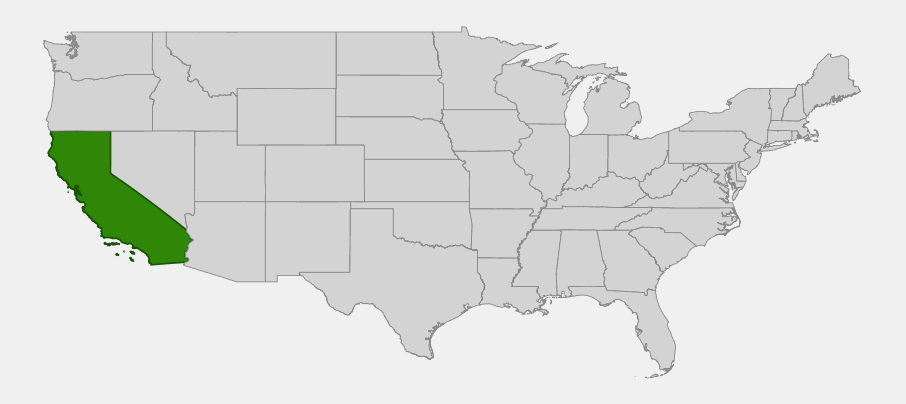
📋 Regional plant lists featuring Padre’s Shooting Star: California & Nevada
Growing & Care Guide
Padre’s shooting star rewards gardeners who can give it a seasonal rhythm of winter-spring moisture followed by dry summer dormancy, much like many California bulbs and corms.
Light
Plant in full sun near the coast or in part shade further inland, where afternoon shade helps keep the rosette from overheating during its brief active season. Light open shade under deciduous shrubs also suits it well, since it is finishing its growth before most shrubs leaf out fully.
Soil & Water
Well-drained soil is essential; heavy, waterlogged clay that stays wet in summer will rot the dormant rootstock. Water regularly through the winter and spring growing season to support strong flowering, then withhold summer water entirely once the foliage yellows and the plant goes dormant. Established plantings in a Mediterranean-climate garden often need no supplemental summer water at all.
Planting Tips
Plant rootstocks or nursery starts in fall, just as the rainy season begins, so roots can establish before the main flush of winter growth. Mark planting spots carefully, since the plant disappears completely by summer and is easy to accidentally dig into or overplant. Group several plants together for a fuller display, since individual stems are delicate and look best in a cluster.
Pruning & Maintenance
No pruning is needed beyond removing spent flower stalks after seed has dispersed, if a tidier look is wanted. Once the foliage yellows in late spring, let it die back naturally rather than cutting it while still green, since the rootstock is still drawing down nutrients from the fading leaves.
Propagation
Propagate from seed sown in fall, which benefits from the same cool, moist conditions the species experiences in the wild, or by carefully dividing offset rootstocks during summer dormancy when the plant can be handled without disturbing active growth.
Landscape Uses
- Rock gardens and raised beds with sharp drainage for an early-spring show
- California native meadow and grassland gardens alongside poppies and blue-eyed grass
- Containers where summer dormancy can be managed and the plant admired up close in bloom
- Oak woodland understory plantings that take advantage of winter light before canopy leaf-out
Wildlife & Ecological Value
As one of California’s earliest bloomers, padre’s shooting star provides an important early-season nectar and pollen source when few other flowers are available.
For Pollinators
The flowers are “buzz pollinated” — bumblebees and other native bees grip the dark stamen cone and vibrate their flight muscles to shake pollen loose, a specialized technique shared with other shooting stars and many nightshade-family plants. This makes the species especially valuable to early-emerging native bees that rely on some of the first blooms of the year.
For Birds
The plant itself is not a major direct food source for birds, but the grassland and woodland-edge habitats it favors support insect populations that feed many early-spring songbirds.
For Mammals
Small mammals generally leave the plant alone, and its early, brief above-ground season limits its exposure to summer grazing pressure.
Ecosystem Role
By flowering and setting seed before the dry season and most other spring wildflowers get underway, padre’s shooting star fills an important early niche in California grassland and woodland communities, helping sustain pollinators through the lean early-spring period.
Cultural & Historical Uses
Padre’s shooting star and its relatives have long been admired in California simply for their striking, dart-like flowers rather than for significant practical use. The common name references the Spanish mission padres of early California, reflecting how long the plant has been noticed and named within the region’s cultural history.
The genus Dodecatheon, under which this species was long classified, was named from Greek for “twelve gods,” a reference to the way a cluster of its reflexed flowers was once thought to resemble a circle of classical deities looking down. Shooting stars have been popular in California native plant gardens for decades, valued for bringing color to the garden in the depths of winter and earliest spring.
Frequently Asked Questions
Why do shooting star flowers point backward?
The petals are strongly reflexed, swept back and up away from the flower’s face, which exposes the pollen-bearing cone of stamens below and helps bumblebees grip and buzz-pollinate the flower efficiently.
Does padre’s shooting star die after blooming?
No, it goes dormant rather than dying. The foliage yellows and disappears by late spring or early summer, and the plant regrows from its underground rootstock the following fall or winter when rains return.
Can I grow padre’s shooting star outside California?
It is adapted to a Mediterranean climate with wet winters and dry summers, so it performs best in similar climates. Gardeners elsewhere can try it in a container where summer moisture can be controlled.
Is padre’s shooting star the same as other shooting stars sold at nurseries?
No. Several related species are sold as “shooting star,” including Primula hendersonii and Primula meadia; padre’s shooting star (Primula clevelandii) is distinguished by its range, bloom timing, and flower details, so check the scientific name when buying.
When is the best time to see padre’s shooting star in bloom?
Look for it from January through April in grassy or rocky Southern California habitats, with peak bloom usually in February and March depending on rainfall timing.

Looking for a nursery that carries Padre’s Shooting Star?
Browse our native plant nursery directory: California