Mojave Fishhook Cactus (Sclerocactus polyancistrus)
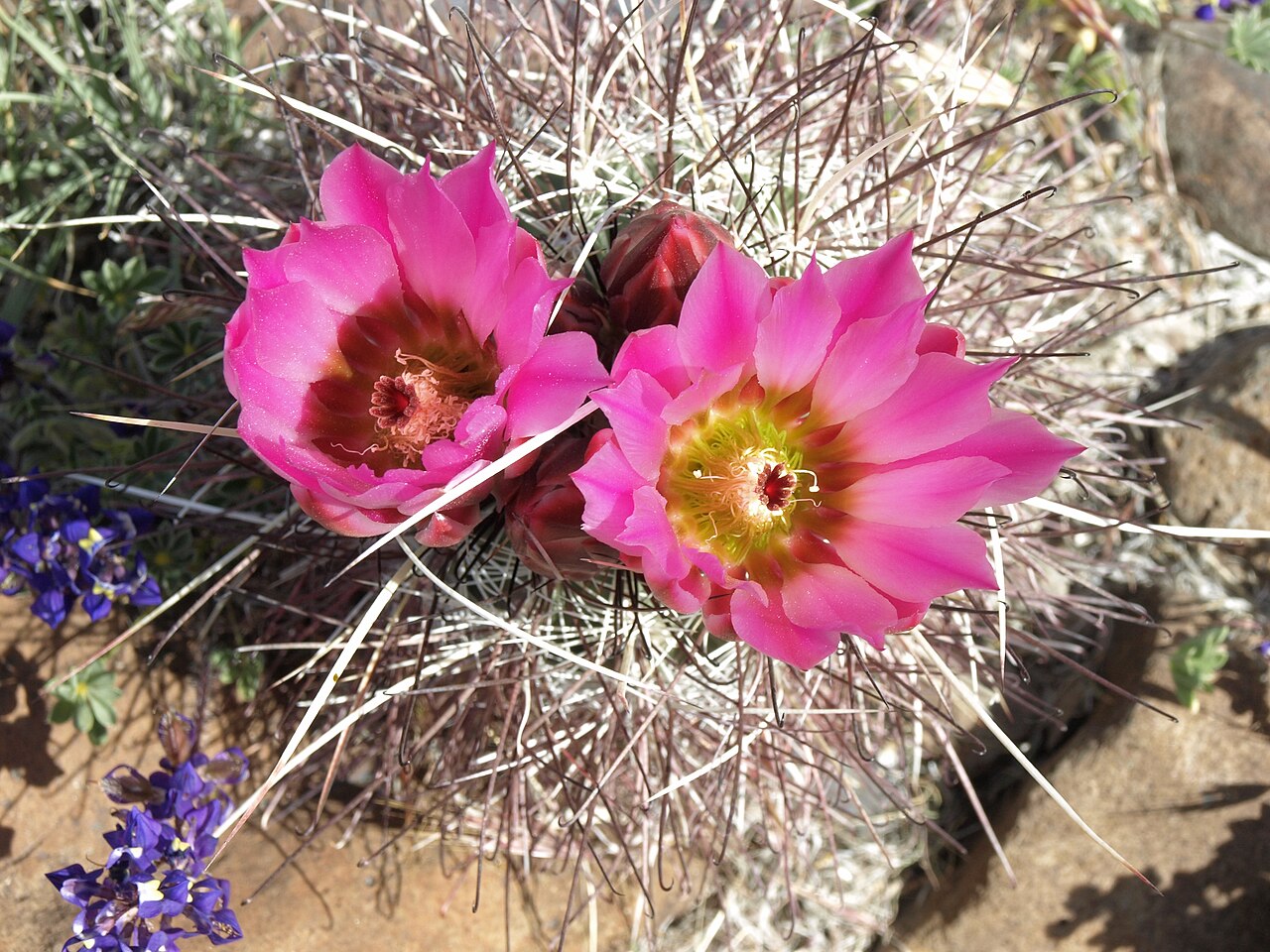
Sclerocactus polyancistrus, commonly called Mojave fishhook cactus or redspined fishhook cactus, is a small, solitary barrel-type cactus native to the Mojave Desert of eastern California and southern Nevada. A member of the cactus family (Cactaceae), it takes its common name from its most distinctive feature: long, strongly hooked central spines that curl like fishhooks from a dense covering of straight radial spines, giving the whole plant a formidable, bristling appearance even before it flowers.
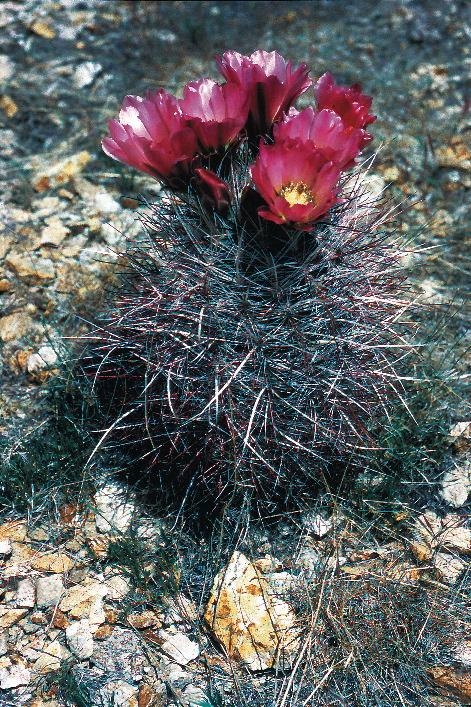
Each spring the plant rewards a close look with large, silky, magenta-pink to rose-purple flowers that open at the crown and can nearly hide the spines beneath them when a well-grown specimen blooms heavily. The flowers are disproportionately showy for the plant’s modest size, which rarely exceeds the dimensions of a large grapefruit even in old specimens.
Mojave fishhook cactus is a true desert specialist, found scattered across gravelly flats, rocky slopes, and desert pavement from the eastern Sierra Nevada rain shadow through Death Valley and the northern Mojave, often growing singly rather than in clusters. It is a slow-growing, long-lived plant that makes an excellent, low-water accent for desert and rock gardens within or near its native range, though it is uncommon in general cultivation and best sourced from specialty native or cactus nurseries rather than wild-collected.
Identification
Mojave fishhook cactus forms a solitary, barrel- or globe-shaped stem that is usually unbranched, reaching 4 to 12 inches tall and 3 to 6 inches in diameter at maturity, though old plants can grow somewhat larger and more cylindrical.
Stem & Ribs
The stem is gray-green to blue-green, with 13 to 17 vertical ribs bearing closely spaced, prominent tubercles (bumps) arranged in spiraling rows. The overall form is a tight, dense barrel densely armored with spines from base to crown.
Spines
Each areole (spine cluster) carries 6 to 10 straight to slightly curved white to pinkish radial spines and 4 to 8 longer central spines, the lowermost of which is strongly hooked — the “fishhook” that gives the species its name. Central spines are typically red, reddish-brown, or straw-colored and can reach over an inch long, creating a dense, interlacing armor over the whole plant.
Flowers
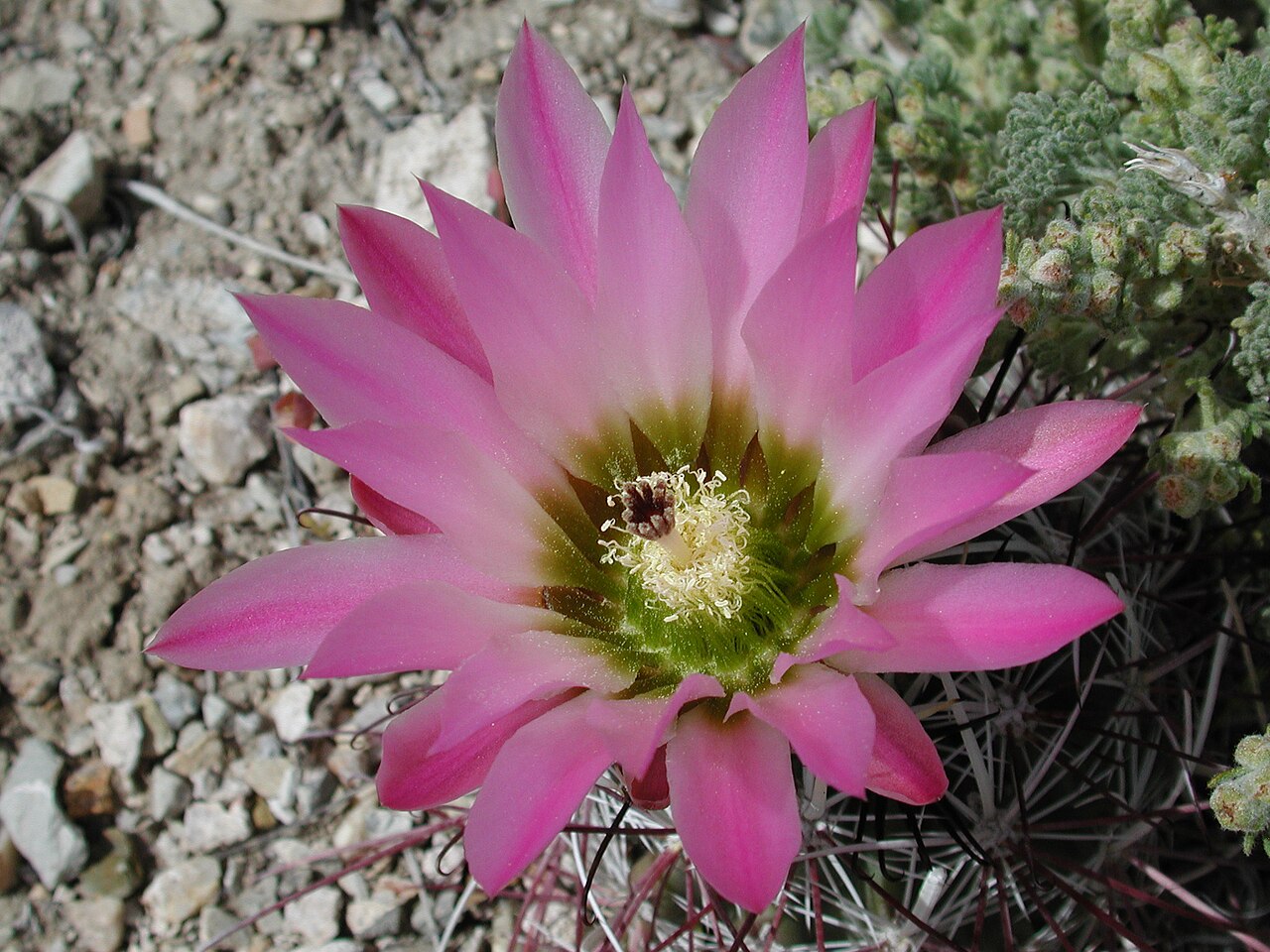
Flowers emerge from the crown in a ring near the growing tip, each 1½ to 2½ inches across, with numerous silky, magenta-pink to deep rose-purple petals surrounding a cluster of pale yellow-green to white stamens. Bloom occurs from April through June, with individual flowers lasting several days and opening in the warmth of the day.
Fruit & Seeds
The fruit is a small, dry, greenish to tan capsule roughly ½ inch long that splits open at the base when ripe, releasing small black seeds. Fruits typically ripen through early summer, persisting as dry husks on the plant afterward.
Quick Facts
| Scientific Name | Sclerocactus polyancistrus |
| Family | Cactaceae (Cactus) |
| Plant Type | Solitary Barrel Cactus |
| Mature Height | 4–12 in |
| Mature Spread | 3–6 in diameter |
| Growth Rate | Slow |
| Sun Exposure | Full Sun |
| Water Needs | Very Low |
| Soil Type | Gravelly, rocky, fast-draining |
| Soil pH | 7.0–8.5 (neutral to alkaline) |
| Bloom Time | April – June |
| Flower Color | Magenta-pink to rose-purple |
| Fall Color | None |
| Fruit | Small dry greenish-tan capsule |
| Deer Resistant | Yes |
| USDA Hardiness Zones | 7–10 |
Native Range
Mojave fishhook cactus is native to the Mojave Desert of eastern California and southern Nevada, with county-level records concentrated in Inyo, Kern, and San Bernardino counties in California and Nye, Clark, and Esmeralda counties in Nevada. It occurs chiefly within and around the Death Valley region, the Owens Valley rain shadow, and the broader northern Mojave Desert.
Within this range it grows on gravelly alluvial fans, desert pavement, rocky slopes, and sandy-gravelly flats in creosote bush scrub and Joshua tree woodland, typically from about 2,000 to 6,000 feet elevation. It tends to grow as scattered, solitary individuals rather than dense colonies, often tucked among rocks or low shrubs that offer some protection from the harshest sun and grazing.
The species is not federally listed, but like many small desert cacti it faces ongoing pressure from illegal collection, off-road vehicle damage, and habitat disturbance from development and mining in parts of its range. Several populations occur within protected lands, including Death Valley National Park, which helps safeguard core habitat.
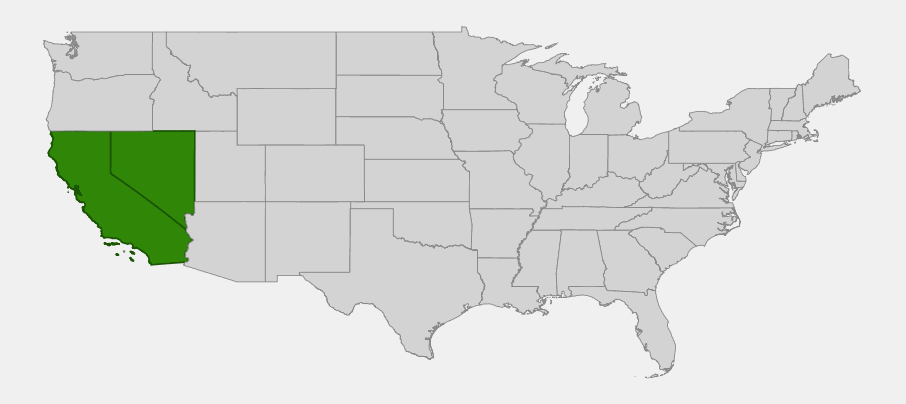
📋 Regional plant lists featuring Mojave Fishhook Cactus: California & Nevada
Growing & Care Guide
Mojave fishhook cactus is a slow, undemanding plant for desert gardens that mimic its harsh native gravel-and-sun habitat. It is not well suited to humid climates or soils that hold moisture, and patience is essential — this is a cactus that rewards a long-term, hands-off approach.
Light
Full sun is required for healthy growth and good flowering, matching its open, unshaded desert habitat. Insufficient light leads to weak, etiolated growth and few if any flowers.
Soil & Water
Extremely well-drained, gravelly or rocky soil is essential; this species rots quickly in heavy or consistently moist soil. Water sparingly, allowing soil to dry completely between waterings, and withhold water almost entirely during winter dormancy. Established plants in the ground within their native range need no supplemental irrigation beyond natural rainfall.
Planting Tips
Plant in spring in a raised bed, rock garden, or container with a mineral cactus mix heavy in gravel or decomposed granite. Avoid organic-rich potting soil. Because wild populations face collection pressure, always source nursery-propagated specimens or seed-grown plants rather than wild-collected cacti.
Pruning & Maintenance
No pruning is needed or possible on a solitary barrel-form cactus. Simply keep the area free of overhanging shade and competing vegetation. The plant is essentially pest-free in appropriate growing conditions, though mealybugs can occasionally appear in overly humid settings.
Propagation
Propagate from seed sown in a gritty mix in spring; germination and early growth are slow, and seedlings may take many years to reach flowering size. This species does not produce offsets for division, unlike many clustering cacti.
Landscape Uses
Mojave fishhook cactus suits a narrow but valuable set of garden roles:
- Desert rock gardens and gravel beds within or near its native range
- Container specimens for patios in frost-protected desert climates
- Native cactus collections highlighting Mojave Desert flora
- Xeriscape accents requiring essentially no irrigation once established
Wildlife & Ecological Value
Though small and scattered across the desert, Mojave fishhook cactus plays a real role in supporting the specialized pollinators and small wildlife of the Mojave Desert ecosystem.
For Pollinators
The large, showy flowers attract native bees, including desert-adapted solitary bee species, which are the primary pollinators. The size and bright color of the blooms make them conspicuous nectar and pollen sources in a landscape where spring flowering is brief and often sparse.
For Birds
Small desert birds occasionally forage near the plant for insects drawn to the flowers, and the dense spine armor offers limited but real protection for insects and the base of the plant itself from larger herbivores.
For Mammals
The formidable spine coat deters most large mammal browsing, though some desert rodents and other small mammals may seek shelter near the base of the plant. The hooked central spines can also catch on animal fur, providing limited incidental seed or plant-part dispersal.
Ecosystem Role
As a long-lived, slow-growing perennial, Mojave fishhook cactus contributes to the structural diversity of sparse desert scrub communities, and its presence is often used by botanists and land managers as an indicator of relatively undisturbed desert pavement and gravel-flat habitat.
Cultural & Historical Uses
Indigenous peoples of the Mojave Desert region, including the Timbisha Shoshone, Southern Paiute, and Kawaiisu, have long been familiar with the diverse cacti of their homeland, though Mojave fishhook cactus itself is not documented as a significant food or material plant compared with larger, more productive desert cacti. Its small size and dense spine armor make it impractical as a food source relative to other regional cacti.
The genus name Sclerocactus comes from the Greek “skleros,” meaning hard, referring to the tough, woody seed capsule characteristic of the genus, while “polyancistrus” combines Greek roots meaning “many hooks,” a direct reference to the plant’s dense covering of hooked central spines. The species was first collected in 1854 near the headwaters of the Mojave River during the Whipple Railroad Survey, and formally described by botanists George Engelmann and John Milton Bigelow in 1856.
Today the species is primarily of interest to cactus enthusiasts, desert botanists, and conservationists, and it is a sought-after subject for desert wildflower photography during its brief, vivid spring bloom.
Frequently Asked Questions
Why is it called a fishhook cactus?
The name refers to its central spines, the longest of which curve sharply at the tip like a fishhook, distinguishing it from cacti with only straight spines. This hooked-spine trait is shared across the genus Sclerocactus.
Can I grow Mojave fishhook cactus outside the desert?
It is difficult outside true arid climates. This species needs intense sun, extremely fast-draining gravelly soil, and a dry winter dormancy, and it generally struggles or rots in humid or wet-winter regions. It is best grown in desert gardens or in containers where moisture can be tightly controlled.
Is it legal to collect this cactus from the wild?
No. Removing cacti from wild desert habitat, including on public lands, is illegal and seriously harms already slow-recovering populations. Always buy nursery-propagated or seed-grown plants from reputable native or cactus specialty nurseries.
How long does it take to flower from seed?
Growth is slow, and seed-grown plants can take several years to reach flowering size. This patience requirement is typical of small barrel-type desert cacti and is part of what makes mature wild specimens especially valuable to protect.
Is Mojave fishhook cactus endangered?
It is not federally listed as threatened or endangered, but it faces ongoing pressure from illegal collecting, off-road vehicle damage, and habitat disturbance, and populations within protected areas like Death Valley National Park are important strongholds for the species.

Looking for a nursery that carries Mojave Fishhook Cactus?
Browse our native plant nursery directory: California · Nevada